
GITNUXSOFTWARE ADVICE
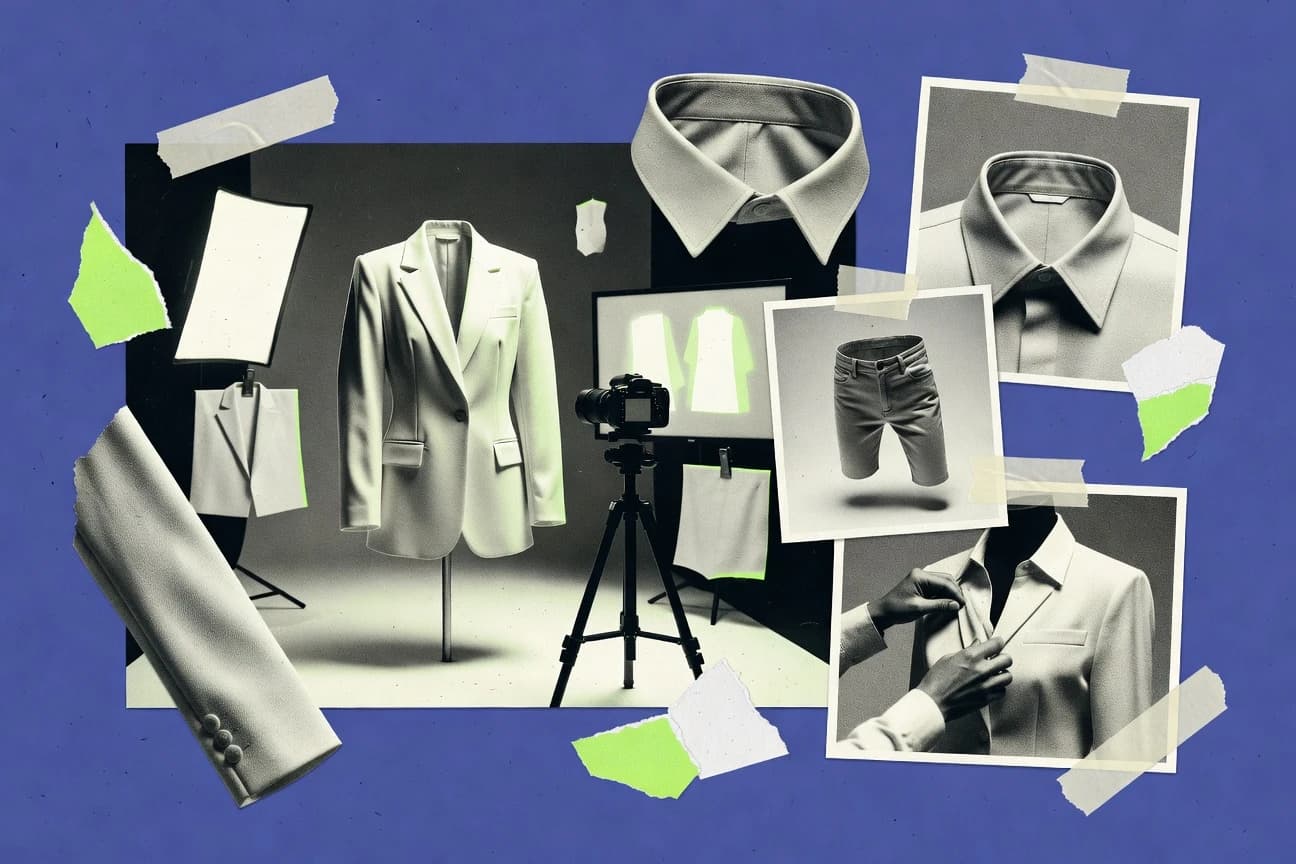
Fashion ApparelTop 10 Best AI Invisible Mannequin Product Photography Generator of 2026
Discover the best ai invisible mannequin product photography generator—compare top tools, expert ratings, and features side by side to find the right fit for

How we ranked these tools
Core product claims cross-referenced against official documentation, changelogs, and independent technical reviews.
Analyzed video reviews and hundreds of written evaluations to capture real-world user experiences with each tool.
AI persona simulations modeled how different user types would experience each tool across common use cases and workflows.
Final rankings reviewed and approved by our editorial team with authority to override AI-generated scores based on domain expertise.
Score: Features 40% · Ease 30% · Value 30%
Gitnux may earn a commission through links on this page — this does not influence rankings. Editorial policy
Editor’s top 3 picks
Three quick recommendations before you dive into the full comparison below — each one leads on a different dimension.
RAWSHOT AI
RAWSHOT AI replaces the category's open text box with a visible seven-step photoshoot builder. Its orchestration layer turns selected blocks into repeatable instructions, while saved Stacks preserve the same treatment across a catalogue and remain editable at every stage.
Built for dTC labels, marketplace sellers, and retail platforms that need consistent on-model apparel imagery across large catalogues without arranging repeated physical shoots..
Flair AI
Editor pickThe editable scene canvas combines uploaded products, generated backgrounds, draggable props, and reusable layouts in one composition workflow.
Built for fits when apparel teams need editable campaign scenes and occasional mannequin-style composites from existing product images..
Pixelcut
Editor pickAI Product Photos creates multiple styled product scenes from one catalog image.
Built for fits when apparel teams need fast catalog scenes without specialized mannequin reconstruction controls..
Comparison Table
RAWSHOT AI
Block-based AI fashion photography platformRAWSHOT AI generates original on-model fashion images and short videos from selectable models, garments, lighting, backgrounds, poses, and camera views.
RAWSHOT AI replaces the category's open text box with a visible seven-step photoshoot builder. Its orchestration layer turns selected blocks into repeatable instructions, while saved Stacks preserve the same treatment across a catalogue and remain editable at every stage.
RAWSHOT AI combines more than 1,800 licence-free synthetic models with a published attribute system, including more than 600 children's models; no child was cast, photographed, or used as a likeness reference. Users can configure up to four garments, select from catalogue views and frames, and generate 2K or 4K still images, while short videos use the same block-based setup. C2PA credentials, layered watermarking, AI-labelled metadata, audit trails, EU hosting, and permanent commercial rights support compliance-sensitive publishing.
The tradeoff is a deliberately controlled workflow: RAWSHOT AI offers one accuracy-focused image style and no free-text input, so teams seeking expressive art direction or open-ended experimentation need post-production or another tool. It fits a DTC brand launching 100 new garments when physical samples, casting, and repeat studio sessions would otherwise slow catalogue production.
- +Full commercial rights forever, with no recurring licensing on library models.
- +Seven visible configuration steps make repeatable photoshoot setup easier for non-specialist users.
- +Saved Stacks can apply consistent treatments across hundreds of images.
- +Browser and REST API workflows have full parity, from one image to 10,000 or more per run.
- –No free-text input limits users to the available selectable blocks.
- –The product ships with one image style, so stylised or graded treatments require post-production.
- –It generates on-model fashion imagery rather than functioning as a dedicated invisible mannequin or hollow-garment compositor.
- –Video output is limited to three five-second scenes at 720p or 1080p.
Emerging fashion labels
Launch collections before physical samples arrive
Earlier product-page imagery
DTC e-commerce teams
Refresh hundreds of SKU images
More consistent catalogues
Show 2 more scenarios
Kidswear marketplaces
Create compliant child apparel imagery
Safer kidswear production
Synthetic children's models provide age-specific presentation without casting, photographing, or referencing a real child.
Retail technology platforms
Generate images through an API
Scalable image generation
The REST API exposes the browser workflow and supports bulk product imports for high-volume catalogue operations.
Best for: DTC labels, marketplace sellers, and retail platforms that need consistent on-model apparel imagery across large catalogues without arranging repeated physical shoots.
Flair AI
SMBAI product photography software generates staged commercial scenes from uploaded product assets.
The editable scene canvas combines uploaded products, generated backgrounds, draggable props, and reusable layouts in one composition workflow.
Apparel brands producing campaign variations can build scenes by positioning uploaded products on a visual canvas, then generating backgrounds and props with prompts. Flair AI supports reusable templates, image editing, and product-focused compositions that reduce manual work for small catalog teams. The interface suits marketers who need fast creative iteration alongside standard product assets.
Generative edits can change logos, seams, proportions, and fabric details, so hollow-man images still need human review before publication. Flair AI fits teams creating lifestyle variants or occasional invisible mannequin compositions, but highly standardized catalogs may require dedicated retouching controls for repeatable garment geometry.
- +Editable canvas places products, generated scenes, props, and text elements in one workspace
- +Reusable templates support consistent campaign layouts across multiple apparel collections
- +Prompt-based generation creates lifestyle variations from existing product images
- +API access connects image generation with external catalog workflows
- –Generative edits can distort logos, stitching, garment proportions, and small hardware
- –Precise collar and sleeve interior reconstruction is less deterministic than specialist retouching
- –High-volume catalogs still require manual quality review for asset consistency
- –Advanced composition control requires more iteration than fixed studio templates
Apparel marketing teams
Create seasonal campaign variations
More campaign-ready image variants
Small fashion catalogs
Build mannequin-style product assets
Lower studio production demand
Show 2 more scenarios
Ecommerce content teams
Automate product scene generation
Faster asset pipeline throughput
API requests connect image creation with existing catalog systems and downstream publishing workflows.
Creative agencies
Present multiple visual directions
Faster client concept reviews
Designers assemble client concepts with shared products, generated environments, props, and editable layouts.
Best for: Fits when apparel teams need editable campaign scenes and occasional mannequin-style composites from existing product images.
Pixelcut
SMBAI product photography software creates backgrounds, removes distractions, and prepares ecommerce images.
AI Product Photos creates multiple styled product scenes from one catalog image.
Pixelcut works well when apparel teams need fast image preparation from ordinary garment photos. AI Product Photos can place products into generated scenes, while background removal, Magic Eraser, shadow controls, templates, and resizing cover common catalog edits. Web and mobile access support distributed content teams, and batch tools reduce repetitive work across product sets.
The main limitation is apparel-specific control. Pixelcut does not present dedicated controls for neck-void creation, sleeve-interior reconstruction, or precise garment compositing, so complex invisible mannequin images may need manual retouching after generation. It fits merchants that need clean, publishable product scenes quickly, but specialized studios may prefer software with deeper reconstruction controls.
- +AI-generated product scenes from a single source image
- +Batch editing handles repeated catalog transformations
- +Magic Eraser removes props and visual distractions quickly
- +API access supports automated image-editing workflows
- –No dedicated controls for neck voids or sleeve interiors
- –Complex apparel reconstruction may require manual retouching
- –Generated scenes can require repeated prompts for consistent styling
Small apparel retailers
Create seasonal product scenes
Faster seasonal launches
Marketplace catalog teams
Standardize product image backgrounds
More consistent listings
Show 2 more scenarios
E-commerce content agencies
Process client product batches
Higher production throughput
Teams can combine templates, automated edits, and API workflows for recurring client catalog production.
Independent fashion sellers
Improve flat-lay garment photos
Cleaner storefront imagery
Background cleanup, distraction removal, and generated scenes make limited source photography more usable.
Best for: Fits when apparel teams need fast catalog scenes without specialized mannequin reconstruction controls.
Klaviyo Smart Receive
SMBMarketing platform with AI product image generation including ghost mannequin.
Event-driven image generation that syncs AI asset creation to Klaviyo segmentation and campaign timing.
Klaviyo Smart Receive focuses on generating product images inside Klaviyo workflows, tying visual creation to catalog and messaging triggers. The core capability is API-driven image generation that can produce consistent apparel-style assets aligned to campaign contexts.
Smart Receive is most useful when image generation needs to be coordinated with event timing, such as when a customer enters a segment. Batch-style processing and export formatting support downstream publishing steps, including common e-commerce delivery needs.
- +Workflow-triggered generation connects image creation to Klaviyo events
- +API-first integration supports programmatic batch runs and automation
- +Configurable output formats fit common storefront and catalog pipelines
- +Human review checkpoints can be inserted into the publishing workflow
- –Requires strong workflow design to prevent mismatched variants or timing
- –Generative output control is narrower than dedicated photo retouching tools
Best for: Fits when marketing teams need automated product visuals coordinated with Klaviyo messaging events.
VModel AI
vertical specialistAI fashion model generator with ghost mannequin product photography.
One garment upload can produce both AI mannequin imagery and virtual fashion model compositions.
VModel AI converts garment uploads into invisible mannequin effect images without requiring a physical mannequin or studio setup. Its product suite also supports AI fashion models, background removal, and apparel scene generation from the same browser workflow. The interface favors fast single-image production, while catalog teams may find fewer controls for repeatable batch standards and retouching precision.
- +Combines AI mannequin imagery with virtual fashion model generation.
- +Accepts standard garment uploads without requiring physical mannequin photography.
- +Includes background removal and apparel scene creation in one workflow.
- +Browser-based processing reduces dependence on specialist image editing software.
- –Fine control over collar, sleeve, and interior garment reconstruction is limited.
- –Output consistency can vary with garment angle, lighting, and source-image quality.
- –Batch catalog controls are less prominent than single-image generation features.
- –No clearly exposed public API supports automated production pipelines.
Best for: Fits when apparel sellers need quick listing images from flat-lay or worn garment photos.
Pebblely
SMBAI product photography tool with ghost mannequin removal for apparel.
Invisible mannequin rendering that preserves fabric texture while removing the torso region for clean cutout apparel results.
Pebblely generates invisible mannequin product photography by producing clean cutout results and reconstructing garment presence without the visible model body. It targets apparel product workflows that need consistent catalog-style outputs across angles such as front and back garment views.
The workflow focuses on generating ready-to-publish composites with attention to edges, fabric texture, and background integration. For teams that process many SKUs, it supports batch image generation to reduce manual retouching time.
- +Batch generation speeds up large apparel catalog production runs
- +Invisible mannequin output reduces manual compositing around the torso area
- +Edge refinement helps keep collars and hems from looking cut-and-paste
- +Export-ready imagery supports common e-commerce catalog presentation needs
- –Garment detail accuracy can vary on complex sleeves and layered fabrics
- –Automation depends on disciplined input images and consistent garment framing
- –Limited controls for occlusion handling compared with specialist retouch pipelines
- –Higher iteration count may be needed for strict human quality review
Best for: Fits when apparel catalogs need consistent ghost mannequin composites with batch throughput and limited manual retouching.
PromeAI
SMBAI design platform with product photography tools including ghost mannequin.
Garment interior reconstruction targets the neck void and collar and sleeve interiors in a single pass.
PromeAI generates invisible mannequin style product photography by producing clean cutouts and reconstructing the garment shape around hidden supports. It targets catalog-ready results with focus on edge refinement and consistent background removal for front-and-back apparel views.
The workflow emphasizes image inpainting behavior that fills the neck void and garment interiors while aiming to preserve fabric texture and wrinkles. Output formats support downstream e-commerce compositing, including transparent PNG and layered PSD style handoff for retouching workflows.
- +Strong invisible mannequin effect with cleaner collar and sleeve interiors
- +Edge refinement keeps garment boundaries consistent across batch runs
- +Maintains fabric texture and wrinkle detail during generative fill
- +Exports compatible with layered Photoshop retouching workflows
- –Requires careful input framing to avoid silhouette drift on complex hems
- –Batch throughput slows when generating multiple views per SKU
Best for: Fits when apparel catalogs need consistent ghost mannequin photography for bulk SKUs with human QA.
Sellerpic
SMBAI product image generator with ghost mannequin for apparel sellers.
AI-generated fashion model variations let one garment image produce multiple styled listing visuals.
Sellerpic targets apparel sellers with AI-generated product images, including invisible mannequin effect renders from uploaded garment photos. The workflow can remove models and backgrounds, then produce clean catalog images or model-based variations.
Sellerpic supports fast listing production, but its standard workflow lacks documented API access, DAM integration, and advanced review controls. The narrower automation surface places it below higher-ranked options for large catalog operations.
- +Creates apparel catalog images from uploaded garment photos.
- +Combines background removal with AI-generated fashion model variations.
- +Simple browser workflow suits small online clothing stores.
- +Supports faster visual testing than conventional studio reshoots.
- –No documented public API supports automated catalog pipelines.
- –Batch processing and approval controls are limited.
- –Garment details can change across generated model variations.
- –No visible DAM connector supports centralized asset governance.
Best for: Fits when small apparel teams need quick catalog images without API-led production workflows.
Vmake
vertical specialistAI fashion photography tools generate apparel images with models, backgrounds, and product-focused compositions.
AI fashion-model generation creates selectable model, pose, and scene variations from one apparel image.
Vmake converts flat apparel photos into the invisible mannequin effect, then adds background removal and AI-generated fashion scenes. Its web editor also supports virtual model creation, image enhancement, resizing, and product-image composition without separate desktop retouching software. The workflow suits small catalogs that need alternate presentation images, but specialist controls for garment reconstruction and production governance remain limited.
- +Generates alternate apparel presentations from a single flat-lay or mannequin source image.
- +Combines background editing, enhancement, and composition in one browser workspace.
- +Supports rapid resizing for marketplace and social-media asset versions.
- –Specialist controls for accurate hollow garment interiors are limited.
- –Virtual try-on outputs can alter garment geometry during presentation changes.
- –Catalog-wide consistency depends on manual checking and repeated adjustments.
Best for: Fits when small apparel teams need fast alternate merchandising images from existing product photography.
Botika
vertical specialistAI fashion photography software creates model-based apparel images from clothing product assets.
Batch generation tuned for catalog consistency across front-and-back apparel views, with attention to edge and occlusion cleanup before export.
Botika focuses on AI invisible mannequin product photography generation for e-commerce catalogs, with emphasis on consistent background removal and garment compositing. The workflow targets hollow-man style results by producing clean front-and-back apparel views and correcting common edge and occlusion artifacts around the neck and sleeves.
Automation support is geared toward batch image processing so teams can regenerate large catalog sets while keeping style uniformity. For publish-ready outputs, Botika emphasizes exports suited to downstream retouching workflows and visual consistency checks.
- +Batch processing for high-volume catalog regeneration
- +Consistent background removal across apparel sets
- +Front-and-back garment view generation for catalog completeness
- +Exports designed for downstream retouching workflows
- –Less granular control over garment detail accuracy than retouch-first tools
- –Edge refinement and occlusion handling can require human review on complex sleeves
- –Limited transparency into the generation logic compared with API-first pipelines
- –Workflow governance controls for multi-user teams are not emphasized
Best for: Fits when catalog teams need batch invisible mannequin outputs with consistent backgrounds and basic garment corrections.
Conclusion
After evaluating 10 fashion apparel, RAWSHOT AI stands out as our overall top pick — it scored highest across our combined criteria of features, ease of use, and value, which is why it sits at #1 in the rankings above.
Use the comparison table and detailed reviews above to validate the fit against your own requirements before committing to a tool.
How to Choose the Right ai invisible mannequin product photography generator
Invisible mannequin product photography generators turn a garment source image into a ghost mannequin style composite by removing the torso region and reconstructing garment boundaries for consistent e-commerce catalog use. This guide covers RAWSHOT AI, Flair AI, Pixelcut, Klaviyo Smart Receive, VModel AI, Pebblely, PromeAI, Sellerpic, Vmake, and Botika.
The tools differ in how they orchestrate production and how much control they give over reconstruction details like neck voids, collar interiors, and sleeve interiors. RAWSHOT AI centers on a seven-step photoshoot builder with editable Stacks, while Flair AI uses an editable scene canvas that combines products, generated backgrounds, props, and reusable layouts.
AI invisible mannequin product photography generator for ghost mannequin apparel catalog composites
An ai invisible mannequin product photography generator produces hollow-man style apparel images by performing background removal, edge refinement, and occlusion handling so the garment reads cleanly without a mannequin torso. In practice, the category aims for stable cutout results across repeated SKUs and views such as front-and-back garment views.
RAWSHOT AI drives repeatability with a seven-step photoshoot builder and editable Stacks that preserve the same treatment across a catalogue. Pebblely focuses on invisible mannequin rendering that preserves fabric texture while removing the torso region for batch-friendly ghost mannequin composites. Other options shift control to different workflows, like Flair AI’s editable canvas for scene-level composites and PromeAI’s single-pass garment interior reconstruction targeting the neck void plus collar and sleeve interiors.
Evaluation Criteria for Invisible Mannequin Catalog Production
Garment reconstruction controls determine whether a generated image preserves collars, sleeves, hems, logos, and fabric structure. Batch handling and repeatable treatments determine how consistently a catalog team can process multiple SKUs.
Garment interior reconstruction
PromeAI reconstructs the neck void, collar interior, and sleeve interiors in one pass. VModel AI creates mannequin images from standard garment uploads but provides less control over those interior areas.
Repeatable production controls
RAWSHOT AI uses a seven-step photoshoot builder and editable Stacks to preserve treatments across catalog items. Pebblely supports batch generation but depends more heavily on consistent source framing.
Scene and layout editing
Flair AI combines uploaded products, generated backgrounds, props, text, and reusable layouts on an editable canvas. Pixelcut generates multiple styled scenes from one catalog image but offers fewer mannequin-specific controls.
Automation and integration surface
Klaviyo Smart Receive connects image generation to Klaviyo events and supports programmatic batch runs through its API-first workflow. Sellerpic lacks a documented public API and provides limited catalog approval automation.
Batch catalog consistency
Botika targets repeated front-and-back apparel views with consistent background removal and basic edge cleanup. Pebblely also supports batch production, while complex sleeves and layered fabrics can still require review.
Source-image flexibility
VModel AI accepts flat-lay and worn garment photos for both mannequin and virtual fashion model outputs. Vmake adds selectable model, pose, and scene variations from one flat-lay or mannequin source image.
Choosing Between Reconstruction Control, Scene Editing, and Catalog Automation
The first decision is the required image type. PromeAI and Pebblely prioritize hollow garment results, while Flair AI, Vmake, and Sellerpic prioritize styled model or campaign presentations.
Select reconstruction-first or scene-first production
Choose PromeAI when collar and sleeve interior accuracy controls the publishing decision. Choose Flair AI when draggable props, generated backgrounds, text, and reusable campaign layouts matter more than deterministic garment reconstruction.
Match the source-image policy to incoming apparel assets
Choose VModel AI when suppliers provide flat-lay or worn garment photos instead of dedicated mannequin photography. Choose RAWSHOT AI when the team can standardize selectable shoot settings across a large catalog.
Decide between guided configuration and open composition
Choose RAWSHOT AI when visible seven-step configuration and editable Stacks must govern repeatable treatments. Choose Flair AI when operators need to position products, props, text, and backgrounds directly on a scene canvas.
Map generation to catalog or campaign events
Choose Klaviyo Smart Receive when image creation must follow Klaviyo segmentation and messaging events. Choose Sellerpic or Vmake for browser-based merchandising work that does not require an API-led catalog pipeline.
Set the review threshold for complex garments
Choose PromeAI or Pebblely for ghost mannequin workflows, then test layered fabrics, long hems, and complex sleeves before bulk production. Choose Botika when consistent batch backgrounds and basic corrections matter more than granular garment-detail controls.
Audience Fit by Apparel Image Workflow
The strongest fit depends on catalog volume, source-image variation, and the required presentation format. A DTC catalog with fixed image rules needs different controls from a campaign team producing styled scenes.
DTC apparel labels
RAWSHOT AI gives DTC teams repeatable seven-step shoot settings and editable Stacks for consistent SKU treatment. Pebblely suits labels that need batch ghost mannequin outputs with limited manual compositing.
Marketplace sellers
VModel AI converts standard garment uploads into mannequin and virtual model images without requiring physical mannequin photography. Pixelcut produces multiple styled scenes from one catalog image for faster listing variation.
Retail catalog operations
Botika handles batch regeneration across apparel sets with consistent background removal. PromeAI suits teams that assign human review to complex hems, sleeves, and interior garment areas.
Campaign and merchandising teams
Flair AI provides an editable canvas for products, props, backgrounds, text, and reusable layouts. Vmake creates selectable model, pose, and scene variations from a single apparel source.
Marketing automation teams
Klaviyo Smart Receive connects generation to Klaviyo events and programmatic batch runs. Its value depends on precise variant mapping and campaign timing rather than manual image editing.
Common Failures in AI Mannequin Apparel Production
Generated apparel images can look acceptable at thumbnail size while failing on collars, sleeves, logos, or garment proportions. Testing must use the same difficult SKUs that the catalog will publish.
Using one easy T-shirt to judge reconstruction quality
Test PromeAI, Pebblely, and Botika with layered fabrics, complex sleeves, long hems, and visible hardware before approving a production workflow.
Treating styled model generation as equivalent to mannequin reconstruction
Use Vmake, Sellerpic, or VModel AI for presentation variations, but inspect garment geometry before using those outputs as technical catalog images.
Automating generation without variant and event controls
Klaviyo Smart Receive requires mapped product variants, campaign triggers, and timing rules to prevent the wrong image from following a marketing event.
Assuming batch processing guarantees identical source treatment
RAWSHOT AI preserves settings through editable Stacks, while Pebblely and Botika still require consistent framing and human checks for difficult garments.
How We Selected and Ranked These Tools
We evaluated RAWSHOT AI, Flair AI, Pixelcut, Klaviyo Smart Receive, VModel AI, Pebblely, PromeAI, Sellerpic, Vmake, and Botika for apparel image controls, reconstruction behavior, workflow integration, and batch production features. Features contributed 40% of each overall score.
Ease of use contributed 30%, and value contributed 30%. RAWSHOT AI ranked first with a 9.3 Overall score because its visible seven-step photoshoot builder and editable Stacks provide more repeatable catalog control than an open text workflow.
Frequently Asked Questions About ai invisible mannequin product photography generator
Which AI invisible mannequin product photography generators support API-based workflows?
How do these tools handle neck voids, sleeves, and garment interiors?
Which generator fits a large apparel catalog with repeatable production rules?
What breaks if a team needs editable retouching files after generation?
When does Klaviyo Smart Receive make more sense than a standalone generator?
What source images can teams use to create invisible mannequin results?
Do these platforms provide SSO, RBAC, audit logs, or specific security controls?
How should an apparel team move an existing catalog into a new generator?
Tools reviewed
Primary sources checked during evaluation.
Referenced in the comparison table and product reviews above.
- Fashion ApparelTop 10 Best AI Ghost Mannequin Product Photography Generator of 2026
- Fashion ApparelTop 10 Best Plus Size Clothing AI Product Photography Generator of 2026
- Fashion ApparelTop 10 Best AI Flat Lay Product Photography Generator of 2026
- Fashion ApparelTop 10 Best AI High Quality Product Photography Generator of 2026
- Fashion ApparelTop 10 Best AI Baby Girl Model Photo Generator of 2026
Keep exploring
Comparing two specific tools?
Software Alternatives
See head-to-head software comparisons with feature breakdowns, pricing, and our recommendation for each use case.
Explore software alternatives→In this category
Fashion Apparel alternatives
See side-by-side comparisons of fashion apparel tools and pick the right one for your stack.
Compare fashion apparel tools→