
GITNUXSOFTWARE ADVICE
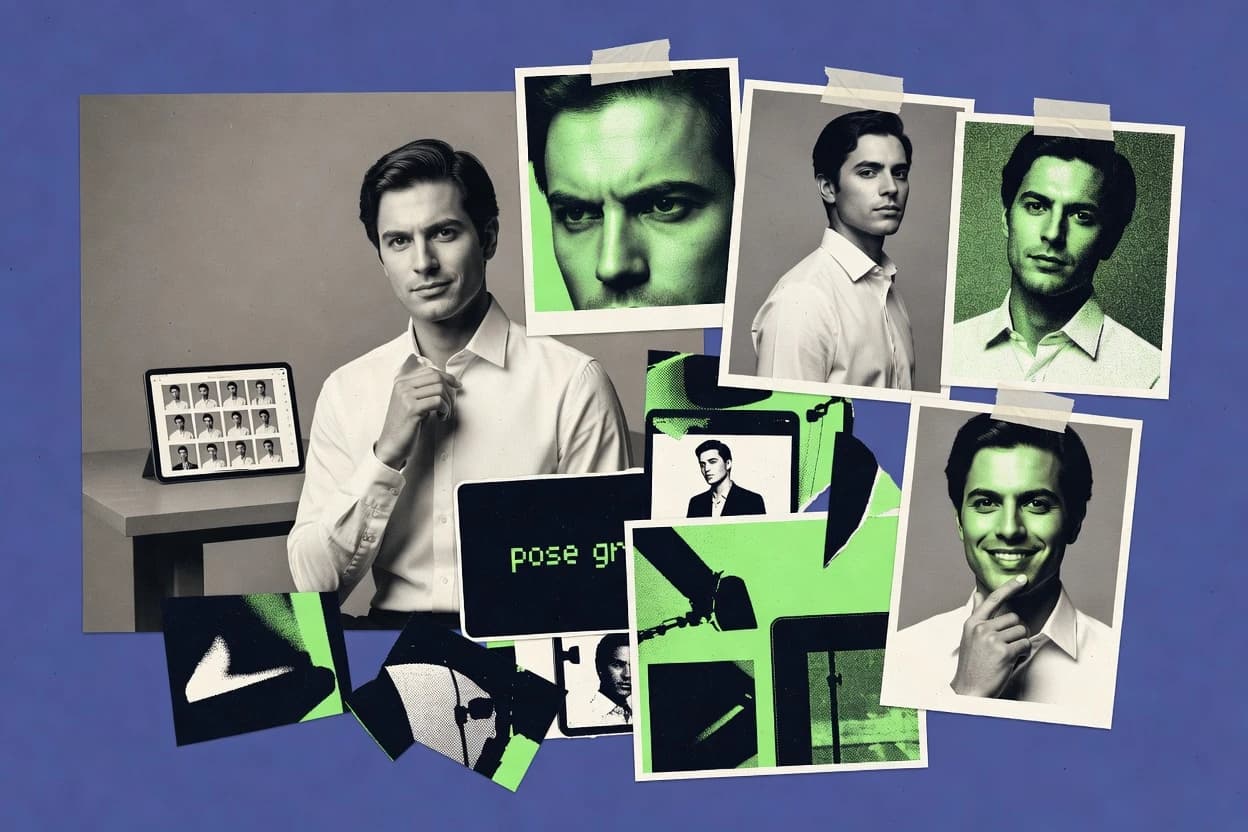
Top 10 Best AI Headshot Poses Generator of 2026
Ranking of ai headshot poses generator tools for creators, assessed by pose variety and output quality, with Rawshot AI among the options.

How we ranked these tools
Core product claims cross-referenced against official documentation, changelogs, and independent technical reviews.
Analyzed video reviews and hundreds of written evaluations to capture real-world user experiences with each tool.
AI persona simulations modeled how different user types would experience each tool across common use cases and workflows.
Final rankings reviewed and approved by our editorial team with authority to override AI-generated scores based on domain expertise.
Score: Features 40% · Ease 30% · Value 30%
Gitnux may earn a commission through links on this page — this does not influence rankings. Editorial policy
RAWSHOT AI is the strongest overall choice for fashion sellers and marketplaces that need consistent on-model poses and close-ups across large catalogues, while HeadshotPro is a practical lower-cost entry for teams standardizing staff portraits and Generated Photos suits creative teams building fictional people into controlled campaigns.
Editor’s top 3 picks
Three quick recommendations before you dive into the full comparison below — each one leads on a different dimension.
RAWSHOT AI
RAWSHOT AI's defining feature is its seven-step, no-text photoshoot builder: every model, garment, light, frame, camera view, pose, and expression choice is a visible editable block. Saved Stacks then apply the same configuration across a collection for deterministic repeatability.
Built for rAWSHOT AI is best for fashion labels, DTC sellers, marketplaces, and apparel platforms that need repeatable on-model product, pose, and close-up imagery across many SKUs without relying on prompt-writing..
Generated Photos
Editor pickHuman Generator combines synthetic identity, pose, wardrobe, and background selection in one image workflow.
Built for fits when creative teams need fictional people in controlled headshot and full-body compositions..
PhotoAI
Editor pickAI Photographer generates custom photo shoots around a reusable AI person.
Built for fits when creators need varied posed portraits from one reusable AI identity..
Comparison Table
RAWSHOT AI
Block-based AI fashion photography generatorRAWSHOT AI generates original on-model fashion images and short videos with selectable poses, camera views, expressions, garments, lighting, and frames for controlled headshot and catalogue imagery.
RAWSHOT AI's defining feature is its seven-step, no-text photoshoot builder: every model, garment, light, frame, camera view, pose, and expression choice is a visible editable block. Saved Stacks then apply the same configuration across a collection for deterministic repeatability.
RAWSHOT AI turns fashion image creation into a visible block-selection workflow: users never write a prompt, while the product compiles their choices into generation instructions. It offers more than 1,800 licence-free synthetic models, including more than 600 children's models, all synthetic composites — no child was cast, photographed, or used as a likeness reference. Brands can combine one main garment with up to three supporting garments and save configurations as Stacks for catalogue-wide consistency.
For headshot-oriented fashion imagery, RAWSHOT AI supplies 15 frame types, five camera views, 10 expressions, 22 makeup looks, and pose choices tailored to each frame. A concrete tradeoff is its single accuracy-focused image style: teams needing stylised or heavily graded campaign work must finish that treatment in post. It is especially useful when a label needs consistent model-led product images for a launch but cannot organize a conventional studio shoot.
- +RAWSHOT AI provides 104 selectable poses across four fashion registers, with frame-specific options for controlled close-ups and full-body product presentation.
- +Saved Stacks preserve the same selected treatment across hundreds of catalogue images, while browser and REST API workflows have full feature parity.
- +Full commercial rights forever, with no recurring licensing on library models.
- –RAWSHOT AI ships one accuracy-focused image style, so stylised or graded campaign aesthetics require post-production.
- –RAWSHOT AI cannot create a specific real person and does not support open-ended text experimentation beyond its available blocks.
DTC apparel brands
Launch consistent product imagery
Consistent launch catalogue
Accessory sellers
Create detail-led model shots
Clear accessory presentation
Show 2 more scenarios
Kidswear retailers
Produce compliant catalogue visuals
Traceable kidswear imagery
RAWSHOT AI uses synthetic children's models with transparent AI labelling and documented output records.
Marketplace operators
Bulk-create SKU photography
Scalable SKU coverage
RAWSHOT AI imports products by file or API and supports runs exceeding 10,000 images.
Best for: RAWSHOT AI is best for fashion labels, DTC sellers, marketplaces, and apparel platforms that need repeatable on-model product, pose, and close-up imagery across many SKUs without relying on prompt-writing.
Generated Photos
API-firstSynthetic human image platform with face and portrait generation useful for headshot-style assets.
Human Generator combines synthetic identity, pose, wardrobe, and background selection in one image workflow.
Generated Photos provides Face Generator and Human Generator workflows for creating non-real people. Human Generator controls cover pose, wardrobe, setting, age range, gender presentation, and facial appearance. A searchable catalog supplies pre-generated faces and full-person images, while the API supports image delivery inside external creative or product workflows.
Generated Photos creates synthetic identities rather than preserving a supplied person's face across new headshot poses. The available pose choices work well for stock-style portrait selection, but they offer less direct control than a workflow built around detailed pose conditioning. It fits teams building visual concepts, ads, avatars, and interface placeholders without arranging a photo shoot.
- +Human Generator combines pose, clothing, background, and appearance controls.
- +Searchable catalog includes faces and full-person synthetic images.
- +API supports image delivery in external product workflows.
- +Synthetic subjects avoid scheduling model photography.
- –Does not preserve a real person's identity from an uploaded selfie.
- –Pose selection lacks direct skeletal pose conditioning.
- –Generated identities can feel less personal for executive portraits.
Creative agencies
Building campaign concepts
Faster concept visuals
Product design teams
Populating interface mockups
Credible product mockups
Show 2 more scenarios
Marketing teams
Creating lifestyle assets
Reduced production coordination
Select posed synthetic people without coordinating models, wardrobes, or locations.
Developers
Automating placeholder images
Automated image provisioning
Use the API to deliver synthetic people into application workflows.
Best for: Fits when creative teams need fictional people in controlled headshot and full-body compositions.
PhotoAI
vertical specialistAI photo generator that produces realistic portraits and headshots across many poses and scenes.
AI Photographer generates custom photo shoots around a reusable AI person.
PhotoAI builds a reusable AI person from uploaded photos rather than limiting users to a single corporate headshot session. Its AI Photographer supports generated scenes, clothing changes, locations, and pose requests, giving creators wider visual variation than preset-only headshot generators. Photo-shoot templates reduce prompt writing for common portrait concepts.
Prompt-led pose requests offer more creative range, but they give users less deterministic control than a dedicated pose library with exact reference matching. Review generated images closely before publication, especially where hands, body position, or facial details must look natural. PhotoAI works well when one trained identity must appear across headshots and broader editorial imagery.
- +Reusable AI person supports headshots and lifestyle images
- +AI Photographer accepts custom pose, location, and outfit directions
- +Photo-shoot templates shorten common portrait workflows
- +Generates varied imagery from one identity profile
- –Pose results can require reruns for precise body positioning
- –Generated hands and facial details need image-by-image review
- –Corporate headshot controls are less prescriptive than dedicated portrait services
Content creators
Creating varied profile portraits
More reusable portrait assets
Personal brand consultants
Building client image libraries
Broader brand image coverage
Show 1 more scenario
Social media managers
Refreshing creator profile imagery
Faster profile refreshes
Managers can produce new posed portraits without scheduling repeated physical photo shoots.
Best for: Fits when creators need varied posed portraits from one reusable AI identity.
Canva AI Headshot Generator
SMBDesign suite with a dedicated AI headshot workflow for profile and business portrait creation.
Canva editor integration for turning generated headshots into branded posts, profile graphics, and presentation layouts.
Among pose-focused portrait generators, Canva AI Headshot Generator differentiates itself with Canva's full design editor after generation. It creates professional-style headshots from uploaded photos and supports background changes, cropping, text overlays, and layout composition.
Brand Kit assets, preset templates, and export options keep a generated portrait connected to social posts, team pages, and presentation graphics. Canva provides less direct control over head angle and gaze than dedicated pose-conditioning generators.
- +Generated headshots open directly in Canva's visual editor.
- +Brand Kit assets support consistent team and company portrait layouts.
- +Templates turn portraits into profile banners, posts, and presentation slides.
- –No dedicated head-pose sliders or gaze-direction controls.
- –Style selection offers less pose precision than specialist portrait generators.
- –No documented REST API automates AI headshot generation workflows.
Best for: Fits when marketing teams need editable headshots that feed directly into branded design assets.
HeadshotPro
SMBAI headshot studio for corporate and personal portraits with varied compositions and styling.
Corporate style packs that turn 8 to 12 selfies into 120 business headshot variations.
HeadshotPro converts 8 to 12 selfies into 120 corporate headshots through preset business styles and pose variations. Users choose style sets instead of writing prompts, and the generated gallery varies attire, backgrounds, and framing. HeadshotPro also supports team-oriented staff headshot production, but it does not document a public API or granular gaze and body-orientation controls.
- +Produces 120 variations from 8 to 12 submitted selfies.
- +Preset business styles vary attire, backdrops, and portrait framing.
- +Team workflow supports coordinated staff headshot collection.
- +Prompt-free workflow reduces setup for professional portrait batches.
- –No documented REST API for automated headshot provisioning.
- –Preset styles limit direct control over exact gaze and body position.
- –Results depend on several clear, varied source selfies.
Best for: Fits when teams need uniform professional portraits from staff selfies without prompt writing.
BetterPic
vertical specialistAI headshot generator for LinkedIn and business use with multiple looks, angles, and outfit styles.
AI Studio creates additional portraits using the established face profile with new outfits, backgrounds, and scenes.
For professionals refreshing LinkedIn and company-profile photos, BetterPic combines guided selfie uploads with post-generation AI Studio edits. BetterPic distinguishes itself through AI Studio, which creates further portraits from an established face profile with changed outfits, backgrounds, and scenes.
Its preset gallery covers formal, casual, and location-based business looks, but BetterPic does not document direct controls for precise face angle or shoulder positioning. The self-service workflow suits individual portrait updates better than automated team provisioning.
- +AI Studio creates new portraits from an established face profile.
- +Outfit, background, and scene changes extend completed headshot batches.
- +Preset gallery covers formal, casual, and location-based business looks.
- –No documented public API or webhook workflow for automated image delivery.
- –No direct controls for precise face angle or shoulder positioning.
- –Output consistency depends on varied, well-lit source selfies.
Best for: Fits when individual professionals need varied business portraits within preset pose and scene options.
StudioShot
SMBAI headshot platform for business portraits with style direction and pose diversity.
Virtual photographer catalog with distinct preset visual directions for generated headshot collections.
StudioShot uses a virtual photographer catalog, so headshot direction starts with a selected photographic style rather than a text prompt. Users submit reference selfies and select a look for an AI-generated collection of professional portraits.
Its output emphasizes varied studio-ready framing and pose options within each photographer-led style. StudioShot does not expose documented API, webhook, or granular pose-control features for automated production.
- +Named virtual photographer styles provide recognizable art direction.
- +Reference-photo uploads create coordinated portrait collections.
- +Style-led batches include varied framing, expressions, and pose options.
- –No documented API or webhook integration surface.
- –Pose direction remains tied to selected styles rather than per-image controls.
- –Source selfie variety has a direct effect on output range.
Best for: Fits when creators need coordinated headshots from curated photographer-style presets instead of manually directing every pose.
Try It On AI
vertical specialistAI portrait generator that creates studio-style headshots with pose and outfit variation.
Creative Studio pairs self-serve headshots with custom AI portrait requests for more art-directed visual styles.
Try It On AI places a custom-portrait service beside its self-serve AI headshot generator, separating it from pose-only generators. The service turns uploaded selfies into headshots with varied wardrobe, background, crop, and posture treatments for professional profiles.
Its Creative Studio adds stylized portrait directions beyond conventional corporate images. The workflow centers on visual style selection rather than exact controls for head position, gaze, or shoulder angle.
- +Creative Studio supports stylized portraits beyond standard business headshots.
- +Wardrobe and background variations use the same reference-photo workflow.
- +Custom AI portrait requests support more art-directed visual directions.
- –No documented public API supports automated generation workflows.
- –Style choices lack explicit head-position, gaze, and shoulder-angle controls.
- –Output consistency depends on varied, well-lit reference selfies.
Best for: Fits when creators need professional and stylized portrait variations from selfies without manual pose controls.
Portrait Pal
vertical specialistAI headshot generator focused on profile-ready portraits with style and composition variety.
Preset-driven AI photoshoot workflow that converts one selfie reference set into multiple profile-oriented portrait variations.
Portrait Pal generates headshot variations from uploaded selfies and groups results into preset portrait looks. Portrait Pal differentiates itself with an individual AI photoshoot flow that favors look selection over manual pose composition.
The service covers core profile-photo generation and returns multiple candidate images from one reference set. Portrait Pal does not document an API, batch automation, or team administration, which limits repeatable production workflows.
- +Preset portrait looks reduce manual prompt writing.
- +Selfie-based workflow targets individual profile-image updates.
- +Multiple generated variations support image selection.
- –No documented pose controls for gaze, shoulders, or framing.
- –No documented API, batch automation, or team administration.
- –Preset-led styling limits repeatable art direction.
Best for: Fits when individuals need varied AI profile headshots from selfies without a team production workflow.
Dreamwave
vertical specialistAI headshot tool for realistic business portraits with controlled styling and presentation.
Dreamwave Teams collects employee selfie uploads and returns uniform company headshots.
Professionals updating LinkedIn or company-directory images fit Dreamwave when a selfie upload is available. Dreamwave uses 5 to 8 source selfies to create a set of studio-style business portraits.
Preset styles vary clothing, backgrounds, and crops for profile-photo use. The public workflow does not document pose templates, pose-locking, or an API, which limits repeated-pose control and automated production.
- +Accepts 5 to 8 source selfies for portrait generation.
- +Business-oriented styles provide attire, background, and crop variation.
- +Team accounts centralize employee headshot orders.
- –Preset styles do not provide named pose templates or pose-locking controls.
- –Dreamwave does not present a public API or webhook workflow.
- –Generated sets lack a pose-by-pose editing workflow.
Best for: Fits when professionals need updated business portraits from 5 to 8 selfies and accept preset pose direction.
How to Choose the Right ai headshot poses generator
RAWSHOT AI leads this group with 104 selectable poses, seven editable photoshoot blocks, Saved Stacks, and browser-to-REST API parity. Generated Photos, PhotoAI, Canva AI Headshot Generator, and HeadshotPro cover synthetic identities, reusable AI people, branded design editing, and selfie-based business batches.
BetterPic, StudioShot, Try It On AI, Portrait Pal, and Dreamwave focus on face-profile extensions, virtual-photographer presets, art-directed requests, profile portraits, and employee headshot collections. The dividing line is direct pose control and repeatable production, not simply the number of portrait styles.
AI Headshot Poses Generator: Pose Direction and Identity-Based Portrait Output
An AI headshot poses generator creates portrait images from a selfie set or a synthetic identity while directing elements such as framing, body position, attire, background, and expression. RAWSHOT AI exposes pose as one of seven visible photoshoot blocks, while Generated Photos combines pose selection with fictional-person creation.
Specialist tools differ in how precisely they direct composition and how consistently they repeat it. RAWSHOT AI offers 104 selectable poses and Saved Stacks for repeated catalogue treatments, while HeadshotPro generates business-style variations from submitted staff selfies through preset packs.
Pose Control, Identity Source, and Production Repeatability
Direct pose selection matters because a headshot crop can conceal shoulder placement, framing, and expression differences. RAWSHOT AI exposes 104 poses, while Canva AI Headshot Generator provides no dedicated head-pose or gaze controls.
Identity source and production workflow determine which portrait tasks each tool can handle. Generated Photos creates fictional people, while HeadshotPro turns staff selfie sets into preset business portrait batches.
Direct pose selection versus editor-led styling
RAWSHOT AI provides 104 selectable poses across four fashion registers, including controlled close-up and full-body options. Canva AI Headshot Generator prioritizes post-generation layout editing and Brand Kit application rather than direct pose direction.
Synthetic identity versus selfie-based identity
Generated Photos combines synthetic identity creation with clothing, pose, and background controls in Human Generator. HeadshotPro uses 8 to 12 submitted selfies to produce 120 business headshot variations for a real employee.
Repeatable configuration versus reusable AI person
RAWSHOT AI Saved Stacks retain the same seven-block photoshoot treatment across large catalogue collections. PhotoAI centers its workflow on a reusable AI person that can appear in new headshot and lifestyle shoots.
Automated production versus profile-based extensions
RAWSHOT AI provides matching browser and REST API workflows for its photoshoot builder. BetterPic extends an established face profile through AI Studio, but it provides no documented public API or webhook delivery workflow.
Curated visual direction versus custom art requests
StudioShot organizes headshot collections around named virtual photographer styles. Try It On AI combines self-serve portraits with Creative Studio requests for more art-directed stylized images.
Select by Pose Direction, Identity Workflow, and Output Destination
The first decision is whether each image requires a specified body arrangement or a curated visual direction. RAWSHOT AI supports visible pose selection, while StudioShot binds pose direction to virtual photographer presets.
The second decision is where completed portraits go after generation. Canva AI Headshot Generator moves images into branded layouts, while RAWSHOT AI supports repeatable catalogue treatments through Saved Stacks.
Choose block-based direction or preset-led art direction
Select RAWSHOT AI when garment, light, frame, camera view, pose, and expression need separate visible settings. Select StudioShot when named virtual photographer styles should determine the collection's visual direction.
Choose fictional people or real-person portrait generation
Select Generated Photos for synthetic faces and full-person imagery that does not represent a submitted individual. Select HeadshotPro, BetterPic, or Dreamwave when uploaded selfies must produce portraits of the same person.
Set the required pose precision before generating
Use RAWSHOT AI for selectable pose templates and frame-specific close-up or full-body presentation. Avoid Canva AI Headshot Generator, BetterPic, and Portrait Pal for work requiring direct gaze, face-angle, or shoulder-position controls.
Match the workflow to repeat volume
Use RAWSHOT AI Saved Stacks when hundreds of product images require the same treatment. Use PhotoAI when one reusable AI person needs varied custom shoots with different locations, outfits, and pose directions.
Choose the destination workflow for completed portraits
Use Canva AI Headshot Generator when headshots must become profile graphics, presentation layouts, or branded social assets. Use RAWSHOT AI when a browser workflow and REST API workflow must use the same photoshoot configuration.
Teams and Creators That Benefit From Pose-Directed Headshots
Fashion and commerce teams need consistent model presentation across repeated product imagery. RAWSHOT AI addresses that requirement with selectable poses, frame controls, and Saved Stacks.
Professional portrait buyers have different identity and styling requirements. HeadshotPro, BetterPic, Dreamwave, and Try It On AI each begin from submitted selfies but vary in preset depth and art direction.
Fashion labels, DTC sellers, and marketplaces
RAWSHOT AI supports 104 selectable poses and consistent garment presentation across catalogue images. Saved Stacks preserve the same chosen photoshoot blocks across repeated SKU work.
Creative teams using fictional people
Generated Photos provides synthetic faces and full-person images with coordinated pose, wardrobe, and background selection. Human Generator avoids dependence on employee or creator selfie uploads.
Individual creators building a recurring digital persona
PhotoAI creates headshots and lifestyle scenes around one reusable AI person. Custom directions can specify the location, outfit, and intended pose for each shoot.
Marketing teams publishing headshots in brand assets
Canva AI Headshot Generator opens generated portraits in Canva's visual editor. Brand Kit assets keep profile graphics, posts, and presentation layouts aligned with company branding.
Companies collecting staff portraits
HeadshotPro produces 120 business-style variations from 8 to 12 employee selfies. Dreamwave Teams organizes employee selfie uploads for uniform company headshots from 5 to 8 source images.
Headshot Pose Selection Errors That Reduce Usable Output
Many buyers treat a style gallery as proof of pose control. StudioShot, Try It On AI, and Dreamwave offer style-based direction, but their workflows do not expose per-image pose controls.
Many buyers also overlook the handoff after image generation. Canva AI Headshot Generator and RAWSHOT AI serve different downstream workflows despite both producing editable portrait assets.
Assuming preset business styles define an exact body position
HeadshotPro preset packs vary attire, backdrop, and framing but do not provide direct control over exact gaze or body position. Use RAWSHOT AI when selected pose templates are required.
Choosing a selfie workflow for a fictional-person campaign
BetterPic and Portrait Pal build portrait variations from selfie references. Generated Photos creates synthetic identities for campaigns that need people who are not based on real submissions.
Expecting style presets to replace precise pose direction
StudioShot ties pose direction to its virtual photographer styles. PhotoAI accepts custom pose directions, although precise body positioning can require reruns.
Ignoring the production handoff for repeated image work
RAWSHOT AI retains identical treatments through Saved Stacks and supports REST API access. BetterPic and Try It On AI provide no documented public API for automated image delivery.
How We Selected and Ranked These Tools
We evaluated features at 40% of the ranking, including pose direction, identity workflow, repeatability, and downstream production options. We weighted ease of use at 30% by examining visible controls, preset dependence, and selfie submission workflows.
We weighted value at 30% by comparing the usable output scope each product provides for its intended workflow. RAWSHOT AI ranked first because its 104 selectable poses, seven editable photoshoot blocks, Saved Stacks, and browser-to-REST API feature parity provide the deepest repeatable production control.
Frequently Asked Questions About ai headshot poses generator
How do AI headshot pose generators preserve the same identity across different poses?
Which tool provides the most explicit pose selection for apparel and accessory headshots?
When is a preset-led headshot generator preferable to manual pose direction?
What breaks if a team needs API-driven headshot production?
Which generator connects headshots directly to branded marketing layouts?
Where do pose-focused generators fall short for precise facial direction?
How should teams handle employee uploads, access control, and audit requirements?
Can existing portrait data or image libraries be migrated into these tools?
Which tool works best for creators who need both business portraits and stylized images?
Conclusion
After evaluating 10 tools, RAWSHOT AI stands out as our overall top pick — it scored highest across our combined criteria of features, ease of use, and value, which is why it sits at #1 in the rankings above.
Use the comparison table and detailed reviews above to validate the fit against your own requirements before committing to a tool.
Tools reviewed
Primary sources checked during evaluation.
Referenced in the comparison table and product reviews above.
Keep exploring
Comparing two specific tools?
Software Alternatives
See head-to-head software comparisons with feature breakdowns, pricing, and our recommendation for each use case.
Explore software alternatives→Need a personal recommendation?
Software Advisory Service
Skip months of vendor evaluation. Our analysts recommend the right tool for your business in 2–4 weeks.
Talk to an analyst →