
GITNUXSOFTWARE ADVICE
Fashion ApparelTop 10 Best AI Flat Lay Product Photography Generator of 2026
A ranked comparison of ai flat lay product photography generator tools, covering features, image controls, and use cases for ecommerce teams.

How we ranked these tools
Core product claims cross-referenced against official documentation, changelogs, and independent technical reviews.
Analyzed video reviews and hundreds of written evaluations to capture real-world user experiences with each tool.
AI persona simulations modeled how different user types would experience each tool across common use cases and workflows.
Final rankings reviewed and approved by our editorial team with authority to override AI-generated scores based on domain expertise.
Score: Features 40% · Ease 30% · Value 30%
Gitnux may earn a commission through links on this page — this does not influence rankings. Editorial policy
RAWSHOT AI is the strongest overall choice for fashion labels and catalogue teams that need repeatable on-model imagery from garment uploads without coordinating samples or shoots, while Pixelcut is a better fit for sellers turning existing product photos into styled flat-lay visuals across web and mobile.
Editor’s top 3 picks
Three quick recommendations before you dive into the full comparison below — each one leads on a different dimension.
RAWSHOT AI
RAWSHOT AI turns a shoot into editable, visible blocks and lets teams save the complete configuration as a Stack. The orchestration layer compiles identical selections into identical instructions, creating deterministic repeatability across hundreds of catalogue images without requiring users to write prompts.
Built for rAWSHOT AI is best for fashion labels, DTC catalogue teams, marketplace sellers, and apparel platforms that need repeatable on-model imagery across collections without organising physical samples, casting, or studio scheduling..
Pixelcut
Editor pickProduct Photos combines uploaded product cutouts, scene presets, and text refinements in Pixelcut's editor.
Built for fits when sellers need styled product visuals from existing images across web and mobile..
Kittl
Editor pickKittl's integrated design canvas pairs product-background generation with editable typography, vector graphics, and template layouts.
Built for fits when brand marketers need prompt-built product scenes with editable text and layout..
Comparison Table
RAWSHOT AI
AI on-model fashion photography and videoRAWSHOT AI generates original on-model fashion images and short videos from garment uploads, rather than serving as a dedicated overhead product-only generator.
RAWSHOT AI turns a shoot into editable, visible blocks and lets teams save the complete configuration as a Stack. The orchestration layer compiles identical selections into identical instructions, creating deterministic repeatability across hundreds of catalogue images without requiring users to write prompts.
RAWSHOT AI combines a seven-step shoot builder with more than 1,800 licence-free synthetic models, a private model builder, editable inspiration-led starting points, and bulk import by file or API. Its browser interface and REST API have full parity, while every output includes C2PA credentials, AI labelling, visible and cryptographic watermarking, and a documented audit trail. Photoshoots start at $9 a month.
A DTC catalogue team can save a selected shoot configuration as a Stack and reuse it across a seasonal collection, retaining the same selectable model, garments, lighting direction, and framing logic. The tradeoff is that RAWSHOT AI ships one accuracy-focused image style, so brands seeking graded or highly stylised campaign imagery must handle that work in post.
- +Visible seven-step blocks replace user-written prompts, and saved Stacks preserve repeatable catalogue treatment at scale.
- +Full commercial rights forever, with no recurring licensing on library models.
- –One accuracy-focused image style means stylised, graded, or filter-led creative work needs post-production.
- –The fixed block catalogue cannot accommodate free-text experimentation or generation of a specific real person.
Emerging fashion labels
Launch collections before samples arrive
Ready-to-list collection imagery
DTC catalogue teams
Standardize 10–200 SKU drops
Consistent catalogue presentation
Show 2 more scenarios
Marketplace fashion sellers
Create listing-ready apparel images
More complete product listings
RAWSHOT AI produces consistent on-model views with permanent commercial rights for marketplace listings.
Accessory brand teams
Show bags and jewellery worn
Contextual accessory presentation
Six poses and five video actions handle products directly within the selected frame.
Best for: RAWSHOT AI is best for fashion labels, DTC catalogue teams, marketplace sellers, and apparel platforms that need repeatable on-model imagery across collections without organising physical samples, casting, or studio scheduling.
Pixelcut
SMBAI image editor with product backgrounds, object removal, and ecommerce generation tools.
Product Photos combines uploaded product cutouts, scene presets, and text refinements in Pixelcut's editor.
Pixelcut handles the common workflow of isolating an item and placing it in a styled scene. Product Photos offers preset visual directions and text refinements for generating product imagery from existing source shots. Its template library and mobile editor support teams publishing listings and social posts from the same product images.
Pixelcut exports flattened image files rather than layered PSD compositions for art-direction handoff. Generated scenes can alter small packaging text or product geometry, so listing images need a final visual review. Pixelcut suits retailers producing several campaign variants from clean source images rather than studios requiring deterministic scene placement.
- +Product Photos creates prompt-guided scene variations from uploaded item images.
- +Batch Edit applies repeated adjustments across product image sets.
- +Mobile and browser editors support listing updates from different devices.
- +Magic Eraser removes unwanted objects after image generation.
- –Generated scenes can alter small label text and package edges.
- –Exports are flattened files rather than layered PSD compositions.
- –Prompt controls cannot guarantee identical product placement across outputs.
Marketplace sellers
Creating seasonal listing variants
More listing image options
Social media managers
Producing campaign post assets
Faster campaign asset production
Show 1 more scenario
Catalog operations teams
Cleaning product image batches
Consistent catalog image cleanup
Batch Edit applies the same cleanup action across selected catalog images.
Best for: Fits when sellers need styled product visuals from existing images across web and mobile.
Kittl
SMBDesign platform offering AI image generation and product photography mockup tools for ecommerce sellers.
Kittl's integrated design canvas pairs product-background generation with editable typography, vector graphics, and template layouts.
Kittl keeps scene generation inside the same browser editor used for branded layouts. The canvas includes text controls, vector assets, templates, and mockups, so teams can add campaign copy and graphic elements after creating a product scene. A top-down product shot can be assembled by positioning the item and adding supporting design elements manually.
Kittl lacks a documented public API and batch job workflow for processing large SKU catalogs. It fits small marketing teams that need campaign visuals with custom typography, rather than operations teams producing standardized product imagery at scale.
- +Canvas keeps generated scenes and branded typography editable.
- +Background removal, templates, and AI imagery share one workspace.
- +Mockup tools support apparel, packaging, and digital design promotions.
- –No documented public API for catalog automation.
- –Manual canvas composition is needed for consistent framing.
- –No dedicated high-volume SKU rendering workflow.
E-commerce marketers
Build campaign product banners
Branded campaign assets
Print-on-demand sellers
Prepare apparel mockup promotions
Ready-to-publish promotions
Show 1 more scenario
Social media teams
Create themed product posts
Faster campaign variants
They reuse templates while changing generated scenery and product copy for each campaign.
Best for: Fits when brand marketers need prompt-built product scenes with editable text and layout.
Zegashop
SMBEcommerce platform with built-in AI product photography tools for generating professional product images.
Product-to-scene generation built around an uploaded product image rather than text-only image creation.
Zegashop centers its workflow on converting a product cutout into flat lay composition images for e-commerce listings. Users upload a product image, select a scene direction, and generate merchandising visuals with AI-created surfaces and props.
The product-first input flow suits teams that need quick creative variants without arranging a physical shoot. Fine control over the generated scene is less explicit than in editors built around manual retouching.
- +Product-image upload anchors generation around the item being sold.
- +Flat lay composition output supports catalog and social merchandising.
- +Scene selection reduces the need to write long creative prompts.
- –Generated props can require iteration to match a specific campaign brief.
- –Manual retouching controls are thinner than dedicated image-editing software.
- –No documented public API is presented for catalog-scale automation.
Best for: Fits when e-commerce teams need fast flat-lay variants from existing product images.
Flair AI
vertical specialistAI product photography software for creating styled scenes and flat lay compositions.
Flair AI Canvas combines movable product layers, props, and prompt-driven scene generation in one editor.
Flair AI uses a drag-and-drop canvas to place uploaded products into generated commercial scenes. Its editor combines prompt-guided scene creation with repositionable props, surfaces, and lighting controls for styled product images. Flair AI also provides templates and background removal, but final images need review when packaging includes small text or intricate labels.
- +Drag-and-drop canvas supports deliberate product and prop placement.
- +Templates speed up cosmetics, food, apparel, and home-goods concepts.
- +Background removal prepares uploads for generated scene placement.
- –Small packaging text and labels can render inaccurately.
- –Clean source images are needed for convincing product edges.
- –Fine art direction still requires repeated prompt and layout adjustments.
Best for: Fits when small brands need editable styled product scenes without arranging a physical shoot.
Stockimg AI
SMBAI image generation tool that creates product photography and flat lay compositions from text prompts.
Dedicated generators for logos, book covers, posters, wallpapers, and web UI alongside product photography.
Stockimg AI fits solo sellers and small creative teams by combining product photography with generators for logos, book covers, posters, wallpapers, and web UI. Its reference-led workflow turns a product image and written scene direction into new compositions.
Stockimg AI also supports image-to-image generation for adapting an existing asset rather than starting from a blank prompt. Control remains prompt-led, so teams needing fixed packaging placement, product scale, and repeatable catalog output will need manual review.
- +Product photography sits alongside logo, cover, poster, wallpaper, and UI generators.
- +Reference-led scene creation avoids building every product concept from a physical set.
- +Broad creative modes support related campaign assets in the same workspace.
- –Prompt-led outputs offer limited control over exact label placement and product scale.
- –No documented product catalog integration or batch rendering workflow.
- –Generated images need manual review for brand colors and packaging text.
Best for: Fits when small teams need quick product scenes plus logos, posters, and other campaign assets.
Vmake AI
SMBAI photo studio for ecommerce product photography offering background removal and flat lay scene generation.
AI Fashion Model generates apparel visuals with AI models from clothing images.
Vmake AI pairs flat-lay product imagery with fashion-model and video-editing modules in one browser workspace. Its AI Product Photography workflow uses an uploaded product image and a text prompt to generate a styled scene. Vmake AI also provides background removal and image upscaling for preparing catalog assets.
- +AI Product Photography combines product uploads with text-guided scene generation.
- +AI Fashion Model creates apparel visuals from clothing images.
- +Image and video enhancement tools share the same workspace.
- –No documented API supports automated product-image generation.
- –No documented commerce-catalog connector publishes generated assets.
- –Exports remain flattened images rather than editable layered PSD files.
Best for: Fits when small apparel and product sellers need styled images plus model and video edits.
Mokker AI
vertical specialistAI product photography generator for placing uploaded products into styled environments.
Product-oriented template gallery that generates styled scenes around an uploaded product image.
Mokker AI centers its workflow on turning a product image into styled catalog scenes through a product-oriented template gallery. It generates flat lay compositions and other background variations from uploaded product cutouts, with prompt-led scene creation for custom directions. Mokker AI prioritizes rapid single-image creative production over catalog-scale automation, which limits its fit for teams needing documented API workflows or bulk asset controls.
- +Product-focused templates reduce the effort required to compose marketing scenes.
- +Uploaded products remain the central subject across generated scene variations.
- +Prompt-led generation supports custom surfaces, props, and color directions.
- –No documented public API supports catalog or DAM automation.
- –Complex packaging text can lose legibility in generated scenes.
- –Batch production controls are limited for large product catalogs.
Best for: Fits when small commerce teams need quick flat lay variants from existing product images.
Photoroom
SMBProduct photography platform with AI backgrounds, shadows, layouts, and batch editing.
Product Staging converts a single upload and text prompt into a styled catalog scene without manual compositing.
Photoroom converts an uploaded product image into a styled merchandising scene through Product Staging, its prompt-driven image generator. Background removal, Retouch, AI Expand, and Templates cover cutouts, cleanup, canvas extension, and repeatable product layouts across web and mobile apps.
Batch Mode processes multiple images with a selected template, while the API provides image editing and image-generation endpoints for catalog automation. Product Staging does not provide a granular layout canvas for placing products or locking camera geometry.
- +Product Staging generates prompt-guided scenes from uploaded product images.
- +Batch Mode applies one selected template across many product photos.
- +Mobile apps support capture-to-export product image work.
- +API provides image editing and generation endpoints for catalog automation.
- –Product Staging offers limited direct control over camera angle and product placement.
- –Generated scenes can distort packaging edges and small label text.
- –No layered PSD export supports postproduction handoff.
Best for: Fits when sellers need prompt-guided product scenes and repeatable marketplace image production.
Pebblely
SMBAI product image generator for placing products into backgrounds and themed scenes.
Pebblely's theme library combines preset scene styles with automatic product placement.
Pebblely fits small e-commerce teams that need styled catalog images from isolated product photos, using a theme-led workflow instead of manual set construction. Pebblely creates a product cutout, places it in generative backgrounds, and offers resize formats for common commerce and social placements. Its API supports programmatic generation, but the editor does not replace layered compositing workflows or protect every fine label detail.
- +Theme library produces styled scenes from a single product upload.
- +Resize formats support common social and commerce image placements.
- +API enables programmatic generation from product inputs.
- –No layered PSD export for downstream retouching workflows.
- –Fine packaging text can distort in generated scenes.
- –Editor controls are lighter than dedicated compositing applications.
Best for: Fits when small commerce teams need fast catalog visuals from isolated product photos.
Conclusion
After evaluating 10 fashion apparel, RAWSHOT AI stands out as our overall top pick — it scored highest across our combined criteria of features, ease of use, and value, which is why it sits at #1 in the rankings above.
Use the comparison table and detailed reviews above to validate the fit against your own requirements before committing to a tool.
How to Choose the Right ai flat lay product photography generator
RAWSHOT AI, Pixelcut, Kittl, Zegashop, Flair AI, Stockimg AI, Vmake AI, Mokker AI, Photoroom, and Pebblely generate product scenes from uploaded item images. Each tool handles the baseline task of placing a product into a styled top-down composition.
The differences lie in repeatability, editing control, and production automation. RAWSHOT AI saves deterministic configurations as Stacks, while Pixelcut and Photoroom apply repeated treatments through batch workflows, and Kittl retains editable branding elements on its canvas.
How AI Flat Lay Product Photography Generators Build Product Scenes
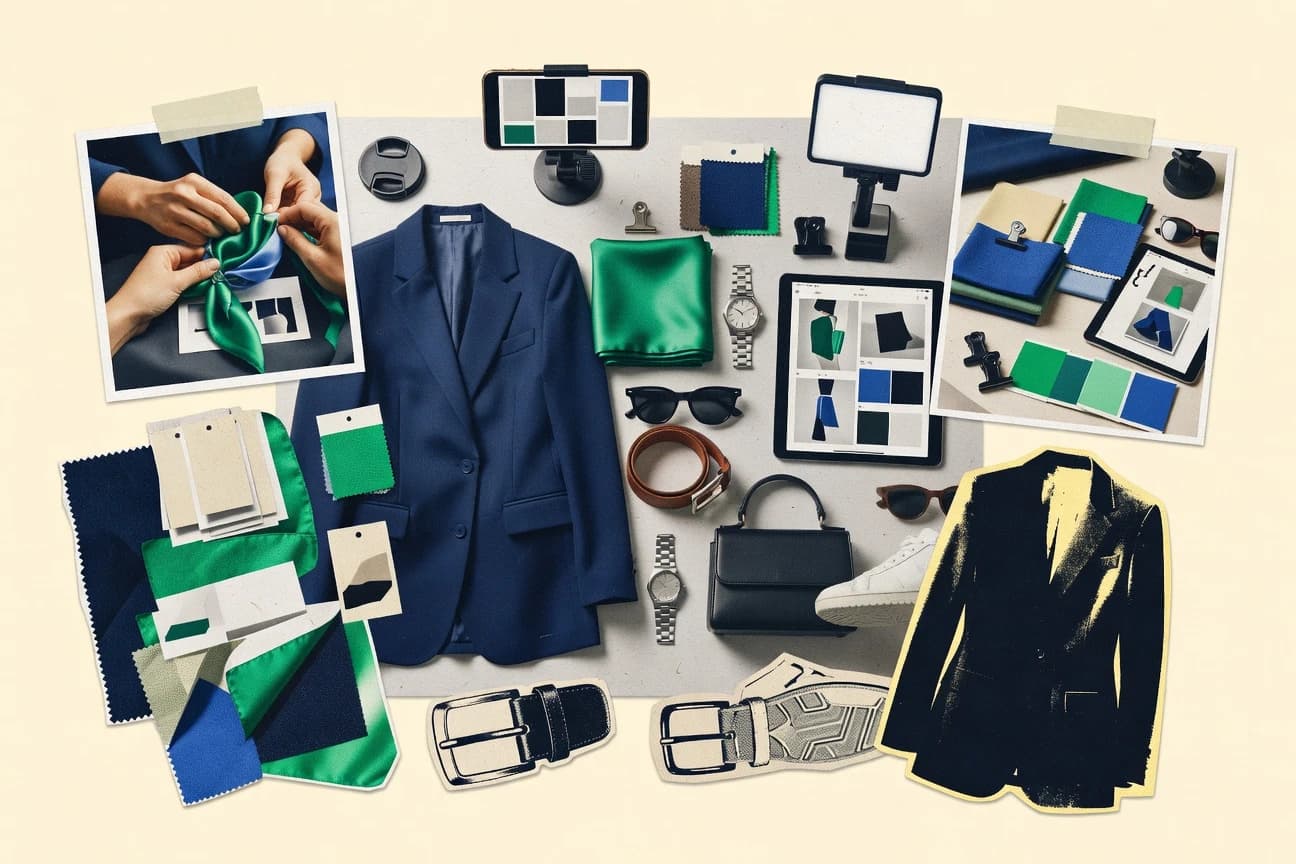
An AI flat lay product photography generator creates styled top-down product images from an uploaded product image, a preset, or text direction. It places the item within a generated setting and produces catalog or campaign-ready scene variations without arranging a physical set.
Tools differ in how much control remains after generation. Pixelcut combines product cutouts, scene presets, and text refinements in an editor, while Flair AI lets teams move product layers and props directly on its Canvas. RAWSHOT AI uses visible workflow blocks and saved Stacks to reproduce the same catalogue treatment across large image sets.
Evaluation Criteria for Repeatable Flat Lay Product Scenes
All ten tools generate styled scenes from existing item images. Production differences begin after the first output, with RAWSHOT AI retaining saved configurations and Pixelcut applying repeated editor adjustments.
Brand teams need different controls for catalogue consistency, editable layouts, and packaging fidelity. The criteria below separate reusable production systems from fast scene generators.
Repeatable configuration
RAWSHOT AI saves visible seven-step workflows as Stacks, so identical selections compile into identical instructions across catalogue images. Mokker AI centers its workflow on product-oriented templates, which accelerate scene creation but do not provide RAWSHOT AI's saved block configuration.
Direct layout editing
Kittl keeps generated product scenes, typography, vector graphics, and layouts editable in one canvas. Flair AI provides movable product layers and props, while Kittl adds brand text and vector design controls to the same workspace.
Repeated image treatment
Pixelcut Batch Edit applies repeated adjustments across a product image set. Photoroom Batch Mode applies one selected template across many product photos, making it suitable for a fixed marketplace treatment rather than varied editor adjustments.
Product anchoring and output limits
Zegashop builds scenes around an uploaded product image, which keeps the sold item central to the composition. Pebblely also begins from a product upload, but its output has no layered PSD export for downstream retouching.
Automation surface
Stockimg AI does not document product catalog integration or a batch rendering workflow. Vmake AI does not document a public API or a commerce-catalog connector for publishing generated assets.
Choosing Between Configuration, Canvas, and Template Workflows
The primary decision is not scene quality alone. Teams must choose between a fixed production configuration, an editable design canvas, and preset-led generation.
The second decision concerns the downstream workflow. Product-image volume, packaging detail, and required asset types determine which workflow creates the fewest manual corrections.
Choose deterministic production or open composition
RAWSHOT AI suits catalogue operations that need the same treatment reproduced through saved Stacks. Kittl and Flair AI suit art-directed work that requires manual placement, text edits, or prop movement after generation.
Separate batch treatment from preset scene generation
Pixelcut Batch Edit repeats adjustments across product sets, while Photoroom Batch Mode repeats a selected template. Mokker AI and Pebblely prioritize quick themed variants from individual uploads instead of repeated editor operations.
Match the tool to the wider asset workload
Stockimg AI serves teams that also need logos, posters, book covers, wallpapers, and web UI imagery. Vmake AI serves apparel sellers that need AI Fashion Model outputs alongside product scenes and video edits.
Test packaging fidelity on representative SKUs
Pixelcut, Flair AI, Photoroom, Mokker AI, and Pebblely can distort small label text or package edges in generated scenes. Packaging-heavy catalogues need sample outputs from the smallest labels, reflective surfaces, and irregular product shapes before standardizing a workflow.
Set the automation boundary before rollout
Kittl, Vmake AI, and Mokker AI do not document public APIs for catalogue automation. Teams using those tools need a manual export and upload process, while RAWSHOT AI provides saved Stacks for repeatable internal production settings.
Teams That Benefit From Each Production Model
Catalogue teams benefit most from tools that preserve a defined visual treatment across many SKUs. RAWSHOT AI and Pixelcut address repeated production through saved configurations and repeated adjustments.
Campaign teams benefit from tools that keep composition and branding editable. Kittl and Flair AI support hands-on scene construction after the initial generated image.
Fashion labels and apparel platforms
RAWSHOT AI produces repeatable on-model imagery across collections through visible workflow blocks and saved Stacks. Vmake AI adds AI Fashion Model output for clothing images.
Brand marketers building promotional assets
Kittl combines generated product scenes with editable typography, vector graphics, and template layouts. Flair AI supports deliberate product and prop placement through its Canvas.
Small commerce teams with isolated product images
Zegashop creates fast product-to-scene variants from uploaded item images. Mokker AI and Pebblely generate themed product scenes from a single uploaded subject.
Marketplace sellers processing repeated product sets
Pixelcut Batch Edit applies repeated changes across image sets. Photoroom Batch Mode applies a single selected template to many product photos.
Flat Lay Generation Mistakes That Create Rework
Generated scenes can make a product look correctly placed while changing small visual details. Label text, package edges, and prop selection require inspection on actual sellable SKUs.
Export format and production workflow also create constraints after generation. A fast scene tool can add manual work if the output cannot be retouched or repeated in the required way.
Using generated packaging scenes without checking labels
Pixelcut, Flair AI, Photoroom, Mokker AI, and Pebblely can alter small text or package edges. Test each tool with the smallest label and most detailed package used in the catalogue.
Expecting layered files for retouching
Pixelcut exports flattened files rather than layered PSD compositions. Pebblely also has no layered PSD export, so downstream retouching requires work on flattened output.
Treating templates as campaign-specific art direction
Zegashop can generate props that require iteration to match a specific campaign brief. Mokker AI templates reduce composition effort, but teams still need to check that scene styling matches the campaign's product category and brand treatment.
Assuming a manual editor can feed a catalogue pipeline
Kittl, Vmake AI, and Mokker AI do not document public APIs for catalogue automation. Their workflows require manual image handling unless an internal process supplies the missing connection.
How We Selected and Ranked These Tools
We evaluated features at 40%, ease of use at 30%, and value at 30%. We assessed product-image anchoring, repeatability, editable composition, repeated production workflows, output constraints, and documented automation surfaces.
RAWSHOT AI ranked first because its visible seven-step blocks and saved Stacks create deterministic catalogue treatments without prompt writing. We also weighed its permanent commercial rights and its fit for repeatable fashion and DTC imagery.
Frequently Asked Questions About ai flat lay product photography generator
How do API workflows differ between Photoroom and Pebblely?
Which tools work best for repeatable apparel catalog imagery?
What breaks if a team uses prompt-led generation for packaging with small labels?
When should a team choose a design canvas instead of a template-led generator?
Which tools support batch production for marketplace image workflows?
Can these generators connect to a product catalog or digital asset management system?
What SSO, RBAC, and audit-log controls are documented for these tools?
How should a team prepare source images before generating flat lay scenes?
Where does Photoroom fall short for art-directed flat lay layouts?
Tools reviewed
Primary sources checked during evaluation.
Referenced in the comparison table and product reviews above.
- Fashion ApparelTop 10 Best AI Flat Lay Apparel Photography Generator of 2026
- Fashion ApparelTop 10 Best AI High Quality Product Photography Generator of 2026
- Fashion ApparelTop 10 Best AI Flat Product Photo Generator of 2026
- Fashion ApparelTop 10 Best Plus Size Clothing AI Product Photography Generator of 2026
- Fashion ApparelTop 10 Best AI Invisible Mannequin Product Photography Generator of 2026
Keep exploring
Comparing two specific tools?
Software Alternatives
See head-to-head software comparisons with feature breakdowns, pricing, and our recommendation for each use case.
Explore software alternatives→In this category
Fashion Apparel alternatives
See side-by-side comparisons of fashion apparel tools and pick the right one for your stack.
Compare fashion apparel tools→