GITNUXSOFTWARE ADVICE
Healthcare MedicineTop 10 Best AI Dental Software of 2026
Compare ai dental software options with a tool roundup, key features, and use-case notes for clinics and dental IT teams.

How we ranked these tools
Before any source is gathered, an editor locks the question, what qualifies, and how the piece will be judged.
Search agents gather the source set and the review record, including transcriptions of video reviews and podcasts.
Framework: Features 40% · Ease 30% · Value 30%
Gitnux may earn a commission through links on this page — this does not influence rankings. Editorial policy
Overjet is the best pick for dental teams needing consistent AI image review and case tracking because it flags common findings directly on the clinical images for quicker clinician checking, whereas DentalMonitoring fits practices doing remote orthodontic follow-ups thanks to its triage alerts that highlight changes across submitted captures.
Editor’s top 3 picks
Three quick recommendations before you dive into the full comparison below — each one leads on a different dimension.
Overjet
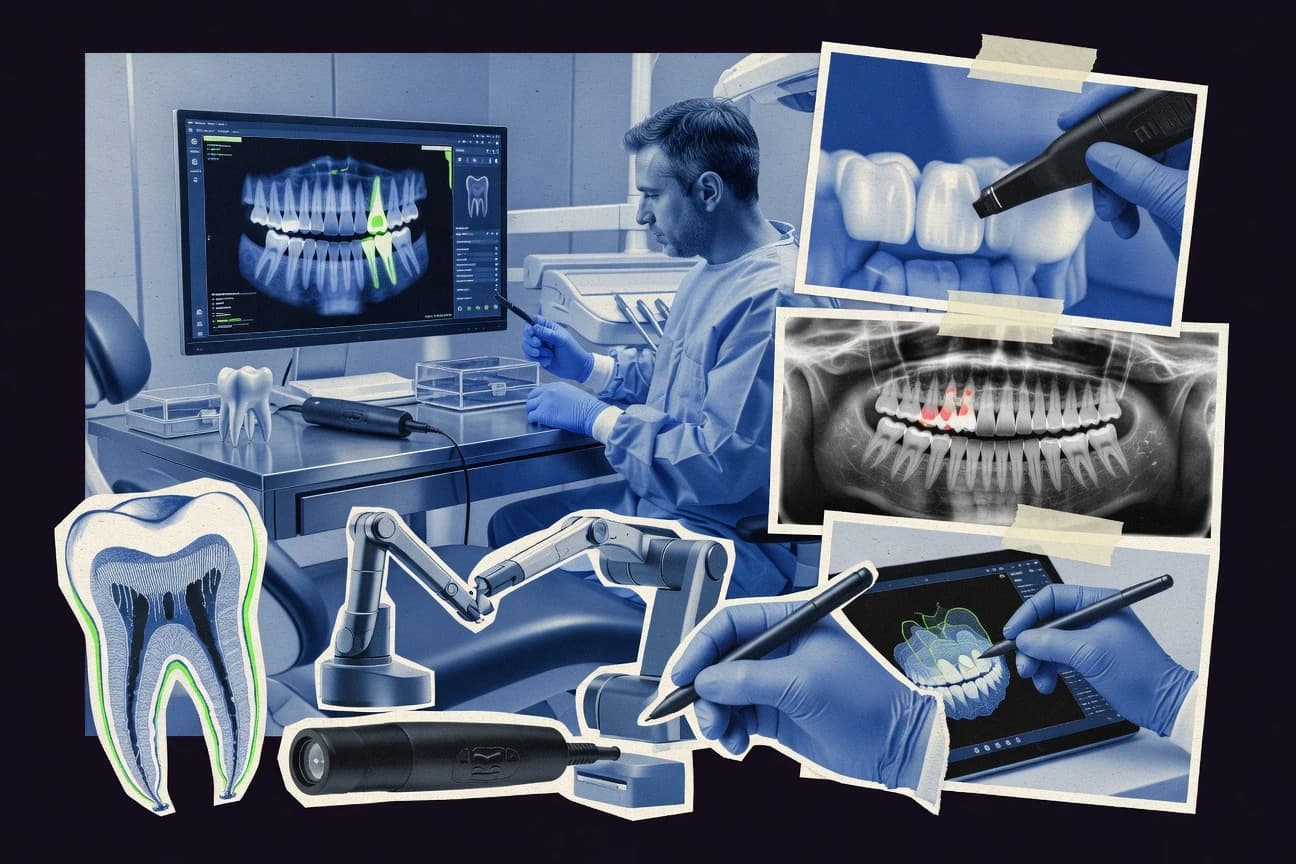
Overjet AI flags caries and other findings directly on clinical images for clinician review
Best for: Dental teams needing consistent AI image review and case tracking
DentalMonitoring
Editor pickAI monitoring with triage alerts for detected dental changes from submitted images
Best for: Dental practices running remote patient monitoring for ortho and preventive follow-ups
MediRecords
Editor pickAI-assisted dental note generation for faster, more consistent visit documentation
Best for: Dental teams needing AI-supported charting and structured visit documentation
Comparison Table
Overjet
AI imagingOverjet uses AI on dental imaging to support diagnosis, risk detection, and clinical treatment planning.
Overjet AI flags caries and other findings directly on clinical images for clinician review
Overjet stands out for AI that turns routine dental records into standardized, measurable clinical findings across images and scans. The platform highlights issues like caries, restorations, and periodontal indicators and produces guided outputs clinicians can review.
Overjet also supports practice workflows with case management and decision support that focuses on consistency and monitoring over time. Its value is strongest when teams want repeatable visual analysis rather than general document automation.
- +AI-driven detection and visualization for common clinical findings
- +Standardized case outputs improve review consistency across clinicians
- +Workflow tools support longitudinal monitoring for patient cases
- +Designed for dental imaging use cases instead of generic document AI
- –Best results require good scan quality and consistent capture protocols
- –Implementation effort can be higher than simple point solutions
- –Review screens can feel dense for high-volume clinics
- –Value depends on adoption by multiple clinicians across the practice
Best for: Dental teams needing consistent AI image review and case tracking
DentalMonitoring
remote orthodonticsDentalMonitoring applies remote monitoring with AI-supported orthodontic insights using patient-captured scans and images.
AI monitoring with triage alerts for detected dental changes from submitted images
DentalMonitoring stands out with automated detection and triage of dental changes from patient-captured images and videos. Its AI-driven monitoring supports case scoring, alerts, and longitudinal tracking to help practices follow up between visits.
The system is built around remote review workflows that route findings to clinicians and care teams. Stronger preventive monitoring use cases exist for ortho and general dentistry when patients can upload consistent media.
- +Automated detection flags changes across sequential patient captures
- +Remote monitoring reduces chair-time for routine image review
- +Clinician workflow supports case scoring and prioritized alerts
- –Requires consistent patient image capture quality to avoid misses
- –Setup and workflow mapping take time for multi-provider practices
- –AI outputs still need clinician validation before actions
Best for: Dental practices running remote patient monitoring for ortho and preventive follow-ups
MediRecords
practice automationMediRecords combines dental practice management with AI-assisted document workflows for streamlined clinical and administrative operations.
AI-assisted dental note generation for faster, more consistent visit documentation
MediRecords focuses on AI-supported dental documentation and clinical workflows that help teams reduce manual charting effort. It includes features for patient record management, structured note capture, and treatment documentation to keep clinical information consistent.
The system emphasizes usability for day-to-day clinic work rather than deep research workflows. AI assists with generating or standardizing parts of documentation, which can speed up visit write-ups.
- +AI-assisted dental documentation reduces repetitive charting work
- +Patient record management keeps visit notes structured and searchable
- +Clinic-first workflow design supports faster daily use
- –AI outcomes depend heavily on input quality and clinician edits
- –Limited visibility into advanced automation and integrations from AI features
- –Value drops for small practices without heavy documentation volume
Best for: Dental teams needing AI-supported charting and structured visit documentation
Denti.AI
patient commsDenti.AI uses AI to automate dental patient communication and appointment workflows across common practice channels.
AI drafting of patient-ready messages from your dental inputs
Denti.AI stands out for turning dental workflows into AI-assisted, patient-ready outputs rather than only generating generic text. It focuses on tasks common in dental offices such as drafting patient communications and supporting treatment documentation.
- +AI-assisted drafting for patient communications and clinical documentation
- +Fast turnaround from clinical inputs to shareable practice outputs
- +Workflow-oriented approach that reduces repetitive admin writing
- –Best results require consistent input structure from the practice
- –Limited evidence of deep EHR-level automation in core AI workflow
- –More documentation templates may be needed for niche specialties
Best for: Dental practices needing AI-generated patient communications and treatment documentation
Curve Dental
practice managementCurve Dental provides AI-enabled productivity features in dental practice workflows with charting, reminders, and patient engagement support.
AI-assisted dental charting that converts patient visit details into structured documentation
Curve Dental focuses on AI-powered dental charting and documentation that reduces manual entry during chairside visits. It supports smart recall, treatment planning workflows, and patient communications tied to recorded clinical details.
- +AI-assisted dental charting reduces manual documentation during appointments
- +Recall and communication workflows leverage stored clinical history
- +Treatment planning connects decisions to documented clinical findings
- +Reporting tools reuse chart data to speed clinical summaries
- –Workflow depth can feel heavy for small practices with simple needs
- –AI value depends on consistent charting usage by the full team
- –Setup and customization time can be significant for multi-provider clinics
Best for: Dental practices wanting AI charting and documentation automation for active recall workflows
Kinkar Dental Software
clinic managementKinkar Dental Software delivers clinic scheduling, charting, and billing tools with AI-assisted usability features for day-to-day operations.
AI-assisted workflow automation for daily dental clinic scheduling and record tasks
Kinkar Dental Software stands out for applying AI-assisted workflows to dental clinic administration and patient management. The core capabilities cover appointment handling, patient records, clinical documentation support, and billing-oriented operational tracking.
- +AI-assisted workflows reduce repetitive clinic administration tasks
- +Centralized patient records support consistent documentation across visits
- +Appointment and scheduling tools cover core daily operational needs
- +Practice tracking supports billing workflows without extra systems
- –Dental-specific AI capabilities are narrower than broad practice suites
- –Limited evidence of advanced analytics or AI clinical decision tooling
- –User experience depends on clinic setup and customization requirements
Best for: Dental clinics needing AI workflow support for scheduling and records
Planmeca Romexis AI
imaging suitePlanmeca Romexis AI adds AI-driven features inside the Romexis imaging workflow for dental analysis and review support.
AI-assisted analysis tools inside Romexis that support faster review of panoramic and CBCT studies
Planmeca Romexis AI stands out by adding AI-assisted analysis inside a radiology workflow built around Planmeca imaging. It supports automated detection and measurements on common dental imaging tasks like panoramic and CBCT viewing, with tools designed to reduce manual review time.
- +AI-assisted detection integrated into the Romexis radiology viewer
- +Case workflow keeps AI findings tied to the same imaging session
- +Works best with Planmeca imaging systems for smoother adoption
- +Provides measurement and annotation tools alongside AI outputs
- –Limited benefit for practices using non-Planmeca imaging stacks
- –Setup and configuration can be heavier than lightweight AI viewers
- –Accuracy depends on image quality and acquisition protocol
- –Value can drop if you only need a narrow AI function
Best for: Dental imaging centers using Planmeca systems for AI-enhanced review and reporting
Tracker by Arrajani Health
practice workflowTracker by Arrajani Health uses AI-enabled risk and workflow tools to support dental practice operations and follow-up processes.
AI-guided patient progress tracking that turns visit updates into consistent follow-up history
Tracker by Arrajani Health focuses on AI-assisted dental workflows for tracking patient progress across visits. It centers on structured records, treatment monitoring, and automation of routine documentation tasks used in dental practices.
- +AI-supported patient tracking standardizes follow-up notes across visits
- +Structured clinical records make longitudinal review faster
- +Guided monitoring reduces manual progress tracking and reminders
- –Limited evidence of broad dental practice management modules
- –AI automation depends on consistent data entry during visits
- –Reporting depth can feel narrow versus comprehensive competitors
Best for: Dental clinics needing AI-guided patient progress tracking without heavy practice management
DENTALEZ (Dentalez)
automation platformDentalez offers dental practice tools with AI-oriented automation for patient engagement and administrative tasks.
AI-generated dental documentation and patient communication drafts
DENTALEZ stands out by positioning an AI workflow for dental practices around clinical and administrative automation. It supports AI-driven content generation for common dental documentation needs and helps structure appointment-related communications.
- +AI-assisted dental documentation generation for faster front-office turnaround
- +Guided workflows for appointment and patient messaging consistency
- +Straightforward user experience built around common clinic tasks
- +Useful for reducing repeated typing during routine patient communication
- –Limited evidence of advanced clinical decision support for complex cases
- –Fewer integrations are evident than broader practice platforms
- –AI output still needs clinician review and editing for accuracy
Best for: Dental clinics seeking AI-assisted documentation and patient messaging automation
Pearl (Pearl AI) - Pearl AI for Dental Imaging
diagnostic AIPearl AI provides AI-assisted analysis for dental radiographs to help clinicians detect findings and prioritize review.
Automated AI detection and measurement of dental findings on radiology images
Pearl AI for Dental Imaging stands out with AI models tuned specifically for dental radiology workflows. It provides automated detection and measurement on common imaging types to support faster clinical review and consistent documentation.
- +Dental-imaging AI workflows built for radiology review
- +Automated findings and measurements reduce manual charting
- +Consistent outputs help standardize documentation across clinicians
- +Designed for clinical imaging rather than general computer vision
- –Dental-specific focus can limit usefulness for non-imaging tasks
- –AI review still requires clinician validation in the workflow
- –Integration and deployment can require more effort than basic tools
Best for: Dental imaging teams needing faster AI-assisted case review and measurement
Conclusion
After evaluating 10 ai dental software, Overjet stands out as our overall top pick — it scored highest across our combined criteria of features, ease of use, and value, which is why it sits at #1 in the rankings above.
Use the comparison table and detailed reviews above to validate the fit against your own requirements before committing to a tool.
How to Choose the Right AI Dental Software
This buyer’s guide covers how to choose AI Dental Software for dental imaging, remote monitoring, documentation automation, and clinic workflow productivity. It walks through Denti.AI, DentalMonitoring, Overjet, Pearl AI for Dental Imaging, and Planmeca Romexis AI as concrete examples. It also compares broader workflow tools like MediRecords, Tracker by Arrajani Health, Kinkar Dental Software, DENTALEZ, and Curve Dental for documentation and recall workflows.
What Is AI Dental Software?
AI Dental Software uses machine learning to automate or assist dental work such as radiology review, image triage, clinical documentation, and patient communications. The goal is to reduce repetitive admin tasks and speed clinician workflows while keeping outputs structured and reviewable. Tools like Pearl AI for Dental Imaging focus on automated detection and measurement directly on radiology images. Tools like Denti.AI focus on turning your dental inputs into patient-ready messages and treatment documentation outputs.
Key Features to Look For
These features matter because dental workflows depend on consistent inputs, clinician validation, and outputs that attach to real patient records and visits.
Patient-ready communication drafting from your dental inputs
Denti.AI excels at drafting patient-ready messages from dental inputs so practices can reduce repetitive communication writing. DENTALEZ also provides AI-generated documentation and appointment-related patient messaging drafts built around guided digital workflows.
AI image detection with clinician review on top of clinical records
Overjet flags caries and other findings directly on clinical images so clinicians can review visual overlays. Pearl AI for Dental Imaging and Planmeca Romexis AI both provide dental-imaging-tuned automated findings and measurements that reduce manual charting during radiology review.
Remote monitoring with triage alerts from patient-captured media
DentalMonitoring uses AI to detect changes from patient-captured images and videos and routes findings into clinician workflows with case scoring and prioritized alerts. Overjet and Pearl AI support longitudinal monitoring through case tracking and consistent outputs, but DentalMonitoring is built specifically around remote patient submissions.
Structured, consistent clinical documentation and note capture
MediRecords focuses on AI-assisted note generation and structured visit documentation so teams can reduce manual charting and keep records searchable. Curve Dental and Tracker by Arrajani Health similarly push structured charting and longitudinal tracking so follow-ups reuse stored clinical history.
Workflow-oriented automation for appointment and follow-up operations
Kinkar Dental Software applies AI-assisted workflows to daily clinic scheduling, charting, and billing-oriented operational tracking. Tracker by Arrajani Health focuses on guided patient progress tracking across visits so routine follow-ups become consistent and easier to manage.
AI findings tied to the same imaging and reporting workspace
Planmeca Romexis AI integrates AI-assisted analysis inside the Romexis radiology viewer so findings stay connected to the same imaging session workspace. Overjet provides standardized, measurable visual case outputs that improve review consistency across clinicians, but Planmeca is explicitly designed to stay inside the Planmeca imaging workflow.
How to Choose the Right AI Dental Software
Pick the tool that matches your main bottleneck and data type so you deploy AI where it can produce consistent, reviewable outputs.
Start with your highest-volume workflow: imaging, monitoring, charting, or communications
If you need AI-assisted radiology review with automated detection and measurement, choose Pearl AI for Dental Imaging or Overjet. If your priority is remote orthodontic or preventive follow-ups using patient-captured media, choose DentalMonitoring. If your bottleneck is repetitive documentation and patient messaging, choose Denti.AI for patient-ready communication drafts or MediRecords and Curve Dental for charting and note generation.
Verify the tool’s input requirements match your real-world capture process
Overjet, Pearl AI for Dental Imaging, and Planmeca Romexis AI all depend on scan quality and consistent capture protocols for best results. DentalMonitoring also requires consistent patient image capture quality so the AI does not miss changes during submitted captures. If your practice cannot enforce consistent capture, prioritize tools that rely more on structured in-office inputs like Denti.AI and Tracker by Arrajani Health.
Match output style to how your clinicians review cases
Overjet and Pearl AI present AI findings in a clinician review workflow that highlights issues clinicians validate before action. Planmeca Romexis AI keeps AI outputs inside the radiology viewer with measurement and annotation tools for faster review of panoramic and CBCT studies. For documentation-heavy workflows, MediRecords, Curve Dental, and Denti.AI focus on structured write-ups and patient-ready outputs that your team edits and reuses.
Choose tools that standardize consistency across clinicians and visits
Overjet produces standardized case outputs that improve review consistency across clinicians and supports monitoring over time. Pearl AI helps standardize documentation through consistent automated measurements. Curve Dental and Tracker by Arrajani Health help ensure longitudinal follow-up notes reuse structured charting history so progress tracking stays coherent across visits.
Plan for adoption and setup effort based on how tightly the AI is embedded
Planmeca Romexis AI is most efficient when used with compatible Planmeca systems and Romexis case management, so imaging-center environments usually get the smoothest fit. Overjet and Pearl AI can require more integration and deployment effort than simpler document automation tools. If you need quick operational impact with fewer workflow dependencies, tools like Denti.AI and DENTALEZ focus on patient communication drafting and guided messaging where consistent input structure drives better results.
Who Needs AI Dental Software?
Different AI Dental Software tools target different bottlenecks, so the right choice depends on whether you run imaging review, remote monitoring, documentation, scheduling, or recall workflows.
Dental practices that need AI-generated patient communications and treatment documentation
Denti.AI fits practices that want AI drafting of patient-ready messages from dental inputs and workflow-oriented reductions in repetitive admin writing. DENTALEZ is a strong match for routine appointment-related communication and AI-assisted dental documentation generation when teams want a straightforward guided workflow.
Practices running remote orthodontic or preventive monitoring with patient-captured scans
DentalMonitoring is built for remote review workflows that route AI-detected changes into clinician case scoring, alerts, and longitudinal tracking. This tool is most effective when patients can upload consistent media so the AI can reliably flag changes.
Dental teams that need consistent AI-assisted image review and case tracking across clinicians
Overjet is designed for standardized visual analysis that flags caries and other findings directly on images for clinician review. Pearl AI for Dental Imaging is ideal for radiology teams that need automated detection and measurement on common imaging types to reduce manual charting.
Imaging centers using Planmeca imaging stacks for AI-enhanced panoramic and CBCT review
Planmeca Romexis AI is the best match when you want AI-assisted analysis embedded inside the Romexis imaging workflow so findings stay tied to the same imaging session workspace. It provides measurement and annotation tools alongside AI outputs for faster review of panoramic and CBCT studies.
Common Mistakes to Avoid
The most costly failures come from choosing AI outputs that do not match your inputs, your review process, or your team’s charting discipline.
Buying imaging AI without enforcing consistent scan or capture protocols
Overjet, Pearl AI for Dental Imaging, and Planmeca Romexis AI all perform best when you deliver good scan quality and consistent acquisition workflows. DentalMonitoring also depends on consistent patient image capture quality, so monitoring can under-detect changes if your media quality varies.
Expecting AI to replace clinician validation instead of supporting review
Overjet and Pearl AI both require clinician review of AI findings before actions. DentalMonitoring triage alerts also still require clinician validation, and curve-like charting and documentation tools like MediRecords rely on clinician edits to keep outcomes accurate.
Choosing a tool that does not align to your primary workflow unit
MediRecords and Curve Dental excel at structured documentation and charting, but they are not designed to replace image-specific AI review workflows. Planmeca Romexis AI is most valuable inside the Planmeca Romexis workflow, so using it for mixed non-Planmeca imaging stacks reduces benefit.
Deploying AI automation without the structured input discipline it depends on
Denti.AI needs consistent input structure from the practice to produce best results for patient-ready messages and documentation. Curve Dental and Tracker by Arrajani Health also depend on consistent charting usage so their recall and progress tracking workflows stay reliable across visits.
How We Selected and Ranked These Tools
We evaluated each AI Dental Software tool by four dimensions that matter in daily clinic operations: overall performance, feature depth, ease of use, and value for the intended workflow. We prioritized imaging tools like Overjet and Pearl AI for Dental Imaging when they produced standardized, measurable outputs that support consistent clinician review. We separated Denti.AI from lower-ranked document and workflow tools by focusing on fast turnaround from dental inputs into patient-ready outputs that reduce repetitive admin writing. We also looked at workflow alignment, since Planmeca Romexis AI delivers AI-assisted analysis inside the Romexis viewer and DentalMonitoring is built around remote capture triage and clinician routing.
Frequently Asked Questions About AI Dental Software
How do Denti.AI and DENTALEZ differ when generating patient communications?
Which tools are best for AI image analysis in dental workflows?
What’s the difference between remote monitoring with DentalMonitoring and imaging analysis tools like Overjet?
Which option fits orthodontic and preventive follow-ups with patient uploads?
How do Planmeca Romexis AI and Pearl AI for Dental Imaging handle imaging workflow setup?
Which tool helps reduce manual charting during visits with structured documentation?
How do Tracker by Arrajani Health and Tracker-style documentation tools differ from pure charting automation like Curve Dental?
Which tools are most useful for consistent documentation and clinician review instead of generic text generation?
What common failure mode should teams plan for when using AI monitoring or detection tools?
Tools reviewed
Primary sources checked during evaluation.
Referenced in the comparison table and product reviews above.
- Healthcare MedicineTop 10 Best Dental Software of 2026
- Healthcare MedicineTop 10 Best Most Popular Dental Software of 2026
- Healthcare MedicineTop 10 Best Dental Treatment Plan Software of 2026
- Healthcare MedicineTop 10 Best Web Based Dental Software of 2026
- Healthcare MedicineTop 10 Best Dental Office Computer Software of 2026
Keep exploring
Comparing two specific tools?
Software Alternatives
See head-to-head software comparisons with feature breakdowns, pricing, and our recommendation for each use case.
Explore software alternatives→In this category
Healthcare Medicine alternatives
See side-by-side comparisons of healthcare medicine tools and pick the right one for your stack.
Compare healthcare medicine tools→