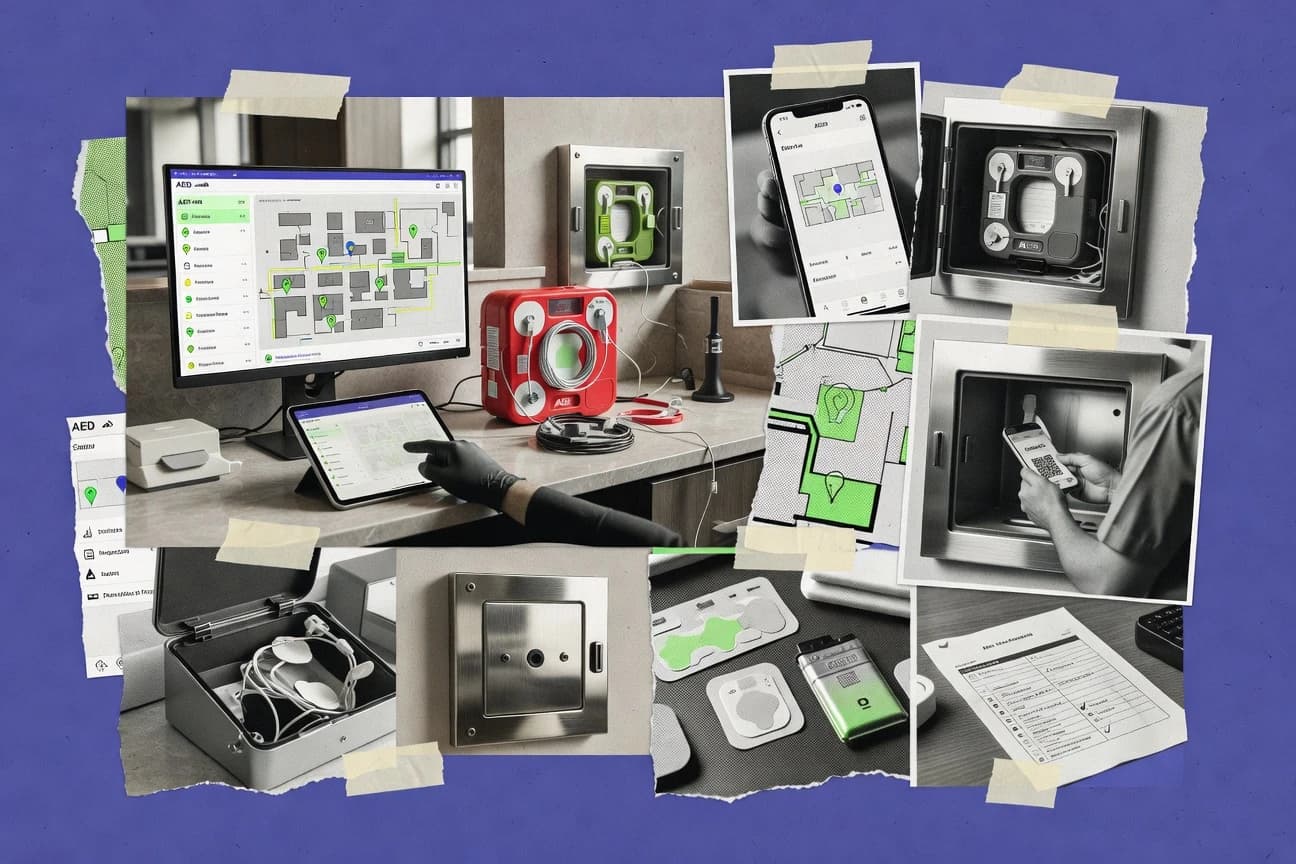
GITNUXSOFTWARE ADVICE
Business FinanceTop 9 Best Aed Software of 2026
Compare aed software options for managing AED records, with practical notes on setup, reporting, and day-to-day use for teams.

How we ranked these tools
Before any source is gathered, an editor locks the question, what qualifies, and how the piece will be judged.
Search agents gather the source set and the review record, including transcriptions of video reviews and podcasts.
Framework: Features 40% · Ease 30% · Value 30%
Gitnux may earn a commission through links on this page — this does not influence rankings. Editorial policy
AED365 is the best pick for single-organization teams managing AED readiness across multiple sites because its expiration alerts for batteries and electrodes tie straight into per-device checks, while PulsePoint AED Registry fits community programs that need location accuracy and geofenced responder notifications maintained by local organizations.
Editor’s top 3 picks
Three quick recommendations before you dive into the full comparison below — each one leads on a different dimension.
AED365
Expiration alerts for battery and electrodes tie directly into readiness checks per device and site.
Best for: Fits when a single organization needs device readiness tracking and recordkeeping across multiple sites.
PulsePoint AED Registry
Editor pickResponder notifications tied to an AED location registry maintained by local organizations.
Best for: Fits when community and public-access sites need location accuracy and readiness inputs for geofenced responder alerts.
AED Log
Editor pickInspection history stays connected to each AED record, making readiness status and compliance evidence available for audits.
Best for: Fits when mid-size organizations need AED readiness tracking, inspection history, and governance-grade records.
Comparison Table
AED365
SMBAED program management solution with inspection tracking, event documentation, medical direction, and EMS registration support.
Expiration alerts for battery and electrodes tie directly into readiness checks per device and site.
AED365 is an AED software and registry solution built around organizing devices, tracking readiness, and recording compliance activities. Core workflows cover site lists, inspection and maintenance history, and expiration tracking for battery and electrodes.
The system also supports incident and training record capture so rescue events and CPR and AED education can be reviewed later. Admin controls focus on managing organizational ownership of sites and enforcing consistent data capture across deployed locations.
- +Inspection and maintenance history stays tied to each device and site
- +Battery and electrode expiration tracking supports proactive readiness checks
- +Training and incident documentation improves audit-style record continuity
- +Site and device lists reduce manual cross-referencing during audits
- –External integrations are limited compared with AED platforms built for dispatch and telemetry
- –Geofenced notifications and mobile responder workflows depend on add-on patterns
- –Role governance is serviceable but lacks fine-grained operational controls
- –Data exports support reviews but do not fully replace API-driven automation
Best for: Fits when a single organization needs device readiness tracking and recordkeeping across multiple sites.
PulsePoint AED Registry
vertical specialistPublic AED registry software that shares device locations with emergency responders.
Responder notifications tied to an AED location registry maintained by local organizations.
PulsePoint AED Registry publishes and maintains an AED registry that localizes device locations and site details for responders. The system supports readiness tracking inputs like maintenance and expiration dates so sites can keep devices aligned with rescue response workflows.
PulsePoint also connects registry information to the PulsePoint responder experience that uses geofenced notifications and dispatch-area context. Admin capabilities focus on keeping the device list accurate and auditable for participating organizations.
- +Geofenced responder notifications driven by maintained AED location entries
- +Workflow inputs for maintenance and expiration data to support readiness checks
- +Public registry data supports site coverage visibility across participating locations
- +Clear separation between organization-managed entries and responder-facing display
- –Limited depth for incident reporting and rescue event documentation compared with EMS-focused tools
- –Integration surface for dispatch systems depends on partner mechanisms rather than a standalone API
- –Device connectivity fields and telemetry tracking are not designed for cellular telemetry workflows
- –Moderation and governance require disciplined processes to prevent location data drift
Best for: Fits when community and public-access sites need location accuracy and readiness inputs for geofenced responder alerts.
AED Log
SMBAED program management platform with inspection tracking, battery and pad expiration alerts, and CPR certification monitoring.
Inspection history stays connected to each AED record, making readiness status and compliance evidence available for audits.
AED Log centers on AED registry and readiness tracking for organizations that need recurring inspections and device status history. The workflow focus supports maintenance compliance through inspection records, device ownership, and expiration visibility for batteries and electrodes.
AED Log also supports operational coordination by linking rescue documentation to site and device context for post-incident review. Administration emphasizes governance through role-based access controls and an audit trail for changes.
- +Inspection workflows keep AED readiness records tied to each device
- +Expiration tracking covers battery and electrode due dates for compliance
- +Audit trail logs administrative changes across the AED registry
- +Role-based access limits who can modify device and inspection data
- –Emergency dispatch integration depth is limited compared with coordinator-first vendors
- –Bulk device onboarding requires careful data preparation to avoid duplicates
- –Geofenced notifications and responder workflows need external setup
- –API coverage for connected telemetry is narrower than device-first monitoring tools
Best for: Fits when mid-size organizations need AED readiness tracking, inspection history, and governance-grade records.
GoodSAM
vertical specialistEmergency response software that supports AED registration, mapping, and responder alerts.
GoodSAM Alert combines proximity-based responder dispatch with live incident video for emergency control rooms.
Organizations can register AED sites, maintain device details, and make nearby equipment visible through GoodSAM’s responder network. GoodSAM Alert uses responder proximity and training status to route incident notifications. Emergency control rooms can use GoodSAM’s live video capability to assess scenes before responders arrive.
- +GoodSAM Alert routes cardiac-arrest notifications to nearby trained responders.
- +GoodSAM AED supports public device registration and location sharing.
- +Live video gives control rooms additional scene information.
- +Responder profiles can include training and availability details.
- –Deployment requires coordination with ambulance services and local emergency protocols.
- –Response coverage depends on the density of enrolled responders.
- –AED record quality depends on accurate local updates.
- –Advanced dispatch workflows may require organizational configuration.
Best for: Fits when emergency services need coordinated responder dispatch around public AED locations.
HSI AED & Equipment Manager
SMBSubscription-based equipment tracking system for AEDs and other medical devices with barcode scanning and customizable inspections.
QR-code equipment inspections tied directly to asset records, assigned tasks, and location data.
HSI AED & Equipment Manager gives safety administrators a centralized AED inventory with asset details, site assignments, inspection schedules, and replacement reminders. QR codes let staff identify equipment in the field before completing assigned checks. The administrative view supports oversight of completion status, overdue work, and equipment records.
- +QR-code scans connect physical devices to inspection records.
- +Scheduled reminders flag battery and electrode replacements before due dates.
- +Mobile workflows assign checks to named staff and record completion.
- +Supports equipment records beyond AED-only registers.
- –Public documentation does not show an open API for external automation.
- –Dispatch and responder coordination are outside the core workflow.
- –Reporting quality depends on consistent field and location configuration.
- –The core equipment workflow does not provide cellular device telemetry.
Best for: Fits when safety teams need QR-based equipment checks, assigned maintenance tasks, and centralized records across multiple sites.
PlusTrac
enterpriseWeb-based AED program management software from ZOLL with compliance checks, recall alerts, and responder certification tracking.
Rescue-response event documentation links incidents back to device readiness history for follow-up workflows.
PlusTrac from zoll.com focuses on AED readiness tracking tied to site operations, with workflows for inspection, maintenance, and rescue-response documentation. The solution supports AED inventory management with expiration visibility for batteries and electrodes, and it routes findings into ongoing compliance work.
- +Inspection and maintenance workflows keep device status tied to work orders
- +Battery and electrode expiration tracking supports proactive readiness checks
- +Rescue event documentation keeps response outcomes connected to device history
- +Reporting groups device readiness by site and operational coverage
- –Mobile app support and offline capture for responders are limited versus mobile-first tools
- –Automation depends on available integrations rather than open-ended data sync
- –Role separation and audit trail depth are not as granular as enterprise governance tools
- –Device connectivity and telemetry coverage are constrained to specific supported hardware
Best for: Fits when AED programs need ongoing readiness and compliance tracking tied to real rescue events.
AED Sentinel
vertical specialistAED management software for inventory, inspections, expirations, and readiness monitoring.
Sentinel Guardian adds cellular telemetry to AED cabinets, reporting access, temperature, and device-status changes through AED Sentinel’s central dashboard.
AED Sentinel supports AED readiness tracking across distributed sites through centralized device records and configurable notifications. Administrators can assign locations, document checks, monitor battery and electrode expiration tracking, and route corrective work to responsible staff. The dashboard gives facilities teams a shared view of deployed devices and unresolved maintenance tasks.
- +Sentinel Guardian supports cellular monitoring where site Wi-Fi is unavailable.
- +Alerts cover cabinet access, temperature, device status, and consumable expiry.
- +Central records link AED sites, devices, contacts, and maintenance tasks.
- +Mobile access supports field checks and corrective updates.
- –Guardian deployment adds hardware installation and cellular coverage dependencies.
- –Compatibility varies across AED models and available device-status signals.
- –Monitoring does not replace a full emergency dispatch console.
- –Large rollouts require disciplined ownership of contacts and maintenance tasks.
Best for: Fits when organizations need remote oversight across many AED cabinets and geographically distributed facilities.
LIFELINKcentral AED Program Manager
enterpriseCloud software for monitoring AED readiness, maintenance, alerts, and program records.
Readiness status drives maintenance and documentation checkpoints from AED inventory data within program workflows.
LIFELINKcentral AED Program Manager provides AED program workflows tied to device readiness, site-level documentation, and rescue readiness tracking. The system centers on maintaining accurate AED inventory details and expiration-driven maintenance checkpoints, so readiness status can be reviewed for specific locations.
- +Readiness tracking highlights expired components at the site level
- +Inspection and documentation workflows support consistent program records
- +AED inventory updates can be tied to operational readiness reviews
- +Integration with the broader LIFELINKcentral operations data supports coordinated programs
- –Requires disciplined location and device setup to keep readiness accurate
- –Limited visibility for non-LIFELINKcentral workflows without additional integrations
- –Geographically complex programs can need careful data hygiene for mapping views
- –Advanced automation depends more on configured program workflows than ad hoc rules
Best for: Fits when organizations run multi-site AED programs and need readiness, inspection, and rescue documentation connected to operational workflows.
RescueManager
SMBCloud-based AED program manager tracking device locations, serial numbers, expiration dates, inspections, and FDA recall notifications.
RescueManager links AED device and site readiness tracking directly to CPR and AED training recordkeeping.
RescueManager manages AED training institute operations by tying AED location records to training, readiness, and rescue documentation workflows. The system supports AED inventory tracking with device status fields for maintenance follow-ups and readiness checks tied to real-world sites.
- +Connects site AED records to training and rescue event documentation.
- +Inspection and readiness checks can be tracked alongside device status fields.
- +Maintains responder and training history in one operational workflow.
- +Supports maintenance follow-ups tied to expiring components.
- –Limited visibility into device connectivity metrics such as cellular telemetry.
- –External dispatch and emergency alert integrations are not a prominent native capability.
- –Workflow automation relies on configuration rather than exposed APIs.
- –Role-based administration controls and audit history are harder to validate from public materials.
Best for: Fits when an AED training institute needs connected device, site, inspection, and incident documentation workflows.
Conclusion
After evaluating 9 aed software, AED365 stands out as our overall top pick — it scored highest across our combined criteria of features, ease of use, and value, which is why it sits at #1 in the rankings above.
Use the comparison table and detailed reviews above to validate the fit against your own requirements before committing to a tool.
How to Choose the Right Aed Software
This guide covers AED Sentinel, GoodSAM, HSI AED & Equipment Manager, LIFELINKcentral AED Program Manager, PulsePoint AED Registry, AED Log, AED365, PlusTrac, and RescueManager for organizations managing public-access defibrillation readiness across sites.
Tool differences show up in remote oversight, QR-code inspections, readiness-driven workflows, geofenced responder notifications, and rescue-event documentation that ties back to device history.
AED Sentinel adds cellular telemetry to AED cabinets and reports access, temperature, and device-status changes through a central dashboard.
GoodSAM combines proximity-based responder dispatch with live incident video tied to AED locations maintained for public access.
AED Software for managing defibrillator readiness, inspections, and rescue event records
AED software records AED inventory by device and location, then turns maintenance and inspection activities into readiness status that teams can track and document. These systems also manage battery and electrode expiration tracking so organizations can flag components before due dates and maintain compliance evidence.
Several products connect readiness to broader operations. LIFELINKcentral AED Program Manager drives maintenance and documentation checkpoints from AED inventory data inside program workflows, while AED Log keeps inspection history connected to each AED record so readiness status and audit evidence stay tied to device-level history.
AED readiness control points, asset workflows, and emergency response connectivity
AED software succeeds when it connects each physical device to inspection history, component expiration dates, and a readiness state that teams can act on.
The same system also needs governance-grade records so audits and handoffs do not break when multiple sites, coordinators, and responders touch the workflow.
Remote device visibility with cellular telemetry
AED Sentinel adds cellular telemetry to AED cabinets and reports access, temperature, and device-status changes from its central dashboard to support remote oversight at distributed facilities.
QR-code inspections tied to assigned work
HSI AED & Equipment Manager uses QR-code equipment inspections that link scans directly to asset records, assigned tasks, and location data for centralized multi-site tracking.
Readiness-driven maintenance and documentation checkpoints
LIFELINKcentral AED Program Manager turns readiness status into maintenance and documentation checkpoints using AED inventory data inside program workflows.
Geofenced responder notifications and public AED location inputs
PulsePoint AED Registry and GoodSAM AED support community-facing AED location mapping with geofenced responder notifications and readiness inputs maintained by participating organizations.
Inspection history and audit-ready device record trails
AED Log keeps inspection history connected to each AED record so readiness status and compliance evidence stay tied to device-level history for audits.
Rescue-event documentation linked back to device readiness
PlusTrac focuses on connecting rescue-response event documentation to device readiness history so follow-up workflows can reference the device timeline.
Match AED workflows to operational control points and integration expectations
The selection starts with which operational control point must be central in day-to-day work. Teams usually center workflows on either device monitoring, inspection execution, or rescue documentation traceability.
The second decision axis is how responders and dispatch get notified around AED locations. Tools built for alerting and dispatch coordination behave differently from tools built for inspection and readiness recordkeeping.
Pick the system that owns the readiness truth
Organizations that need centralized readiness accuracy across many cabinets should prioritize AED Sentinel, which reports cabinet access, temperature, and device-status changes through cellular telemetry into a single dashboard. Organizations that need inspection evidence that never detaches from each device should prioritize AED Log, which keeps inspection history connected to each AED record for audit-grade continuity.
Standardize inspections with the capture method that field teams can follow
Teams that can scan on-site should use HSI AED & Equipment Manager because QR-code scans connect physical devices to inspection records, scheduled reminders, and replacement timing. Teams that want maintenance and documentation checkpoints driven directly by readiness status inside program workflows should evaluate LIFELINKcentral AED Program Manager because readiness drives the maintenance and documentation sequence.
Choose the alerting model based on responder density and coordination needs
If responder dispatch needs proximity-based routing with live incident video, GoodSAM Alert routes cardiac-arrest notifications to nearby trained responders around public AED locations. If the priority is community-managed AED location accuracy that drives geofenced responder notifications, PulsePoint AED Registry centers on maintained AED location entries and readiness inputs.
Decide how rescue documentation must link back to the device timeline
Organizations that require incident follow-up tied to device readiness history should evaluate PlusTrac because rescue-response event documentation links incidents back to device readiness history for follow-up workflows. Organizations that want rescue and training records tied to the same device and site readiness tracking should consider RescueManager because it connects site AED records to CPR and AED training and to rescue event documentation.
Validate the integration depth implied by dispatch and telemetry
If emergency alert integration and dispatch integration are required at scale, AED Sentinel and GoodSAM align more closely with remote oversight and alerting coordination, while HSI AED & Equipment Manager explicitly places dispatch and responder coordination outside the core workflow. If dispatch integration depth is secondary to compliance records and expiration tracking, AED365 and AED Log focus more directly on battery and electrode expiration tracking and inspection history tied to device records.
Who should buy AED Software with these readiness, inspection, and alert capabilities
AED programs across campuses, office portfolios, and public-access sites need systems that keep device records accurate and actionable across recurring inspections and component replacements.
Emergency coordination needs shape the software choice, because responder notification and rescue documentation workflows differ between community registry and dispatch-focused products.
Multi-site safety and facilities teams managing battery and electrode expiration
LIFELINKcentral AED Program Manager highlights expired components at the site level and drives maintenance and documentation checkpoints from readiness status derived from AED inventory data.
Operations teams needing remote monitoring when site Wi‑Fi is unavailable
AED Sentinel fits environments that require cellular telemetry for access, temperature, and device-status changes so distributed cabinet visibility stays in one central dashboard.
Workplaces and training-adjacent organizations standardizing inspections through QR capture
HSI AED & Equipment Manager fits teams that want QR-code equipment inspections that tie directly to asset records, assigned tasks, and location data.
Community and public-access AED programs coordinating geofenced responder alerts
PulsePoint AED Registry and GoodSAM AED focus on AED location mapping and geofenced responder notifications, with GoodSAM adding proximity-based dispatch coordination around enrolled responders.
Programs that must connect rescue events to training and device readiness for follow-up
PlusTrac and RescueManager both connect rescue-event documentation to device history, with PlusTrac linking incidents back to device readiness history and RescueManager linking AED device and site readiness tracking to CPR and AED training recordkeeping.
Common selection pitfalls that break AED readiness workflows
Many implementations fail when the chosen tool covers readiness tracking but does not match the organization’s inspection capture method or the expected emergency coordination flow.
Other failures come from assuming that rescue event documentation and dispatch integration work the same way across inspection-first tools and alerting-first tools.
Buying a tool that tracks inspections and readiness but cannot connect rescue documentation to the device timeline used for follow-up.
PlusTrac and RescueManager both link rescue-related records back to device or readiness history, while tools focused on inventory and readiness without rescue-event linkage limit follow-up workflows.
Assuming telemetry exists without validating cabinet-model compatibility and cellular deployment requirements.
AED Sentinel’s Sentinel Guardian adds cellular monitoring and introduces hardware installation and cellular coverage dependencies, and compatibility varies across AED models and available device-status signals.
Choosing a QR inspection workflow without confirming field teams can scan and that location and device setup remains disciplined.
HSI AED & Equipment Manager relies on QR-code scans tied to asset records, while LIFELINKcentral AED Program Manager requires disciplined location and device setup to keep readiness accurate.
Overestimating dispatch integration depth from registry or notification-focused products.
PulsePoint AED Registry and GoodSAM Alert depend on partner mechanisms and local emergency protocols for dispatch coordination, while dispatch and responder coordination is outside HSI AED & Equipment Manager’s core workflow.
How We Selected and Ranked These Tools
We evaluated AED Sentinel, GoodSAM, HSI AED & Equipment Manager, LIFELINKcentral AED Program Manager, PulsePoint AED Registry, AED Log, AED365, PlusTrac, and RescueManager using features, ease of use, and value.
Features account for 40% of the score because readiness workflows depend on device-level inspection history, component expiration tracking, and documentation traceability tied to AED records.
Ease of use accounts for 30% of the score because teams rely on practical capture and workflow steps such as QR-code inspections and readiness-driven checkpoints.
Value accounts for the remaining 30% of the score, and AED Sentinel earned the top position by adding cellular telemetry through Sentinel Guardian for access, temperature, and device-status change monitoring across distributed cabinets.
Frequently Asked Questions About Aed Software
How do AED Sentinel and PulsePoint AED Registry handle readiness inputs for responders?
When does a GoodSAM Alert workflow shift from directory-style dispatch to coordinated responder dispatch?
Which tool supports QR-based equipment records and inspection task assignment from the field?
What breaks if an AED program needs rescue documentation tied to readiness, not just inspection history?
How do AED Log and AED365 differ in how they manage compliance evidence over time?
Which platform is designed for organizations that must connect AED program tasks to other operational data used for response programs?
How does Sentinel Guardian change the technical data path compared with a standard local-network setup?
What tradeoff appears when an AED program prioritizes training institute documentation over general dispatch coordination?
How do PlusTrac and GoodSAM handle site-level accuracy in shared AED location workflows?
How should administrators structure role-based access and auditability when multiple teams update the same AED records?
Tools reviewed
Primary sources checked during evaluation.
Referenced in the comparison table and product reviews above.
Funding and competing interests
This study was co-funded by several of the vendors assessed in it. No single vendor funded it. Funders could propose the market studied.
They had no role in selecting vendors, setting or weighting criteria, analysing data or drawing conclusions, and they received the same factual-accuracy check as every other vendor assessed.
Market definition, inclusion rules and criteria weights were fixed by an editor before research began and did not change afterwards. Editorial process →
Keep exploring
Comparing two specific tools?
Software Alternatives
See head-to-head software comparisons with feature breakdowns, pricing, and our recommendation for each use case.
Explore software alternatives→In this category
Business Finance alternatives
See side-by-side comparisons of business finance tools and pick the right one for your stack.
Compare business finance tools→