
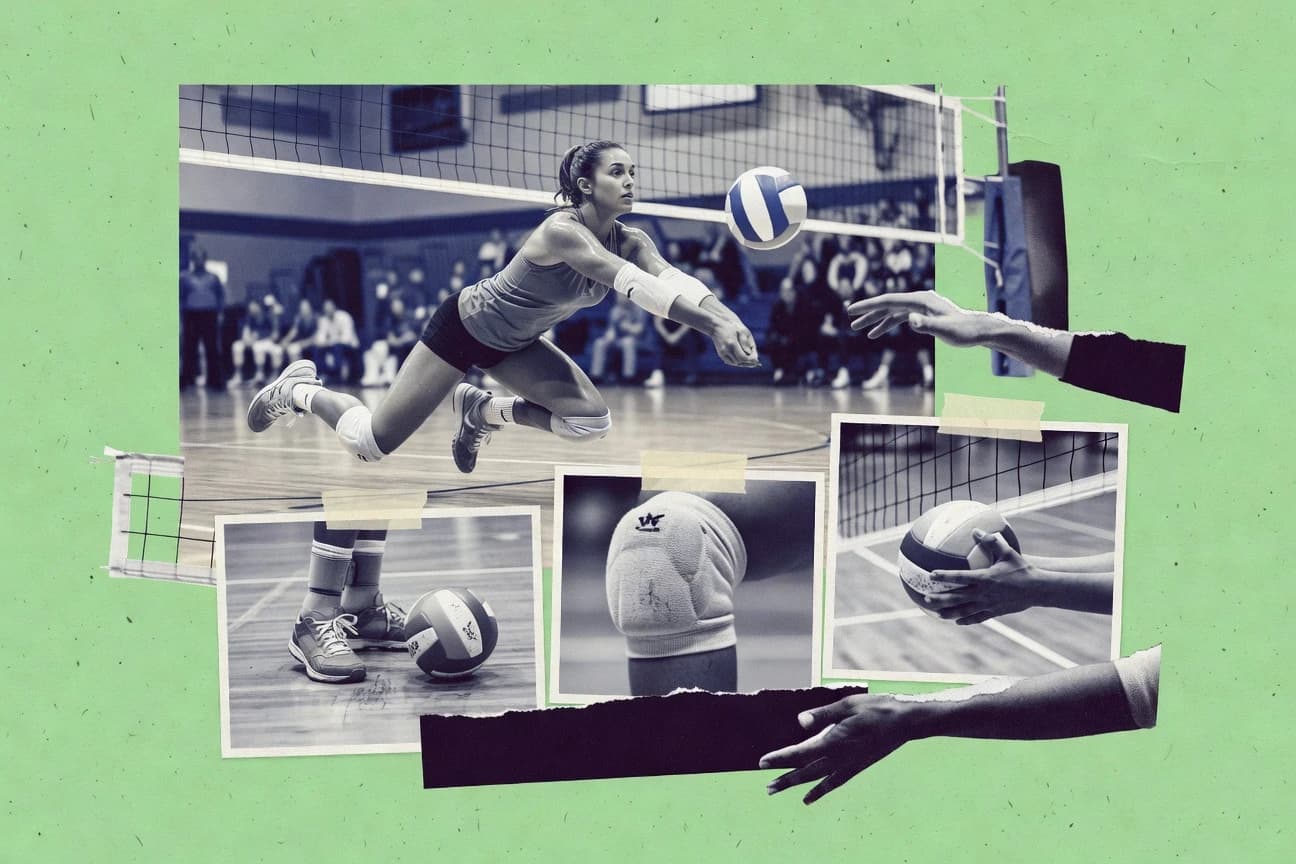

Volleyball injury risk varies by level and role, from youth practice loads to professional training. This guide connects key injury rates with what drives them—training volume, prior sprains, and risk differences like female athletes facing higher ACL likelihood. You’ll also explore the patterns behind common problems (including ankles, shoulders, and fingers) and the prevention and rehab options supported by research, from bracing and proprioceptive work to return-to-play and recovery timelines.
Key Takeaways
- Volleyball players experience an injury incidence rate of 4.9 injuries per 1000 player-hours during competition
- The overall injury rate in professional volleyball is 3.6 per 1000 hours of training
- Female collegiate volleyball players had 9.2 injuries per 1000 athlete-exposures annually
- Ankle sprains account for 28% of all volleyball injuries
- Shoulder injuries represent 20% of volleyball injuries in setters
- Finger injuries occur in 15% of volleyball players annually
- Ankle brace use reduces sprain risk by 71%
- Proprioceptive training cuts ankle injuries by 40%
- FIFA 11+ program adapted reduces knee injuries 50%
- Average return to play after ankle sprain: 12 days
- Shoulder impingement recovery: 6-8 weeks with PT
- ACL reconstruction RTP: 9 months in volleyball
- Previous ankle sprain increases risk by 4.5 times
- Female gender raises ACL injury risk 3-fold in volleyball
- High training volume (>20h/week) OR 2.8 for overuse
Volleyball injuries are common, but prevention like ankle bracing and training can sharply reduce sprains and ACL risk.
Related reading
01 · Category
Incidence Rates25 stats
01
Volleyball players experience an injury incidence rate of 4.9 injuries per 1000 player-hours during competition
02
The overall injury rate in professional volleyball is 3.6 per 1000 hours of training
03
Female collegiate volleyball players had 9.2 injuries per 1000 athlete-exposures annually
04
Youth volleyball injury rate is 2.5 per 1000 practice hours
05
Beach volleyball shows 8.2 injuries per 1000 hours compared to 4.5 for indoor
06
NCAA Division I volleyball injury rate: 4.1 per 1000 AEs
07
Elite male players: 5.8 injuries/1000 hours
08
Recreational volleyball: 1.8 injuries per 1000 hours
09
High school volleyball: 3.4 injuries/1000 AEs
10
Italian Serie A volleyball: 6.2/1000 hours
11
Australian elite: 4.7/1000 hours exposure
12
Junior volleyball: 2.9/1000 hours
13
Olympic volleyball: 7.1 injuries per team per tournament
14
Club level: 3.2/1000 training hours
15
US youth: 4.0/1000 AEs practices
16
Professional beach: 9.5/1000 hours
17
Collegiate men: 3.8/1000 AEs
18
Women pro: 5.3/1000 hours
19
Adolescent girls: 4.5/1000 hours
20
Indoor elite: 4.2/1000 competition hours
21
71% of volleyball injuries occur during training sessions
22
Match injury rate 2.5 times higher than practice in volleyball
23
15.6% time-loss injuries in NCAA volleyball
24
2.4 acute injuries per 1000 hours in youth
25
Overuse injuries comprise 40% of volleyball cases
Interpretation
Incidence Rates Interpretation
Incidence rates in volleyball vary widely by setting and level, ranging from 2.5 injuries per 1000 practice hours in youth to 9.2 per 1000 athlete-exposures annually for female collegiate players, with competition and indoor play clustering around the low to mid single digits.
02 · Category
Injury Types19 stats
01
Ankle sprains account for 28% of all volleyball injuries
02
Shoulder injuries represent 20% of volleyball injuries in setters
03
Finger injuries occur in 15% of volleyball players annually
04
ACL tears: 0.42 per 1000 hours in females
05
Patellar tendinopathy affects 25% of elite players
06
Concussions: 7% of volleyball injuries in high school
07
Low back pain: 14.5% prevalence in volleyball athletes
08
Rotator cuff tears: 10% in overhead athletes
09
Knee injuries: 18% of total, mostly jumpers
10
Hand fractures: 8% in blockers
11
Achilles tendon ruptures: 1.2 per 1000 elite players
12
Stress fractures: 5% in female volleyball
13
Wrist sprains: 6% incidence
14
Hamstring strains: 12% of lower limb injuries
15
Meniscal tears: 4% in volleyball knees
16
Elbow overuse: 9% in setters
17
Cervical spine issues: 3% prevalence
18
Quadriceps strains: 7% of injuries
19
Plantar fasciitis: 11% in beach volleyball
Interpretation
Injury Types Interpretation
Across volleyball injury types, ankle sprains lead at 28% overall, underscoring how most prevention efforts should start with protecting the ankle, even as other common issues like patellar tendinopathy at 25% of elite players and concussions at 7% in high school also contribute.
03 · Category
Prevention17 stats
01
Ankle brace use reduces sprain risk by 71%
02
Proprioceptive training cuts ankle injuries by 40%
03
FIFA 11+ program adapted reduces knee injuries 50%
04
Taping shoulders decreases impingement by 35%
05
Plyometric training lowers landing forces 25%
06
Core stability exercises reduce back pain 55%
07
Periodized training cuts overuse by 30%
08
Proper footwear reduces stress fractures 45%
09
Balance board training: 50% ankle prevention
10
Stretching protocols lower strains 28%
11
Load monitoring apps reduce injuries 22%
12
Volleyball-specific warm-up: 35% fewer acute injuries
13
Strengthening rotator cuff: 40% shoulder risk drop
14
Neuromuscular training: 33% knee injury reduction
15
Ice massage post-training: 25% overuse prevention
16
Finger splints for blockers: 60% fracture reduction
17
Sleep >8h/night: 20% injury risk decrease
Interpretation
Prevention Interpretation
For prevention in volleyball, targeted training and supports make a major difference, cutting key injury risks by as much as 71% with ankle braces and 55% for back pain through core stability.
More related reading
04 · Category
Rehabilitation20 stats
01
Average return to play after ankle sprain: 12 days
02
Shoulder impingement recovery: 6-8 weeks with PT
03
ACL reconstruction RTP: 9 months in volleyball
04
Patellar tendinopathy: 70% full recovery with eccentrics
05
Finger fracture healing: 4-6 weeks immobilization
06
Low back pain resolves in 4 weeks with core rehab
07
Concussion RTP: average 10 days protocol
08
Achilles repair: 6 months RTP elite level
09
Meniscal repair: 4 months recovery time
10
Rotator cuff rehab: 85% success non-surgical
11
Hamstring strain grade II: 3 weeks RTP
12
Stress fracture tibia: 8-12 weeks rest
13
Plantar fasciitis: 12 weeks with orthotics
14
92% of ankle sprains RTP full function
15
Knee rehab success 88% in volleyball
16
Shoulder surgery RTP 75% elite players
17
Time-loss average 21 days per injury NCAA
18
Recurrence rate post-rehab: 15% ankles
19
PRP injections: 80% tendinopathy improvement
20
Functional bracing: 90% confidence RTP
Interpretation
Rehabilitation Interpretation
In the rehabilitation category, most common volleyball injuries rebound quickly, with ankle sprains returning in about 12 days and low back pain typically resolving in around 4 weeks, while the biggest outlier is ACL reconstruction which takes about 9 months.
05 · Category
Risk Factors17 stats
01
Previous ankle sprain increases risk by 4.5 times
02
Female gender raises ACL injury risk 3-fold in volleyball
03
High training volume (>20h/week) OR 2.8 for overuse
04
Blocking position: 25% higher finger injury risk
05
Poor landing technique increases knee injury by 3.2x
06
Age >25 years: 1.9x shoulder injury risk
07
Inadequate warm-up: OR 2.1 for acute injuries
08
BMI >25: 2.4x low back pain risk
09
Single-leg landing asymmetry: 3.5x ankle risk
10
Setter position: 4x shoulder impingement
11
Hard surfaces increase impact injuries by 2.7x
12
Fatigue: 2.9x match injury rate late in games
13
History of tendinopathy: RR 5.1 for recurrence
14
Poor core strength: 2.6x back injury risk
15
High spike volume: OR 3.1 for shoulder pain
16
Neuromuscular imbalance: 2.2x knee injury
17
Inexperience (<2 years): 1.8x overall injury
Interpretation
Risk Factors Interpretation
In volleyball’s risk factors, the biggest takeaway is that risk can jump dramatically when key factors align, such as previous ankle sprain raising ankle sprain risk 4.5 times and poor landing technique increasing knee injuries 3.2 times.
Reference
Cite This Report
This report is designed to be cited. We maintain stable URLs and versioned verification dates. Copy the format appropriate for your publication below.
APA
Kevin O'Brien. (2026, February 13). Volleyball Injury Statistics. Gitnux. https://gitnux.org/volleyball-injury-statistics
MLA
Kevin O'Brien. "Volleyball Injury Statistics." Gitnux, 13 Feb 2026, https://gitnux.org/volleyball-injury-statistics.
Chicago
Kevin O'Brien. 2026. "Volleyball Injury Statistics." Gitnux. https://gitnux.org/volleyball-injury-statistics.
Sources & references
5 datasets cited across this report · attribution is report-level