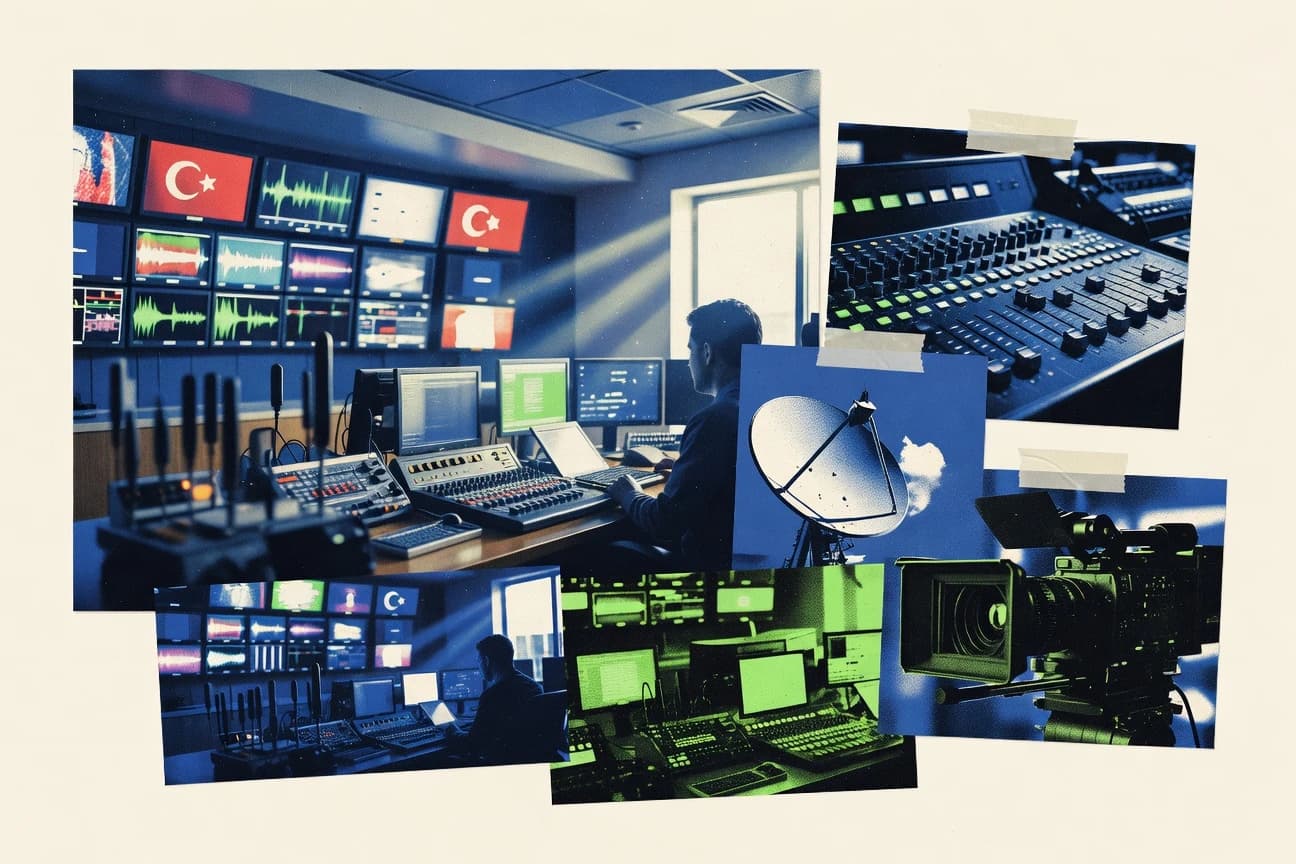

Turkey’s TV and media market is being reshaped by a sharp mix of macro lift and audience infrastructure. With 12.8 million pay TV subscriptions in 2022, 23.7 million fixed broadband lines, and 90.2% internet access at home, viewing habits are shifting fast while advertising economics still track GDP, inflation, and CPM pricing. The result is a landscape where policy rules, channel licensing, and second screen behavior collide in measurable ways.
Key Takeaways
- 5.3% real GDP growth in Turkey in 2021, up from -1.8% in 2020, reflecting strong macro conditions that affected media advertising demand
- 1.1% of Turkey’s GDP was spent on education in 2019 (latest year in OECD dataset), which is relevant to TV audience reach via schooling and literacy
- 86.5 million people lived in Turkey in 2022, providing the base for TV reach and total viewing households
- 12.8 million people in Turkey subscribed to pay TV services in 2022, indicating scale of satellite/cable/iptv viewing base (pay TV subscriptions estimate in OECD Communications data)
- 90.2% of households in Turkey had access to the internet in 2022 (TÜİK household internet access), enabling OTT TV substitution
- 85.9% of individuals in Turkey used mobile devices (smartphone) to access the internet in 2023 (TÜİK ‘Individuals who used the Internet via mobile phone’), increasing second-screen viewing
- Netflix launched downloads/offline viewing in Turkey for mobile devices, supporting on-the-go consumption and reducing churn risk for mobile TV audiences (Netflix Help Center notice)
- Amazon Prime Video expanded in Turkey with Turkish originals; the platform’s ‘Türk Yapımı’ original slate increased from 5 titles in 2020 to 14 titles by 2022 (IMDb titles count methodology as tracked by Variety/industry reporting)
- TRT World’s English YouTube channel reached 6.7 million subscribers as of 2024, reflecting growth of international TV distribution channels
- Turkey had 1,021 television channels licensed for terrestrial, satellite, and cable operations in 2023 according to the Radio and Television Supreme Council (RTÜK) channel registry counts
- Turkey’s ‘Law No. 6112 on the Establishment of RTÜK and its broadcasting services’ governs commercial TV licensing and content rules, forming the legal framework for broadcasters
- Turkey’s Law No. 5846 on Intellectual and Artistic Works provides the legal basis for music/format/IP licensing in TV programming
- Turkey’s mobile data prices fell by 32% between 2020 and 2022 according to OECD price basket comparisons, supporting cheaper OTT mobile video consumption
- Turkey’s TV advertising CPM (cost per thousand impressions) for major channels averaged 3.2 TRY in 2023 (industry pricing summary by Nielsen Ad Intel Turkey press release)
- Turkey’s advertising VAT/sales tax treatment remains applicable to TV advertising contracts; Turkey’s standard VAT rate was 18% (2024), shaping final advertiser pricing
Turkey’s improving macro conditions and rising pay TV and online video access are boosting TV advertising demand.
Related reading
01 · Category
Market Size10 stats
01
5.3% real GDP growth in Turkey in 2021, up from -1.8% in 2020, reflecting strong macro conditions that affected media advertising demandhttps://data.worldbank.org/indicator/NY.GDP.MKTP.KD.ZG?locations=TR
02
1.1% of Turkey’s GDP was spent on education in 2019 (latest year in OECD dataset), which is relevant to TV audience reach via schooling and literacyhttps://data.oecd.org/education/gross-expenditure-on-education.htm
03
86.5 million people lived in Turkey in 2022, providing the base for TV reach and total viewing householdshttps://data.worldbank.org/indicator/SP.POP.TOTL?locations=TR
04
$892.0 billion nominal GDP for Turkey in 2022, which is a key denominator for advertising spend and consumer affordabilityhttps://data.worldbank.org/indicator/NY.GDP.MKTP.CD?locations=TR
05
36.5% of Turkey’s population lived in urban areas in 2022, affecting TV penetration patterns between urban and rural audienceshttps://data.worldbank.org/indicator/SP.URB.TOTL.IN.ZS?locations=TR
06
16.0% unemployment rate in Turkey in 2020, which can influence household discretionary spending on pay TV and advertising cycleshttps://data.worldbank.org/indicator/SL.UEM.TOTL.ZS?locations=TR
07
3.0% inflation (CPI) in Turkey in 2022 in World Bank’s series revision, used as a macro control for advertising and media spendhttps://data.worldbank.org/indicator/FP.CPI.TOTL.ZG?locations=TR
08
3.8% of Turkey’s employment was in the ‘information and communication’ sector in 2021 (latest year shown in OECD data), relevant to media-tech ecosystem capacityhttps://stats.oecd.org/Index.aspx?DataSetCode=EAG_NEAC
09
Turkey had 23.7 million broadband subscriptions (fixed broadband) in 2022, enabling OTT viewing that competes with traditional TVhttps://data.oecd.org/broadband/broadband-subscriptions.htm
10
Turkey had 87.2 mobile-cellular subscriptions per 100 people in 2022, supporting mobile TV/streaming and audience extensionshttps://data.oecd.org/ict/mobile-cellular-subscriptions.htm
Interpretation
Market Size Interpretation
With Turkey reaching 86.5 million people in 2022 and a fast expanding connectivity base of 23.7 million fixed broadband subscriptions plus 87.2 mobile subscriptions per 100 people, the TV market size is poised to be large and still growing, even as macro conditions such as 5.3% real GDP growth in 2021 and 3.0% inflation in 2022 help sustain advertising demand.
02 · Category
User Adoption4 stats
01
12.8 million people in Turkey subscribed to pay TV services in 2022, indicating scale of satellite/cable/iptv viewing base (pay TV subscriptions estimate in OECD Communications data)https://www.oecd.org/en/data/indicators/pay-television.html
02
90.2% of households in Turkey had access to the internet in 2022 (TÜİK household internet access), enabling OTT TV substitutionhttps://data.tuik.gov.tr/Bulten/Index?p=Hanehalki-Bilgi-Teknolojilerini-Kullanma-Arastirmasi-2022-45683
03
85.9% of individuals in Turkey used mobile devices (smartphone) to access the internet in 2023 (TÜİK ‘Individuals who used the Internet via mobile phone’), increasing second-screen viewinghttps://data.tuik.gov.tr/Bulten/Index?p=Hanehalki-Bilgi-Teknolojilerini-Kullanma-Arastirmasi-2023-65397
04
Turkey had 71% of internet users consuming video content online in 2023 per a survey summarized by DataReportal for Turkeyhttps://datareportal.com/reports/digital-2024-turkey
Interpretation
User Adoption Interpretation
With 90.2% of Turkish households having internet access in 2022 and 71% of internet users watching video online in 2023, user adoption for TV viewing is already well entrenched beyond pay TV, supported by the 85.9% of people accessing the internet via mobile devices.
03 · Category
Industry Trends5 stats
01
Netflix launched downloads/offline viewing in Turkey for mobile devices, supporting on-the-go consumption and reducing churn risk for mobile TV audiences (Netflix Help Center notice)https://help.netflix.com/en/node/100541
02
Amazon Prime Video expanded in Turkey with Turkish originals; the platform’s ‘Türk Yapımı’ original slate increased from 5 titles in 2020 to 14 titles by 2022 (IMDb titles count methodology as tracked by Variety/industry reporting)https://variety.com/2022/tv/news/prime-video-turkey-originals-1235180390/
03
TRT World’s English YouTube channel reached 6.7 million subscribers as of 2024, reflecting growth of international TV distribution channelshttps://www.youtube.com/@TRTWorld/about
04
Turkey’s leading broadcaster Doğuş Media’s ATV and Show TV achieved an average all-day rating of 6.7% in 2022 per Kantar Türkiye audience measurement summarieshttps://www.kantar.com/tr/insights/medya/kantar-turkiye-televizyon-izlenme-raporlari
05
TRT accounted for 49.1% of total broadcast television ‘fresh news’ output in 2021 per a peer-reviewed content analysis of Turkish public service mediahttps://journals.sagepub.com/doi/10.1177/17416590211048218
Interpretation
Industry Trends Interpretation
For the Industry Trends in Turkey’s TV landscape, major streaming expansion and platform shifts are accelerating at scale, from Amazon Prime Video’s Turkish originals growing from 5 titles in 2020 to 14 by 2022 and Netflix enabling mobile offline viewing, to TRT’s reach expanding with its 6.7 million-subscriber English YouTube channel and driving 49.1% of “fresh news” output in 2021.
More related reading
04 · Category
Regulation & Licensing6 stats
01
Turkey had 1,021 television channels licensed for terrestrial, satellite, and cable operations in 2023 according to the Radio and Television Supreme Council (RTÜK) channel registry countshttps://www.rtuk.gov.tr/dosya/1-2024-yayin-izin-istatistikleri.pdf
02
Turkey’s ‘Law No. 6112 on the Establishment of RTÜK and its broadcasting services’ governs commercial TV licensing and content rules, forming the legal framework for broadcastershttps://www.mevzuat.gov.tr/MevzuatMetin/1.5.6112.pdf
03
Turkey’s Law No. 5846 on Intellectual and Artistic Works provides the legal basis for music/format/IP licensing in TV programminghttps://www.mevzuat.gov.tr/MevzuatMetin/1.833a9c.pdf
04
Turkey’s ‘Law No. 5651’ restricts internet and certain broadcasting-related content categories and governs access bans relevant to TV simulcasting platformshttps://www.mevzuat.gov.tr/MevzuatMetin/1.5.5651.pdf
05
Turkey’s Radio and Television Regulations require broadcasters to keep records for at least 1 year for advertising spot logs and program schedules (per RTÜK implementing regulation)https://www.resmigazete.gov.tr/eskiler/2011/06/20110630-1.htm
06
Turkey’s ‘Communications Law’ framework (Law No. 5809) establishes the electronic communications regulator scope that includes distribution infrastructure feeding TV serviceshttps://www.mevzuat.gov.tr/MevzuatMetin/1.5.5809.pdf
Interpretation
Regulation & Licensing Interpretation
With 1,021 licensed terrestrial, satellite, and cable channels recorded by RTÜK in 2023, Turkey’s Regulation and Licensing landscape is clearly shaped by layered legal controls including Law No. 6112 for TV licensing and content, alongside IP and advertising record obligations under Laws No. 5846 and RTÜK rules.
05 · Category
Financials & Pricing3 stats
01
Turkey’s mobile data prices fell by 32% between 2020 and 2022 according to OECD price basket comparisons, supporting cheaper OTT mobile video consumptionhttps://www.oecd.org/en/data/indicators/telecommunications-prices.html
02
Turkey’s TV advertising CPM (cost per thousand impressions) for major channels averaged 3.2 TRY in 2023 (industry pricing summary by Nielsen Ad Intel Turkey press release)https://www.nielsen.com/tr/tr/insights/article/2023/ad-intel-turkiye-televizyon-cpm-verileri/
03
Turkey’s advertising VAT/sales tax treatment remains applicable to TV advertising contracts; Turkey’s standard VAT rate was 18% (2024), shaping final advertiser pricinghttps://taxation-customs.ec.europa.eu/taxation/vat_en
Interpretation
Financials & Pricing Interpretation
Turkey’s Financials & Pricing landscape shows clear affordability momentum as mobile data prices dropped 32% from 2020 to 2022 and TV ad CPM for major channels averaged 3.2 TRY in 2023 while the 18% VAT continues to shape what advertisers ultimately pay.
Reference
Cite This Report
This report is designed to be cited. We maintain stable URLs and versioned verification dates. Copy the format appropriate for your publication below.
APA
Christopher Morgan. (2026, February 13). Turkey Tv Industry Statistics. Gitnux. https://gitnux.org/turkey-tv-industry-statistics
MLA
Christopher Morgan. "Turkey Tv Industry Statistics." Gitnux, 13 Feb 2026, https://gitnux.org/turkey-tv-industry-statistics.
Chicago
Christopher Morgan. 2026. "Turkey Tv Industry Statistics." Gitnux. https://gitnux.org/turkey-tv-industry-statistics.
Sources & references
28 datasets cited across this report
+12 additional datasets cited (not shown individually)