
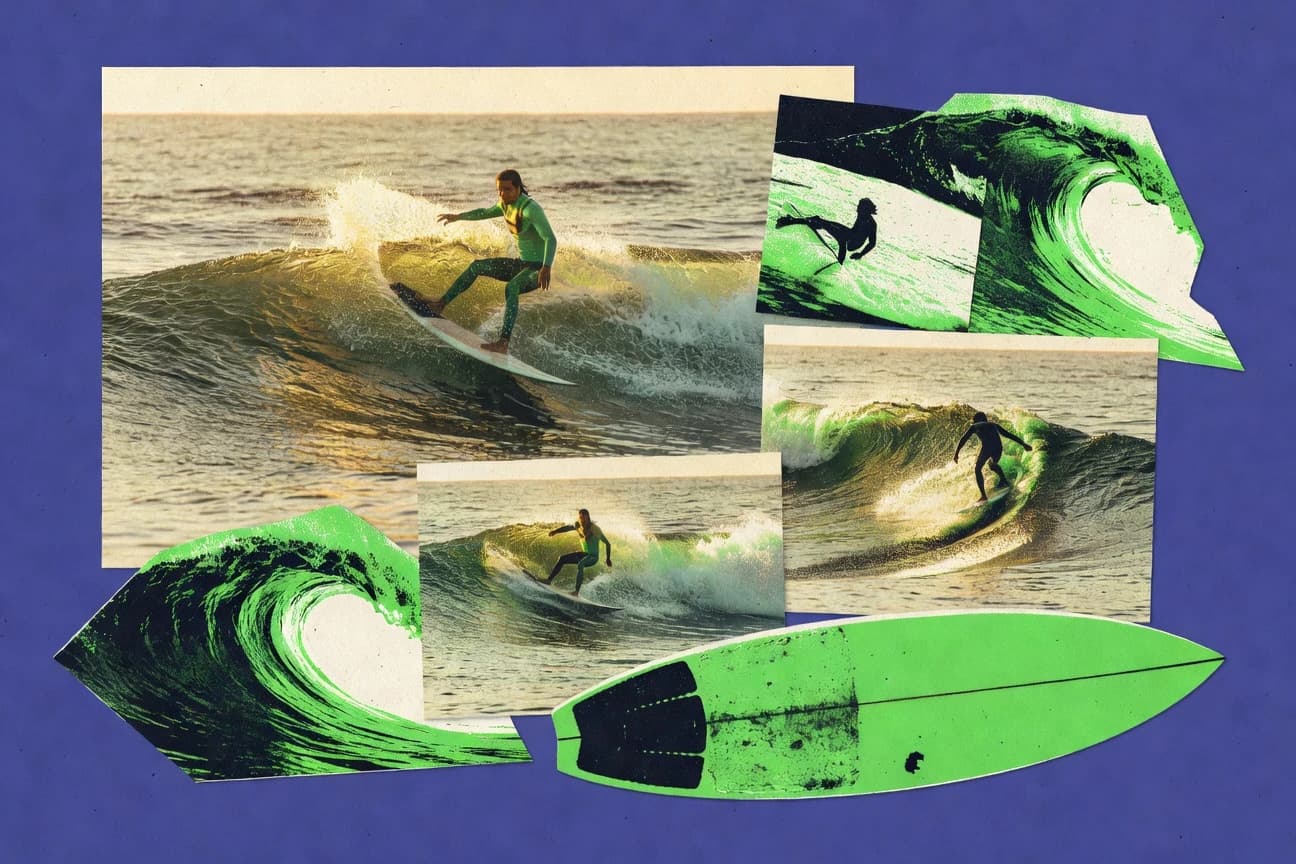

Surfing is practiced by an estimated 35 million people worldwide, with roughly 60% of surfers aged 18 to 34. At the Olympic level, heats run for just 20 to 35 minutes and scoring can move in 0.1 point increments. The sport also keeps its extremes close together, from 62.3-foot storm waves recorded by buoys to title races decided on fractions of a wave.
Key Takeaways
- Surfing was officially added to the Olympic program for the Tokyo 2020 Games
- The World Surf League (WSL) Championship Tour features 10-11 events annually
- A perfect 10 point ride requires three judges to agree on the excellence of the wave
- There are an estimated 35 million surfers worldwide
- Approximately 20% of all surfers are female
- 60% of surfers are between the ages of 18 and 34
- The highest wave ever recorded by a buoy during a storm was 62.3 feet
- 80% of the world's surfable waves are located in the Pacific Ocean
- Pipeline in Oahu is responsible for more surfing fatalities than any other single break
- The global surfing market size was valued at $3.76 billion USD in 2022
- The surfboard industry accounts for 15% of the total surfing market revenue
- Surfing tourism contributes over $50 billion USD to the global economy annually
- Professional surfers can reach top speeds of 35 miles per hour on a wave
- An average surf session lasts approximately 90 to 120 minutes
- Surfers paddle for approximately 50-60% of their total time in the water
From Olympic debut to global participation and prize money, surfing keeps growing with standout champions.
Related reading
01 · Category
Competition and Events30 stats
01
Surfing was officially added to the Olympic program for the Tokyo 2020 Games
02
The World Surf League (WSL) Championship Tour features 10-11 events annually
03
A perfect 10 point ride requires three judges to agree on the excellence of the wave
04
The first world surfing championship was held in Manly, Australia in 1964
05
Top professional surfers can earn over $2 million USD in sponsorship deals annually
06
Kelly Slater has won a record 11 World Titles
07
36 surfers competed in the inaugural Olympic surfing event
08
Carissa Moore has won 5 World Titles as of 2021
09
The Vans Triple Crown of Surfing offers a total prize purse of $1.1 million
10
Priority rules were first formalized in competition in the mid-1980s
11
Over 100 countries are members of the International Surfing Association
12
Olympic surfing heats usually last between 20 and 35 minutes
13
Judges score waves on a scale of 0.1 to 10.0 in increments of 0.1
14
The Eddie Aikau Big Wave Invitational requires waves to be at least 20 feet high to run
15
Gabriel Medina has over 11 million followers on Instagram, the most of any surfer
16
Top-tier surf competitions utilize a "dual heat" system to save time
17
The Pipe Masters is the most-watched individual event in professional surfing
18
40 surfers compete in the Men's World Championship Tour
19
Steph Gilmore has won 8 World Titles, a record for women's surfing
20
The WSL uses a ranking system where points from the best 9 events count
21
5 judges typically evaluate a heat in the World Surf League
22
To win a heat, a surfer needs the highest total of their two best waves
23
The ISA World Surfing Games features teams from 50+ nations
24
Wildcard entries are given to 2 surfers per WSL event
25
The first Olympic Gold Medal in surfing was won by Italo Ferreira
26
A "perfect heat" is a total score of 20 points, achieved very rarely
27
The Big Wave Tour consists of 3-5 events per season
28
The "Mid-season cut" reduces the WSL field from 36 to 24 men
29
Surfing heats are timed using a countdown horn system
30
Duke Kahanamoku is credited with popularizing surfing in the early 20th century
Interpretation
Competition and Events Interpretation
This data paints a picture of surfing as a thrillingly chaotic, yet meticulously quantified paradox, where a pursuit rooted in the grace of riding nature’s raw power now meticulously judges it in tenth-of-a-point increments, crowns its kings and queens with millions of dollars and millions of followers, and has finally convinced the Olympics that catching a wave is every bit as serious as catching a fastball.
02 · Category
Demographics and Participation30 stats
01
There are an estimated 35 million surfers worldwide
02
Approximately 20% of all surfers are female
03
60% of surfers are between the ages of 18 and 34
04
Brazil has seen a 25% increase in surfing participation since 2014
05
13% of surfers identify as "advanced" or "expert" skill level
06
The United States has 3.3 million active surfers
07
California accounts for 40% of the surfing population in the United States
08
Portugal’s surfing population has doubled in the last 10 years
09
55% of surfers surf at least once a week during peak season
10
Australia has the highest per-capita surfing population in the world
11
30% of surfers consider themselves "soul surfers" rather than competitive
12
15% of surfers own more than 5 surfboards
13
Surfers over the age of 50 make up 12% of the global surfing community
14
25% of surfers travel internationally at least once a year for surf trips
15
The average surfer spends $2,000annually on gear and travel
16
10% of new surfers now learn in wave pools rather than the ocean
17
40% of surfers have an annual household income over $75,000 USD
18
Men represent 78% of the global surf apparel market
19
Only 5% of surfers live more than 50 miles from the coast
20
22% of surfers started the sport before the age of 10
21
18% of the surfing population is located in Europe
22
Approximately 2 million people learn to surf every year
23
35% of surfers have a college degree or higher
24
7% of surfers identify as "professional" or "semi-pro"
25
48% of surfers prefer surfing early in the morning
26
Japan has a surfing population of roughly 2.5 million people
27
1 in 5 surfers started during the COVID-19 pandemic
28
60% of surfers use a longboard at least occasionally
29
12% of surfers are over the age of 45
30
28% of surfers are based in the United States
Interpretation
Demographics and Participation Interpretation
Despite its image of free-spirited rebellion, surfing reveals itself as a surprisingly structured global subculture where the majority are young, coastal, and financially comfortable, suggesting it's less about dropping out and more about buying in—just before sunrise.
03 · Category
Environment and Geography30 stats
01
The highest wave ever recorded by a buoy during a storm was 62.3 feet
02
80% of the world's surfable waves are located in the Pacific Ocean
03
Pipeline in Oahu is responsible for more surfing fatalities than any other single break
04
Over 4,500 miles of Indonesian coastline offer surfable conditions
05
75% of surf breaks are impacted by coastal development or pollution
06
Teahupo'o's reef is located only 20 inches below the surface at low tide
07
The Great Barrier Reef helps create over 100 distinct surf breaks
08
Nazaré, Portugal, features a 16,000-foot deep underwater canyon that amplifies swell
09
Sea level rise threatens 60% of current high-quality surfing locations
10
Hawaii has over 100 named surf spots on the North Shore alone
11
The average temperature of a surf break in the UK is 12 degrees Celsius
12
The longest wave ever ridden was on a tidal bore in the Amazon for 37 minutes
13
Jeffreys Bay in South Africa is widely considered the world's best right-hand point break
14
Erosion at Mavericks has shortened the break's takeoff zone by 5% since 1990
15
The Pacific Garbage Patch contains plastics that affect 15% of major surf breaks
16
The water temperature at Mavericks can drop to 50 degrees Fahrenheit
17
Trestles in California is the only surf spot located on a military base
18
Skeleton Bay in Namibia features a sandpit that can last for 2 kilometers
19
The Maldives consists of 1,192 islands, of which 50 offer world-class surf
20
90% of surfers have reported seeing trash in the water during a session
21
Bells Beach in Australia is home to the world's longest-running surf contest
22
Cloudbreak in Fiji is located 3 miles offshore on a barrier reef
23
Hawaii's Banzai Pipeline is only 50 yards from the shore
24
The average wave height at Waikiki is 2-3 feet year-round
25
The Southern Ocean produces the most consistent swells globally
26
Supertubes in Portugal is famous for its fast, cylindrical barrels
27
The coast of Cornwall accounts for 60% of the UK's surfing activity
28
Mundaka in Spain is considered the best river-mouth break in Europe
29
The North Shore of Oahu generates $30 million in tourism during peak surf season
30
The Amazon Tidal Bore (Pororoca) can travel 500 miles inland
Interpretation
Environment and Geography Interpretation
Despite holding a staggering 80% of the world's surfable waves, the Pacific Ocean reminds us that our playground is both a magnificent and fragile beast, where the same forces that carve perfect barrels also choke 15% of major breaks with plastic and threaten 60% of our best waves with rising seas.
More related reading
04 · Category
Industry and Economics30 stats
01
The global surfing market size was valued at $3.76 billion USD in 2022
02
The surfboard industry accounts for 15% of the total surfing market revenue
03
Surfing tourism contributes over $50 billion USD to the global economy annually
04
Wetsuit sales grew by 8% annually between 2018 and 2021
05
Surfing hardware sales (fins, leashes, wax) gross over $400 million yearly
06
Online surf apparel sales increased by 12% following the 2021 Olympics
07
The average price of a custom-shaped surfboard is $750USD
08
Surf schools generate approximately $250 million in global revenue annually
09
The sustainable surfboard market is projected to grow by 6% by 2025
10
Surfboard wax sales reach over 10 million units globally each year
11
Quiksilver's annual revenue from surfing products exceeds $1 billion
12
Surf film production budgets have increased by 200% since the digital era
13
Retail surf shops saw a 15% rise in foot traffic during the COVID-19 pandemic
14
Wave pools cost between $20 million and $50 million to construct
15
The Surfboard leashes market is valued at $85 million USD globally
16
GoPro cameras are used by 65% of surfers who record their sessions
17
The resale value of vintage surfboards has increased by 50% in the last decade
18
E-commerce accounts for 35% of all surfboard sales as of 2023
19
The average commission for a surfboard shaper is $100-$150 per board
20
The world surf apparel market is expected to reach $1.5 billion by 2027
21
Sponsorships account for 80% of a professional surfer's income
22
Custom wetsuits can cost up to $800USD
23
Surf forecasting apps like Surfline have over 1 million paid subscribers
24
The surfing retail sector employs over 100,000 people in the US
25
The surfboard manufacturing industry uses 500,000 tons of foam annually
26
Surf-related injuries result in $10 million in medical costs annually in Australia
27
Wave pool technology has attracted $300 million in VC investment since 2015
28
Billabong's marketing budget for surf events is $20 million per year
29
The used surfboard market is valued at $200 million USD
30
Surf travel agencies report average trip costs of $3,500per person
Interpretation
Industry and Economics Interpretation
Surfers may ride waves for free, but the colossal economic wake they create—from billion-dollar tourism to a relentless drip of wax and leashes—proves that catching the perfect curl is the engine of a surprisingly vast and serious global industry.
05 · Category
Science and Performance30 stats
01
Professional surfers can reach top speeds of 35 miles per hour on a wave
02
An average surf session lasts approximately 90 to 120 minutes
03
Surfers paddle for approximately 50-60% of their total time in the water
04
Heart rates of competitive surfers can peak at 190 beats per minute during a heat
05
Surfers burn between 200 and 400 calories per hour of active surfing
06
A modern shortboard weighs between 5 and 7 pounds on average
07
Surfing improves balance by strengthening the core and proprioceptor muscles
08
The "buoyancy" of a surfboard is measured in liters of volume
09
The average surfer stands on their board for less than 5% of their session
10
Impact vests can reduce water impact pressure by up to 40%
11
Surfing at dawn (Dawn Patrol) is practiced by 45% of regular surfers
12
Fins increase the stability and directional control of a surfboard by 70%
13
The "duck dive" maneuver requires a surfer to submerge up to 3 feet underwater
14
A surfer's VO2 max is typically comparable to that of a marathon runner
15
Saltwater can decrease the lifespan of a surfboard by 10% if not rinsed
16
High-performance surfing requires a knee flexion of up to 120 degrees
17
70% of surfing injuries are lacerations caused by fins or reefs
18
Surfing increases serotonin levels by 20% after a 30-minute session
19
UV exposure is 30% higher for surfers due to water reflection
20
Lung capacity in elite surfers is 15% higher than the average adult
21
Hydrodynamic drag is reduced by 10% with a polished surfboard finish
22
50% of surfers suffer from 'Surfer's Ear' (exostosis) at some point
23
Reaction times of professional surfers are 10% faster than average athletes
24
A surfboard's "rocker" affects turning speed by up to 25%
25
Surfing for 1 hour can improve glucose metabolism by 15%
26
Paddle power generates 90% of the momentum needed to catch a wave
27
65% of surfers experience lower back pain due to repetitive paddling
28
Core body temperature can drop by 2 degrees in 60-degree water without a wetsuit
29
Surfing develops 30% more shoulder strength than swimming alone
30
80% of surfers use a leash to prevent losing their board
Interpretation
Science and Performance Interpretation
Professional surfers, who can reach the exhilarating yet fleeting top speed of a city car, spend most of their time not gracefully dancing on waves but rather engaged in an exhaustive aquatic paddling marathon that rivals a runner's cardiovascular strain, all while battling the ocean's relentless wear on both their bodies and equipment, proving that the iconic image of serene wave-riding is merely the glorious, sub-five-percent tip of a grueling, saltwater-soaked iceberg.
Reference
Cite This Report
This report is designed to be cited. We maintain stable URLs and versioned verification dates. Copy the format appropriate for your publication below.
APA
Stefan Wendt. (2026, February 13). Surfing Statistics. Gitnux. https://gitnux.org/surfing-statistics
MLA
Stefan Wendt. "Surfing Statistics." Gitnux, 13 Feb 2026, https://gitnux.org/surfing-statistics.
Chicago
Stefan Wendt. 2026. "Surfing Statistics." Gitnux. https://gitnux.org/surfing-statistics.
Sources & references
91 datasets cited across this report · attribution is report-level
 instagram.com
+1 additional datasets cited (not shown individually)