
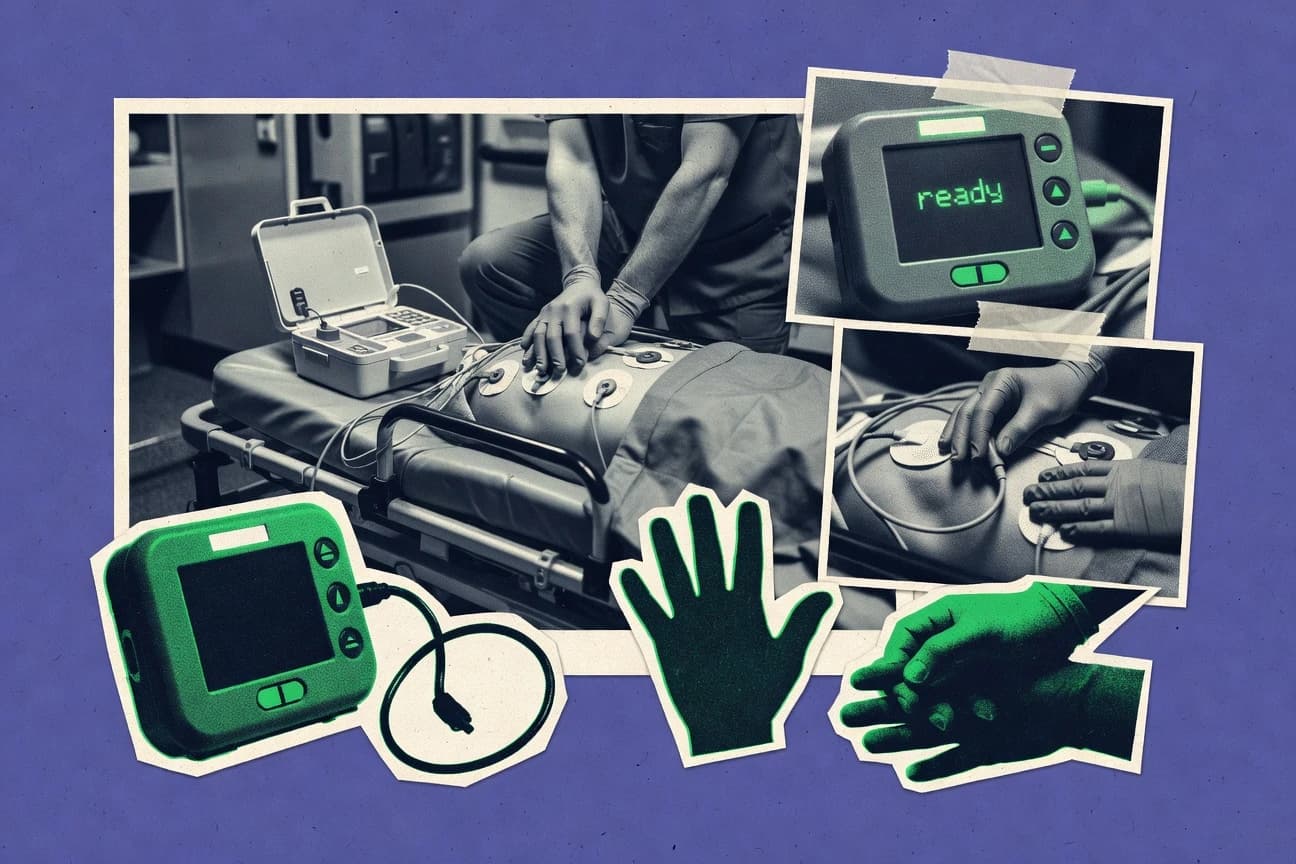

Sudden cardiac arrest strikes about 350,000 times every year in the US, and roughly 90% of victims die before reaching the hospital. The pattern is just as startling as the scale, with men affected about 2:1, incidence peaking in the 6 to 10 AM and 4 to 7 PM windows, and outcomes swinging dramatically depending on where and how quickly help arrives.
Key Takeaways
- SCA occurs more in men (2:1 ratio)
- Mean age at SCA is 65 years
- 70% of SCA victims are men
- Approximately 350,000 out-of-hospital cardiac arrests (OHCA) occur annually in the US
- In Europe, there are about 400,000 to 700,000 cases of OHCA each year
- SCA accounts for 15-20% of all deaths in Western countries
- CPR training reduces SCA incidence in communities
- ICD implantation reduces SCA mortality by 30%
- Public AED programs increase survival 3-fold
- Coronary artery disease causes 70-80% of SCA
- Hypertension increases SCA risk by 2-fold
- Smoking doubles SCA risk
- Out-of-hospital cardiac arrest (OHCA) survival to hospital discharge is about 10%
- Bystander CPR increases survival by 2-3 times
- Public AED use triples survival chances
Most sudden cardiac arrests occur in men around age 65, and survival depends on fast bystander CPR and AED use.
Related reading
01 · Category
Demographics24 stats
01
SCA occurs more in men (2:1 ratio)
02
Mean age at SCA is 65 years
03
70% of SCA victims are men
04
Blacks have 1.5 times higher SCA incidence than whites
05
Women SCA peaks after age 55
06
Urban areas have higher EMS-treated OHCA rates
07
Low SES neighborhoods have 2x SCA incidence
08
Hispanics have lower bystander CPR rates
09
Elderly (>80) comprise 40% of SCA cases
10
Children <1 year have highest pediatric incidence
11
Athletes SCA mostly young males 12-35 years
12
IHCA more common in surgical vs medical patients
13
Rural OHCA has lower survival due to delay
14
50% of SCA in patients with known heart disease
15
Pregnancy SCA incidence 1:30,000 deliveries
16
Nursing home residents 25% of OHCA
17
Workplace SCA 10% of OHCA
18
Public SCA 20%, private 80%
19
Peak SCA incidence 6-10 AM and 4-7 PM
20
Winter months have 10% higher SCA rates
21
Monday highest day for SCA occurrence
22
Asians lower incidence than Caucasians
23
Veterans have higher SCA rates
24
Prisoners SCA rate similar to general population
Interpretation
Demographics Interpretation
While men are more often struck by sudden cardiac arrest—especially as they age, in disadvantaged neighborhoods, or at peak stress hours—this grim statistical portrait reveals that no demographic is immune, reminding us that vigilance and preparedness must be as universal as the risk itself.
02 · Category
Incidence and Prevalence29 stats
01
Approximately 350,000 out-of-hospital cardiac arrests (OHCA) occur annually in the US
02
In Europe, there are about 400,000 to 700,000 cases of OHCA each year
03
SCA accounts for 15-20% of all deaths in Western countries
04
Global incidence of SCA is estimated at 50-100 per 100,000 person-years
05
In the US, SCA occurs in about 1 in 1,000 adults over age 35 annually
06
OHCA incidence is 55-113 per 100,000 population in North America
07
About 90% of SCA victims die before reaching hospital
08
SCA is responsible for half of all coronary heart disease deaths
09
In high-income countries, EMS-treated OHCA incidence is 52-98 per 100,000
10
SCA prevalence in athletes is 1 in 50,000 to 1 in 200,000
11
Annual OHCA in US adults is 326,000
12
SCA strikes 1 in 1,500 people yearly in some regions
13
OHCA occurs every 2 minutes in the US
14
In Asia, OHCA incidence is 28-55 per 100,000
15
SCA accounts for 180,000-300,000 US deaths yearly
16
Incidence of VF/VT OHCA is 30-50 per 100,000
17
Pediatric OHCA incidence is 3-15 per 100,000 children
18
Workplace SCA incidence is 0.04 per 1,000 employees annually
19
Nursing home OHCA rate is 20-40 per 1,000 residents yearly
20
Airport SCA incidence is higher due to surveillance
21
SCA in public places occurs in 15-20% of OHCA cases
22
Home accounts for 70-80% of OHCA locations
23
OHCA with shockable rhythm is 25% of cases
24
Non-cardiac OHCA is 20-30% of total
25
Witnessed OHCA is 20-40% of cases
26
In Denmark, OHCA incidence is 61 per 100,000
27
UK OHCA incidence is 70 per 100,000 adults
28
Australia OHCA is 51-102 per 100,000
29
Japan EMS-treated OHCA is 118 per 100,000
Interpretation
Incidence and Prevalence Interpretation
Sudden cardiac arrest, with its chilling math—averaging a fresh victim every two minutes in the US alone and claiming nearly all of them before a hospital can even try—stands as a grim, democratic tax on human mortality that the vast majority of us are woefully unprepared to pay.
03 · Category
Prevention and Treatment26 stats
01
CPR training reduces SCA incidence in communities
02
ICD implantation reduces SCA mortality by 30%
03
Public AED programs increase survival 3-fold
04
Beta-blockers reduce SCA risk 40% post-MI
05
Statins lower SCA risk by 50% in CAD
06
Lifestyle modification prevents 80% of CAD-related SCA
07
School CPR/AED programs save lives
08
Amiodarone in VF improves ROSC 20%
09
Vasopressin equivalent to epinephrine in OHCA
10
TTM at 33C improves outcomes vs 37C
11
Early coronary angiography post-ROSC 50% better survival
12
High-quality CPR doubles survival
13
Genetic screening prevents SCA in channelopathies
14
Wearable defibrillators prevent SCA in bridge period 2%
15
Sports preparticipation screening detects 70% HCM
16
Community AED mapping reduces time to shock
17
Opioid reversal with naloxone in overdose OHCA
18
Exercise programs reduce SCA in heart failure
19
Smoking cessation halves SCA risk in 5 years
20
Hypertension control prevents 20% SCA
21
Vaccinations reduce infectious SCA triggers
22
Dispatcher CPR instructions increase bystander action 60%
23
Mobile apps for AED location cut response time 3 min
24
Drone AED delivery reduces shock time to 5 min
25
Post-arrest PCI in non-STEMI improves outcome 25%
26
Family CPR training boosts home survival 2x
Interpretation
Prevention and Treatment Interpretation
If we truly want to outwit death by cardiac arrest, we must treat the chain of survival as a relentless community project, arming everyone with knowledge, strategically scattering defibrillators like modern-day Excaliburs, meticulously managing risk from genetics to hypertension, and ensuring that from the moment collapse occurs to post-arrest care, every single, evidence-based link is forged with the urgency of a ticking clock.
More related reading
04 · Category
Risk Factors29 stats
01
Coronary artery disease causes 70-80% of SCA
02
Hypertension increases SCA risk by 2-fold
03
Smoking doubles SCA risk
04
Diabetes mellitus raises SCA risk by 2-4 times
05
Obesity (BMI>30) increases risk by 1.5-2 times
06
Family history of SCA increases risk 2-5 fold
07
Male gender has 2-3 times higher SCA risk
08
Age >65 years triples SCA risk
09
Prior myocardial infarction increases risk 5-fold
10
Heart failure raises SCA risk 6-9 times
11
Left ventricular ejection fraction <35% has 5-10% annual SCA risk
12
Electrolyte imbalances like hypokalemia increase risk
13
Drug abuse (cocaine) increases acute SCA risk 10-fold
14
Sleep apnea doubles SCA risk
15
Chronic kidney disease raises risk 2-3 times
16
HIV infection increases SCA risk 4-fold
17
Alcohol abuse increases risk by 2.5 times
18
Hypercholesterolemia doubles risk
19
Sedentary lifestyle increases risk by 1.5 times
20
Prior ventricular arrhythmias raise risk 10-fold
21
Congenital long QT syndrome has 1-2% annual risk in untreated
22
Brugada syndrome SCA risk is 1-8% per year
23
Hypertrophic cardiomyopathy risk is 0.5-1% annually
24
ARVC annual SCA risk 2-5%
25
Myocarditis increases risk 3-fold acutely
26
Aortic stenosis severe cases have 2-3% annual risk
27
Atrial fibrillation increases risk 1.5-2 times
28
COPD raises SCA risk 2-fold
29
Depression doubles SCA risk post-MI
Interpretation
Risk Factors Interpretation
The human heart, it seems, is a tragically efficient record-keeper, tallying every extra pound, skipped walk, and late-night worry into a single, devastating invoice that it can suddenly present without warning.
05 · Category
Survival Rates and Outcomes28 stats
01
Out-of-hospital cardiac arrest (OHCA) survival to hospital discharge is about 10%
02
Bystander CPR increases survival by 2-3 times
03
Public AED use triples survival chances
04
Witnessed VF OHCA survival is 20-30%
05
In-hospital cardiac arrest (IHCA) survival is 25%
06
1-year survival post-OHCA is 8-10%
07
Neurological intact survival is 8% for OHCA
08
Pediatric OHCA survival is 5-10%
09
Shockable rhythm OHCA survival 30-40%
10
EMS response <5 min doubles survival odds
11
Therapeutic hypothermia improves neuro outcome by 20%
12
ECPR survival for refractory OHCA is 20-30%
13
Dispatcher-assisted CPR boosts bystander intervention by 50%
14
PCI post-ROSC improves 1-year survival to 60%
15
IHCA survival improved from 18% to 25% 2000-2017
16
Public location OHCA survival 30-50% vs home 5%
17
Bystander AED before EMS survival 50-70%
18
ROSC rate with bystander CPR is 40%
19
30-day survival post-OHCA is 10-15%
20
Good neuro outcome at discharge 7-9% for OHCA
21
Survival without severe impairment is 3-5% overall
22
Utstein style survival for bystander witnessed shockable 57%
23
Post-arrest care bundle increases survival 2-fold
24
Coma post-ROSC has 20% good outcome with TTM
25
Workplace OHCA survival 50-70%
26
Sports-related SCA survival 40-50% with prompt AED
27
Nursing home OHCA survival <2%
28
Airport AED program survival 50%
Interpretation
Survival Rates and Outcomes Interpretation
While the numbers paint a grim picture, they are also a clear blueprint: the path to survival is paved by the immediate links in the chain—a witness who calls for help and starts CPR, a public AED that’s close at hand, and a system that supports them every step of the way.
Reference
Cite This Report
This report is designed to be cited. We maintain stable URLs and versioned verification dates. Copy the format appropriate for your publication below.
APA
Lars Eriksen. (2026, February 13). Sudden Cardiac Arrest Statistics. Gitnux. https://gitnux.org/sudden-cardiac-arrest-statistics
MLA
Lars Eriksen. "Sudden Cardiac Arrest Statistics." Gitnux, 13 Feb 2026, https://gitnux.org/sudden-cardiac-arrest-statistics.
Chicago
Lars Eriksen. 2026. "Sudden Cardiac Arrest Statistics." Gitnux. https://gitnux.org/sudden-cardiac-arrest-statistics.
Sources & references
21 datasets cited across this report · attribution is report-level