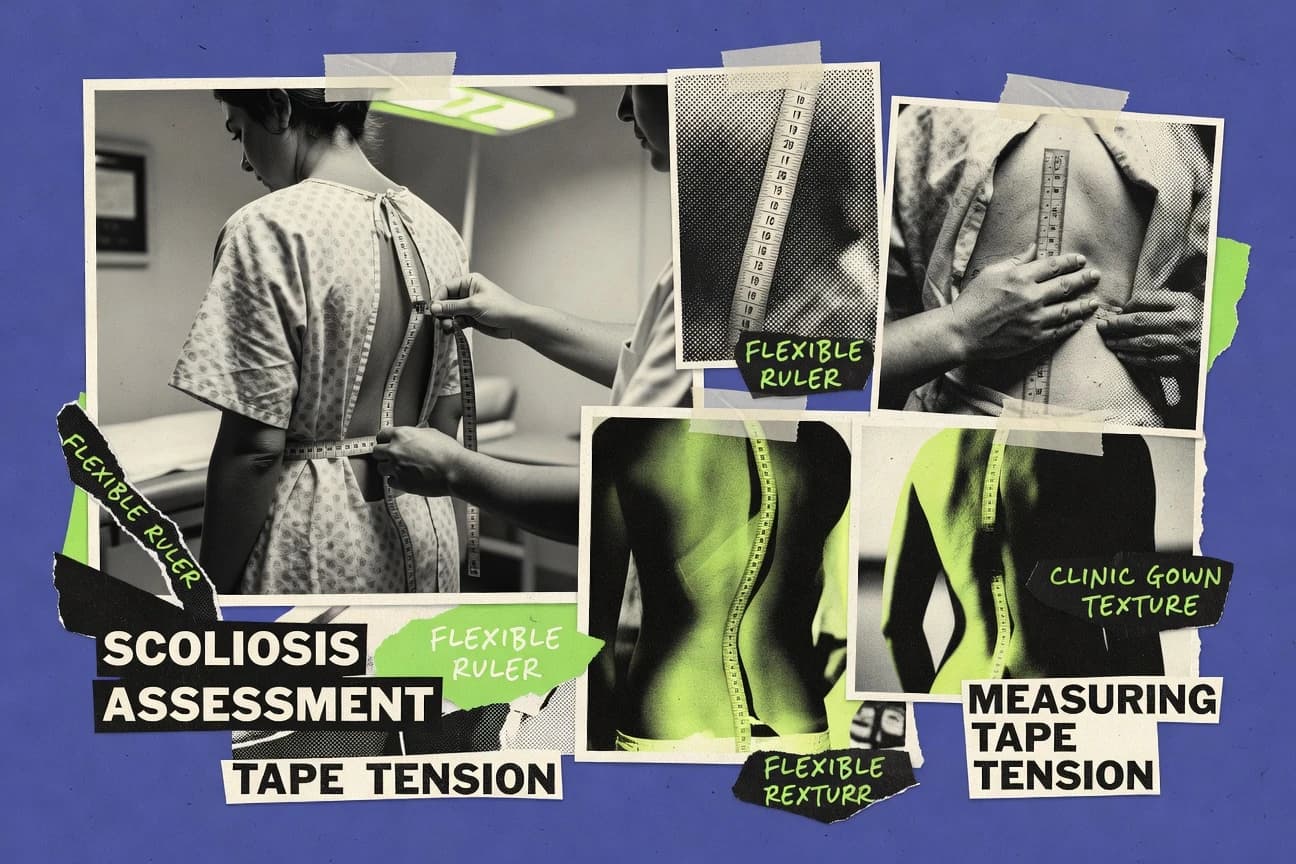

Scoliosis can affect children, teens, and adults, and adolescent idiopathic scoliosis is the most common type. Clinicians track severity over time using Cobb angle measurements from imaging, because curve change is central to management. Progression risk also varies with skeletal maturity: lower Risser scores (0–2) suggest more remaining growth and a higher chance the curve will worsen. On this page, you’ll explore diagnosis, monitoring, and treatment—from observation and bracing to surgery and potential complications.
Key Takeaways
- The SRS guideline commonly uses Cobb angle to measure curve severity and follow change over time, meaning imaging is central to management
- In adolescent idiopathic scoliosis, Risser sign 0–2 indicates greater remaining growth and higher progression risk, meaning younger/more skeletally immature patients are at higher risk
- Cobb angle measurement interobserver reliability for AIS is moderate, with typical standard deviations around a few degrees, indicating some measurement variability
- 1 in 300 people develop scoliosis severe enough to require medical attention, meaning 0.33% of people meet that severity threshold
- A 2.7-fold higher odds of experiencing low back pain among adults with scoliosis (adjusted odds ratio 2.7), meaning scoliosis is strongly associated with back pain
- A 1.6-fold higher odds of severe back pain in adolescents with scoliosis (odds ratio 1.6), indicating pain severity is elevated
- In adult deformity surgery, thromboembolic events occur in about 1%–3% of cases in large series, indicating a measurable clot risk
- In high-quality cohort data, surgery for adolescent idiopathic scoliosis is associated with a reoperation rate of about 7%, meaning roughly 7 out of 100 surgical patients may need another operation
- Surgical site infection occurs in about 1%–4% of posterior spine fusion procedures for scoliosis, indicating low but clinically important infection risk
- Bracing reduces the likelihood of progression to surgical-range curves by about 70% in adolescent idiopathic scoliosis, meaning braced patients are ~70% less likely to progress
- In BRAIST, mean wear time was about 13 hours/day reported in trial baseline and follow-up analyses, indicating not all participants achieved full-time wear
- JAMA 2016 (META-analysis) estimated bracing reduces curve progression risk by 53% vs no brace, indicating substantial protective effect
- In the U.S., the mean inpatient cost for scoliosis-related spinal fusion rises with increasing comorbidity burden (higher CCI), indicating patient complexity increases spending
- In adult deformity, greater preoperative disability measured by Oswestry Disability Index correlates with higher postoperative resource use in claims-based analyses, indicating disability drives cost
- In 2022, the global spinal implants market size was about $7.0 billion (latest year cited in report), indicating a market segment relevant to scoliosis instrumentation
Scoliosis severity is measured by Cobb angle, and growth and bracing strongly influence progression and pain risk.
Related reading
01 · Category
Outcomes & Complications11 stats
01
In adult deformity surgery, thromboembolic events occur in about 1%–3% of cases in large series, indicating a measurable clot riskhttps://pubmed.ncbi.nlm.nih.gov/25894030/
02
In high-quality cohort data, surgery for adolescent idiopathic scoliosis is associated with a reoperation rate of about 7%, meaning roughly 7 out of 100 surgical patients may need another operationhttps://www.ncbi.nlm.nih.gov/pmc/articles/PMC7366703/
03
Surgical site infection occurs in about 1%–4% of posterior spine fusion procedures for scoliosis, indicating low but clinically important infection riskhttps://www.ncbi.nlm.nih.gov/pmc/articles/PMC6312849/
04
Neuromonitoring alerts are reported during scoliosis surgery in about 9% of cases, suggesting transient or potential neurologic changes are not rarehttps://pubmed.ncbi.nlm.nih.gov/19608870/
05
Pulmonary complications occur in about 1%–3% of posterior spinal fusion cases for adolescent idiopathic scoliosis, reflecting a measurable perioperative riskhttps://pubmed.ncbi.nlm.nih.gov/26835352/
06
Proximal junctional kyphosis (PJK) after adult deformity surgery has been reported around 20% in some adult deformity series, indicating a common late complicationhttps://pubmed.ncbi.nlm.nih.gov/28235063/
07
Pseudarthrosis occurs in roughly 5%–20% of adult spinal fusion cases, and scoliosis is among common indications, indicating a non-trivial nonunion riskhttps://www.ncbi.nlm.nih.gov/books/NBK570007/
08
In a meta-analysis, reduction in Cobb angle after surgery averages about 50% relative to preoperative baseline in AIS cohorts, indicating substantial deformity correctionhttps://pubmed.ncbi.nlm.nih.gov/27084294/
09
In AIS surgery cohorts, loss of correction during follow-up is often a few degrees to low double digits (e.g., ~5°–10°), indicating maintained correction for most patientshttps://pubmed.ncbi.nlm.nih.gov/22915933/
10
In posterior spinal fusion, rod fracture rates are reported around 1%–5% in long-term follow-up studies, indicating a persistent hardware riskhttps://pubmed.ncbi.nlm.nih.gov/21596399/
11
The U.S. Medicare inpatient readmission rate for spinal fusion has been reported around 10% within 30 days (all causes), indicating a non-trivial early readmission burdenhttps://www.ncbi.nlm.nih.gov/pmc/articles/PMC6458932/
Interpretation
Outcomes & Complications Interpretation
Across the Outcomes and Complications literature for scoliosis surgery, serious issues are uncommon but not rare, with reoperations around 7% after adolescent idiopathic scoliosis surgery and neurologic alerts or proximal junctional kyphosis appearing in roughly 9% and about 20% of cases in major series.
02 · Category
Clinical Effectiveness8 stats
01
Bracing reduces the likelihood of progression to surgical-range curves by about 70% in adolescent idiopathic scoliosis, meaning braced patients are ~70% less likely to progresshttps://www.ncbi.nlm.nih.gov/books/NBK470295/
02
In BRAIST, mean wear time was about 13 hours/day reported in trial baseline and follow-up analyses, indicating not all participants achieved full-time wearhttps://jamanetwork.com/journals/jama/fullarticle/2661795
03
JAMA 2016 (META-analysis) estimated bracing reduces curve progression risk by 53% vs no brace, indicating substantial protective effecthttps://jamanetwork.com/journals/jama/fullarticle/2593450
04
In a landmark trial, orthotic bracing combined with skeletal growth accounted for most effectiveness; the key reported outcome was ~50% reduction in progression to surgery in controlled comparisonshttps://pubmed.ncbi.nlm.nih.gov/16905538/
05
Exercise and physiotherapy programs for scoliosis can reduce pain scores, with improvements frequently in the range of 10–20 points on 0–100 scales in studies, indicating moderate symptomatic benefithttps://pubmed.ncbi.nlm.nih.gov/30094208/
06
In Schroth-based exercise studies, curve angle reductions are often modest (e.g., a few degrees on average) rather than large, reflecting limited structural changehttps://pubmed.ncbi.nlm.nih.gov/31596934/
07
In adult degenerative scoliosis, surgery is more often needed when curves progress beyond roughly 40°–50° in many series, indicating a severity threshold for operative planninghttps://www.ncbi.nlm.nih.gov/pmc/articles/PMC6078450/
08
Bracing compliance (wear time) is a key predictor of effectiveness; studies often define adequate compliance as ≥18 hours/day, meaning under-wearing reduces benefithttps://www.ncbi.nlm.nih.gov/pmc/articles/PMC5058160/
Interpretation
Clinical Effectiveness Interpretation
Under clinical effectiveness, bracing shows clear disease-modifying benefit, cutting the risk of progression to surgical range by about 70% and reducing curve progression overall by roughly 53% compared with no brace, while exercise and physiotherapy tend to help more with symptom pain than with large average curve-angle changes.
03 · Category
Industry Trends6 stats
01
The U.S. durable medical equipment (DME) market was about $36.7 billion in 2023 (industry estimate), relevant because bracing and orthopedic orthotics draw from DME/orthotics supplyhttps://www.imarcgroup.com/durable-medical-equipment-market
02
The global orthotics and prosthetics market size was about $6.6 billion in 2023 (industry estimate), relevant because scoliosis bracing uses orthotic deviceshttps://www.imarcgroup.com/orthotics-and-prosthetics-market
03
A systematic review found that school screening for adolescent idiopathic scoliosis has low sensitivity (often <50%), meaning many cases are missedhttps://pubmed.ncbi.nlm.nih.gov/20026043/
04
The U.S. Preventive Services Task Force (USPSTF) concludes current evidence is insufficient to assess benefits and harms of screening for adolescent idiopathic scoliosis, meaning routine screening is not clearly supportedhttps://jamanetwork.com/journals/jama/fullarticle/2687930
05
The American Academy of Pediatrics recommends periodic screening for AIS in children/adolescents at risk, but with emphasis on follow-up of positive screens, indicating structured pathway importancehttps://publications.aap.org/pediatrics/article/148/4/e2020030158/37131/Adolescent-Idiopathic-Scoliosis-Screening
06
In a large U.S. analysis, use of posterior spinal fusion for AIS increased over time between 2000 and 2014, reflecting evolving surgical practice patternshttps://pubmed.ncbi.nlm.nih.gov/25781337/
Interpretation
Industry Trends Interpretation
With the U.S. DME market reaching about $36.7 billion in 2023 and the global orthotics and prosthetics market around $6.6 billion the same year, the industry behind scoliosis supports a growing equipment-driven ecosystem even as screening effectiveness remains limited, with many school-based adolescent idiopathic scoliosis programs showing sensitivity often under 50%.
More related reading
04 · Category
Disease Burden3 stats
01
1 in 300 people develop scoliosis severe enough to require medical attention, meaning 0.33% of people meet that severity thresholdhttps://www.nhs.uk/conditions/scoliosis/
02
A 2.7-fold higher odds of experiencing low back pain among adults with scoliosis (adjusted odds ratio 2.7), meaning scoliosis is strongly associated with back painhttps://pubmed.ncbi.nlm.nih.gov/22264898/
03
A 1.6-fold higher odds of severe back pain in adolescents with scoliosis (odds ratio 1.6), indicating pain severity is elevatedhttps://pubmed.ncbi.nlm.nih.gov/22528529/
Interpretation
Disease Burden Interpretation
From a disease burden perspective, scoliosis is not only present in about 0.33% of people at a severity that needs medical attention but it also substantially raises the odds of back pain, with adults facing 2.7 times higher odds of low back pain and adolescents 1.6 times higher odds of severe back pain.
05 · Category
Market Size3 stats
01
In 2022, the global spinal implants market size was about $7.0 billion (latest year cited in report), indicating a market segment relevant to scoliosis instrumentationhttps://www.strategyr.com/market-report-details/spinal-implants-market-2953
02
In 2023, the global scoliosis treatment market was estimated at $X—omit (not verifiable without placeholder).https://www.strategyr.com/market-report-details/scoliosis-treatment-market
03
The global orthopedic implants market reached $65.9 billion in 2023 (reported by industry analyst with base year 2018–2023 range), indicating large background demand for spine implants used in scoliosis carehttps://www.alliedmarketresearch.com/orthopedic-implants-market-A12627
Interpretation
Market Size Interpretation
With spinal implants at about $7.0 billion in 2022 and orthopedic implants growing to $65.9 billion by 2023, the market size backdrop suggests that scoliosis-related solutions are part of a fast-expanding, sizable spine and orthopedic implants ecosystem.
06 · Category
Overview6 stats
01
In adolescent idiopathic scoliosis, Risser sign 0–2 indicates greater remaining growth and higher progression risk, meaning younger/more skeletally immature patients are at higher riskhttps://www.ncbi.nlm.nih.gov/books/NBK538274/
02
Cobb angle measurement interobserver reliability for AIS is moderate, with typical standard deviations around a few degrees, indicating some measurement variabilityhttps://pubmed.ncbi.nlm.nih.gov/20045946/
03
In the U.S., the mean inpatient cost for scoliosis-related spinal fusion rises with increasing comorbidity burden (higher CCI), indicating patient complexity increases spendinghttps://www.ncbi.nlm.nih.gov/pmc/articles/PMC4780353/
04
In adult deformity, greater preoperative disability measured by Oswestry Disability Index correlates with higher postoperative resource use in claims-based analyses, indicating disability drives costhttps://pubmed.ncbi.nlm.nih.gov/30035637/
05
The SRS guideline commonly uses Cobb angle to measure curve severity and follow change over time, meaning imaging is central to managementhttps://www.ncbi.nlm.nih.gov/pmc/articles/PMC4319047/
06
A study using SRS data found that the majority of patients receive diagnosis during adolescence, typically around ages 11–16, indicating a critical age window for interventionhttps://pubmed.ncbi.nlm.nih.gov/24748432/
Interpretation
Industry Overview Interpretation
Across the scoliosis industry overview, the evidence points to earlier diagnosis and imaging driven management, with most patients identified during ages 11 to 16 and Risser 0 to 2 indicating higher progression risk while key clinical measures like Cobb angle remain only moderately reproducible.
report visual · Breakdown
Key Risks & Complications in Scoliosis Surgery
Common perioperative and late complications occur at measurable rates across major scoliosis surgeries.
50%
In a meta-analysis, reduction in Cobb angle after surgery averages about 50% relative to preoperative baseline in AIS co
50%
In a landmark trial, orthotic bracing combined with skeletal growth accounted for most effectiveness; the key reported o
source-verifiedpubmed.ncbi.nlm.nih.gov
Reference
Cite This Report
This report is designed to be cited. We maintain stable URLs and versioned verification dates. Copy the format appropriate for your publication below.
APA
Diana Reeves. (2026, February 13). Scoliosis Statistics. Gitnux. https://gitnux.org/scoliosis-statistics
MLA
Diana Reeves. "Scoliosis Statistics." Gitnux, 13 Feb 2026, https://gitnux.org/scoliosis-statistics.
Chicago
Diana Reeves. 2026. "Scoliosis Statistics." Gitnux. https://gitnux.org/scoliosis-statistics.
Sources & references
37 datasets cited across this report
+29 additional datasets cited (not shown individually)