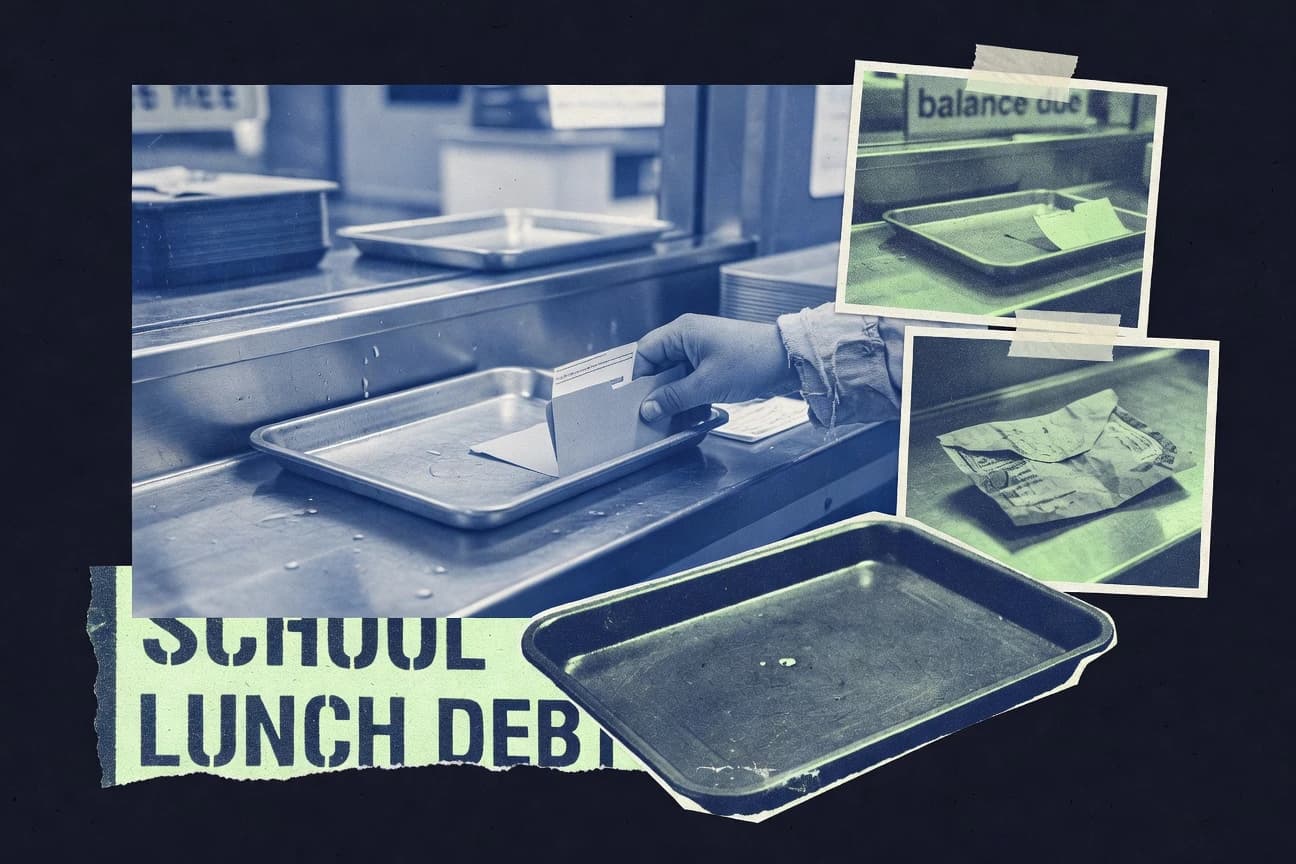

Nearly 20% of U.S. students were eligible for free or reduced-price lunch in 2021 to 2022, yet the bills behind school lunch debt are often handled as if meals were optional. At the same time, the National School Lunch Program moved 30.4 million children through the door on an average day in FY 2023, which makes the “unpaid balance” problem hit at massive scale. This post connects those contrasts to the policies, costs, and health risks that shape how lunch debt shows up nationwide and who it reaches first.
Key Takeaways
- 19.9% of students in the United States were eligible for free or reduced-price lunch during the 2021–2022 school year
- Total federal costs for the National School Lunch Program were $14.7 billion in FY 2021
- The USDA administers the NSLP through state agencies in 50 states, the District of Columbia, and 5 U.S. territories
- Children experiencing food insecurity have higher risk of adverse health outcomes; a JAMA Network Open analysis found associations with worse health indicators
- 1 in 8 children in the United States experienced hunger in 2022
- The U.S. Department of Agriculture estimated that school lunch debt affected hundreds of thousands of students nationwide in early guidance materials (as discussed in policy summaries)
- The USDA issued guidance requiring schools to offer meals to children regardless of unpaid balances under certain conditions (non-application of meal denial policies)
- In 2017, USDA guidance emphasized that schools should not deny meals for unpaid balances and should instead use alternative methods to address debts
- 45% is the additional threshold used for determining federal reimbursement level under CEP in some years (as described in CEP guidance)
- More than 10 million students participated in the Community Eligibility Provision (CEP) in the 2022–23 school year, meaning a large share of students may be served without separate individual meal accounts (relevant when considering debt-accounting mechanisms)
- The National School Lunch Program served 30.4 million children on an average day in FY 2023, setting the baseline population size that school lunch debt policies can affect
- CRS reports CEP has grown to cover millions of children nationwide, with the program serving 10+ million students in recent years (scope relevant when estimating potential debt-accounting exposure)
- 38 states reported operating Community Eligibility Provision (CEP) schools in the 2022–23 school year, showing how widely alternative eligibility pathways reduce the need for individual debt-accounting
- Nineteen states plus the District of Columbia had enacted policies preventing meal denial for unpaid charges by 2020, showing how quickly compliance-oriented statutes expanded
- A state-level example: Oklahoma’s 2022 policy changed handling of unpaid meal charges by limiting the consequences for unpaid balances while still allowing collection, reflecting statutory compliance approaches to debt
In 2021 to 2022, millions of U.S. students faced hunger and food insecurity, while federal guidance limited meal denials.
Related reading
01 · Category
Program Participation1 stats
01
19.9% of students in the United States were eligible for free or reduced-price lunch during the 2021–2022 school yearhttps://www.fns.usda.gov/pd/sls
Interpretation
Program Participation Interpretation
In the 2021–2022 school year, 19.9% of U.S. students were eligible for free or reduced-price lunch, showing that nearly one in five students were part of the program participation group tied to school lunch debt.
02 · Category
Funding And Costs2 stats
01
Total federal costs for the National School Lunch Program were $14.7 billion in FY 2021https://www.fns.usda.gov/pd/child-nutrition-tables
02
The USDA administers the NSLP through state agencies in 50 states, the District of Columbia, and 5 U.S. territorieshttps://www.fns.usda.gov/nslp/national-school-lunch-program
Interpretation
Funding And Costs Interpretation
In the Funding And Costs category, the National School Lunch Program drew $14.7 billion in federal spending in FY 2021, showing how substantial nationwide funding supports a system administered through state agencies across 50 states, the District of Columbia, and five territories.
03 · Category
Health And Educational Impacts2 stats
01
Children experiencing food insecurity have higher risk of adverse health outcomes; a JAMA Network Open analysis found associations with worse health indicatorshttps://jamanetwork.com/journals/jamanetworkopen/fullarticle/2778854
02
1 in 8 children in the United States experienced hunger in 2022https://www.feedingamerica.org/hunger-in-america
Interpretation
Health And Educational Impacts Interpretation
With 1 in 8 children in the United States experiencing hunger in 2022, school lunch debt can directly undermine health and educational outcomes by increasing the likelihood of adverse health indicators, as JAMA Network Open found in its analysis of food insecurity.
04 · Category
Debt Prevalence And Trends1 stats
01
The U.S. Department of Agriculture estimated that school lunch debt affected hundreds of thousands of students nationwide in early guidance materials (as discussed in policy summaries)https://www.fns.usda.gov/cn/school-meals-eligibility-and-access
Interpretation
Debt Prevalence And Trends Interpretation
Early guidance from the U.S. Department of Agriculture indicated that school lunch debt affected hundreds of thousands of students nationwide, underscoring that this issue is widespread rather than isolated within the Debt Prevalence And Trends category.
05 · Category
Policy And Compliance4 stats
01
The USDA issued guidance requiring schools to offer meals to children regardless of unpaid balances under certain conditions (non-application of meal denial policies)https://www.fns.usda.gov/cn/grand-mothers-guidance-school-meals-unpaid-meal-balances
02
In 2017, USDA guidance emphasized that schools should not deny meals for unpaid balances and should instead use alternative methods to address debtshttps://www.fns.usda.gov/tn/school-meals-unpaid-meal-balances
03
45% is the additional threshold used for determining federal reimbursement level under CEP in some years (as described in CEP guidance)https://www.fns.usda.gov/cn/community-eligibility-provision
04
USDA guidance states that schools may continue to follow policies consistent with offering meals even with unpaid chargeshttps://www.fns.usda.gov/tn/unpaid-meal-charges
Interpretation
Policy And Compliance Interpretation
Under the Policy And Compliance lens, USDA guidance consistently blocks meal denial for unpaid balances and reinforces this approach through reminders in 2017 and ongoing consistency with offering meals, alongside CEP reimbursement threshold rules such as the 45% marker used in some years.
06 · Category
Program Coverage4 stats
01
More than 10 million students participated in the Community Eligibility Provision (CEP) in the 2022–23 school year, meaning a large share of students may be served without separate individual meal accounts (relevant when considering debt-accounting mechanisms)https://fns-prod.azureedge.net/sites/default/files/resource-files/cep-eligibility.pdf
02
The National School Lunch Program served 30.4 million children on an average day in FY 2023, setting the baseline population size that school lunch debt policies can affecthttps://www.fns.usda.gov/pd/foodprograms/nslp
03
CRS reports CEP has grown to cover millions of children nationwide, with the program serving 10+ million students in recent years (scope relevant when estimating potential debt-accounting exposure)https://crsreports.congress.gov/product/pdf/R/R45931
04
The National Center for Education Statistics reported that 51.2 million students were enrolled in U.S. public schools in fall 2022, setting the overall population in which school lunch programs and potential debt interactions occurhttps://nces.ed.gov/programs/digest/d23/tables/dt23_203.10.asp
Interpretation
Program Coverage Interpretation
With the National School Lunch Program serving 30.4 million children on an average day in FY 2023 and the Community Eligibility Provision reaching more than 10 million students in 2022 to 23, program coverage suggests a large share of students are covered through group-based meal eligibility rather than individual accounts, shaping how much school lunch debt accounting is even applicable.
More related reading
07 · Category
Policy Compliance4 stats
01
38 states reported operating Community Eligibility Provision (CEP) schools in the 2022–23 school year, showing how widely alternative eligibility pathways reduce the need for individual debt-accountinghttps://www.cbpp.org/research/school-funding/facts-about-community-eligibility
02
Nineteen states plus the District of Columbia had enacted policies preventing meal denial for unpaid charges by 2020, showing how quickly compliance-oriented statutes expandedhttps://www.ncsl.org/human-services/education-school-meals-unpaid-charges
03
A state-level example: Oklahoma’s 2022 policy changed handling of unpaid meal charges by limiting the consequences for unpaid balances while still allowing collection, reflecting statutory compliance approaches to debthttps://legiscan.com/OK/text/SB474/id/260239/Oklahoma-2022
04
New York’s 2022–2023 regulatory actions tightened requirements regarding meal charges and prohibited certain actions tied to unpaid balances, indicating stricter compliance frameworkshttps://regs.health.ny.gov/volume16title18part/section/131.4
Interpretation
Policy Compliance Interpretation
Across policy compliance, the spread of protections is striking as 19 states plus the District of Columbia had already barred meal denial for unpaid charges by 2020, while 38 states reported operating CEP schools in 2022–23, showing that compliance-driven eligibility and enforcement shifts are substantially reducing the conditions that create lunch debt.
08 · Category
Cost Analysis5 stats
01
A 2020 study in Pediatrics (peer-reviewed) found that children living in food-insecure households had higher odds of delayed healthcare and other adverse outcomes, providing health-risk context for unpaid meal charges that intensify food insecurityhttps://publications.aap.org/pediatrics/article/146/4/e20194068/72501/Association-between-Food-Insecurity-and
02
A systematic review reported that food insecurity is associated with learning and behavioral outcomes in children, with multiple studies showing consistent negative effects on academic performancehttps://journals.sagepub.com/doi/10.1177/2158244020906118
03
A study reported in JAMA Pediatrics (peer-reviewed) found that food insecurity is associated with increased risk of hospitalization among children, quantifying broader health consequences that unpaid meal-charge stress can exacerbatehttps://jamanetwork.com/journals/jamapediatrics/fullarticle/2760248
04
CBPP reports that districts have incurred costs when unpaid meal charges are not fully reimbursed, with some districts reporting losses that can reach the mid-five-figure range or higherhttps://www.cbpp.org/research/school-funding/facts-about-unpaid-school-meal-charges
05
The Congressional Budget Office estimated the federal outlay for SNAP in 2024 would be $114 billionhttps://www.cbo.gov/system/files/2024-03/59710-snap.pdf
Interpretation
Cost Analysis Interpretation
Cost analysis shows that while unpaid school lunch charges can leave some districts with losses in the mid five figures or higher, the broader safety net picture remains huge with the Congressional Budget Office projecting $114 billion in federal SNAP outlays in 2024.
09 · Category
Debt Exposure1 stats
01
NCES reported 24.1 million students were eligible for free or reduced-price lunch in school year 2021–22, framing the size of the low-income eligible population where meal-account systems may operatehttps://nces.ed.gov/programs/digest/d23/tables/dt23_216.20.asp
Interpretation
Debt Exposure Interpretation
With 24.1 million students eligible for free or reduced-price lunch in 2021–22, the scale of low-income participation is large enough to meaningfully shape how much debt exposure meal-account systems can face.
10 · Category
Program Scale5 stats
01
In FY 2023, the USDA estimate of reimbursable lunches under NSLP totaled 4.2 billionhttps://www.fns.usda.gov/pd/school-nutrition-tables
02
27% of students who participate in school lunch are served through Community Eligibility Provision (CEP) in school year 2022–23 (share of NSLP meals/participants via CEP)https://www.fns.usda.gov/cn/cep
03
2.5 million students participated in the Community Eligibility Provision (CEP) in school year 2013–14 (baseline estimate for CEP reach)https://www.fns.usda.gov/sites/default/files/resource-files/CEP-Fact-Sheet.pdf
04
In 2023, USDA reported that 5.9 million children participated in Summer Electronic Benefits Transfer for Children (EBT) programs (context for alternative child nutrition supports)https://www.fns.usda.gov/pressrelease/usda-provides-142-million-states-and-districts-summer-ebt-2023
05
In 2023, USDA Summer EBT served 26.2 million children across the summer program lifecycle (rollup figure)https://www.fns.usda.gov/pressrelease/usda-expands-summer-ebt-program-nationwide
Interpretation
Program Scale Interpretation
Under the Program Scale lens, participation is expanding through large alternative delivery channels, with 2.5 million students in CEP in 2013 to 27% of participants served by CEP in 2022–23 and Summer EBT reaching 26.2 million children in 2023.
11 · Category
Eligibility & Access1 stats
01
In 2023, 24.3 million Americans lived in households that were food insecure (USDA ERS estimate)https://www.ers.usda.gov/topics/food-nutrition-assistance/food-security-in-the-us/key-statistics-graphics/
Interpretation
Eligibility & Access Interpretation
In 2023, 24.3 million Americans lived in food-insecure households, highlighting that eligibility and access challenges can affect far more families than school meal programs alone may reach.
Reference
Cite This Report
This report is designed to be cited. We maintain stable URLs and versioned verification dates. Copy the format appropriate for your publication below.
APA
Stefan Wendt. (2026, February 13). School Lunch Debt Statistics. Gitnux. https://gitnux.org/school-lunch-debt-statistics
MLA
Stefan Wendt. "School Lunch Debt Statistics." Gitnux, 13 Feb 2026, https://gitnux.org/school-lunch-debt-statistics.
Chicago
Stefan Wendt. 2026. "School Lunch Debt Statistics." Gitnux. https://gitnux.org/school-lunch-debt-statistics.
Sources & references
30 datasets cited across this report
+16 additional datasets cited (not shown individually)