
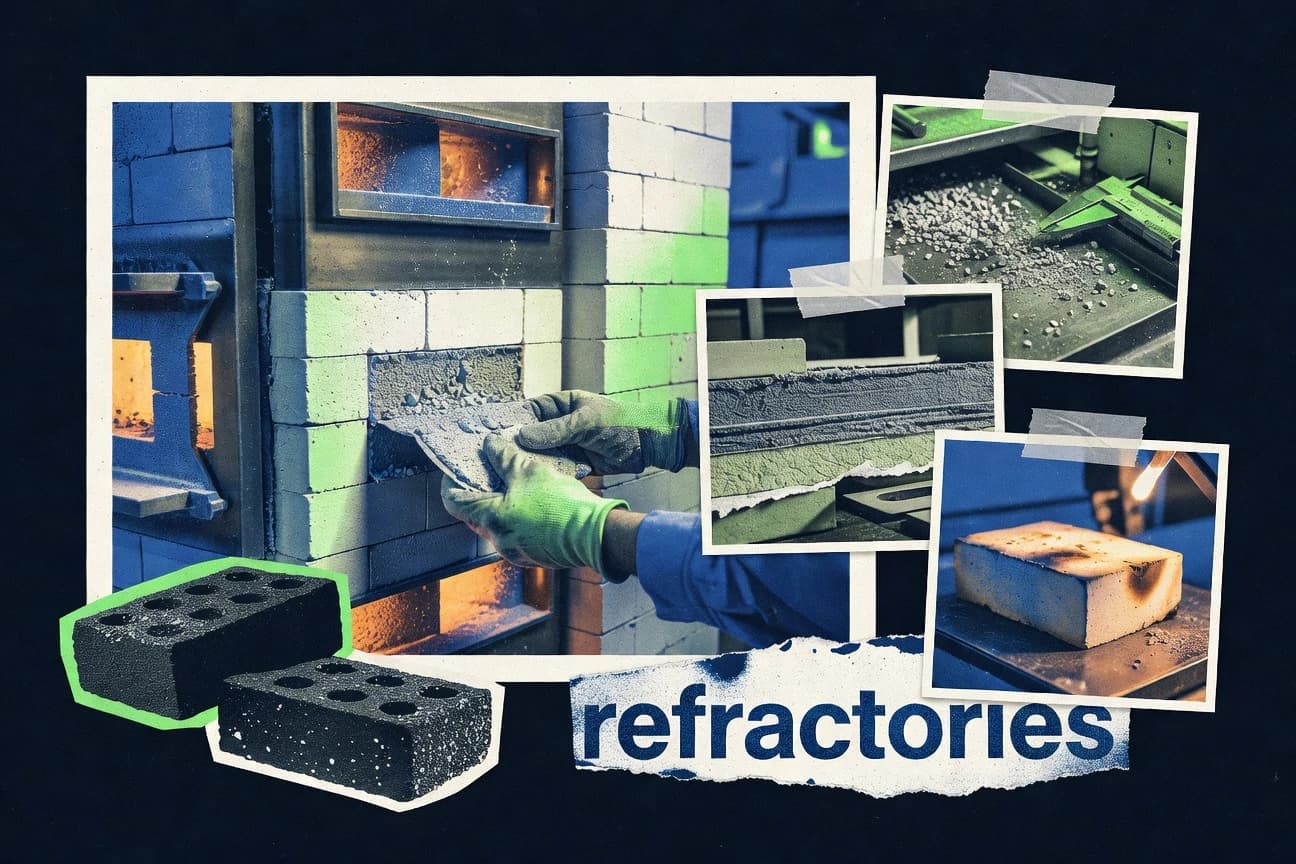

Renewable electricity reached 30% of global power generation in 2023, which increases intermittency-driven operating swings that raise thermal shock risk in furnaces. Steel decarbonization investment surpassed $10B in the latest tracked trends, while cement output hit about 4.1 billion metric tons and global crude steel reached about 1.86 billion metric tons in 2022. Refractory spec decisions now balance higher cycling stress against downtime risk and campaign cost across steel, cement, and refining operations.
Key Takeaways
- In 2023, the share of renewable electricity reached 30% of global power generation, increasing intermittency-driven operating changes that can affect furnace cycling and refractory thermal shock risk.
- In 2023, 74% of steel producers reported that decarbonization initiatives were a top investment priority, indirectly increasing demand for refractories optimized for new process routes.
- In 2022, BF/BOF routes accounted for 71% of global crude steel, the largest driver of refractory volumes in ironmaking furnaces.
- The global cement industry produced about 4.1 billion metric tons of cement in 2022, driving major demand for refractory linings in cement kilns.
- The global steel industry produced about 1.86 billion metric tons of crude steel in 2022, supporting refractory consumption in blast furnaces and basic oxygen furnaces.
- The global iron and steel sector emitted 7.2 gigatons (Gt) CO2 in 2022, reinforcing the need for high-performance refractories that reduce heat loss and downtime.
- A 2020 literature review reported that thermal shock resistance improvements can extend refractory service life by up to 2–3 times under cycling conditions (reported in controlled testing ranges).
- A 2019 peer-reviewed study found that insulating castables can reduce thermal conductivity by roughly 30%–60% versus conventional dense castables, lowering furnace heat losses.
- In a 2018 review, corrosion/erosion rates of slag at refractory interfaces were reported to be reduced by applying protective coatings, with reductions often exceeding 50% in lab slag tests.
- In 2022, the global slag demand shifted with commodity cycles; zinc price volatility reached +/- 20% over a year in benchmark data, impacting smelter operating costs and refractory consumption levels.
- The World Bank’s Commodity Markets Outlook reported that 2022 saw significant energy price increases, with international natural gas prices rising several times, impacting total installed refractory campaign economics.
- In 2023, electricity prices for industry in Germany were roughly €0.24–€0.30 per kWh, influencing decisions on insulation refractories to reduce heat losses.
With renewable power and tougher decarbonization, high performance refractories help cut heat loss and extend furnace life.
Related reading
01 · Category
Industry Trends7 stats
01
In 2023, the share of renewable electricity reached 30% of global power generation, increasing intermittency-driven operating changes that can affect furnace cycling and refractory thermal shock risk.
02
In 2023, 74% of steel producers reported that decarbonization initiatives were a top investment priority, indirectly increasing demand for refractories optimized for new process routes.
03
In 2022, BF/BOF routes accounted for 71% of global crude steel, the largest driver of refractory volumes in ironmaking furnaces.
04
The global shift toward low-clinker cement increased in 2022; by 2022 supplementary cementitious materials use exceeded 25% of cementitious content in major markets, changing refractory operating profiles in kilns.
05
In 2022, hydrogen accounted for less than 5% of final energy use globally, but pilot deployments are increasing for industrial heat, influencing refractory requirements for high-temperature hydrogen service.
06
In 2022, the global investment in steel decarbonization (H2 DRI, CCS and efficiency) exceeded $10B (industry trend figure) and supports refractory solutions compatible with new ironmaking routes.
07
In 2023, the average annual operating days for kilns in major cement markets were about 330–350 days, influencing refractory turn-around planning and relining schedules.
Interpretation
Industry Trends Interpretation
As the industry trends shift toward decarbonization, renewable electricity rose to 30% of global power generation in 2023 and with 74% of steel producers prioritizing decarbonization investments, demand for refractories is increasingly shaped by changing furnace operating needs and low carbon steelmaking routes that still made up 71% of crude steel via BF and BOF in 2022.
02 · Category
Market Size7 stats
01
The global cement industry produced about 4.1 billion metric tons of cement in 2022, driving major demand for refractory linings in cement kilns.
02
The global steel industry produced about 1.86 billion metric tons of crude steel in 2022, supporting refractory consumption in blast furnaces and basic oxygen furnaces.
03
The global iron and steel sector emitted 7.2 gigatons (Gt) CO2 in 2022, reinforcing the need for high-performance refractories that reduce heat loss and downtime.
04
In 2022, global ethylene capacity additions were about 7.3 million metric tons per year (increment), supporting refractory demand in steam crackers and related thermal units.
05
In 2023, the global ammonia production was about 180 million metric tons, supporting refractory demand for reformers and other high-temperature units.
06
In 2022, the world’s refining capacity was about 101 million barrels per day, supporting refractory usage in kilns, reformers, and other high-temperature refining equipment.
07
In 2022, global refractory consumption was directly linked to steel, cement, and non-ferrous end markets that together dominate high-temperature industrial output (share across end industries varies by region).
Interpretation
Market Size Interpretation
With cement output at about 4.1 billion metric tons in 2022 and crude steel reaching roughly 1.86 billion metric tons the same year, the refractories market size is being strongly underpinned by the sheer scale of high-temperature production volumes across major industries.
More related reading
03 · Category
Performance Metrics9 stats
01
A 2020 literature review reported that thermal shock resistance improvements can extend refractory service life by up to 2–3 times under cycling conditions (reported in controlled testing ranges).
02
A 2019 peer-reviewed study found that insulating castables can reduce thermal conductivity by roughly 30%–60% versus conventional dense castables, lowering furnace heat losses.
03
In a 2018 review, corrosion/erosion rates of slag at refractory interfaces were reported to be reduced by applying protective coatings, with reductions often exceeding 50% in lab slag tests.
04
In 2021, a refractory wear test campaign reported that monolithic refractories achieved up to 25% longer campaign life than brick in comparable thermal-mechanical service.
05
A 2020 study reported that using phosphate-bonded castables improved resistance to spalling under thermal cycling by reducing mass loss to below 2% after a specified number of cycles.
06
A 2016 peer-reviewed article showed that spinel-forming additives can reduce slag penetration depth by roughly 50% in simulated slag attack experiments.
07
A 2019 study demonstrated that insulating refractory linings reduced surface temperature by up to 60°C compared with standard linings at comparable heat flux.
08
In a 2022 lab study, high-alumina castables achieved compressive strength above 50 MPa after curing, enabling structural stability during installation and operation.
09
A 2021 study found that using optimized grain-size distribution reduced permeability by about 30%–45%, lowering slag infiltration in refractory systems.
Interpretation
Performance Metrics Interpretation
Performance metrics across recent refractory research show that material and treatment advances can dramatically boost durability, with thermal shock resistance increasing service life by up to 2 to 3 times, insulating castables cutting thermal conductivity by about 30% to 60%, and wear tests reporting monolithic refractories lasting up to 25% longer than brick.
04 · Category
Cost Analysis7 stats
01
In 2022, the global slag demand shifted with commodity cycles; zinc price volatility reached +/- 20% over a year in benchmark data, impacting smelter operating costs and refractory consumption levels.
02
The World Bank’s Commodity Markets Outlook reported that 2022 saw significant energy price increases, with international natural gas prices rising several times, impacting total installed refractory campaign economics.
03
In 2023, electricity prices for industry in Germany were roughly €0.24–€0.30 per kWh, influencing decisions on insulation refractories to reduce heat losses.
04
A 2020 study estimated that refractory failures and unplanned shutdowns can cost steel plants millions of dollars per event, with downtime costs comprising the majority of total loss.
05
A 2019 industry paper reported that upgrading from conventional to advanced monolithic refractories can reduce total installed cost per ton of steel by roughly 5%–15% by extending campaign life.
06
A 2018 paper found that reducing refractory thickness in insulation systems by 10% can lower energy consumption by measurable percentages (reported ~5%–10% in the paper’s case studies).
07
A 2021 paper on repair material lifecycle costing showed that longer campaign life reduced cost per operating day by about 20% versus shorter-life baselines in modeled scenarios.
Interpretation
Cost Analysis Interpretation
Cost pressures in the refractories industry are being driven by large energy and commodity swings, such as zinc price volatility of about plus or minus 20% in 2022 and industrial electricity costs in Germany around €0.24 to €0.30 per kWh in 2023, while evidence also shows that preventing refractory failures and cutting insulation thickness by 10% can meaningfully reduce operating and installed costs.
report visual · Key figures
Refractories demand is shaped by energy, decarbonization, and process shifts
Recent shifts in power generation and industry decarbonization priorities are changing furnace and kiln operating conditions—raising the need for refractories designed for new thermal and chemical stresses across steel and cement value chains.
30%
In 2023, the share of renewable electricity reached 30% of global power generation, increasing intermittency-driven oper
74%
In 2023, 74% of steel producers reported that decarbonization initiatives were a top investment priority, indirectly inc
71%
In 2022, BF/BOF routes accounted for 71% of global crude steel, the largest driver of refractory volumes in ironmaking f
25%
The global shift toward low-clinker cement increased in 2022; by 2022 supplementary cementitious materials use exceeded
4.1
The global cement industry produced about 4.1 billion metric tons of cement in 2022, driving major demand for refractory
1.86
The global steel industry produced about 1.86 billion metric tons of crude steel in 2022, supporting refractory consumpt
source-verifiedember-climate.org · worldsteel.org · iea.org · usgs.gov2023
Reference
Cite This Report
This report is designed to be cited. We maintain stable URLs and versioned verification dates. Copy the format appropriate for your publication below.
APA
Lukas Bauer. (2026, February 13). Refractories Industry Statistics. Gitnux. https://gitnux.org/refractories-industry-statistics
MLA
Lukas Bauer. "Refractories Industry Statistics." Gitnux, 13 Feb 2026, https://gitnux.org/refractories-industry-statistics.
Chicago
Lukas Bauer. 2026. "Refractories Industry Statistics." Gitnux. https://gitnux.org/refractories-industry-statistics.
Sources & references
30 datasets cited across this report · attribution is report-level
+16 additional datasets cited (not shown individually)