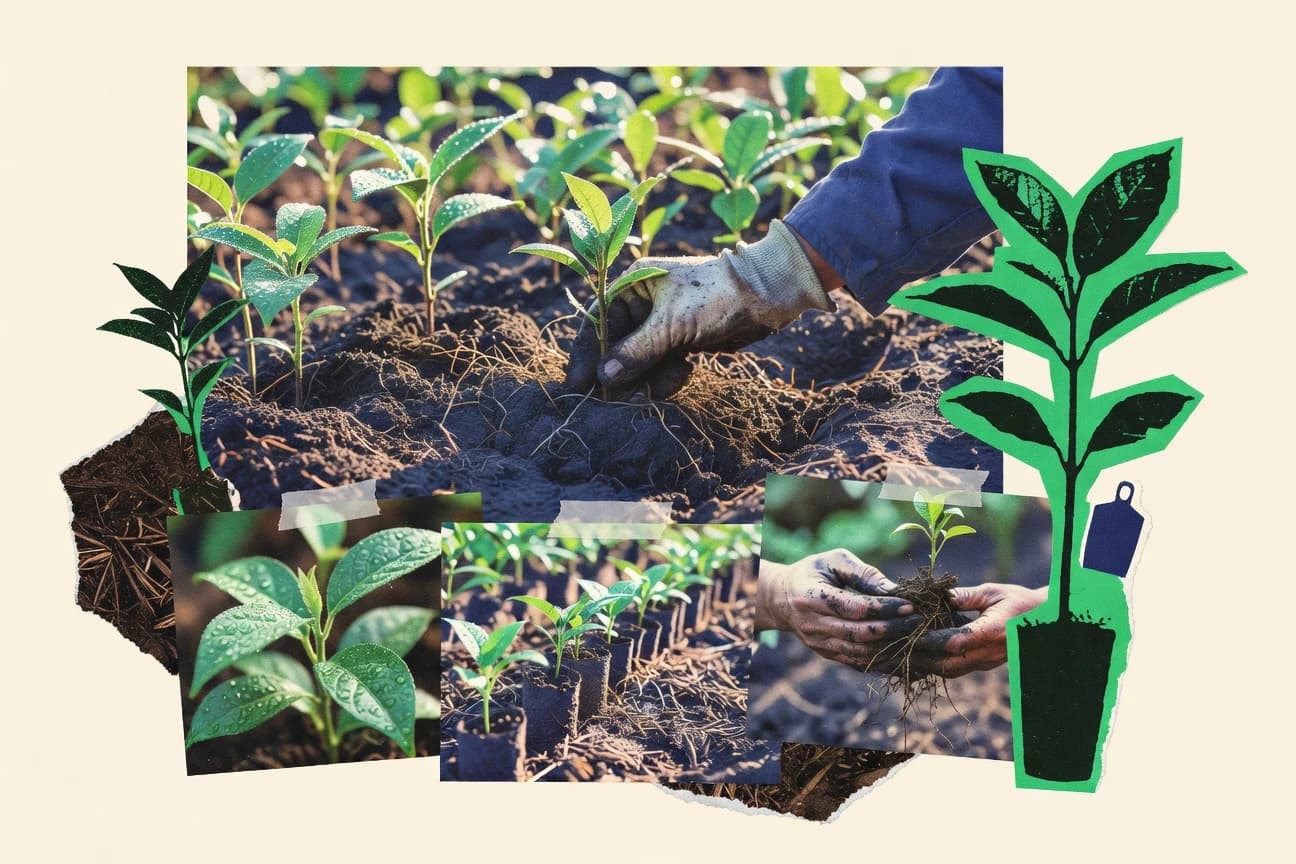

Reforestation efforts are scaling fast, but the gap between planting and survival is still huge, with 60% of projects dropping below 50% survival after five years without monitoring. Even then, the work is about more than seedlings since drought, invasive species, fire risk, and seed quality can quietly undo gains. This post pulls together the most telling reforestation statistics, including a $300 billion gap for the Bonn Challenge by 2030 and the conditions where carbon and biodiversity benefits finally stick.
Key Takeaways
- Reforestation failure rates 20-50% due to poor site selection and maintenance.
- Drought affects 40% of reforestation projects in semi-arid zones.
- Invasive species overrun 30% of monoculture plantations within 10 years.
- Reforestation sequesters 0.5-2 GtCO2 annually from global efforts.
- One hectare of reforested tropical forest captures 50-100 tons CO2 over 40 years.
- Global reforestation could offset 10-20% of annual anthropogenic emissions by 2050.
- Reforestation provides $100-300/tCO2 abatement cost advantage.
- Global reforestation market valued at $25 billion in 2022, projected $40B by 2030.
- Jobs created: 1 job per 5 ha reforested, totaling 20 million potential jobs.
- Newly planted forests sequester 2-4 tons of carbon per hectare per year on average globally.
- Reforested areas increase soil organic carbon by 20-50% within 10 years.
- Mature reforested mangroves provide habitat for 70% more fish species than deforested areas.
- Global reforestation efforts planted approximately 19.8 million hectares of new forest area between 2015 and 2020, according to FAO data.
- As of 2022, the Trillion Trees initiative has restored over 50 million hectares worldwide through partnerships.
- Between 1990 and 2020, afforestation and reforestation contributed to a net gain of 122 million hectares in forest area globally.
Reforestation can capture carbon and restore ecosystems, but success often fails without funding, monitoring, and smart planning.
Related reading
01 · Category
Challenges and Restoration Methods28 stats
01
Reforestation failure rates 20-50% due to poor site selection and maintenance.
02
Drought affects 40% of reforestation projects in semi-arid zones.
03
Invasive species overrun 30% of monoculture plantations within 10 years.
04
Only 26% of tropical restoration sites meet 90% survival threshold.
05
Funding gap for Bonn Challenge: $300 billion needed by 2030.
06
Animal damage destroys 15-25% of seedlings in first year.
07
Community conflicts arise in 20% of large-scale projects over land rights.
08
Poor seed quality causes 50% failure in native species planting.
09
Fire risk post-reforestation increases 2x without management.
10
In 60% of projects, survival drops below 50% after 5 years sans monitoring.
11
Climate mismatch reduces growth by 30% in shifted provenances.
12
Labor shortages delay 40% of planting seasons in rural areas.
13
Mycorrhizal inoculation boosts survival by 20%, but used in <10% projects.
14
Erosion post-planting affects 25% of steep slope sites.
15
Policy inconsistency halts 15% of national programs midway.
16
Herbicide resistance in weeds impacts 35% of plantation maintenance.
17
Remote sensing monitors only 20% of projects effectively.
18
Social acceptance low in 30% due to opportunity costs for agriculture.
19
Drought-hardy species needed as 70% standard species fail in dry areas.
20
Carbon accounting errors overestimate sinks by 20-50%.
21
Beaver and rodent damage: 10-20% loss in riparian zones.
22
Blockchain for seed tracking implemented in <5% supply chains.
23
Direct seeding success 60% lower than nursery seedlings in tropics.
24
50% projects lack long-term finance beyond 3 years.
25
Pathogen outbreaks wipe 15% of uniform plantations.
26
Drone seeding covers 10x area but survival 20% lower.
27
Land tenure insecurity affects 40% community-based efforts.
28
Assisted migration success 70% but regulatory barriers in 80% countries.
Interpretation
Challenges and Restoration Methods Interpretation
Reforestation is a daunting numbers game where heroic ambition too often succumbs to a comedic parade of thirsty seedlings, bureaucratic whiplash, hungry rodents, and the quiet, expensive tragedy of simply walking away.
02 · Category
Climate Mitigation26 stats
01
Reforestation sequesters 0.5-2 GtCO2 annually from global efforts.
02
One hectare of reforested tropical forest captures 50-100 tons CO2 over 40 years.
03
Global reforestation could offset 10-20% of annual anthropogenic emissions by 2050.
04
China's Grain for Green program sequestered 1.1 GtCO2 from 1999-2015 via reforestation.
05
Reforested mangroves sequester 3-5 times more carbon per hectare than terrestrial forests.
06
Restoration of 350 million hectares could sequester 13-30 GtCO2 by 2030.
07
Temperate reforestation stores 200-300 tons CO2/ha over 100 years.
08
Boreal reforestation potential: 0.9 GtCO2/year if 20% degraded land restored.
09
Peatland reforestation prevents 0.5 GtCO2e emissions annually if protected.
10
Urban trees from reforestation efforts sequester 700 million tons CO2 globally.
11
Africa's Great Green Wall projected to sequester 250 MtCO2/year by 2030.
12
Reforestation in India offsets 50 MtCO2/year through afforestation.
13
One trillion trees could sequester 200 GtCO2 over 50 years.
14
Brazilian Amazon restoration sequesters 200 tCO2/ha over 75 years.
15
Global plantations contribute 7.5% of total forest carbon sink.
16
Vietnam's reforestation sequesters 40 MtCO2/year by 2030 target.
17
Reforestation reduces albedo warming, adding 20% to sequestration benefits.
18
Restoration of 1 billion ha sequesters up to 30% of needed mitigation to 2030.
19
Costa Rican reforestation payments yielded 1.3 tCO2/ha/year.
20
Ethiopia's efforts sequester 20 MtCO2/year from 15 million ha restored.
21
Mixed reforestation sequesters 25% more CO2 than monoculture plantations.
22
Global reforestation could avoid 10 GtCO2e by preserving sinks.
23
Australia's reforestation targets 30 MtCO2/year sequestration by 2030.
24
Rewilding forests sequesters 40% faster than commercial plantations.
25
Reforestation in degraded pastures stores 150 tCO2/ha over 60 years.
26
International aviation offset via reforestation: 100 MtCO2/year potential.
Interpretation
Climate Mitigation Interpretation
While the numbers show reforestation is a formidable weapon against climate change, the real story is that we are essentially trying to put a planetary fire out with a global network of meticulously placed, carbon-sucking sponges.
More related reading
04 · Category
Environmental Benefits27 stats
01
Newly planted forests sequester 2-4 tons of carbon per hectare per year on average globally.
02
Reforested areas increase soil organic carbon by 20-50% within 10 years.
03
Mature reforested mangroves provide habitat for 70% more fish species than deforested areas.
04
Reforestation improves watershed health, reducing soil erosion by up to 80% in hilly regions.
05
In reforested tropical areas, bird populations recover to 90% of natural levels within 20 years.
06
Reforested forests enhance water retention by 25-40% compared to degraded lands.
07
Pollinator diversity in reforested agroforestry systems increases by 35%.
08
Reforestation reduces surface runoff by 50% and improves groundwater recharge by 30%.
09
Restored forests support 15-20% higher mammal diversity than plantations.
10
Reforested areas in arid zones increase ant species richness by 40%.
11
Mixed-species reforestation boosts invertebrate biomass by 60% over monocultures.
12
Reforestation along rivers improves fish migration corridors by 70% effectiveness.
13
Degraded land reforested sees microbial diversity recover to 80% of native forests in 15 years.
14
Reforested peatlands reduce methane emissions by 50% while storing carbon.
15
Urban reforestation cools cities by 2-5°C through shade and evapotranspiration.
16
Reforested savannas restore grass-tree balance, increasing herbivore forage by 30%.
17
Coral-adjacent mangrove reforestation buffers wave energy by 66%.
18
Reforestation enhances fungal networks, improving tree resilience by 25%.
19
Restored forests filter 20-30% more air pollutants than open fields.
20
Reforested hillsides stabilize slopes, reducing landslide risk by 60-90%.
21
Biodiversity in reforested wetlands returns to 75% of natural levels in 10 years.
22
Agroforestry reforestation increases soil nitrogen by 40% via nitrogen fixation.
23
Reforested areas promote natural pest control, reducing pesticide needs by 50%.
24
Ocean-connected reforestation of dunes protects coastlines, accreting 1-3m sediment/year.
25
Reforestation restores 50-70% of amphibian species in former clearcuts within 25 years.
26
Mixed reforestation improves understory plant diversity by 45% over time.
27
Reforested forests reduce dust storms frequency by 30% in drylands.
Interpretation
Environmental Benefits Interpretation
If Mother Nature had a resume, reforestation would be listed as her most impressive skill, boasting a near-perfect record for sequestering carbon, resurrecting entire ecosystems, and even giving cities a much-needed chill pill.
05 · Category
Global Extent and Trends30 stats
01
Global reforestation efforts planted approximately 19.8 million hectares of new forest area between 2015 and 2020, according to FAO data.
02
As of 2022, the Trillion Trees initiative has restored over 50 million hectares worldwide through partnerships.
03
Between 1990 and 2020, afforestation and reforestation contributed to a net gain of 122 million hectares in forest area globally.
04
China has reforested over 79 million hectares since 1978 under the Three-North Shelterbelt Program.
05
Ethiopia planted more than 350 million trees in a single day on July 29, 2019, as part of the Green Legacy Initiative.
06
India's afforestation efforts increased forest cover by 3,976 square kilometers between 2019 and 2021.
07
From 2010 to 2020, the European Union reforested 4.5 million hectares through various national programs.
08
Brazil's reforestation initiatives restored 1.2 million hectares of Atlantic Forest by 2023.
09
The Bonn Challenge has committed to restoring 350 million hectares by 2030, with 210 million pledged by 2022.
10
Vietnam increased its forest cover from 27.8% in 1990 to 41.5% in 2020 through reforestation programs.
11
In 2021, global tree planting campaigns like Team Trees reached 20 million trees planted.
12
Australia's Great Green Wall aims to reforest 1 million hectares by 2030, with 200,000 achieved by 2023.
13
Costa Rica restored 70% of its forest cover since 1980s, reaching 52% of land area by 2020.
14
By 2022, the African Union's Great Green Wall had restored 20 million hectares across the Sahel.
15
Indonesia reforested 12.7 million hectares between 2015 and 2019 under its FOLU Net Sink 2030 plan.
16
The UN Decade on Ecosystem Restoration (2021-2030) mobilized commitments for 1 billion hectares.
17
Pakistan planted 1 billion trees by 2023 through the Ten Billion Tree Tsunami Programme.
18
Between 2000 and 2020, global mangroves reforestation added 1.1 million hectares.
19
The US planted 1.2 billion trees since 2020 under the 1t.org America pledge.
20
Russia's national reforestation program plans 1.6 trillion trees by 2035, with 200 billion by 2023.
21
By 2021, the World Economic Forum's 1t.org platform secured pledges for 31.5 billion trees.
22
In 2020, Latin America reforested 5.2 million hectares net gain in forest plantations.
23
New Zealand's One Billion Trees program planted 280 million trees by 2023.
24
South Korea's reforestation turned barren land into 66% forest cover by 2022.
25
Global forest plantation area reached 293 million hectares in 2020, up 5% from 2015.
26
By 2023, Ecosia's tree planting reached 200 million trees worldwide.
27
The Philippines reforested 1.2 million hectares through the National Greening Program by 2016.
28
Africa's reforestation efforts grew forest cover by 3.5 million hectares from 2010-2020.
29
Canada's 2 Billion Trees program planted 460 million seedlings by end of 2023.
30
By 2022, global citizen science tree planting apps tracked 500 million trees planted.
Interpretation
Global Extent and Trends Interpretation
While these impressive numbers show the world is scrambling to replant our planet, it's like using a garden hose to put out a forest fire—commendable effort, but we're still losing trees faster than we can replace them.
Reference
Cite This Report
This report is designed to be cited. We maintain stable URLs and versioned verification dates. Copy the format appropriate for your publication below.
APA
Marcus Afolabi. (2026, February 13). Reforestation Statistics. Gitnux. https://gitnux.org/reforestation-statistics
MLA
Marcus Afolabi. "Reforestation Statistics." Gitnux, 13 Feb 2026, https://gitnux.org/reforestation-statistics.
Chicago
Marcus Afolabi. 2026. "Reforestation Statistics." Gitnux. https://gitnux.org/reforestation-statistics.
Sources & references
91 datasets cited across this report