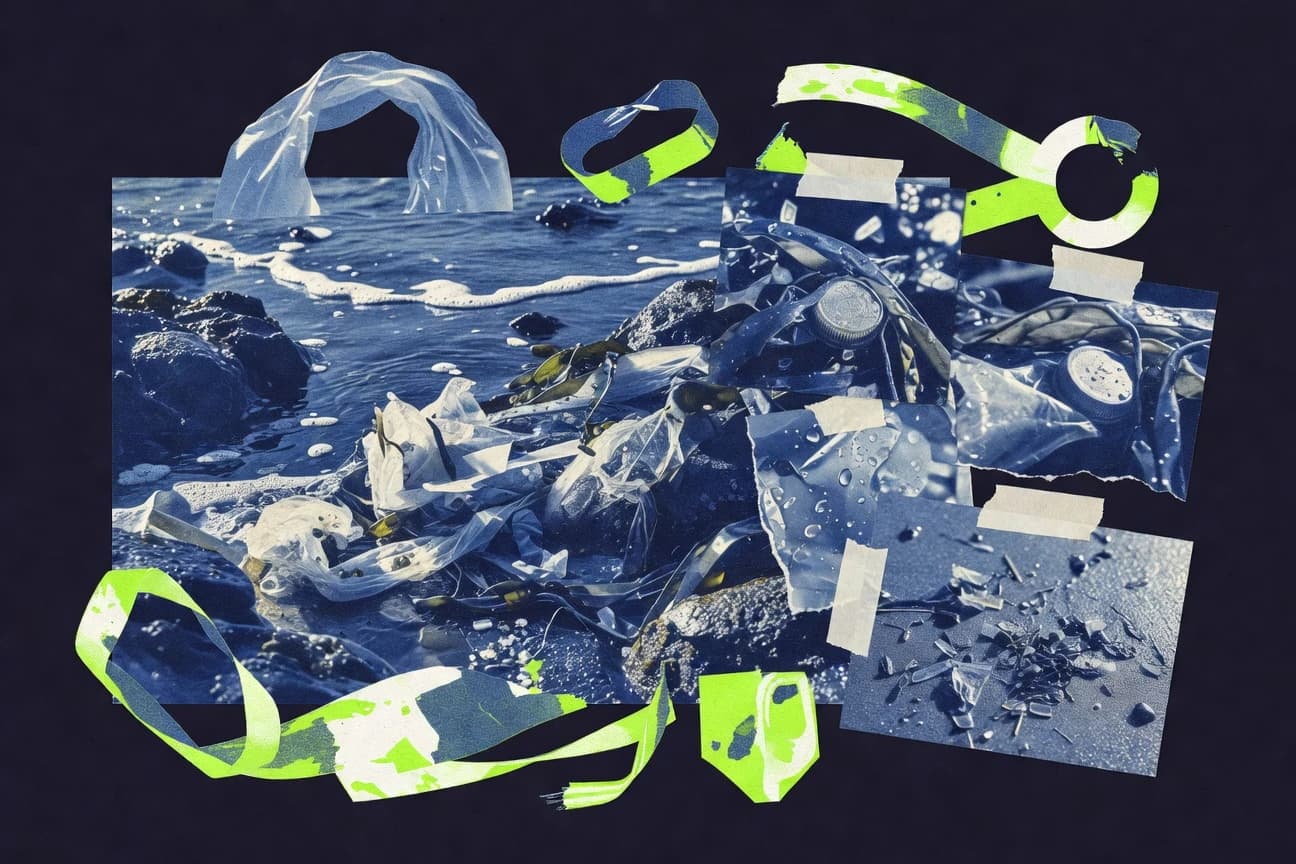

Plastic pollution is being measured in scales that are hard to ignore, from global plastic production hitting 460 million metric tons in 2019 to the UN estimate that single use plastics already make up 40% of all consumption at 188 million tons per year. Even where recycling exists, the gap is huge, with only a 9% global plastics recycling rate and most waste ending up incinerated or in landfills. The statistics below connect what we buy and use every day to what ends up in waterways and oceans, including 11 million tons entering the sea each year.
Key Takeaways
- Annual plastic use per capita in North America averages 130 kg, highest globally per OECD
- Globally, humans consume 50 billion plastic water bottles yearly, per Ocean Conservancy
- Packaging plastics account for 141 million tons consumed annually worldwide per Ellen MacArthur Foundation
- Humans ingest equivalent of credit card plastic weekly via food chain per WWF
- Microplastics found in 83% of global tap water samples per Orb Media
- Over 2,100 chemicals in plastics, 242 hazardous to health per Minderoo
- 11 million tons of plastic enter oceans yearly from rivers, mostly from Asia per Meijer et al.
- Over 14 million tons of microplastics on ocean floor per NOAA
- 88% of ocean surface plastic comes from top 10 rivers per Schmidt et al.
- Global recycling rate for plastics is only 9%, with most incinerated releasing toxins per OECD
- EU recycled 38.8% of plastic packaging waste in 2021 per Eurostat
- 700,000 tons of plastic collected from beaches in International Coastal Cleanup 2022 per Ocean Conservancy
- Global plastic production reached 460 million metric tons in 2019, doubling from 2000 levels according to OECD data
- Approximately 400 million tons of plastic are produced annually worldwide as of 2023, with packaging accounting for 36% of total production per UNEP
- Polyethylene (PE) constitutes 30% of global plastic production at around 138 million tons yearly, per Plastics Europe
North America uses 130 kg plastic per person yearly, and plastic pollution keeps overwhelming oceans worldwide.
Related reading
01 · Category
Consumption18 stats
01
Annual plastic use per capita in North America averages 130 kg, highest globally per OECD
02
Globally, humans consume 50 billion plastic water bottles yearly, per Ocean Conservancy
03
Packaging plastics account for 141 million tons consumed annually worldwide per Ellen MacArthur Foundation
04
Single-use plastics represent 40% of total plastic consumption at 188 million tons per year per UNEP
05
In the EU, plastic packaging consumption hit 40 million tons in 2021 per Eurostat
06
Americans use 500 million plastic straws daily, totaling 182.5 billion yearly per WWF
07
Global plastic bag consumption exceeds 5 trillion bags annually per UNEP
08
Fast fashion uses 16 million tons of plastic fibers yearly for clothing per IUCN
09
Coffee cups made of plastic-coated paper number 2.5 billion weekly globally per Starbucks data analysis
10
Tobacco filters, mostly plastic, total 4.5 trillion used yearly per WHO
11
Annual plastic use per capita in North America averages 130 kg, highest globally per OECD
12
Globally, humans consume 50 billion plastic water bottles yearly, per Ocean Conservancy
13
Packaging plastics account for 141 million tons consumed annually worldwide per Ellen MacArthur Foundation
14
Single-use plastics represent 40% of total plastic consumption at 188 million tons per year per UNEP
15
In the EU, plastic packaging consumption hit 40 million tons in 2021 per Eurostat
16
Americans use 500 million plastic straws daily, totaling 182.5 billion yearly per WWF
17
Global plastic bag consumption exceeds 5 trillion bags annually per UNEP
18
Fast fashion uses 16 million tons of plastic fibers yearly for clothing per IUCN
Interpretation
Consumption Interpretation
Every breath we take, every sip we swallow, and every moment we wear is now woven with a staggering amount of disposable plastic, suggesting that our current civilization's most enduring legacy might just be a synthetic ghost haunting the planet.
02 · Category
Health7 stats
01
Humans ingest equivalent of credit card plastic weekly via food chain per WWF
02
Microplastics found in 83% of global tap water samples per Orb Media
03
Over 2,100 chemicals in plastics, 242 hazardous to health per Minderoo
04
Plastic production linked to 4.5 million disability-adjusted life years lost annually per Landrigan et al.
05
BPA exposure from plastics affects 93% of Americans' urine per CDC
06
Microplastics in human placentas average 10 particles per sample per Italian study
07
Phthalates from plastics linked to 100,000 premature deaths yearly in US per NIEHS
Interpretation
Health Interpretation
We've turned a convenience into a planetary IV drip, feeding ourselves a sickening cocktail of credit card bits, hazardous chemicals, and placental trespasses that steals years from our lives.
03 · Category
Marine13 stats
01
11 million tons of plastic enter oceans yearly from rivers, mostly from Asia per Meijer et al.
02
Over 14 million tons of microplastics on ocean floor per NOAA
03
88% of ocean surface plastic comes from top 10 rivers per Schmidt et al.
04
Great Pacific Garbage Patch contains 1.8 trillion plastic pieces weighing 80,000 tons per The Ocean Cleanup
05
Seabirds ingest 12,000-24,000 tons of plastic annually per Wilcox et al.
06
50-75% of global plastic waste potentially reaches oceans per IUCN
07
Microplastics found in 88% of sea surface trawls globally per CSIRO
08
Coral reefs suffer bleaching 89% more when plastic present per Lamb et al.
09
800 species affected by marine plastic debris per UNEP
10
Plastic pollution kills 1 million seabirds and 100,000 marine mammals yearly per UNEP
11
170 trillion microplastic particles float in oceans per Eriksen et al.
12
Yangtze River carries 1.5 million tons of plastic to sea annually per Meijer
13
60% of marine debris is plastic by weight per NOAA
Interpretation
Marine Interpretation
While Asia's rivers, led by the Yangtze, serve as the planet's primary plastic tap, our oceans have become a grim soup where microplastics outnumber stars in our galaxy, smothering the seafloor, poisoning wildlife from seabirds to coral, and proving that humanity's most enduring legacy might just be a trillion-piece synthetic monument to convenience.
More related reading
04 · Category
Mitigation9 stats
01
Global recycling rate for plastics is only 9%, with most incinerated releasing toxins per OECD
02
EU recycled 38.8% of plastic packaging waste in 2021 per Eurostat
03
700,000 tons of plastic collected from beaches in International Coastal Cleanup 2022 per Ocean Conservancy
04
Bans on single-use plastics adopted by 85 countries as of 2023 per UNEP
05
Chemical recycling processes only 1% of plastics globally per IRENA
06
Deposit return schemes recover 90%+ of plastic bottles in Germany per BMU
07
Global investment needed for circular economy: $500 billion by 2040 per Pew
08
Plastic treaty negotiations aim for 80% reduction in production by 2040 per UNEA
09
Reusable packaging could cut plastic use 50% by 2040 per Ellen MacArthur
Interpretation
Mitigation Interpretation
While global recycling remains a pathetic 9%, the hopeful math is that between beach cleanups, deposit schemes, treaty goals, and reusable packaging, we might just bottle the problem before it bottles us.
05 · Category
Production20 stats
01
Global plastic production reached 460 million metric tons in 2019, doubling from 2000 levels according to OECD data
02
Approximately 400 million tons of plastic are produced annually worldwide as of 2023, with packaging accounting for 36% of total production per UNEP
03
Polyethylene (PE) constitutes 30% of global plastic production at around 138 million tons yearly, per Plastics Europe
04
By 2040, annual plastic production is projected to reach 1.1 billion tons without intervention, per Pew Charitable Trusts
05
In 2021, China produced 32 million tons of plastic resins, the highest globally, representing 28% of world output per Statista
06
Global plastic production grew at 8.4% annually from 2009-2019, outpacing any other material per OECD
07
Polypropylene (PP) makes up 20% of plastic production, totaling 92 million tons in 2022 per ICIS
08
Virgin plastic production emits 1.8 billion tons of greenhouse gases annually, equivalent to 3.4% of global emissions per Minderoo Foundation
09
In Europe, 57.7 million tons of plastics were produced in 2022, with 40% for packaging per Plastics Europe
10
PET production for bottles reached 24 million tons globally in 2022 per NAPCOR
11
Global plastic production reached 460 million metric tons in 2019, doubling from 2000 levels according to OECD data
12
Approximately 400 million tons of plastic are produced annually worldwide as of 2023, with packaging accounting for 36% of total production per UNEP
13
Polyethylene (PE) constitutes 30% of global plastic production at around 138 million tons yearly, per Plastics Europe
14
By 2040, annual plastic production is projected to reach 1.1 billion tons without intervention, per Pew Charitable Trusts
15
In 2021, China produced 32 million tons of plastic resins, the highest globally, representing 28% of world output per Statista
16
Global plastic production grew at 8.4% annually from 2009-2019, outpacing any other material per OECD
17
Polypropylene (PP) makes up 20% of plastic production, totaling 92 million tons in 2022 per ICIS
18
Virgin plastic production emits 1.8 billion tons of greenhouse gases annually, equivalent to 3.4% of global emissions per Minderoo Foundation
19
In Europe, 57.7 million tons of plastics were produced in 2022, with 40% for packaging per Plastics Europe
20
PET production for bottles reached 24 million tons globally in 2022 per NAPCOR
Interpretation
Production Interpretation
We are, with impressive and terrifying efficiency, engineering a disposable planet to match our disposable products.
06 · Category
Waste10 stats
01
8 million metric tons of plastic enter oceans annually from land-based sources per Jambeck et al. study
02
Only 9% of all plastic ever produced has been recycled, with 12% incinerated and 79% in landfills per Our World in Data
03
US landfills hold 150 million tons of plastic waste per EPA
04
Globally, 350 million tons of plastic waste generated yearly, per OECD Global Plastics Outlook
05
Mismanaged plastic waste totals 100 million tons annually, 25% of total waste per Geyer et al.
06
In 2016, 242 million tons of plastic waste generated in coastal regions per Jambeck
07
Europe discards 29 million tons of plastic waste yearly, with 41.5% recycled per Plastics Europe
08
Plastic bags and sachets comprise 48% of collected beach litter per Ocean Conservancy ICC data
09
Global plastic waste leakage to environment is 19-23 million tons per year per UNEP
10
India generates 3.5 million tons of plastic waste annually per CPCB
Interpretation
Waste Interpretation
While Earth is doing an impressive impression of a landfill, producing enough plastic yearly to gift-wrap the coastline several times over, we have only bothered to recycle a paltry 9% of it, proving our global follow-through is as flimsy as the single-use bags choking our beaches.
Reference
Cite This Report
This report is designed to be cited. We maintain stable URLs and versioned verification dates. Copy the format appropriate for your publication below.
APA
Catherine Wu. (2026, February 13). Plastic Pollution Statistics. Gitnux. https://gitnux.org/plastic-pollution-statistics
MLA
Catherine Wu. "Plastic Pollution Statistics." Gitnux, 13 Feb 2026, https://gitnux.org/plastic-pollution-statistics.
Chicago
Catherine Wu. 2026. "Plastic Pollution Statistics." Gitnux. https://gitnux.org/plastic-pollution-statistics.
Sources & references
33 datasets cited across this report