
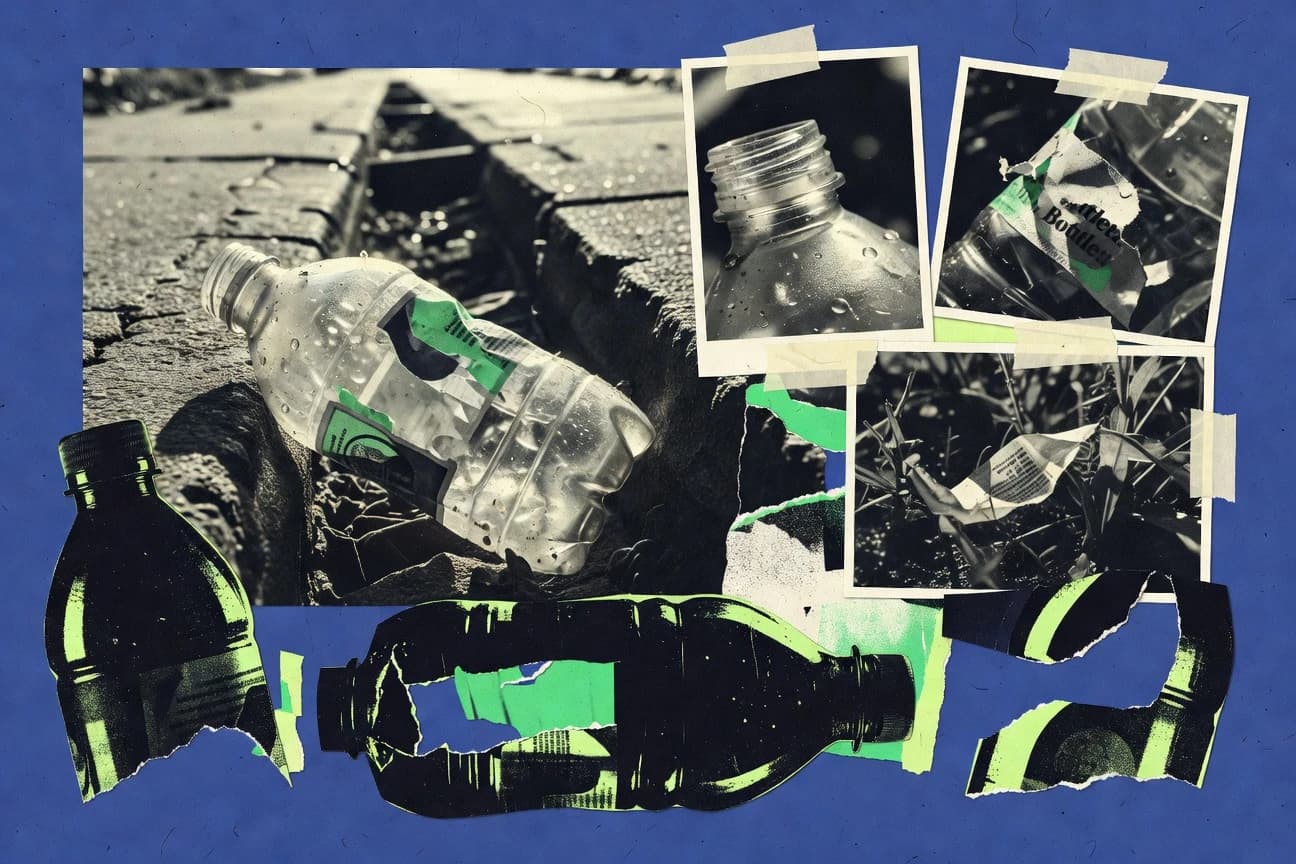

Plastic bottle use is still scaling fast, with 1 million plastic bottles bought every minute and global PET bottle sales revenue reaching $85 billion in 2022. At the same time, only 18% of PET bottles were recycled in 2022 and PET bottles can persist for 450 years in landfills. If you look closer, the same material can be both a convenience staple and a long-term waste problem, from Europe’s beverage-heavy demand to countries where deposits or bans quietly shift what gets sold.
Key Takeaways
- Annual global consumption of single-use PET water bottles exceeds 600 billion units.
- Americans purchase about 60 million plastic water bottles per day, totaling 22 billion yearly.
- Per capita PET bottle consumption in the US is 170 bottles annually for water alone.
- Plastic bottles contribute 10% of global plastic waste by weight.
- 8-10 million metric tons of plastic enter oceans yearly, with PET bottles comprising 12%.
- PET bottles take 450 years to decompose in landfills.
- Antimony leaching in rPET is below 40 ppb after food-contact purification.
- BPA is absent in PET bottles, but antimony migrates at 0.1-0.6 µg/L in hot water.
- Phthalates in PET bottles average <1 mg/kg, below EU limit of 60 mg/kg.
- In 2022, global production of PET plastic bottles reached approximately 682 billion units, driven primarily by demand in the beverage sector.
- The average weight of a standard 500ml PET plastic bottle is about 10.4 grams, reduced by 25% since 2005 due to lightweighting technologies.
- China accounts for over 30% of global PET resin production for bottles, producing around 15 million tons annually in 2023.
- Global recycling rate for PET bottles was 18% in 2022.
- US PET bottle recycling rate reached 29% in 2023, collecting 345,000 tons.
- Europe recycles 52% of PET bottles sold, highest globally at 1.5 million tons.
PET bottles exceed 600 billion yearly, yet only about 18 percent get recycled globally.
Related reading
01 · Category
Consumption30 stats
01
Annual global consumption of single-use PET water bottles exceeds 600 billion units.
02
Americans purchase about 60 million plastic water bottles per day, totaling 22 billion yearly.
03
Per capita PET bottle consumption in the US is 170 bottles annually for water alone.
04
In 2023, India consumed 120 billion PET bottles, mostly for carbonated drinks.
05
Mexico has the highest per capita soda consumption at 195 liters/year, mostly in PET bottles.
06
Global PET bottle sales revenue reached $85 billion in 2022.
07
80% of PET bottles sold in Europe are for non-alcoholic beverages.
08
China's urban households consume 300 PET bottles per capita yearly.
09
Average household in Brazil discards 1,200 PET bottles annually.
10
PET bottle usage for sports drinks grew 15% YoY in the US in 2023.
11
Worldwide, 1 million plastic bottles are bought every minute.
12
Saudi Arabia's per capita PET bottle consumption is 250 units/year for water.
13
In the UK, 7.7 billion single-use plastic water bottles are sold yearly.
14
PET bottles account for 15% of all beverage packaging by volume globally.
15
Australian consumers use 700 million PET bottles for water annually.
16
Japan recycles 85% of PET bottles but consumes 40 billion yearly.
17
France bans plastic bottles under 3 liters in vending machines since 2021, reducing small bottle sales by 20%.
18
Nigeria imports 80% of its PET bottles, consuming 25 billion annually.
19
PET bottle consumption in the EU averages 50 per person yearly for water.
20
Turkey produces and consumes 20 billion PET bottles yearly, 70% for soft drinks.
21
Canadians discard 2.7 million PET bottles every 3 minutes.
22
South Africa's bottled water market uses 4 billion PET bottles annually.
23
Consumption: UAE per capita water bottle consumption is 285 units/year.
24
Consumption: Germany's PET bottle sales dropped 10% post-deposit scheme.
25
Consumption: Philippines uses 50 billion PET sachets and bottles yearly.
26
Consumption: PET bottles represent 50% of US convenience store beverage sales.
27
Consumption: Egypt consumes 30 billion PET bottles annually for beverages.
28
Consumption: Spain's vending machines sell 1 billion PET bottles yearly.
29
Consumption: PET tea bottles in Asia grew 25% market share since 2020.
30
Consumption: Kenya imports 2 billion PET bottles yearly.
Interpretation
Consumption Interpretation
From Mexico's soda fixation to Japan's recycling paradox, humanity's collective thirst has engineered a torrent of over a trillion plastic soldiers a year, marching from convenience to eternity.
02 · Category
Environmental Impact29 stats
01
Plastic bottles contribute 10% of global plastic waste by weight.
02
8-10 million metric tons of plastic enter oceans yearly, with PET bottles comprising 12%.
03
PET bottles take 450 years to decompose in landfills.
04
Microplastics from degrading PET bottles number 14 million pieces per square kilometer in oceans.
05
Producing PET bottles from virgin plastic consumes 3,500 liters of water per ton.
06
PET bottle litter kills 1 million seabirds and 100,000 marine mammals annually.
07
Global PET bottle waste totals 58 million tons yearly, 90% not recycled.
08
PET fragments from bottles found in 93% of table salt samples worldwide.
09
Landfilled PET bottles release 1.5 tons CO2 per ton over 100 years.
10
60% of ocean plastic pollution originates from PET beverage bottles.
11
PET bottle production contributes 3.4% to global plastic GHG emissions.
12
In the Great Pacific Garbage Patch, PET bottles make up 46% of largest plastics.
13
PET hydrolysis in seawater releases terephthalic acid, toxic to marine life at 10 mg/L.
14
US rivers carry 300,000 tons of plastic waste yearly, 20% PET bottles.
15
PET bottle caps are the 3rd most common ocean debris item, 10% of total.
16
Virgin PET production uses 100 million barrels of oil annually worldwide.
17
PET incineration emits 2.7 kg dioxins per ton in poorly controlled facilities.
18
91% of plastic bottles not recycled end up in nature or landfills.
19
PET bottles in Arctic ice cores show concentrations rising 20-fold since 2010.
20
Environmental Impact: PET bottles 20% of US beach litter by count.
21
Environmental Impact: Desert dunes accumulate 50 PET bottles per km² in Sahara.
22
Environmental Impact: PET degradation produces CO2 at 2.2 kg per kg plastic.
23
Environmental Impact: 1 ton PET bottles pollutes 20,000 liters groundwater if landfilled.
24
Environmental Impact: PET in Mediterranean Sea at 1,160 particles/km² surface.
25
Environmental Impact: Biofilm on PET bottles harbors 10^5 pathogens/cm².
26
Environmental Impact: PET production pollutes 17 liters water per liter bottled water.
27
Environmental Impact: Incinerated PET releases 3 kg CO2e per kg.
28
Environmental Impact: PET bottles entangle 5% of sea turtle ingestions.
29
Environmental Impact: Atmospheric transport carries PET microplastics 1,000 km inland.
Interpretation
Environmental Impact Interpretation
In a staggering act of hubris, humanity has engineered a near-indestructible monument to fleeting convenience—the plastic bottle—which outlives empires by centuries to deliver a single drink while saddling the planet with an eternity of toxic fallout.
03 · Category
Health Effects24 stats
01
Antimony leaching in rPET is below 40 ppb after food-contact purification.
02
BPA is absent in PET bottles, but antimony migrates at 0.1-0.6 µg/L in hot water.
03
Phthalates in PET bottles average <1 mg/kg, below EU limit of 60 mg/kg.
04
UV-aged PET releases 10^6 microplastic particles per liter when crushed.
05
Daily antimony intake from PET bottled water is 0.2-2 µg, safe per WHO 40 µg/L limit.
06
PET acetaldehyde levels <5 ppm prevent taste issues and are non-toxic.
07
Microplastics from PET in human blood detected at 1.6 µg/mL average.
08
Estrogenicity of rPET bottles is 100 times lower than virgin PET.
09
PET bottle storage at 70°C increases leachables by 10-fold, risking hormone disruption.
10
93% of bottled water samples contain microplastics, avg 325 particles/L from PET.
11
Germanium dioxide catalyst residues in PET <20 ppb, non-carcinogenic.
12
Long-term PET bottle use linked to 20% higher urinary antimony in consumers.
13
Nano-PET particles <100 nm penetrate gut barrier, causing inflammation in mice.
14
EU sets SML for antimony at 40 µg/kg in PET food contact materials.
15
Heat exposure of PET bottles increases furan formation to 10 µg/L, potential carcinogen.
16
rPET shows 50% higher migration of oligomers than virgin PET at 60°C.
17
PET microplastics in lungs of 11/13 surgical patients, avg 2.1 µg/g tissue.
18
Terephthalic acid from PET hydrolysis is irritant at >500 mg/kg body weight.
19
No genotoxicity from PET migrants up to 5 g/kg bw/day in rat studies.
20
Chronic exposure to PET-derived antimony linked to dermatitis in 5% of cases.
21
Health Effects: PET bottles leach ethylenediamine at <0.05 mg/kg under standard tests.
22
Health Effects: 240 million people ingest >10,000 PET microplastic particles yearly via water.
23
Health Effects: No reproductive toxicity from PET up to 5% diet in chronic dog studies.
24
Health Effects: PET oligomers induce oxidative stress at 100 µg/mL in cell cultures.
Interpretation
Health Effects Interpretation
While PET bottles are generally considered safe under standard conditions, their alarming cocktail of microplastic pollution and heat-amplified chemical leaching presents a creeping, if not yet acute, public health gamble that we're all drinking from.
More related reading
04 · Category
Production29 stats
01
In 2022, global production of PET plastic bottles reached approximately 682 billion units, driven primarily by demand in the beverage sector.
02
The average weight of a standard 500ml PET plastic bottle is about 10.4 grams, reduced by 25% since 2005 due to lightweighting technologies.
03
China accounts for over 30% of global PET resin production for bottles, producing around 15 million tons annually in 2023.
04
Energy required to produce one PET bottle from virgin resin is about 2.5 MJ, compared to 0.3 MJ from recycled PET.
05
In the US, PET bottle production capacity stood at 1.9 million tons in 2022, with 85% used for beverage packaging.
06
Automated blow molding machines produce up to 2,000 PET bottles per minute in high-volume plants.
07
Virgin PET flake prices averaged $1,200per ton in Europe during Q3 2023.
08
India produced over 50 billion PET bottles in 2022, with a CAGR of 8% from 2017-2022.
09
The preform injection molding process for PET bottles uses 30% less material than direct blow molding.
10
Global PET bottle production emitted 1.8 billion tons of CO2 equivalent in 2020.
11
Mexico's PET bottle manufacturing grew by 12% in 2023, reaching 40 billion units.
12
Single-serve PET water bottles weigh 3.5 grams on average in optimized designs.
13
Asia-Pacific region dominates PET bottle production with 65% global share in 2023.
14
Brazilian PET bottle output hit 25 billion in 2022, fueled by soda demand.
15
Barrier coatings in PET bottles extend shelf life by 50% for oxygen-sensitive drinks.
16
US PET sheet production for bottles was 280,000 tons in 2022.
17
PET bottle caps are typically made from HDPE, weighing 1.8 grams each.
18
Iran's PET bottle production capacity exceeds 1 million tons annually as of 2023.
19
Lightweight PET bottles now use 20% less resin than in 1990 without compromising strength.
20
Europe produced 2.5 million tons of PET for bottles in 2022.
21
Production: Global PET preform market valued at $22.5 billion in 2023.
22
Production: Thailand exports 800,000 tons of PET resin for bottles yearly.
23
Production: Carbonated soft drink PET bottles use 35g resin for 2L size.
24
Production: Turkey's PET bottle capacity is 1.2 million tons annually.
25
Production: rPET integration in production saved 1 million tons virgin PET in EU 2022.
26
Production: Blow molding cycle time for PET bottles is 10-15 seconds.
27
Production: Indonesia produced 15 billion PET bottles in 2023.
28
Production: PET stretch blow molding reduces wall thickness to 0.15mm.
29
Production: Vietnam's PET bottle market grows 10% YoY to 12 billion units.
Interpretation
Production Interpretation
So we’re lightweighting our bottles with one hand while, with the other, we’re industriously pumping out nearly 700 billion of them a year, creating a carbon footprint heavier than the resin we just saved.
05 · Category
Recycling30 stats
01
Global recycling rate for PET bottles was 18% in 2022.
02
US PET bottle recycling rate reached 29% in 2023, collecting 345,000 tons.
03
Europe recycles 52% of PET bottles sold, highest globally at 1.5 million tons.
04
Japan achieves 84% PET bottle recycling through deposit-return systems.
05
Recycling one ton of PET bottles saves 7,200 kWh of electricity.
06
India's PET bottle recycling rate is 90% via informal sector, processing 1 million tons.
07
Mechanical recycling of PET yields rPET with 90% purity after sorting.
08
Bottle-to-bottle recycling in the US used 1.6 billion pounds of rPET in 2022.
09
Chemical recycling depolymerizes PET to monomers, recovering 99% material value.
10
Brazil collects 57% of PET bottles via selective collection programs.
11
PET flake export from Asia to Europe reached 500,000 tons in 2023.
12
Enzymatic recycling by Carbios breaks PET in 10 hours at 70°C.
13
UK's deposit return scheme aims for 90% PET return rate by 2025.
14
rPET content in new bottles averages 25% in EU brands like Coca-Cola.
15
Sorting PET bottles by NIR spectroscopy achieves 95% accuracy in MRFs.
16
Global rPET production capacity hit 8 million tons in 2023.
17
California recycled 74% of PET bottles in 2022 due to CRV program.
18
PET bottle-to-fiber recycling uses 60% of US rPET, 700,000 tons yearly.
19
Advanced sorting tech increased EU PET recycling by 5% in 2022.
20
Recycled PET reduces virgin oil use by 70% per bottle.
21
Recycling: Australia's PET recycling rate is 37%, collecting 60,000 tons.
22
Recycling: China's formal PET recycling processes 3 million tons yearly.
23
Recycling: DRS systems boost PET return rates to 88% in Norway.
24
Recycling: rPET flakes sell at $900-1,100/ton in 2023.
25
Recycling: France recycled 65% of PET bottles in 2022.
26
Recycling: Solid-state polycondensation purifies rPET to food-grade.
27
Recycling: PET bottle sorting lines process 10 tons/hour.
28
Recycling: Indonesia recycled 25% of 10 billion PET bottles in 2023.
29
Recycling: Glycolysis recycling yields BHET monomer from PET at 95% efficiency.
30
Recycling: EU recycled PET used in 30% of new bottles by 2023.
Interpretation
Recycling Interpretation
The global plastic bottle story is a frustrating, high-stakes report card where some countries are acing the recycling test with clever systems, others are passing through sheer informal hustle, and the world as a whole is still flunking with an abysmal 18% average, proving we have all the technology to solve this crisis but tragically lack the will to implement it consistently.
Reference
Cite This Report
This report is designed to be cited. We maintain stable URLs and versioned verification dates. Copy the format appropriate for your publication below.
APA
Leah Kessler. (2026, February 13). Plastic Bottle Statistics. Gitnux. https://gitnux.org/plastic-bottle-statistics
MLA
Leah Kessler. "Plastic Bottle Statistics." Gitnux, 13 Feb 2026, https://gitnux.org/plastic-bottle-statistics.
Chicago
Leah Kessler. 2026. "Plastic Bottle Statistics." Gitnux. https://gitnux.org/plastic-bottle-statistics.
Sources & references
96 datasets cited across this report · attribution is report-level