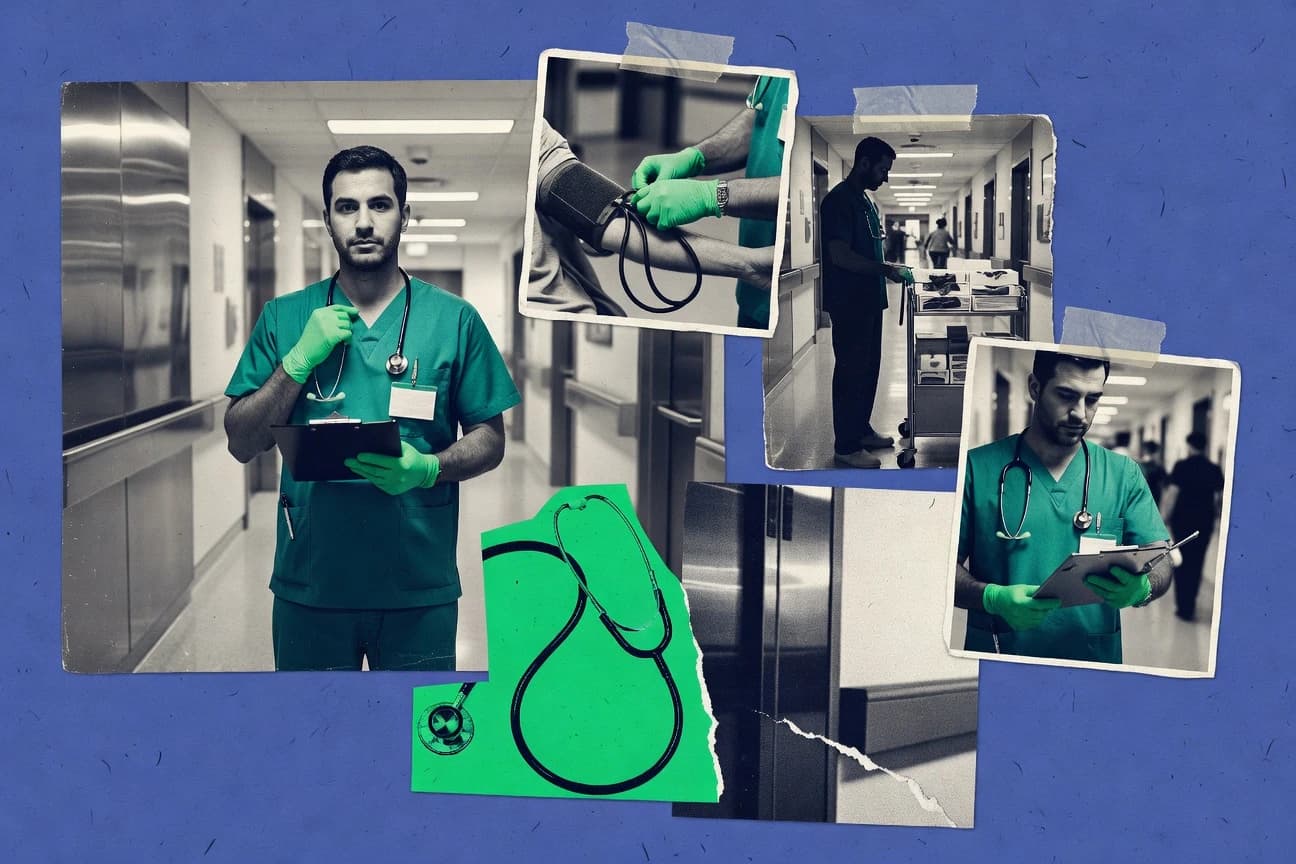

Men make up about 10% of the U.S. registered nurse workforce, which translates to roughly 200,000 male RNs. U.S. Bureau of Labor Statistics projections call for RN employment to rise by 203,200 jobs over the next decade, tightening the link between staffing demand and who gets hired. Male nurses also report higher rates of gender bias and workplace bullying, even as pay and specialty roles vary.
Key Takeaways
- In the U.S., men account for about 10% of registered nurses (RN) based on workforce composition estimates summarized by AACN research
- 2,000,000+ nurses work in the U.S., and men represent about 10% of the nursing workforce (male nurses ≈ 200,000+)
- Male nurses are more likely than female nurses to be concentrated in specific specialties (U.S. specialty distribution shows higher male shares in some procedural and critical-care roles)
- In Australia, demand for nurses remains high: AIHW reports an ongoing increase in employed nursing workforce numbers through 2021–2022 (affecting male nurses within workforce)
- The U.S. Bureau of Labor Statistics projects RN employment to increase by 203,200 jobs from 2023 to 2033 (male RN demand growth follows overall RN growth)
- The U.S. Bureau of Labor Statistics projects LPN/LVN employment to increase by 122,800 jobs from 2023 to 2033 (potential demand for male LPN/LVN likewise rises with overall projections)
- In the U.S., male registered nurses earn higher median hourly wages than female registered nurses (U.S. wage data summarized by BLS)
- In the U.S., annual median earnings for registered nurses were $86,070 in 2023 (BLS; male RN earnings differ by sex)
- In the U.S., annual median earnings for licensed practical and licensed vocational nurses were $57,090 in 2023 (BLS; male LPN/LVN earnings differ by sex)
- In the U.S., 1 in 3 nurses reported bullying/harassment experiences (survey results used in multiple nursing workforce safety analyses)
- In a systematic review, workplace bullying in healthcare workers was associated with increased turnover intention (meta-analytic finding; includes nurses)
- In a study of male nurses, 62% reported experiencing stereotypes or gender bias in workplace settings (peer-reviewed survey results)
Men make up about 10 percent of U.S. nurses, yet strong demand and uneven workplace experiences shape recruitment.
Related reading
01 · Category
Workforce Demographics4 stats
01
In the U.S., men account for about 10% of registered nurses (RN) based on workforce composition estimates summarized by AACN researchhttps://www.aacnnursing.org/News-Information/Research-Reports/Nursing-Workforce
02
2,000,000+ nurses work in the U.S., and men represent about 10% of the nursing workforce (male nurses ≈ 200,000+)https://www.bls.gov/ooh/healthcare/nurses.htm
03
Male nurses are more likely than female nurses to be concentrated in specific specialties (U.S. specialty distribution shows higher male shares in some procedural and critical-care roles)https://www.uhcprovider.com/education/insights/nurse-specialty-gender-distribution
04
In the U.S., men account for 9% of licensed practical nurses (LPN/LVN) in national workforce composition reportinghttps://www.bls.gov/cps/cpsaat11.htm
Interpretation
Workforce Demographics Interpretation
For the Workforce Demographics angle, men make up roughly 9% to 10% of the nursing workforce in the U.S., translating to about 200,000 male nurses, with an additional pattern that they are more concentrated in certain specialties than female nurses.
02 · Category
Employment & Demand6 stats
01
In Australia, demand for nurses remains high: AIHW reports an ongoing increase in employed nursing workforce numbers through 2021–2022 (affecting male nurses within workforce)https://www.aihw.gov.au/reports/nursing/nursing-and-midwifery-workforce
02
The U.S. Bureau of Labor Statistics projects RN employment to increase by 203,200 jobs from 2023 to 2033 (male RN demand growth follows overall RN growth)https://www.bls.gov/ooh/healthcare/registered-nurses.htm
03
The U.S. Bureau of Labor Statistics projects LPN/LVN employment to increase by 122,800 jobs from 2023 to 2033 (potential demand for male LPN/LVN likewise rises with overall projections)https://www.bls.gov/ooh/healthcare/licensed-practical-and-licensed-vocational-nurses.htm
04
WHO estimates the world has 27.9 nursing and midwifery personnel per 10,000 population, indicating capacity gaps that expand recruitment demandhttps://www.who.int/data/gho/data/themes/topics/health-workforce
05
In the U.S., 73% of hospitals report using travel nurses to fill gaps (demand pressure that affects recruiting across genders, including male nurses)https://www.ahip.org/wp-content/uploads/2024/01/Travel-Nurse-Supply-Demand-Survey-2023.pdf
06
In the U.S., nursing job postings remained elevated: there were 200,000+ postings for registered nurses in 2023 (implying sustained demand)https://www.careeronestop.org/Toolkit/Jobs/Job-Search/job-postings.aspx
Interpretation
Employment & Demand Interpretation
Across employment and demand signals, nurse staffing needs are clearly staying strong, with the U.S. projecting registered nurse employment to rise by 203,200 jobs from 2023 to 2033 and travel nurses used by 73% of hospitals, alongside global shortfalls where WHO estimates only 27.9 nursing and midwifery personnel per 10,000 people.
More related reading
03 · Category
Pay & Equity5 stats
01
In the U.S., male registered nurses earn higher median hourly wages than female registered nurses (U.S. wage data summarized by BLS)https://www.bls.gov/cps/cpsaat39.htm
02
In the U.S., annual median earnings for registered nurses were $86,070in 2023 (BLS; male RN earnings differ by sex)https://www.bls.gov/oes/current/oes291141.htm
03
In the U.S., annual median earnings for licensed practical and licensed vocational nurses were $57,090in 2023 (BLS; male LPN/LVN earnings differ by sex)https://www.bls.gov/oes/current/oes291151.htm
04
In the U.S., BLS reported that women working full-time earned 82 cents for every dollar earned by men on average in 2023 (context for potential gender equity in nursing pay)https://www.bls.gov/news.release/pdf/wkyeng.pdf
05
In Canada, the gender wage gap across all nursing occupations was measured at 8% in 2020 (Statistics Canada wage gap analysis)https://www150.statcan.gc.ca/n1/pub/75-006-x/2022001/article/00002-eng.htm
Interpretation
Pay & Equity Interpretation
Across nursing pay and equity, U.S. data show men earning more than women, with women making 82 cents for every dollar men earned in 2023 and RN annual median earnings at $86,070, while Canada’s nursing workforce still has an 8% gender wage gap in 2020.
04 · Category
Workplace Culture7 stats
01
In the U.S., 1 in 3 nurses reported bullying/harassment experiences (survey results used in multiple nursing workforce safety analyses)https://pubmed.ncbi.nlm.nih.gov/28614811/
02
In a systematic review, workplace bullying in healthcare workers was associated with increased turnover intention (meta-analytic finding; includes nurses)https://pubmed.ncbi.nlm.nih.gov/31601998/
03
In a study of male nurses, 62% reported experiencing stereotypes or gender bias in workplace settings (peer-reviewed survey results)https://pubmed.ncbi.nlm.nih.gov/31368585/
04
In another survey, 54% of male nurses reported feeling less accepted by colleagues due to gender (peer-reviewed findings)https://pubmed.ncbi.nlm.nih.gov/28909663/
05
In the U.S., the Joint Commission’s data show that workplace safety culture initiatives are correlated with lower incident reports (organization-wide quality reports)https://www.jointcommission.org/resources/news-and-newsletters/newsletters/quality-and-safety-news/quality-and-safety-news-archive/2022/quality-and-safety-news-january-2022/
06
In the U.S., ANA reports that workplace conditions are a key factor in retention: 47% of nurses considered leaving their jobs in a 2022 survey (context for male retention)https://www.americannursetoday.com/ana-survey-results-on-retention-2022
07
In a meta-analysis, burnout prevalence among healthcare professionals averaged about 23% (includes nurses; affects retention and job satisfaction across genders)https://pubmed.ncbi.nlm.nih.gov/30661313/
Interpretation
Workplace Culture Interpretation
For male nurses, workplace culture issues are not minor side problems, with 62% reporting stereotypes or gender bias and 54% feeling less accepted, and broader evidence shows bullying is linked to higher turnover intention, meaning safer, more inclusive culture initiatives are likely crucial for retention and lower workplace incidents.
report visual · Key figures
Male nurse representation, pay context, and workplace experiences
Male nurses remain a small share of the workforce, while demand for nursing roles is high and many nurses report workplace challenges that can affect retention and belonging.
10%
In the U.S., men account for about 10% of registered nurses (RN) based on workforce composition estimates summarized by
9%
In the U.S., men account for 9% of licensed practical nurses (LPN/LVN) in national workforce composition reporting
82
In the U.S., BLS reported that women working full-time earned 82 cents for every dollar earned by men on average in 2023
62%
In a study of male nurses, 62% reported experiencing stereotypes or gender bias in workplace settings (peer-reviewed sur
54%
In another survey, 54% of male nurses reported feeling less accepted by colleagues due to gender (peer-reviewed findings
source-verifiedaacnnursing.org · bls.gov · pubmed.ncbi.nlm.nih.gov2023
Reference
Cite This Report
This report is designed to be cited. We maintain stable URLs and versioned verification dates. Copy the format appropriate for your publication below.
APA
Alexander Schmidt. (2026, February 13). Male Nurses Statistics. Gitnux. https://gitnux.org/male-nurses-statistics
MLA
Alexander Schmidt. "Male Nurses Statistics." Gitnux, 13 Feb 2026, https://gitnux.org/male-nurses-statistics.
Chicago
Alexander Schmidt. 2026. "Male Nurses Statistics." Gitnux. https://gitnux.org/male-nurses-statistics.
Sources & references
22 datasets cited across this report
+11 additional datasets cited (not shown individually)