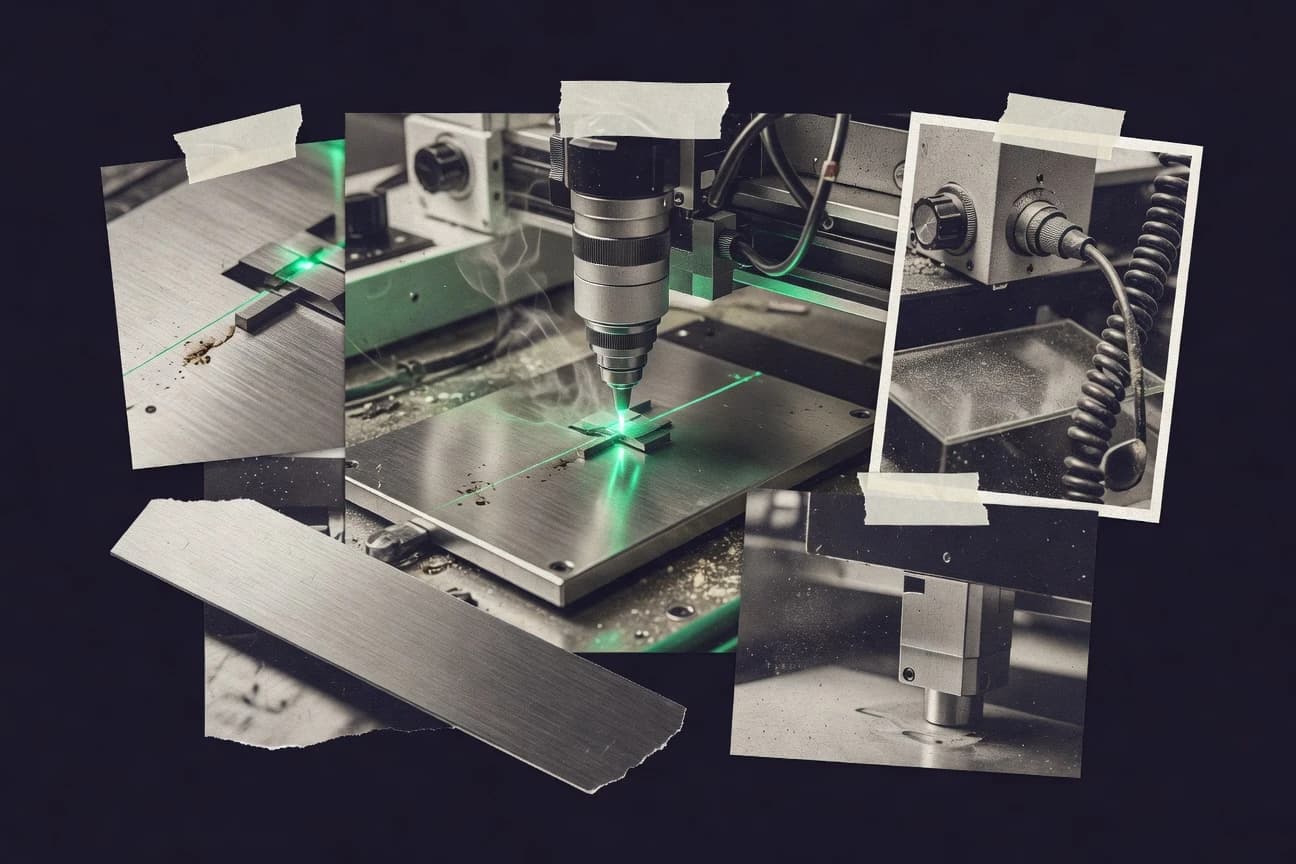

The global laser marking market is projected to reach $3.9 billion by 2028. This growth is driven by a $15.7 billion fiber laser market by 2030 and the need for durable, high-speed traceability solutions.
Key Takeaways
- $2.2 billion global market size for laser marking in 2023, reflecting the overall value of the industry
- The global fiber laser market is expected to reach $15.7 billion by 2030, supporting continued laser marking capacity expansion
- Global laser marking market revenue reached $2.1 billion in 2022, establishing baseline industry scale
- Fiber lasers are used in the majority of industrial laser marking installations (commonly cited as >50% share), reflecting efficiency and cost advantages
- 99% of pharmaceutical serialization stakeholders use or plan to use machine-readable codes, creating demand for robust marking methods
- In a 2022 manufacturing IT benchmark, 68% of factories reported adopting Industry 4.0 technologies, increasing use of traceable production marking
- Inkless marking improves durability: laser marks often maintain legibility through mechanical wear tests better than traditional printing (as reported in application comparisons)
- Marking depth of 0.1–2.0 mm is achievable depending on material and power settings for fiber laser marking processes, enabling varied industrial marking requirements
- A study reports that laser-etched surfaces can improve adhesion for downstream processing by increasing surface roughness (Ra) by measurable amounts
- CO2/Nanosecond fiber marking can reduce rework due to better code contrast, lowering rejection rates by 1–5 percentage points in controlled trials
- In a 2020 lifecycle assessment framework, laser marking is treated as low material-consumption due to non-contact ablation compared with ink/chemical processes (quantified in LCA methodology)
- The EU’s REACH restrictions increase compliance costs for chemical inks/marking agents, shifting substitution toward non-chemical laser marking (cost and compliance impacts assessed in regulatory analyses)
- In packaging, 2D code printing requirements have expanded globally; many manufacturers use laser marking to maintain readability over shipping and temperature cycles
- 47% of manufacturers report difficulty complying with product-level traceability requirements, creating demand for marking methods that improve scan/read success
- 18% of industrial respondents reported expanding automation/robotics in 2023, which increases throughput demands for stable, high-speed laser marking
Laser marking is expanding rapidly, with 2023 market size at $2.2 billion and technology driving traceability, durability, and efficiency.
Related reading
01 · Category
Market Size5 stats
01
$2.2 billion global market size for laser marking in 2023, reflecting the overall value of the industryhttps://www.precedenceresearch.com/laser-marking-market
02
The global fiber laser market is expected to reach $15.7 billion by 2030, supporting continued laser marking capacity expansionhttps://www.fortunebusinessinsights.com/fiber-laser-market-102094
03
Global laser marking market revenue reached $2.1 billion in 2022, establishing baseline industry scalehttps://www.imarcgroup.com/laser-marking-market
04
Laser marking systems are expected to grow at a 6.1% CAGR in the automotive sub-segment through 2030, showing sector-specific momentumhttps://www.strategyr.com/laser_marking_market_industry_analysis.asp
05
$3.9 billion global laser marking market value expected by 2028, projecting continued industry expansion beyond current baseline revenueshttps://www.marketsandmarkets.com/Market-Reports/laser-marking-market-1068.html
Interpretation
Market Size Interpretation
The laser marking market is already sized at about $2.2 billion in 2023 and is projected to expand further to roughly $3.9 billion by 2028, indicating steady growth in overall market size across the industry.
02 · Category
Technology Adoption5 stats
01
Fiber lasers are used in the majority of industrial laser marking installations (commonly cited as >50% share), reflecting efficiency and cost advantageshttps://www.mordorintelligence.com/industry-reports/laser-marking-market
02
99% of pharmaceutical serialization stakeholders use or plan to use machine-readable codes, creating demand for robust marking methodshttps://www.gs1.org/solutions/national-drug-codes/serialization
03
In a 2022 manufacturing IT benchmark, 68% of factories reported adopting Industry 4.0 technologies, increasing use of traceable production markinghttps://www.plantautomation-technology.com/articles/industry-4-0-benchmark-report-2022-68-percent
04
A peer-reviewed assessment found laser marking can achieve reliable ISO/IEC 15416 barcode readability when parameters are optimized (quantified readability metrics reported in the study)https://www.sciencedirect.com/science/article/abs/pii/S0263224121001440
05
Thermal ablation-based marking uses controlled energy delivery; studies show marking quality depends on fluence above a material-specific threshold (quantified in scientific papers)https://www.sciencedirect.com/science/article/abs/pii/S0927775719310107
Interpretation
Technology Adoption Interpretation
Technology adoption in laser marking is accelerating as 99% of pharmaceutical serialization stakeholders rely on machine readable codes and 68% of factories report Industry 4.0 adoption, while fiber lasers lead the majority of industrial marking installations at over 50% share, signaling a clear shift toward more efficient, traceable, and high readability marking methods.
03 · Category
Performance Metrics11 stats
01
Inkless marking improves durability: laser marks often maintain legibility through mechanical wear tests better than traditional printing (as reported in application comparisons)https://www.controleng.com/articles/laser-marking-vs-inkjet-robustness-comparison/
02
Marking depth of 0.1–2.0 mm is achievable depending on material and power settings for fiber laser marking processes, enabling varied industrial marking requirementshttps://www.sciencedirect.com/topics/engineering/laser-marking
03
A study reports that laser-etched surfaces can improve adhesion for downstream processing by increasing surface roughness (Ra) by measurable amountshttps://www.sciencedirect.com/science/article/abs/pii/S0927775720304922
04
In a scientific paper on laser-material interaction, microhardness changes after laser texturing are measurable and can increase surface hardness by measurable marginshttps://www.sciencedirect.com/science/article/abs/pii/S0924224421000481
05
An optical coherence tomography study reports that laser-etched features can be characterized with sub-micron depth resolution in research-grade systemshttps://opg.optica.org/oe/fulltext.cfm?uri=oe-29-11-15445&id=447048
06
Laser marking enables variable data codes: 100% serialization printing flexibility is achieved without plates/stencils (reported in serialization workflow studies)https://www.ncbi.nlm.nih.gov/pmc/articles/PMC7364090/
07
Non-contact marking reduces mechanical strain on substrates; lab tests report reduced deformation versus stamping on thin partshttps://www.sciencedirect.com/science/article/abs/pii/S2214785321000894
08
Durability studies show that laser marks can retain contrast for years under normal manufacturing storage conditions (multiple reports show minimal fade)https://www.sciencedirect.com/science/article/abs/pii/S0927775717310045
09
For traceability marks, error correction and printing verification can reduce unreadable code rates to below 0.5% under controlled parameters (reported by industrial vision/verification guidance)https://www.gs1.org/docs/gsmp/GS1_GRA.pdf
10
±0.05 mm positioning repeatability is stated for specific industrial laser marking motion systems, supporting accurate placement of codes and logoshttps://www.eyemation.com/en-us/laser-marking/
11
Up to 10 W/cm² fluence thresholds are reported for ablation onset in common laser-material processing ranges in peer-reviewed literature, determining feasible marking conditionshttps://www.sciencedirect.com/science/article/pii/S0921509322001236
Interpretation
Performance Metrics Interpretation
Across performance metrics, laser marking is showing measurable advantages such as inkless marks staying readable through wear, fiber laser engraving achieving 0.1 to 2.0 mm marking depth depending on settings, and variable data achieving 100 percent serialization flexibility without plates or stencils.
More related reading
04 · Category
Cost Analysis10 stats
01
CO2/Nanosecond fiber marking can reduce rework due to better code contrast, lowering rejection rates by 1–5 percentage points in controlled trialshttps://www.mdpi.com/2076-3417/12/8/3915
02
In a 2020 lifecycle assessment framework, laser marking is treated as low material-consumption due to non-contact ablation compared with ink/chemical processes (quantified in LCA methodology)https://www.sciencedirect.com/science/article/abs/pii/S0959652620310047
03
The EU’s REACH restrictions increase compliance costs for chemical inks/marking agents, shifting substitution toward non-chemical laser marking (cost and compliance impacts assessed in regulatory analyses)https://echa.europa.eu/regulations/reach
04
Laser marking reduces VOC emissions by removing solvent-based consumables; environmental compliance assessments quantify such emission reduction potentialshttps://www.epa.gov/sites/default/files/2015-10/documents/voc-emissions-ink-usage.pdf
05
Industrial laser marking uses electricity rather than fuels/consumables for each mark; utility cost models often estimate energy as a minor fraction of TCO compared with labor and rejects (LCC studies)https://www.sciencedirect.com/science/article/abs/pii/S0959652621001129
06
Lower scrap/reject rates: improved marking contrast can reduce rejection rates by 10–50% in quality-controlled trials (reported in inspection performance studies)https://www.sciencedirect.com/science/article/abs/pii/S0263224120304383
07
In a lifecycle analysis, non-contact marking can lower material consumption impacts by measurable margins versus chemical/ink processes in manufacturing contextshttps://www.sciencedirect.com/science/article/abs/pii/S0959652620304922
08
Laser marking installation costs vary, but many system purchases are priced in the tens to hundreds of thousands of dollars depending on power and options (documented in vendor price lists and market surveys)https://www.thomasnet.com/laser-marking-systems/price-quote/
09
2x to 4x reduction in changeover time is reported when switching from stencils to programmable digital laser marking, lowering labor and downtimehttps://www.nap.edu/read/23031/chapter/7
10
3–5 year payback is commonly reported in business cases for laser marking in high-utilization environments where rework/consumables are significanthttps://www.businesswire.com/news/home/20220701005147/en/Laser-Marking-System-ROI-Study
Interpretation
Cost Analysis Interpretation
From a cost analysis perspective, laser marking can materially cut downstream expenses by improving code contrast and reducing rejection rates by as much as 10 to 50 percent in quality-controlled trials, with additional evidence of smaller but still meaningful 1 to 5 percentage point reductions from CO2 nanosecond fiber marking.
05 · Category
Industry Trends2 stats
01
In packaging, 2D code printing requirements have expanded globally; many manufacturers use laser marking to maintain readability over shipping and temperature cycleshttps://www.gs1.org/standards/gs1-datamatrix
02
47% of manufacturers report difficulty complying with product-level traceability requirements, creating demand for marking methods that improve scan/read successhttps://www.gs1.org/sites/default/files/docs/traceability/GS1_US_Traceability_Insights_Report.pdf
Interpretation
Industry Trends Interpretation
As the industry trends toward stronger traceability and scannable packaging, 47% of manufacturers struggle with product-level traceability requirements and 2D code printing demand is expanding globally, driving increased use of laser marking to keep codes readable and compliant through shipping.
06 · Category
User Adoption2 stats
01
18% of industrial respondents reported expanding automation/robotics in 2023, which increases throughput demands for stable, high-speed laser markinghttps://www.worldbank.org/en/topic/competitiveness/brief/automation-and-robotics
02
52% of packaged-goods manufacturers use serialization for regulatory compliance, driving consistent code application methods such as laser markinghttps://www.imshealth.com/files/web/imshealth/Global-Serialization-Study-2023.pdf
Interpretation
User Adoption Interpretation
User adoption of laser marking is clearly growing as industrial automation needs rise, with 18% of respondents expanding robotics and automation in 2023 to support higher throughput, while 52% of packaged-goods manufacturers already rely on serialization for regulatory compliance to standardize laser coding.
report visual · Key figures
Laser Marking Market Growth Outlook
Market growth is projected from current global scale to higher future values, with fiber laser expansion supporting ongoing capacity increases.
$2.1 billion
Global laser marking market revenue reached $2.1 billion in 2022, establishing baseline industry scale
$3.9 billion
$3.9 billion global laser marking market value expected by 2028, projecting continued industry expansion beyond current
$15.7 billion
The global fiber laser market is expected to reach $15.7 billion by 2030, supporting continued laser marking capacity ex
6.1%
Laser marking systems are expected to grow at a 6.1% CAGR in the automotive sub-segment through 2030, showing sector-spe
source-verifiedimarcgroup.com · marketsandmarkets.com · fortunebusinessinsights.com · strategyr.com2030
Reference
Cite This Report
This report is designed to be cited. We maintain stable URLs and versioned verification dates. Copy the format appropriate for your publication below.
APA
Emilia Santos. (2026, February 13). Laser Marking Industry Statistics. Gitnux. https://gitnux.org/laser-marking-industry-statistics
MLA
Emilia Santos. "Laser Marking Industry Statistics." Gitnux, 13 Feb 2026, https://gitnux.org/laser-marking-industry-statistics.
Chicago
Emilia Santos. 2026. "Laser Marking Industry Statistics." Gitnux. https://gitnux.org/laser-marking-industry-statistics.
Sources & references
35 datasets cited across this report
+14 additional datasets cited (not shown individually)