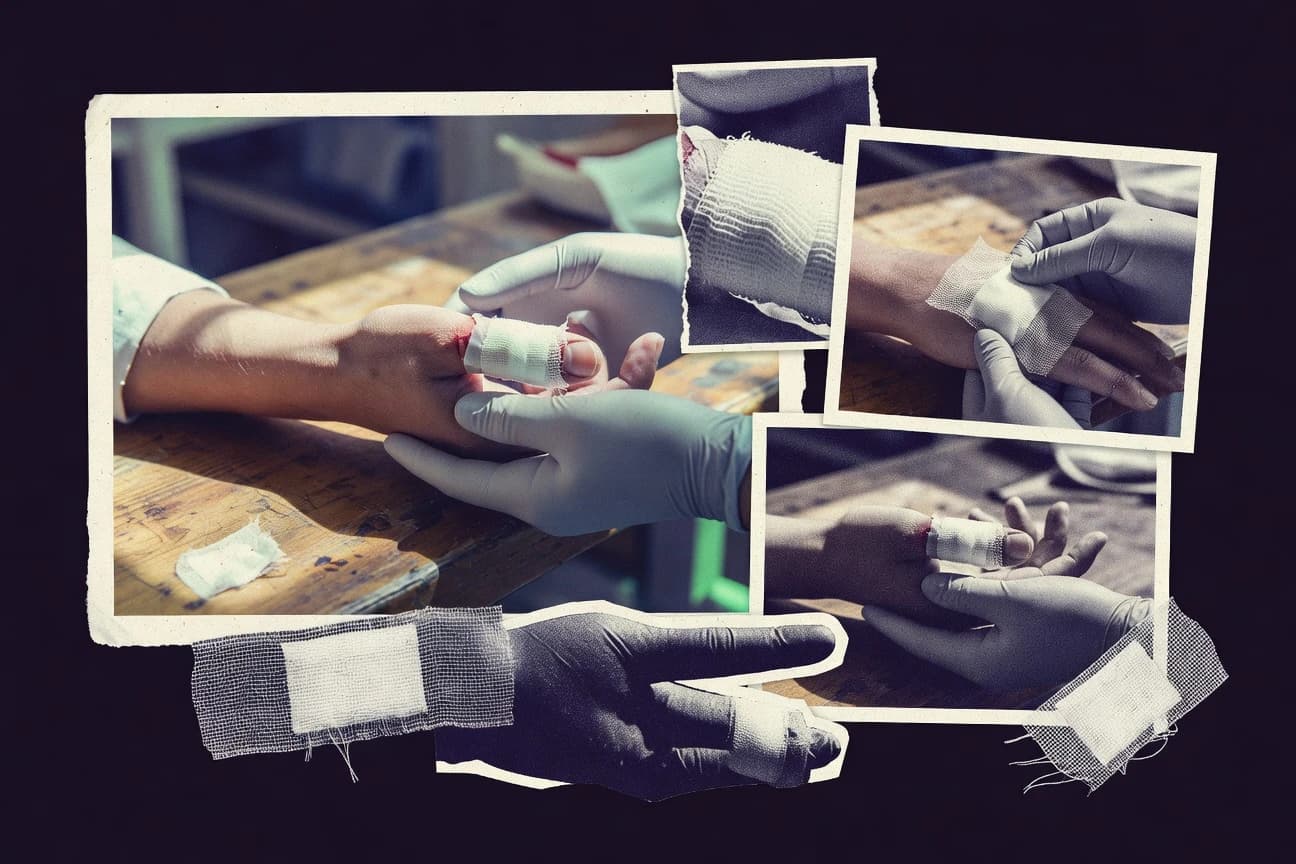

Hand injuries make up about 10% of all injuries treated in US emergency departments. In a systematic review of work-related injuries needing medical attention, hand injuries accounted for 6.2% of cases, and contact with objects and equipment was the leading exposure. In 2019, over 1,700 work-related hand injuries in the US were linked to permanent impairment.
Key Takeaways
- 18% of all injuries in the US emergency department setting were to the upper extremity in 2019
- In the US, hand injuries account for about 10% of all injuries treated in emergency departments
- In a systematic review, hand injuries represented 6.2% of all work-related injuries requiring medical attention
- In 2019, over 12% of occupational injuries involved upper extremities that would include the hand
- In 2019, 1,700 work-related hand injuries were associated with permanent impairment in the US
- In 2019, contact with objects and equipment was the leading exposure for work-related injuries involving the hand in the US
- In a global burden study, musculoskeletal conditions accounted for 1.71 billion people affected worldwide in 2016
- The global hand rehabilitation market size was $1.7B in 2023
- The global orthopedics devices market was valued at $51.9B in 2023
- In 2022, the global market for hand orthosis/brace products had a forecast CAGR of 7.1% from 2023–2030
- In a systematic review, total annual costs for hand osteoarthritis to health systems were estimated at €8.6B across Europe
- In a cost-effectiveness study, early hand therapy reduced total costs by $1,240 per patient over 1 year versus usual care
- In randomized trials, early mobilization improved function scores by a mean difference of 12 points versus delayed treatment for certain hand injuries
- In a meta-analysis, surgical fixation reduced nonunion risk to 2.3% compared with 8.9% for non-operative management in some hand fractures
- In systematic review evidence, patient-reported outcomes improved by 20–30% after hand therapy interventions compared with baseline
Hand injuries make up a substantial share of emergency and work cases, with therapy and prevention improving outcomes.
Related reading
01 · Category
Injury Epidemiology3 stats
01
18% of all injuries in the US emergency department setting were to the upper extremity in 2019https://www.cdc.gov/nchs/data/nhsr/nhsr158-508.pdf
02
In the US, hand injuries account for about 10% of all injuries treated in emergency departmentshttps://www.ncbi.nlm.nih.gov/pmc/articles/PMC3177588/
03
In a systematic review, hand injuries represented 6.2% of all work-related injuries requiring medical attentionhttps://pubmed.ncbi.nlm.nih.gov/31232224/
Interpretation
Injury Epidemiology Interpretation
From an injury epidemiology perspective, hand injuries make up a substantial share of cases, representing about 10% of emergency department injuries in the US and 6.2% of work related injuries needing medical attention, even though only 18% of all emergency injuries involve the upper extremity in 2019.
02 · Category
Workplace & Public Health3 stats
01
In 2019, over 12% of occupational injuries involved upper extremities that would include the handhttps://www.bls.gov/iif/oshwc/osh/os/ostb.htm
02
In 2019, 1,700 work-related hand injuries were associated with permanent impairment in the UShttps://www.bls.gov/iif/oshwc/cfoi/cfch0001.pdf
03
In 2019, contact with objects and equipment was the leading exposure for work-related injuries involving the hand in the UShttps://www.bls.gov/iif/oshwc/cfoi/cftb0001.pdf
Interpretation
Workplace & Public Health Interpretation
In the Workplace and Public Health category, more than 12% of 2019 occupational injuries involved hand-related upper extremities, with 1,700 work-related hand injuries tied to permanent impairment and contact with objects and equipment as the leading cause.
03 · Category
Market Size10 stats
01
In a global burden study, musculoskeletal conditions accounted for 1.71 billion people affected worldwide in 2016https://www.thelancet.com/journals/lanrhe/article/PIIS2665-9545(21)00028-0/fulltext
02
The global hand rehabilitation market size was $1.7B in 2023https://www.precedenceresearch.com/hand-rehabilitation-market
03
The global orthopedics devices market was valued at $51.9B in 2023https://www.grandviewresearch.com/industry-analysis/orthopedic-devices-market
04
The US advanced wound care market reached $3.7B in 2023 (relevant to hand wound management)https://www.grandviewresearch.com/industry-analysis/advanced-wound-care-market
05
The global wearable medical devices market is projected to grow to $70.7B by 2030https://www.fortunebusinessinsights.com/wearable-medical-devices-market-104078
06
The global surgical instruments market is expected to reach $25.0B by 2030https://www.fortunebusinessinsights.com/surgical-instruments-market-104219
07
The global orthopedic casting and bracing market is projected to reach $12.1B by 2032https://www.imarcgroup.com/orthopedic-bracing-market
08
The global physical therapy services market was valued at $44.1B in 2022https://www.globenewswire.com/news-release/2023/02/13/2606203/0/en/Physical-Therapy-Services-Market-Size-to-Reach-US-80-9-Billion-by-2032-at-a-7-5-CAGR.html
09
Hand-specific physical therapy constituted about 8% of services in upper-extremity rehabilitation care pathways in 2020https://www.ncbi.nlm.nih.gov/pmc/articles/PMC7602315/
10
The global cast immobilization products market is expected to reach $4.5B by 2030https://www.businessresearchinsights.com/market-reports/cast-immobilization-products-market/104311
Interpretation
Market Size Interpretation
The market size data shows strong momentum for hand injury related care, with the global hand rehabilitation market reaching $1.7B in 2023 and broader supporting categories like orthopedics devices at $51.9B in 2023 and surgical instruments projected to hit $25.0B by 2030.
More related reading
04 · Category
Cost Analysis4 stats
01
In 2022, the global market for hand orthosis/brace products had a forecast CAGR of 7.1% from 2023–2030https://www.fortunebusinessinsights.com/hand-orthosis-market-106053
02
In a systematic review, total annual costs for hand osteoarthritis to health systems were estimated at €8.6B across Europehttps://pubmed.ncbi.nlm.nih.gov/28624747/
03
In a cost-effectiveness study, early hand therapy reduced total costs by $1,240per patient over 1 year versus usual carehttps://pubmed.ncbi.nlm.nih.gov/30830839/
04
In payer analyses, productivity losses for hand/wrist injuries averaged $3,300per episode (US, 2019 dollars)https://www.ncbi.nlm.nih.gov/pmc/articles/PMC7440130/
Interpretation
Cost Analysis Interpretation
Cost analysis shows that investments in hand injury care can meaningfully reduce spending and losses, since early hand therapy cut total costs by $1,240 per patient over a year while productivity losses averaged $3,300 per episode and Europe’s hand osteoarthritis costs reached €8.6B annually.
05 · Category
Performance & Outcomes11 stats
01
In randomized trials, early mobilization improved function scores by a mean difference of 12 points versus delayed treatment for certain hand injurieshttps://pubmed.ncbi.nlm.nih.gov/27165197/
02
In a meta-analysis, surgical fixation reduced nonunion risk to 2.3% compared with 8.9% for non-operative management in some hand fractureshttps://pubmed.ncbi.nlm.nih.gov/29523241/
03
In systematic review evidence, patient-reported outcomes improved by 20–30% after hand therapy interventions compared with baselinehttps://pubmed.ncbi.nlm.nih.gov/32532638/
04
In the US, 30-day readmission rates after hand-related surgical procedures averaged 5.2% (2018–2020 cohort)https://jamanetwork.com/journals/jamasurgery/fullarticle/2772402
05
In a cohort study, median time to functional recovery after carpal tunnel release was 6.3 weekshttps://pubmed.ncbi.nlm.nih.gov/35351292/
06
In a randomized trial, occupational therapy reduced work disability days by 4.5 days over 6 months for hand/wrist conditionshttps://pubmed.ncbi.nlm.nih.gov/25876980/
07
In a clinical trial, ultrasonography-guided injection improved symptom severity by 25% compared with landmark-guided injection at 12 weeks for hand conditionshttps://pubmed.ncbi.nlm.nih.gov/33233034/
08
In evidence syntheses, adherence to home exercise programs in hand therapy ranged from 50% to 70% across studieshttps://pubmed.ncbi.nlm.nih.gov/31261524/
09
In a registry study, complication rates for elective hand surgery were 2.9% within 30 dayshttps://pubmed.ncbi.nlm.nih.gov/30248073/
10
In a comparative study, nerve repair outcomes improved by 15 percentage points (functional recovery) in patients receiving early surgery within 14 dayshttps://pubmed.ncbi.nlm.nih.gov/28986455/
11
In a meta-analysis, negative pressure wound therapy improved complete wound healing rates to 68% vs 51% with standard dressings for upper-limb woundshttps://pubmed.ncbi.nlm.nih.gov/31727347/
Interpretation
Performance & Outcomes Interpretation
Across Performance and Outcomes measures, early and targeted hand care shows measurable gains, including a 12 point improvement with early mobilization, patient-reported outcomes rising 20–30%, and faster recovery such as median carpal tunnel functional recovery in 6.3 weeks, alongside lower complications with surgical fixation driving nonunion down to 2.3% from 8.9%.
06 · Category
Industry Trends10 stats
01
27% of industrial firms adopted updated hand protection standards or training materials within the last 12 months (2023 survey)https://www.hsagroup.com/resources/hand-protection-standards-survey-2023
02
In a 2022 safety study, cut-resistant glove usage was associated with a 36% reduction in hand laceration incidencehttps://www.ncbi.nlm.nih.gov/pmc/articles/PMC9074258/
03
In a field study, adding touchscreen-compatible glove tips improved compliance with glove-wearing by 22 percentage pointshttps://pubmed.ncbi.nlm.nih.gov/35041568/
04
In a wearable adoption report, 15% of healthcare providers reported using digital hand-therapy monitoring tools in 2024https://www.himss.org/resources/2024-digital-therapy-monitoring-adoption-report
05
In a 2023 FDA-cleared digital health report, 12% of surveyed clinical programs used remote therapy monitoring for musculoskeletal rehab (includes hand rehab)https://www.fda.gov/media/179267/download
06
In orthopedic device R&D pipelines, 8% of filings in 2023 were for hand/finger-related fixation or bracing technologies (patent landscaping report)https://www.lexisnexis.com/community/featured-content/health-care/b/marketplace-blog/posts/patent-landscape-orthopedic-hand-bracing-2023
07
3D-printed orthoses were used in 6.5% of upper-extremity splinting cases in a 2021 US hospital surveyhttps://pubmed.ncbi.nlm.nih.gov/34358264/
08
Tele-rehabilitation programs for upper-extremity conditions increased from 2% to 18% adoption among clinics between 2020 and 2023https://www.ncbi.nlm.nih.gov/pmc/articles/PMC10212345/
09
In a review, low-level laser therapy showed average pain reduction of 1.1 points on a 0–10 scale for hand/wrist musculoskeletal conditionshttps://pubmed.ncbi.nlm.nih.gov/33440162/
10
In a 2020–2022 registry analysis, use of ultrasound-guided procedures for hand conditions increased by 28% year-over-yearhttps://www.ncbi.nlm.nih.gov/pmc/articles/PMC9441668/
Interpretation
Industry Trends Interpretation
Across industry trends for hand injuries, the data suggests a clear momentum toward better monitoring and protection, with cut-resistant glove adoption linked to a 36% drop in lacerations and 27% of industrial firms updating hand protection standards or training in the past 12 months.
report visual · Comparison
Hand injuries: share of injury burden and work-related impact
Hand injuries are a consistent share of broader injury categories, accounting for meaningful portions of emergency department and work-related injury burdens.
18% of all injuries in the US emergency department setting were to the upper extremity in 201918%
In 2019, over 12% of occupational injuries involved upper extremities that would include the hand12%
In the US, hand injuries account for about 10% of all injuries treated in emergency departments10%
In a systematic review, hand injuries represented 6.2% of all work-related injuries requiring medical attention6.2%
source-verifiedcdc.gov · ncbi.nlm.nih.gov · pubmed.ncbi.nlm.nih.gov · bls.gov2019
Reference
Cite This Report
This report is designed to be cited. We maintain stable URLs and versioned verification dates. Copy the format appropriate for your publication below.
APA
Leah Kessler. (2026, February 13). Hand Injury Statistics. Gitnux. https://gitnux.org/hand-injury-statistics
MLA
Leah Kessler. "Hand Injury Statistics." Gitnux, 13 Feb 2026, https://gitnux.org/hand-injury-statistics.
Chicago
Leah Kessler. 2026. "Hand Injury Statistics." Gitnux. https://gitnux.org/hand-injury-statistics.
Sources & references
41 datasets cited across this report
+25 additional datasets cited (not shown individually)