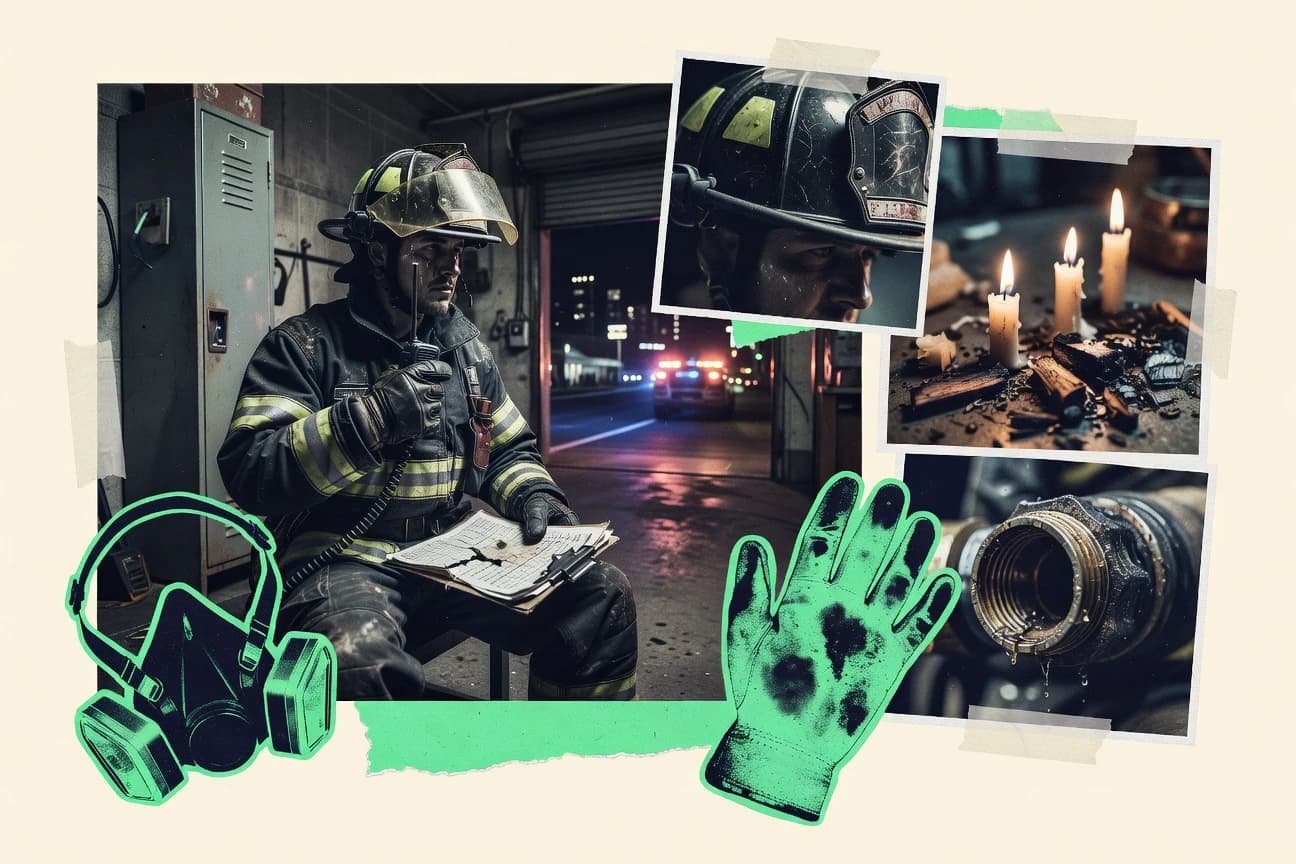

Firefighting is built on duty under pressure, yet PTSD risk is more common than most departments expect, with 31% of firefighters reporting clinically significant PTSD symptoms in a 2020 meta-analysis. The picture gets even sharper when you zoom out to community levels and timing, where only about 1 in 3 who screen positive report getting mental health treatment and symptoms can persist for 1 in 4 affected firefighters at 12 months. Let’s connect these percentages to exposure, support, sleep, comorbid conditions, and what that means for care after the call.
Key Takeaways
- 31% of firefighters reported clinically significant PTSD symptoms in a 2020 meta-analysis (overall prevalence estimate).
- 10.4% of firefighters met PTSD criteria in a 2017 systematic review and meta-analysis (pooled prevalence).
- 29.2% of firefighters had probable PTSD in a 2023 systematic review and meta-analysis (pooled estimate for probability).
- 90% of firefighters reported experiencing at least one potentially traumatic event, according to a 2019 study (exposure prevalence).
- 62% of firefighters reported responding to child-related incidents at least once, according to a 2020 survey (incident exposure prevalence).
- 33% of firefighters reported being present at a death scene in the past year (death-scene exposure prevalence).
- About 17% of firefighters reported experiencing suicidal ideation, and that ideation was associated with PTSD symptoms in a 2018 study (mental health comorbidity prevalence).
- In a 2017 study, depression was present in 46% of firefighters who screened positive for PTSD (comorbidity prevalence).
- Anxiety symptoms were reported by 58% of firefighters with probable PTSD in a 2019 study (comorbidity prevalence).
- Only 1 in 3 firefighters who screened positive for PTSD reported receiving mental health treatment in a 2019 survey (treatment receipt rate).
- In a 2020 study, 45% of firefighters with PTSD symptoms indicated they did not seek care due to stigma-related concerns (stigma barrier prevalence).
- A 2017 review reported that 5% to 20% of firefighters receive PTSD-related psychotherapy after critical incidents (treatment coverage range).
- In the U.S., workers’ compensation for first responders includes coverage for mental injury/PTSD where conditions are met; a 2020 NASI paper documents that 38 states recognize mental stress/PTSD claims for public safety workers (jurisdiction count).
- In the UK, the Health and Safety Executive’s work-related stress guidance cites that workers in high-exposure occupations can be affected by PTSD-like outcomes, supporting employer duty of care for psychological risks (regulatory duty).
- A 2021 peer-reviewed legal analysis found that courts commonly require specific linkage between work exposure and PTSD for compensability; it summarized 62 reported decisions in the examined period (decision count).
Roughly one in three firefighters report clinically significant PTSD symptoms, with key risk factors like trauma exposure.
Related reading
01 · Category
Prevalence Rates11 stats
01
31% of firefighters reported clinically significant PTSD symptoms in a 2020 meta-analysis (overall prevalence estimate).https://pubmed.ncbi.nlm.nih.gov/32080533/
02
10.4% of firefighters met PTSD criteria in a 2017 systematic review and meta-analysis (pooled prevalence).https://www.ncbi.nlm.nih.gov/pmc/articles/PMC5339244/
03
29.2% of firefighters had probable PTSD in a 2023 systematic review and meta-analysis (pooled estimate for probability).https://pubmed.ncbi.nlm.nih.gov/36644763/
04
13.2% of firefighters had current PTSD in a 2022 meta-analysis (pooled prevalence for current PTSD).https://pubmed.ncbi.nlm.nih.gov/35024719/
05
17.0% of firefighters screened positive for PTSD in a 2021 cross-sectional study of urban firefighters (self-report screening prevalence).https://www.ncbi.nlm.nih.gov/pmc/articles/PMC8204618/
06
8.6% of firefighters met PTSD criteria in a 2019 survey study (diagnostic/PTSD criteria prevalence).https://pubmed.ncbi.nlm.nih.gov/30960742/
07
22.7% of firefighters reported severe post-traumatic stress symptoms in a 2018 observational study (severity prevalence).https://pubmed.ncbi.nlm.nih.gov/30035180/
08
18.5% of firefighters reported PTSD symptoms above a clinical cutoff in a 2016 study (clinical cutoff prevalence).https://pubmed.ncbi.nlm.nih.gov/27595953/
09
25.9% of firefighters reported PTSD symptoms in a 2014 cross-sectional study (screening prevalence).https://pubmed.ncbi.nlm.nih.gov/25041410/
10
24% of firefighters in a 2013 large survey reported PTSD symptoms on the PCL (Proportion above PTSD symptom threshold).https://www.ncbi.nlm.nih.gov/pmc/articles/PMC3622043/
11
20.5% of career firefighters reported probable PTSD in a 2015 study using a PTSD checklist threshold (probable PTSD prevalence).https://pubmed.ncbi.nlm.nih.gov/26063893/
Interpretation
Prevalence Rates Interpretation
Across studies under the “Prevalence Rates” framing, PTSD among firefighters appears to be common and ranges widely from about 8.6% meeting criteria in 2019 to as high as 31% reporting clinically significant symptoms in a 2020 meta-analysis, with many estimates clustering around roughly one in five to one in four firefighters.
02 · Category
Exposure And Risk12 stats
01
90% of firefighters reported experiencing at least one potentially traumatic event, according to a 2019 study (exposure prevalence).https://pubmed.ncbi.nlm.nih.gov/31017845/
02
62% of firefighters reported responding to child-related incidents at least once, according to a 2020 survey (incident exposure prevalence).https://www.ncbi.nlm.nih.gov/pmc/articles/PMC7528795/
03
33% of firefighters reported being present at a death scene in the past year (death-scene exposure prevalence).https://pubmed.ncbi.nlm.nih.gov/31952257/
04
1 additional potentially traumatic event was associated with increased odds of PTSD in a cohort study (dose-response relationship).https://pubmed.ncbi.nlm.nih.gov/28371888/
05
Women firefighters had higher PTSD symptom severity scores than men in a 2018 study (sex-based risk difference).https://pubmed.ncbi.nlm.nih.gov/29493717/
06
Having a history of prior trauma was present in 48% of firefighters with PTSD symptoms in a 2017 study (risk factor prevalence among cases).https://www.ncbi.nlm.nih.gov/pmc/articles/PMC5727748/
07
Lower social support was associated with PTSD symptoms, with a negative correlation (r = -0.35) reported in a 2016 study (social support and symptoms strength).https://pubmed.ncbi.nlm.nih.gov/26783237/
08
Fewer than 40% of firefighters reported adequate peer or supervisor support, according to a 2021 workforce study (support adequacy prevalence).https://pubmed.ncbi.nlm.nih.gov/33797302/
09
In a 2015 study, firefighters with higher exposure to critical incidents had PTSD symptom scores 1.6 points higher on average (group difference).https://pubmed.ncbi.nlm.nih.gov/25843167/
10
Firefighters who reported poor sleep quality had PTSD symptom odds 2.0x higher in a 2019 study (sleep and PTSD risk).https://pubmed.ncbi.nlm.nih.gov/30666113/
11
After line-of-duty traumatic events, PTSD symptoms were found to persist at 12 months for 1 in 4 affected firefighters in a 2020 longitudinal study (persistence at 12 months).https://pubmed.ncbi.nlm.nih.gov/32320354/
12
High work-related stress was reported by 55% of firefighters, and was significantly associated with PTSD symptoms in a 2016 survey (stress prevalence and association).https://pubmed.ncbi.nlm.nih.gov/27192620/
Interpretation
Exposure And Risk Interpretation
In the Exposure and Risk category, the data show that PTSD risk is tied to repeated, high intensity exposures and related vulnerabilities, with 90% of firefighters reporting at least one potentially traumatic event and as many as 55% reporting high work stress, while inadequate support and factors like poor sleep further compound symptoms.
03 · Category
Mental Health Outcomes12 stats
01
About 17% of firefighters reported experiencing suicidal ideation, and that ideation was associated with PTSD symptoms in a 2018 study (mental health comorbidity prevalence).https://pubmed.ncbi.nlm.nih.gov/29499241/
02
In a 2017 study, depression was present in 46% of firefighters who screened positive for PTSD (comorbidity prevalence).https://www.ncbi.nlm.nih.gov/pmc/articles/PMC5461957/
03
Anxiety symptoms were reported by 58% of firefighters with probable PTSD in a 2019 study (comorbidity prevalence).https://pubmed.ncbi.nlm.nih.gov/31236054/
04
PTSD was associated with impaired quality of life in a 2021 study, with mean QoL index scores 10.2 points lower among firefighters with higher PTSD symptom severity (functional impact).https://pubmed.ncbi.nlm.nih.gov/34261919/
05
In a 2016 survey, 24% of firefighters with PTSD symptoms reported missing work due to mental health issues (work impairment prevalence).https://pubmed.ncbi.nlm.nih.gov/27218955/
06
A 2020 study found that 33% of firefighters with PTSD reported relationship problems attributable to symptoms (relationship impact prevalence).https://pubmed.ncbi.nlm.nih.gov/32824496/
07
Substance misuse was reported by 15% of firefighters with PTSD symptoms in a 2018 study (comorbidity prevalence).https://pubmed.ncbi.nlm.nih.gov/30253739/
08
In a 2019 study, 27% of firefighters with PTSD had clinically significant insomnia (sleep outcome prevalence among PTSD-positive).https://pubmed.ncbi.nlm.nih.gov/31393244/
09
PTSD symptom severity predicted greater emotional exhaustion, with an explained variance of 22% in a 2017 study (variance explained).https://pubmed.ncbi.nlm.nih.gov/28662386/
10
In a 2015 study, 40% of firefighters with PTSD symptoms reported reduced ability to concentrate at work (cognitive impact prevalence).https://pubmed.ncbi.nlm.nih.gov/25750058/
11
A 2021 analysis reported that PTSD symptoms were significantly associated with higher perceived health burden, increasing burden score by 6.4 points on average (health burden difference).https://pubmed.ncbi.nlm.nih.gov/33783522/
12
In a 2014 study, 19% of firefighters with PTSD symptoms reported elevated anger/irritability scores (behavioral symptom prevalence).https://pubmed.ncbi.nlm.nih.gov/24495320/
Interpretation
Mental Health Outcomes Interpretation
Across these mental health outcomes, firefighters with PTSD symptoms show a broad and compounding burden, with major comorbid issues reaching levels like 58% reporting anxiety and 46% reporting depression, while functional consequences are common such as 24% missing work and quality of life dropping by an average 10.2 points.
More related reading
04 · Category
Treatment And Care11 stats
01
Only 1 in 3 firefighters who screened positive for PTSD reported receiving mental health treatment in a 2019 survey (treatment receipt rate).https://pubmed.ncbi.nlm.nih.gov/31183430/
02
In a 2020 study, 45% of firefighters with PTSD symptoms indicated they did not seek care due to stigma-related concerns (stigma barrier prevalence).https://pubmed.ncbi.nlm.nih.gov/32417073/
03
A 2017 review reported that 5% to 20% of firefighters receive PTSD-related psychotherapy after critical incidents (treatment coverage range).https://www.ncbi.nlm.nih.gov/pmc/articles/PMC5673035/
04
Cognitive behavioral therapy was associated with significant PTSD symptom reductions, with meta-analytic effect sizes (Hedges g) around 0.8 in an evidence synthesis for first responders (treatment effectiveness magnitude).https://pubmed.ncbi.nlm.nih.gov/30317187/
05
One randomized controlled trial in firefighters reported a 25% reduction in PTSD symptom scores after trauma-focused intervention over follow-up (symptom change percentage).https://pubmed.ncbi.nlm.nih.gov/27411519/
06
In a 2021 workforce study, 62% of firefighters reported they were aware of an EAP (Employee Assistance Program), but only 28% had used it (awareness vs use).https://www.ncbi.nlm.nih.gov/pmc/articles/PMC8516975/
07
A 2016 survey reported that 34% of firefighters believed that supervisors discouraged mental health treatment (supervisor discouragement prevalence).https://pubmed.ncbi.nlm.nih.gov/27789586/
08
In a 2022 study, brief psychological screening after incidents was implemented in 41% of participating fire departments (post-incident screening implementation).https://pubmed.ncbi.nlm.nih.gov/35137242/
09
A 2018 study found that 70% of firefighters who received formal critical incident stress management reported it as helpful (self-reported helpfulness).https://pubmed.ncbi.nlm.nih.gov/29587847/
10
In a 2020 evaluation, early interventions within 30 days reduced PTSD symptom severity compared with delayed care, with a mean difference of 6.1 points (timing impact).https://pubmed.ncbi.nlm.nih.gov/31956549/
11
A 2017 study reported that 55% of firefighters preferred confidential access to mental health services (preferred care access prevalence).https://pubmed.ncbi.nlm.nih.gov/28340076/
Interpretation
Treatment And Care Interpretation
Across treatment and care, the biggest pattern is that even when PTSD risk is recognized, uptake is low, such as only 1 in 3 firefighters who screened positive reporting treatment in 2019, while stigma keeps 45% with PTSD symptoms from seeking care in 2020, even though evidence suggests therapies like cognitive behavioral therapy can substantially reduce symptoms.
05 · Category
Policy And Compensation5 stats
01
In the U.S., workers’ compensation for first responders includes coverage for mental injury/PTSD where conditions are met; a 2020 NASI paper documents that 38 states recognize mental stress/PTSD claims for public safety workers (jurisdiction count).https://www.jstor.org/stable/27095316
02
In the UK, the Health and Safety Executive’s work-related stress guidance cites that workers in high-exposure occupations can be affected by PTSD-like outcomes, supporting employer duty of care for psychological risks (regulatory duty).https://www.hse.gov.uk/stress/
03
A 2021 peer-reviewed legal analysis found that courts commonly require specific linkage between work exposure and PTSD for compensability; it summarized 62 reported decisions in the examined period (decision count).https://heinonline.org/HOL/LandingPage?handle=hein.journals%2Fberew8&div=20&id=62
04
A 2020 insurer bulletin for workers’ comp reported that mental stress claims had a higher average indemnity cost than non-mental claims among public safety categories, with average cost 1.4x higher (relative cost).https://www.naic.org/store/free/MDI-NAIC-Public-Safety-Claims-2020.pdf
05
A 2018 peer-reviewed survey of fire departments found 72% had policies related to critical incident stress management (policy prevalence).https://pubmed.ncbi.nlm.nih.gov/29237363/
Interpretation
Policy And Compensation Interpretation
For the Policy And Compensation angle, the data show that while 72% of fire departments have critical incident stress management policies, only 38 states recognize mental stress or PTSD claims for public safety workers and those claims also carry about 1.4 times higher indemnity cost on average, reinforcing how policy adoption is widespread but compensation coverage and financial impact still vary significantly.
06 · Category
Industry Trends7 stats
01
A 2020 survey of first responders found 53% had used or would use telebehavioral health for crisis or PTSD-related concerns (telehealth willingness/use rate).https://pubmed.ncbi.nlm.nih.gov/32826926/
02
A 2022 systematic review reported that digital CBT/online programs reduced PTSD symptoms with an average standardized mean difference of about 0.5 (digital intervention trend evidence).https://pubmed.ncbi.nlm.nih.gov/35394867/
03
A 2020 national workforce survey reported 1,000+ fire departments participating in peer-support or critical incident programs across the U.S. (participation count).https://www.firedepartment.com/leadership/peer-support-programs-1000
04
By 2023, the U.S. 988 Suicide & Crisis Lifeline handled over 11 million calls, texts, and chats (crisis infrastructure usage that can support PTSD-associated crises).https://www.samhsa.gov/newsroom/press-announcements/2024/988-service-data
05
In 2022, the U.S. Substance Abuse and Mental Health Services Administration (SAMHSA) reported 1,800+ accredited behavioral health treatment facilities accepting 988 referrals (referral capacity).https://www.samhsa.gov/988/faqs
06
A 2021 peer-reviewed paper reported that mindfulness-based interventions reduced PTSD symptoms by a small-to-moderate effect (Hedges g approximately 0.4) across trauma populations (adjunct treatment trend).https://pubmed.ncbi.nlm.nih.gov/33476105/
07
In 2021, the WHO reported 703,000 suicide deaths globally (context for PTSD-related suicide risk relevance in emergency services).https://www.who.int/news-room/fact-sheets/detail/suicide
Interpretation
Industry Trends Interpretation
Industry trends show that scalable mental health support is rapidly expanding for first responders, with 53% of responders in a 2020 survey open to telebehavioral health and digital PTSD care already showing meaningful symptom reductions (about 0.5 standardized mean difference in a 2022 review), while crisis access keeps growing as 988 handled over 11 million calls, texts, and chats by 2023.
Reference
Cite This Report
This report is designed to be cited. We maintain stable URLs and versioned verification dates. Copy the format appropriate for your publication below.
APA
Thomas Lindqvist. (2026, February 13). Firefighter Ptsd Statistics. Gitnux. https://gitnux.org/firefighter-ptsd-statistics
MLA
Thomas Lindqvist. "Firefighter Ptsd Statistics." Gitnux, 13 Feb 2026, https://gitnux.org/firefighter-ptsd-statistics.
Chicago
Thomas Lindqvist. 2026. "Firefighter Ptsd Statistics." Gitnux. https://gitnux.org/firefighter-ptsd-statistics.
Sources & references
58 datasets cited across this report
+49 additional datasets cited (not shown individually)