
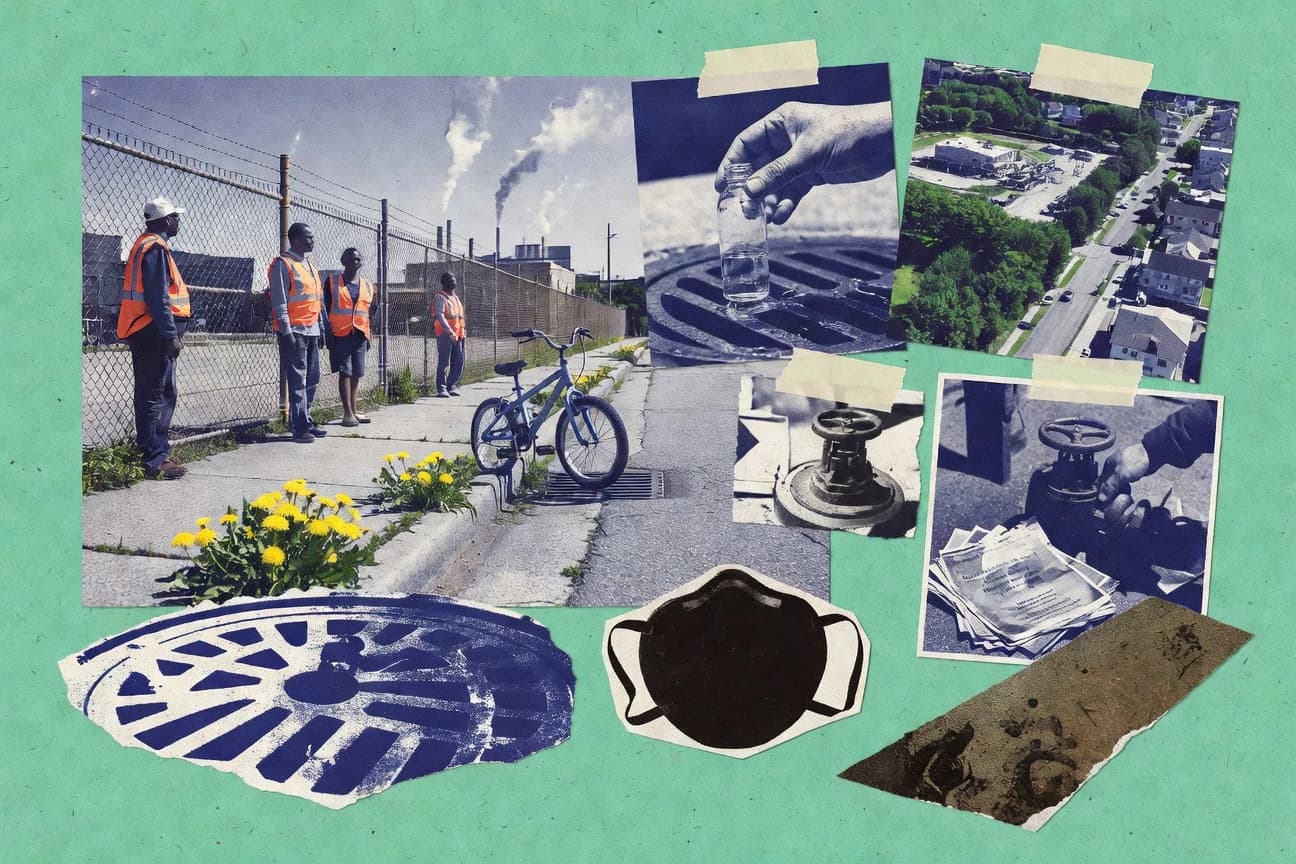

Environmental justice looks at how environmental harms and benefits are shared across communities—and why the burdens often cluster in specific neighborhoods and among certain groups. This page examines key exposures such as air pollution, wildfire smoke, extreme heat, and water risks. It also shows how underlying factors like poverty, housing burden, health vulnerability, and racial inequities help shape who faces the greatest disparities, and how agencies screen, validate, and act on risk.
Key Takeaways
- 4.3 million children in the United States live in households with elevated asthma prevalence risk associated with air pollution exposure (study using NHIS/air pollution linkage; 2017).
- 20% of U.S. births are affected by air pollution exposure that contributes to adverse birth outcomes, with higher burdens in disadvantaged communities (review summarizing national evidence; 2019).
- A 2021 systematic review found that the odds of adverse birth outcomes are elevated for people living in communities with higher air pollution levels, with pooled increases ranging from ~5% to ~20% depending on outcome type (meta-analysis range).
- $1.1 billion: The Clean Water State Revolving Fund (CWSRF) allocated $1.1B for disadvantaged communities/green infrastructure in a documented set of state uses for equity (EPA SRF equity reporting; 2020).
- 9.6%: A 2020 analysis found that environmental justice considerations were explicitly mentioned in 9.6% of state transportation improvement plans reviewed (peer-reviewed policy analysis).
- 61%: In a 2023 IBM Global Sustainability Study, 61% of respondents were willing to change purchasing habits to reduce environmental impact (enterprise sustainability demand signal).
- 52%: A 2021 Gartner survey found that 52% of organizations have begun establishing ESG data governance processes (governance relevant to EJ measurement).
- 12%: A 2022 survey of U.S. utilities found 12% of utilities had formally integrated EJ-related criteria into resource planning processes (industry survey report).
- 0.85 correlation: A 2020 validation study reported a correlation of r=0.85 between modeled and monitored PM2.5 at fine scales used for EJ mapping (validation).
- 100-point: Some environmental burden indexes are normalized to a 0–100 scale to facilitate cross-area comparisons (index methodology paper; 2018).
- 5 variables: A peer-reviewed EJ vulnerability model used five core variables (e.g., poverty, race/ethnicity, housing burden, health indicators, environmental exposures) to explain variance in vulnerability (2019).
- 71%: A 2021 Pew Research Center analysis reported that many Americans say climate change is affecting their communities, with disproportionate concern in lower-income and minority groups (survey-based statistic).
- 3.2x: Between 2010 and 2020, the number of reported extreme heat events affecting U.S. communities increased by about 3.2 times (NOAA climate extremes frequency trend for 2010s vs 2020).
- 2°F: The observed rate of warming in the Arctic is roughly 2°F per decade faster than the global average (NOAA Arctic report).
- 19% of Black Americans in the United States live within 5 miles of a refinery, compared with 10% of White Americans (2019 analysis).
Millions of U.S. children and families face higher air and climate harms, highlighting urgent environmental justice action.
Related reading
01 · Category
Trends & Impacts8 stats
01
71%: A 2021 Pew Research Center analysis reported that many Americans say climate change is affecting their communities, with disproportionate concern in lower-income and minority groups (survey-based statistic).
02
3.2x: Between 2010 and 2020, the number of reported extreme heat events affecting U.S. communities increased by about 3.2 times (NOAA climate extremes frequency trend for 2010s vs 2020).
03
2°F: The observed rate of warming in the Arctic is roughly 2°F per decade faster than the global average (NOAA Arctic report).
04
15%: A 2023 peer-reviewed study estimated that wildfire smoke exposure burdens increased by ~15% for disadvantaged groups in recent decades due to shifting fire activity and exposure patterns.
05
50%: A 2021 NOAA study found that households in historically disadvantaged areas are about 50% more likely to be displaced following climate disasters than those in less disadvantaged areas (civil rights/climate displacement analysis).
06
37%: A 2020 academic analysis found that environmental justice communities experience a greater share of toxic release facility siting outcomes, with around 37% higher probability in modeled siting scenarios (peer-reviewed; 2020).
07
9.1%: Household food insecurity rates were 9.1% higher in communities with higher environmental contamination burden in a 2018 national analysis (peer-reviewed public health study).
08
6.3 years: The average lifespan reduction associated with chronic exposure to air pollution in disadvantaged communities has been estimated at 6.3 years in a 2019 global burden study when applying higher exposure distributions (peer-reviewed modeling).
Interpretation
Trends & Impacts Interpretation
Across Trends and Impacts, the data show a widening climate harm gap as extreme heat events affecting U.S. communities rose about 3.2 times from 2010 to 2020 and disadvantaged groups faced roughly 15% higher wildfire smoke exposure burdens alongside about 50% greater displacement risk in historically disadvantaged areas.
02 · Category
Exposure & Health4 stats
01
4.3 million children in the United States live in households with elevated asthma prevalence risk associated with air pollution exposure (study using NHIS/air pollution linkage; 2017).
02
20% of U.S. births are affected by air pollution exposure that contributes to adverse birth outcomes, with higher burdens in disadvantaged communities (review summarizing national evidence; 2019).
03
A 2021 systematic review found that the odds of adverse birth outcomes are elevated for people living in communities with higher air pollution levels, with pooled increases ranging from ~5% to ~20% depending on outcome type (meta-analysis range).
04
3.6% higher: Census tracts in the highest income inequality quartile had a statistically significant increase in the cumulative risk score for multiple environmental stressors (2018 peer-reviewed analysis).
Interpretation
Exposure & Health Interpretation
For the Exposure and Health category, millions of people are facing measurable health harms linked to air pollution and related inequality, including 4.3 million children living with elevated asthma risk and about 20% of U.S. births affected by air pollution exposure that contributes to adverse birth outcomes, with further evidence that higher air pollution burden and income inequality track with increased cumulative risk.
03 · Category
Business & Operations4 stats
01
61%: In a 2023 IBM Global Sustainability Study, 61% of respondents were willing to change purchasing habits to reduce environmental impact (enterprise sustainability demand signal).
02
52%: A 2021 Gartner survey found that 52% of organizations have begun establishing ESG data governance processes (governance relevant to EJ measurement).
03
12%: A 2022 survey of U.S. utilities found 12% of utilities had formally integrated EJ-related criteria into resource planning processes (industry survey report).
04
24: Average number of community/stakeholder engagement activities included in environmental review plans for major infrastructure projects (peer-reviewed planning study; 2021).
Interpretation
Business & Operations Interpretation
Business and operations leaders are increasingly moving environmental justice into real decision processes, with 61% of respondents willing to change purchasing habits and 52% of organizations putting ESG data governance in place, while only 12% of U.S. utilities have formally built EJ criteria into resource planning despite the average of 24 stakeholder engagement activities in major infrastructure reviews.
More related reading
04 · Category
Data & Metrics3 stats
01
0.85 correlation: A 2020 validation study reported a correlation of r=0.85 between modeled and monitored PM2.5 at fine scales used for EJ mapping (validation).
02
100-point: Some environmental burden indexes are normalized to a 0–100 scale to facilitate cross-area comparisons (index methodology paper; 2018).
03
5 variables: A peer-reviewed EJ vulnerability model used five core variables (e.g., poverty, race/ethnicity, housing burden, health indicators, environmental exposures) to explain variance in vulnerability (2019).
Interpretation
Data & Metrics Interpretation
For the Data and Metrics angle, the strong r=0.85 correlation in fine scale PM2.5 modeling shows that EJ assessments can be reliably grounded in measurable air quality, while standardized burden indexes on a 0 to 100 scale and vulnerability models using five core variables help make results comparable and actionable across communities.
05 · Category
Environmental Risk3 stats
01
19% of Black Americans in the United States live within 5 miles of a refinery, compared with 10% of White Americans (2019 analysis).
02
35% of U.S. residents in historically disadvantaged communities are exposed to wildfire smoke at levels that exceed the EPA “Unhealthy for Sensitive Groups” threshold for at least one day in a typical wildfire season (2019 estimates).
03
6.6 million people in the United States are exposed to PM2.5 levels above the WHO 2021 guideline for annual mean concentrations (2022 global/US estimate).
Interpretation
Environmental Risk Interpretation
Under the Environmental Risk frame, Black Americans are nearly twice as likely as White Americans to live near refineries (19% versus 10%), and millions more face harmful air impacts, including 6.6 million people exposed to PM2.5 above WHO’s 2021 annual guideline and 35% in historically disadvantaged communities exposed to wildfire smoke levels above EPA thresholds.
06 · Category
Industry Overview7 stats
01
$1.1 billion: The Clean Water State Revolving Fund (CWSRF) allocated $1.1B for disadvantaged communities/green infrastructure in a documented set of state uses for equity (EPA SRF equity reporting; 2020).
02
9.6%: A 2020 analysis found that environmental justice considerations were explicitly mentioned in 9.6% of state transportation improvement plans reviewed (peer-reviewed policy analysis).
03
Publicly accessible PM2.5 satellite-based datasets covering the United States at 1-km resolution were used in EJ screening studies; the MODIS aerosol dataset provides daily global coverage at ~1 km (terrestrial study basis).
04
In the Global Burden of Disease study (IHME) used for environmental health inequality analyses, PM2.5 exposure was quantified for the United States across multiple years; the study produced annual estimates used for disparity mapping (methodology described in GBD 2021 documentation).
05
$4.6 billion was awarded in Climate Pollution Reduction Grants (CPRG) (Round 2, 2024 announcements for planning and implementation grants).
06
In a 2024 review of EJ screen methods, 9 out of 12 documented state and local EJ frameworks used a multidimensional screening approach combining multiple environmental and demographic indicators.
07
In a 2020 peer-reviewed study, people living near major industrial sources reported significantly lower perceived quality of life; the study estimated a 0.23 standard-deviation decrement in perceived quality of life for residents in high-exposure census tracts compared to lower-exposure tracts (US cross-sectional analysis).
Interpretation
Industry Overview Interpretation
Across the Industry Overview landscape, recent funding and practice signals show momentum, with $1.1 billion in clean water support for disadvantaged communities and $4.6 billion awarded through CPRG in 2024, while environmental justice is explicitly considered in 9.6% of state transportation improvement plans and 9 of 12 documented state and local EJ frameworks rely on multidimensional screening.
Reference
Cite This Report
This report is designed to be cited. We maintain stable URLs and versioned verification dates. Copy the format appropriate for your publication below.
APA
David Kowalski. (2026, February 13). Environmental Justice Statistics. Gitnux. https://gitnux.org/environmental-justice-statistics
MLA
David Kowalski. "Environmental Justice Statistics." Gitnux, 13 Feb 2026, https://gitnux.org/environmental-justice-statistics.
Chicago
David Kowalski. 2026. "Environmental Justice Statistics." Gitnux. https://gitnux.org/environmental-justice-statistics.
Sources & references
29 datasets cited across this report · attribution is report-level
+7 additional datasets cited (not shown individually)