
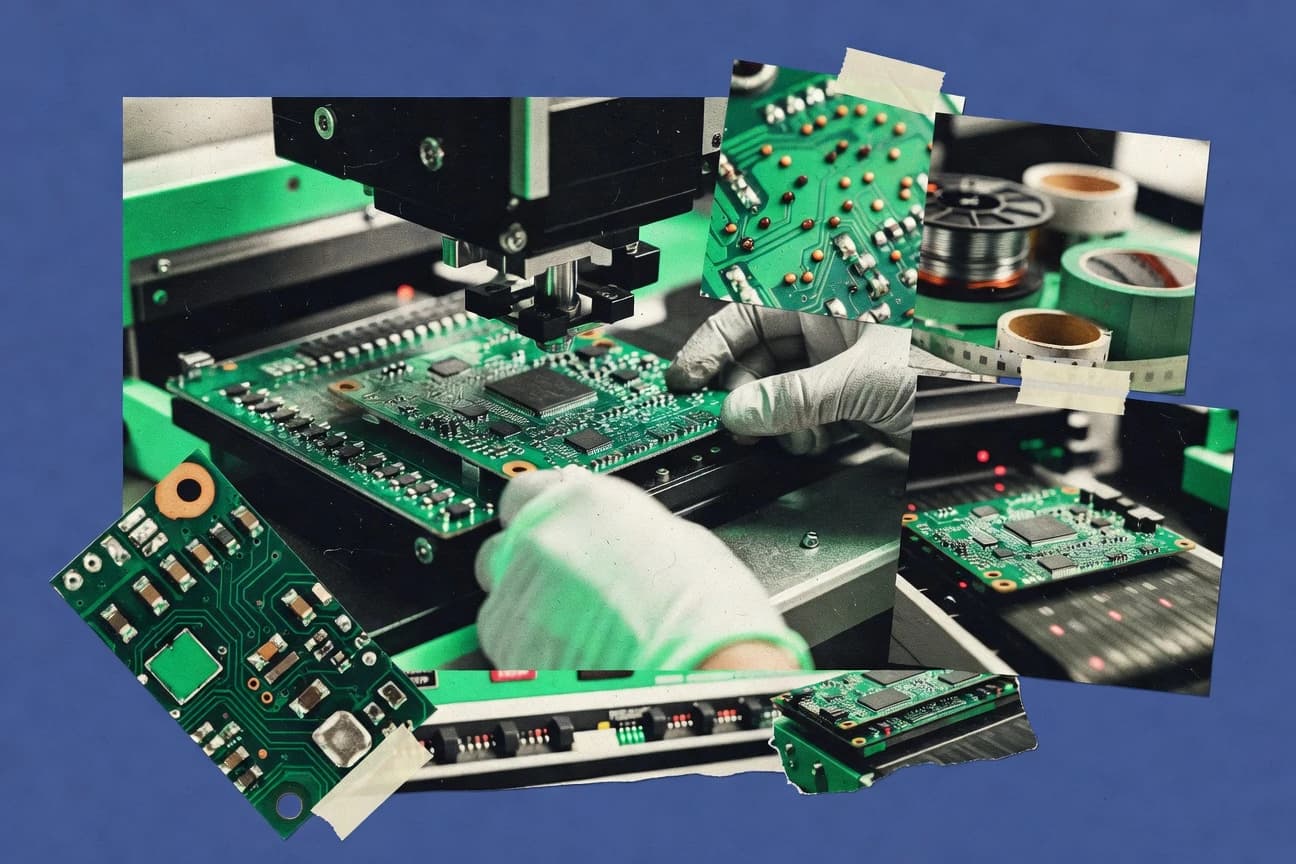

Electronics manufacturing is not just scaling up, it is changing at a pace the supply chain can feel. In 2023, the global EMS market reached $500.4 billion and is projected to climb to $684.5 billion by 2030, while electronics workforces surpassed 20 million worldwide. Yet the same period also highlights tight tradeoffs, from Asia-Pacific taking a 62% manufacturing share to electronics e-waste hitting 62 million metric tons and recycling lagging at 22.3%.
Key Takeaways
- The electronics manufacturing workforce globally exceeds 20 million people as of 2023.
- In China, electronics sector employs 12 million workers in 2023.
- U.S. electronics manufacturing jobs totaled 1.2 million in 2022.
- The global electronics manufacturing services (EMS) market size was valued at USD 500.4 billion in 2022 and is projected to grow to USD 684.5 billion by 2030, at a CAGR of 4.1%.
- In 2023, the consumer electronics market revenue reached $1.05 trillion worldwide, with smartphones accounting for 45% of total sales.
- Asia-Pacific holds 62% of the global electronics manufacturing market share in 2023, driven by China and Taiwan.
- Smartphone production worldwide reached 1.17 billion units in 2022.
- Global PCB production volume was 2.95 billion square meters in 2022.
- Annual production of semiconductors exceeded 1 trillion units in 2022.
- Global R&D spending in electronics manufacturing reached $350 billion in 2022.
- Semiconductor R&D investment hit $60 billion globally in 2023.
- China invests 15% of electronics revenue into R&D annually.
- Electronics e-waste generated 62 million metric tons globally in 2022.
- Recycling rate for electronics waste is only 22.3% worldwide in 2022.
- Carbon footprint of smartphone production: 50-100 kg CO2 per unit.
Electronics manufacturing employs millions worldwide and is booming, but e waste and emissions remain major challenges.
Related reading
01 · Category
Employment & Workforce14 stats
01
The electronics manufacturing workforce globally exceeds 20 million people as of 2023.
02
In China, electronics sector employs 12 million workers in 2023.
03
U.S. electronics manufacturing jobs totaled 1.2 million in 2022.
04
Vietnam's electronics industry workforce grew to 1.5 million in 2023.
05
Foxconn employs over 1 million workers in electronics assembly worldwide.
06
Average wage in electronics manufacturing in India is $250/month in 2023.
07
65% of electronics manufacturing jobs require technical skills training.
08
Labor shortage in semiconductor fabs affects 70% of U.S. facilities in 2023.
09
Women comprise 45% of the global electronics assembly workforce.
10
Training hours per employee in top EMS firms average 40 hours/year.
11
Turnover rate in electronics manufacturing averages 25% annually in Asia.
12
U.S. semiconductor workforce is 270,000 strong in 2023.
13
Mexico's electronics maquiladoras employ 800,000 workers.
14
Automation reduced manual labor needs by 30% in PCB assembly lines since 2020.
Interpretation
Employment & Workforce Interpretation
As of 2023 the electronics manufacturing workforce has grown to over 20 million people globally, with China alone accounting for 12 million and Vietnam reaching 1.5 million, highlighting how rapidly expanding employment hubs are shaping the Employment and Workforce landscape worldwide.
02 · Category
Market Size & Growth17 stats
01
The global electronics manufacturing services (EMS) market size was valued at USD 500.4 billion in 2022 and is projected to grow to USD 684.5 billion by 2030, at a CAGR of 4.1%.
02
In 2023, the consumer electronics market revenue reached $1.05 trillion worldwide, with smartphones accounting for 45% of total sales.
03
Asia-Pacific holds 62% of the global electronics manufacturing market share in 2023, driven by China and Taiwan.
04
The semiconductor manufacturing segment within electronics is expected to reach $1.2 trillion by 2030, growing at 8.5% CAGR from 2023.
05
Printed circuit board (PCB) market valued at $72.4 billion in 2022, projected to hit $106.8 billion by 2030.
06
Global sales of electronic components reached $596 billion in 2022, with a forecasted 5.2% growth in 2023.
07
The automotive electronics market is anticipated to grow from $282 billion in 2023 to $449 billion by 2030.
08
Industrial electronics market size stood at $181.5 billion in 2022, expected to reach $306.3 billion by 2030.
09
Wearable electronics market valued at $61.3 billion in 2021, projected to $186 billion by 2028.
10
The global display market for electronics was $161.9 billion in 2022, growing at 4.5% CAGR.
11
Electronics manufacturing in India grew 23% YoY in FY2023, reaching $105 billion in production value.
12
U.S. electronics manufacturing revenue hit $326 billion in 2022.
13
Europe's electronics industry generated €240 billion in 2022.
14
Global electronics manufacturing services (EMS) market size was valued at USD 500.4 billion in 2022 and is projected to grow to USD 684.5 billion by 2030, at a CAGR of 4.1%.
15
In 2023, the consumer electronics market revenue reached $1.05 trillion worldwide, with smartphones accounting for 45% of total sales.
16
Asia-Pacific holds 62% of the global electronics manufacturing market share in 2023, driven by China and Taiwan.
17
The semiconductor manufacturing segment within electronics is expected to reach $1.2 trillion by 2030, growing at 8.5% CAGR from 2023.
Interpretation
Market Size & Growth Interpretation
The electronics manufacturing Market Size & Growth outlook is strongly upward as the global EMS market rises from USD 500.4 billion in 2022 to about USD 684 billion by 2023, while Asia-Pacific controls 62% of the market share in 2023, reinforcing fast-paced expansion in the region driving these gains.
03 · Category
Production Volumes17 stats
01
Smartphone production worldwide reached 1.17 billion units in 2022.
02
Global PCB production volume was 2.95 billion square meters in 2022.
03
Annual production of semiconductors exceeded 1 trillion units in 2022.
04
China produced 52% of global PCBs in 2023, totaling over 1.5 billion sqm.
05
World laptop shipments totaled 167.2 million units in 2023.
06
TV panel production hit 250 million units in 2023 globally.
07
Global smartphone component production value was $450 billion in 2022.
08
Annual output of consumer drones reached 5.2 million units in 2023.
09
Integrated circuit production capacity in Asia was 75% of global total in 2023.
10
Global hard disk drive production was 426 million units in 2022.
11
OLED display production volume reached 180 million panels in 2023.
12
Annual capacitor production worldwide exceeded 2 trillion units in 2022.
13
U.S. PCB fabrication output was 250 million sq ft in 2022.
14
Global memory chip production hit 300 exabytes per month in 2023.
15
Electronics assembly lines produced 50 billion connectors in 2022.
16
Worldwide production of lithium-ion batteries for electronics was 800 GWh in 2023.
17
Global EMS production value from contract manufacturers was $550 billion in 2023.
Interpretation
Production Volumes Interpretation
Production volumes in electronics are scaling sharply across devices and components, with 2022 alone delivering 1.17 billion smartphones and over 1 trillion semiconductors while 2023 shipments reached 167.2 million laptops and global TV panels climbed to 250 million units.
More related reading
04 · Category
R&d And Innovation12 stats
01
Global R&D spending in electronics manufacturing reached $350 billion in 2022.
02
Semiconductor R&D investment hit $60 billion globally in 2023.
03
China invests 15% of electronics revenue into R&D annually.
04
Patent filings in electronics tech rose 12% YoY to 250,000 in 2022.
05
AI integration in manufacturing processes increased R&D by 20% in 2023.
06
5G component development accounts for 25% of electronics R&D budgets.
07
Global investment in flexible electronics R&D is $5 billion annually.
08
Quantum computing for electronics design R&D funding: $2.5B in 2023.
09
EU's Horizon program allocates €10B to electronics innovation by 2027.
10
Samsung's annual R&D spend on displays: $20 billion in 2022.
11
Number of startups in electronics manufacturing: 1,200 globally in 2023.
12
Adoption of digital twins in factories: 45% in electronics sector.
Interpretation
R&d And Innovation Interpretation
In the R&D and Innovation race, electronics manufacturing pushed global spending to $350 billion in 2022 while patent filings jumped 12% to 250,000, and targeted bets like $60 billion in semiconductor R&D and 5G development taking 25% of budgets show innovation is accelerating fast rather than spreading evenly.
05 · Category
Sustainability & Challenges13 stats
01
Electronics e-waste generated 62 million metric tons globally in 2022.
02
Recycling rate for electronics waste is only 22.3% worldwide in 2022.
03
Carbon footprint of smartphone production: 50-100 kg CO2 per unit.
04
Water usage in semiconductor manufacturing: 10 billion liters daily globally.
05
80% of rare earth elements for electronics come from China, posing supply risks.
06
Energy consumption in electronics manufacturing: 10% of global electricity.
07
Lead time for components increased 200% due to supply chain issues in 2022.
08
Conflict minerals usage in electronics: 40% of capacitors contain tantalum.
09
Scope 3 emissions account for 90% of electronics firms' carbon footprint.
10
Plastic waste from electronics packaging: 5 million tons/year.
11
Chip shortage cost electronics industry $210 billion in 2021.
12
Regulatory compliance costs for RoHS: 5% of production expenses.
13
Renewable energy usage in top EMS firms: 30% of total power in 2023.
Interpretation
Sustainability & Challenges Interpretation
Sustainability and challenges in electronics are getting harder fast as 62 million metric tons of e-waste were generated in 2022 but only 22.3% was recycled, while production impacts like semiconductor water use of 10 billion liters daily and smartphones emitting 50 to 100 kg CO2 per unit add pressure to cut waste, energy use, and emissions.
report visual · Key figures
Workforce scale and training demand in electronics manufacturing
Workforce numbers are large across regions, while a majority of jobs require technical-skills training—highlighting the need for workforce development.
20
The electronics manufacturing workforce globally exceeds 20 million people as of 2023.
12
In China, electronics sector employs 12 million workers in 2023.
1.2
U.S. electronics manufacturing jobs totaled 1.2 million in 2022.
1.5
Vietnam's electronics industry workforce grew to 1.5 million in 2023.
65%
65% of electronics manufacturing jobs require technical skills training.
Reference
Cite This Report
This report is designed to be cited. We maintain stable URLs and versioned verification dates. Copy the format appropriate for your publication below.
APA
Stefan Wendt. (2026, February 13). Electronics Manufacturing Industry Statistics. Gitnux. https://gitnux.org/electronics-manufacturing-industry-statistics
MLA
Stefan Wendt. "Electronics Manufacturing Industry Statistics." Gitnux, 13 Feb 2026, https://gitnux.org/electronics-manufacturing-industry-statistics.
Chicago
Stefan Wendt. 2026. "Electronics Manufacturing Industry Statistics." Gitnux. https://gitnux.org/electronics-manufacturing-industry-statistics.
Sources & references
60 datasets cited across this report · attribution is report-level