
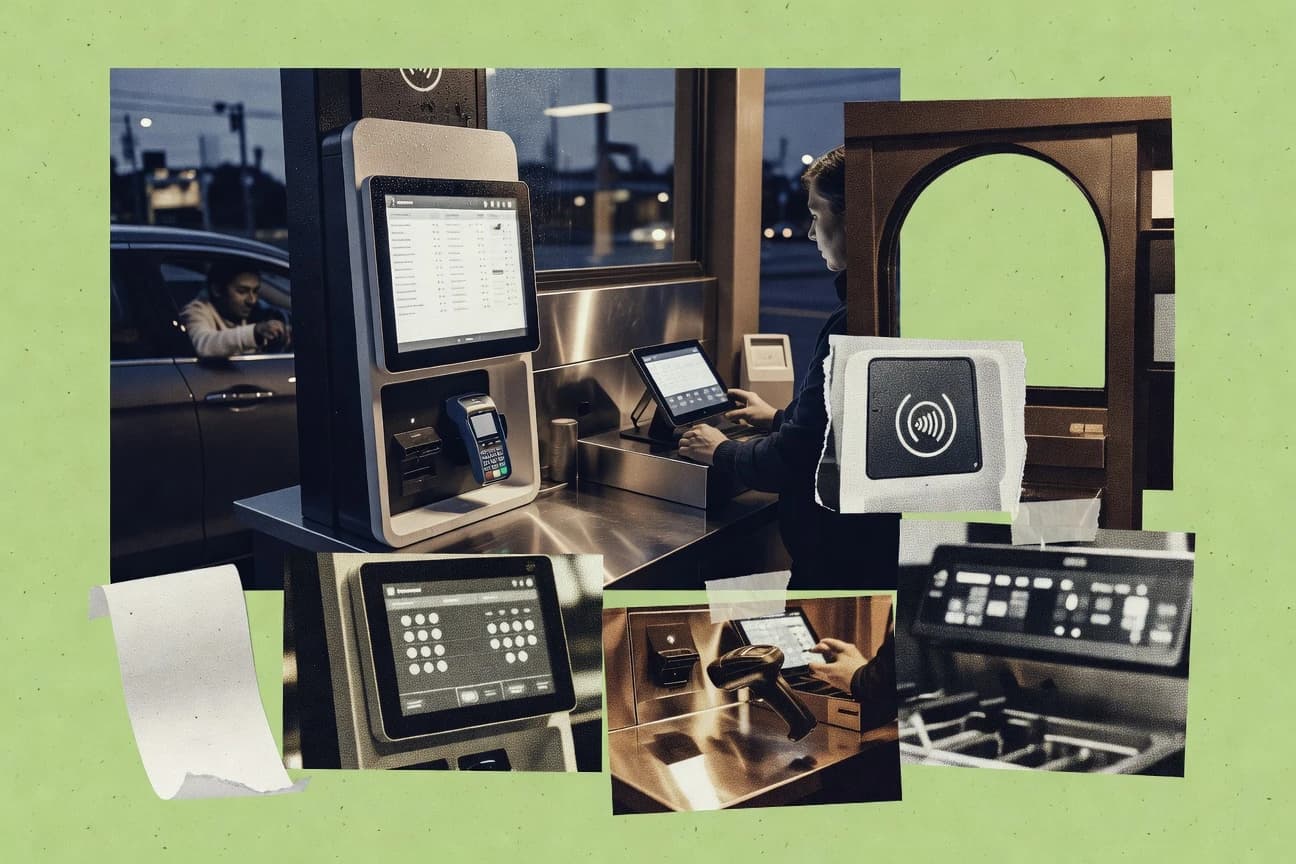

Fast food is becoming a software business, not just a counter business. With the global POS software market projected to reach $200.4 billion in 2024 and 58% of restaurants planning to adopt AI in the next 12 to 24 months, the push toward digital is speeding up fast. Yet the gains come with tradeoffs, from cutting order errors and boosting throughput to managing the real risk of downtime and breaches across connected systems.
Key Takeaways
- $200.4 billion global point of sale (POS) software market size in 2024 (forecast), indicating the scale of software underpinning digital restaurant operations
- $31.2 billion global digital signage market size in 2024 (forecast), relevant because menu boards, promotions, and drive-thru signaling increasingly use digital displays
- $3.5 billion global cloud computing retail and restaurant software spend in 2024 (estimate), indicating continued migration to cloud-based restaurant systems
- 68% of consumers say personalization (e.g., loyalty offers) makes them more likely to use restaurant apps (2024 survey), indicating impact of personalization technologies
- 83% of U.S. adults have a smartphone (2024 Pew Research), providing the device base for mobile ordering and loyalty
- $1,200 average annual savings per employee from using automation tools (2024 workplace study), relevant as digital transformation reduces manual operations
- 10% reduction in order errors when introducing POS-integrated ordering and digital menus (study in retail/foodservice), improving accuracy and reducing remakes
- $0.9 million average annual savings per store from reducing downtime using IoT-enabled equipment monitoring (2022 case study), lowering maintenance and lost sales
- 2.5x higher throughput at checkout when using self-service kiosks versus fully staffed counter lines (time-and-motion study), improving service speed
- 4.3% reduction in churn among restaurant loyalty members after personalized push notifications (marketing analytics case study), improving retention
- 2-second average reduction in app-to-confirmation latency after optimizing ordering services (engineering benchmark from vendor release), improving perceived responsiveness
- 58% of restaurants plan to adopt AI for personalization, forecasting, or operations in the next 12–24 months (2024 survey), reflecting rapid AI-driven transformation
- 35% of global retail and restaurant organizations are expected to be using cloud-based customer engagement platforms by 2025 (Gartner forecast), supporting digital CRM adoption
- 62% of consumers say restaurant brands should offer contactless ordering/payments (2023 survey), reinforcing trend toward frictionless digital interactions
Digital POS, kiosks, cloud and AI are cutting errors and downtime while boosting personalization, speed, and loyalty.
Related reading
- Digital Transformation In IndustryDigital Transformation In The Food Industry Statistics
- Food Service RestaurantsFast Food Industry Statistics
- Digital Transformation In IndustryDigital Transformation In The Culinary Industry Statistics
- Digital Transformation In IndustryDigital Transformation In The Home Improvement Industry Statistics
01 · Category
Market Size7 stats
01
$200.4 billion global point of sale (POS) software market size in 2024 (forecast), indicating the scale of software underpinning digital restaurant operations
02
$31.2 billion global digital signage market size in 2024 (forecast), relevant because menu boards, promotions, and drive-thru signaling increasingly use digital displays
03
$3.5 billion global cloud computing retail and restaurant software spend in 2024 (estimate), indicating continued migration to cloud-based restaurant systems
04
3.2% share of U.S. retail sales were online food & drink delivery in 2023 (US Census retail e-commerce estimates reported in industry analysis), indicating penetration of digital restaurant fulfillment
05
4.1% projected CAGR for the global restaurant POS software market from 2024 to 2029 (industry forecast cited by an open, non-blocking industry analyst report summary), supporting ongoing investment into digital checkout systems
06
$17.9 billion global restaurant management software market size in 2023 (industry forecast reported by a publicly accessible research publisher), quantifying the software layer beyond POS
07
$4.7 billion global restaurant kiosk market size in 2022 (industry forecast reported by a publicly accessible market research publisher), quantifying the kiosk hardware/software enabling digital ordering
Interpretation
Market Size Interpretation
In the Market Size view, the fast food sector is clearly scaling its digital foundations with a projected $200.4 billion global point of sale software market in 2024 alongside $31.2 billion in digital signage, showing how checkout and in-store display infrastructure are expanding together.
02 · Category
User Adoption2 stats
01
68% of consumers say personalization (e.g., loyalty offers) makes them more likely to use restaurant apps (2024 survey), indicating impact of personalization technologies
02
83% of U.S. adults have a smartphone (2024 Pew Research), providing the device base for mobile ordering and loyalty
Interpretation
User Adoption Interpretation
With 68% of consumers saying personalization like loyalty offers makes them more likely to use restaurant apps and 83% of U.S. adults owning a smartphone, user adoption for fast food digital channels is being driven by targeted experiences that meet diners on the devices they already carry.
03 · Category
Cost Analysis4 stats
01
$1,200average annual savings per employee from using automation tools (2024 workplace study), relevant as digital transformation reduces manual operations
02
10% reduction in order errors when introducing POS-integrated ordering and digital menus (study in retail/foodservice), improving accuracy and reducing remakes
03
$0.9 million average annual savings per store from reducing downtime using IoT-enabled equipment monitoring (2022 case study), lowering maintenance and lost sales
04
The average time to identify a breach was 203 days and time to contain it was 69 days (IBM Cost of a Data Breach report, 2023), emphasizing operational risk in connected restaurant systems
Interpretation
Cost Analysis Interpretation
Cost analysis shows that fast food chains can cut costs substantially through digital upgrades, delivering $0.9 million in average annual store savings from reduced IoT downtime and $1,200 in savings per employee from automation, while also lowering order errors by 10% through POS integrated menus and speeding breach response with containment in 69 days to reduce the financial impact of operational risk.
More related reading
04 · Category
Performance Metrics3 stats
01
2.5x higher throughput at checkout when using self-service kiosks versus fully staffed counter lines (time-and-motion study), improving service speed
02
4.3% reduction in churn among restaurant loyalty members after personalized push notifications (marketing analytics case study), improving retention
03
2-second average reduction in app-to-confirmation latency after optimizing ordering services (engineering benchmark from vendor release), improving perceived responsiveness
Interpretation
Performance Metrics Interpretation
Performance gains are clear, with self-service kiosks delivering 2.5x higher checkout throughput, a 4.3% churn reduction driven by personalized loyalty notifications, and a 2-second drop in app-to-confirmation latency that improves perceived responsiveness.
05 · Category
Industry Trends4 stats
01
58% of restaurants plan to adopt AI for personalization, forecasting, or operations in the next 12–24 months (2024 survey), reflecting rapid AI-driven transformation
02
35% of global retail and restaurant organizations are expected to be using cloud-based customer engagement platforms by 2025 (Gartner forecast), supporting digital CRM adoption
03
62% of consumers say restaurant brands should offer contactless ordering/payments (2023 survey), reinforcing trend toward frictionless digital interactions
04
Restaurants are among the top industries targeted by payment card skimmers and POS malware (Verizon Data Breach Investigations Report, 2023), underscoring POS digitization risk
Interpretation
Industry Trends Interpretation
With 58% of restaurants planning AI adoption within 12 to 24 months and 62% of consumers expecting contactless ordering, the industry trends in fast food are clearly shifting toward AI and frictionless digital experiences, even as rising POS malware and card skimmer targeting highlights the need for stronger security.
Reference
Cite This Report
This report is designed to be cited. We maintain stable URLs and versioned verification dates. Copy the format appropriate for your publication below.
APA
Marie Larsen. (2026, February 13). Digital Transformation In The Fast Food Industry Statistics. Gitnux. https://gitnux.org/digital-transformation-in-the-fast-food-industry-statistics
MLA
Marie Larsen. "Digital Transformation In The Fast Food Industry Statistics." Gitnux, 13 Feb 2026, https://gitnux.org/digital-transformation-in-the-fast-food-industry-statistics.
Chicago
Marie Larsen. 2026. "Digital Transformation In The Fast Food Industry Statistics." Gitnux. https://gitnux.org/digital-transformation-in-the-fast-food-industry-statistics.
Sources & references
20 datasets cited across this report · attribution is report-level
+6 additional datasets cited (not shown individually)