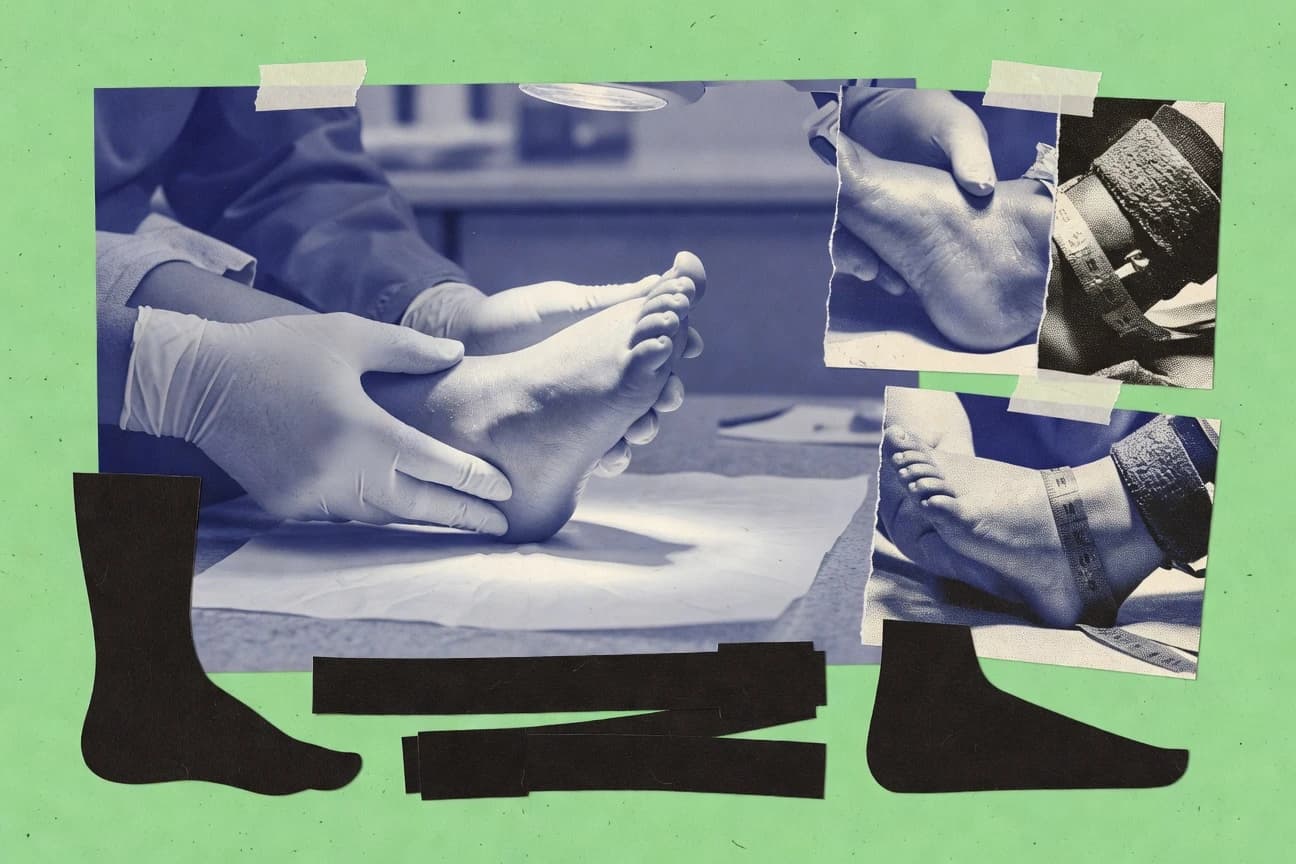

Clubfoot may look like a single diagnosis, but the statistics swing dramatically from prenatal detection rates to decade long outcomes. For example, ultrasound after 18 weeks finds it in 60 to 80% of cases, yet untreated feet can develop pain in about 50% of patients by adulthood. The rest gets even more revealing with severity tools like the Pirani and Dimeglio scales, plus long term Ponseti results that can reach 90% excellent function at 20 years with good brace compliance.
Key Takeaways
- Clubfoot diagnosed prenatally in 60-80% via ultrasound after 18 weeks
- Pirani score assesses severity: 0-6 scale, >5 severe deformity
- Dimeglio classification: grades I-IV based on position and reducibility
- Worldwide incidence of clubfoot is approximately 1.2 cases per 1,000 live births, with higher rates in developing countries reaching up to 6.8 per 1,000
- In the United States, clubfoot affects about 1 in 1,000 live births, with a male-to-female ratio of 2.5:1
- Prevalence of clubfoot in Hawaii among Polynesians is 7 per 1,000 live births, the highest reported ethnically specific rate
- Idiopathic clubfoot accounts for 80% of all cases worldwide
- Genetic mutations in PITX1 gene linked to 5-10% of familial cases
- Maternal smoking increases risk by 20-30% in idiopathic clubfoot
- 95% patients relapse-free at 10 years post-Ponseti with compliance
- Untreated clubfoot leads to 50% pain by adulthood
- Ponseti long-term: 90% excellent function at 20 years follow-up
- Ponseti casting initiated within 2 weeks of birth in 90% cases
- Ponseti method success rate 95% with brace compliance >90%
- Serial manipulation and casting: 5-7 casts over 6-8 weeks average
Most clubfoot is detected prenatally, and Ponseti treatment with strong brace compliance achieves durable outcomes.
Related reading
01 · Category
Diagnosis25 stats
01
Clubfoot diagnosed prenatally in 60-80% via ultrasound after 18 weeks
02
Pirani score assesses severity: 0-6 scale, >5 severe deformity
03
Dimeglio classification: grades I-IV based on position and reducibility
04
Ultrasound sensitivity for clubfoot 75% at 20 weeks gestation
05
X-ray shows talocalcaneal angle <20 degrees in equinus
06
MRI detects neuromuscular causes in 20% equivocal cases
07
Clinical exam: hindfoot equinus, forefoot adduction, varus, midfoot cavus
08
Genetic testing positive in 10% syndromic clubfoot referrals
09
Prenatal 3D ultrasound improves specificity to 90%
10
Dynamic ultrasound evaluates tendon lengths accurately 85%
11
Simon score for post-treatment: evaluates 5 components
12
Electromyography identifies neurogenic clubfoot in 15%
13
Foot bimalleolar axis angle >20 degrees diagnostic on X-ray
14
DNA microarray detects chromosomal anomalies in 5% cases
15
Kites angle measurement: talocalcaneal < -35 degrees confirms
16
Prenatal diagnosis leads to 40% termination rate in some cohorts
17
Laaveg and Ponseti score: 0-100, assesses function and appearance
18
CT scan reveals navicular position abnormalities in 90%
19
False positive ultrasound rate 10-20% before 24 weeks
20
Neurological exam rules out myelodysplasia in 95% idiopathic
21
Roye classification for residual deformity post-treatment
22
Achilles tendon thickness >5mm on US suggests severity
23
Ponseti method starts diagnosis at birth with serial casting assessment
24
Syndromic clubfoot identified by associated anomalies in 20%
25
Foot length asymmetry >10% in unilateral cases
Interpretation
Diagnosis Interpretation
Under the Diagnosis category, clubfoot is typically identified prenatally in about 60 to 80% of cases after 18 weeks with ultrasound, but detection still depends on timing and certainty since ultrasound sensitivity is around 75% at 20 weeks and MRI clarifies only the 20% of equivocal cases by revealing neuromuscular causes.
02 · Category
Epidemiology30 stats
01
Worldwide incidence of clubfoot is approximately 1.2 cases per 1,000 live births, with higher rates in developing countries reaching up to 6.8 per 1,000
02
In the United States, clubfoot affects about 1 in 1,000 live births, with a male-to-female ratio of 2.5:1
03
Prevalence of clubfoot in Hawaii among Polynesians is 7 per 1,000 live births, the highest reported ethnically specific rate
04
In India, clubfoot incidence is 1.5 per 1,000 live births, accounting for 50% of congenital foot deformities
05
Malawi reports clubfoot rates of 3.5-6.5 per 1,000 live births, linked to limited prenatal care
06
Global burden: 200,000 new clubfoot cases annually, mostly in low- and middle-income countries
07
In Europe, idiopathic clubfoot incidence is 1.1 per 1,000, lower than in Africa at 3-7 per 1,000
08
Male predominance in clubfoot is 2:1 worldwide, with some studies showing up to 4:1 ratios
09
Bilateral clubfoot occurs in 50-60% of cases, unilateral in 40-50%
10
In China, clubfoot prevalence is 0.9 per 1,000 live births, with urban rates lower than rural
11
South Africa reports 1.6 per 1,000 in black populations vs. 0.9 in whites
12
Australia: 1.3 per 1,000 live births, stable over decades
13
Pakistan: up to 4 per 1,000 due to consanguinity
14
UK birth defects registry: 1.2 per 1,000, 55% bilateral
15
Brazil: 1.0 per 1,000, higher in Northeast regions
16
Familial recurrence risk for siblings is 2-5%
17
Clubfoot comprises 50% of all musculoskeletal birth defects globally
18
In Uganda, incidence 4.2 per 1,000
19
Zimbabwe: 3.8 per 1,000 live births
20
Genetic factors contribute to 30% of cases, rest multifactorial
21
Incidence decreases with prenatal diagnosis rates
22
Native American populations: 2.8 per 1,000
23
Annual global cases: ~170,000-230,000
24
In low-income countries, 80-90% untreated without intervention
25
US secular trend: stable at 1/1,000 since 1990s
26
Maori population in New Zealand: 6.5 per 1,000
27
Clubfoot in twins: 10% concordance in monozygotic vs. 1% dizygotic
28
Africa overall: 3-7 per 1,000 live births average
29
Japan: lowest at 0.6 per 1,000
30
Recurrent risk for offspring of affected: 2-4%
Interpretation
Epidemiology Interpretation
Epidemiology data show clubfoot occurs worldwide at about 1.2 per 1,000 live births but is consistently higher in lower income settings, such as 3.5 to 6.5 per 1,000 in Malawi and 200,000 new cases globally each year that are concentrated mostly in low and middle income countries.
03 · Category
Etiology24 stats
01
Idiopathic clubfoot accounts for 80% of all cases worldwide
02
Genetic mutations in PITX1 gene linked to 5-10% of familial cases
03
Maternal smoking increases risk by 20-30% in idiopathic clubfoot
04
Oligohydramnios associated with 15% of clubfoot cases
05
Family history present in 25-30% of idiopathic cases
06
TBX4 gene mutations cause 2-3% of isolated clubfoot
07
Consanguinity raises risk 3-fold in high-prevalence areas
08
Neural tube defects co-occur with clubfoot in 10% of syndromic cases
09
HoxD cluster genes implicated in 20% of heritable clubfoot
10
Amniotic band syndrome causes 5% of atypical clubfoot
11
Spina bifida associated with 30% of neurogenic clubfoot
12
GWAS identifies 16 loci for clubfoot susceptibility
13
First-degree relative risk ratio 30-50 times higher
14
Vascular disruption theory explains 10-15% positional deformities
15
CHARGE syndrome includes clubfoot in 20% cases
16
Diastematomyelia linked to 5% tethered cord clubfoot
17
Multifactorial inheritance model fits 70% idiopathic cases
18
Maternal diabetes elevates risk by 2.5-fold
19
MYH9 mutations in 1% syndromic clubfoot
20
Environmental toxins like pesticides increase odds ratio 1.8
21
Arthrogryposis multiplex congenita features clubfoot in 80%
22
Heritability estimate 30-60% from twin studies
23
Distal arthrogryposis type 1 has 50% clubfoot penetrance
24
Retinoic acid exposure in utero risks 10% limb defects including clubfoot
Interpretation
Etiology Interpretation
From an etiology standpoint, idiopathic clubfoot dominates worldwide at 80% of cases, while specific genetic factors account for only a smaller slice such as PITX1 mutations in 5 to 10% of familial cases and TBX4 mutations in 2 to 3% of isolated cases.
More related reading
04 · Category
Prognosis25 stats
01
95% patients relapse-free at 10 years post-Ponseti with compliance
02
Untreated clubfoot leads to 50% pain by adulthood
03
Ponseti long-term: 90% excellent function at 20 years follow-up
04
Relapse rate 30% if brace <50% compliance
05
Bilateral cases have 10% higher relapse than unilateral
06
Adult clubfoot patients: 70% require assistive devices untreated
07
Post-Ponseti AOFAS score average 92/100 at 5 years
08
Neglected clubfoot >2 years: 60% need osteotomy for correction
09
Syndromic clubfoot: 50% relapse vs. 10% idiopathic
10
Laaveg score >90 in 85% Ponseti-treated at maturity
11
Gait analysis: normal in 88% post-Ponseti adolescents
12
Osteoarthritis risk 20% higher in surgically treated feet
13
Patient satisfaction 95% with Ponseti vs. 70% surgery
14
Residual cavus persists in 15% long-term
15
Growth disturbance: leg length discrepancy 2cm in 10% untreated
16
Ponseti in LMICs: 92% plantigrade at 2 years
17
Re-relapse after second treatment: 20%
18
Functional outcome: 80% participate in sports post-treatment
19
Hindfoot stiffness 10-15 degrees less ROM in treated vs. normal
20
2% amputation risk in severe untreated rigid cases
21
SHOAF score >85 in 90% at skeletal maturity Ponseti
22
Employment rate 95% in treated vs. 60% untreated adults
23
Pain-free walking 98% at 15 years Ponseti compliant
24
Overcorrection rate 5% with excessive abduction bracing
25
Neurogenic clubfoot: 40% wheelchair dependence if untreated
Interpretation
Prognosis Interpretation
With good Ponseti bracing compliance, about 95% of patients remain relapse free at 10 years and reach 90% excellent function by 20 years, while poor brace adherence can sharply worsen outcomes with a 30% relapse rate when compliance is under 50%.
05 · Category
Treatment26 stats
01
Ponseti casting initiated within 2 weeks of birth in 90% cases
02
Ponseti method success rate 95% with brace compliance >90%
03
Serial manipulation and casting: 5-7 casts over 6-8 weeks average
04
Percutaneous Achilles tenotomy in 80-90% Ponseti cases
05
Bracing protocol: 23h/day for 3 months, then 15h/night for 3 years
06
French functional method: daily passive motion, success 70-80%
07
Soft tissue release surgery relapse rate 40% vs. Ponseti 5%
08
Minimally invasive tenotomy reduces complications to <1%
09
Triple pelvic osteotomy in resistant cases: 85% correction
10
Ilizarov external fixator for neglected clubfoot: 75% good results
11
Botulinum toxin adjunct reduces casting sessions by 20%
12
Kite's procedure historical: posteromedial release, 50% relapse
13
Accelerated Ponseti: weekly casts, equal efficacy to traditional
14
Dennis Brown splint post-casting: compliance issues in 30%
15
Grice extra-articular subtalar fusion for recurrent: 90% stability
16
Prenatal casting experimental: reduces severity 50% in animal models
17
Methenamine brace alternative: night use only after 6 months
18
Lambrinudi arthrodesis for rigid equinus: 80% success
19
Ponseti in arthrogryposis: 70% success vs. 95% idiopathic
20
Circular frame correction in older children: 65% plantigrade
21
Abduction orthosis compliance monitored via app reduces relapse 25%
22
Post-surgical scar management with silicone sheets in 40% cases
23
Ponseti relapse treated with recasting: 85% re-correction
24
Hybrid Ponseti-surgical for atypical: 80% outcomes
25
Long-term brace: 4 years reduces relapse to 2%
26
Cost of Ponseti: $500vs. surgery $15,000 in LMICs
Interpretation
Treatment Interpretation
For the Treatment category, early Ponseti casting within 2 weeks drives a 95% success rate with brace compliance over 90%, typically using 5 to 7 casts over 6 to 8 weeks and an Achilles tenotomy in 80 to 90% of cases, while the French functional method shows a lower 70 to 80% success.
report visual · Key figures
Clubfoot: diagnosis & detection vs. deeper causes
Ultrasound can identify most cases, but adjunct testing helps determine severity and rule in neuromuscular or syndromic causes.
-80%
Clubfoot diagnosed prenatally in 60-80% via ultrasound after 18 weeks
75%
Ultrasound sensitivity for clubfoot 75% at 20 weeks gestation
90%
Prenatal 3D ultrasound improves specificity to 90%
20%
MRI detects neuromuscular causes in 20% equivocal cases
10%
Genetic testing positive in 10% syndromic clubfoot referrals
95%
Neurological exam rules out myelodysplasia in 95% idiopathic
Reference
Cite This Report
This report is designed to be cited. We maintain stable URLs and versioned verification dates. Copy the format appropriate for your publication below.
APA
Marcus Afolabi. (2026, February 13). Clubfoot Statistics. Gitnux. https://gitnux.org/clubfoot-statistics
MLA
Marcus Afolabi. "Clubfoot Statistics." Gitnux, 13 Feb 2026, https://gitnux.org/clubfoot-statistics.
Chicago
Marcus Afolabi. 2026. "Clubfoot Statistics." Gitnux. https://gitnux.org/clubfoot-statistics.
Sources & references
17 datasets cited across this report