
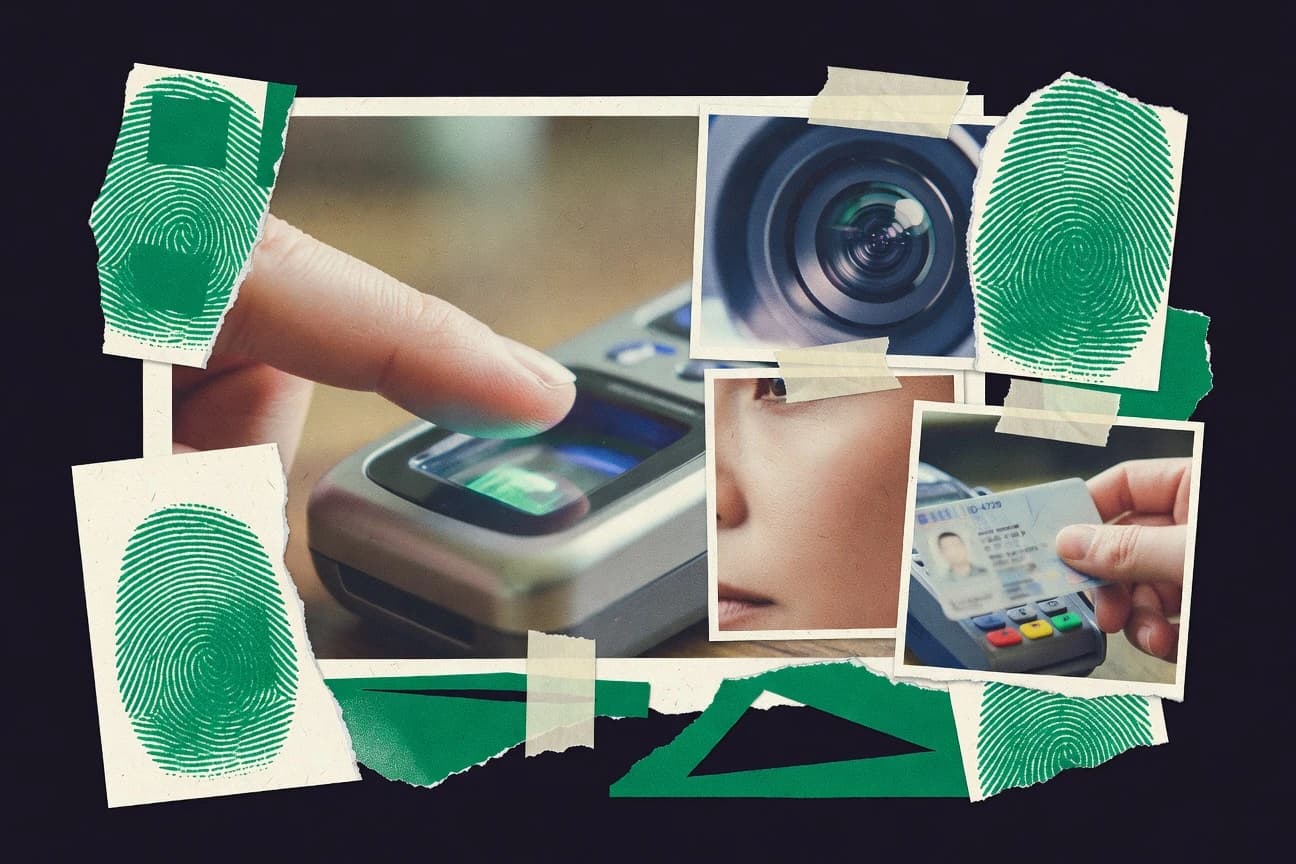

The global biometrics market is projected to grow from $25.9 billion to $76.2 billion within a decade. This expansion occurs alongside a key tension: while 86% of organizations now use biometrics for authentication, 61% cite biometric fraud as a major driver for their security budgets. This article examines the statistics shaping adoption, performance, and regulation.
Key Takeaways
- 9.3% CAGR forecast for the global biometrics market from 2023 to 2030, reaching $57.6B by 2030
- The global biometrics market was $25.9B in 2022 and is projected to reach $76.2B by 2032
- $12.0B in biometric software revenue in 2022 with a forecast to $28.1B by 2031 (Global market)
- 86% of organizations reported using biometrics for identity authentication in 2023
- US border agencies captured biometric data for 100% of travelers at airports under the Registered Traveler program (including fingerprints and facial images)
- The US Visa Waiver Program supports digital border processing using biometric passports with facial images (biometric identifiers included per DHS and CBP documentation)
- In ISO/IEC 30107-3, liveness detection accuracy is evaluated with performance metrics including Attack Presentation Classification Error Rate (APCER) and Bona Fide Presentation Classification Error Rate (BPCER)
- ISO/IEC 19795-1 defines biometric performance measures including false match rate (FMR), false non-match rate (FNMR), and detection error tradeoff (DET)
- NIST SP 800-63-3 notes that organizations should balance biometric false reject rates against the costs of additional user attempts, quantified in operational performance planning
- Tougher liveness requirements reduced fraud losses by 40% in a 2023 deployment report by Onfido
- Biometric authentication can lower call-center authentication costs by 25% by reducing account takeover verification overhead (vendor finance benchmark)
- In 2023, 61% of US organizations reported that biometric data theft or fraud concerns were a major driver of their identity security budget
- Biometric fraud incidents in banking and finance increased in 2023 compared with 2022 according to a global fraud and identity report by Alloy (2019–2023 trend findings)
- The EU AI Act includes biometric systems covered by specific risk categories; the Act was adopted in 2024 and will apply in stages starting 2025 (regulatory timeline)
Biometrics is set to grow fast with wider adoption, rising revenues, and improved security through liveness and accuracy standards.
Related reading
01 · Category
Market Size11 stats
01
9.3% CAGR forecast for the global biometrics market from 2023 to 2030, reaching $57.6B by 2030
02
The global biometrics market was $25.9B in 2022 and is projected to reach $76.2B by 2032
03
$12.0B in biometric software revenue in 2022 with a forecast to $28.1B by 2031 (Global market)
04
US biometrics-related expenditures were about $1.8B in 2022
05
UK market size for biometrics was £0.2B in 2022
06
France market size for biometrics was €0.1B in 2022
07
Germany market size for biometrics was €0.2B in 2022
08
India market size for biometrics was ₹0.1B in 2022
09
China market size for biometrics was $1.2B in 2022
10
Brazil market size for biometrics was $0.1B in 2022
11
Global fingerprint sensor market revenue was $6.7B in 2022
Interpretation
Market Size Interpretation
From the Market Size perspective, biometrics is scaling steadily and globally, with forecasts such as Fortunebusinessinsights.com projecting growth to $57.6B by 2030 on a 9.3% CAGR from 2023 to 2030 and other estimates rising from $25.9B in 2022 to $76.2B by 2032.
02 · Category
User Adoption4 stats
01
86% of organizations reported using biometrics for identity authentication in 2023
02
US border agencies captured biometric data for 100% of travelers at airports under the Registered Traveler program (including fingerprints and facial images)
03
The US Visa Waiver Program supports digital border processing using biometric passports with facial images (biometric identifiers included per DHS and CBP documentation)
04
Over 240 million passengers enrolled in TSA PreCheck by 2023, enabling biometric identity verification at airports
Interpretation
User Adoption Interpretation
In 2023, user adoption of biometrics is clearly mainstream, with 86% of organizations using biometric identity authentication and programs like TSA PreCheck reaching over 240 million enrolled travelers while US border processes capture biometrics for 100% of travelers under Registered Traveler and leverage biometric passports in the Visa Waiver Program.
03 · Category
Performance Metrics2 stats
01
In ISO/IEC 30107-3, liveness detection accuracy is evaluated with performance metrics including Attack Presentation Classification Error Rate (APCER) and Bona Fide Presentation Classification Error Rate (BPCER)
02
ISO/IEC 19795-1 defines biometric performance measures including false match rate (FMR), false non-match rate (FNMR), and detection error tradeoff (DET)
Interpretation
Performance Metrics Interpretation
For Performance Metrics, biometric evaluations standardize accuracy using concrete error rates such as ISO/IEC 19795-1’s false match rate and false non-match rate, and ISO/IEC 30107-3 builds on that by measuring liveness detection with attack presentation classification errors, showing a clear trend toward using quantified error behavior to judge reliability.
More related reading
04 · Category
Cost Analysis3 stats
01
NIST SP 800-63-3 notes that organizations should balance biometric false reject rates against the costs of additional user attempts, quantified in operational performance planning
02
Tougher liveness requirements reduced fraud losses by 40% in a 2023 deployment report by Onfido
03
Biometric authentication can lower call-center authentication costs by 25% by reducing account takeover verification overhead (vendor finance benchmark)
Interpretation
Cost Analysis Interpretation
Cost analysis shows that strengthening biometric liveness can cut fraud losses by 40% while also potentially reducing authentication overhead costs by 25%, and organizations can further manage expense by balancing false reject rates against the added cost of extra user attempts.
05 · Category
Industry Trends6 stats
01
In 2023, 61% of US organizations reported that biometric data theft or fraud concerns were a major driver of their identity security budget
02
Biometric fraud incidents in banking and finance increased in 2023 compared with 2022 according to a global fraud and identity report by Alloy (2019–2023 trend findings)
03
The EU AI Act includes biometric systems covered by specific risk categories; the Act was adopted in 2024 and will apply in stages starting 2025 (regulatory timeline)
04
ISO/IEC 30107-3 (2024 edition) standardizes testing of presentation attack detection (PAD) for face and other modalities
05
FIDO Alliance’s WebAuthn adoption grew to include platform authenticators supporting biometrics by default across major browsers (measured by published interoperability statistics from FIDO)
06
In 2023, global spending on cybersecurity products and services including identity and access management reached $156.1B, supporting demand for biometric authentication
Interpretation
Industry Trends Interpretation
For the Industry Trends in biometrics, concerns about biometric data theft are already shaping identity security budgets, with 61% of US organizations citing them as a major driver in 2023, alongside rising 2023 biometric fraud in banking and finance and continued standards and regulatory momentum like the EU AI Act and updated PAD testing norms.
report visual · Comparison
Biometrics Adoption & Impact Snapshot (2023)
Most organizations use biometrics for identity authentication, and liveness requirements are linked to lower fraud losses.
US border agencies captured biometric data for 100% of travelers at airports under the Registered Traveler program (incl100%
86% of organizations reported using biometrics for identity authentication in 2023
86%
In 2023, 61% of US organizations reported that biometric data theft or fraud concerns were a major driver of their ident
61%
Tougher liveness requirements reduced fraud losses by 40% in a 2023 deployment report by Onfido
40%
source-verifiedidg.com · cbp.gov · onfido.com · verizon.com2023
Reference
Cite This Report
This report is designed to be cited. We maintain stable URLs and versioned verification dates. Copy the format appropriate for your publication below.
APA
Marie Larsen. (2026, February 13). Biometrics Statistics. Gitnux. https://gitnux.org/biometrics-statistics
MLA
Marie Larsen. "Biometrics Statistics." Gitnux, 13 Feb 2026, https://gitnux.org/biometrics-statistics.
Chicago
Marie Larsen. 2026. "Biometrics Statistics." Gitnux. https://gitnux.org/biometrics-statistics.
Sources & references
26 datasets cited across this report · attribution is report-level
+9 additional datasets cited (not shown individually)