
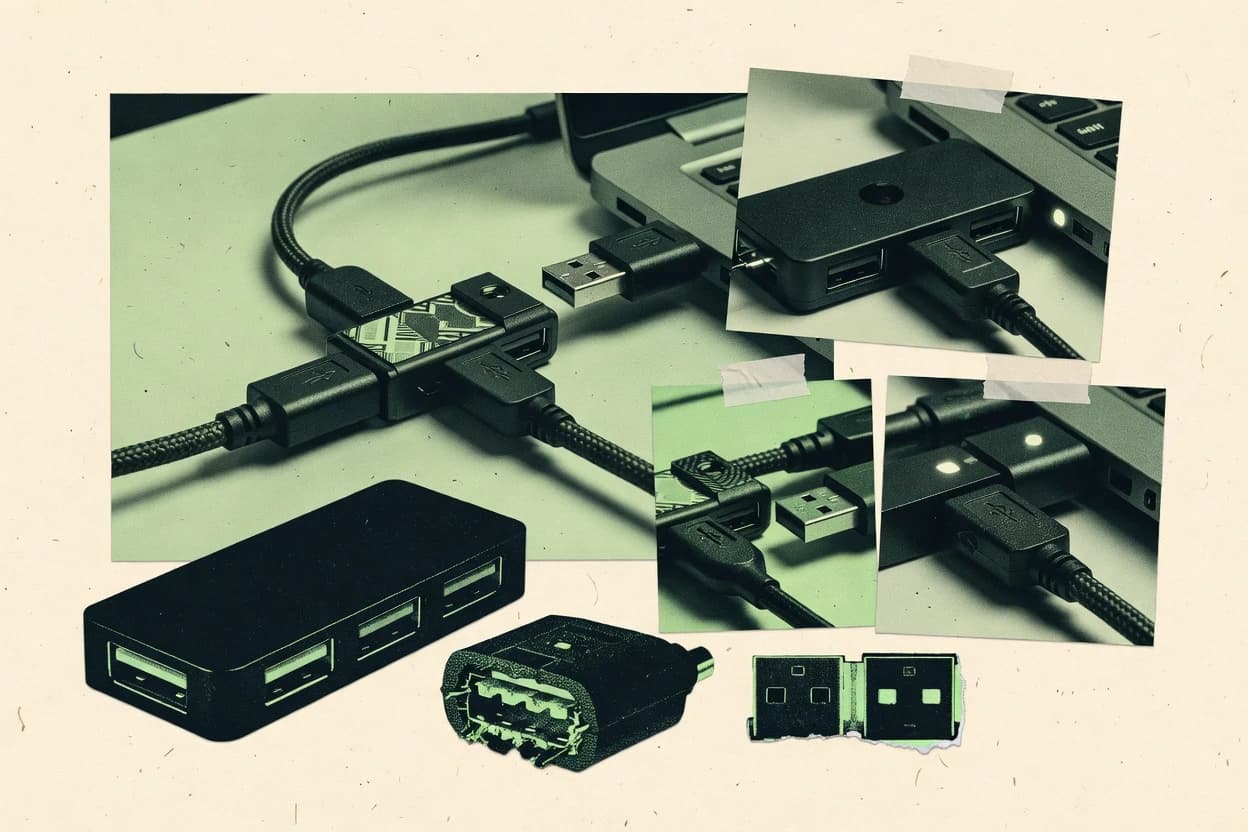
GITNUXSOFTWARE ADVICE
Telecommunications ConnectivityTop 10 Best Usb Device Sharing Software of 2026
Ranked roundup of usb device sharing software with compatibility, latency, and setup checks, including USB over Network, USB Redirector, usbip-win.

How we ranked these tools
Core product claims cross-referenced against official documentation, changelogs, and independent technical reviews.
Analyzed video reviews and hundreds of written evaluations to capture real-world user experiences with each tool.
AI persona simulations modeled how different user types would experience each tool across common use cases and workflows.
Final rankings reviewed and approved by our editorial team with authority to override AI-generated scores based on domain expertise.
Score: Features 40% · Ease 30% · Value 30%
Gitnux may earn a commission through links on this page — this does not influence rankings. Editorial policy
USB over Network (FabulaTech) is the strongest choice when labs, offices, or support teams need controlled native USB access over Ethernet, whereas usbip-win on Windows fits best if you need OS-level access to a few specific USB devices on a reliable IP network.
Editor’s top 3 picks
Three quick recommendations before you dive into the full comparison below — each one leads on a different dimension.
USB over Network
Per-device mapping lets selected peripherals attach to remote sessions without exposing the full USB tree.
Built for fits when labs, offices, or support teams need controlled remote access to specific USB peripherals..
USB Redirector
Editor pickPersistent per-session device mapping that keeps the same USB attachment available across client reconnects.
Built for fits when teams need reliable remote access to USB dongles and peripherals over controlled networks..
usbip-win
Editor pickWindows client attachment that binds an exported USB device into the local driver stack for direct hardware access.
Built for fits when Windows clients need OS-level access to a few specific USB devices on a reliable network..
Comparison Table
USB over Network
SMBFabulaTech application that shares USB devices over Ethernet so remote computers can access them natively.
Per-device mapping lets selected peripherals attach to remote sessions without exposing the full USB tree.
USB over Network is designed around client-server USB passthrough where the USB interface stays attached to a controlled server host and remote clients attach through a network session. The software supports device-level access modes that help when specific peripherals like barcode scanners or license dongles must be mapped without exposing the entire USB topology. It also supports device connection persistence so clients can reconnect after network interruptions without reauthorizing the physical device each time. In practice, this architecture fits sites that centralize USB hardware in one room or rack and deliver access to workstations and RDP-like workflows.
A key tradeoff is that USB-through-network latency and throughput depend on the network path and device type, so high-bandwidth and strict-timing devices can degrade remote performance. Barcode scanners and smart-card readers tend to remain usable, while webcams or isochronous-heavy devices require careful testing against the target network. Setup requires installing the server-side agent on the USB-owning machine and aligning device selection with the required client access pattern. Governance is limited to configuration discipline on the server host, so isolation and audit-style controls are not as deep as full device management stacks.
For environments that need shared hardware keys, the value comes from mapping the dongle to specific clients and avoiding manual cable moves. For shared lab instruments, the approach centralizes the USB device and reduces downtime from frequent reconnections. When multiple clients need the same peripheral, the session model still requires planning around device availability and reconnection behavior.
- +Server-controlled USB device mapping reduces cable management overhead
- +Works well for HID and low-to-medium bandwidth peripherals
- +Session reconnection supports continued use after temporary network drops
- +Per-device attachment keeps remote access scoped to selected hardware
- –Latency-sensitive peripherals need testing for acceptable response time
- –Remote multi-client sharing requires deliberate session and availability planning
- –RBAC-style governance and audit log depth are limited for enterprises
- –Network misconfiguration can cause device attach failures
IT admins in distributed offices
Remote access to a single USB dongle
Fewer physical dongle handoffs
Operations teams running shared peripherals
Remote barcode scanner for warehouse terminals
Reduced downtime during peak shifts
Show 2 more scenarios
QA teams with centralized test hardware
Remote use of device under test
Repeatable test execution
A fixed server host maintains the USB attachment while remote test stations reconnect as needed.
Support desks and IT helpdesks
Remote troubleshooting with smart-card readers
Faster incident resolution
Selected USB readers attach to a technician session without moving hardware cables.
Best for: Fits when labs, offices, or support teams need controlled remote access to specific USB peripherals.
USB Redirector
SMBUSB-over-network software from Incentives Pro that redirects USB devices to remote machines over TCP/IP.
Persistent per-session device mapping that keeps the same USB attachment available across client reconnects.
USB Redirector focuses on USB over network device redirection, where a central service can capture a locally attached USB device and present it to a remote client. It is most relevant when one or more users need consistent access to the same hardware, such as a license dongle or a scanner, without moving the device. The deployment model is straightforward enough for small server rooms but benefits from disciplined device-to-user mapping to avoid accidental exposure across sessions.
A key tradeoff is that latency and reliability depend on the network path because USB traffic must traverse the redirecting tunnel. The tool fits best when the USB device tolerates higher round-trip time, such as dongles or low-bandwidth peripherals, and when administrative control can be maintained over which client sessions are allowed to attach.
- +Server-side device capture with remote attachment per user session
- +Practical support for USB dongles and HID-style peripherals
- +Centralized configuration helps reduce client setup sprawl
- +Device availability persists through repeated client logins
- –Real-world responsiveness varies with network latency and jitter
- –Fine-grained access controls require careful mapping configuration
- –Troubleshooting USB disconnects can be time-consuming
- –Some high-speed or isochronous device workloads may feel constrained
IT ops teams
Share license dongles across office sites
Fewer hardware moves
Engineering teams
Use HID peripherals from remote workstations
Faster remote setup
Show 1 more scenario
Call centers
Provide scanner access to remote terminals
Lower device logistics
USB passthrough-style sharing supports consistent device use without on-site duplication.
Best for: Fits when teams need reliable remote access to USB dongles and peripherals over controlled networks.
usbip-win
vertical specialistOpen-source Windows implementation of the USB/IP protocol for sharing USB devices over IP networks.
Windows client attachment that binds an exported USB device into the local driver stack for direct hardware access.
On the host side, usbip-win enumerates locally connected USB devices, exports selected devices, and exposes them for network attachment. On the client side, it attaches an exported device to the local system so the OS loads standard USB drivers for that device. The practical integration depth is in OS-level device binding, not in a higher-level management plane. Network behavior depends on USBIP session traffic, so stability varies with link quality and latency.
A key tradeoff is that usbip-win provides transport and attachment, but it does not add device-aware authorization or per-device governance features by itself. A common usage situation is sharing a hardware dongle or a USB serial adapter between machines in a controlled network so Windows applications can use the same underlying device.
- +Attaches remote USB devices so Windows loads normal device drivers
- +Supports per-device export selection from the host machine
- +Works with standard USBIP-style host to client attachment workflow
- +Provides clear separation between exporting and client binding steps
- –Latency sensitivity can disrupt devices with tight timing requirements
- –No built-in RBAC or audit log for host export and client attachment
- –Firewall and networking setup often dominates time-to-first-device
- –Not all USB device behaviors remain stable under remote redirection
IT administrators
Centralize dongle access across workstations
Dongle is recognized by apps
QA engineering teams
Test peripherals from remote harness PCs
Repeatable device-driver behavior
Show 1 more scenario
Small engineering teams
Remote access to USB serial adapters
Serial tools work without modification
Expose the adapter on the host and attach it to keep serial workflows running.
Best for: Fits when Windows clients need OS-level access to a few specific USB devices on a reliable network.
FlexiHub
SMBCloud-assisted USB and serial device sharing service that routes peripheral access over the internet.
Per-user USB device mapping with eligibility filtering lets admins control which enumerated devices each client can claim.
FlexiHub provides USB device sharing for remote access, with host-side software that redirects local USB hardware to client machines.
It supports per-user device mapping so multiple people can target the same set of connected devices without manual cable swapping.
FlexiHub also includes admin-oriented configuration controls for enabling the USB redirect service and controlling which devices are eligible for sharing.
For workflows like licensing dongle use and peripheral redirection, it targets stable session behavior rather than raw USB throughput benchmarking.
- +Per-user device mapping reduces manual coordination when multiple clients need access
- +Persistent client sessions help keep dongle-driven tools from repeated reconnect workflows
- +Clear host and client agent model keeps deployment steps separate and auditable
- +Device selection is driven by USB enumeration so exact peripherals can be targeted
- –High device count setups require deliberate configuration to avoid selection mistakes
- –Some high-bandwidth USB use cases can feel latency-sensitive compared with local attachment
Best for: Fits when teams need remote access to specific USB peripherals and license dongles with controlled device selection.
USB/IP
open-source specialistOriginal open-source USB over IP framework integrated into the Linux kernel for sharing USB devices across networks.
usbipd-driven export plus remote attach integrates into the kernel USB bus so local apps use standard device nodes.
USB/IP is a Linux-oriented USB-over-network device sharing stack that redirects USB device traffic between a host and one or more clients. It uses the USBIP protocol to attach a remote USB device to a local kernel USB device tree so existing applications see the device as if it were plugged in.
Core capabilities include exporting local USB devices, binding exported devices to remote clients on demand, and supporting multiple transport paths through kernel integration. Device behavior depends on USB driver support on the client side and on whether the target device’s transfer types work correctly over the network.
- +Kernel-level device attachment makes exported USB enumerate normally
- +Export and attach flows support remote device redirection without custom apps
- +Per-device binding lets clients choose specific USB devices
- +Widely usable on Linux servers via standard usbip tooling
- –Primary functionality targets Linux kernels and drivers
- –Latency and packet loss can break timing-sensitive devices like scanners
- –Some devices fail when required transfer modes or drivers differ on clients
- –Requires network and kernel configuration discipline for reliable sessions
Best for: Fits when Linux environments need controlled USB device redirection for lab automation or remote peripherals.
Eltima USB Network Gate for Linux
SMBUSB device sharing software that connects local USB peripherals to remote Linux systems over IP networks.
Host-side device mapping and access control that targets individual USB peripherals for remote session connections.
Eltima USB Network Gate for Linux provides USB device sharing by redirecting a USB device from a server to a client over a network. It focuses on USB device passthrough workflows where the client application interacts with the redirected device as if it were locally attached.
The product includes per-device connection management, client-side discovery, and access control around which hosts may connect. For teams standardizing remote access to USB peripherals across mixed lab or branch locations, it supports session-based device mapping rather than requiring application rewrites.
- +Server-to-client USB redirection with host-side device enumeration for client apps
- +Per-device sharing control that limits which specific peripherals can be redirected
- +Client connection management designed for multi-client lab or office scenarios
- +Linux-focused deployment for environments that avoid Windows-based gateways
- –USB hot-swap behavior can be inconsistent for devices that rely on frequent re-enumeration
- –Performance depends heavily on network latency and sustained throughput for isochronous devices
Best for: Fits when remote teams need controlled access to specific USB peripherals without changing local client software.
TSplus Remote Access USB Redirection
SMBRemote desktop software with USB redirection for local devices in remote Windows sessions.
USB device selection and redirection are tied to TSplus session assignment, so redirected devices appear as part of the remote desktop experience.
TSplus Remote Access USB Redirection targets USB device redirection inside its remote access stack rather than acting as a standalone USB-over-network appliance. The software remaps local USB devices to remote sessions using the TSplus remote access components, with controls focused on per-session device assignment.
Support concentrates on USB passthrough style workflows like redirecting peripherals and dongles into remote desktop sessions. Administration centers on TSplus Remote Access management for enabling redirection and controlling which users can access redirected devices.
- +USB redirection runs within TSplus Remote Access session handling
- +Per-user device selection supports controlled session mapping
- +Works well for dongle style access that must appear inside the session
- +Administration uses the same TSplus console patterns as remote access
- –USB behavior depends on client OS drivers and application support
- –Latency and isochronous performance are limited for high-time-sensitive devices
- –Troubleshooting spans both remote access and USB driver layers
- –No clear published device compatibility matrix for niche USB peripherals
Best for: Fits when remote desktop workflows need USB peripherals in-session, and the user base uses TSplus Remote Access consistently.
Donglify
vertical specialistLicense dongle sharing software for USB security keys used by desktop applications and CAD tools.
Device mapping configuration that exposes specific locally connected USB hardware to selected remote client endpoints.
Donglify is a USB device sharing utility for redirecting local USB hardware to remote client machines. It focuses on running a USB-over-network style workflow and presenting the redirected device on connected endpoints.
Key capabilities center on device mapping, session handling, and network transport that supports device use in remote workloads. Setup typically involves installing components on the server and clients, then configuring which USB ports or devices are allowed for sharing.
- +Supports remote USB device mapping with per-client device presentation
- +Handles device redirection without requiring application-level USB changes
- +Uses a USB-over-network transport pattern suitable for lab and office use
- +Lets operators control which local USB hardware is exposed to remote clients
- –Latency sensitivity can affect high-rate USB behaviors like isochronous streams
- –Setup and troubleshooting can require careful network and driver alignment
- –Limited clarity on audit and RBAC-style governance for shared device access
- –Device compatibility can vary by USB class and connected hub behavior
Best for: Fits when small teams need remote access to a limited set of hardware devices for testing or remote work.
AnywhereUSB Plus
enterpriseNetwork-attached USB device servers share USB peripherals over IP for remote access and central management.
Port-to-device mapping via the AnywhereUSB Plus server lets admins restrict which USB-attached endpoints are exposed to clients.
AnywhereUSB Plus from DigiKey enables remote redirection of USB peripherals by running a server on the USB-attached machine and client software on the accessing machine. The product focuses on device sharing for common USB use cases like printers, scanners, and hardware keys by mapping the local USB port to a remote session.
Administration relies on configuration of allowed devices and connection endpoints, which supports controlled device access across multiple users. The setup path emphasizes installing services on both sides rather than integrating into existing virtualization platforms.
- +USB device sharing works through a server and client service pairing
- +Supports common peripheral categories like printers and scanners
- +Can map specific USB ports to remote sessions for targeted access
- +Print and scan workflows can persist across reconnects
- –Deep control like per-device RBAC and auditing is limited compared with enterprise USB gateways
- –Compatibility varies by device driver stack and USB timing sensitivity
- –Network latency can become noticeable for chatty USB devices and real-time HID
- –Setup requires coordinated configuration across server and client machines
Best for: Fits when teams need practical remote access to standard USB peripherals without building USBIP tooling.
SEH UTN Manager with UTN Device Servers
enterpriseUSB device servers and management software provide LAN and WAN access to printers, dongles, scanners, and storage devices.
UTN Manager centralizes configuration of device-server exposure and client access rules for remote USB sessions.
SEH UTN Manager with UTN Device Servers is a USB-over-network device redirection and access stack aimed at managing remote USB endpoints from server-side hardware. UTN Manager focuses on centralized configuration for which device servers may expose which USB devices, which supports repeatable deployment across multiple clients.
UTN Device Servers provide the device-side gateway that performs USB session handling for connected peripherals over the network. The combination targets IT-controlled environments where governance, auditing, and consistent mapping of physical USB devices to remote consumers matter.
- +Central UTN Manager configuration reduces per-host setup variance
- +Server-side UTN Device Servers keep USB endpoints managed close to hardware
- +Supports controlled mapping of remote clients to exposed USB devices
- +Designed for enterprise administration workflows with governance controls
- –Remote USB device compatibility depends on the attached peripheral and firmware
- –Setup requires careful planning for device persistence and reconnection behavior
- –Integration effort increases when combining with existing access and identity systems
- –Throughput and latency can be sensitive to network conditions and USB transfer type
Best for: Fits when administrators need centrally managed, policy-controlled remote USB access for specific peripherals across offices or labs.
Conclusion
After evaluating 10 telecommunications connectivity, USB over Network stands out as our overall top pick — it scored highest across our combined criteria of features, ease of use, and value, which is why it sits at #1 in the rankings above.
Use the comparison table and detailed reviews above to validate the fit against your own requirements before committing to a tool.
How to Choose the Right usb device sharing software
USB device sharing software moves locally attached peripherals into remote user sessions using redirection or export and re-attach mechanisms. This guide focuses on practical deployment patterns across USB over Network, USB Redirector, usbip-win, and FlexiHub, along with the Linux-oriented options like USB/IP and usbipd-style workflows.
After the individual tool reviews, this narrative framing connects the differences that affect latency tolerance, device selection control, and operational handling across reconnects. It also highlights where governance features show up as configuration knobs and where device behavior depends on the client OS driver stack.
USB device sharing software that redirects USB peripherals into remote sessions
USB device sharing software enables remote USB access by exporting specific peripherals from a host and attaching them into a client session as if they were locally connected. USB over Network uses per-device mapping so selected peripherals can attach to remote sessions without exposing the full USB tree.
USB Redirector adds persistent per-session mapping so a user reconnect keeps the same USB attachment available, which reduces repeated device presentation changes. Tools like usbip-win bind exported USB devices into the Windows driver stack, which makes local applications use normal device nodes even when the hardware is remote.
Device mapping persistence, kernel integration, and session governance controls
Deployment also hinges on whether redirection integrates into the host USB stack or stays inside a remote session layer. Kernel-level attachment reduces app friction while session-scoped redirection makes user mapping central but can increase dependency on client drivers.
Per-device mapping for controlled exposure
USB over Network maps selected peripherals to remote sessions without exposing the full USB tree. Eltima USB Network Gate for Linux similarly targets individual USB peripherals to keep redirected access narrowly scoped.
Persistent per-session mapping across reconnects
USB Redirector keeps a USB attachment available across client reconnects using persistent per-session device mapping. FlexiHub also emphasizes persistent client sessions so dongle-driven tools do not repeatedly cycle through device presentation states.
Kernel USB bus attachment on Linux
USB/IP integrates exported USB devices so Linux clients enumerate and attach like local hardware through kernel bus integration. usbip-win delivers similar OS-level visibility on Windows by binding an exported USB device into the local driver stack for direct device node access.
Eligibility filtering and enumerated-device selection
FlexiHub applies eligibility filtering so admins can control which enumerated devices each client can claim. AnywhereUSB Plus restricts what the server exposes to clients using port-to-device mapping rules.
Session-linked USB redirection inside a remote desktop stack
TSplus Remote Access USB Redirection ties redirected devices to TSplus session assignment so redirected peripherals appear as part of the remote desktop experience. USB/IP focuses on server export and client attach flows rather than remote desktop session binding.
Choose by redirection boundary, reconnect behavior, and compatibility risk
Next decide how reconnects should behave. USB Redirector and FlexiHub are built around session persistence, while usbip-win and usbipd-style workflows emphasize OS-level attachment that can still be sensitive to timing and latency for devices with tight requirements.
Map the exact peripheral set and pick per-device exposure first
If only specific peripherals should be reachable per remote session, choose USB over Network for per-device mapping without exposing the full USB tree. If device eligibility must be filtered across enumerated devices, choose FlexiHub to enforce eligibility rules per client claim.
Require stable reconnect attachment for dongle-based tools
If the same USB dongle must remain attached when users reconnect, choose USB Redirector for persistent per-session device mapping. If multiple clients must coordinate device claims with reduced manual effort, choose FlexiHub to maintain persistent client sessions tied to allowed device selection.
Target kernel-level device nodes on the client OS
For Linux fleets that need normal device enumeration by local apps, choose USB/IP because kernel-level attachment makes exported USB enumerate normally. For Windows clients that must load standard drivers against remote hardware, choose usbip-win because it binds remote exports into the Windows driver stack.
Match device timing sensitivity to network conditions
If devices are latency sensitive like scanners, validate that the chosen workflow tolerates packet loss and jitter because usbipd-driven export and client attach can break tight timing. If device use is HID and low-to-medium bandwidth, USB over Network’s per-device mapping has better practical fit for controlled remote access.
Avoid over-accepting high device counts without configuration discipline
If many devices must be selectable, choose a product with a clear selection workflow and eligibility controls, because FlexiHub’s high device count setups require deliberate configuration to avoid selection mistakes. If device sets stay small and the workflow is controlled, Donglify’s per-client device presentation can reduce complexity.
Align hot-swap behavior with the target hardware reality
If the peripheral re-enumerates frequently, treat USB Redirector as a baseline but test USB hot-swap behavior because Eltima USB Network Gate for Linux can show inconsistent behavior for devices relying on frequent re-enumeration. If firmware-dependent persistence matters across reconnections, SEH UTN Manager centralization still depends on peripheral firmware compatibility.
Teams that need controlled remote USB access with predictable session handling
Labs, support desks, and remote desktop operations also differ by operational model. Central mapping at the server supports policy control, while TSplus session binding supports user-facing remote desktop workflows that expect devices to appear inside the session.
Networked lab and support teams that need controlled peripheral access
USB over Network supports controlled per-device mapping so selected peripherals attach without exposing the full USB tree, which reduces accidental device access. Eltima USB Network Gate for Linux also targets individual peripherals for access control with host-side enumeration.
Organizations serving users who reconnect often with dongle-driven tools
USB Redirector is built around persistent per-session device mapping so the attachment stays available after reconnects. FlexiHub adds per-user mapping with eligibility filtering so multi-client dongle access does not rely on ad hoc changes.
Linux environments that require standard device nodes for unmodified apps
USB/IP integrates exported USB into the kernel USB bus so apps see normal device nodes rather than session-scoped handles. USB/IP aligns best when the client-side driver stack expects standard USB enumeration.
Windows clients that must load normal device drivers against remote hardware
usbip-win focuses on Windows client attachment by binding an exported USB device into the local driver stack. This supports direct hardware access patterns but carries latency sensitivity risk for timing-critical devices.
Remote desktop teams using TSplus Remote Access consistently
TSplus Remote Access USB Redirection ties redirected devices to TSplus session assignment so peripherals become part of the remote desktop experience. This suits workflows where the remote session is already the user’s interaction boundary.
Common failure modes in USB device redirection projects
Another failure mode is using a configuration approach that does not reflect how the software actually maps devices to sessions. Server-side per-device mapping and eligibility filters behave differently from TSplus session-linked attachment and from kernel-level enumeration flows.
Selecting a redirection product without testing timing-sensitive peripherals like scanners.
USB/IP and usbip-win both depend on network transport and device timing, so packet loss or jitter can disrupt devices with tight timing requirements. Run a device-specific test that includes real scan workflows rather than only enumeration.
Assuming reconnect will keep the same USB attachment in multi-user environments.
USB Redirector and FlexiHub explicitly emphasize persistent per-session or per-user mapping across reconnects. If another product is selected, reconnect behavior can still cause device presentation changes that break dongle-based automation.
Overloading selection rules without configuration discipline when the device count is high.
FlexiHub’s eligibility filtering needs deliberate configuration for high device counts to prevent selection mistakes. If the environment has many peripherals, limit the eligible device set or validate the selection workflow before rollout.
Ignoring that some hot-swap behaviors can be inconsistent for re-enumerating hardware.
Eltima USB Network Gate for Linux can show inconsistent USB hot-swap behavior for devices relying on frequent re-enumeration. Validate device behavior when physically replugging and when the OS reenumerates endpoints.
How We Selected and Ranked These Tools
We evaluated USB device sharing tools by measuring how consistently each product maps specific USB peripherals into remote client sessions after reconnect, because that determines application stability. Features accounted for 40% of the score by weighting per-device mapping control, attachment persistence, and how directly the client sees normal device nodes through the OS stack.
Ease and value each accounted for 30% by weighting setup friction tied to driver expectations on Linux or Windows and operational overhead for device selection. USB over Network set the top position because per-device mapping lets selected peripherals attach to remote sessions without exposing the full USB tree, and its HID and low-to-medium bandwidth fit aligns with the most common remote lab access patterns while keeping configuration scope tight.
Frequently Asked Questions About usb device sharing software
Which tools expose USB devices at the OS driver level on the client, not just as an application stream?
How does per-device mapping differ across USB over Network, FlexiHub, and SEH UTN Manager?
Which product fits remote licensing dongle sharing when device eligibility must be constrained per user?
When do HID passthrough style peripherals behave differently between USB over Network and TSplus Remote Access USB Redirection?
What breaks if multiple remote endpoints try to use the same physical device at the same time?
How do admin controls and governance workflows differ between Eltima USB Network Gate for Linux and USB/IP?
What integration path is available in TSplus Remote Access USB Redirection compared with AnywhereUSB Plus?
How does usbip-win handle device attachment on Windows clients after the host exports a device?
What setup gap appears when mixing Linux and Windows clients across USB/IP and USB over Network deployments?
Tools reviewed
Primary sources checked during evaluation.
Referenced in the comparison table and product reviews above.
- Digital Transformation In IndustryTop 10 Best Usb Device Management Software of 2026
- TelecommunicationsTop 10 Best Internet Sharing Software of 2026
- SecurityTop 10 Best Usb Activity Monitoring Software of 2026
- TelecommunicationsTop 10 Best Cloud Sharing Services of 2026
- TelecommunicationsTop 10 Best Shared Web Hosting Services of 2026
Keep exploring
Comparing two specific tools?
Software Alternatives
See head-to-head software comparisons with feature breakdowns, pricing, and our recommendation for each use case.
Explore software alternatives→In this category
Telecommunications Connectivity alternatives
See side-by-side comparisons of telecommunications connectivity tools and pick the right one for your stack.
Compare telecommunications connectivity tools→