
GITNUXSOFTWARE ADVICE
Consumer RetailTop 10 Best Store Planogram Software of 2026
Ranked review of Store Planogram Software for retail teams. Compare features, tradeoffs, and fit across 10 tools in one shortlist.

How we ranked these tools
Core product claims cross-referenced against official documentation, changelogs, and independent technical reviews.
Analyzed video reviews and hundreds of written evaluations to capture real-world user experiences with each tool.
AI persona simulations modeled how different user types would experience each tool across common use cases and workflows.
Final rankings reviewed and approved by our editorial team with authority to override AI-generated scores based on domain expertise.
Score: Features 40% · Ease 30% · Value 30%
Gitnux may earn a commission through links on this page — this does not influence rankings. Editorial policy
Editor’s top 3 picks
Three quick recommendations before you dive into the full comparison below — each one leads on a different dimension.
Blue Yonder Category Management
Shared merchandising data model across category planning, assortment analysis, and planogram execution
Built for fits when enterprise retail teams need tightly integrated planograms, governance controls, and shared merchandising data..
RELEX Space
Editor pickUnified retail data model connecting planograms, assortments, fixtures, stores, and replenishment workflows
Built for fits when enterprise retail teams need planograms tied to assortment, demand, and governed data integrations..
Leafio
SponsoredEditor pickIts standout capability is AI-based automated planogram generation that tailors shelf layouts to each store's demand patterns, assortment mix, and merchandising constraints, helping retailers move beyond static chainwide planograms.
Built for multi-store grocery and retail chains that want AI-driven, store-specific planograms tied to assortment strategy, shelf productivity, and merchandising execution..
Comparison Table
Blue Yonder Category Management
enterpriseEnterprise space and planogram software with fixture-aware planogram creation, assortment integration, demand-linked analytics, and broad retail data integration across merchandising workflows.
Shared merchandising data model across category planning, assortment analysis, and planogram execution
Blue Yonder Category Management handles visual merchandising and category planning inside a broader retail data environment. Teams can build planograms, analyze space productivity, manage assortments, and evaluate localized recommendations with shared product and store data. The product fits retailers that need planogram work tied to forecasting, replenishment, and merchandising systems rather than isolated desktop files.
Blue Yonder Category Management also carries more implementation weight than lighter planogram tools. Admin teams need clear governance, role design, and integration planning to get full value from its schema and workflow depth. It works best for large chains that run frequent resets, localized assortments, and centrally governed merchandising processes across many stores.
- +Deep integration with wider Blue Yonder retail planning stack
- +Structured data model supports enterprise assortment and space workflows
- +Scenario analysis links planograms to category performance metrics
- +Governance features suit centrally managed retail organizations
- –Implementation demands significant data and process alignment
- –Heavier admin overhead than standalone planogram editors
- –Less suitable for small retailers with simple merchandising needs
enterprise category teams
chainwide category resets
consistent reset execution
space planning managers
localized shelf planning
better local assortments
Show 2 more scenarios
retail IT teams
merchandising system integration
cleaner data flow
Integration with broader retail planning environments reduces disconnected files and duplicate category data maintenance.
governance-focused retailers
controlled planogram workflows
tighter operational control
Central administration supports standardized workflows, permissions, and approved category planning processes.
Best for: Fits when enterprise retail teams need tightly integrated planograms, governance controls, and shared merchandising data.
RELEX Space
unified retailRetail space planning software that connects planograms with forecasting, assortment, and replenishment data models for chain-wide automation and performance monitoring.
Unified retail data model connecting planograms, assortments, fixtures, stores, and replenishment workflows
Retailers with complex category structures and frequent assortment resets are the clearest fit for RELEX Space. RELEX Space links planograms to product, store, fixture, and demand data so space decisions can reflect local assortments and operational constraints. The broader RELEX environment adds integration paths into forecasting, replenishment, and merchandising processes. That connected data model gives central teams more control over consistency, exception handling, and rollout governance.
RELEX Space also carries a heavier implementation profile than simpler visual merchandising products. The strongest value appears when an organization already runs RELEX planning workflows or needs planogram outputs wired into enterprise data pipelines and governed administration. Teams that only need basic shelf drawing and store execution can find the configuration depth excessive. Large grocery, convenience, and general merchandise chains with strong master data discipline will benefit more from its schema-driven approach.
- +Connects planograms with assortment, demand, and replenishment data
- +Deep enterprise integration across wider RELEX retail planning workflows
- +Supports fixture, floor plan, and cluster-aware space planning
- +Strong fit for governed rollout across many store formats
- –Implementation scope is larger than standalone planogram editors
- –Best value depends on mature product and store master data
- –Less suited to small teams needing quick visual merchandising only
category management teams
localized assortment planning
More relevant layouts
space planning teams
chainwide reset governance
Fewer rollout errors
Show 2 more scenarios
retail IT teams
integrated merchandising workflows
Cleaner data flows
API-led integration keeps planogram data aligned with merchandising, forecasting, and replenishment records.
grocery operators
space to demand alignment
Better shelf productivity
RELEX Space connects shelf allocation decisions with demand signals and operational constraints.
Best for: Fits when enterprise retail teams need planograms tied to assortment, demand, and governed data integrations.
Leafio
AI retail planogram optimizationLeafio provides AI-driven planogram software that automates shelf space planning, assortment-to-shelf alignment, and in-store merchandising optimization for retailers.
Its standout capability is AI-based automated planogram generation that tailors shelf layouts to each store's demand patterns, assortment mix, and merchandising constraints, helping retailers move beyond static chainwide planograms.
Leafio positions its planogram software as part of a broader retail optimization suite, helping merchants translate assortment decisions into effective shelf layouts. It supports automated shelf planning using sales data, product dimensions, merchandising logic, and store-specific demand patterns. That makes it especially relevant for retailers that need to optimize limited shelf space across many formats or locations.
A practical strength is its focus on store-level relevance, which can help chains avoid generic planograms that ignore local demand. The tradeoff is that the platform appears best suited to retailers with enough operational data and merchandising structure to benefit from AI-driven optimization, rather than very small stores wanting a lightweight standalone tool. It fits well when a grocery or chain retailer needs to connect central category strategy with more precise in-store execution.
- +Uses AI to automate planogram creation based on demand, product data, and merchandising rules
- +Supports store-specific shelf optimization instead of relying on uniform layouts across all locations
- +Connects assortment planning and shelf space decisions for more coordinated retail execution
- –Best fit is enterprise or multi-store retail, making it less ideal for very small independent stores
- –Advanced optimization likely depends on clean retail data and disciplined product master information
- –May involve a steeper setup and change-management effort than simpler visual-only planogram tools
Grocery category managers
Localize shelf layouts by store
Better shelf productivity
Retail merchandising teams
Automate planogram creation
Faster planogram rollout
Show 2 more scenarios
Chain store operations
Standardize execution across locations
Improved compliance consistency
Teams can distribute optimized shelf plans while preserving store-level relevance.
Supermarket executives
Improve space allocation decisions
Higher sales per shelf
They can connect assortment, capacity, and shelf performance in one planning workflow.
Best for: Multi-store grocery and retail chains that want AI-driven, store-specific planograms tied to assortment strategy, shelf productivity, and merchandising execution.
Quant
specialistStore planogram and space planning platform with desktop and web tooling, automation rules, 3D visualization, collaboration controls, and integration for enterprise retail teams.
Unified retail data model connecting floor plans, planograms, assortment, shelf analytics, and publishing workflows.
Among store planogram products, Quant focuses more heavily on integration depth and configuration control than many visual-first rivals. Quant combines space planning, planogram creation, floor planning, assortment, and shelf analytics in one data model, which supports chain-wide rules and local adaptations.
Its API and import framework support ERP, POS, product master, and image data flows, while automation covers recurring updates, rule-based placement, and batch publishing. Admin controls include role-based permissions, workflow configuration, and change tracking that suit retail teams managing large store estates and shared merchandising governance.
- +Broad API and import coverage for ERP, POS, and product master data
- +Unified data model links floor plans, planograms, assortment, and shelf analytics
- +Granular permissions and workflow controls support distributed merchandising governance
- –Interface depth can slow onboarding for teams that want quick visual editing
- –Advanced configuration work demands clean source data and defined schemas
- –Less suited to small retailers with simple layouts and limited integration needs
Best for: Fits when retail teams need deep integration, governed workflows, and chain-wide planogram control.
DotActiv
category managementPlanogram and category management software with rule-based planogram generation, floor planning, assortment analysis, and data import workflows for large retail estates.
Assortment and category analytics linked directly to planogram generation and shelf-space decisions
Store planning in DotActiv centers on planogram creation, assortment analysis, floor planning, and reporting from a shared retail data model. DotActiv is distinct for pairing planogram automation with category and performance analytics, which makes it useful for teams that want merchandising decisions tied directly to product movement and space metrics.
The product covers image-backed planograms, live data imports, clustering, shelf optimization, and task flows for store execution. Integration depth is narrower than API-first merchandising stacks, and the strongest fit is organizations that value built-in analytics and controlled desktop-to-enterprise workflows over broad extensibility.
- +Strong assortment and category analytics tied directly to planogram outputs
- +Supports floor planning, clustering, and shelf optimization in one environment
- +Image-backed planograms improve visual validation for merchandising teams
- –API and external automation surface are less visible than integration-first competitors
- –Desktop-oriented workflow can limit lightweight browser-based collaboration
- –Governance details like granular RBAC and audit logging are less explicit
Best for: Fits when retail teams need planograms tightly linked to assortment analytics and store-specific execution.
NielsenIQ Spaceman
cpg analyticsPlanogram software used for shelf planning, merchandising analysis, and category review workflows with established retailer and CPG data exchange patterns.
Planogram workflow connected to NielsenIQ category, assortment, and space performance data
Retail teams that manage category resets across many stores and depend on syndicated market data get the most from NielsenIQ Spaceman. NielsenIQ Spaceman is distinct for linking planogram authoring with assortment, floor planning, and NielsenIQ data assets in one merchandising workflow.
Core capabilities include visual planogram creation, fixture and shelf modeling, clustering, localized assortment planning, compliance reporting, and performance analysis tied to sales and space metrics. The tradeoff is a heavier enterprise operating model, where integration work, data governance, and administrator setup matter more than quick self-serve rollout.
- +Deep linkage between planograms and NielsenIQ assortment and market data
- +Detailed fixture, shelf, and product data model supports complex merchandising rules
- +Enterprise governance supports controlled configuration across large retail organizations
- –API and automation details are less visible than newer API-first competitors
- –Setup and administration demand specialist merchandising and data skills
- –Less suited to lightweight teams that need fast self-serve deployment
Best for: Fits when large retail teams need planograms tied to syndicated data and strict merchandising governance.
PlanoHero
cloud nativeCloud planogram platform with shelf layout editing, task distribution, compliance checks, photo reporting, and execution tracking for distributed store networks.
Photo-based shelf compliance workflow tied to planograms and store execution tasks.
Unlike planogram suites built around enterprise middleware, PlanoHero centers on fast visual merchandising workflows with web access, mobile execution, and image-based compliance checks. PlanoHero covers planogram creation, assortment planning, shelf analysis, task distribution, and store-level reporting in one environment that retail teams can deploy without heavy desktop software.
Integration depth is narrower than API-first enterprise systems, with stronger emphasis on imports, exports, and operational workflows than on broad external schema control. Admin features support user roles, territory assignment, and centralized content distribution, but governance depth and automation surface are lighter than tools built for complex provisioning and audit requirements.
- +Combines planograms, field tasks, and photo reporting in one workflow.
- +Mobile execution supports store visits, shelf checks, and compliance capture.
- +Web-based setup avoids desktop-heavy deployment and local file handling.
- –Limited public API visibility for deep custom integration work.
- –Governance controls are lighter than enterprise suites with audit-focused administration.
- –Data model appears less extensible for complex master data synchronization.
Best for: Fits when retail teams need quick planogram deployment with mobile compliance and lighter integration requirements.
Shelf Logic
web planningWeb-based planogram and shelf management software with visual merchandising controls, inventory-aware placement logic, and collaboration features for retail operations teams.
Image-based shelf compliance linked to planogram execution workflows.
Among store planogram products, Shelf Logic leans toward operational control rather than broad enterprise merchandising suites. Shelf Logic centers its workflow on planogram creation, store execution, and shelf compliance, with a data model that ties products, fixtures, locations, and image-based checks into one schema.
Integration depth appears narrower than higher-ranked enterprise tools, but the system covers core retail data exchange and supports repeatable automation around plan updates and field verification. Admin coverage is oriented to day-to-day retail governance, with role-based access, configuration controls, and reporting that support distributed teams managing frequent in-store changes.
- +Clear product-fixture-location schema supports consistent planogram execution.
- +Image-based shelf checks connect visual compliance with plan updates.
- +Role-based access helps control edits across distributed store teams.
- –API and developer extensibility appear lighter than enterprise-first competitors.
- –Integration breadth looks narrower for complex multi-system retail stacks.
- –Governance depth trails tools with stronger audit log and provisioning controls.
Best for: Fits when retail teams need practical planogram execution with basic integration and controlled store-level access.
Scorpion Planogram
specialistPlanogram application focused on shelf planning, merchandising layouts, and printable outputs for retailers that need dedicated store layout tooling without a large suite footprint.
Store-specific planogram deployment linked to floor layouts and execution workflows
Floor-plan and shelf-layout management sit at the center of Scorpion Planogram, with planogram creation, fixture mapping, and visual merchandising controls in one workflow. Scorpion Planogram is distinct for its retail operations focus, where planograms connect to store-specific layouts and execution processes rather than staying as static diagrams.
Core capabilities include category layout design, product placement rules, store clustering, and field communication for rollout. Public API depth, external integration coverage, and formal governance controls are not prominently documented, which makes the product easier to place for teams that value built-in merchandising functions over broad automation and extensibility.
- +Connects planograms to store layouts and execution workflows
- +Supports category design, fixture mapping, and store clustering
- +Visual merchandising features suit retail rollout coordination
- –Limited public detail on API endpoints and automation surface
- –Sparse documentation on RBAC, audit log, and admin governance
- –Integration model and extensibility are not clearly specified
Best for: Fits when retail teams need planogram execution tied closely to store-specific layouts.
SMARTASSORT
assortment-ledAssortment and planogram platform that links shelf space decisions with cluster logic, category analysis, and retail execution workflows for chain merchandising teams.
Assortment-linked planogram data model
Retail teams that need planogram execution tied to live assortment data will find SMARTASSORT most relevant. SMARTASSORT centers its workflow on category, store, fixture, and SKU relationships, which gives it a clearer merchandising data model than image-first layout tools.
Core capabilities cover assortment planning, floor and shelf planograms, cluster-based execution, and analytics for compliance and performance. Its fit is stronger for organizations that want planogram work connected to enterprise data and governed through structured configuration rather than heavy visual design features alone.
- +Strong assortment-to-planogram linkage across stores, clusters, and categories
- +Structured merchandising data model supports consistent configuration
- +Good fit for integration-led retail planning environments
- –Less emphasis on advanced visual merchandising presentation
- –Public API and developer documentation are not prominently exposed
- –Governance details like RBAC and audit logging are sparsely documented
Best for: Fits when retail teams need assortment-driven planograms linked to structured merchandising data.
Conclusion
After evaluating 10 consumer retail, Blue Yonder Category Management stands out as our overall top pick — it scored highest across our combined criteria of features, ease of use, and value, which is why it sits at #1 in the rankings above.
Use the comparison table and detailed reviews above to validate the fit against your own requirements before committing to a tool.
Frequently Asked Questions About Store Planogram Software
Which store planogram tools have the deepest integration and API coverage?
Which products fit retailers that need planograms tied directly to assortment and replenishment data?
Which tools provide the strongest governance, admin controls, and auditability?
What is the best option for fast rollout with lighter technical requirements?
Which tools are strongest for store-specific or localized planograms across many formats?
How do these tools differ on extensibility versus built-in merchandising workflows?
Which products handle data migration and ongoing data imports most cleanly?
Are any of these tools a strong fit for SSO, security, and controlled user provisioning?
Which tools are better for image-based shelf compliance and field execution?
Tools reviewed
Primary sources checked during evaluation.
Referenced in the comparison table and product reviews above.
How to Choose the Right Store Planogram Software
Choosing store planogram software depends less on drawing shelves and more on how each system handles retail data, automation, and control. Blue Yonder Category Management, RELEX Space, Quant, Leafio, DotActiv, NielsenIQ Spaceman, PlanoHero, Shelf Logic, Scorpion Planogram, and SMARTASSORT differ sharply on those points.
Enterprise retailers usually need a shared merchandising schema, governed publishing, and integration into assortment or replenishment workflows. Smaller rollout teams often get more value from web deployment, mobile compliance, and simpler store execution tools such as PlanoHero or Shelf Logic.
How store planogram platforms connect shelf layouts to retail data and execution
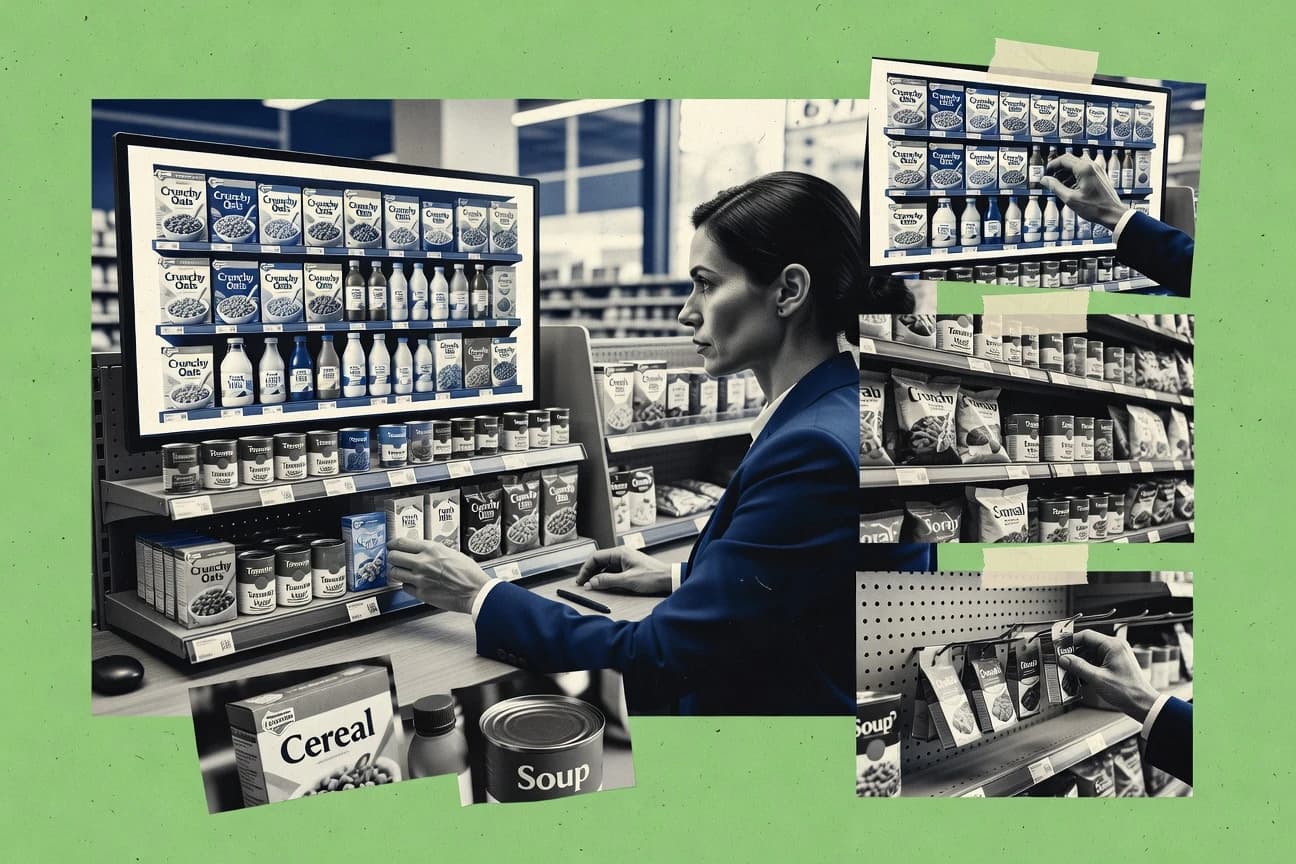
Store planogram software manages shelf layouts, fixture logic, product placement rules, and store-specific publishing inside a structured retail workflow. The category solves the gap between category strategy and in-store execution by tying planograms to assortments, fixtures, clusters, performance metrics, and compliance tasks.
Blue Yonder Category Management and RELEX Space represent the enterprise end of the category because both connect planograms to broader merchandising data models. PlanoHero and Shelf Logic show the execution-focused end because both combine visual layouts with image-based compliance and store task workflows.
Product capabilities that matter most in planogram system selection
The strongest products in this category differ on schema design, integration coverage, and administration depth. A polished shelf editor matters less than the ability to keep assortments, fixtures, stores, and publishing states aligned.
Blue Yonder Category Management, RELEX Space, and Quant rank highly because each product treats planograms as part of a wider retail system. PlanoHero and Shelf Logic matter for a different reason because both bring store execution and compliance back into the same workflow.
Unified merchandising data model
Blue Yonder Category Management uses a shared merchandising data model across category planning, assortment analysis, and planogram execution. RELEX Space and Quant also connect planograms, assortments, fixtures, stores, and analytics in one schema, which reduces manual remapping between systems.
API and import coverage for retail source systems
Quant stands out for broad API and import coverage across ERP, POS, product master, and image data. RELEX Space also offers strong integration depth for retailers that need planograms tied to replenishment and assortment workflows rather than isolated file exchange.
Automation for store-specific planograms
Leafio uses AI-driven planogram generation to tailor layouts to local demand patterns, assortment mix, and merchandising constraints. DotActiv adds rule-based planogram generation and clustering, which helps teams publish repeatable layouts across large store estates.
Admin controls, RBAC, and change tracking
Quant includes granular permissions, workflow configuration, and change tracking for distributed merchandising teams. Blue Yonder Category Management also suits centrally managed retail organizations because its governance features support controlled automation and localization across large store networks.
Fixture, floor plan, and cluster-aware planning
RELEX Space supports floor planning, fixture management, and cluster-aware space planning inside the same retail data model. NielsenIQ Spaceman and Scorpion Planogram also support fixture and store-layout workflows, which matters when category resets depend on physical store variation.
Compliance and execution feedback loops
PlanoHero ties planograms to task distribution, photo reporting, and execution tracking, which helps field teams verify rollout quality. Shelf Logic also links image-based shelf checks to plan updates, which is useful when store compliance matters more than deep enterprise integration.
Decision sequence for matching planogram software to retail operating model
The right choice starts with operating model, not editor preference. A chain that publishes from centralized assortment data needs a different product than a field team that mainly checks shelf compliance.
Blue Yonder Category Management, RELEX Space, and Quant fit retailers that already run governed merchandising processes. PlanoHero, Shelf Logic, and Scorpion Planogram fit retailers that need faster store rollout with lighter technical overhead.
Map the system of record for assortment, store, and fixture data
If assortments, replenishment, and store masters already sit in connected planning systems, prioritize Blue Yonder Category Management or RELEX Space. If the main requirement is syncing ERP, POS, product master, and image feeds into a configurable planogram platform, Quant is a stronger match.
Choose between automation depth and visual execution speed
Leafio fits teams that want automated, store-specific planograms generated from demand and merchandising rules. PlanoHero and Shelf Logic fit teams that need web-based editing, image checks, and faster execution without the heavier enterprise setup found in Blue Yonder Category Management or NielsenIQ Spaceman.
Check governance requirements before rollout
Retailers with centralized category control, role segregation, and audit needs should focus on Quant, Blue Yonder Category Management, and NielsenIQ Spaceman. Scorpion Planogram, SMARTASSORT, and PlanoHero provide clearer execution workflows than formal governance depth, so they fit lighter control models better.
Validate the underlying schema for local variation
RELEX Space and Quant handle fixtures, floor plans, assortments, and clusters in one connected model, which helps retailers support multiple store formats. SMARTASSORT also brings a structured assortment-linked data model, but it places less emphasis on advanced visual presentation than DotActiv or Scorpion Planogram.
Tie the purchase to the last mile of store compliance
If success depends on proof that stores executed the planogram, prioritize PlanoHero or Shelf Logic because both connect layouts to image-based verification. DotActiv also supports task flows for store execution, while Blue Yonder Category Management focuses more on enterprise merchandising integration than field-photo workflows.
Retail team profiles and the products that fit them
Store planogram software serves very different retail teams. The shortlist ranges from enterprise merchandising platforms with broad integration to lighter cloud products built around field execution.
Fit depends on data complexity, rollout model, and governance expectations. The strongest matches appear when the product schema mirrors the retailer's actual assortment, fixture, and store hierarchy.
Enterprise merchandising teams with shared planning systems
Blue Yonder Category Management and RELEX Space fit this group because both connect planograms to assortment, fixtures, stores, and broader merchandising workflows. Quant also works well where enterprise teams need configurable integration and chain-wide control.
Multi-store grocery and retail chains that want automated local layouts
Leafio fits chains that need AI-generated, store-specific planograms tied to demand patterns and assortment strategy. DotActiv also suits retailers that want rule-based generation linked to category analytics and shelf optimization.
Retail operations teams focused on execution, compliance, and field visibility
PlanoHero is a strong match because it combines planograms, mobile tasks, photo reporting, and compliance checks in one cloud workflow. Shelf Logic also fits teams that need image-based shelf verification and controlled store-level access.
Large retailers and CPG-adjacent teams using syndicated category data
NielsenIQ Spaceman fits organizations that rely on NielsenIQ assortment, category, and space performance data inside review and reset workflows. Its detailed fixture and shelf model also supports complex merchandising rules across many stores.
Retailers that need structured assortment-linked configuration without a full suite footprint
SMARTASSORT fits teams that want planogram work anchored to category, store, fixture, and SKU relationships. Scorpion Planogram also appeals to retailers that need store-specific layout deployment and rollout communication more than broad API extensibility.
Selection errors that create planogram rework later
Many failed planogram deployments start with the wrong assumptions about data readiness and admin capacity. The biggest problems appear when retailers buy for visual editing and ignore integration, schema control, or store execution needs.
The shortlist makes those tradeoffs clear. Blue Yonder Category Management and RELEX Space demand stronger data discipline, while PlanoHero and Shelf Logic trade away some extensibility for easier operational use.
Buying an enterprise suite without clean master data
RELEX Space, Blue Yonder Category Management, Leafio, and Quant all depend on consistent product, fixture, assortment, and store data to deliver their full value. Retailers with fragmented source data often get faster adoption from PlanoHero or Shelf Logic while master data work matures.
Assuming every tool has a broad API and automation surface
Quant and RELEX Space expose stronger integration depth for complex retail stacks. DotActiv, PlanoHero, Scorpion Planogram, and SMARTASSORT place less public emphasis on API coverage, so custom provisioning and cross-system automation need closer scrutiny.
Ignoring governance depth in multi-team rollouts
Quant supports granular permissions, workflow configuration, and change tracking, while Blue Yonder Category Management and NielsenIQ Spaceman also fit stricter central administration. Teams that skip RBAC and audit requirements often outgrow lighter products such as Shelf Logic or Scorpion Planogram.
Choosing a visual editor when compliance proof is the real requirement
PlanoHero and Shelf Logic connect planograms to image-based checks and field execution, which makes them better fits for operational compliance programs. Scorpion Planogram supports rollout coordination, but its public governance and automation details are thinner than field-first compliance platforms.
Underestimating implementation overhead
Blue Yonder Category Management, RELEX Space, and NielsenIQ Spaceman require more process alignment and specialist administration than lighter tools. Retailers that need fast browser-based deployment often move quicker with PlanoHero, while DotActiv sits between enterprise analytics depth and operational simplicity.
How We Selected and Ranked These Tools
We evaluated each store planogram software product through editorial research and criteria-based scoring focused on features, ease of use, and value. We weighted features most heavily at 40% because integration depth, schema coverage, automation, and administration shape long-term fit more than a drawing interface alone, while ease of use and value each accounted for 30% of the overall rating.
Blue Yonder Category Management ranked first because its shared merchandising data model links category planning, assortment analysis, and planogram execution in one system. That capability, combined with scenario analysis tied to category performance metrics and a 9.6 Features rating, gave it a clear advantage on the factor that carried the most weight.
- Consumer RetailTop 10 Best Merchandising Planogram Software of 2026
- Consumer RetailTop 10 Best Retail Store Planning Software of 2026
- Real Estate PropertyTop 10 Best Commercial Floor Plan Software of 2026
- Consumer RetailTop 10 Best Grocery Store Pos Software of 2026
- Consumer RetailTop 10 Best Store Finder Software of 2026
Keep exploring
Comparing two specific tools?
Software Alternatives
See head-to-head software comparisons with feature breakdowns, pricing, and our recommendation for each use case.
Explore software alternatives→In this category
Consumer Retail alternatives
See side-by-side comparisons of consumer retail tools and pick the right one for your stack.
Compare consumer retail tools→