
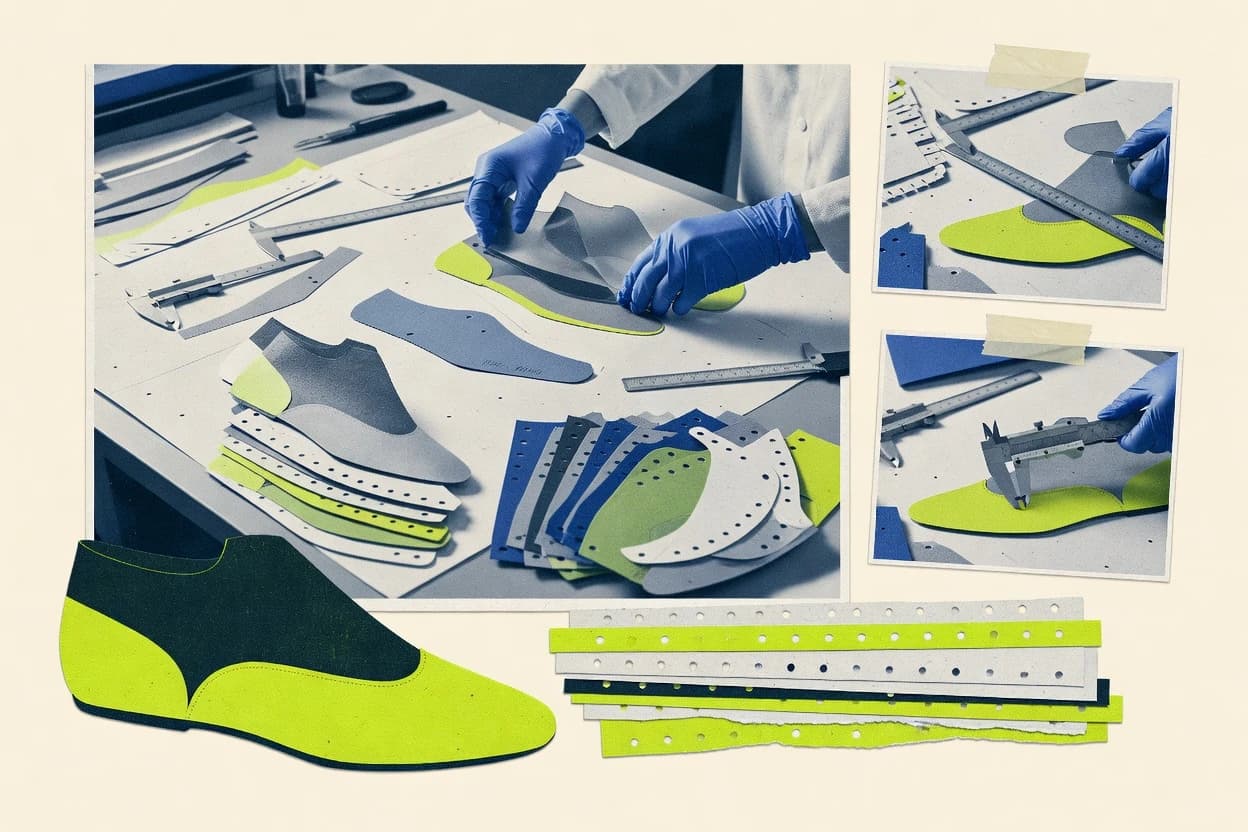
GITNUXSOFTWARE ADVICE
Fashion ApparelTop 9 Best Shoe Pattern Grading Software of 2026
Ranked roundup of shoe pattern grading software for footwear CAD workflows, covering Gerber AccuMark, Optitex, CADS, plus MiriSys and Crispin 2D.

How we ranked these tools
Core product claims cross-referenced against official documentation, changelogs, and independent technical reviews.
Analyzed video reviews and hundreds of written evaluations to capture real-world user experiences with each tool.
AI persona simulations modeled how different user types would experience each tool across common use cases and workflows.
Final rankings reviewed and approved by our editorial team with authority to override AI-generated scores based on domain expertise.
Score: Features 40% · Ease 30% · Value 30%
Gitnux may earn a commission through links on this page — this does not influence rankings. Editorial policy
MiriSys FootwearCAD is the best choice for footwear teams that want consistent, repeatable grade generation across a size run from a maintained master pattern, whereas Crispin 2D Pattern Engineering fits if you must regenerate controlled 2D size sets from grade rules, and budget options like Crispin can work when you need an easier entry point.
Editor’s top 3 picks
Three quick recommendations before you dive into the full comparison below — each one leads on a different dimension.
MiriSys FootwearCAD
Configurable grading rule behavior applies consistently across pattern pieces to regenerate graded sets after master edits.
Built for fits when footwear teams need consistent, repeatable grade generation across a size run from maintained master patterns..
Crispin 2D Pattern Engineering
Editor pickRule-chart driven grading regenerates complete size runs from a master while applying controlled grade behavior at grading points.
Built for fits when footwear teams must regenerate consistent 2D size sets from controlled grade rules..
MindCAD 2D for Footwear
Editor pickFootwear grading rules are applied directly within the 2D pattern workflow for controlled production pattern output.
Built for fits when footwear teams need rule-based grade generation and DXF handoff without custom integration..
Comparison Table
MiriSys FootwearCAD
SMBProfessional 2D construction and grading system for shoe and leather goods manufacturers.
Configurable grading rule behavior applies consistently across pattern pieces to regenerate graded sets after master edits.
MiriSys FootwearCAD focuses on rule-driven grading and repeatable pattern regeneration when design changes land on a master. The workflow centers on defining grading rule behavior and applying it across a graded size range for consistent proportional results. Export-oriented outputs help teams pass graded patterns into downstream processes without rebuilding patterns manually for each size.
A tradeoff is that complex anatomical workflows still require disciplined point placement and rule chart maintenance to avoid inconsistent outcomes between parts. MiriSys FootwearCAD fits best when a team wants dependable size run generation from maintained master patterns, not ad hoc manual resizing for one-off samples.
- +Rule-driven grading keeps master pattern edits consistent across sizes
- +Nested layout output supports multi-size production planning workflows
- +Pattern piece management reduces rework when parts change
- +Export-oriented pipeline supports downstream CAD and manufacturing steps
- –Requires careful rule chart and point placement discipline
- –Anatomical-grade refinement can take time for dense pattern sets
- –Automation depends on maintaining accurate grading configuration
- –Complex multi-family variants may need process standardization
Footwear product development
Regenerate graded patterns after design updates
Fewer rework cycles across sizes
Pattern makers
Maintain standard rules for size runs
More stable grading results
Show 2 more scenarios
Operations planning teams
Prepare nested layouts for production
Cleaner handoff to production
Nested layout output supports planning of multiple sizes in a single workflow pass.
CAD coordinators
Reduce manual export for each size
Lower manual throughput time
Export-oriented workflows package graded patterns for downstream consumption without rebuilding per size.
Best for: Fits when footwear teams need consistent, repeatable grade generation across a size run from maintained master patterns.
Crispin 2D Pattern Engineering
vertical specialist2D footwear pattern creation and automatic grading module within the Crispin CAD/CAM suite.
Rule-chart driven grading regenerates complete size runs from a master while applying controlled grade behavior at grading points.
Crispin 2D Pattern Engineering centers grading logic around configurable rule charts and measurable grading points, so grade behavior stays consistent across a size range table. The workflow is built for turning a base size master pattern into a graded set that can be laid out for production with predictable increments. Export formats and downstream CAD usage matter because graded geometry is often transferred into cutter planning and manufacturing preparation. Teams that already maintain grading rules in controlled charts tend to map their process directly into Crispin’s rule-driven model.
A key tradeoff is that Crispin emphasizes 2D grading workflows more than free-form CAD modeling, so significant pattern creation and editing still depends on an upstream CAD process. It fits best when the master pattern and grading point set already exist, and the main bottleneck is generating accurate size runs on schedule. A common usage situation is rolling out updated grading increments or rule changes and regenerating an entire size set without manually editing each size.
- +Rule-chart grading keeps increment behavior consistent across size runs.
- +Measurable grading point controls support repeatable proportional adjustments.
- +2D workflow aligns with footwear pattern piece regeneration needs.
- +Exported graded geometry supports downstream production planning.
- –Less suited for complex pattern creation and free-form CAD editing.
- –Achieving stable results depends on disciplined grading point setup.
Footwear pattern techs
Regenerate size sets from updated master
Fewer manual edits.
Footwear CAD coordinators
Standardize grading across lines
More uniform size output.
Show 1 more scenario
Production planning teams
Create cutter-ready graded pattern layouts
Faster pre-production turnover.
Graded 2D pattern sets support downstream planning that relies on predictable geometry per size run.
Best for: Fits when footwear teams must regenerate consistent 2D size sets from controlled grade rules.
MindCAD 2D for Footwear
vertical specialist2D footwear pattern design, engineering, and grading software with French, English, and American scale support.
Footwear grading rules are applied directly within the 2D pattern workflow for controlled production pattern output.
MindCAD 2D for Footwear is designed for footwear pattern grading tasks where a master pattern and its pattern pieces drive the graded production patterns. Grading is rule-based, and grade increments can be applied across the required size range to generate consistent outputs for upper, lining, and related pattern sets. DXF export supports handoff to plotting and CAD/CAM workflows without requiring a separate conversion pipeline.
A key tradeoff is that automation depth is more centered on the grading and nesting pipeline than on broad integration surfaces. It fits teams that need reliable internal grade generation and DXF-based handoff for cutting rooms, especially when grading rules are maintained by the same designers who build the master patterns.
- +Rule-driven grading tied to the master pattern workflow
- +Generates production patterns across defined size runs consistently
- +DXF export supports direct handoff to cutting and plotting tools
- +Footwear-focused 2D pattern layout keeps related pieces together
- –Limited evidence of deep API-based automation for external systems
- –Best results require disciplined grading rule maintenance
Footwear pattern designers
Maintain grading rules across releases
Fewer rework cycles
Operations for small cut rooms
Standardize outputs in DXF
More predictable production starts
Show 1 more scenario
Technical design teams
Manage multiple pattern sets
Better internal consistency
Teams grade sets of upper and lining pieces using a shared master-driven workflow.
Best for: Fits when footwear teams need rule-based grade generation and DXF handoff without custom integration.
Ariatech ShoeDesign
vertical specialistCAD software for shoe pattern design and grading.
Configuration-driven grade increment and size-range control keeps graded outputs consistent across pattern pieces.
Ariatech ShoeDesign targets 2D footwear CAD workflows that need consistent grading from master patterns into production pattern size runs. It focuses on grading rule execution and repeatable generation of graded pattern pieces for uppers, linings, and related components.
The workflow supports exporting pattern outputs for downstream manufacturing, including DXF-based handoff used in many footwear CAD ecosystems. Teams use its configuration to keep grade increments and size range handling consistent across projects.
- +Grading rule execution supports repeatable production pattern size runs
- +DXF export supports common downstream CAD and CAM handoff
- +Config-driven grade increments and size range handling reduce drift
- +Works directly inside a footwear CAD pattern workflow with fewer round-trips
- –Automation surface for batch processing across multiple styles is limited
- –Integration depth with CAD systems beyond its native workflow can require conversion steps
Best for: Fits when footwear teams need consistent 2D grading and reliable DXF handoff across multiple size runs.
CRISPIN (Dassault Systèmes)
enterpriseFootwear-specific CAD solution for pattern making and grading.
CRISPIN’s grading rule environment ties grade moves to defined measurement point logic for anatomical proportional results.
CRISPIN (Dassault Systèmes) performs 2D shoe pattern grading by applying grading rules to master patterns and generating production-ready size runs for multiple pattern types. It is distinct for its fit-to-spec approach to anatomical grading through a rule-driven grading environment designed around footwear pattern points.
CRISPIN also supports interoperability workflows needed in footwear CAD, including DXF export and common CAD handoff patterns from manufacturing design. It fits organizations that need consistent grade logic across repeated style cycles while coordinating with other Dassault Systèmes footwear tooling.
- +Rule-driven grading that keeps increment logic consistent across sizes
- +Supports multiple pattern pieces in a coordinated grading run
- +DXF export for downstream CAD and manufacturing handoff
- +Fits anatomical grading workflows tied to defined measurement points
- –Grade-rule maintenance requires careful setup and governance discipline
- –Workflow setup can feel complex for teams without footwear pattern automation experience
- –Integration breadth depends on how the rest of the CAD stack is organized
- –Advanced automation needs tight process definition to avoid rework
Best for: Fits when footwear teams need rule-consistent grading outputs integrated with a CAD-to-manufacturing workflow.
Optitex
SMB2D and 3D pattern design and grading software for apparel and footwear.
Point-of-measure grading workflow that applies proportional movement consistently across multiple pattern pieces.
Optitex is a footwear pattern grading and CAD toolset focused on turning master patterns into consistent size runs for production workflows. Core capabilities include 2D pattern grading driven by grading rules, point-of-measure definitions, and repeatable increments across a graded size range.
It also supports nested pattern layout and export-oriented handoff formats used in footwear CAD processes. Optitex fits teams that need controlled grading behavior across multiple pattern pieces for uppers and related components.
- +Rule-based grading behavior supports consistent anatomical scaling
- +Point-of-measure driven grading improves repeatability across size runs
- +Nested pattern layouts help reduce material waste for production cutting
- +Footwear-oriented workflow mapping reduces rework between pattern stages
- –Higher model setup effort is required before grading runs stay stable
- –Automation depth depends on workflow design rather than built-in batch orchestration
- –Interoperability with non-Optitex footwear CAD flows can add transformation steps
- –Complex multi-component grading can increase model management overhead
Best for: Fits when footwear teams must maintain tightly controlled grading rules across size runs.
TUKA3D
SMBPattern design, grading, and 3D visualization software.
Web-driven grading rule configuration that produces finalized pattern sets for CAD handoff without local tooling steps.
TUKA3D from tukaweb.com focuses on automating 2D grading workflows for footwear pattern sets, with emphasis on rule-driven size creation. It supports size run planning around a master pattern workflow and outputs grading results suitable for downstream CAD steps.
The key differentiator versus CAD-integrated grading tools is the web-delivered control surface for defining grading behavior and producing finished pattern files. Core work centers on applying grading rules across pattern pieces and exporting results in formats used by footwear CAD pipelines.
- +Rule-driven grading workflow designed around a master pattern lifecycle
- +Web-based operations reduce local install friction for daily grading tasks
- +Designed for consistent application across multiple pattern pieces
- +Exports grading outputs for handoff into footwear CAD processes
- –Advanced anatomical grading setups can require careful rule mapping
- –Complex nested layout and fine control can be limited versus CAD-native graders
Best for: Fits when footwear teams need rule-based grading automation and predictable handoff into CAD workflows.
Romans CAD 2D
vertical specialist2D footwear pattern creation and grading software with multi-size and multi-width grading capabilities.
Pattern regeneration that keeps grading logic tied to grading points, so updates propagate consistently across the size run.
Romans CAD 2D is a footwear CAD and grading workflow tool focused on 2D pattern development and size scaling from a master pattern. It supports rule-based grading behaviors tied to grading points and increments, then outputs production-ready patterns and exports commonly used in downstream CAD and plotter workflows.
The grading process is designed around repeatable configuration so teams can regenerate size runs when base patterns change. File interoperability relies on standard CAD exchanges like DXF export rather than a single closed pipeline.
- +Rule-driven grading built around grading points and increments
- +DXF export supports common CAD and manufacturing handoff
- +Regenerates size runs from updated master patterns
- +2D workflow keeps pattern editing focused on footwear pieces
- –Automation surface is limited compared with tools that expose APIs
- –Advanced multi-size nesting and layout controls feel less granular
- –Rule chart management can become complex with large size tables
- –Fewer built-in footwear-specific production checks than category leaders
Best for: Fits when teams need repeatable 2D grading from a master pattern with DXF handoff to downstream CAD workflows.
Icad Evolve
vertical specialistIntegrated 2D and 3D footwear creation software with size grading systems and pattern engineering.
Rule set configuration for grading point behavior makes proportional grading changes easier to apply across a whole size run.
Icad Evolve performs 2D grading workflows for footwear patterns by applying grading rules across a size run. It focuses on rule-driven grading execution with tools for managing grade increments and producing production-ready pattern outputs.
Workflow control is centered on configuration of grading sets and generation of graded pattern pieces for downstream CAD and cut planning. Integration coverage is mainly oriented around data exchange via common footwear pattern file workflows used in CAD environments.
- +Rule-driven grading execution supports repeatable 2D size runs
- +Graded pattern output keeps piece-level control for footwear workflows
- +Configuration-based approach reduces manual point adjustment per size
- +Works with common downstream CAD handoff expectations
- –Workflow setup requires disciplined configuration of grade rules
- –Automation depth for batch governance across many styles is limited
- –Fewer integration touchpoints than tools built around native CAD interoperability
- –Debugging grading errors can take time when point-of-measure coverage is inconsistent
Best for: Fits when teams need consistent 2D grading rule execution and controlled pattern piece output for production workflows.
Conclusion
After evaluating 9 fashion apparel, MiriSys FootwearCAD stands out as our overall top pick — it scored highest across our combined criteria of features, ease of use, and value, which is why it sits at #1 in the rankings above.
Use the comparison table and detailed reviews above to validate the fit against your own requirements before committing to a tool.
How to Choose the Right shoe pattern grading software
Footwear teams use shoe pattern grading software to regenerate production patterns from a master pattern across a defined size run using controlled grading rule behavior. This buyer’s guide covers MiriSys FootwearCAD, Crispin 2D Pattern Engineering, Optitex, Ariatech ShoeDesign, and other tools used in 2D grading workflows and DXF handoff.
The tools covered here differ most in how they attach grade moves to grading points and measurement logic, and in how they support repeated regeneration after master edits. The strongest fit depends on whether grade rule behavior stays consistent across pattern pieces, or whether the workflow prioritizes a point-of-measure scaling approach for anatomical proportional results.
Shoe pattern grading software for regenerating 2D size runs from footwear master patterns
Shoe pattern grading software automates 2D shoe pattern grading by applying grade rules tied to a master pattern, grading points, and grade increment behavior to produce complete size sets for upper, lining, outsole, and insole-related pattern pieces. The grading engine determines whether rule-driven regeneration stays consistent when the master pattern changes, and whether grade moves propagate cleanly across coordinated pattern pieces.
MiriSys FootwearCAD emphasizes configurable grading rule behavior that applies consistently across pattern pieces to regenerate graded sets after master edits. Crispin 2D Pattern Engineering focuses on rule-chart driven grading that regenerates complete size runs from a master using controlled grading behavior at grading points for repeatable proportional adjustments.
Core grading and regeneration capabilities for footwear CAD workflows
Stable shoe pattern grading depends on how grade moves attach to grading points and measurement logic so that regenerated production patterns match the master after edits. The tools below differ most in whether the grading rule behavior stays consistent across pattern pieces or whether proportional movement is driven from a point-of-measure workflow.
Teams also need predictable output for downstream CAD and manufacturing handoff because size nesting and DXF export often become the bottleneck when grade runs cover a full size run. The feature set below highlights rule-chart regeneration, point-of-measure consistency, and DXF handoff readiness across the covered graders.
Rule-chart or rule-engine regeneration from a master pattern
Crispin 2D Pattern Engineering regenerates complete size runs from a master using rule-chart behavior at grading points for controlled proportional adjustments. MiriSys FootwearCAD emphasizes configurable grading rule behavior that applies consistently across pattern pieces when regenerating graded sets after master edits.
Grading point precision and repeatable increment behavior
Crispin supports measurable grading point controls that drive repeatable proportional adjustments across a size run. Optitex uses a point-of-measure workflow that applies proportional movement consistently across multiple pattern pieces to keep grade behavior stable.
Consistency of grading across coordinated pattern pieces
MiriSys FootwearCAD keeps grading rule behavior consistent across multiple pattern pieces so master edits propagate cleanly across the whole graded set. CRISPIN ties grading rule environment moves to defined measurement point logic for anatomically proportional results across coordinated grading runs.
Production-oriented 2D workflow with direct DXF handoff
MindCAD 2D for Footwear applies footwear grading rules directly inside the 2D pattern workflow and targets DXF handoff for production pattern output. Ariatech ShoeDesign supports consistent 2D grading and DXF export for reliable downstream handoff across multiple size runs.
Size-run configuration and grade increment control
Ariatech ShoeDesign uses configuration-driven grade increment and size-range control to keep graded outputs consistent across pattern pieces. Romans CAD 2D anchors pattern regeneration to grading points and increments so update propagation stays consistent across the size run.
Operational workflow model for daily grading tasks
TUKA3D uses web-driven grading rule configuration to produce finalized pattern sets for CAD handoff without local tooling steps. Ariatech and Romans CAD 2D keep the grading logic tied to configured rules and grading points within their 2D workflows for predictable output generation.
Choose a grading engine by regeneration consistency and automation surface
First determine whether grade moves must remain consistent across many pattern pieces after master edits, because tools like MiriSys FootwearCAD and CRISPIN are built around coordinated rule behavior and measurement point logic. If regeneration stability across pattern sets is the main priority, then grade-engine consistency becomes the deciding axis.
Next select the workflow philosophy for how grading rules are authored and executed, because some tools prioritize rule-chart driven regeneration at grading points while others prioritize point-of-measure scaling tied to a grading workflow model. Automation and integration depth matter when multiple styles require batch governance, but the category cards show limited API visibility for several options.
Map master edits to whole-size regeneration behavior
Pick MiriSys FootwearCAD when master edits must regenerate graded sets consistently because it emphasizes configurable grading rule behavior applied across pattern pieces. Pick CRISPIN when measurement point logic drives anatomically proportional grade moves across a coordinated grading run.
Choose rule authoring style based on how control is enforced
Choose Crispin 2D Pattern Engineering when rule-chart driven grading must regenerate complete size runs from a master with controlled behavior at grading points. Choose Optitex when grading point scaling must follow a point-of-measure workflow to maintain proportional movement repeatability across multiple pattern pieces.
Decide how grading rules live inside the 2D workflow
Choose MindCAD 2D for Footwear when grading rules must be applied directly within the 2D pattern workflow for controlled production pattern output and DXF handoff. Choose Ariatech ShoeDesign when configuration-driven grade increment and size-range control must stay reliable across multiple size runs with DXF export.
Set expectations for automation depth across many styles
Choose tools with clear batch automation surfaces if workflows span multiple styles, since MiriSys FootwearCAD and Crispin focus on consistent regeneration rather than exposing deep API-based automation in the cards. Choose TUKA3D when daily grading rule configuration should happen through web-driven operations to reduce local install friction for day-to-day grading tasks.
Validate grading-point setup capacity before committing to dense size sets
If the team expects complex pattern sets and dense pattern piece coverage, account for MiriSys FootwearCAD’s note that anatomical-grade refinement can take time for dense pattern sets. If the workflow depends on tight governance of grading point setup, account for Crispin’s note that stable results depend on disciplined grading point setup.
Who benefits from these shoe pattern grading tools
Footwear teams need grading software that regenerates a complete size run from a master pattern while keeping grade increments consistent at grading points and measurement logic. The best fit depends on whether production pattern output must remain stable after master edits and whether CAD handoff relies on DXF export from the same grading workflow.
Teams also differ by workflow delivery model, since some graders emphasize local daily tooling and rule authoring while others move grading rule configuration into web-driven operations.
Footwear pattern teams running repeated grade regeneration after master edits
MiriSys FootwearCAD is built around configurable grading rule behavior that applies consistently across pattern pieces when regenerating graded sets after master edits. CRISPIN also targets coordinated grading runs by tying grade moves to measurement point logic for anatomically proportional results.
Teams standardizing 2D size sets from controlled grading rule charts
Crispin 2D Pattern Engineering regenerates complete size runs from a master using rule-chart driven grading at grading points. Ariatech ShoeDesign supports configuration-driven grade increment and size-range control for consistent graded outputs across pattern pieces.
Workflow teams that need rule-based DXF handoff without custom integration work
MindCAD 2D for Footwear generates production patterns across defined size runs and targets DXF handoff without requiring external system automation in the cards. Ariatech ShoeDesign also provides DXF export for common downstream CAD and CAM handoff across multiple size runs.
Teams prioritizing point-of-measure proportional scaling across multiple pattern pieces
Optitex uses a point-of-measure grading workflow that applies proportional movement consistently across multiple pattern pieces. MiriSys FootwearCAD can also support consistent rule-driven regeneration across pattern pieces, but Optitex is the more explicit point-of-measure workflow choice in the cards.
Organizations using remote or browser-based grading rule configuration for daily output
TUKA3D focuses on web-driven grading rule configuration that produces finalized pattern sets for CAD handoff without local tooling steps. This model fits teams that want rule configuration and pattern set output managed through web operations.
Common grading mistakes that derail size-run consistency
Most grading failures come from inconsistent rule-point placement or from mismatched expectations about how grade logic propagates across pattern pieces after edits. Several tools in the list explicitly tie stable results to disciplined grading point setup, so setup hygiene becomes a core risk.
Another frequent failure is treating automation depth as a given, because several tools prioritize rule-driven regeneration inside their native workflow and provide limited evidence of deep API-based orchestration for batch governance across many styles.
Treating grading-point setup as a one-time setup instead of a governed asset
Crispin 2D Pattern Engineering notes that achieving stable results depends on disciplined grading point setup. MiriSys FootwearCAD similarly flags that rule chart and point placement discipline is required to keep regeneration consistent.
Assuming anatomical proportional results will remain stable when grade rules are not applied across all coordinated pieces
MiriSys FootwearCAD targets consistent behavior across pattern pieces, but anatomical-grade refinement can take time for dense pattern sets. CRISPIN’s grading-rule maintenance requires careful setup and governance discipline to keep the measurement point logic producing consistent outcomes.
Expecting deep external automation when the workflow is mainly native to 2D grading and DXF handoff
MindCAD 2D for Footwear shows limited evidence of deep API-based automation for external systems while emphasizing rule-driven grading inside the 2D pattern workflow. Ariatech ShoeDesign calls out limited automation surface for batch processing across multiple styles beyond its native workflow.
Overfitting a point-of-measure workflow without planning for higher model setup effort
Optitex states that higher model setup effort is required before grading runs stay stable. This impacts throughput when the team needs to iterate master patterns frequently across a full size run.
How We Selected and Ranked These Tools
We evaluated MiriSys FootwearCAD, Crispin 2D Pattern Engineering, Optitex, Ariatech ShoeDesign, and the remaining listed tools using feature depth and execution clarity for rule-driven 2D size-run regeneration. Features accounted for 40% of the weighting based on repeatable regeneration from a master, grading point behavior control, and support for production DXF handoff workflows called out in the tool cards.
Ease of use and value each accounted for 30% based on how directly grading rules are applied in the workflow and how much setup discipline is required for stable outputs. MiriSys FootwearCAD separated itself by keeping configurable grading rule behavior consistent across pattern pieces so master edits regenerate graded sets reliably across a defined size run.
Frequently Asked Questions About shoe pattern grading software
How do MiriSys FootwearCAD and Crispin 2D Pattern Engineering apply grade rules across a full size run?
When does MindCAD 2D for Footwear work better than an external batch grading workflow?
What breaks if grade increments change mid-project in Optitex versus Ariatech ShoeDesign?
Which tool offers a web control surface for grading rule setup and finished pattern handoff?
How do Optitex and CRISPIN compare on point-of-measure control for anatomical proportional grading?
What integration path works best for DXF export in Romans CAD 2D and MiriSys FootwearCAD?
Which workflow is better for keeping grading logic tied to grading points during regeneration: Icad Evolve or Crispin (Dassault Systèmes)?
How should teams migrate an existing master pattern dataset when moving to nested pattern layout output in MiriSys FootwearCAD and Optitex?
What security and admin controls are typically required around grading automation in tools like TUKA3D and MindCAD 2D for Footwear?
Tools reviewed
Primary sources checked during evaluation.
Referenced in the comparison table and product reviews above.
- Fashion ApparelTop 10 Best Shoe Making Software of 2026
- Art DesignTop 10 Best Pattern Grading Software of 2026
- Fashion And ApparelTop 10 Best Dress Pattern Design Software of 2026
- Fashion And ApparelTop 10 Best Clothing Pattern Services of 2026
- Fashion And ApparelTop 10 Best Apparel Design Services of 2026
Keep exploring
Comparing two specific tools?
Software Alternatives
See head-to-head software comparisons with feature breakdowns, pricing, and our recommendation for each use case.
Explore software alternatives→In this category
Fashion Apparel alternatives
See side-by-side comparisons of fashion apparel tools and pick the right one for your stack.
Compare fashion apparel tools→