
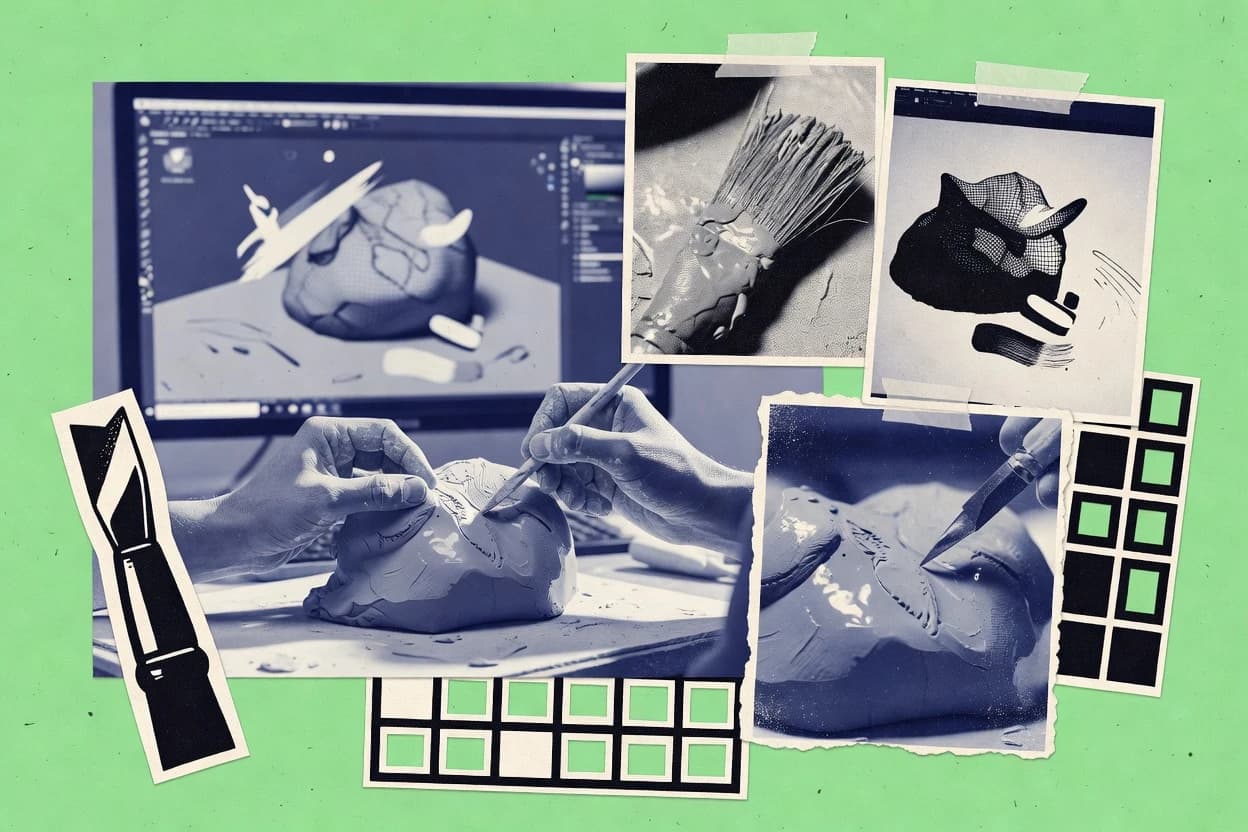
GITNUXSOFTWARE ADVICE
Art DesignTop 10 Best Sculpting 3D Software of 2026
Top 10 sculpting 3d software roundup with ranked strengths and tradeoffs for Blender, ZBrush, Maya, plus Cinema 4D, MagicaVoxel, Houdini.

How we ranked these tools
Core product claims cross-referenced against official documentation, changelogs, and independent technical reviews.
Analyzed video reviews and hundreds of written evaluations to capture real-world user experiences with each tool.
AI persona simulations modeled how different user types would experience each tool across common use cases and workflows.
Final rankings reviewed and approved by our editorial team with authority to override AI-generated scores based on domain expertise.
Score: Features 40% · Ease 30% · Value 30%
Gitnux may earn a commission through links on this page — this does not influence rankings. Editorial policy
Cinema 4D is the best fit for teams that need studio-ready sculpt detail to stay tied to the scene, materials, and baking, while MagicaVoxel is a strong alternative when you want fast voxel maquettes that export quickly for downstream retopology and bake passes.
Editor’s top 3 picks
Three quick recommendations before you dive into the full comparison below — each one leads on a different dimension.
Cinema 4D
Modifier-driven scene organization that keeps sculpt outputs linked to material, transforms, and production export steps.
Built for fits when teams need sculpt detail that stays connected to scene, materials, and baking..
MagicaVoxel
Editor pickLayer-based voxel scene editing with symmetry mirroring enables fast iteration on complex maquettes.
Built for fits when voxel maquettes must move from blockout to export quickly for downstream baking and retopology..
Houdini
Editor pickSculpting via procedural nodes that preserve editability across booleans, voxel remeshing, and projection detail transfer.
Built for fits when teams need repeatable procedural sculpting and high-to-low bake consistency..
Comparison Table
Cinema 4D
enterpriseProfessional 3D suite with a dedicated sculpting toolset offering brushes, stamps, stencils, and symmetry controls.
Modifier-driven scene organization that keeps sculpt outputs linked to material, transforms, and production export steps.
Cinema 4D’s sculpting experience centers on brush-based surface deformation, mask-based sculpt control, and symmetry workflows for repeatable detailing. Mesh handling supports common sculpt production steps like normal and ambient occlusion baking for high-to-low transfer and it can export interchange geometry for retopology and baking toolchains. Scene-based editing helps keep sculpted assets attached to materials, groups, and transform states rather than requiring a standalone sculpt file. For sculpt iteration, the modifier stack and non-destructive options can reduce the churn of reapplying detail after layout or material tweaks.
A key tradeoff is that Cinema 4D’s sculpt toolset is less specialized than ZBrush for extreme dynamesh-like topology reshaping and ultra-dense multi-resolution workflows. For teams that need fast shading iteration, consistent scene organization, and reliable handoff into rendering and baking workflows, Cinema 4D fits better than tool-first sculpt pipelines. For character and hard-surface hybrid work, the workflow works best when the mesh density plan is set early and when baking settings are tested against the target game or render resolution. If deep topology preservation during aggressive reshaping is the primary goal, the sculpt phase may demand external remeshing or topology cleanup steps.
- +Strong scene and material workflow around sculpt assets
- +Brush sculpting plus masking supports controlled detail passes
- +Reliable projection-style baking outputs for high-to-low workflows
- +Subdivision editing integrates well with production modeling steps
- –Extreme topology-remodeling workflows need external support
- –Some advanced sculpt controls lag behind dedicated sculpters
- –High-detail density can increase viewport and cache costs
- –Automation for custom sculpt brushes depends on add-ons and scripts
Character artists for rendering
Detail maquettes then bake for assets
Faster iteration between sculpt and lookdev
Motion design modelers
Sculpt forms for animated scenes
Less asset relinking across scenes
Show 2 more scenarios
Environment artists
Bake high-detail surfaces for props
Lower poly counts with preserved detail
High-to-low baking supports consistent surface detail transfer for repeated asset use.
Indie pipelines
Hand off geometry to external tools
Cleaner cross-tool asset handoff
Interchange export supports sending sculpt geometry into retopology and bake pipelines when needed.
Best for: Fits when teams need sculpt detail that stays connected to scene, materials, and baking.
MagicaVoxel
vertical specialistVoxel art editor with sculpting-like build and erase tools for low-resolution 3D creation.
Layer-based voxel scene editing with symmetry mirroring enables fast iteration on complex maquettes.
MagicaVoxel provides a 3D workspace built around placing and editing voxels with brush modes, symmetry mirroring, and masking-like workflows through layer organization. Core capabilities include multi-resolution sculpting of voxel geometry, layer-based sculpting using named layers, and high-poly baking paths via mesh conversion for downstream normal map baking. Export includes OBJ and FBX so external tools can run retopology, UV unwrapping, and normal map baking for a high-to-low poly workflow.
A clear tradeoff is that MagicaVoxel does not target topology preservation or quad-drawing for manual edge flow, so it cannot replace retopology-first modeling in Blender or Maya. MagicaVoxel fits when voxel maquettes need quick iteration for maquette sculpting, then a separate pipeline handles texture painting, UDIM UVs, and final mesh preparation.
- +Real-time matcap shading keeps voxel form readable while sculpting
- +Layer-based editing makes large scenes manageable during iterations
- +Symmetry mirroring reduces manual work on character-like silhouettes
- +OBJ and FBX export supports common downstream bake workflows
- –Topology preservation and edge-flow control are not a sculpting priority
- –Advanced displacement and high-poly baking control depends on external tools
Character artists
Voxel creature maquette sculpting
Faster maquette revisions
Environment artists
Voxel set dressing exports
Higher iteration throughput
Show 2 more scenarios
Technical art teams
High-to-low bake handoff
Consistent asset handoff
Batches export OBJ or FBX meshes into baking tools for normal and ambient occlusion baking.
Indie modelers
Quick blockout to texture preview
Quicker visual validation
Modelers use matcap rendering for rapid look development and export for final texture painting.
Best for: Fits when voxel maquettes must move from blockout to export quickly for downstream baking and retopology.
Houdini
enterpriseProcedural 3D software with sculpting brushes for high-resolution geometry editing.
Sculpting via procedural nodes that preserve editability across booleans, voxel remeshing, and projection detail transfer.
Houdini’s sculpting stack is built around procedural graphs, so masking, booleans, and remeshing steps can be repeated or adjusted without destructive editing. Voxel remeshing supports organic reshaping from rough volumes, while dynamic subdivision and topology controls help retain detail during surface deformation. Projection-based workflows enable high-poly baking setups that transfer normals and displacement detail onto lower meshes. Layer-based sculpting is handled through multiple geometry branches and attribute-driven operations instead of fixed sculpting layers.
The tradeoff is that sculpting speed and tool accessibility depends on learning graph navigation, attribute flow, and data management in addition to brush usage. Houdini fits teams that need reusable sculpting pipelines, like maintaining consistent topology decisions across iterations and producing reliable high-to-low bake outputs for game assets. It also fits asset workflows where sculpting changes must propagate into later steps such as retopology guidance, LOD generation prep, or procedural material authoring. A common usage situation is building a sculpt graph that includes live booleans, voxel remesh stages, and detail projection for repeatable baking across character variations.
- +Procedural sculpt graphs keep booleans and remesh steps editable
- +Voxel remeshing accelerates early organic forms without manual retopo
- +Projection-based detail workflows support consistent high-to-low baking
- +Dynamic subdivision helps preserve micro-detail under deformation
- –Graph-based workflow adds friction for brush-first sculpt habits
- –Sculpt tool ergonomics lag dedicated sculpting apps for rapid clay work
- –Advanced workflows require careful attribute and topology management
- –Retopology and edge-flow cleanup still often needs dedicated passes
Technical character artists
Maintain bake-ready sculpts across variants
Consistent normals and displacement bakes
Environment art teams
Prototype forms with editable boolean stages
Faster iteration cycles
Show 2 more scenarios
Studios building pipelines
Automate sculpt-to-asset handoff
Predictable asset outputs
Procedural attribute workflows make it easier to standardize density decisions and export prep steps.
Simulation-driven production
Blend sculpting with simulation geometry
Fewer re-import steps
Geometry stays in a format compatible with simulation steps, so sculpt changes can propagate into downstream behavior.
Best for: Fits when teams need repeatable procedural sculpting and high-to-low bake consistency.
Nomad Sculpt
vertical specialistMobile and desktop sculpting application optimized for touch and stylus input.
Voxel remeshing designed for uninterrupted sculpting, letting topology adapt during active form changes.
Nomad Sculpt focuses on fast brush-based sculpting with a mobile-first design and a workflow tuned for multi-resolution detail. It supports live surface subdivision, voxel-based remeshing, and dynamic topological changes during active sculpting.
Export paths cover common high-poly and baking handoff formats like OBJ and FBX, with project files that preserve sculpt layers and masks. For artists who need continuous iteration, it emphasizes reliable symmetry tools, masking, and non-destructive layer editing over scene-level asset management.
- +Layer-based sculpting supports masks and iterative refinement
- +Voxel remeshing keeps topology manageable during major silhouette changes
- +Live subdivision improves preview density without breaking the sculpt flow
- +Symmetry tools and radial symmetry accelerate character and creature blocking
- –Limited hard-surface toolset compared with dedicated CAD or DCC modelers
- –Automation and API surface for pipeline integration is not a core focus
Best for: Fits when a team needs fast on-device sculpt iterations and clean export for a later retopology and bake pass.
SculptGL
emergingBrowser-based WebGL sculpting application with dynamic topology.
Interactive GPU sculpting with strong symmetry and mask tooling for fast, iterative organic form edits.
SculptGL performs real-time mesh sculpting on the GPU with live viewport feedback while editing vertices directly. It supports core workflows such as symmetry, masking, and multi-resolution sculpting, plus common export paths like OBJ for handing meshes to downstream tools.
Brush behavior covers common deformation needs such as smoothing, inflating, pinching, and clay-style building for organic forms. Boolean operations and high-to-low baking workflows are limited compared with full production sculpt suites.
- +GPU-driven sculpting keeps brush feedback responsive on dense meshes
- +Symmetry modes reduce manual rework on bilateral organic forms
- +Mask-based sculpt isolation supports targeted cleanup and refinement
- +Live subdivision and smoothing enable quick multi-resolution passes
- –Boolean operations are not production-grade compared with dedicated sculpt packages
- –Texture baking and PBR material preview are not deep enough for full pipelines
- –Retopology and quad-drawing tooling is minimal for structured topology needs
- –No extensible API surface limits automation and studio integration
Best for: Fits when quick organic maquettes and practice sculpting need fast viewport iteration without a heavy production pipeline.
Gravity Sketch
vertical specialistVR-based 3D modeling and sculpting application for intuitive spatial creation.
VR sculpting with stroke-driven brush control for rapid form iteration and live mask-based refinement.
Gravity Sketch targets sculpting workflows where sketching in 3D matters as much as mesh refinement. It emphasizes VR-first sculpting with brush tools, multi-resolution surface handling, and strong masking and symmetry controls for iterative forms.
The workflow supports projecting detail from reference geometry and exporting assets for a later retopology and bake pass. Scene assembly stays organized around sculpting layers and object grouping for handoff to downstream tools.
- +VR sketch-to-form workflow accelerates early maquette sculpting
- +Symmetry and masking controls support fast refinement of complex shapes
- +Projection-based detailing helps migrate surface features for bakes
- +Layered organization keeps large multi-part sculpts manageable
- –Topology editing for dynamesh-style remeshing is not its primary strength
- –Advanced UV unwrapping and bake configuration are limited versus dedicated pipelines
- –High-density detail management can feel workflow-dependent at extreme polycounts
- –Texturing and shader authoring depth trails DCC tools aimed at full material pipelines
Best for: Fits when teams need VR-first sculpting for concept and formfinding, then hand off for retopology and baking.
SelfCAD
SMBBrowser-based 3D modeling suite with sculpting brushes, deformation tools, and boolean operations.
Inline high-to-low workflow support centers on baking and export from sculpting projects.
SelfCAD focuses on browser-based sculpting workflows that mix sculpting and basic asset prep inside a single session. It supports multi-resolution sculpting with voxel remeshing style editing, plus displacement mapping output and common high-to-low poly handoff steps like normal map baking.
Mesh editing includes masking, symmetry mirroring, and layer-based sculpting controls aimed at character and maquette style iteration. Compared with desktop DCC sculpting suites, the main differentiator is tight format handoff through OBJ import and export tools that fit web-first creation cycles.
- +Web-first sculpting keeps iteration inside the browser
- +Voxel remeshing workflows fit blockout to detail passes
- +Masking and symmetry mirroring support controlled sculpting
- +Normal map baking supports common high-to-low workflows
- –Limited deep control for topology preservation compared with desktop sculpting
- –Advanced retopology and edge flow tooling are not the strongest focus
Best for: Fits when rapid sculpt iterations need quick mesh baking and export without leaving the browser.
Curvy 3D
vertical specialistDedicated 3D sculpting and sketching application for rapid organic form creation.
Curve-driven brush shaping combined with continuous dynamesh-style topology lets forms evolve without frequent remeshing steps.
Curvy 3D targets sculpting workflows inside a dedicated 3D editor with curve-based brushes and surface deformation tools focused on fast organic iteration. The toolset emphasizes dynamesh topology behavior for continual reshaping, masking for constraint-based editing, and symmetry tools for consistent character and creature forms.
Export workflows cover common handoff formats for downstream retopology and baking passes, including FBX and OBJ. Interactive viewport controls center on stroke behavior, brush falloff, and real-time surface feedback during multi-resolution sculpting.
- +Curve-based brush control supports clean silhouette shaping and form refinement
- +Symmetry and mirroring tools reduce rework during multi-view sculpting
- +Masking tools help preserve regions while pushing or smoothing surrounding forms
- +Multi-resolution sculpting supports quick macro edits and later micro-detail passes
- –Boolean operations and dynamesh results can require manual cleanup for clean topology
- –Retopology and edge flow control are limited compared with dedicated mesh modeling suites
- –High-poly baking workflows depend on mesh and UV readiness outside the sculpt session
- –Layer-based sculpting controls can feel less granular than major DCC sculpting tools
Best for: Fits when artists need fast organic sculpt iteration with symmetry and masking before retopology and baking.
Adobe Substance 3D Modeler
enterpriseA desktop and virtual reality modeling tool with clay-based sculpting workflows.
PBR material preview integrated into the sculpting workflow, so material look informs surface shaping.
Adobe Substance 3D Modeler creates sculpted meshes with brush-driven deformation, then converts that sculpt into workflow-ready geometry. It centers on a sculpting-to-texturing pipeline that includes PBR material preview and texture authoring for export-ready assets.
The core modeling loop supports masking, layer-based sculpting workflows, and subdivision-friendly surface detail for organic forms. Export options focus on delivering mesh and texture outputs for downstream baking, retopology, and asset handoff.
- +Material preview stays tied to sculpt iterations for faster visual judgment
- +Layer-based sculpt workflow supports non-destructive refinement passes
- +Masking tools speed up localized detail work without full remeshing
- +Export workflow fits high-to-low poly pipelines for downstream baking
- –Fewer advanced sculpt topology tools than ZBrush-focused workflows
- –Boolean and remeshing control can feel less granular than dedicated sculpting tools
- –Tool organization for large sub-asset projects is weaker than DCC-centric setups
- –Automation and API surface for pipeline integration is limited versus Blender scripting
Best for: Fits when material-authoring is part of the sculpting loop and artists need fast iteration.
Putty3D
vertical specialistA mobile 3D sculpting application for shaping digital clay with touch input.
Putty3D’s layer-based sculpting keeps earlier shape decisions editable while continuing to refine new detail.
Putty3D is a sculpting-focused 3D editor built around fast brush-based surface deformation workflows. It supports voxel-like remeshing behavior and artist-friendly detail layering so changes stay editable across sculpting passes.
The tool includes masking and symmetry controls to refine localized forms without losing global proportions. Export pipelines target common mesh and high-to-low baking steps used in character and asset handoff workflows.
- +Brush workflow keeps iteration fast for organic sculpt blocking and refinement
- +Masking and symmetry tools support repeatable edits across mirrored form regions
- +Detail layering supports non-destructive iteration across sculpt passes
- +Export-oriented pipeline fits typical bake and asset handoff stages
- –Retopology and edge-flow control are limited compared with DCC specialist tools
- –Hard-surface workflows are weaker than dedicated polygon modeling applications
- –Advanced baking customization for specialized cage setups can be constrained
- –Scene-level management options are thinner than full production DCC suites
Best for: Fits when sculpting teams need fast iteration for organic forms and later bake handoff for downstream tools.
Conclusion
After evaluating 10 art design, Cinema 4D stands out as our overall top pick — it scored highest across our combined criteria of features, ease of use, and value, which is why it sits at #1 in the rankings above.
Use the comparison table and detailed reviews above to validate the fit against your own requirements before committing to a tool.
How to Choose the Right sculpting 3d software
This buyer’s guide covers sculpting 3d software used to build high-poly organic forms, refine detail with masking and symmetry, and prepare assets for later retopology and bake workflows. The guide includes Blender, ZBrush, and Autodesk Maya along with Cinema 4D, Houdini, Nomad Sculpt, MagicaVoxel, Gravity Sketch, SculptGL, SelfCAD, Curvy 3D, Adobe Substance 3D Modeler, and Putty3D.
Each section is grounded in how the tools handle sculpting workflows that touch scene organization, iterative refinement, and high-to-low baking handoff. Cinema 4D is treated as the top pick for teams that need modifier-driven scene structure tied to sculpt outputs, materials, and export steps. Houdini is positioned around procedural editability across booleans and remeshing steps, while Nomad Sculpt is evaluated for fast voxel remeshing during uninterrupted sculpting.
Sculpting 3D software for high-poly organic detail and bake-ready handoff
Sculpting 3d software creates and deforms dense meshes with brush-based edits, then supports downstream preparation for retopology and high-to-low poly baking. Tools in this guide differ most in how they manage sculpt iteration, from Cinema 4D’s modifier-driven scene organization to Houdini’s procedural node graphs that keep booleans and voxel remeshing editable.
Many packages also emphasize symmetry and masking controls to constrain changes while preserving silhouette and micro-detail. For voxel-first pipelines, Nomad Sculpt focuses on voxel remeshing designed to continue topology adaptation during active form changes, while MagicaVoxel centers layer-based voxel editing to move blockouts quickly into export-oriented steps.
Sculpting 3D software features that control iteration speed
Sculpting 3d software succeeds when it keeps high-poly changes editable while preserving the path to retopology and high-to-low bake workflows. The tools in this guide separate that capability by scene organization, sculpt ergonomics, and how well masks and symmetry constrain rework.
Cinema 4D’s modifier-driven scene organization connects sculpt outputs to material and export steps. Houdini keeps booleans, voxel remeshing, and projection detail transfer editable through procedural node graphs, while Nomad Sculpt emphasizes uninterrupted voxel remeshing during active form changes.
Scene and export linkage for sculpt outputs
Cinema 4D supports modifier-driven scene organization that keeps sculpt outputs linked to materials and production export steps, so downstream baking setup stays consistent. Blender is covered in tool reviews for modeling-roundtrip use, while Cinema 4D narrows the gap between sculpt edits and export-ready scene state.
Procedural editability across booleans and remeshing
Houdini uses procedural nodes to preserve editability across boolean operations, voxel remeshing, and projection detail transfer for repeatable high-to-low bake consistency. Cinema 4D is stronger for scene-linked production flow, while Houdini is stronger for staying editable across non-destructive sculpt stages.
Voxel remeshing that supports uninterrupted form changes
Nomad Sculpt is built around voxel remeshing designed to continue topology adaptation during active sculpting so silhouette and major form changes stay fluid. MagicaVoxel offers layer-based voxel scene editing with symmetry mirroring, while Nomad Sculpt keeps the remeshing loop as the sculpting centerpiece.
Masking and symmetry controls that reduce manual rework
SculptGL focuses on GPU-driven sculpting with symmetry and mask tooling for fast iterative organic form edits. Putty3D also centers masking and symmetry so mirrored form regions get repeatable edits before the handoff to downstream tools.
Interactive workflow options for early maquettes
Gravity Sketch supports VR-first sculpting with stroke-driven brush control and live mask-based refinement for fast formfinding. MagicaVoxel fits teams that want voxel maquettes that move from blockout into export-oriented steps for later retopology and baking.
Material-aware sculpting for texture and PBR look decisions
Adobe Substance 3D Modeler integrates PBR material preview so material look informs surface shaping while the sculpt loop continues. Cinema 4D handles material-linked export flow, while Substance 3D Modeler focuses the decision loop on PBR preview rather than scene modifiers.
Choosing sculpting 3D software by iteration control and pipeline handoff
Selection should start with the sculpt iteration shape, because tools differ on whether edits stay editable through procedural graphs or through layer-based sculpt stacks. Teams that need deterministic high-to-low bake setups usually prioritize procedural editability, while teams doing rapid formfinding prioritize interactive remeshing and viewport feedback.
The second split is pipeline control depth. Cinema 4D favors modifier-driven scene organization that ties sculpt outputs to transforms and production export steps, while Houdini favors node graphs that keep booleans, voxel remeshing, and projection detail transfer editable across later changes.
Pick the sculpt iteration model: procedural graph versus direct sculpt loop
Choose Houdini when repeatable sculpt stages must remain editable across boolean operations and voxel remeshing through procedural node graphs. Choose Nomad Sculpt when uninterrupted voxel remeshing during active form changes matters more than preserving a procedural graph for later edits.
Match sculpt output organization to your scene workflow
Choose Cinema 4D when sculpt outputs must stay linked to materials and production export steps using modifier-driven scene organization. Choose SculptGL when speed of on-canvas iteration on dense meshes matters more than production-grade boolean operations and deep baking configuration.
Decide how you want topology handled during major silhouette changes
Choose Nomad Sculpt for voxel remeshing that keeps topology manageable during major silhouette changes without pausing for manual retopo mid-iteration. Choose MagicaVoxel when layer-based voxel scene editing and symmetry mirroring are the priority for blockout to export speed.
Plan where masking and symmetry will do the work
Choose SculptGL when symmetry and mask tooling must stay fast under GPU-driven brush feedback for iterative organic edits. Choose Putty3D when layer-based sculpting plus masking and symmetry support repeatable edits across mirrored form regions before the bake handoff.
Align early ideation needs with the sculpt environment
Choose Gravity Sketch when VR-first stroke control and live mask-based refinement are the fastest path to concept and formfinding. Choose SelfCAD when browser-first iteration should include quick mesh baking and export without leaving the web workflow.
Lock material decisions into the sculpt loop or defer them
Choose Adobe Substance 3D Modeler when PBR material preview must stay tied to sculpt iterations for faster surface shaping decisions. Choose Cinema 4D when the key constraint is keeping sculpt detail connected to material handling and export steps through scene modifiers.
Who should use this sculpting 3D software stack
Different tools suit different asset stages because they optimize distinct parts of the sculpt pipeline. Some focus on editable sculpt stage graphs, others focus on uninterrupted voxel form changes, and others focus on browser or VR iteration speed.
Cinema 4D targets production teams that need sculpt outputs connected to material and export steps. Houdini targets teams that need repeatable procedural sculpt stages for high-to-low bake consistency.
Asset production teams using a high-to-low bake workflow
Houdini supports procedural editability across booleans, voxel remeshing, and projection detail transfer to keep bake inputs consistent. Cinema 4D keeps sculpt outputs linked to materials and export steps through modifier-driven scene organization.
Artists iterating on organic maquettes with fast silhouette changes
Nomad Sculpt is designed around voxel remeshing that continues topology adaptation during active sculpting for uninterrupted form evolution. MagicaVoxel complements this with layer-based voxel editing and symmetry mirroring for fast blockout-to-export iterations.
Studios that need early ideation in VR or browser-first tools
Gravity Sketch accelerates early sculpting through VR-first stroke control and live mask-based refinement for concept and formfinding. SelfCAD keeps high-to-low baking and export inside a web-first sculpt iteration workflow.
Material-driven sculpting workflows that decide look during shaping
Adobe Substance 3D Modeler integrates PBR material preview directly into the sculpt workflow so material look guides surface shaping. Cinema 4D supports material linkage through scene modifiers for export-ready production setups.
Common sculpting 3D software pitfalls during production
Mistakes usually show up when tool choice does not match the required editability or baking constraints. Another common failure is assuming sculpting features like booleans, remeshing, or topology control provide production-grade results without toolchain support.
Several packages explicitly trade sculpt ergonomics for other priorities. SculptGL keeps GPU feedback fast but does not provide production-grade boolean operations and deep baking configuration, while Gravity Sketch focuses on VR formfinding and limits topology editing for dynamesh-style remeshing.
Using a fast sculpt viewport tool for production booleans without checking downstream bake needs
SculptGL’s boolean operations are not production-grade compared with dedicated sculpt packages. Plan a separate boolean and remesh stage in a more production-focused tool before committing to normal map baking outputs.
Assuming interactive remeshing equals editable procedural stages later
Nomad Sculpt emphasizes uninterrupted voxel remeshing for sculpting flow, while Houdini emphasizes procedural node graphs that preserve editability across booleans and remesh steps. Projects requiring re-runable sculpt stages should prioritize Houdini’s procedural workflow.
Confusing voxel-first sculpting with strong edge flow and retopology control
MagicaVoxel is centered on voxel editing and symmetry rather than topology preservation and edge-flow control. Teams should treat retopology and edge flow as a downstream pass rather than relying on voxel editing tools for final mesh structure.
Skipping a scene organization plan before sculpting begins
Cinema 4D supports modifier-driven scene organization that keeps sculpt outputs linked to transforms, materials, and production export steps. Without that structure, asset handoff can break because sculpt edits detach from export configuration.
Trying to use a material-preview tool as a topology-first sculpting package
Adobe Substance 3D Modeler focuses on PBR material preview tied to sculpt iterations and has fewer advanced sculpt topology tools than ZBrush-focused workflows. For topology-critical sculpt stages, prioritize a tool that supports more granular sculpt control and retopo handoff.
How We Selected and Ranked These Tools
We evaluated features by whether sculpting stays editable across booleans, voxel remeshing, and projection detail transfer, because that directly affects high-to-low bake consistency. We evaluated ease by measuring how quickly users can iterate on dense meshes with responsive brush feedback, plus how fast symmetry and masking reduce rework.
We evaluated value by comparing sculpting flow strength to pipeline depth for export, baking readiness, and handoff to downstream retopology. We weighted integration depth and control depth by how Cinema 4D’s modifier-driven scene organization keeps sculpt outputs linked to materials and export steps, which is why Cinema 4D is ranked highest.
Frequently Asked Questions About sculpting 3d software
How do Blender, ZBrush, and Autodesk Maya differ from these sculpting tools for high-to-low bake workflows?
Which tool workflow is best when booleans must remain editable during sculpting and detail transfer?
What breaks if a sculpting tool relies on voxel remeshing instead of topology preservation during edge-flow planning?
How should teams handle multi-resolution sculpting layers when masking and symmetry drive form refinement?
When a project requires frequent format conversion for an asset handoff, how do these tools compare?
How do integrations and APIs affect automation for a sculpting pipeline?
What security or admin controls matter most when sculpting is produced inside managed teams?
When migrating an existing sculpting project to a different tool, how does data migration differ?
Where does stroke-driven VR sculpting fall short compared with desktop workflows for micro-detail workflows?
Tools reviewed
Primary sources checked during evaluation.
Referenced in the comparison table and product reviews above.
Keep exploring
Comparing two specific tools?
Software Alternatives
See head-to-head software comparisons with feature breakdowns, pricing, and our recommendation for each use case.
Explore software alternatives→In this category
Art Design alternatives
See side-by-side comparisons of art design tools and pick the right one for your stack.
Compare art design tools→