
GITNUXSOFTWARE ADVICE
Customer Experience In IndustryTop 10 Best Remote Visual Assistance Software of 2026
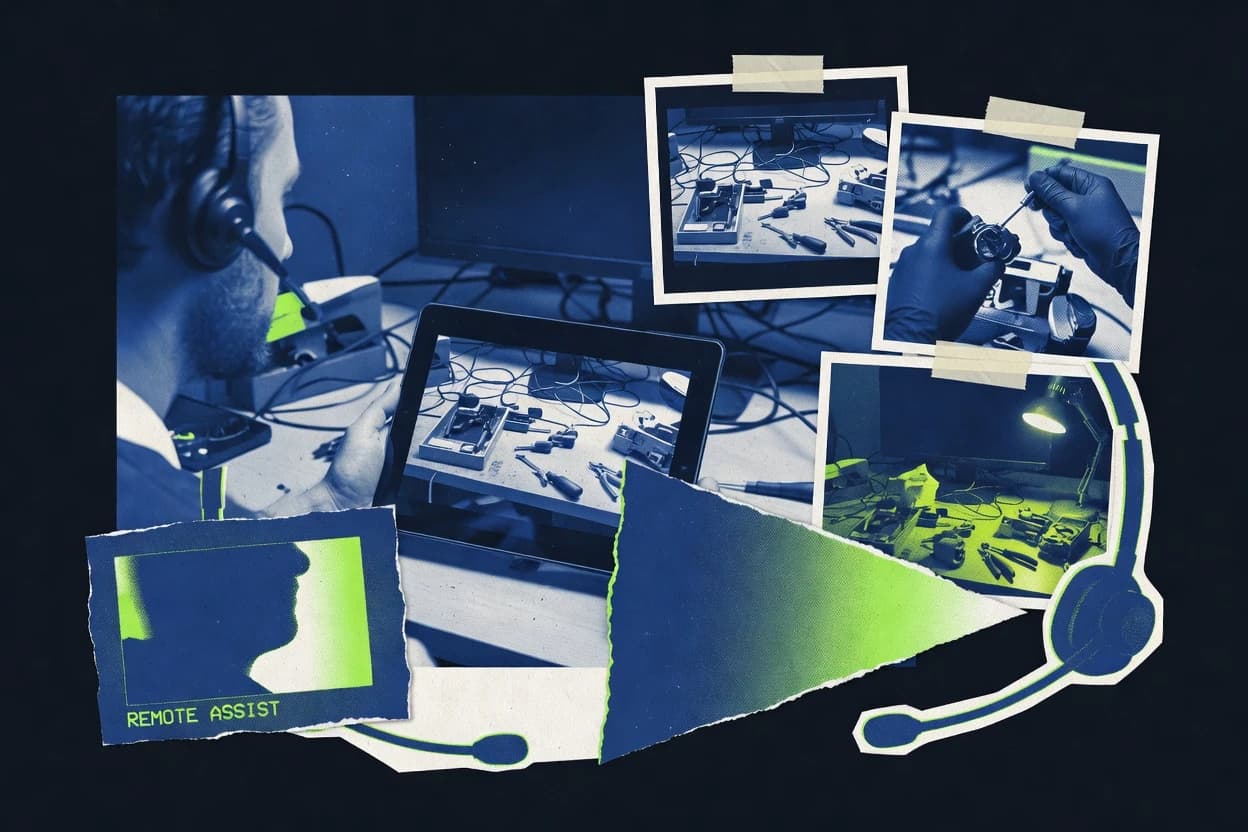
Top 10 remote visual assistance software for support teams, comparing OneAssist, VSee, TeamViewer Tensor, GoToAssist, and XMReality with ranking criteria.

How we ranked these tools
Core product claims cross-referenced against official documentation, changelogs, and independent technical reviews.
Analyzed video reviews and hundreds of written evaluations to capture real-world user experiences with each tool.
AI persona simulations modeled how different user types would experience each tool across common use cases and workflows.
Final rankings reviewed and approved by our editorial team with authority to override AI-generated scores based on domain expertise.
Score: Features 40% · Ease 30% · Value 30%
Gitnux may earn a commission through links on this page — this does not influence rankings. Editorial policy
OneAssist is the best fit for service operations that need repeatable expert guidance with live video, annotated steps, and session evidence for later fixes, whereas XMReality suits support teams who want guided capture and recorded troubleshooting with AR drawing.
Editor’s top 3 picks
Three quick recommendations before you dive into the full comparison below — each one leads on a different dimension.
OneAssist
Expert snapshot markup anchored to the technician’s captured view streamlines evidence-driven resolution.
Built for fits when field support teams need repeatable expert guidance and session evidence for fixes..
XMReality
Editor pickGuided technician interaction model that standardizes capture and markup across expert sessions.
Built for fits when support teams need repeatable guided capture and session record retention for field troubleshooting..
Scope AR
Editor pickAR-first annotation workflow that anchors markup to the live device view during co-browsing.
Built for fits when mobile or wearable technicians need annotated guidance during field issue resolution..
Comparison Table
OneAssist
vertical specialistRemote expert assistance software with live video, augmented annotations, and step guidance for service operations.
Expert snapshot markup anchored to the technician’s captured view streamlines evidence-driven resolution.
OneAssist’s core loop centers on a technician starting a visual session and an expert performing live video guidance with snapshot markup and guided annotations. Session artifacts support post-session review, which helps teams align fixes with documented evidence. The automation surface is practical for support ops because session start and assignment workflows can be coordinated around dispatcher routing and work order context.
A key tradeoff is that deep workflow automation depends on integration effort with the team’s existing ticketing and dispatcher systems. OneAssist works best when the remote expert process is standardized, such as diagnosis then evidence capture, instead of ad hoc screen sharing with loosely structured notes.
- +Live visual co-browsing with expert markup tied to the technician view
- +Session evidence capture supports review after diagnosis
- +Admin controls include role-based access and centralized configuration
- +Remote expert workflows support dispatcher-style routing patterns
- –Automation depth for ticket creation depends on integration scope
- –Advanced governance needs careful role design and session policy setup
Field service teams
Expert guides diagnosis from mobile camera
Faster field resolution cycles
Support operations managers
Dispatcher routes experts by work order
Higher consistency in triage
Show 2 more scenarios
Quality assurance leads
Review annotated sessions for coaching
Targeted training feedback
Supervisors evaluate technician-expert sessions using captured artifacts and markup context.
IT service desks
Remote visual troubleshooting for devices
Lower repeat support contacts
Experts annotate the on-screen or camera view to reduce back-and-forth troubleshooting steps.
Best for: Fits when field support teams need repeatable expert guidance and session evidence for fixes.
XMReality
SMBRemote visual assistance platform with AR drawing tools for field service and support.
Guided technician interaction model that standardizes capture and markup across expert sessions.
XMReality supports live video co-browsing with expert-led instruction and technician-side capture and markup during a see-what-I-see session. Session outputs can be retained as artifacts for later review, which reduces repeat explanations when a field issue recurs. Admin configuration supports organization-level governance for user access and session handling.
The main tradeoff is that structured session workflows and integrations require more setup than general-purpose remote support tools. XMReality fits best when teams run recurring technical workflows where expert dispatch routing and case linkage matter. A common usage situation is first-time fix rate improvement for complex hardware problems that benefit from consistent capture instructions.
- +Guided expert sessions with technician-led capture and markup
- +Session artifacts support later troubleshooting and knowledge reuse
- +Governance controls for access and session handling
- +Integration paths for linking sessions to operational case context
- –Structured workflows can add setup time for new technicians
- –Some automation depends on configuration depth across systems
- –Expert handoff and session continuation needs careful operational design
- –Bandwidth adaptation behavior can vary by device camera conditions
Field service operations
Recurring equipment troubleshooting with experts
Fewer repeat visits and rework
Support teams with dispatch
Expert routing based on case context
Faster resolution time
Show 2 more scenarios
Device and asset management groups
Audit-ready session trails for incidents
Improved audit trail logging
Retained session outputs support later review when incidents or service outcomes are disputed.
IT and governance teams
Controlled access for enterprise rollout
Reduced access and process risk
Organization-level configuration enables access controls and session governance across user groups.
Best for: Fits when support teams need repeatable guided capture and session record retention for field troubleshooting.
Scope AR
enterpriseWorkLink platform delivering live AR remote assistance and interactive 3D work instructions.
AR-first annotation workflow that anchors markup to the live device view during co-browsing.
Scope AR supports see-what-I-see remote viewing with on-device AR overlays so experts can guide technicians without relying only on verbal instructions. The session workflow includes snapshot markup and session recording, which helps teams reuse prior evidence during repeat troubleshooting. Remote camera control and expert guidance are designed for low-latency viewing so technicians can act while the expert is watching.
A tradeoff is that AR overlay fidelity depends on device camera and environment stability, which can reduce alignment during fast motion or poor lighting. Scope AR fits best for field service resolution and expert dispatch routing where the same issue repeats and recorded sessions improve first-time fix rate.
- +AR overlay guidance keeps expert instructions aligned with the live scene
- +Snapshot markup and session recording improve post-incident troubleshooting
- +Expert dispatch routing supports structured escalation during field resolution
- +Audit logging supports traceability for support operations
- –AR overlay accuracy drops with unstable camera movement or poor lighting
- –Advanced enterprise integrations require dedicated configuration effort
Field service teams
Remote troubleshooting for equipment repair
Faster diagnostics and fewer repeat calls
Expert support operators
Dispatch routing for high-priority issues
Better handoffs across shifts
Show 2 more scenarios
Training and QA teams
Review recorded sessions for coaching
Consistent technician guidance
Recorded co-browsing and snapshots provide training material tied to real fixes.
Enterprise support governance
Traceable assistance sessions
Clear accountability during audits
Audit logging provides traceability for who viewed and who annotated during each session.
Best for: Fits when mobile or wearable technicians need annotated guidance during field issue resolution.
TeamViewer Frontline
enterpriseAR-powered remote assistance and frontline productivity suite for industrial and field service operations.
Session recording tied to controlled access for frontline users and experts, supporting audit trail logging for guided troubleshooting.
TeamViewer Frontline is built for remote visual assistance workflows that pair an on-site technician with an expert who guides from a remote view. The experience supports live visual guidance with expert annotations and session recording for later review. Admin configuration focuses on centralized onboarding and permissions for who can start, manage, and view sessions.
- +Structured session flow that keeps expert guidance and technician view synchronized
- +Session recording and audit trail logging support post-incident review
- +Admin configuration covers user onboarding and feature permissions for sessions
- +Good fit for mobile technician workflows using a dedicated technician experience
- –Automation and API surface are limited compared with workflow-first peers
- –Operational rollout needs governance to standardize session settings across teams
Best for: Fits when support teams need controlled remote visual sessions with annotation and recorded handoffs for later review.
SightCall
enterpriseLive video assistance platform with AR annotations for field service and customer support.
AR annotation and remote camera control tailored to live on-site see-what-I-see guidance, with recorded sessions for audit-style review.
SightCall connects a remote expert to a technician’s live view so the expert can guide decisions during a see-what-I-see session. It supports AR annotation on the live video feed, plus remote camera control for switching viewpoints and framing.
SightCall also provides session recording and an audit trail that helps support teams review what was shown and said. The product is geared toward operational workflows like troubleshooting and guidance capture, not just ad hoc screen sharing.
- +AR annotation over live video for precise visual instructions
- +Session recording and audit trail logging for post-incident review
- +Remote camera control for faster framing changes on-site
- +Mobile-friendly technician workflow aimed at field troubleshooting
- –Expect workflow design effort to keep guidance structured across sessions
- –Integration options can be limited compared with enterprise support suites
- –Advanced governance depends on admin configuration and team discipline
- –Network quality can still affect clarity during high-motion guidance
Best for: Fits when field teams need guided troubleshooting with on-video markup and recorded evidence.
Help Lightning
enterpriseRemote visual assistance platform using blended reality to guide on-site technicians.
Session annotation tied to what the remote camera shows supports faster decision-making during live troubleshooting.
Help Lightning is a remote visual assistance tool built around a technician and expert workflow that prioritizes quick, guided viewing and markup during live sessions. The core experience centers on live co-browsing of what a remote camera sees plus annotation so field issues can be documented as the session progresses.
Admin controls focus on managing access to the remote support experience and supporting repeatable session handling for teams with recurring device types. Collaboration artifacts can be captured for later review so support outcomes can be traced to what the expert observed and marked during the call.
- +Guided live viewing with annotation that keeps troubleshooting context in one session
- +Session artifacts support follow-up review of what was shown and marked
- +Repeatable remote support flow fits field dispatch and expert review workflows
- +Clear technician and expert roles reduce confusion during urgent troubleshooting
- –Advanced automation and extensibility are limited versus tools with deep integration APIs
- –Enterprise governance needs may require extra operational discipline around access control
Best for: Fits when support teams need camera-based live guidance with annotation and later session review for field fixes.
Librestream
enterpriseOnsight remote expert platform providing AR-guided visual assistance for industrial environments.
Session recording tied to the live WebRTC workflow produces reviewable evidence for each expert interaction.
Librestream centers remote visual assistance on a WebRTC-based live session experience and built-in session recording for later review. The software focuses on a technician-to-expert workflow that supports remote camera control and guided issue diagnosis.
Admin features focus on organization-level configuration, role control, and audit-friendly session history that teams can review after each call. Compared with peers like VSee, TeamViewer Tensor, and GoToAssist, Librestream tends to emphasize operational visibility through captured sessions rather than only ad hoc viewing.
- +WebRTC session delivery supports browser-based participation without extra app installs
- +Session recording creates a durable record for post-call review and coaching
- +Remote camera control supports live framing changes during a see-what-I-see session
- +Remote expert portal keeps experts in a consistent interface for multiple jobs
- –Mobile performance depends on camera stability and can impact low-light field work
- –Live AR annotation depth and offline sync capabilities are not as consistently broad as top peers
- –Enterprise governance requires careful rollout of roles and permissions to avoid access sprawl
- –Integration depth can lag for CRM ticket linkage and work order sync compared with specialized platforms
Best for: Fits when support organizations need recorded visual evidence and browser-first expert sessions for field resolution workflows.
Dynamics 365 Remote Assist
enterpriseMicrosoft HoloLens and mobile application for AR-guided remote collaboration with Teams integration.
Dynamics 365 Remote Assist ties live guidance sessions to Dynamics case and work order context for traceability.
Dynamics 365 Remote Assist adds a live remote expert portal into Microsoft’s Dynamics ecosystem so field and support workflows can connect to the same operational records. It supports see-what-I-see sessions with co-browsing, allowing experts to annotate and guide technicians while the technician stays focused on the现场 task.
Session recordings and an audit trail logging workflow help teams review what was shared and when it happened. Tight Microsoft integration supports CRM ticket linkage and work order sync so remote assistance can follow the same case and asset context.
- +Expert sessions align with Dynamics records for work orders and cases
- +Session recording plus audit trail logging supports later review and training
- +Annotated guidance works inside a remote expert portal workflow
- +SSO integration fits enterprise access models
- –Best workflow requires Dynamics and model alignment across work streams
- –Mobile technician readiness depends on supported device and app setup
- –Automation options feel narrower than standalone visual assistance tools
- –Admin governance needs careful role scoping for expert access
Best for: Fits when enterprises need remote visual guidance tied to Dynamics work orders and case context.
Zoho Lens
SMBRemote assistance software with live camera sharing, AR annotations, session recording, and mobile support workflows.
Zoho Lens session access and governance align with Zoho admin and workflow integrations rather than relying only on standalone session controls.
Zoho Lens supports live remote visual assistance with co-browsing-style guidance through a technician-led view of the remote environment. It pairs on-screen markup with session recording and shareable session links for later review.
Zoho Lens also fits into the wider Zoho ecosystem, including identity and workflow integration patterns that support support teams and field operations. Compared with other remote visual assistance tools, its differentiator is the administrative and integration path through Zoho’s enterprise tooling rather than a standalone collaboration stack.
- +Tight integration path with Zoho identity and workflow tooling
- +Markup tools and guided views support technician-led troubleshooting
- +Session recording supports later QA and knowledge review
- +Session share links simplify expert handoffs
- –Advanced AR overlay workflows are limited versus dedicated AR-centric tools
- –Remote camera control quality depends on client device and network conditions
Best for: Fits when support teams want remote visual guidance plus Zoho ecosystem workflow and identity control.
Be My Eyes for Business
vertical specialistBusinesses connect customers with remote visual assistance through live video and human support.
Volunteer network plus structured guided prompts for common visual checks like labels and device status.
Be My Eyes for Business pairs a guided, remote vision workflow with a global network of sighted volunteers, focused on resolving what a camera sees. Support sessions can include live viewing plus user context prompts like reading labels or checking device status.
The business offering emphasizes organizational control over who can request help, rather than building a custom expert dispatch stack. For teams, the main operational difference is that assistance comes from trained volunteers and guided request flows instead of an employer-run video expert queue.
- +Volunteer-led guidance fits ad hoc visual questions without staffing an internal expert pool
- +Guided request flows reduce the chance of missing critical visual angles
- +Session participation is simple for end users using a mobile camera
- +Organization-focused access controls help limit who can place requests
- –Limited integration depth compared with technician-first remote control and dispatch tools
- –API surface and automation options for work order linkage are not a primary strength
Best for: Fits when mobile teams need quick, human visual help for one-off issues without engineering an expert queue.
Conclusion
After evaluating 10 customer experience in industry, OneAssist stands out as our overall top pick — it scored highest across our combined criteria of features, ease of use, and value, which is why it sits at #1 in the rankings above.
Use the comparison table and detailed reviews above to validate the fit against your own requirements before committing to a tool.
How to Choose the Right remote visual assistance software
Remote visual assistance software connects a field technician and a remote expert through live video co-browsing, annotated evidence, and recorded session artifacts. This guide covers OneAssist, XMReality, Scope AR, TeamViewer Frontline, SightCall, Help Lightning, Librestream, Dynamics 365 Remote Assist, Zoho Lens, and Be My Eyes for Business.
The buying decisions usually hinge on how experts capture and annotate what the technician sees, how session recordings become reviewable proof, and how much automation and governance can be applied at rollout time. The comparison also accounts for integration depth signals where Dynamics case context, Zoho identity controls, or WebRTC browser delivery shape the workflow.
Remote visual assistance software for technician-to-expert live guidance and evidence capture
Remote visual assistance software delivers a live see-what-I-see session so a remote expert can guide troubleshooting while the technician captures what the camera shows. Tools like OneAssist pair live co-browsing with expert snapshot markup anchored to the technician view to produce evidence tied to the exact observation moment.
Many products also create session recordings and audit trail logging so support teams can review what happened after diagnosis and coaching. TeamViewer Frontline emphasizes controlled session flow plus session recording and audit trail logging for later review, while Librestream leans on a browser-first WebRTC session delivery paired with recording for each expert interaction.
Remote session capture, evidence, and governance controls
Remote visual assistance software lives or dies by what an expert can reliably validate during the see-what-I-see session. Evidence quality depends on whether markup and recordings stay anchored to the technician view and whether the session artifacts can be reviewed after diagnosis.
Governance controls decide whether rollout stays consistent across teams. Tools differ in how they standardize session flow and how much automation and API surface exists for provisioning, workflow triggers, and access policy enforcement.
Expert markup anchored to the technician view
OneAssist pairs live visual co-browsing with expert snapshot markup tied to the technician’s captured view stream so evidence stays aligned with the exact observation. Scope AR anchors AR-first annotation to the live device view during co-browsing so guidance remains spatially consistent during capture.
Session recording and audit-style review artifacts
TeamViewer Frontline delivers structured session flow with session recording and audit trail logging support for later review. Librestream uses browser-first WebRTC session delivery paired with session recording so experts and reviewers can replay each expert interaction.
Guided technician interaction model for repeatability
XMReality standardizes capture and markup through guided expert sessions so technician-led actions remain consistent across troubleshooting cycles. Help Lightning uses guided live viewing with annotation that keeps troubleshooting context in one session for faster follow-up review.
Integration traceability into service records
Dynamics 365 Remote Assist ties live guidance sessions to Dynamics case and work order context so remote evidence maps to operational records. Zoho Lens aligns session access and governance with Zoho identity and workflow tooling so the session workflow stays under the same admin controls.
Camera and AR workflow constraints under real field conditions
Scope AR’s AR overlay accuracy drops when camera movement becomes unstable or lighting is poor, which affects annotation reliability. SightCall depends on AR annotation over live video for precise instructions and records sessions for audit-style review, which can still require workflow design effort to keep guidance structured.
Choose by capture workflow philosophy, evidence needs, and control depth
Shortlisting works best when the capture workflow is treated as a system design decision rather than a feature checklist. Each tool in this guide makes a different bet on whether technician capture should be guided, whether AR should anchor the guidance, or whether browser-first WebRTC delivery should reduce participation friction.
Control depth matters once multiple sites and teams are involved. The decision should map to how governance and automation must behave at rollout time, including whether session settings stay standardized and whether workflow integration can keep session context tied to service records.
Select the evidence anchor model for expert markup
Choose OneAssist when snapshot markup must be anchored to the technician’s captured view stream so the evidence can be reviewed as proof of what the technician actually saw. Choose Scope AR when field work requires an AR-first annotation workflow that keeps expert instructions aligned with the live scene during co-browsing.
Pick the session repeatability approach for technician capture
Choose XMReality when standardized technician-led capture and markup across expert sessions is the priority, since the guided model is designed to reduce variation. Choose Help Lightning when a single guided live viewing session with annotation must keep troubleshooting context concentrated for follow-up review.
Decide how recordings and audit-style review should work
Choose TeamViewer Frontline when controlled access and audit trail logging around a structured session flow are required for later review. Choose Librestream when browser-first WebRTC session delivery is needed and durable session recording must support coaching and post-call evidence review.
Map session artifacts to service records and identity controls
Choose Dynamics 365 Remote Assist when guidance sessions must align with Dynamics case and work order records so traceability is built into the workflow. Choose Zoho Lens when identity and workflow governance in the Zoho ecosystem must control access to session participation and session lifecycle.
Set field reliability expectations for AR and live camera workflows
Choose SightCall when AR annotation over live video and session recording are sufficient for audit-style evidence, while accepting that workflow design effort may be needed to keep guidance structured. Choose Scope AR only when expected camera movement stability and lighting conditions can support AR overlay accuracy during co-browsing.
Separate human visual help from technician-first remote control
Choose Be My Eyes for Business when ad hoc visual checks need volunteer-led guided requests without the automation and integration depth expected from technician-first dispatch workflows. Choose technician-first tools like VSee-style expert capture workflows implied by OneAssist and XMReality when evidence must be tied to technician view capture and expert markup generation.
Which teams should buy remote visual assistance software
Remote visual assistance software fits teams that need consistent evidence from the technician’s camera during live expert collaboration. It also fits teams that need after-action review through session recording and audit-style logging rather than relying on verbal summaries.
The strongest fit comes from matching the tool’s capture workflow to device realities and support operations. OneAssist, XMReality, Scope AR, and TeamViewer Frontline each optimize a different part of the see-what-I-see workflow so the right buyer should align to that optimization target.
Field support teams standardizing evidence for first-time fix rate coaching
OneAssist supports reviewable evidence capture by anchoring snapshot markup to the technician view and pairing it with session evidence capture. XMReality adds guided capture and markup so review artifacts remain comparable across troubleshooting sessions.
Enterprises that must tie remote guidance to existing case and work order systems
Dynamics 365 Remote Assist aligns expert guidance sessions with Dynamics case and work order context for operational traceability. Zoho Lens supports governance alignment with Zoho identity and workflow tooling so access control stays inside existing admin patterns.
Operations with controlled session access requirements for compliance-oriented training
TeamViewer Frontline couples structured session flow with session recording and audit trail logging for post-incident review. This pairing supports controlled frontline use while keeping expert and technician views synchronized.
Wearable or mobile technicians using AR-guided troubleshooting in the field
Scope AR targets AR-first annotation workflows that keep expert instructions aligned with the live scene through AR overlay guidance. SightCall also emphasizes AR annotation over live video and recorded sessions for audit-style review.
Teams needing quick human visual help without an expert queue or workflow integrations
Be My Eyes for Business fits one-off label and device status visual questions using volunteer-led guided prompts. It trades away the deeper technician-first remote control and dispatch-style integration depth found in tools designed for expert capture workflows.
Common rollout mistakes in remote visual assistance software purchases
Procurement errors usually show up when capture evidence quality, governance, and integration scope are treated as afterthoughts. Many failures happen after pilot sessions reveal that expert markup is not anchored the way reviewers need or that governance requires extra role design work.
Another pattern is overestimating AR reliability without testing real camera stability and lighting conditions. A third pattern is assuming automation exists for ticket creation and workflow linkage without validating integration depth and configuration requirements.
Selecting an AR-first tool without validating camera stability and lighting conditions
Scope AR explicitly shows accuracy drops with unstable camera movement or poor lighting, so field trials must include the worst-case conditions. Matching the annotation workflow to the technician’s device handling prevents session evidence from becoming ambiguous.
Assuming automation for ticket creation is available without integration scope planning
OneAssist flags that automation depth for ticket creation depends on integration scope, and this affects how sessions translate into operational tasks. TeamViewer Frontline also notes limited automation and API surface compared with workflow-first peers.
Skipping governance design for standardized session settings across teams
TeamViewer Frontline notes operational rollout needs governance to standardize session settings across teams, and audit trail logging requires consistent configuration. XMReality also warns that structured workflows can add setup time for new technicians, which should be planned as part of onboarding.
Choosing browser-first delivery but underestimating mobile performance variability
Librestream states mobile performance depends on camera stability and can impact low-light field work, so the same environment constraints apply even with browser-first WebRTC delivery. Running tests in real low-light scenarios prevents recording evidence from degrading under practical conditions.
How We Selected and Ranked These Tools
We evaluated remote visual assistance tools on feature coverage that affects live capture, expert markup, and session recording quality for review workflows, with Features set to 40% weight. Ease and field rollout friction counted for 30% weight based on how guided technician capture and session structure reduce variation during troubleshooting. Value counted for 30% weight based on how well each tool’s workflow evidence and governance controls support post-incident review and training.
OneAssist separated from the pack by pairing live visual co-browsing with expert snapshot markup tied to the technician’s captured view stream and by providing session evidence capture designed for review after diagnosis. That evidence-first anchor model aligned capture to review artifacts in a way that reduced ambiguity for support teams.
Frequently Asked Questions About remote visual assistance software
How do VSee-style expert workflows differ from Librestream when the priority is recorded evidence?
Which tool is better for tying remote visual sessions to CRM tickets and work orders in the same system of record?
What integration and API capabilities matter most when provisioning access for multiple technician roles?
How do SSO and security controls show up in daily admin operations for remote sessions?
How should organizations migrate existing technician and expert user data into a managed remote visual assistance setup?
When does remote camera control become a hard requirement instead of a nice-to-have feature?
What breaks if an organization needs structured capture flows instead of free-form annotation?
Where do AR-first annotation workflows fall short compared with non-AR co-browsing approaches?
How do session recording and audit trail logging differ across tools when the goal is compliance-style review?
Tools reviewed
Primary sources checked during evaluation.
Referenced in the comparison table and product reviews above.
- Customer Experience In IndustryTop 10 Best Remote Computer Assistance Software of 2026
- Customer Experience In IndustryTop 10 Best Augmented Reality Remote Assistance Software of 2026
- Customer Experience In IndustryTop 10 Best Remote Desktop Assistance Software of 2026
- Customer Experience In IndustryTop 10 Best Remote Assistance Services of 2026
- Customer Experience In IndustryTop 10 Best Remote Visual Support Services of 2026
Keep exploring
Comparing two specific tools?
Software Alternatives
See head-to-head software comparisons with feature breakdowns, pricing, and our recommendation for each use case.
Explore software alternatives→In this category
Customer Experience In Industry alternatives
See side-by-side comparisons of customer experience in industry tools and pick the right one for your stack.
Compare customer experience in industry tools→