
GITNUXSOFTWARE ADVICE
Consumer RetailTop 10 Best Product Recommendation Software of 2026
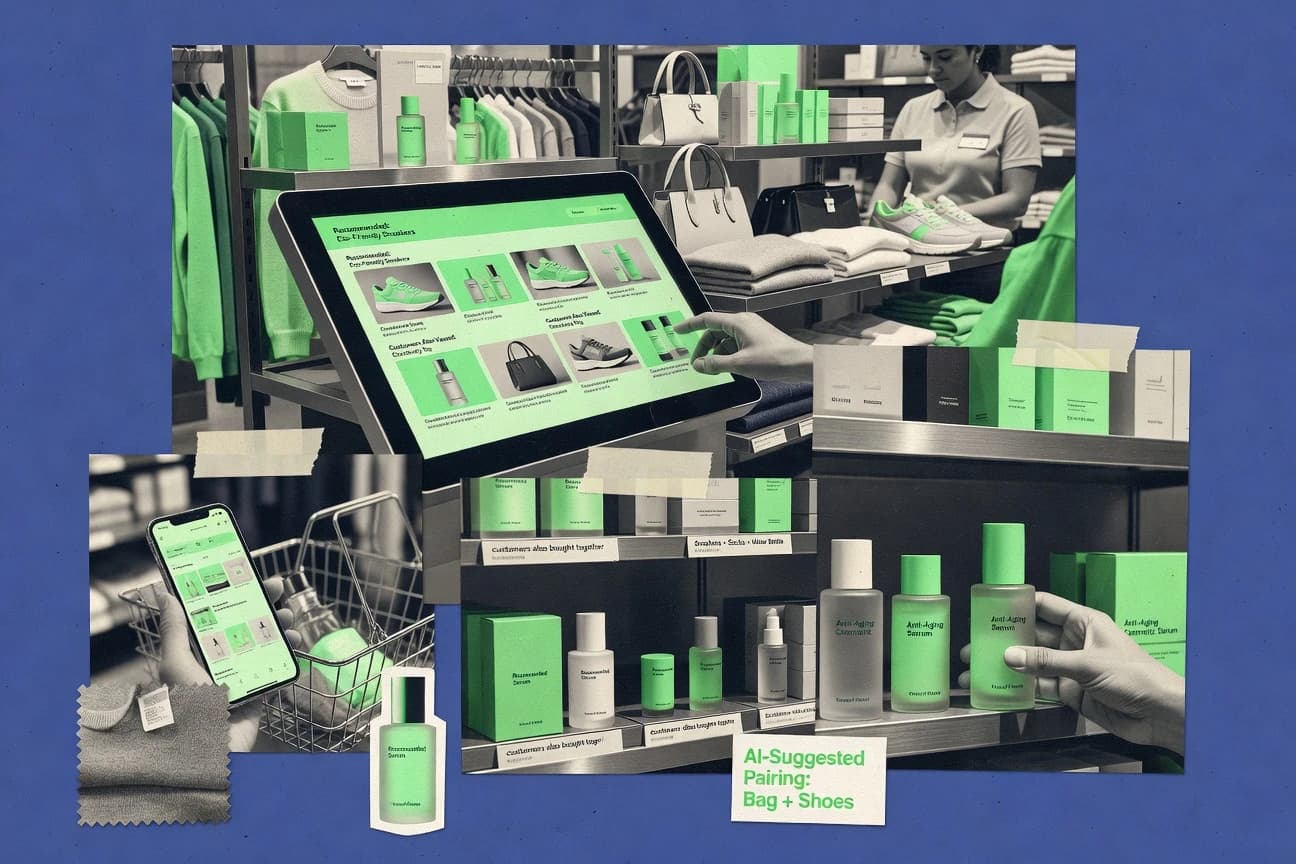
Top 10 product recommendation software for ecommerce and marketing teams, ranking SAP Emarsys, Adobe Target, and Nosto with tradeoffs and criteria.

How we ranked these tools
Core product claims cross-referenced against official documentation, changelogs, and independent technical reviews.
Analyzed video reviews and hundreds of written evaluations to capture real-world user experiences with each tool.
AI persona simulations modeled how different user types would experience each tool across common use cases and workflows.
Final rankings reviewed and approved by our editorial team with authority to override AI-generated scores based on domain expertise.
Score: Features 40% · Ease 30% · Value 30%
Gitnux may earn a commission through links on this page — this does not influence rankings. Editorial policy
SAP Emarsys is the best fit if your marketing ops needs governed, event-driven personalization tied to enterprise data flows, whereas Nosto is the easier choice for ecommerce teams that want fast merchandising control over next-product placements without heavy developer cycles.
Editor’s top 3 picks
Three quick recommendations before you dive into the full comparison below — each one leads on a different dimension.
SAP Emarsys
Emarsys recommendation placements inherit the same audience, trigger, and QA governance as its journey orchestration.
Built for fits when marketing ops needs governed, event-driven personalization across email and web, tied to enterprise data flows..
Adobe Target
Editor pickAutomated experience decisioning for personalization campaigns that reuse Adobe measurement and testing workflows.
Built for fits when marketing teams need testing-led personalization with Adobe analytics alignment..
Nosto
Editor pickMerchandising rules tied to recommendation placements let marketers control what users see across key modules.
Built for fits when ecommerce teams need fast merchandising control over next-product placements without heavy developer cycles..
Comparison Table
SAP Emarsys
enterpriseCustomer engagement software provides predictive product recommendations across marketing channels.
Emarsys recommendation placements inherit the same audience, trigger, and QA governance as its journey orchestration.
SAP Emarsys supports behavioral event tracking that can feed audience segmentation and trigger rules for session-based and lifecycle messaging flows. Recommendation usage is typically deployed through configurable recommendation placements within marketing experiences, which helps merchandising rules and business constraints stay consistent across email and on-site experiences. Integration depth tends to be strongest when commerce events and product catalogs already flow into SAP-focused systems, because Emarsys can reuse those signals rather than treating recommendations as an isolated engine.
A key tradeoff is that recommendation effectiveness depends on disciplined data and event hygiene, because weak product feed mapping or inconsistent identity stitching degrades attribution and personalization. Emarsys fits best when a marketing operations team needs governed automation for cross-channel journeys and wants recommendation outputs to follow the same targeting and QA workflow as other campaign assets.
- +Cross-channel journeys coordinate recommendations with email and mobile triggers
- +Event-driven automation supports governed triggered flows from captured behavior
- +Integration options align well with SAP commerce and enterprise data pipelines
- +Admin controls support permissioned changes to audiences and campaign logic
- –Recommendation performance is sensitive to product catalog mapping quality
- –Advanced personalization often requires engineering work for event and API wiring
- –Session-level merchandising requires careful placement configuration per channel
- –Debugging personalization outcomes can be time-consuming without strong ops practice
Marketing operations teams
Governed cross-channel journey personalization
Fewer manual merchandising overrides
Ecommerce CRM teams
Behavior-triggered next-best-product messaging
Higher relevance in outbound
Show 2 more scenarios
Data and integration engineers
Event and catalog integration for targeting
Consistent personalization inputs
APIs and integrations connect product feeds and identity signals to recommendation inputs.
Merchandising managers
Channel-specific recommendation slot governance
More controllable product exposure
Business rules control placement behavior inside marketing experiences.
Best for: Fits when marketing ops needs governed, event-driven personalization across email and web, tied to enterprise data flows.
Adobe Target
enterprisePersonalization software supports recommendation activities across web and digital experiences.
Automated experience decisioning for personalization campaigns that reuse Adobe measurement and testing workflows.
Adobe Target is strongest when teams already run experiment programs and want personalization decisions to share the same event and measurement foundation as their testing workflows. It can deliver recommendations at key storefront surfaces through managed experiences and uses event-driven triggers to keep recommendations aligned with user activity. Teams can also codify targeting logic and merchandising priorities through campaign configuration and audience definitions tied to their analytics setup.
A key tradeoff is that Adobe Target favors Adobe-centric implementations, which can raise integration effort for non-Adobe data pipelines and catalog feeds. It is a good fit when web teams need tight governance over live experiences and want a shared workflow between A B testing and personalization across product detail pages, cart entry, and other high-impact slots.
- +Experiment and personalization workflows run on the same Adobe ecosystem
- +Server-side personalization decisions reduce client implementation complexity
- +Placement-specific experiences support merchandising rules per storefront surface
- +Strong reporting alignment with analytics events used for testing
- –Non-Adobe event pipelines often require more engineering work
- –Advanced personalization configuration can slow iteration for small teams
- –Recommendation behavior depends on feed and audience signal availability
- –Governed rollout processes can extend time-to-launch for frequent updates
Digital marketing teams
Run tests and personalize PDPs
Fewer measurement mismatches
Ecommerce merchandising teams
Apply rules to cart entry
Higher cross-sell coverage
Show 1 more scenario
Web engineering teams
Connect personalization via Adobe stack
Less front-end custom code
Use Adobe-managed event instrumentation and server-side decisions to minimize client logic.
Best for: Fits when marketing teams need testing-led personalization with Adobe analytics alignment.
Nosto
vertical specialistCommerce experience software provides personalized product recommendations and merchandising.
Merchandising rules tied to recommendation placements let marketers control what users see across key modules.
Nosto is built around real-time personalization that reacts to user behavior on-site, then blends it with product catalog attributes for relevant results. Catalog ingestion and taxonomy alignment support mapping catalog structure into recommendation logic so merchandising teams can reason about outcomes. Configuration is oriented around rule and placement settings, which makes it easier to keep cross-sell and cart-style modules consistent with campaign goals.
A key tradeoff versus A/B-led experimentation suites is that governance tends to live in configuration and business rules rather than deeply in experimentation mechanics. Nosto works best when an ecommerce team needs session-aware product recommendations and fast merchandising iteration for product detail page and cart experiences without relying on frequent developer changes.
- +Real-time on-site personalization tuned to session behavior
- +Merchandising rules let marketers shape recommendation content
- +Recommendation API supports consistent placements across experiences
- +Catalog ingestion maps product attributes to ranking inputs
- –Experiment design depth is lighter than dedicated testing platforms
- –Rule changes can require developer help for complex edge cases
Merchandising teams
Control PDP cross-sell content
Fewer irrelevant cross-sells
Growth marketers
Improve cart recommendations
Higher add-to-cart rates
Show 2 more scenarios
Engineering teams
Standardize recommendations via API
One logic stack
A recommendation API provides consistent product logic across web and external surfaces.
Ecommerce analytics
Measure personalization impact
Clearer optimization signals
Event tracking supports attribution of on-site recommendation outcomes to content changes.
Best for: Fits when ecommerce teams need fast merchandising control over next-product placements without heavy developer cycles.
Recombee
API-firstRecommendation APIs let teams deploy personalized product and content recommendation systems.
Hybrid recommendation with item-attribute inputs plus a recommendation API that returns ranked results for specific recommendation slots.
Recombee pairs a recommendation engine with an API-first delivery model for ecommerce and marketing personalization workflows. Its core capabilities center on hybrid recommendation logic that can mix catalog attributes with behavioral signals to generate ranked results for multiple surfaces.
Product catalog ingestion and attribute mapping feed the engine, while recommendation API calls return next-best-product candidates for use on web and email. Configuration favors business rules around what to recommend and where to place it, rather than only model training.
- +Recommendation API supports real-time item retrieval for product detail, cart, and list placements.
- +Attribute-driven ranking can incorporate catalog structure, not just click behavior.
- +Hybrid recommendation logic reduces cold-start risk when item metadata is rich.
- +Rules-based controls support merchandising constraints and recommendation slot governance.
- –Behavioral event tracking quality and mapping strongly affect output relevance.
- –Operational discipline is needed to keep catalog updates and model inputs consistent.
Best for: Fits when ecommerce teams need API-driven personalization across on-site placements and lifecycle messaging with strict controls.
Algolia Recommend
API-firstPersonalization APIs generate product recommendations from catalog, event, and user data.
Placement-aware merchandising rules applied at recommendation serving time through Algolia Recommend’s API.
Algolia Recommend generates product recommendations using behavioral event tracking and catalog ingestion from Algolia indexes. It focuses on real-time personalization by serving a recommendation API with configurable business rules for placement such as PDP, cart, and email.
The integration surface is centered on Algolia’s search and indexing workflow, which reduces mapping work when catalog data already lives in Algolia. Automation is strongest when recommendation inputs and serving endpoints are wired through the same Algolia data flow.
- +Recommendation API returns placement-scoped results for PDP, cart, and email flows
- +Uses the existing Algolia index workflow for catalog ingestion and attribute matching
- +Business rules support merchandising constraints and category-aware ordering
- +Supports real-time personalization from clickstream signals with session context
- –Best results require consistent behavioral event tracking and disciplined schema mapping
- –Some recommendation explainability and controls depend on available reporting views
- –Hybrid merchandising outcomes can lag if catalog refresh and event latency are misaligned
- –Advanced experimentation requires more engineering than UI-first testing tools
Best for: Fits when teams already run product search on Algolia and want real-time placement-based recommendations via API.
Bloomreach Discovery
enterpriseCommerce search and merchandising software provides personalized product recommendations.
Merchandising rules applied alongside model ranking let teams control candidate eligibility per placement, not just post-ranking sorting.
Bloomreach Discovery targets ecommerce and marketing teams that need search and recommendation relevance tuned by behavioral signals and catalog attributes. It ingests product catalog data and clickstream-style events, then generates ranked content placements for PDP, cart, and site and commerce surfaces.
Configuration centers on merchandising rules, attribute-based constraints, and model-driven ranking that can run in both interactive and scheduled workflows. The integration approach emphasizes an API-first surface so recommendation decisions and metadata can be orchestrated across web and marketing channels.
- +API-first recommendation access for web and marketing placement orchestration
- +Catalog attribute matching supports targeted merchandising and category constraints
- +Rule configuration enables placement-specific guardrails and candidate filtering
- +Event-driven tuning supports relevance changes based on user interactions
- –Event schema and instrumentation require careful governance to avoid noisy signals
- –Advanced tuning depends on integration depth and operational configuration
Best for: Fits when teams need API-controlled recommendation placements with catalog-aware constraints across multiple digital surfaces.
Dynamic Yield
enterpriseExperience optimization software supports product recommendations across digital channels.
Live decisioning that blends merchandising rules with dynamic recommendation slots based on current session behavior.
Dynamic Yield focuses on real-time personalization workflows that connect merchandising rules with on-site and lifecycle decisioning. It ingests product catalog data and behavioral event streams to drive placement-aware recommendations and targeted experiences across web and mobile touchpoints.
The system supports continuous optimization through experimentation, with an automation and API surface aimed at keeping decisioning synchronized with catalog and campaign changes. Administration centers on rules, segments, and permissions so teams can govern who can publish and what logic runs.
- +Real-time decisioning supports placement-aware merchandising logic
- +Product catalog ingestion plus event tracking enables responsive recommendations
- +Experimentation workflows support iterative optimization without rebuilding logic
- +API and automation options reduce manual redeploys for catalog changes
- –Complex rule sets can slow governance and increase change risk
- –Recommendation setup requires disciplined taxonomy and attribute mapping
Best for: Fits when ecommerce teams need real-time personalization tied to catalog updates and governed publishing.
Salesforce Personalization
enterpriseCommerce personalization software delivers individualized product recommendations and offers.
Salesforce-native event and identity integration ties recommendation requests to the same customer profiles used for marketing operations.
Salesforce Personalization is designed for ecommerce and marketing teams that already operate inside the Salesforce ecosystem, because it pairs recommendation delivery with Salesforce customer data access. It supports personalized recommendations across web and app surfaces using tracked customer events, product catalog ingestion, and configurable merchandising rules.
The product also emphasizes integration depth through Salesforce APIs and extensibility points that let teams route data and recommendations through existing campaign and CRM workflows. Governance is handled through Salesforce administrative controls, including role-based access patterns and activity visibility across connected components.
- +Deep integration with Salesforce customer data for consistent audience identity
- +Configurable merchandising rules for controlling recommendation placements
- +Recommendation delivery fits common Salesforce marketing and commerce workflows
- +Extensibility supports connecting recommendation events to downstream systems
- –Most value depends on strong Salesforce-centric implementation and event hygiene
- –Recommendation tuning can require developer support for complex rule logic
Best for: Fits when teams run commerce and CRM in Salesforce and need governed personalization across channels.
Klevu
vertical specialistAI commerce software provides product discovery, search, and personalized recommendations.
Rule-based merchandising controls for recommendation placement, built to override ranking without rebuilding the personalization logic.
Klevu performs ecommerce product discovery by turning catalog ingestion and search signals into on-site and commerce recommendations. Catalog-driven personalization is paired with behavioral event tracking to drive next-best-product placements across common storefront surfaces.
Admin workflows support merchandising via configuration and rule-based ranking controls, which is relevant for teams that need predictable category-level outcomes. Klevu also exposes an API for recommendation and data synchronization so engineering teams can connect personalization to existing commerce systems.
- +Recommendation API supports storefront embedding and external workflow integration
- +Catalog ingestion ties suggestions to product taxonomy and attributes
- +Merchandising rules let teams override ranking for category and campaign intent
- +Behavior tracking improves relevance on product detail and cart experiences
- –Taxonomy alignment during catalog ingestion can take iterative configuration
- –Recommendation diversity tuning requires hands-on adjustment of business rules
Best for: Fits when ecommerce teams need catalog-based personalization with controllable merchandising rules and an API.
LimeSpot
SMBEcommerce personalization software creates product recommendations and automated merchandising.
Placement-aware merchandising controls that constrain recommendation outputs per slot with rule-based governance.
LimeSpot is a recommendation management tool aimed at ecommerce and marketing teams that need merchandising control around personalized product and cart experiences. It ingests a product catalog and event data to generate recommendations, then applies business rules to govern which items can appear in specific placements.
LimeSpot’s differentiation is its focus on configurable recommendation logic and operational governance for live placements rather than a one-click personalization toggle. For teams building site search adjacent experiences like PDP, cart, and email recommendation slots, it provides a recommendation API surface and workflow controls to keep outputs aligned with merchandising goals.
- +Merchandising rules control what can appear per placement
- +Recommendation API supports direct embedding into PDP, cart, and email flows
- +Catalog and attribute matching helps reduce irrelevant suggestions
- +Operational configuration supports governance over live recommendation outputs
- –Recommendation tuning needs ongoing iteration for best results
- –Integration requires disciplined event quality and consistent product identifiers
Best for: Fits when ecommerce teams need rule-governed personalization across multiple on-site and messaging placements.
Conclusion
After evaluating 10 consumer retail, SAP Emarsys stands out as our overall top pick — it scored highest across our combined criteria of features, ease of use, and value, which is why it sits at #1 in the rankings above.
Use the comparison table and detailed reviews above to validate the fit against your own requirements before committing to a tool.
How to Choose the Right product recommendation software
Product recommendation software turns behavioral and catalog signals into ranked product outputs for placement-specific experiences across PDP, cart, and marketing channels. This buyer guide covers SAP Emarsys, Adobe Target, and Nosto alongside Recombee, Algolia Recommend, Bloomreach Discovery, Dynamic Yield, Salesforce Personalization, Klevu, and LimeSpot.
The standout differentiators across these tools are integration depth into marketing and commerce systems, how merchandising rules bind to recommendation slots, and the automation and API surface used to serve real-time or decisioned results. The guide also calls out governance and operational constraints that show up as catalog mapping sensitivity, event pipeline requirements, and rule configuration overhead.
Product recommendation software that serves governed, placement-specific rankings
Product recommendation software ingests a product catalog and behavioral event streams to generate ranked suggestions for defined recommendation slots. Many deployments also apply merchandising and business rules at the placement level so teams control what can appear in PDP modules, cart widgets, and cross-sell or next-product experiences.
SAP Emarsys ties recommendation placements to the same audience, trigger, and QA governance used for its journey orchestration, which makes it a fit for marketing ops running event-driven personalization across email and web. Nosto emphasizes marketer-controlled merchandising rules tied to recommendation placements and delivers real-time on-site personalization tuned to session behavior.
Evaluation criteria for product recommendation software in production
Merchandising rules that execute at the recommendation slot level determine which products can appear in each placement on PDP, cart, and marketing surfaces. SAP Emarsys and Nosto bind placement governance to their orchestration workflows or marketer controls so rule changes affect outputs in the right context.
API and automation coverage decide how quickly personalization can be wired into existing commerce and messaging systems. Recombee and Algolia Recommend expose recommendation APIs that return ranked results for specific recommendation slots, while Adobe Target ties experience decisioning to shared Adobe measurement and testing workflows.
Placement-governed merchandising rules
SAP Emarsys runs recommendation placements under the same audience, trigger, and QA governance as its journey orchestration. Nosto uses merchandising rules tied to recommendation placements so marketers control what users see across key modules.
Recommendation API for slot-scoped serving
Recombee provides a recommendation API that returns ranked results for specific recommendation slots across product detail, cart, and list placements. Algolia Recommend serves placement-scoped results through its API for PDP, cart, and email flows.
Experiment and decisioning workflow alignment
Adobe Target automates experience decisioning for personalization campaigns using the same Adobe measurement and testing workflows. Salesforce Personalization ties recommendation requests to Salesforce-native customer profiles used for marketing operations.
Catalog attribute matching and ingestion discipline
Recombee ranks using attribute-driven inputs plus catalog structure, which makes catalog mapping quality a direct output driver. Klevu uses catalog ingestion to connect suggestions to product taxonomy and attributes, with taxonomy alignment requiring iterative configuration.
Governed real-time personalization vs batch workflows
Dynamic Yield performs live decisioning that blends merchandising rules with dynamic recommendation slots based on current session behavior. Nosto delivers real-time on-site personalization tuned to session behavior with merchandising rules that shape recommendation content.
Operational governance and event pipeline requirements
Bloomreach Discovery requires careful governance of event schema and instrumentation to avoid noisy signals that degrade tuning outcomes. Emarsys recommendation performance is sensitive to product catalog mapping quality and advanced personalization needs engineering work for event and API wiring.
Decision framework for choosing product recommendation software
Start by separating tools that prioritize marketing orchestration governance from tools that prioritize API-first slot serving. SAP Emarsys combines recommendation placement governance with journey orchestration, while Recombee and Algolia Recommend focus on returning ranked results for specific recommendation slots through a recommendation API.
Then choose the workflow philosophy that matches internal iteration speed. Adobe Target connects personalization and experimentation to Adobe analytics workflows, while Nosto emphasizes fast merchandising control for next-product placements without heavy developer cycles.
Match governance ownership to the recommendation workflow
If marketing ops must coordinate recommendations inside governed journeys across email and web, SAP Emarsys ties recommendation placements to the same audience, trigger, and QA governance as its journey orchestration. If ecommerce teams want marketer control over what users see in each module, Nosto uses merchandising rules tied to recommendation placements.
Choose an API-first serving model or a decisioning-first model
If storefront and lifecycle systems need ranked outputs per placement through an external integration, pick Recombee or Algolia Recommend for recommendation APIs that return placement-scoped results. If the team wants personalization decisions centralized in a hosted decisioning workflow with reduced client implementation, pick Adobe Target for server-side personalization decisions.
Set the event and catalog quality bar up front
If behavioral event tracking and mapping quality can be tightly governed, Recombee and Algolia Recommend can use attribute and event inputs to drive relevance for real-time slot serving. If event schema governance is still maturing, Bloomreach Discovery calls out that event schema and instrumentation need careful governance to avoid noisy signals.
Confirm whether experimentation depth or merchandising control dominates day-to-day iteration
If testing-led iteration and measurement workflow reuse in Adobe is the primary operating model, Adobe Target keeps experiment and personalization workflows in the same Adobe ecosystem. If merchandising rules and slot control are the primary levers, Dynamic Yield and Nosto emphasize live placement-aware control based on current session behavior.
Align catalog update cadence with model inputs and rule complexity
If catalog updates can be stabilized and kept consistent with operational governance, Dynamic Yield supports catalog ingestion plus event tracking for responsive recommendations. If merchandising rules and edge cases create rule complexity overhead, Dynamic Yield notes that complex rule sets can slow governance and increase change risk.
Who product recommendation software fits best
Teams succeed with product recommendation software when they can operationalize event capture, product catalog ingestion, and placement governance into repeatable workflows. The fit differs most by whether recommendations must be governed inside marketing orchestration or served through external APIs for ecommerce modules and messaging.
SAP Emarsys and Salesforce Personalization fit organizations with existing enterprise customer data and identity flows, while Nosto, Recombee, and Algolia Recommend fit organizations that need tight control over placement content with fast iteration cycles.
Marketing ops running governed cross-channel personalization
SAP Emarsys ties recommendation placements to journey orchestration governance so controlled triggers and QA processes apply to email and web personalization.
Ecommerce teams embedding recommendations across PDP, cart, and lifecycle systems
Recombee and Algolia Recommend expose recommendation APIs that return ranked results for specific recommendation slots so engineering can wire consistent placement serving.
Teams already standardized on Adobe measurement and experimentation
Adobe Target runs personalization and experiment workflows in the same Adobe ecosystem and uses server-side decisioning to reduce client implementation complexity.
Commerce and CRM teams building personalization around Salesforce profiles
Salesforce Personalization connects recommendation requests to Salesforce-native event and identity integration so marketing audiences align with the same customer profiles used across CRM operations.
Merchandising teams prioritizing rule control over testing depth
Nosto emphasizes merchandising rules tied to recommendation placements and delivers real-time on-site personalization tuned to session behavior with faster marketer control.
Common pitfalls that break recommendation performance
Recommendation systems usually fail due to avoidable integration and governance gaps rather than missing model capability. Catalog mapping quality, event pipeline hygiene, and rule complexity determine whether recommendation outputs stay relevant across placements.
Several tools explicitly surface these failure modes, including sensitivity to catalog mapping quality in Emarsys and event schema governance requirements in Bloomreach Discovery.
Using merchandising rules without aligning them to catalog identifiers
Emarsys recommendation performance is sensitive to product catalog mapping quality, so rule outcomes depend on correct catalog mapping. Klevu also highlights that taxonomy alignment during catalog ingestion takes iterative configuration.
Treating event instrumentation as a one-time task
Bloomreach Discovery requires careful event schema and instrumentation governance to avoid noisy signals. Recombee and Algolia Recommend note that behavioral event tracking quality and mapping strongly affect output relevance.
Overcomplicating placement logic faster than governance can keep up
Dynamic Yield warns that complex rule sets can slow governance and increase change risk. LimeSpot expects ongoing recommendation tuning and integration discipline tied to consistent product identifiers.
Assuming advanced personalization configuration will move as fast as marketer-driven merchandising
Emarsys notes that advanced personalization often requires engineering work for event and API wiring. Adobe Target cautions that advanced personalization configuration can slow iteration for small teams.
How We Selected and Ranked These Tools
We evaluated product recommendation software on features coverage, ease of operational setup, and ongoing value for production use. Features account for 40% of the score and prioritize placement-governed control, recommendation API coverage, and workflow alignment for merchandising and personalization decisioning.
Ease/value each account for 30% of the score and weight how event and catalog integration friction shows up in day-to-day iteration. SAP Emarsys separated itself with recommendation placements that inherit the same audience, trigger, and QA governance as its journey orchestration, which tightens control across cross-channel personalization rather than treating recommendations as a standalone widget.
Frequently Asked Questions About product recommendation software
How do SAP Emarsys and Nosto differ in tying recommendations to marketing orchestration workflows?
When should Adobe Target be chosen over SAP Emarsys for ecommerce personalization?
What breaks when recommendation slots require hybrid logic but the stack only supports content-based filtering?
How do recommendation APIs differ between Nosto and Recombee for integration into storefront and lifecycle messaging?
How do Algolia Recommend and Bloomreach Discovery handle catalog ingestion when product data already lives in a search index?
When does Dynamic Yield’s session behavior matter more than batch recommendation generation?
Which tool provides the clearest merchandising rule governance per recommendation placement across multiple modules?
How do admin controls and RBAC differ between Salesforce Personalization and SAP Emarsys?
What security and provisioning concerns differ when recommendations are delivered through SSO-connected ecosystems?
Tools reviewed
Primary sources checked during evaluation.
Referenced in the comparison table and product reviews above.
- Consumer RetailTop 10 Best Product Review Software of 2026
- Construction InfrastructureTop 10 Best Product Recognition Software of 2026
- Customer Experience In IndustryTop 10 Best Product Feedback Software of 2026
- Data Science AnalyticsTop 10 Best Product Database Software of 2026
- Technology Digital MediaTop 10 Best Product Tour Software of 2026
Keep exploring
Comparing two specific tools?
Software Alternatives
See head-to-head software comparisons with feature breakdowns, pricing, and our recommendation for each use case.
Explore software alternatives→In this category
Consumer Retail alternatives
See side-by-side comparisons of consumer retail tools and pick the right one for your stack.
Compare consumer retail tools→