
GITNUXSOFTWARE ADVICE
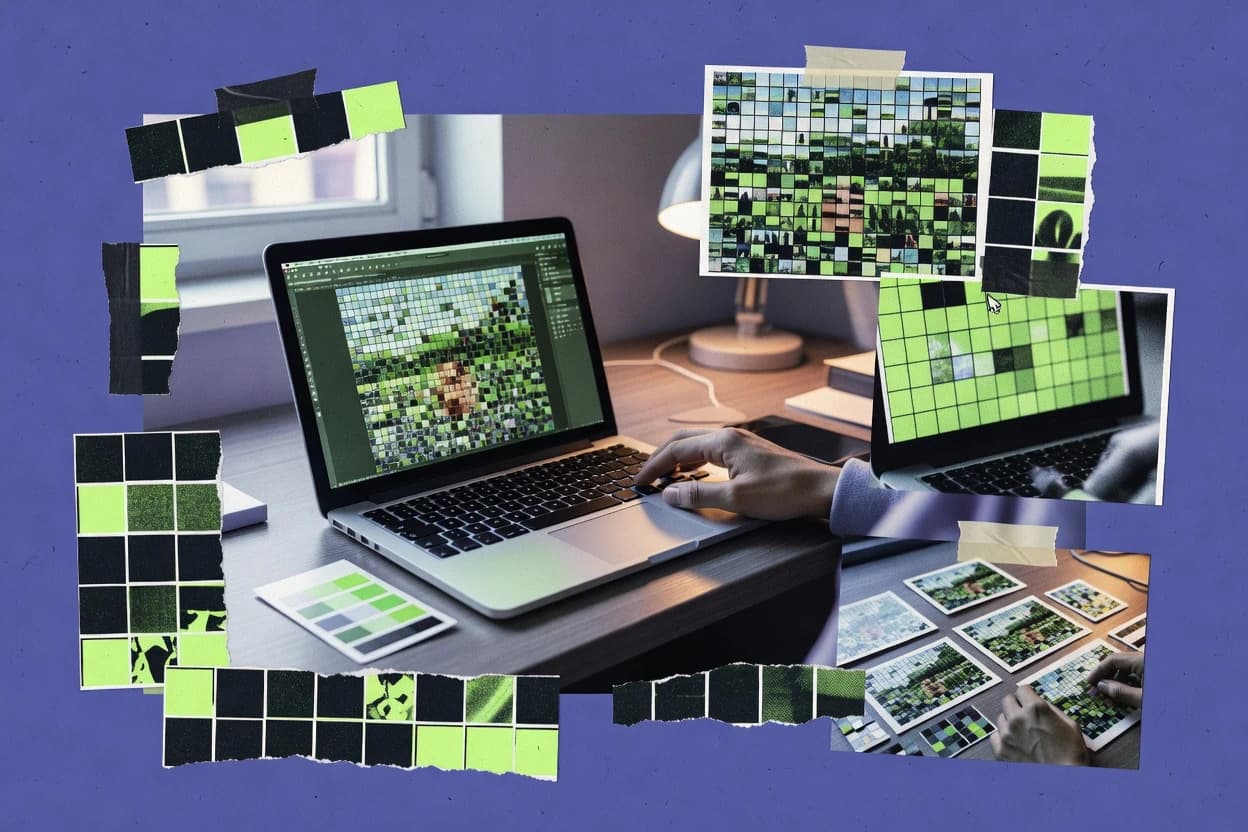
Art DesignTop 9 Best Photomosaic Software of 2026
Top 10 photomosaic software ranking for photo artists and designers, including Mosaically and Andrea Mosaic, with feature tradeoffs and comparisons.

How we ranked these tools
Core product claims cross-referenced against official documentation, changelogs, and independent technical reviews.
Analyzed video reviews and hundreds of written evaluations to capture real-world user experiences with each tool.
AI persona simulations modeled how different user types would experience each tool across common use cases and workflows.
Final rankings reviewed and approved by our editorial team with authority to override AI-generated scores based on domain expertise.
Score: Features 40% · Ease 30% · Value 30%
Gitnux may earn a commission through links on this page — this does not influence rankings. Editorial policy
Mosaically is the best web-based pick if you want repeatable, high-quality mosaic generation across many target images, while Foto-Mosaik-Edda is a tighter fit for print-oriented, consistent tile placement using curated libraries, and if budget is the priority, Rapid-Mosaic gives a low-friction Windows entry with export-ready results.
Editor’s top 3 picks
Three quick recommendations before you dive into the full comparison below — each one leads on a different dimension.
Mosaically
Project batch rendering keeps tile matching settings consistent across a whole target set.
Built for fits when artists need repeatable, high-quality mosaic generation across many targets..
Foto-Mosaik-Edda
Editor pickProject settings keep tile-library curation aligned with tile placement and cropping so repeated outputs keep the same visual rhythm.
Built for fits when curated tile libraries must produce consistent, print-oriented photomosaics with controlled placement..
TurboMosaic
Editor pickLayered project files preserve matching and placement settings for fast re-renders during design iteration.
Built for fits when designers need repeatable photomosaic generation with print-ready raster exports..
Comparison Table
Mosaically
SMBWeb-based photo mosaic creator that renders mosaics from uploaded image sets.
Project batch rendering keeps tile matching settings consistent across a whole target set.
Mosaically’s core workflow takes a target image and assigns tile images through dominant-color extraction and color-distance matching, which keeps the mosaic readable at distance while preserving recognizable structure up close. The app’s interface focuses on project configuration and rendering rather than manual tile-by-tile editing. Batch processing lets artists run the same tile library and matching settings across multiple target images.
A key tradeoff is that very fine-grained seam suppression and edge preservation tuning is limited compared with editors that expose deeper rendering controls. Mosaically fits situations where consistent visual similarity scoring across a set of artworks matters more than hand-crafted local corrections.
- +Batch rendering supports consistent output across multiple target images
- +Color mapping uses dominant-color extraction plus color-distance matching
- +Project controls cover tile selection constraints and placement configuration
- +Export supports raster image workflows for print and screen
- –Limited access to advanced seam suppression and edge preservation controls
- –Complex tile libraries need extra curation time for consistent results
- –Geometric refinement is less granular than manual mosaic editors
Photo artists
Series creation from one tile set
Faster production of cohesive artwork
Graphic designers
Brand visuals with controlled tile placement
Consistent layout across revisions
Show 2 more scenarios
Print production teams
Print-ready raster exports at scale
Lower manual rework per job
Render mosaics in batch for predictable raster output and downstream print handling.
Curators
Photographic tile library curation
More uniform mosaic appearance
Iterate tile selection constraints to keep the library visually coherent in results.
Best for: Fits when artists need repeatable, high-quality mosaic generation across many targets.
Foto-Mosaik-Edda
vertical specialistWindows desktop application for creating photo mosaic images from personal photo databases.
Project settings keep tile-library curation aligned with tile placement and cropping so repeated outputs keep the same visual rhythm.
Foto-Mosaik-Edda is designed around a tile image library that feeds tile matching against a target image, then produces a rendered mosaic for downstream use like print-ready composition. The project setup typically revolves around choosing how tiles are compared using color cues and how the mosaic is laid out on the target. Tile reuse and placement settings are central when the tile set is curated for photographic consistency.
A key tradeoff is that tightly managed tile curation pays off, while very large libraries can slow iteration during tuning runs. Foto-Mosaik-Edda fits best when a photographer or designer can lock a tile set and then batch-generate variations from the same library to maintain a consistent look.
- +Tile matching uses color-based cues tuned for photographic mosaic rendering
- +Tile placement and cropping controls support consistent visual composition
- +Raster export makes it easy to move results into layout workflows
- +Repeatable tile-library workflows help maintain a stable artistic look
- –Large tile libraries can make tuning sessions slower
- –Advanced output customization options feel limited for production automation
- –Batch iteration still depends on manual configuration of key settings
Photographers producing print commissions
Curated tiles for portrait mosaics
Consistent print-ready artwork
Graphic designers for events
Seasonal posters from one tile library
Faster production cycles
Show 1 more scenario
Art studios with standard workflows
Batch variants from a fixed source library
Cohesive campaign artwork
Re-render mosaics with the same library configuration to maintain a unified style.
Best for: Fits when curated tile libraries must produce consistent, print-oriented photomosaics with controlled placement.
TurboMosaic
SMBDesktop and online software for creating photo mosaics from image collections.
Layered project files preserve matching and placement settings for fast re-renders during design iteration.
TurboMosaic is built around a repeatable photomosaic generation workflow that starts with a tile image library and ends with a rendered target image. The interface supports project-driven iteration, which helps when designers need to adjust tile curation choices and re-render without reassembling inputs. Raster image export is geared toward downstream use in print and layout tools.
A key tradeoff appears in the preparation step. Tile library quality and consistency matter because TurboMosaic can only match what exists in the library. It fits best when a team already has a curated set of photographic tiles and wants repeatable high-resolution rendering for designer-led iterations.
- +Project-driven iteration preserves tile matching and placement choices
- +High-resolution rendering supports print-oriented photo workflows
- +Tile library pipeline supports consistent reuse across multiple targets
- +Raster image export supports handoff to design tools
- –Tile library preparation quality strongly affects final visual similarity
- –Some advanced adjustments require careful per-project tuning
- –Large libraries can slow rendering during iteration
Photo artists and designers
Iterate mosaic look without rebuilding
Fewer rework cycles
Production teams
Batch render multiple targets
Consistent production outputs
Show 1 more scenario
Photo curators
Build tile libraries for style
More controllable imagery
Organize and refine a tile set so matching results stay aligned with an art direction style guide.
Best for: Fits when designers need repeatable photomosaic generation with print-ready raster exports.
AndreaMosaic
vertical specialistDesktop software that builds photographic mosaics from user-selected tile images.
Tile library workflow with saved, layered project configurations for repeatable high-resolution rendering.
AndreaMosaic is a photomosaic generation tool focused on controllable tile matching and print-ready rendering. It uses a curated tile image library workflow that separates source preparation from target composition.
The core process supports repeatable batch processing and export of raster outputs suitable for high-resolution printing. Scene tuning tools like color and luminance fitting support better visual similarity scoring than one-pass matching.
- +Tunable tile matching based on color and luminance inputs
- +Project workflow supports layered edits and saved configurations
- +Export pipeline targets high-resolution raster output for printing
- +Batch processing supports repeatable production runs
- –Tile preparation and library curation take substantial upfront work
- –High-resolution renders can be slow on large target dimensions
- –Fine control can feel complex without guided presets
- –Limited automation surface for deep studio integration needs
Best for: Fits when artists need repeatable mosaic production with strong render control and print-ready output.
Fotor Photo Mosaic
SMBOnline photo editor that includes a mosaic creation feature among its design tools.
Photo Mosaic’s tile library reuse supports curated tile sets across multiple target images in one workflow.
Fotor Photo Mosaic generates photomosaic results from a source image by selecting from a tile image library and matching tiles to the target image content. It focuses on color driven tile matching, including average-color analysis for faster visual alignment across large mosaics.
The workflow supports tile image management and output rendering to raster formats suited for review and print pipelines. It is geared toward design iteration, where repeated renders let creators adjust composition and tile density without leaving a single web workspace.
- +Web-based mosaic generation supports quick render-and-iterate workflows.
- +Color-distance matching driven results are visually coherent for most inputs.
- +Tile image library editing lets projects reuse curated tile sets.
- +Exported raster output fits common design review and print handoff.
- –Advanced controls for image segmentation and cropping are limited for fine tuning.
- –Large jobs can hit practical throughput limits in browser rendering.
- –Tile reuse limits and enforcement are not granular enough for strict libraries.
- –Seam suppression and edge preservation controls are not exposed at detail level.
Best for: Fits when designers need fast, color-coherent photomosaics and raster exports for production handoff.
mosaicraft
API-firstPython photomosaic generator using Oklab perceptual color space matching and Hungarian optimal tile placement.
Config-driven batch pipeline for repeatable photomosaic runs using tile reuse limits and deterministic settings.
mosaicraft is a Python-first photomosaic generation tool on PyPI that targets reproducible batch workflows for image artists and designers. It centers on tile matching using color analysis and supports tile reuse controls when building a target image from a tile image library.
mosaiccraft includes raster image export aimed at print-ready handoff, with project-like settings to keep runs consistent across machines. The tool fits teams that want code-level automation around photo mosaic generation rather than a purely GUI-driven pipeline.
- +Python-first workflow supports scripted, repeatable photomosaic generation runs
- +Tile library and matching pipeline supports consistent tile selection per source
- +Batch-oriented processing fits high-volume design production
- +Exported raster output supports downstream editing and print-oriented handoff
- –Setup and configuration require comfort with Python and image-processing parameters
- –Advanced seam suppression controls are not as granular as in dedicated GUI suites
- –Large libraries can reduce throughput without careful preprocessing
- –Limited visual tuning hooks for tile placement overrides during iteration
Best for: Fits when a Python workflow needs automated photomosaic generation from curated tile libraries.
GRTSoft Photo Mosaic Software
SMBWindows photo mosaic maker focused on high-resolution JPEG and TIFF export for print-ready posters.
Project-level tuning of luminance matching and tile placement parameters before high-resolution rendering.
GRTSoft Photo Mosaic Software targets photomosaic generation from a tile image library and emphasizes a project-based workflow that keeps matching and layout changes editable.
Matching quality relies on dominant-color extraction plus luminance matching, and project settings control tile selection behavior and placement rules.
Batch processing can render multiple target images with the same configuration, and exports produce raster image output suited for print-ready use cases.
The tool is less about fully automated magic results and more about controlled parameter-driven outputs that require iterative testing for best seam quality.
- +Layered project files preserve edit history for tile matching and layout changes.
- +Dominant-color extraction improves color-distance matching stability across mixed tiles.
- +Batch processing supports consistent mosaics across multiple source targets.
- +Raster image export options fit print-ready rendering workflows.
- –Tile reuse limits can be restrictive for very small libraries and tight layouts.
- –Achieving artifact-free seam suppression needs parameter tuning across iterations.
Best for: Fits when designers need repeatable photomosaic generation and maintainable project files for iterative edits.
Rapid-Mosaic
SMBWindows desktop photomosaic software with a free Standard version and a paid Pro upgrade.
Luminance matching plus color-distance matching tuning for each generation run, which improves visual consistency across tonal ranges.
Rapid-Mosaic focuses on photomosaic generation from a provided source image and a tile image library. The workflow centers on tile matching tuned for both luminance similarity and color behavior, with options for tile resolution and tile placement controls.
Rendering is geared toward raster image export and high-resolution output, which fits print-oriented review cycles. The tool also supports batch processing for repeated variations of a target image.
- +Color-distance matching helps keep tile selection consistent across gradients
- +Luminance matching reduces brightness drift during photomosaic generation
- +Batch processing supports iterative design passes on multiple target images
- +High-resolution rendering supports print-oriented output requirements
- –Image segmentation controls feel limited for complex subject masking
- –Tile reuse limits can force re-curation for large outputs
Best for: Fits when photo artists need consistent tile matching and print-ready raster exports without custom coding.
Mosaic Creator
SMBProfessional Windows photomosaic software supporting photo mosaics, collages, video mosaics, and ASCII art.
Layered project editing preserves tile and matching settings so refinements can be re-rendered without rebuilding the library.
Mosaic Creator generates photomosaics by mapping a source image onto a reusable tile image library for tile placement and color matching. The workflow supports selecting tile assets, tuning how colors are sampled, and exporting high-resolution raster results for print or screen use.
Mosaic Creator also supports layered project-style editing so tile generation parameters can be refined before committing to final rendering. Batch processing is available for creating multiple mosaics with shared library settings and repeatable output.
- +Tile image library workflow supports curation before rendering
- +Color matching controls let artists tune luminance and hue behavior
- +High-resolution raster export supports print-ready output pipelines
- +Project parameter edits reduce rework when iterating designs
- –Large libraries can slow generation throughput at high target sizes
- –No built-in automation layer for headless runs limits batch governance
- –Seam suppression tools are limited compared with dedicated pro editors
- –Aspect-ratio handling may require manual cropping for clean framing
Best for: Fits when photo artists need repeatable photomosaic iterations with curated tiles and high-resolution exports.
Conclusion
After evaluating 9 art design, Mosaically stands out as our overall top pick — it scored highest across our combined criteria of features, ease of use, and value, which is why it sits at #1 in the rankings above.
Use the comparison table and detailed reviews above to validate the fit against your own requirements before committing to a tool.
How to Choose the Right photomosaic software
Photomosaic software turns a source image into a target mosaic by matching many small tile images to the target’s color and luminance patterns. This buyer’s guide covers Mosaically, AndreaMosaic, and the other tools in the Top 10 list so photo artists and designers can compare repeatability, render control, and production workflow fit.
The most meaningful differences show up in how projects store tile matching and tile placement settings for re-renders, how tile libraries are reused across multiple targets, and how consistently large batches hold the same color mapping behavior. Mosaically leads with project batch rendering that keeps matching settings consistent across a whole target set, while AndreaMosaic focuses on layered project configurations for tunable rendering control.
Photomosaic software for artists: batch control, layered projects, and print-ready renders
Photomosaic software generates a photomosaic by selecting tiles from a tile image library and placing them onto a target image using color-distance matching and luminance matching. Most workflows also rely on dominant-color extraction or equivalent color summarization to stabilize tile selection across photographic inputs.
Mosaically emphasizes batch rendering that preserves tile matching configuration across multiple target images, which reduces drift between runs. AndreaMosaic emphasizes layered project files that store tile matching and layout choices for repeatable high-resolution rendering with print-oriented raster exports.
Photomosaic software features that determine repeatability and render control
Repeatability hinges on whether project files preserve tile matching and tile placement settings so re-renders stay visually consistent across iterations and across multiple targets. Mosaically and AndreaMosaic both store layered project configuration, but Mosaically’s strongest differentiator is batch rendering that keeps matching behavior stable across an entire target set.
Render quality also depends on how tile matching is driven by color signals and how far the controls go into artifact reduction. Mosaically combines dominant-color extraction with color-distance matching, while TurboMosaic and GRTSoft focus on project-driven workflows that preserve matching choices during high-resolution rendering and iteration.
Batch rendering with consistent matching across target sets
Mosaically keeps tile matching settings consistent across a whole target set using project batch rendering so color mapping behavior does not drift run to run. TurboMosaic stores matching and placement in layered project files, but it is oriented more toward fast re-renders during design iteration than whole-set batch consistency.
Layered project files for re-renderable edits
AndreaMosaic uses saved, layered project configurations that preserve tile matching and placement choices for repeatable high-resolution rendering. TurboMosaic also relies on layered project files to preserve matching and placement settings for fast re-renders during iteration.
Tile library workflow that maintains visual rhythm
Foto-Mosaik-Edda emphasizes project settings that keep tile-library curation aligned with tile placement and cropping so repeated outputs keep the same visual rhythm. AndreaMosaic provides a tile library workflow with saved configurations, but the upfront curation workload is heavier for consistent results.
Color-driven tile matching behavior stability
Mosaically pairs dominant-color extraction with color-distance matching, which supports stable color mapping across photographic inputs. Rapid-Mosaic combines luminance matching with color-distance matching tuning per generation run to keep tile selection consistent across tonal gradients.
Print-oriented rendering and export readiness
TurboMosaic targets print-oriented photo workflows with high-resolution rendering and print-ready raster exports. AndreaMosaic also focuses on print-ready output with layered project configs, while Fotor Photo Mosaic is more oriented toward quick browser render-and-iterate loops.
How to choose photomosaic software by workflow philosophy
The best photomosaic tool matches the way projects are managed, not just the visual outcome of a single render. A project-file-first workflow favors layered configurations that preserve matching and placement choices, while a batch-render-first workflow focuses on holding those choices constant across multiple targets.
The second axis is how the software handles high-resolution production constraints. Some tools keep tile matching and placement stable for batch throughput, while others require careful tile library preparation or accept limited automation and advanced seam suppression controls.
Choose project batch control if the work spans multiple targets
Select Mosaically when the workflow generates many mosaics from one tile set and needs tile matching settings to stay identical across a whole target set via project batch rendering. If the goal is more about iterative refinement of one design, TurboMosaic’s layered project re-renders may fit better than whole-set consistency.
Choose layered project configuration if design iteration is the core loop
Select AndreaMosaic when the process depends on saving layered edits so tile matching and layout changes remain re-renderable at high resolution. TurboMosaic is also strong here, but its iteration focus is tighter on fast re-renders rather than on advanced seam suppression controls.
Choose tile-library alignment controls for print-oriented composition
Select Foto-Mosaik-Edda when curated tile libraries must align with tile placement and cropping so repeated outputs keep the same visual rhythm. This choice fits when print-oriented composition consistency matters more than automation depth.
Choose matching behavior tuning when tonal accuracy drives acceptance
Select Rapid-Mosaic when luminance matching plus color-distance matching tuning per generation run is needed to reduce brightness drift across gradients. Select Mosaically when dominant-color driven mapping stability matters more across varied photographic inputs.
Choose Python automation if headless pipelines are required
Select mosaicraft when scripted, repeatable runs are needed from curated tile libraries in a Python workflow. This path requires comfort with Python and image-processing parameter setup, and it provides less granular seam suppression than dedicated GUI-focused suites.
Who should buy photomosaic software from this list
Photomosaic software fits best when project state must survive iteration and when tile libraries must be curated with consistent placement behavior. Users with a production pipeline benefit from tools that keep matching and placement settings stable across rerenders or across batches.
Designers and print-focused artists also benefit from controllable rendering outputs and from workflows that preserve layered project decisions so the same visual intent can be regenerated at higher resolution.
Photo artists generating multiple mosaic pieces from the same tile library
Mosaically’s project batch rendering keeps tile matching settings consistent across a whole target set, which reduces drift between separate pieces made from the same curated resources.
Designers refining composition through repeated edits
AndreaMosaic and TurboMosaic both use layered project files to preserve matching and placement decisions so refinements can be re-rendered without rebuilding the entire configuration.
Print-oriented production teams using curated tile libraries
Foto-Mosaik-Edda aligns tile-library curation with tile placement and cropping through project settings, which supports consistent visual rhythm in print-oriented outputs.
Developers building automated photomosaic generation pipelines
mosaicraft targets a Python workflow that enables scripted, repeatable photomosaic runs, which suits batch generation without manual GUI iteration.
Browser-first designers who need quick render-and-iterate feedback
Fotor Photo Mosaic offers web-based mosaic generation for quick loops, but large jobs can hit practical throughput limits in browser rendering.
Common photomosaic software pitfalls and how to avoid them
Most failures come from treating tile library preparation and project configuration as interchangeable steps. When tile libraries are not curated to the expected visual similarity scoring behavior, the final mosaic inherits that mismatch regardless of render settings.
Another common problem is assuming advanced seam suppression and edge preservation controls are equally available across tools. Several products preserve layered project settings, but they vary in how deeply seam and edge artifacts can be suppressed without per-project parameter tuning.
Assuming tile matching will stay consistent across many targets without batch control
Choose Mosaically for project batch rendering when the same matching settings must apply across an entire target set. If the workflow relies on re-renders during iteration, TurboMosaic’s layered project files still help, but they do not emphasize whole-set batch consistency the same way.
Overlooking the upfront tile curation time needed for stable results
AndreaMosaic’s results depend on substantial tile preparation and library curation for consistent visual similarity. If tile preparation time must be minimized, Foto-Mosaik-Edda and Fotor Photo Mosaic offer faster iteration loops, but advanced production automation options may feel limited.
Trying to achieve artifact-free seams without planning for parameter tuning
GRTSoft requires parameter tuning across iterations to achieve artifact-free seam suppression because seam suppression controls depend on luminance matching and placement parameters. Rapid-Mosaic improves tonal consistency through luminance and color-distance matching, but segmentation control can be limited for complex masking.
Selecting a workflow that blocks automation or governance for production use
Mosaic Creator lacks a built-in automation layer for headless batch governance, which can slow multi-job production processes. mosaicraft supports Python-first automation, but it requires setup and configuration discipline around image-processing parameters.
How We Selected and Ranked These Tools
We evaluated Mosaically, AndreaMosaic, and the other tools in the Top 10 list using features at 40%, ease and workflow clarity at 30%, and value at 30%. Features scoring emphasized how well each product preserves tile matching and tile placement settings through project batch rendering or layered project files.
Ease scoring prioritized how quickly users can reach consistent outputs without redoing curation or retuning parameters for every render. Value scoring reflected how repeatable outputs stay when working with large target sets or large tile libraries, and Mosaically scored highest because project batch rendering keeps tile matching settings consistent across a whole target set.
Frequently Asked Questions About photomosaic software
Which tools support batch processing across multiple target images with the same tile matching settings?
How does layered project file editing change the iteration workflow for photomosaic generation?
What breaks if a team mixes tile libraries across renders without enforcing reuse limits?
Which tools provide color matching behavior that explicitly accounts for luminance and dominant color extraction?
How do source and target preparation steps affect final output when tile cropping and placement geometry must stay consistent?
When print-ready raster export is the requirement, which tools keep the pipeline focused on raster output?
Where does tile matching performance fall short for large libraries and high-resolution targets?
Which tool best supports deterministic, code-driven automation for photomosaic generation runs?
How do teams handle security and access control when multiple users must edit shared photomosaic projects?
Tools reviewed
Primary sources checked during evaluation.
Referenced in the comparison table and product reviews above.
Keep exploring
Comparing two specific tools?
Software Alternatives
See head-to-head software comparisons with feature breakdowns, pricing, and our recommendation for each use case.
Explore software alternatives→In this category
Art Design alternatives
See side-by-side comparisons of art design tools and pick the right one for your stack.
Compare art design tools→