
GITNUXSOFTWARE ADVICE
Art DesignTop 10 Best Photo Calendar Design Software of 2026
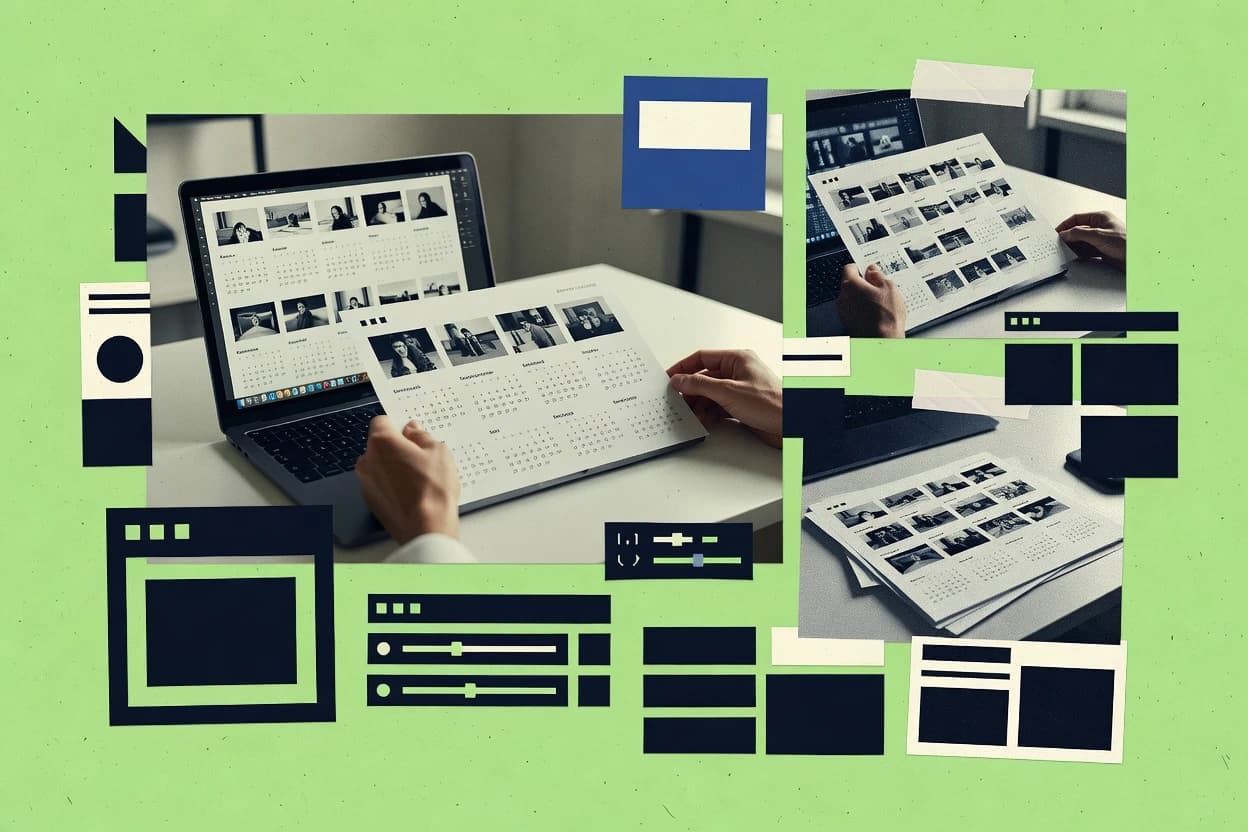
Top 10 photo calendar design software options ranked by layout tools, templates, and print export quality for calendar makers.

How we ranked these tools
Core product claims cross-referenced against official documentation, changelogs, and independent technical reviews.
Analyzed video reviews and hundreds of written evaluations to capture real-world user experiences with each tool.
AI persona simulations modeled how different user types would experience each tool across common use cases and workflows.
Final rankings reviewed and approved by our editorial team with authority to override AI-generated scores based on domain expertise.
Score: Features 40% · Ease 30% · Value 30%
Gitnux may earn a commission through links on this page — this does not influence rankings. Editorial policy
Snapfish is the best bet if your small team needs fast photo calendar layouts with dependable print-ready output, whereas Canva is a strong alternative when you want quick photo calendar layout iterations and shareable review workflows before sending to print.
Editor’s top 3 picks
Three quick recommendations before you dive into the full comparison below — each one leads on a different dimension.
Snapfish
Calendar template library plus grid-aligned drag-and-drop placement for rapid month-page assembly.
Built for fits when small teams need fast calendar layouts, consistent photo placement, and dependable print-ready output..
Mixbook
Editor pickMonth-by-month template styling that keeps date typography and grid alignment consistent after photo swaps.
Built for fits when small teams need consistent photo-grid calendar design without batch automation requirements..
Canva
Editor pickCanva’s calendar elements, including holiday and date overlays, can be placed across month grids without manual redesign.
Built for fits when teams need fast photo calendar layout iterations and shareable review workflows..
Comparison Table
Snapfish
vertical specialistPhoto printing platform offering custom photo calendar creation.
Calendar template library plus grid-aligned drag-and-drop placement for rapid month-page assembly.
Snapfish’s workflow starts with selecting a calendar layout skin and then placing photos into date and month positions on the canvas. The tool’s grid-based approach reduces layout math and speeds up month-by-month assembly using consistent cell alignment across pages. Snapfish also supports crop presets and bleed handling guidance so designs land closer to trim expectations for print production.
The tradeoff is limited deep automation for bulk calendar generation, since the core experience is optimized for interactive design rather than high-throughput templated batches. Snapfish fits best when teams need quick, reviewable calendar iterations for individuals or small groups, not when large catalogs require repeatable generation at scale.
- +Drag-and-drop calendar canvas with month-grid friendly alignment
- +Calendar template library covers common month and wall layouts
- +Crop presets speed consistent photo framing across pages
- +Print-oriented bleed guidance reduces trim surprises
- –Bulk calendar batch generation automation is limited
- –Advanced print engineering controls are not exposed for every output stage
Event coordinators
Create staff wall calendar
Receives print-ready calendar set
Family organizers
Assemble annual photo calendar
Publishes for home print
Show 2 more scenarios
Small retail teams
Prepare seasonal promotion calendars
Ships repeatable seasonal versions
Iterate calendar skins and swap photo content for seasonal sets under a consistent format.
Gifts and personalization teams
Generate multiple recipient calendars
Produces individualized gifts
Create separate designs with shared layout structure for each recipient’s photo set.
Best for: Fits when small teams need fast calendar layouts, consistent photo placement, and dependable print-ready output.
Mixbook
vertical specialistPhoto product service specializing in customizable photo calendars.
Month-by-month template styling that keeps date typography and grid alignment consistent after photo swaps.
Mixbook fits teams and individuals who need calendar skins that stay visually consistent across months, thanks to a guided layout and template library. The editor supports grid-based placement, adjustable typography, and repeatable styling for each month view, which reduces manual rework when swapping photos. The workflow favors quick iterations where the same overall design system is applied across a multi-month calendar.
A key tradeoff is limited automation for large batch generation compared with calendar-focused desktop publishing pipelines. This is a good fit when making a small set of calendars for events, families, or recurring seasonal releases where design time matters more than throughput.
Mixbook also works well when the main goal is print-ready visual design rather than deep prepress control, so users can spend effort on layout choices instead of build rules.
- +Template-based calendar layouts reduce redesign effort across months
- +Grid placement and date overlays keep month views consistent
- +Photo cropping presets help standardize how images fit cells
- +Export flow oriented toward print-friendly output
- –Batch calendar generation controls are limited versus automation-first tools
- –Deep prepress tuning is not as granular as desktop publishing workflows
Event coordinators
Make guest-facing month calendar
Faster proof-to-print turnaround
Family photo keepers
Create annual photo wall calendar
Cohesive year-long calendar
Show 1 more scenario
Small retail marketing
Seasonal promo calendar set
Reduced design inconsistency
Applies the same calendar skin across multiple runs while adjusting photos per campaign.
Best for: Fits when small teams need consistent photo-grid calendar design without batch automation requirements.
Canva
SMBWeb-based graphic design platform with dedicated photo calendar templates.
Canva’s calendar elements, including holiday and date overlays, can be placed across month grids without manual redesign.
Canva provides a grid-based layout workflow for month-style and wall-style calendars, with repeatable design elements like day headers and date blocks. Photo handling supports per-image cropping and positioning inside frames, which helps keep a consistent look across months without rebuilding from scratch. Canva adds calendar-specific content blocks such as holidays and configurable text overlays, which reduces manual typography work compared with generic design tools.
A tradeoff appears when print buyers need strict print production constraints for commercial output, because Canva exports are better suited to standard print workflows than to specialized RIP pipelines. Canva fits best when a team needs to generate multiple photo calendars quickly and validate visually before ordering from a print service or print-on-demand channel.
- +Drag-and-drop editor makes month grid changes fast
- +Template library covers many photo calendar compositions
- +Frame-based photo placement supports consistent month styling
- +Exported PDFs are suitable for typical commercial print handoffs
- –Limited control for advanced print production requirements
- –Tight photo DPI enforcement is not a core workflow focus
- –Complex calendar variations can become hard to batch
- –Add-ons or external steps are often needed for strict workflows
Small print teams
Rapid photo calendar revisions
Less redesign time per version
Event photo coordinators
Family calendars with holiday text
Cleaner, more readable calendars
Show 1 more scenario
Marketing designers
Photo calendar gifting for clients
Faster batch personalization
Designers produce multiple recipient-specific versions using the same base layout and variable photos.
Best for: Fits when teams need fast photo calendar layout iterations and shareable review workflows.
Shutterfly
vertical specialistPhoto printing service with a dedicated photo calendar creator.
On-canvas month-grid editing with live repositioning of date overlays and seasonal skins.
Shutterfly blends a photo-grid calendar template library with an interactive drag-and-drop design canvas that supports month-by-month layouts and date-specific placements. The editor provides recurring layout patterns for holidays and themed skins, then renders the result for print-on-demand fulfillment workflows used for calendars and related photo products. Calendar creation is geared around guided composition, with predictable cropping and on-canvas controls that reduce layout breakage for common calendar formats.
- +Guided grid editor makes month placement changes quick
- +Large template library covers wall, desk, and photo calendar styles
- +Print-focused rendering handles common photo scaling and cropping safely
- +Theming and seasonal variants reduce manual layout tweaks
- –Limited control over print production specifics compared with RIP-oriented tools
- –Advanced export workflows like PDF/X-1a are not the center of the design flow
- –Batch calendar generation requires workarounds rather than first-class automation
- –Template locking can limit custom grid experiments for unusual formats
Best for: Fits when teams need web-to-print calendar production with consistent grids and minimal layout QA time.
Lulu
SMBSelf-publishing and print platform with photo calendar creation tools.
Month-by-month template reuse that keeps photo placement consistent during bulk calendar generation.
Lulu provides a drag-and-drop calendar layout workflow that targets print-ready output from a web editor. It supports photo grid composition and reusable calendar designs so repeated month layouts stay consistent across runs.
Output is generated as print-focused PDFs suitable for local print houses or Lulu fulfillment, with color and image handling designed around commercial print workflows. For calendar makers who need a fast path from template to export without building a full desktop publishing pipeline, Lulu fits well.
- +Web editor supports photo grid placement with predictable month layout control
- +Reusable templates reduce redraw effort across multiple calendar runs
- +Print-focused PDF output reduces last-mile formatting chores
- +Cropping presets help standardize photo framing across months
- –Advanced color management controls are limited compared with desktop tools
- –Bleed and trim guidance is not as granular as professional DTP workflows
Best for: Fits when small print makers need consistent photo calendar layouts and reliable PDF exports.
CEWE Creator Software
vertical specialistDesktop software for designing printed photo calendars with custom layouts, holidays, and image editing tools.
Calendar-specific layout tools for month-grid composition and date marker overlays inside the same editing workspace.
CEWE Creator Software is photo-calendar design software used for producing print-ready calendar layouts through a guided canvas and template library. It focuses on calendar-specific layout assembly such as month and grid composition, date overlays, and photo placement with crop and fit controls.
The workflow is built around producing production files for print output rather than generic page layouts, which keeps common calendar steps within one authoring environment. It also supports workflows where teams need consistent templates and repeatable formatting across multiple calendar variants.
- +Calendar-first editing reduces steps versus general photo layout tools
- +Template library supports quick month and date overlay layouts
- +Photo cropping and placement controls fit common print calendar formats
- +Repeatable formatting supports producing many calendars with consistent styling
- –Limited control over low-level print output settings compared with DTP tools
- –Advanced automation and batch generation are not exposed as developer-facing APIs
Best for: Fits when a print team needs fast, template-based calendar creation with consistent formatting.
Mimeo Photos
SMBmacOS photo product software that includes customizable wall calendar creation from Apple Photos and standalone projects.
Grid auto-fill behavior that maintains consistent photo cell sizing across all month pages.
Mimeo Photos pairs a media-focused design flow with calendar-specific templates and print-ready export steps for common year and monthly layouts. Its editor supports drag-and-drop photo placement plus reusable grid rules that help keep multi-photo months consistent.
The workflow centers on generating print PDFs with color management options and predictable margins for calendar production. For print shops that need repeatable output, Mimeo Photos emphasizes batch-friendly calendar creation rather than one-off layout tinkering.
- +Drag-and-drop canvas keeps month grids consistent across multiple pages
- +Calendar template library covers common month-grid and wall layouts
- +Print export workflow emphasizes predictable margins for calendar runs
- +Reusable photo placement patterns reduce per-month manual rework
- –Advanced calendar skins and deep template locking need extra workflow discipline
- –Automation and API surface for print fulfillment stays limited versus workflow-first tools
Best for: Fits when teams need template-driven calendars with consistent photo grids and reliable print PDF output.
PrestoPhoto
vertical specialistOnline photo publishing platform with custom photo calendar templates and print fulfillment.
Template locking and guided placement reduce misalignment across batch calendar generations.
PrestoPhoto is a photo calendar design tool focused on producing print-ready calendars with a grid-first workflow and template-driven layouts. Calendar creation centers on a drag-and-drop canvas, reusable image placements, and layout options for month-grid and wall-calendar formats.
PrestoPhoto supports export paths aimed at print workflows, including high-resolution output and PDF delivery for downstream print production. Automation is primarily template and batch generation oriented rather than an end-to-end storefront integration layer.
- +Grid-based editing keeps month layouts aligned during rapid design changes
- +Template library covers common calendar structures like month-grid and wall formats
- +Batch calendar generation helps produce consistent editions across multiple photo sets
- +Exports are oriented toward print pipelines with high-resolution PDF output
- –Automation depth is weaker for custom per-recipient personalization rules
- –Fine print-color control like CMYK gamut warnings is limited in the authoring view
Best for: Fits when teams need template-driven calendar production with batch generation for consistent print output.
Pixum Photo World Software
vertical specialistDesktop photo product creator with templates and editing tools for personalized wall and desk calendars.
Template-driven calendar layout workflow that enforces print-safe composition with crop presets and placement constraints.
Pixum Photo World Software creates photo calendar layouts from a selectable set of calendar templates and a drag-and-drop photo canvas. It focuses on print-ready output by guiding users through grid-based placement, crop presets, and bleed-aware page setup before exporting for print production.
The tool also supports repeated calendar generation workflows, such as generating multiple months or variants from a shared photo set. Pixum Photo World Software is best evaluated on template fit for wall and page calendar formats and on export quality consistency for printed calendars.
- +Template library covers common month-grid and wall-calendar patterns
- +Grid placement and photo cropping presets reduce layout guesswork
- +Export output targets print production with print-safe layout constraints
- +Batch generation fits repeat calendars from the same image set
- –Advanced calendar customization is limited after template locking
- –Fine control over print margins and color handling is not as granular as desktop tools
- –Manual per-photo adjustments can be slow on large calendars
- –Automation and integration options are not aimed at custom print workflows
Best for: Fits when personal or small teams need fast template-based print calendars without custom DTP tooling.
Photobox Creator
SMBConsumer photo product platform with online tools for building personalized photo calendars.
Month-grid calendar building with slot-based photo placement and recurring crop presets.
Photobox Creator is a photo calendar design tool for teams and studios that need fast template-based layouts and consistent print output. It supports month and grid-oriented calendar building with drag-and-drop placement, plus image cropping presets meant for recurring photo slots.
The workflow focuses on generating production-ready PDFs for print, with guardrails that reduce common trimming and bleed mistakes. It is less suitable for deep automation or custom layout logic than tools aimed at full web-to-print integrations.
- +Template-driven calendar layouts reduce layout rework for recurring seasons
- +Drag-and-drop canvas makes month-grid assembly quick
- +Crop presets help keep portrait and landscape photos consistent across months
- +PDF exports target print workflows without extra manual steps
- –Limited controls for low-level print parameters compared with RIP-centric tools
- –Calendar customization depth is weaker for template-locked design systems
- –Batch calendar generation is not a strong focus for high-volume operators
- –Automation and API-driven provisioning are not geared for custom storefront integrations
Best for: Fits when teams need quick, repeatable calendar layout creation for print with minimal layout engineering.
Conclusion
After evaluating 10 art design, Snapfish stands out as our overall top pick — it scored highest across our combined criteria of features, ease of use, and value, which is why it sits at #1 in the rankings above.
Use the comparison table and detailed reviews above to validate the fit against your own requirements before committing to a tool.
How to Choose the Right photo calendar design software
Photo calendar design software builds month-grid and wall-calendar layouts by combining a calendar template library with drag-and-drop placement that targets print-ready exports.
This guide covers Snapfish, Mixbook, Canva, Shutterfly, Lulu, CEWE Creator Software, Mimeo Photos, PrestoPhoto, Pixum Photo World Software, and Photobox Creator.
Each tool card emphasizes how templates, grid alignment, and export workflows affect layout consistency across single calendars and bulk runs.
Photo calendar design software for month-grid and wall-calendar layout, template reuse, and print-ready export
Photo calendar design software lets teams assemble calendar pages using a grid layout engine and template library rules that keep date overlays and photo placement aligned across months. Snapfish and Shutterfly focus on month-grid editing that keeps placement predictable when dates and seasonal skins are moved on-canvas.
Template-driven workflows matter because many tools reuse month-by-month layouts to reduce redesign effort after photo swaps, as seen in Mixbook and Lulu. Tools also differ in how much print engineering control is exposed during authoring, with Snapfish emphasizing fast layout creation and Lulu highlighting reliable PDF exports while limiting advanced prepress tuning.
Automation depth varies across the set, so the practical difference is whether bulk calendar generation stays minimal and design-consistent, or whether developer-facing integration and batch controls are a core part of the workflow in the tool itself.
Decision framework for selecting photo calendar design software by workflow fit
Choose the tool that matches how month-page consistency must be maintained in the actual production loop. The biggest split across Snapfish, Mixbook, and the rest is whether the workflow centers on fast on-canvas editing or on governed, template-driven generation for repeated runs.
Then match export needs to authoring control depth. Some tools keep print production tuning shallow in the editor, which works when the calendar is designed to a provider-ready format, while others reduce misalignment risk through stronger template locking and guided placement for volume output.
Map authoring style to how the month grid changes during revisions
If month grids shift often while date overlays and grid alignment must remain stable, Mixbook’s month-by-month template styling keeps month views consistent after photo swaps. If edits are dominated by moving elements on-canvas and keeping seasonal skins aligned, Shutterfly’s live repositioning for date overlays fits faster layout QA.
Select batch generation depth based on how many calendars are produced per run
For repeated calendar runs where month-by-month template reuse must preserve photo placement, Lulu supports reusable templates designed for bulk calendar generation. For smaller teams that mainly assemble layouts once per calendar, Snapfish delivers fast layout creation but limits bulk calendar batch generation automation.
Pick template governance strength when layout mistakes cost time
For production workflows that need fewer layout misalignment events across batch generations, PrestoPhoto’s template locking and guided placement reduces drift. For workflows that depend on consistent photo cell sizing across all month pages, Mimeo Photos grid auto-fill keeps month-grid consistency but requires discipline when applying advanced skins.
Decide whether the tool’s print engineering controls match the prepress workflow
If print production needs advanced prepress tuning, Snapfish and Lulu both emphasize calendar layout and export reliability but limit advanced print engineering controls compared with desktop publishing workflows. If print requirements stay within typical provider formats, Canva’s drag-and-drop canvas and template library support rapid iterations with less exposure to deep print production specifics.
Use crop presets and placement constraints when images vary in size and aspect
If the production problem is inconsistent photo dimensions that break layouts, Pixum Photo World Software uses crop presets and placement constraints to keep print-safe composition under template rules. If repeatable season-based calendar layouts matter more than deeper authoring controls, Photobox Creator’s recurring crop presets and slot-based placement reduce rework.
Who benefits from these calendar design tools
These tools target different production rhythms, not just different visual styles. The key difference is whether month-grid assembly stays interactive and flexible, or whether template-driven generation dominates repeated runs.
Teams that output many calendars for print fulfillment tend to value template reuse, layout safety, and export reliability over advanced desktop publishing controls inside the editor.
Small print teams producing a limited number of calendars per design cycle
Snapfish fits fast month-page assembly because it combines a drag-and-drop calendar canvas with grid-aligned placement. Canva also fits iteration-heavy workflows where shareable review steps matter more than deep print engineering control.
Designers who must keep month pages consistent across photo swaps
Mixbook provides template-based calendar layouts that reduce redesign effort across months while keeping date typography and grid alignment consistent. Shutterfly adds guided grid editor behavior that keeps month placement changes quick during web-to-print production.
Operators who run bulk calendar generations from reusable layouts
Lulu is built around month-by-month template reuse to keep photo placement consistent during bulk calendar generation with dependable PDF exports. PrestoPhoto adds template locking and guided placement to reduce misalignment across batch calendar generations.
Fulfillment-focused workflows where photo sizing variability must be handled by the editor
Pixum Photo World Software reduces layout guesswork with crop presets and placement constraints tied to its template-driven workflow. Photobox Creator uses recurring crop presets and slot-based photo placement to make repeatable calendar layout creation faster.
Studios that need consistent photo grids across every month page
Mimeo Photos uses grid auto-fill behavior that maintains consistent photo cell sizing across all month pages. It also supports template-driven calendars for common month-grid and wall layouts while requiring discipline for advanced calendar skins.
Common pitfalls that break calendar layout quality
Many failures come from assuming layout freedom inside the editor will translate into consistent print output. Grid behavior, template locking, and export emphasis determine whether date overlays and photo geometry stay aligned when designs change.
Mistakes also appear when tools are selected without regard to batch generation needs or prepress control depth, which can cause repeated manual work or output that does not match the production expectations.
Using a template-light workflow and discovering month-grid drift after photo swaps
Mixbook prevents redesign effort across months by using month-by-month template styling that keeps grid alignment consistent after swaps. If drift must be minimized under revisions, Shutterfly’s live repositioning of date overlays keeps seasonal skins aligned during on-canvas edits.
Relying on batch generation controls that are limited when calendar volume increases
Snapfish limits bulk calendar batch generation automation, which can force manual repeat runs at higher volume. Mimeo Photos and Lulu both support consistency via template-driven workflows, but Lulu is the stronger fit for bulk calendar generation with reusable templates.
Overestimating print production tuning available inside the authoring editor
Lulu keeps advanced color-management controls limited compared with desktop tools, so deep prepress tuning is not the center of its design flow. Canva similarly provides limited control for advanced print production requirements, which can be a mismatch for RIP-oriented needs.
Applying deep customization without understanding template locking constraints
PrestoPhoto uses template locking and guided placement to reduce misalignment, but fine-grained custom rules can be harder to implement. Mimeo Photos supports consistent grid output through auto-fill, but advanced calendar skins and deep template locking require extra workflow discipline.
How We Selected and Ranked These Tools
We evaluated Snapfish, Mixbook, Canva, Shutterfly, Lulu, CEWE Creator Software, Mimeo Photos, PrestoPhoto, Pixum Photo World Software, and Photobox Creator using feature coverage and print-certificate workflow fit. Features accounted for 40% of the score, and ease of layout iteration and value for calendar-making workloads each accounted for 30%.
Snapfish ranked highest because it combines a calendar template library with a grid-aligned drag-and-drop calendar canvas for rapid month-page assembly, which directly supports consistent month-grid behavior during revisions. Snapfish also delivered higher overall feature and value ratings than tools where automation and advanced print engineering controls are limited during the design flow.
Frequently Asked Questions About photo calendar design software
How does template locking affect calendar layouts during bulk generation?
Which tool handles month-grid date overlays with better edit stability after photo swaps?
What export format and print-production path matter most for calendar makers?
How do grid-first editors prevent cropping and cell-fit mistakes?
What breaks if holiday localization packs do not match the recipient region?
Which workflow is faster for teams that share review links instead of sending files?
How do calendar design tools compare for web-to-print provisioning and fulfillment readiness?
What tradeoff appears when a tool prioritizes calendar-specific UX over general desktop publishing?
Where does personalization automation tend to fall short compared with an API-first print workflow?
Tools reviewed
Primary sources checked during evaluation.
Referenced in the comparison table and product reviews above.
Keep exploring
Comparing two specific tools?
Software Alternatives
See head-to-head software comparisons with feature breakdowns, pricing, and our recommendation for each use case.
Explore software alternatives→In this category
Art Design alternatives
See side-by-side comparisons of art design tools and pick the right one for your stack.
Compare art design tools→