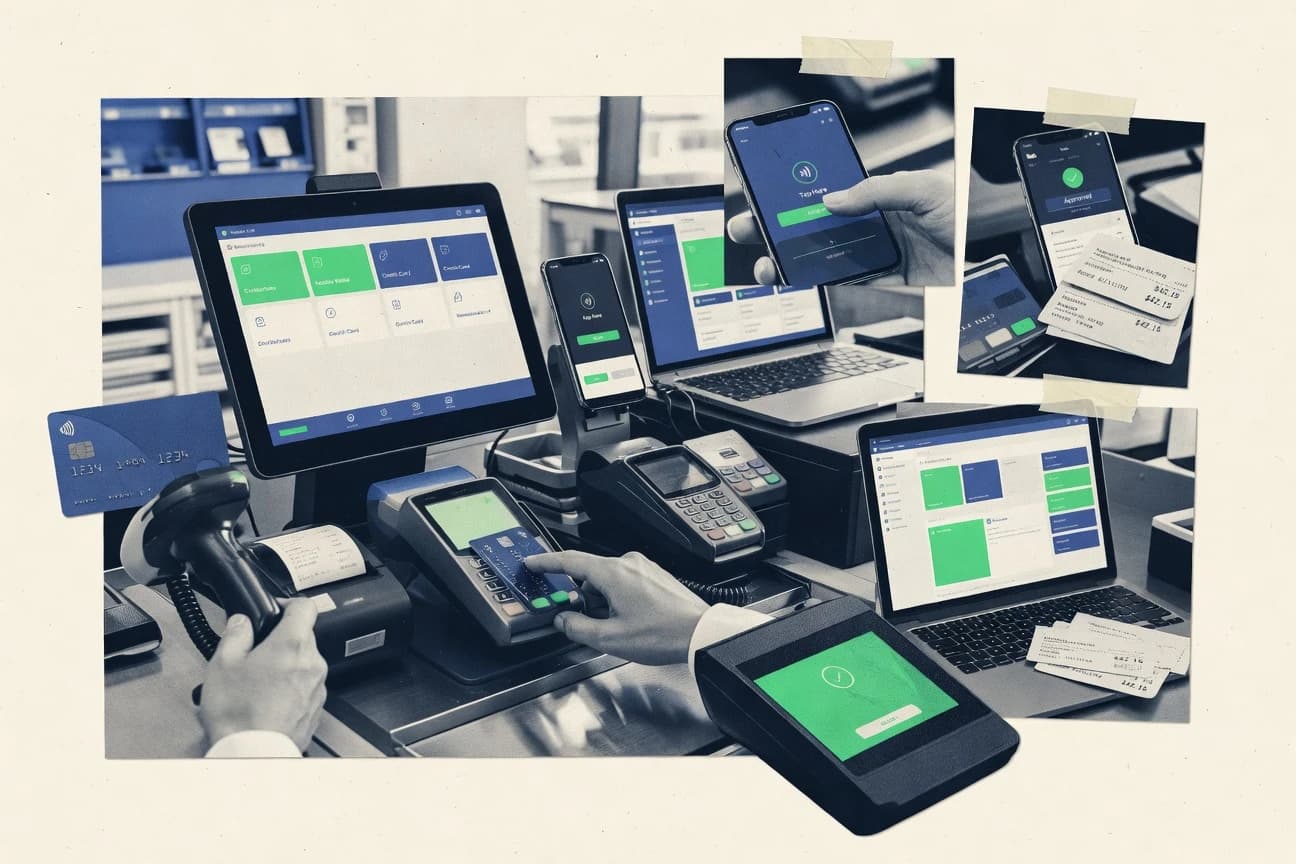
GITNUXSOFTWARE ADVICE
Finance Financial ServicesTop 10 Best Payment Systems Software of 2026
Top 10 payment systems software ranked for transaction processing needs, with comparisons of SumUp, Adyen, and Stripe for decision makers.

How we ranked these tools
Vendors set the topic, but our editors set the inclusion criteria and the evaluation framework before research starts.
Agents extract product evidence with provenance, then collect written reviews and transcribe video reviews and podcasts.
Framework: Features 40% · Ease 30% · Value 30%
Gitnux may earn a commission through links on this page — this does not influence rankings. Editorial policy
SumUp is the most practical fit for small businesses that need fast card acceptance across channels with solid operational reporting and little integration work, whereas Adyen suits multi-market teams that want consistent APIs and tight control for reconciliation and exceptions.
Editor’s top 3 picks
Three quick recommendations before you dive into the full comparison below — each one leads on a different dimension.
SumUp
Terminal management combined with hosted online payments under one operational dashboard.
Best for: Fits when merchants need fast card acceptance across channels with operational reporting and minimal integration work.
Adyen
Editor pickEvent-driven transaction status updates that support automated capture and operational exception handling.
Best for: Fits when multi-market payments require consistent APIs and operational control for reconciliation and exceptions.
Stripe
Editor pickPaymentIntents and SetupIntents provide stateful, multi-step control with confirmation tied to webhook events.
Best for: Fits when engineering teams need programmatic control over payment lifecycle and reconciliation signals.
Comparison Table
SumUp
SMBMobile card payment terminals and software for small businesses.
Terminal management combined with hosted online payments under one operational dashboard.
SumUp covers acceptance for retail locations using card terminals and for digital channels using hosted checkout and invoicing flows. Settlement reporting is designed around batch activity so operators can reconcile payouts against recorded transactions. For teams that need workflow automation, SumUp focuses on operational controls like device management and payment settings rather than exposing low-level message formats.
A key tradeoff is limited control over advanced routing logic compared with gateway or orchestration vendors that support custom acquirer selection and granular ISO message configuration. SumUp fits best when payments execution and reporting need to be run with minimal engineering and when merchants want consistent handling across in-person and basic online flows.
- +Unified workflow across terminals, checkout, and invoicing
- +Recurring payments support reduces manual collection steps
- +Settlement-oriented reporting helps reconcile deposits to activity
- +Fast device operations for retail teams managing terminals
- –Limited customization for advanced payment routing and message-level control
- –Automation depth is narrower than orchestration-first payment gateways
Retail operations teams
Multiple store terminals with consistent workflows
Cleaner daily close and fewer errors
SMB ecommerce managers
Hosted checkout for small product catalogs
Lower integration effort
Show 2 more scenarios
Subscription and membership teams
Recurring collection for membership renewals
More consistent renewals
Recurring payments automate re-billing schedules and reduce manual follow-ups.
Finance and reconciliation owners
Matching deposits to transaction activity
Faster reconciliation cycles
Settlement-based transaction views make it easier to reconcile payouts against recorded payments.
Best for: Fits when merchants need fast card acceptance across channels with operational reporting and minimal integration work.
Adyen
enterpriseA single platform providing global payment processing, data, and financial management.
Event-driven transaction status updates that support automated capture and operational exception handling.
Adyen supports a broad set of payment methods through a unified integration approach, including cards and local instruments, with transaction status updates that can drive downstream business logic. The product also provides configuration and operational controls for handling retries, capture timing, and dispute workflows without building everything from scratch. Data flows are designed around merchant identifiers and settlement outputs that map to operational reporting, which reduces manual work when reconciling across multiple payment types.
A key tradeoff is that deeper controls and advanced flows require more up-front integration and operational design than lighter-weight gateway-only setups. Adyen fits best when payment throughput, multi-market method coverage, and standardized exception handling matter, such as retail groups managing many brands or marketplaces coordinating high volumes across regions.
- +Unified API for transaction lifecycle across payment methods
- +Operational controls for capture timing and automated status updates
- +Dispute workflows designed for merchant processing operations
- +Settlement outputs support reconciliation with fewer manual steps
- –Advanced configuration increases integration and operations workload
- –Exception handling requires disciplined workflow design and monitoring
- –Some payment methods and features depend on specific regional setup
- –Test coverage and sandbox alignment take planning for complex flows
Payments engineering teams
Build consistent orchestration across methods
Fewer workflow forks
Finance and reconciliation teams
Match settlement to payment activity
Lower reconciliation effort
Show 2 more scenarios
Customer support operations
Handle disputes with structured workflows
Faster case resolution
Route dispute handling through operational tooling that aligns with transaction history.
Marketplace operations teams
Run payments across multiple regions
More stable payment coverage
Configure routing behavior and handle method differences with consistent transaction APIs.
Best for: Fits when multi-market payments require consistent APIs and operational control for reconciliation and exceptions.
Stripe
API-firstA suite of APIs powering online payment processing for internet businesses.
PaymentIntents and SetupIntents provide stateful, multi-step control with confirmation tied to webhook events.
Stripe’s integration depth is driven by a consistent API for payment flows, billing objects, and event notifications delivered through webhooks. Payment lifecycle control is granular through mechanisms like PaymentIntents and SetupIntents, which support multi-step confirmation and saved payment methods. Operational tooling includes dashboards for disputes and refunds, and programmatic access to transaction data for downstream settlement reconciliation.
A common tradeoff is that Stripe’s breadth increases design work, since routing, authentication rules, and reconciliation logic often need to be modeled in the merchant’s systems. Stripe fits best when engineering can connect webhooks to ledger updates and when product teams need configurable checkout, subscriptions, and invoicing workflows.
- +Unified APIs for one-off payments, subscriptions, and saved payment methods
- +Event-driven automation via webhooks with idempotency support
- +Extensive dashboards for refunds, disputes, and operational monitoring
- +Configurable checkout flows for multiple payment methods
- –Broad capability set increases integration design and reconciliation effort
- –Advanced workflows require careful state handling across webhook events
- –Customization across regions can add engineering overhead
- –Fraud and optimization features may need tuning per payment type
Platform engineering teams
Build self-serve payment enablement
Fewer manual payment operations
Subscription product teams
Run recurring billing with retries
Higher billing continuity
Show 1 more scenario
Finance and reconciliation teams
Automate transaction-to-ledger matching
Faster close and fewer exceptions
Transaction events drive downstream reconciliation entries and dispute status updates.
Best for: Fits when engineering teams need programmatic control over payment lifecycle and reconciliation signals.
Dwolla
API-firstDwolla provides ACH and account-to-account payment infrastructure through APIs and business workflows.
Event-driven transfer status via API and webhooks supports automated reconciliation workflows without manual polling.
Dwolla is a payments infrastructure provider built around ACH and related bank transfer rails, with APIs for moving money between bank accounts. Its core workflow support focuses on account funding, transfers, and status-driven reconciliation data that can feed internal systems.
- +Transfer lifecycle status events map cleanly into API-driven operations
- +Strong ACH-centric approach fits use cases that rely on bank-to-bank payments
- +Webhook support helps automate ledger updates and operational monitoring
- +Administrative tooling supports operational controls for account management
- –Limited fit for card-first workflows compared with card-focused processors
- –High-volume throughput depends on careful integration and retries
- –More integration work is needed for multi-rail orchestration and routing
- –Settlement and reconciliation design still requires internal accounting mapping
Best for: Fits when ACH-based payments need an API-first lifecycle with automation via webhooks.
Mollie
SMBMollie provides European payment processing, checkout, subscriptions, and business financing.
Webhook events map cleanly to payment state changes, refunds, and dispute updates for reconciliation workflows.
Mollie processes card, bank transfer, and local payment methods through a single payments API and consistent checkout and payment object model. It supports payment lifecycle management with statuses, webhooks, refunds, and recurring payment capabilities for stored customer credentials.
- +Consistent payment object lifecycle with clear statuses and refunds
- +Webhook-driven reconciliation reduces polling and improves event accuracy
- +Broad local payment coverage without adding separate gateway integrations
- +Idempotent create flows help prevent duplicate payment attempts
- –Advanced acquirer routing and ISO 8583-level controls are not the core focus
- –Fraud rules and risk tooling require integration outside Mollie
- –Multi-entity governance needs careful role and merchant account structure
- –Custom payment orchestration logic depends on implementation work
Best for: Fits when European-facing merchants need fast integration across multiple payment methods and reliable webhook updates.
Nuvei
enterpriseNuvei provides global payment acceptance, payouts, card issuing, and embedded finance infrastructure.
Chargeback and dispute operations built around program-level transaction management, not just payments ingestion.
Nuvei targets merchants that need global card processing plus local payment methods across multiple countries, with one integration and operational tooling for ongoing transaction handling. Its offering centers on payment acceptance, risk and dispute workflows, and settlement support that maps to back-office reconciliation needs.
- +Strong operational coverage for settlement and reconciliation across payment methods
- +API depth supports authorization and capture flow control for multi-step checkout
- +Dispute and chargeback workflows align to ongoing transaction management
- +Recurring billing support reduces custom dunning and renewal orchestration
- –Integration depth can require specialist engineering for faster production go-live
- –Admin configuration for complex programs can create change-control overhead
- –Some reporting needs may require data extraction and internal normalization
- –Non-card payment method behavior can vary by country and adds edge-case handling
Best for: Fits when global merchants need one integration for multi-country acceptance and ongoing dispute and settlement operations.
Flutterwave
regional specialistFlutterwave provides African payment acceptance, transfers, checkout, invoicing, and payouts.
Unified webhook event model links collections, recurring events, and payout statuses for end-to-end reconciliation.
Flutterwave focuses on high-coverage Africa-first payment rails with gateway-style onboarding and a single API for multiple payment methods. Its core capabilities include payment initiation and verification, recurring payment setup, payout tooling, and invoice-style flows for bill collection.
- +Single API supports card, bank transfer, and local methods under one payment workflow
- +Webhooks deliver event-driven status updates for reconciliation without polling
- +Recurring billing supports scheduled collections and payment lifecycle tracking
- +Built-in payout tooling supports disbursements alongside collections
- –Complex method configuration can increase time-to-launch for multi-country rollouts
- –Dispute and chargeback tooling requires careful mapping of references to transactions
Best for: Fits when a platform needs API-driven collections plus payouts across multiple local payment methods.
Airwallex
API-firstAirwallex provides global payment acceptance, multi-currency accounts, payouts, and financial APIs.
Multi-currency settlement with API and webhook driven payment lifecycle events for accounting-grade reconciliation.
Airwallex is a payments systems provider focused on cross-border acquiring, issuing, and local payment methods. It supports currency accounts and multi-currency settlement flows that reduce manual FX steps during reconciliation.
- +Multi-region payment coverage reduces the need for separate regional integrations
- +Webhook-driven status updates support automated reconciliation workflows
- +Currency accounts help centralize settlement and FX operations
- +Programmable payment controls support fine-grained routing decisions
- –Complexity increases when optimizing routing rules across many corridors
- –Some operational workflows rely on deeper API knowledge than typical gateways
Best for: Fits when teams need one integration to run multi-currency processing across multiple corridors and automate reconciliation.
Marqeta
API-firstMarqeta provides modern card issuing, processing, transaction controls, and payment APIs.
Real-time issuing controls tied to program configuration and event updates via API-driven card lifecycle management.
Marqeta issues and programs cards through APIs for tokenized card credentials, fintech-led issuing, and global spend control. Core capabilities include configurable card program rules, real-time transaction controls, and event-driven processing for authorization, capture, and lifecycle updates.
- +API-first issuing and card lifecycle controls for programmatic decisioning
- +Webhook and event patterns fit event-driven reconciliation workflows
- +Granular controls support merchant, spend, and lifecycle governance per program
- +Configurable rules reduce custom middleware for common issuing operations
- –Requires integration depth to translate program policies into API workflows
- –Operational setup spans multiple environments and services for end-to-end testing
Best for: Fits when payment programs need developer-led issuing controls and event-driven transaction operations.
FastSpring
vertical specialistFastSpring provides merchant-of-record payments, digital commerce, subscriptions, and global tax handling.
Order lifecycle webhooks for automating entitlement fulfillment, renewal updates, and operational workflows.
FastSpring is geared toward businesses that sell digital goods and services and need payment flows that fit checkout, tax, and invoicing patterns. It provides hosted checkout options and contract-like purchase experiences that support subscriptions, renewals, and entitlement delivery workflows.
- +Hosted checkout reduces integration work for digital product purchases
- +Subscription renewals map cleanly to fulfillment entitlements and updates
- +Lifecycle events support automation for fulfillment and customer status changes
- +Configurable tax and invoicing flows fit common SaaS and digital billing needs
- –Less suited to teams needing direct ISO 8583 control or custom routing rules
- –Advanced orchestration depends on integrating around FastSpring order events
- –Limited visibility compared with gateway-first stacks that expose raw payment messaging
- –Requires adopting FastSpring checkout patterns instead of fully custom payment UX
Best for: Fits when digital product teams need hosted checkout and automation around orders and entitlements.
Conclusion
After evaluating 10 payment systems software, SumUp stands out as our overall top pick — it scored highest across our combined criteria of features, ease of use, and value, which is why it sits at #1 in the rankings above.
Use the comparison table and detailed reviews above to validate the fit against your own requirements before committing to a tool.
How to Choose the Right Payment Systems Software
Payment systems software coordinates authorization, capture, settlement, refunds, and status updates across payment channels through gateway, orchestration, and operational workflows. This buyer guide covers SumUp, Adyen, and Stripe alongside Dwolla, Mollie, Nuvei, Flutterwave, Airwallex, Marqeta, and FastSpring.
The comparison focuses on integration depth and automation surfaces such as webhook-driven state updates, lifecycle control APIs, and operational dashboards that reduce manual reconciliation work. Tool selection hinges on how each platform handles transaction lifecycle control, exception handling workflows, and the practical effort needed to keep operational states consistent.
Payment Systems Software that manages transaction lifecycles, status updates, and reconciliation workflows
Payment systems software is the layer that moves payment events from checkout or transfer initiation into a managed transaction lifecycle with capture, refund, dispute, and settlement reconciliation hooks. It typically includes API-driven payment initiation, event delivery, and operational controls that map real-world payment outcomes into system states.
Adyen is built around a unified API for transaction lifecycle control with event-driven status updates that support automated capture timing and exception handling. Stripe adds stateful control primitives through PaymentIntents and SetupIntents with confirmation flows tied to webhook events, which affects how engineering teams design reconciliation signals and idempotent processing.
Payment lifecycle control, automation, and operations visibility
Payment systems software must represent authorization, capture, refunds, disputes, and settlement outcomes as durable transaction states so operations can act without guessing. Automation hinges on how each platform delivers those state changes, either through webhook event models, lifecycle control primitives, or unified operational dashboards that keep workflows consistent across channels.
Webhook-driven lifecycle state updates
Mollie and Flutterwave keep reconciliation aligned by mapping webhook events to payment state changes, refunds, and dispute updates across related flows.
Stateful lifecycle primitives for multi-step confirmation
Stripe uses PaymentIntents and SetupIntents so engineering teams can tie confirmation progress to webhook events and build idempotent reconciliation signals.
Event-driven capture timing and operational exception handling
Adyen supports automated capture timing and exception handling through event-driven transaction status updates tied to a unified transaction lifecycle API.
Multi-channel operational workflow consolidation
SumUp combines terminal management with hosted online payments in one operational dashboard so checkout, invoicing, and terminal operations share the same workflow surface.
API-first transfer lifecycle for automated reconciliation
Dwolla focuses on ACH transfers and provides event-driven transfer status via API and webhooks so bank-to-bank reconciliation can run without manual polling.
Dispute and chargeback operations tied to program-level transaction management
Nuvei places chargeback and dispute operations around ongoing program-level transaction management so ongoing resolution workflows stay connected to payment lifecycle control.
Select a platform based on workflow model and lifecycle control boundaries
The choice comes down to where lifecycle control logic lives and how operations receives state updates during normal outcomes and exceptions. Tools differ most when the platform uses a unified operational dashboard, a stateful API with confirmation control, or event-driven lifecycle updates that require disciplined workflow design and monitoring.
Pick the lifecycle control style based on engineering ownership
Stripe fits teams that want explicit lifecycle control through PaymentIntents and SetupIntents with confirmation tied to webhook events and engineered idempotency for reconciliation.
Choose event-driven exception handling when operations needs automation
Adyen fits teams that expect event-driven transaction status updates for automated capture timing and operational exception handling that reduces manual triage.
Decide whether dashboard-led operations or API-led operations is the primary control plane
SumUp fits merchants that need terminal management plus hosted online payments under one operational dashboard to avoid splitting operational workflows across separate systems.
Align the payment method mix with the platform's native workflow center
Dwolla fits ACH-centric payment flows that need API-driven transfer lifecycle status events, while card-first workflows typically require deeper card workflow focus than Dwolla’s transfer orientation.
Confirm reconciliation data needs for disputes, refunds, and linked objects
Nuvei fits ongoing dispute and chargeback operations when program-level transaction management must stay connected to settlement and reconciliation workflows.
Who Payment Systems Software fits best
Payment systems software fits teams that manage multiple payment outcomes and need consistent state transitions across systems that generate transactions and systems that reconcile them. It also fits organizations that must automate operational workflows for capture timing, refunds, and exception handling rather than rely on manual status checking.
Multi-channel merchants running terminals plus hosted checkout
SumUp provides a unified workflow across terminals, checkout, and invoicing so operational reporting and day-to-day payment handling do not split across separate portals.
Platform engineering teams building reconciliation pipelines
Stripe supports programmatic lifecycle control with PaymentIntents and SetupIntents and webhook-driven automation that can be engineered around idempotency and state progression.
Enterprises that require consistent transaction lifecycle APIs for multi-market payments
Adyen provides a unified API for transaction lifecycle control plus operational controls for capture timing and automated status updates.
Bank-to-bank payment operators focused on ACH lifecycle automation
Dwolla’s API-first transfer status events support automated reconciliation workflows without manual polling, aligning well with ACH-heavy operations.
Global merchants managing ongoing disputes and resolution operations
Nuvei’s dispute and chargeback operations are built around program-level transaction management rather than only payment ingestion.
Common implementation pitfalls in Payment Systems Software
Most failures come from mismatching workflow ownership, event handling discipline, and the platform’s lifecycle control model to the organization’s operational processes. The second failure mode is designing reconciliation logic that does not match how the platform emits lifecycle states during success and exception paths.
Building reconciliation logic without mapping event states to a durable internal state machine
Stripe’s webhook-driven PaymentIntents and SetupIntents flows require state handling across webhook events so idempotent processing can keep internal outcomes consistent.
Overestimating automation without designing for operational exception paths
Adyen’s advanced configuration and exception handling require workflow design and monitoring so automated capture timing does not hide operational outliers.
Choosing a platform based on payment acceptance breadth while ignoring operational workflow consolidation
SumUp’s strength is unified operations across terminals, checkout, and invoicing so splitting operations across multiple dashboards undermines the workflow simplification that drives its value.
Treating transfers and card payments as interchangeable lifecycle workflows
Dwolla’s ACH-centric transfer lifecycle status events fit reconciliation patterns for bank-to-bank payments, while card-first routing and message-level controls demand a card-focused workflow model.
How We Selected and Ranked These Tools
We evaluated SumUp, Adyen, Stripe, and the other reviewed platforms on automation and lifecycle integration behavior, including how each system emits webhook events and supports lifecycle control primitives. Features accounted for 40% of the ranking using workflow coverage across payment outcomes like capture, refunds, and status updates.
Ease and value each accounted for 30% by measuring integration effort tied to event handling and operational monitoring needs. SumUp placed first because its terminal management combined with hosted online payments under one operational dashboard keeps transaction handling and operational reporting in a single workflow surface.
Frequently Asked Questions About Payment Systems Software
How do SumUp, Adyen, and Stripe handle reconciliation outputs for settlement matching?
Which platform supports event-driven status updates for automated capture and operational exception handling?
How does API integration differ between Dwolla and card-first platforms like Stripe and Adyen?
When do hosted checkout flows fit better than low-level payment orchestration via API objects?
What breaks if an integration does not support idempotency and webhook retries for payment requests?
How do SSO and RBAC controls surface in payment ops across platforms like Flutterwave and Nuvei?
Which tool is strongest for multi-currency reconciliation when cross-border settlement timelines vary?
How do recurring payment workflows differ between SumUp, Stripe, and Flutterwave?
Where does the tradeoff appear when choosing card issuing platforms like Marqeta versus payment acceptance platforms like Adyen?
Tools reviewed
Primary sources checked during evaluation.
Referenced in the comparison table and product reviews above.
Funding and competing interests
This study was co-funded by several of the vendors assessed in it. No single vendor funded it. Funders could propose the market studied.
They had no role in selecting vendors, setting or weighting criteria, analysing data or drawing conclusions, and they received the same factual-accuracy check as every other vendor assessed.
Market definition, inclusion rules and criteria weights were fixed by an editor before research began and did not change afterwards. Editorial process →
- Finance Financial ServicesTop 10 Best Payment Transaction Software of 2026
- Finance Financial ServicesTop 10 Best Payment Management Software of 2026
- Finance Financial ServicesTop 10 Best Payment Application Software of 2026
- Finance Financial ServicesTop 10 Best Payment Automation Software of 2026
- Finance Financial ServicesTop 10 Best Automated Payment Software of 2026
Keep exploring
Comparing two specific tools?
Software Alternatives
See head-to-head software comparisons with feature breakdowns, pricing, and our recommendation for each use case.
Explore software alternatives→In this category
Finance Financial Services alternatives
See side-by-side comparisons of finance financial services tools and pick the right one for your stack.
Compare finance financial services tools→