
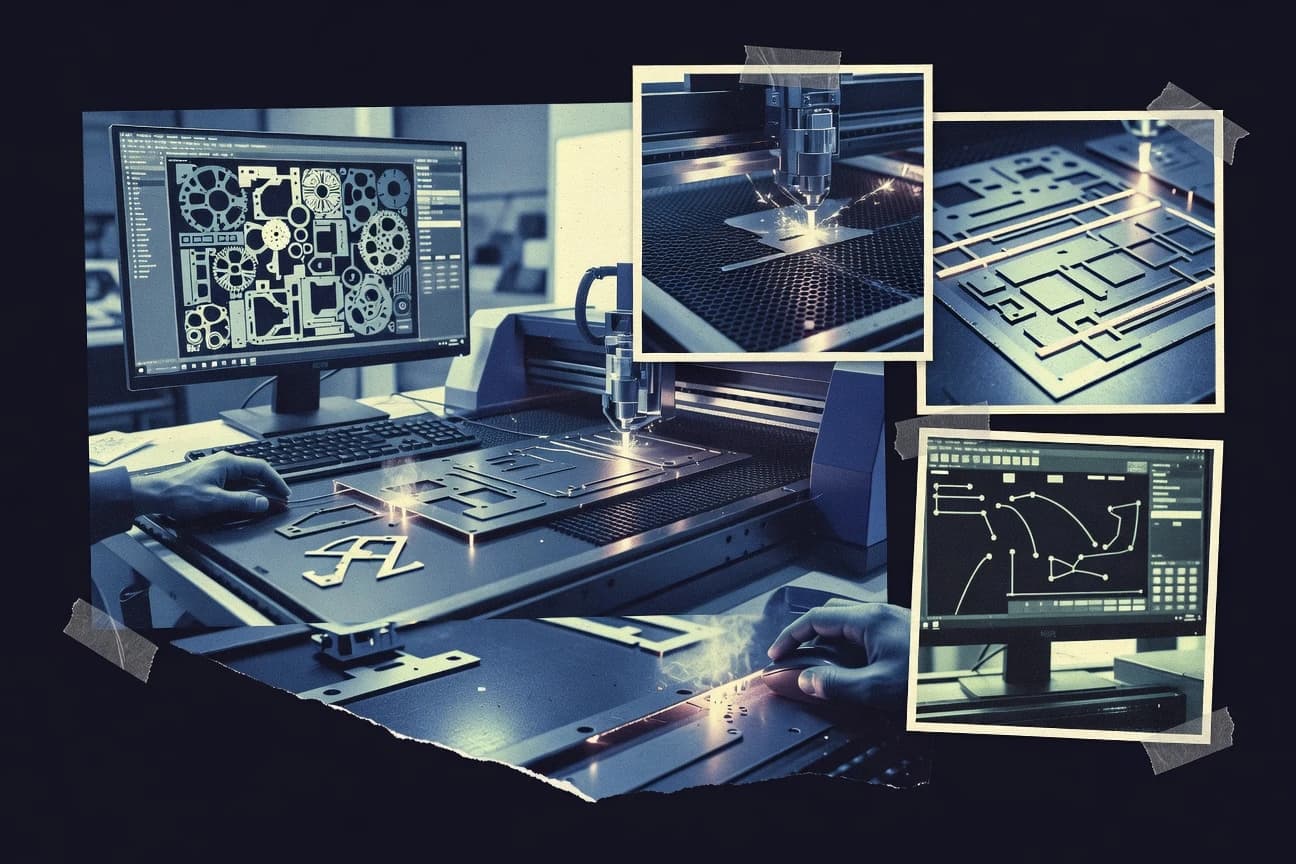
GITNUXSOFTWARE ADVICE
Manufacturing EngineeringTop 10 Best Laser Cut Software of 2026
Ranking roundup of top laser cut software options with evaluation notes for laser cutters and makers, including K40 Whisperer, CorelDRAW, Beam Studio.

How we ranked these tools
Core product claims cross-referenced against official documentation, changelogs, and independent technical reviews.
Analyzed video reviews and hundreds of written evaluations to capture real-world user experiences with each tool.
AI persona simulations modeled how different user types would experience each tool across common use cases and workflows.
Final rankings reviewed and approved by our editorial team with authority to override AI-generated scores based on domain expertise.
Score: Features 40% · Ease 30% · Value 30%
Gitnux may earn a commission through links on this page — this does not influence rankings. Editorial policy
K40 Whisperer is the best choice if your shop runs K40s and you want consistent, preview-first job execution, whereas CorelDRAW fits when vector cleanup and export consistency for laser work matter most, and Inkscape is the low-cost route if you’re preparing SVGs for a separate laser or CAM toolchain.
Editor’s top 3 picks
Three quick recommendations before you dive into the full comparison below — each one leads on a different dimension.
K40 Whisperer
Controller-focused job settings coupled with preview, producing repeatable K40 executions from the same design inputs.
Built for fits when one team needs consistent K40 runs with preview-first job execution..
CorelDRAW
Editor pickVector-focused object manipulation with outline conversion and layer-based organization for laser-ready export.
Built for fits when vector artwork cleanup and export consistency matter more than integrated toolpath control..
Beam Studio
Editor pickLayer ordering that maps engraving and cutting into a device-ready job sequence with actionable preview feedback.
Built for fits when shops run vector-based laser work on known hardware and need repeatable job generation..
Comparison Table
K40 Whisperer
vertical specialistOpen-source control software for K40 laser cutters using compatible controller boards.
Controller-focused job settings coupled with preview, producing repeatable K40 executions from the same design inputs.
K40 Whisperer targets a practical CAD/CAM workflow that ends with controller commands for K40-class machines, with an emphasis on mapping machine settings to each job instead of relying on one-off front panel tweaks. Job execution is designed around preview and deterministic command generation so the operator can catch obvious origin, scale, and travel mismatches before sending output. It also supports workflows where layered designs need consistent cut ordering and repeatable pierce behavior across similar materials.
A tradeoff is that K40 Whisperer stays tightly coupled to K40-style controller behavior, so more heterogeneous setups may require other software to normalize device profiles and tool behavior. It fits teams running the same machine profile for frequent batch jobs where operators need quick, consistent re-runs without rebuilding every controller parameter each time.
- +Job preview and deterministic command generation reduce accidental motion mistakes
- +Per-job controller settings keep runs consistent across materials and sessions
- +Tight K40 controller integration reduces post-processing steps
- +Workflow supports iterative batches without redesigning controller parameters
- –Best results depend on accurate workpiece origin and scale setup
- –More complex multi-machine fleets may need separate toolchains
- –Automation and API surface are not built for custom external orchestration
- –Some advanced CAM behaviors remain limited versus full CAD/CAM suites
Small makerspaces
Frequent signage batches on one K40
Fewer failed cuts during repeats
Laser service shops
Material-specific re-runs for customer orders
More predictable throughput
Show 2 more scenarios
Edu lab staff
Teaching vector workflows on shared equipment
Lower operator variance
Shared machine configuration reduces variation when multiple students run projects.
Freelance engraving operators
Iterating SVG-derived designs for clients
Faster turnaround per revision
Repeatable controller output makes quick iterations less dependent on manual controller tweaks.
Best for: Fits when one team needs consistent K40 runs with preview-first job execution.
CorelDRAW
SMBVector design software used to prepare artwork for laser cutting and engraving systems.
Vector-focused object manipulation with outline conversion and layer-based organization for laser-ready export.
CorelDRAW fits teams that start with brand artwork, logos, or CAD-derived sketches and need dependable vector refinement before sending to a laser workflow. It provides strong support for SVG and DXF-style vector interchange plus reliable PDF export for review and markup. For laser projects, its editing model helps manage geometry, hole placement, and stroke-to-outline decisions that affect cut results. Batch export and repeatable layouts help when multiple variants must be produced from a shared base file.
A key tradeoff is that CorelDRAW does not replace controller-side job setup for power and speed mapping, so laser-specific parameters often live in separate CAM or controller software. It also requires careful layer and object organization so exported vectors preserve the intended cut order and construction lines. CorelDRAW works best when vector cleanup and documentation matter more than fully automated toolpath generation.
- +Precise vector editing for consistent geometry across many laser parts
- +Layered artwork management improves handoff quality to downstream tools
- +Batch export supports variant runs from a shared design master
- +Strong SVG and PDF output for visual inspection and review
- –Laser process parameters usually require separate CAM or controller tooling
- –Cut order is not inherently embedded, so exporting needs disciplined organization
- –Complex fills and effects can require conversion to clean outlines
- –3D laser cutting workflows depend on external toolpaths
Laser-ready graphic designers
Convert logo art into cuttable outlines
Fewer rework cycles
Small fabrication shops
Batch produce signage variants
Shorter production turnover
Show 2 more scenarios
Prepress and artwork teams
Deliver reviewable PDF cut plans
Clearer operator handoff
Package laser cut layouts into review-friendly documents with predictable object placement.
Industrial design teams
Prepare DXF-based profiles for cutting
Cleaner downstream inputs
Refine imported vectors and normalize shapes before sending to laser workflows.
Best for: Fits when vector artwork cleanup and export consistency matter more than integrated toolpath control.
Beam Studio
vertical specialistDesign and control software for FLUX laser cutters and engravers.
Layer ordering that maps engraving and cutting into a device-ready job sequence with actionable preview feedback.
Beam Studio focuses on generating device-ready laser jobs from vector artwork, with a workflow that maps design layers into executable cut and engrave steps. The material and parameter tooling centers on machine-specific settings like focus height and origin handling, which reduces guesswork when switching jobs. Layer ordering and job preview help catch obvious path issues before the first run. Beam Studio fits teams that run repeat production batches and want consistent job generation across files.
Beam Studio’s tradeoff is that advanced CAD-to-toolpath control stays limited compared with full CAD/CAM suites, especially for complex multi-pass optimization and controller-level tuning. It also leans on supported input formats rather than acting as a universal post-processor hub for every controller. Beam Studio works best when incoming artwork is already vector-ready and the required machine settings are within its supported parameter model. It is a stronger fit for reliable iteration on a known laser setup than for bespoke toolpath research.
- +Guided layer-to-job workflow for consistent cut and engrave sequencing
- +Preview feedback reduces errors before sending a job to the controller
- +Material-focused parameter panel includes focus height and origin alignment
- +Layer ordering supports predictable engraving and cutting combinations
- –Advanced controller-level optimization for travel and cut order is limited
- –Supported input coverage is narrower than full CAD/CAM toolchains
- –Custom post-processing workflows need external steps for nonstandard controllers
- –Kerf compensation workflows are not as granular as dedicated CAM tools
Small production shops
Batch signage with consistent layer parameters
Fewer remakes per production run
Freelance makers
Iterate SVG engravings and tests fast
Shorter iteration cycles
Show 2 more scenarios
Education labs
Teach laser workflows with clear job previews
More predictable outcomes for students
Beam Studio’s guided settings and preview help standardize classroom runs across machines.
Makerspaces
Standardize settings across members
Lower operator-to-operator variance
Material and origin handling reduce variability when multiple people run similar jobs.
Best for: Fits when shops run vector-based laser work on known hardware and need repeatable job generation.
LightBurn
vertical specialistLaser control software for designing, preparing, and sending jobs to many CO2, diode, and fiber laser systems.
Toolpath preview and simulation that stays aligned with layered artwork so cut order and pierce behavior can be reviewed before firing.
LightBurn is a laser cut control and design workflow tool built around a tight loop from vector art to controller-ready toolpaths. It imports common 2D sources like SVG and DXF, applies machine and material settings, and previews jobs with toolpath simulation and cut parameters.
LightBurn also supports layered workflows that keep artwork organization and cut order visible before sending to the laser controller. For 2D laser cutting, LightBurn combines workflow control for kerf and lead-in behavior with practical post-processing options like G-code export for controllers that use it.
- +Layered design-to-job workflow keeps cut order and visibility consistent
- +Strong job preview with toolpath simulation before sending to hardware
- +Material and machine presets reduce repeated power-speed-frequency setup
- +G-code export enables controller workflows without LightBurn-connected control
- –Deep machine profile configuration can take time for new setups
- –Air assist control is not unified across every controller workflow
- –Rotary output depends on correct attachment mapping and calibration discipline
- –Complex nesting requires careful management of spacing and cut order
Best for: Fits when 2D laser cutting workflows need dependable previews, layered cut ordering, and controller-ready exports.
LaserGRBL
vertical specialistWindows software for controlling GRBL-based laser engravers and cutters.
Tight GRBL-centric G-code generation with immediate job preview feedback for 2D vector and raster work.
LaserGRBL generates and sends G-code from vector and raster inputs to GRBL-compatible laser controllers. Its editor-focused workflow includes job preview and toolpath generation for common 2D laser cutting tasks like engraving lines and filling shapes.
The software ships with material and machine configuration inputs that affect focus height, workpiece origin, and motion limits. It is also used as a practical bridge between design exports such as SVG and the GRBL command stream that the controller executes.
- +G-code workflow built around GRBL controller expectations
- +Job preview helps catch routing and scaling mistakes before firing
- +Material and machine settings connect to motion and focus assumptions
- +Supports stacked 2D tasks like outlines plus fill in one job
- –Limited support for advanced 2.5D effects and relief-style toolpaths
- –Heavily dependent on correct coordinate origin and origin-driven sizing
- –Nesting optimization for sheet layout is not a primary focus
- –Automation and API surface are minimal compared with modern CAM tools
Best for: Fits when small shops need GRBL-oriented 2D laser cutting from SVG-style designs.
Glowforge App
vertical specialistBrowser-based job preparation and control software for Glowforge laser machines.
Guided focus height and workpiece origin prompts that tighten alignment between file layout and the physical sheet.
Glowforge App is a browser-first laser cut and engrave workflow built around a live job preview and guided device control. SVG-first design imports, raster engraving handling, and a material library reduce the steps between a file and controller-ready settings.
Job settings include focus height and origin alignment prompts that help standardize throughput across sessions. Layered or complex projects still depend on file planning outside the app, since the toolpath layer controls remain relatively high-level.
- +Guided device connection and job send flow reduces operator steps
- +Material library ties common parameters to a repeatable workflow
- +Live preview updates quickly when changing cut and engrave settings
- +Focus height and origin prompts reduce alignment mistakes
- –Kerf compensation and lead-in controls are limited compared with pro tools
- –Nesting optimization and cut order tuning are minimal for batch work
- –Toolpath simulation depth is basic for complex assemblies
- –Advanced power-speed-frequency profiles require workflow workarounds
Best for: Fits when makers and small teams need guided laser jobs from SVG files with consistent focus and material presets.
Trotec Ruby
enterpriseJob preparation and production software for Trotec laser machines.
Controller-oriented machine profiles with job preview that ties planned toolpaths to Trotec execution settings.
Trotec Ruby is a laser cut software workflow centered on Trotec control integration and job preparation for 2D production. The toolchain targets vector cutting and raster engraving by importing common CAD and design formats and mapping them to machine-ready jobs.
Ruby emphasizes repeatable machine profiles, material handling, and controller-oriented settings so operators can regenerate toolpaths consistently across runs. Built-in job preview and toolpath simulation reduce trial cuts by showing cut order and travel expectations before the controller executes the job.
- +Controller-focused job preparation reduces manual setting translation
- +Layered import workflow supports mixed engraving and cutting jobs
- +Job preview helps validate placement and cut sequencing before run
- +Material and machine profiles support repeatable production setups
- –Format handling can require conversion to match Ruby’s import pipeline
- –Advanced nesting control depends on how source vectors are authored
- –Automation beyond manual job setup is limited compared with API-first tools
- –Kinematics tuning and rotary workflows demand careful setup discipline
Best for: Fits when shops need Trotec-aligned job preparation with consistent previews for mixed engraving and cutting.
Inkscape
SMBFree vector graphics software used to create SVG and other files for laser cutting workflows.
Stroke-to-path conversion and path tooling that keep laser-ready outlines editable inside SVG.
Inkscape brings a vector-first workflow for laser cutting prep using SVG as the native editing format. It supports DXF and PDF import, plus export paths for nesting and cutting preparation that can preserve layered artwork structure.
The application can generate precise shapes using snapping, boolean operations, and stroke-to-path conversion needed for pierce and cut outlines. Extensibility through scripts and add-ons supports automation of recurring layout steps before sending files to a controller or CAM toolchain.
- +SVG-native editing keeps cut and pierce outlines editable through revisions
- +DXF import and PDF import support common shop file handoffs
- +Boolean operations and path editing help clean vector geometry for cutting
- +Script and add-on extensibility supports repeatable layout transformations
- –No built-in kerf compensation or toolpath planning for laser motion
- –Layer and grouping semantics can break across some import-export paths
- –Automation depends on extensions instead of a dedicated laser job pipeline
- –Large designs can slow during complex boolean and path operations
Best for: Fits when SVG-based artwork must be cleaned and prepared, then sent to a separate laser or CAM toolchain.
RDWorks
vertical specialistLaser job preparation and machine-control software for Ruida controller systems.
RDWorks combines detailed start and end motion controls with per-element parameter editing during the same job workflow.
RDWorks edits and runs 2D laser cutting jobs by converting vector artwork into device-ready toolpaths for typical controller stacks. It handles layered workflows from import through preview, with per-tool control over cut and engrave parameters like power, speed, and frequency.
The software includes settings for pierce-like behavior and motion controls such as lead-in and lead-out to shape edge quality. RDWorks also supports common vector and page formats like SVG and DXF to reduce friction in CAD-to-CAM pipelines.
- +Direct parameter control for power, speed, and frequency per job element
- +Job preview that reflects path generation before sending to the controller
- +Vector import workflows from SVG and DXF for engraving and cutting
- +Lead-in and lead-out controls to manage start and end marks
- –Toolpath quality depends heavily on manual kerf and focus-style calibration
- –Rotary attachment workflows are limited and require careful setup
- –Advanced nesting optimization coverage is less flexible than dedicated nesting tools
- –Layer and cut-order management can become cumbersome on complex designs
Best for: Fits when a shop needs repeatable 2D laser cuts with manual parameter control and straightforward vector imports.
CypCut
enterpriseCAD and machine-control software for fiber laser sheet-metal cutting systems.
Job preview tied directly to cut-order and travel settings for rapid operator checks.
CypCut targets laser-cut shops that need a tight CAD to toolpath workflow for 2D parts. The software focuses on generating and validating cutting jobs with a practical job preview and machine-ready output.
CypCut also supports layered file workflows through common vector imports and structured device settings so operators can repeat runs with consistent kerf and cut behavior. CNC-style control details like cut order and travel behavior are handled in the same environment as post-processing, which reduces handoff errors.
- +Machine-oriented job preview helps catch wrong geometry before sending work
- +Cut order and travel behavior controls reduce avoidable marks on many layouts
- +Material and focus height controls support repeatable setup for frequent jobs
- +Vector import workflow fits typical CAD-to-laser shop practices
- –Workflow depends on correct machine profile mapping for consistent results
- –Kerf and lead behavior tuning can take multiple iterations on new materials
- –Toolpath simulation coverage is less comprehensive than higher-ranked toolchains
- –Advanced nesting automation is limited for very large sheet batching
Best for: Fits when a laser shop needs repeatable 2D cut jobs with operator-friendly previews.
Conclusion
After evaluating 10 manufacturing engineering, K40 Whisperer stands out as our overall top pick — it scored highest across our combined criteria of features, ease of use, and value, which is why it sits at #1 in the rankings above.
Use the comparison table and detailed reviews above to validate the fit against your own requirements before committing to a tool.
How to Choose the Right laser cut software
Laser cut software converts vector artwork into controller-ready motion for 2D laser cutting and mixed engraving jobs. This buyer’s guide covers K40 Whisperer, CorelDRAW, Beam Studio, LightBurn, LaserGRBL, Glowforge App, Trotec Ruby, Inkscape, RDWorks, and CypCut.
Some tools center on deterministic preview and controller-focused job settings, while others center on vector cleanup and export discipline. The main selection differences show up in how reliably each tool generates cut order, handles origin and scaling, and reflects motion behavior before sending to hardware.
Laser cut software for turning SVG and vectors into repeatable laser jobs
Laser cut software prepares laser motion from design inputs such as SVG, DXF, or similar vector files and produces a device-ready job that can be previewed. K40 Whisperer distinguishes itself with controller-focused job settings plus preview output that aims to keep repeated K40 executions consistent from the same design inputs.
CorelDRAW distinguishes itself by staying anchored in vector editing, including outline conversion and layer-based organization that supports consistent geometry handoff to laser export workflows. Across the list, job-preview alignment with layered artwork, GRBL-centric G-code generation in LaserGRBL, and Trotec-aligned controller preparation in Trotec Ruby shape how much operators must translate settings manually between design files and machine execution.
Laser cut software features that directly affect preview, cut order, and repeatability
Laser cut software quality shows up in how well it turns layered vector designs into a controller-ready job with the same motion behavior every time. Preview fidelity and deterministic command generation matter because operators cannot reliably correct wrong cut order or wrong travel behavior after the controller starts moving.
Controller-focused job settings with aligned preview
K40 Whisperer concentrates on controller-focused job settings plus preview output to keep repeated K40 executions consistent from the same design inputs. Beam Studio and LightBurn also emphasize layered preview, but K40 Whisperer is the most tightly tied to keeping controller runs consistent when settings must remain deterministic.
Layer ordering to enforce cut and engrave sequencing
Beam Studio maps engraving and cutting into a device-ready job sequence through guided layer ordering and preview feedback. LightBurn uses layered design-to-job workflow with toolpath simulation that stays aligned with layered artwork, which helps validate cut order and pierce behavior before sending.
Vector cleanup and export discipline for laser-ready geometry
CorelDRAW provides outline conversion and layer-based organization to keep laser export geometry consistent across many laser parts. Inkscape focuses on stroke-to-path conversion and SVG-native editing so cut and pierce outlines stay editable through revisions.
GRBL-centric G-code generation from vector and raster inputs
LaserGRBL targets GRBL controller expectations with a G-code workflow built around GRBL-style jobs and immediate job preview feedback. K40 Whisperer also aims at deterministic K40 execution, but LaserGRBL is more specifically built around GRBL-style command generation for small shops.
Start and end motion controls for per-element parameter control
RDWorks combines detailed start and end motion controls with per-element parameter editing inside the same job workflow. Glowforge App stays guided and prompt-driven for alignment, but RDWorks is the more operator-tunable option when element-level parameter control must stay close to the preview.
How to choose laser cut software based on job generation philosophy
Selection should start with whether the workflow is preview-first and controller-aligned or design-first and export disciplined. K40 Whisperer, LightBurn, and Beam Studio handle laser job generation with preview alignment, so the software reduces operator translation errors when settings must match hardware behavior.
Choose controller-aligned repeatability when the same job must run the same way
Select K40 Whisperer if repeatable K40 executions depend on per-job controller settings plus preview output tied to deterministic command generation. If layered visibility and toolpath simulation are the priority across cut and engrave, LightBurn and Beam Studio provide preview that stays aligned with layered artwork and layer-to-job sequencing.
Pick the workflow that matches how cut order is represented in source files
Choose Beam Studio when engraving and cutting sequencing must be driven by layer ordering that maps directly into a device-ready job sequence. Choose LightBurn when cut order and pierce behavior must be reviewed through toolpath simulation that remains aligned with the layered design before sending.
Use design-first tools when geometry cleanup is the dominant risk
Choose CorelDRAW when outline conversion and layer-based organization must produce consistent laser-ready geometry before any laser-specific toolpath work begins. Choose Inkscape when SVG-native path editing and stroke-to-path conversion must remain editable through revisions and then be exported into another laser or CAM toolchain.
Match the controller command model to the software's output format
Choose LaserGRBL when GRBL controller expectations drive the job pipeline, since the workflow centers on GRBL-oriented G-code generation with immediate preview feedback. Choose Trotec Ruby when Trotec-aligned machine profiles and Trotec execution settings must stay tied to job preview during mixed engraving and cutting prep.
Select operator-tunable motion controls when start and element parameters must be explicit
Choose RDWorks when start and end motion controls and per-element parameter editing must stay inside the same workflow for repeatable 2D laser cuts. Choose CypCut when job preview tied directly to cut order and travel settings is the priority for quick operator checks and fewer avoidable marks.
Who benefits from these laser cut software capabilities
Laser cut software buyers should align tool choice with the real source of errors in the shop. Shops that repeatedly struggle with alignment and job sequencing benefit from guided origin prompts and preview that matches layered artwork.
K40-focused teams running frequent repeat jobs
K40 Whisperer is built around controller-focused job settings and preview output designed to keep the same design inputs producing consistent K40 executions. That fit improves output consistency when the same parts run across sessions and materials.
Shops that treat layer structure as the job specification
Beam Studio and LightBurn map layered artwork into device-ready job sequences with preview feedback that reduces cut order mistakes. This helps teams whose drawings already separate engraving and cutting into layers.
Vector operators who need fast SVG cleanup and revision workflows
Inkscape and CorelDRAW support vector cleanup patterns such as stroke-to-path conversion and outline conversion with layer organization. These tools help when geometry revision cycles are frequent and downstream laser prep must preserve editable structure.
GRBL-centric makers building 2D laser work from vector or raster inputs
LaserGRBL stays tightly aligned with GRBL controller expectations through GRBL-centric G-code generation and job preview feedback. The approach suits setups where controller model matching matters more than advanced multi-layer optimization.
Operator teams that need explicit start and end motion control per element
RDWorks exposes detailed start and end motion controls and per-element parameter editing within one workflow. That model suits shops where manual parameter control and preview-driven adjustments prevent wrong motion behavior.
Common mistakes that cause bad laser cut results
Many failure points happen before hardware starts moving. Wrong origin handling, mismatched scaling, and misread cut order turn layered design intent into unintended motion, so preview alignment must be validated before sending jobs.
Ignoring origin and scale setup leads to consistent wrong placement
K40 Whisperer depends on accurate workpiece origin and scale setup for best results, so incorrect origin produces deterministic but wrong motion. LaserGRBL is also heavily dependent on correct coordinate origin and origin-driven sizing, so origin mistakes translate directly into wrong routing.
Assuming export discipline automatically carries cut order into the job
CorelDRAW improves geometry handoff through layer organization, but laser process parameters and cut order are not inherently embedded so exporting needs disciplined organization. Beam Studio and LightBurn treat layer-to-job sequencing as a first-class workflow, which reduces reliance on manual cut order reconstruction after export.
Treating preview as a generic picture instead of a toolpath truth check
LightBurn and Beam Studio include toolpath simulation aligned with layered artwork, so skipping toolpath preview checks risks sending a job with mis-sequenced motion. CypCut and RDWorks provide preview tied to cut order and travel behavior or start and end motion, so those previews must be reviewed for motion behavior rather than only geometry.
Choosing software that does not match the machine profile pipeline
Glowforge App provides guided device connection and material library prompts, but nesting optimization and cut order tuning remain minimal for batch work. Trotec Ruby relies on Trotec-aligned controller preparation with job preview tied to planned toolpaths, so using the wrong software pipeline increases manual setting translation.
Over-relying on limited controller optimization for travel and cut order
Beam Studio is explicit about layered sequencing but limits advanced controller-level optimization for travel and cut order. LightBurn and CypCut provide stronger visibility for cut order and travel behavior, so they are safer when travel marks and ordering mistakes show up in production.
How We Selected and Ranked These Tools
We evaluated K40 Whisperer, CorelDRAW, Beam Studio, LightBurn, LaserGRBL, Glowforge App, Trotec Ruby, Inkscape, RDWorks, and CypCut on feature coverage, workflow fit, and job execution consistency. Features took 40% weight because preview output, sequencing behavior, and controller-aligned job settings affect whether motion matches design intent.
Ease and value each took 30% weight because operators need to avoid origin, scale, and setup translation errors when preparing jobs. K40 Whisperer ranked first because its controller-focused job settings paired with preview output aims to keep repeated K40 executions consistent from the same design inputs.
Frequently Asked Questions About laser cut software
Which laser cut software handles K40-style controller workflows with repeatable job output?
How does LightBurn keep layered artwork aligned with toolpath simulation before sending to the controller?
When does Beam Studio’s guided workflow fit better than a general vector editor for 2D laser cutting?
What breaks if a laser-cut workflow requires GRBL-centric command output rather than G-code export from general design tools?
Which tool is best for SVG-first guided laser jobs with consistent focus height and workpiece origin prompts?
How do Inkscape extensions and scripts support automation compared with a controller-tuned workflow app?
Where does RDWorks fall short compared with tools that emphasize detailed start and end motion controls per element?
How should data migration be handled when switching from a GRBL-oriented tool to a K40-oriented one?
What security and admin controls exist when multiple operators share machines and configurations?
Tools reviewed
Primary sources checked during evaluation.
Referenced in the comparison table and product reviews above.
- Manufacturing EngineeringTop 10 Best Laser Cutting Nesting Software of 2026
- Technology Digital MediaTop 10 Best Laser Scanner Software of 2026
- Manufacturing EngineeringTop 10 Best Cnc Router Software of 2026
- Business FinanceTop 10 Best Slm Software of 2026
- Manufacturing EngineeringTop 10 Best Machinery Design Software of 2026
Keep exploring
Comparing two specific tools?
Software Alternatives
See head-to-head software comparisons with feature breakdowns, pricing, and our recommendation for each use case.
Explore software alternatives→In this category
Manufacturing Engineering alternatives
See side-by-side comparisons of manufacturing engineering tools and pick the right one for your stack.
Compare manufacturing engineering tools→