GITNUXSOFTWARE ADVICE
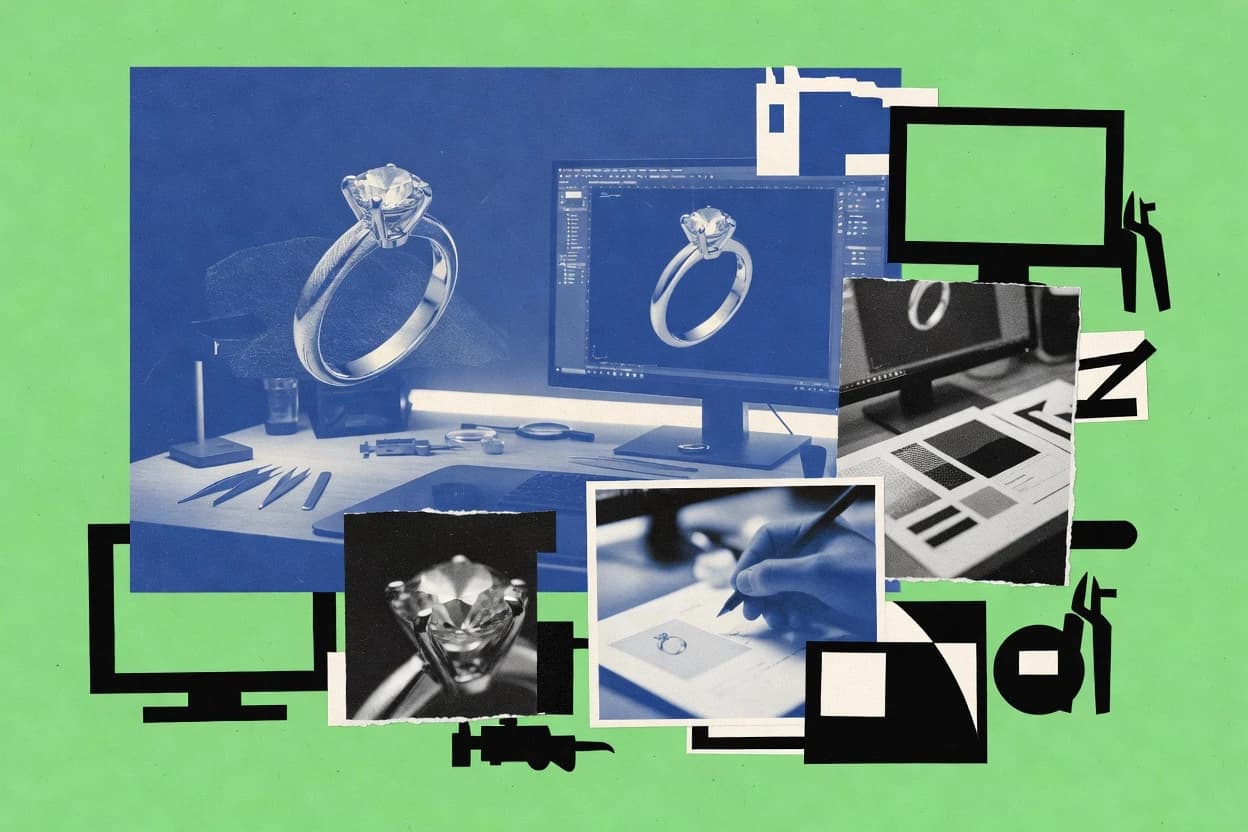
Art DesignTop 10 Best Jewellery Rendering Software of 2026
Ranked picks of jewellery rendering software for product jewellery workflows, with render control notes and comparisons of tools like KeyShot, RhinoGold.

How we ranked these tools
Before any source is gathered, an editor locks the question, what qualifies, and how the piece will be judged.
Search agents gather the source set and the review record, including transcriptions of video reviews and podcasts.
Framework: Features 40% · Ease 30% · Value 30%
Gitnux may earn a commission through links on this page — this does not influence rankings. Editorial policy
RhinoGold is the best pick when your team already uses Rhino and needs repeatable render sets from jewellery CAD, while Maya fits if you’re building animation-ready scenes with CAD-to-pipeline repeatability, and Blender is a solid budget-friendly option when you want scripting-led scene automation.
Editor’s top 3 picks
Three quick recommendations before you dive into the full comparison below — each one leads on a different dimension.
RhinoGold
RhinoGold’s jewellery-oriented material and scene workflow that stays coupled to Rhino model authoring for consistent outputs.
Best for: Fits when teams use Rhino for jewellery CAD and need repeatable render sets.
MatrixGold
Editor pickGem-accurate optical shading driven by a jewelry facet library rather than generic material presets.
Best for: Fits when jewelry studios need repeatable gem and metal renders from CAD geometry.
Maya
Editor pickScripting extensibility for scene build automation across camera, lighting, and material nodes.
Best for: Fits when studios need animation-ready jewelry renders with pipeline automation and CAD-to-scene repeatability.
Comparison Table
RhinoGold
vertical specialistJewelry CAD software for model creation, manufacturing preparation, and photoreal rendering.
RhinoGold’s jewellery-oriented material and scene workflow that stays coupled to Rhino model authoring for consistent outputs.
RhinoGold converts Rhino models into a renderer-ready representation with jewellery-oriented scene preparation and material authoring. The tool is designed around consistent studio lighting rigs, gemstone appearance controls, and output aimed at color-accurate proofing for retail and catalog work. Batch render queues support throughput for recurring product variants and view sets.
A key tradeoff is the dependency on Rhino as the modelling stage, which limits adoption for teams that standardize on non-Rhino CAD authoring. RhinoGold fits best when jewellery CAD arrives in Rhino or can be converted into Rhino reliably, then a controlled render pipeline produces repeatable marketing images and animations.
- +Jewellery-centric render workflow tightly aligned to Rhino modelling
- +Material controls for metals and stones support consistent product looks
- +Batch render queue supports repeated view and variant production
- +Scene lighting setups help standardize studio renders across a catalog
- –Rhino-centric pipeline can slow teams built around other CAD tools
- –Advanced scene customization requires renderer knowledge beyond basic presets
- –Large scenes can increase setup time for geometry and material mapping
Jewellery CAD operators
Convert Rhino models for render-ready scenes
Faster, consistent product visuals
E-commerce merchandising teams
Produce catalog batches with set lighting
Shorter image production cycles
Show 2 more scenarios
Studio artists
Generate turntable animations from jewellery CAD
More consistent motion previews
Artists generate controlled rotational renders for web and campaign assets.
Bench jeweler workflow teams
Visualize design variants for review
Quicker design feedback
Teams render material and setting visual changes for internal approvals.
Best for: Fits when teams use Rhino for jewellery CAD and need repeatable render sets.
MatrixGold
vertical specialistJewelry design software that combines parametric CAD workflows with rendering for custom pieces.
Gem-accurate optical shading driven by a jewelry facet library rather than generic material presets.
MatrixGold is a strong fit for studios that need consistent gemstone optics and metal shading across many SKUs, because it ties its look-dev to jewelry-centric asset libraries. CAD-to-render pipelines and NURBS-to-mesh conversion workflows are designed around jewelry geometry assumptions, including facet patterns and prong-related visualization. Batch rendering lets teams render multiple angles or variants without manual babysitting.
A key tradeoff is that MatrixGold’s jewelry-focused material system can limit custom shader graph workflows compared with general renderers that expose deeper node-level extensibility. It fits best when projects require repeatable gemstone appearance and controlled lighting setups over highly variable jewelry geometry, such as catalog proofs and retail configurator image sets.
- +Gemstone optics tuning aligns with production proofing needs
- +Facet-cut library reduces rework across large SKU batches
- +Batch queue supports multi-view rendering throughput
- +HDR environment lighting improves repeatability for catalog images
- –Custom material node graph depth lags general-purpose renderers
- –Geometry conversion can require cleanup for CAD edge cases
- –Scene setup time increases for highly atypical jewelry designs
- –Automation surface is less script-first than API-centric pipelines
Gem rendering production teams
Batch-proof gemstone and metal variants
Fewer re-renders for approval
Bench jeweler workflow teams
Visualize settings and mount details
Faster iteration on design
Show 2 more scenarios
E-commerce image producers
Generate consistent catalog product angles
Lower variance across listings
Uses repeatable HDR lighting and batch queue to keep images visually uniform across SKUs.
CAD-to-render pipeline operators
Convert CAD assets for rendering
More predictable render readiness
Imports jewelry geometry and converts surfaces into render-ready meshes for optical materials.
Best for: Fits when jewelry studios need repeatable gem and metal renders from CAD geometry.
Maya
enterprise3D creation software used for advanced product visualization and jewelry render scene development.
Scripting extensibility for scene build automation across camera, lighting, and material nodes.
Maya is well suited when jewelry visuals require more than a still image, because it includes animation controls, camera tools, and scene management primitives that rendering-only tools lack. Its material authoring uses a node-based graph, which helps coordinate metal alloy shader choices, gemstone shading, and displacement mapping workflows inside one project. The CAD import pipeline support and downstream mesh conversion steps reduce friction when moving from STEP and NURBS-heavy sources into render-ready geometry.
A tradeoff appears when a team expects a turnkey jewelry-specific material library or preset-based gem shading controls with minimal setup. Maya works best when bench jeweler workflow outputs are driven from a consistent scene template, and when render queue execution is automated to handle many variations without manual scene edits. A common usage situation is creating a turntable animation for a single gemstone and then reusing the same rig and lighting rig across a batch of similar settings.
- +Animation and camera tooling supports turntable deliveries without scene rework
- +Material node graph keeps metal and gemstone look-dev organized in one project
- +Batch render queue supports high-throughput SKU variations from a shared template
- +Scripting hooks enable repeatable scene assembly for CAD-to-render pipelines
- –Jewelry-ready shading often needs custom setup per studio lighting rig
- –Learning curve is steep versus renderer-only tools for scene assembly
Studio CG supervisors
Standardize SKU renders from one scene template
Lower rework across batches
Jewelry e-commerce imaging teams
Produce rotating product videos at scale
Faster catalog content production
Show 2 more scenarios
CAD pipeline teams
Convert STEP and refine geometry before rendering
Fewer handoff steps
They manage mesh conversion and downstream look-dev edits inside one DCC scene.
Look-dev artists
Tune gemstone and metal materials together
More controlled visual fidelity
They use the node graph to coordinate shader parameters and displacement-driven surface detail.
Best for: Fits when studios need animation-ready jewelry renders with pipeline automation and CAD-to-scene repeatability.
3Design
vertical specialistJewelry CAD platform with parametric design tools and integrated rendering for product presentation.
Jewellery material library plus render templates that keep studio lighting and camera parameters consistent across batches.
3Design targets jewellery rendering workflows with a CAD to photoreal pipeline built around material and lighting control for product images. It is geared toward repeatable output through configurable render templates, batch-ready scene setups, and consistent camera and studio rig parameters.
- +Jewellery-focused material setup reduces per-project rework for common metals and gems
- +Render templates standardize camera framing and studio lighting across product lines
- +Batch-ready scene preparation supports high volume still output workflows
- +Predictable export formats help route renders into proofing and catalog pipelines
- –Limited coverage for advanced animation workflows beyond turntable-style deliverables
- –Scene build can take discipline when teams must keep material libraries consistent
- –Deep customization of low-level shading and sampling needs renderer knowledge
- –CAD ingestion may require cleanup steps before mesh conversion behaves well
Best for: Fits when jewellery teams need repeatable still renders with controlled lighting and materials across many SKUs.
Rhinoceros 3D
creative proNURBS-based 3D modeling software widely used for jewelry design and rendering preparation.
NURBS-to-render workflow built on Rhino’s model fidelity with Rhino Render and addon-driven renderer handoff.
Rhinoceros 3D renders jewellery by starting in NURBS CAD and then producing a render scene through Rhino Render and external renderer handoffs.
- +Native NURBS modeling keeps facet geometry editable before render prep
- +Strong CAD import pipeline via 3DM with repeatable object organization
- +Rhino Render supports studio-style lighting setups and material previews
- +Export paths enable handoff to external raytracing renderers
- –Jewellery-specific shader and gemstone accuracy depends on add-ons and renderer choice
- –Raytracing features can be limited compared with dedicated render-first tools
- –High-fidelity gem dispersion and pavé workflows require careful mesh conversion
- –Automation for batch render queues is more fragmented across add-ons
Best for: Fits when CAD-first teams need editable jewellery geometry and exportable render scenes.
KeyShot
creative proReal-time rendering software used to create photoreal jewelry images from CAD models.
Integrated KeyShot material editing with instant raytraced feedback during look development, reducing lighting and shader guesswork.
KeyShot is a jewellery rendering tool built around an interactive, material-first workflow for fast photoreal output. It supports raytraced rendering with studio lighting presets, real-time viewport preview, and batch render queue for turning CAD imports into product images.
- +Real-time viewport preview for quick lighting and material iteration
- +Turntable animation workflow that stays consistent across many renders
- +Batch render queue supports high-throughput product image production
- +Material library plus physically based shader parameters for metals and gems
- –Limited extensibility compared with DCC pipelines that expose full scene graphs
- –Advanced gem-specific control can feel constrained versus specialized renderers
Best for: Fits when jewellery teams need repeatable raytraced renders from CAD imports with minimal scene setup.
Blender
creative proFree 3D creation suite used for jewelry visualization, animation, and photoreal rendering.
Python-driven scene automation lets the same asset, material, and render setup be generated and queued consistently.
Blender is a general 3D authoring tool with a jewellery-focused rendering workflow built through Cycles and node-based materials.
- +Cycles renderer provides photoreal raytracing for metals, gems, and jewelry lighting rigs
- +Material node graphs support repeatable gemstone dispersion style workflows
- +Python scripting enables automated scene setup and batch render queue control
- +Turntable animation pipelines work inside the same scene graph
- –Gem-specific appearance tuning often needs manual shader graph work
- –Photoreal results can require careful light rig and sampling configuration
- –CAD ingestion is indirect and often relies on mesh conversion before refinement
- –For production teams, pipeline consistency depends on custom templates and conventions
Best for: Fits when teams need scripting-driven scene automation and a unified render, animation, and material pipeline.
OctaneRender
creative proGPU rendering software for high-end product visualization with strong material and lighting control.
Octane’s dedicated physically based gemstone-focused rendering behavior with GPU caustics handling for high-contrast stone visuals.
OctaneRender targets jewellery rendering through GPU-accelerated raytracing with tight feedback loops for material lookdev on metals and stones. The engine supports physically based shaders, procedural and texture workflows, and production outputs like EXR for color-managed compositing.
- +GPU path tracing delivers fast material iteration for gem and metal shader tuning
- +Material node graph supports controlled lookdev across metal alloys and layered coatings
- +EXR output supports color-accurate compositing for proofing and catalog finishing
- +Batch render queue supports multi-angle stills and turntable frames
- –STEP and NURBS ingestion require external CAD conversion steps before shading
- –Depth-of-field and fine microdetail often need careful sampling and denoiser tuning
- –Automation control depth is limited compared with render-farm scheduling tools
- –Quality depends on GPU memory for high tessellation macro shots
Best for: Fits when studios need rapid GPU lookdev and repeatable render settings for jewellery catalogs and macro detail workflows.
Thea Render
creative proRendering engine for photoreal product visualization with support for jewelry material realism.
Physically based gemstone material controls tuned for jewelry optics inside a Blender render workflow.
Thea Render produces photoreal raytracing imagery from jewelry scenes built in Blender, targeting accurate reflections, refractions, and highlight behavior on small surfaces.
- +Gemstone-focused material controls for dispersion and facet behavior
- +Physically based metal shading that holds up under studio lighting changes
- +Batch-friendly render settings for repeating catalog variants
- +Tight Blender workflow that avoids file-format churn
- –Jewelry-specific setup is easier when scenes follow a known rig format
- –Limited automation depth for render farm scheduling compared with render-manager tools
Best for: Fits when jewelry studios already model in Blender and need consistent render control.
Firestorm CAD
vertical specialistFirestorm CAD provides jewelry modeling and visualization software for custom design production.
Batch render queue with consistent scene reuse for rendering multiple jewellery variants without reconfiguring camera and lighting per job.
Firestorm CAD targets jewellery rendering workflows that start from CAD models and end in client-ready visuals. It focuses on render control through material setup and physically based lighting outputs rather than general-purpose modelling.
- +CAD import pipeline supports common jewellery file handoff steps
- +Batch render queue helps reduce per-variant manual render setup
- +Material authoring workflow supports consistent studio lighting results
- +Turntable animation output supports retail-style product motion checks
- –Subdivision and tessellation controls are limited for heavy macro detail
- –Gem-specific controls for dispersion tuning are not as granular as niche render tools
- –Large scenes can slow interaction during iterative material edits
- –Automation still depends on repeatable naming and scene structure discipline
Best for: Fits when design teams need CAD-to-render repeatability for product images and turntables.
Conclusion
After evaluating 10 jewellery rendering software, RhinoGold stands out as our overall top pick — it scored highest across our combined criteria of features, ease of use, and value, which is why it sits at #1 in the rankings above.
Use the comparison table and detailed reviews above to validate the fit against your own requirements before committing to a tool.
How to Choose the Right Jewellery Rendering Software
Jewellery rendering software is judged by how consistently a tool turns jewellery CAD geometry into photoreal raytracing renders for metals, gemstones, and studio lighting rigs. This buyer-focused guide covers RhinoGold, MatrixGold, Blender, KeyShot, and other tools from the reviewed set, including Maya, 3Design, Rhinoceros 3D, OctaneRender, Thea Render, and Firestorm CAD.
The evaluation emphasis stays on render control and repeatability across SKU batches, because jewellery work depends on stable material appearance and repeatable camera framing. Tool-specific workflows matter here, since RhinoGold and MatrixGold center jewellery-centric materials, while Blender, OctaneRender, and KeyShot focus on broader render pipelines with different gem-control tradeoffs.
Jewellery Rendering Software for photoreal metals, gemstones, and repeatable studio renders
Jewellery rendering software converts CAD or DCC assets into raytraced visuals that preserve metal alloy shader behavior, gemstone optics, and studio lighting rig consistency. Tools like RhinoGold and MatrixGold target jewellery workflows with material controls that stay tied to jewellery scene construction.
For gem accuracy, MatrixGold emphasizes a facet library approach for gemstone optical shading, while RhinoGold couples a jewellery-oriented material and scene workflow to Rhino model authoring for consistent outputs. For automation and repeatable scene builds, Blender and Maya lean on scripting-driven scene assembly and node graph control rather than a jewellery-only pipeline.
Jewellery rendering control and repeatability criteria
Jewellery rendering workflows fail when material appearance and studio lighting framing drift across SKU batches. These criteria focus on how each tool preserves repeatable output from CAD or DCC geometry through photoreal raytracing of metals and gemstones.
The guide prioritizes render control mechanisms that show up in production work. It also checks whether each tool reduces rework for gem look-dev, camera consistency, and render queue throughput.
Jewellery-centric material workflow tied to scene authoring
RhinoGold pairs a jewellery-oriented material and scene workflow with Rhino model authoring so render sets remain coupled to the CAD source. MatrixGold drives gemstone and metal appearance through a jewelry facet library aimed at consistent proofing across large SKU batches.
Gemstone optics accuracy using facet library or shader behavior
MatrixGold’s gem-accurate optical shading is driven by a jewelry facet library rather than generic material presets, which reduces per-SKU tuning. Blender and Thea Render both support node-driven material control, but gemstone appearance tuning typically requires manual shader graph work to match a studio look.
Scene build automation for camera, lighting, and node setup
Maya offers scripting extensibility so scene build automation can generate camera, lighting, and material nodes for animation-ready jewellery deliveries. Blender provides Python-driven scene automation that generates and queues consistent assets, materials, and renders for repeatable turntable animation.
Template-driven camera framing and lighting consistency
3Design uses render templates that standardize camera framing and studio lighting across product lines. Firestorm CAD supports a batch render queue that reuses scenes so camera and lighting do not require reconfiguration per variant.
Render preview iteration speed under jewellery lighting rigs
KeyShot’s integrated material editing with instant raytraced feedback reduces time spent guessing at studio lighting and shader settings. OctaneRender targets rapid GPU lookdev where GPU path tracing speeds material iteration for gem and metal shader tuning.
CAD ingestion fit for jewellery CAD to render scenes
Rhinoceros 3D stays aligned with CAD-first jewellery authoring using Rhino’s model fidelity and 3DM-driven object organization. OctaneRender and Firestorm CAD both require external CAD conversion steps to reach a shading-ready state, which affects how quickly teams can start look-dev.
Decision framework for Jewellery Rendering Software selection
First decide whether the pipeline should stay coupled to jewellery CAD authoring or shift toward render-first DCC scene assembly. RhinoGold and Rhinoceros 3D prioritize CAD-to-render cohesion, while Blender, Maya, and KeyShot lean toward scene build workflows that can standardize render setup independently of the original CAD tool.
Next choose the automation philosophy. Some tools centralize repeatability with jewellery templates and curated render sets, while others rely on scripting and node graph generation to create camera and lighting consistency at scale.
Lock the render workflow to jewellery CAD when Rhino is the system of record
Choose RhinoGold when Rhino is the primary jewellery model authoring tool and repeatable render sets must stay coupled to Rhino modelling. Choose Rhinoceros 3D when editable jewellery geometry fidelity needs to remain intact before render prep and renderer handoff.
Use a facet-library driven approach when gem accuracy must scale across SKUs
Choose MatrixGold when gem-accurate optical shading needs to align with production proofing and large SKU batches require reduced rework. Choose 3Design when render templates must enforce camera framing and studio lighting consistency while maintaining jewellery-focused material setup.
Pick scripting-driven scene generation when batches require automated scene assembly
Choose Maya when studios need animation-ready turntable deliveries with scripting extensibility that controls camera, lighting, and material nodes. Choose Blender when the same asset, material, and render setup must be generated and queued consistently through Python automation.
Prioritize fast look-development with minimal scene graph complexity
Choose KeyShot when instant raytraced preview during material editing is the main way to reduce lighting and shader guesswork. Choose OctaneRender when GPU path tracing speed matters more than deep extensibility and when teams can handle CAD conversion before shading.
Use batch queue reuse when variants share camera and lighting
Choose Firestorm CAD when a batch render queue should reuse consistent scene settings for multiple jewellery variants without per-job camera and lighting reconfiguration. Choose RhinoGold or 3Design when the repeatability requirement also includes jewellery-centric material and render setup standardization.
Plan for animation depth limits when the deliverable is beyond turntables
Choose Blender, Maya, or KeyShot when the workflow must support animation and scene assembly beyond still renders. Choose 3Design when deliverables are mostly turntable-style outputs and advanced animation coverage is not the primary requirement.
Who Jewellery Rendering Software fits best
Jewellery rendering software selection depends on whether the team needs CAD-coupled material consistency or script-driven scene assembly for repeated cameras and lighting. It also depends on whether gem look-dev must be standardized through a facet library or through editable node graphs.
Teams also differ in where bottlenecks occur, such as shader setup time, CAD conversion prep, or render iteration speed for studio lighting rigs.
Rhino-first jewellery CAD studios
RhinoGold fits teams that model jewellery in Rhino and need jewellery-centric material and scene workflows that stay coupled to Rhino authoring for consistent outputs.
Studios managing large SKU catalog proofing
MatrixGold fits teams that require gem-accurate optical shading and want a jewelry facet library that reduces rework across many product variations.
Studios with automated turntable and delivery pipelines
Maya and Blender fit teams that must generate camera, lighting, and material nodes through scripting or Python automation so turntable deliveries do not require scene rework per batch.
Teams prioritizing fast material iteration under studio lighting
KeyShot fits workflows that depend on real-time raytraced feedback for lighting and shader iteration. OctaneRender fits teams that need rapid GPU lookdev and can manage CAD conversion before shading.
Common pitfalls in Jewellery Rendering Software buying
Misalignment between jewellery CAD formats and the renderer’s shading-ready expectations can create hidden prep work. Mis-scoped animation requirements can also cause delays when teams buy a tool built for still renders or turntables.
Another frequent failure is choosing a tool with strong preview speed but limited extensibility for automated scene assembly. That combination often breaks repeatability when SKU batches scale beyond a manual workflow.
Assuming gemstone material controls will be turnkey across tools without studio rig discipline
Blender and Thea Render require manual shader graph work for gem-specific appearance tuning, so a studio lighting rig setup standard must be defined. KeyShot reduces guesswork via instant raytraced feedback, but advanced gem-specific control can still feel constrained versus specialized renderers.
Buying for CAD ingestion but ignoring the conversion steps needed for shading-ready scenes
OctaneRender and Firestorm CAD both require external CAD conversion steps before shading, which adds prep time before gem and metal look-dev. Rhinoceros 3D avoids that friction by keeping NURBS modeling fidelity editable before render prep through Rhino’s workflow.
Treating template consistency as equal to automation depth
3Design’s render templates standardize camera framing and studio lighting across batches, but limited animation coverage beyond turntable-style deliverables can block future requirements. Blender and Maya provide deeper automation through Python or scripting extensibility for generating scene assemblies and render setups.
Overestimating extensibility in toolchains that focus on integrated preview
KeyShot’s integrated workflow favors quick look development, but limited extensibility compared with DCC pipelines can restrict complex scene graph control. OctaneRender delivers GPU iteration speed, but some depth-of-field and fine microdetail workflows require careful sampling and denoiser tuning.
How We Selected and Ranked These Tools
We evaluated RhinoGold, MatrixGold, Blender, KeyShot, Maya, 3Design, Rhinoceros 3D, OctaneRender, Thea Render, and Firestorm CAD using render control and repeatability across jewellery CAD to photoreal raytracing outputs. Features accounted for 40% of the ranking because consistent metals, gemstone optics, and stable studio lighting framing matter for SKU batch production.
Ease and value each accounted for 30% because teams need fast scene setup and predictable iteration without rerouting the whole pipeline. RhinoGold ranked highest because its jewellery-centric render workflow stays coupled to Rhino model authoring, and its material and scene setup minimizes drift between CAD edits and final renders.
Frequently Asked Questions About Jewellery Rendering Software
How does RhinoGold handle CAD-to-render consistency for stills and turntable animations?
Which tool is better for gem optics from CAD, MatrixGold or KeyShot?
How does Maya support automation for batch rendering and render control in jewellery workflows?
What breaks when a jewellery pipeline relies on generic materials instead of a facet library in MatrixGold?
When should a team choose Blender over Thea Render for a CAD-to-render pipeline?
How do KeyShot and Firestorm CAD differ in where render control lives for prong settings visualization?
Which integration and API expectations apply to Blender, KeyShot, and RhinoGold in production pipelines?
How do admin controls and access governance work when multiple artists share a MatrixGold or 3Design rendering workflow?
What data migration steps are usually required when moving existing jewellery scenes into 3Design or RhinoGold?
What tradeoff appears when choosing OctaneRender over LuxCore-style CPU raytracing for jewellery caustics and throughput?
Tools reviewed
Primary sources checked during evaluation.
Referenced in the comparison table and product reviews above.
Keep exploring
Comparing two specific tools?
Software Alternatives
See head-to-head software comparisons with feature breakdowns, pricing, and our recommendation for each use case.
Explore software alternatives→In this category
Art Design alternatives
See side-by-side comparisons of art design tools and pick the right one for your stack.
Compare art design tools→