
GITNUXSOFTWARE ADVICE
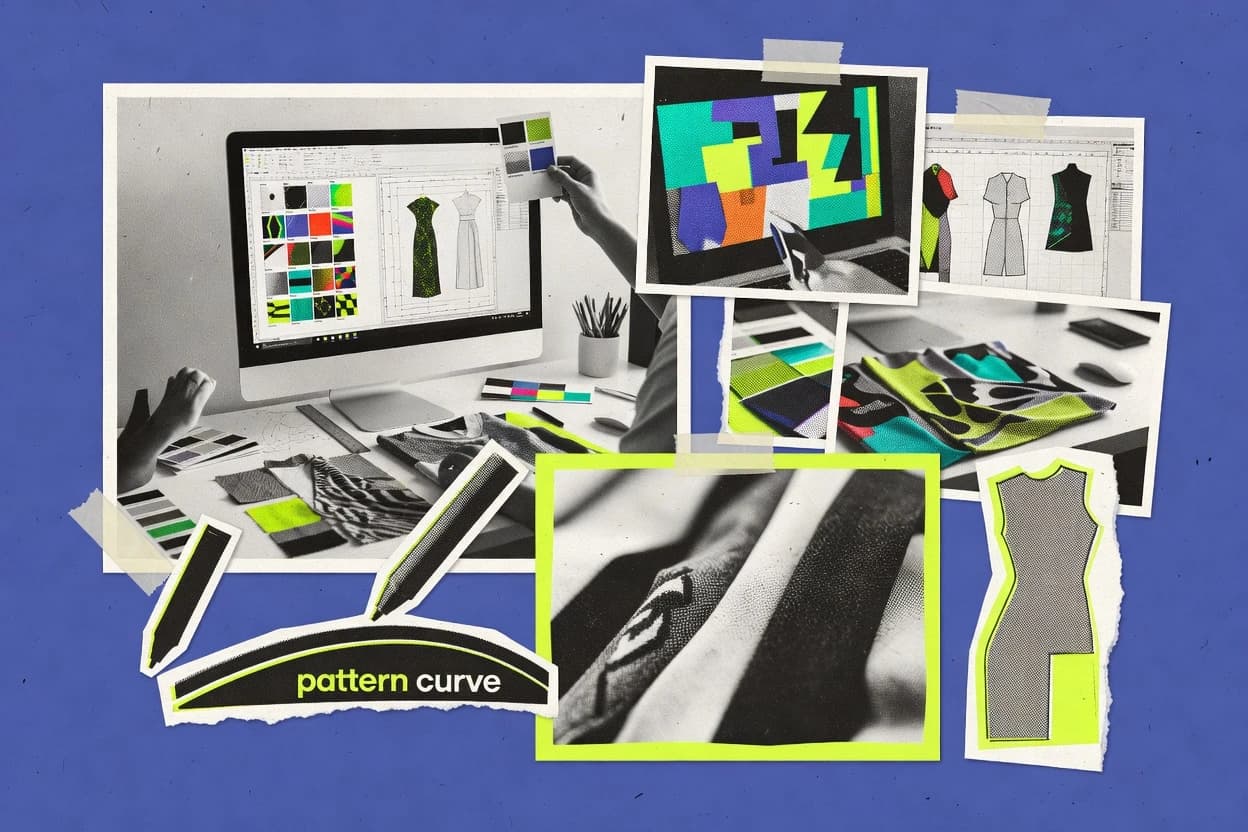
Art DesignTop 10 Best Fashion Design Computer Software of 2026
Rank 10 fashion design computer software tools for patternmaking, 3D modeling, and apparel design, with comparisons including Optitex, Illustrator, Tailornova.

How we ranked these tools
Core product claims cross-referenced against official documentation, changelogs, and independent technical reviews.
Analyzed video reviews and hundreds of written evaluations to capture real-world user experiences with each tool.
AI persona simulations modeled how different user types would experience each tool across common use cases and workflows.
Final rankings reviewed and approved by our editorial team with authority to override AI-generated scores based on domain expertise.
Score: Features 40% · Ease 30% · Value 30%
Gitnux may earn a commission through links on this page — this does not influence rankings. Editorial policy
Optitex is the best pick if you’re a pattern shop or apparel team that needs repeatable 2D-to-3D iteration for sampling, whereas Adobe Illustrator fits design teams who want vendor-ready vector tech pack artwork and flat specifications without jumping into 3D simulation.
Editor’s top 3 picks
Three quick recommendations before you dive into the full comparison below — each one leads on a different dimension.
Optitex
Integrated pattern drafting with 3D virtual fit validation that preserves pattern-to-garment construction context.
Built for fits when pattern shops and apparel engineers need repeatable 2D-to-3D iteration for sampling..
Adobe Illustrator
Editor pickVariable artboard organization plus vector layer labeling for repeatable multi-view fashion tech sheets.
Built for fits when design teams need vector tech pack artwork and vendor-ready specifications..
Tailornova
Editor pickTech pack annotation stays coupled to pattern revisions so spec updates follow drafting changes.
Built for fits when apparel teams need repeatable pattern and tech pack iteration without heavy 3D simulation..
Comparison Table
Optitex
vertical specialist3D fashion design and pattern-making software for apparel production.
Integrated pattern drafting with 3D virtual fit validation that preserves pattern-to-garment construction context.
Optitex centers on CAD pattern drafting with a live 3D garment simulation path, so a pattern adjustment can be reviewed against virtual appearance without leaving the design cycle. It includes annotation and production-facing outputs such as DXF-AAMA export and measurement table support that fit the requirements of pattern shops and apparel engineering teams. A practical fit signal is that the software treats garment construction as a configurable workflow rather than a one-off visualization.
The tradeoff is that advanced results depend on getting pattern parameters, garment structure settings, and fabric behavior inputs consistent across the project. Optitex works best when iterative fit reviews are part of the process, such as during sampling where multiple sizes and construction variants must be compared before release.
- +Fast loop between CAD pattern edits and 3D visual fit checks
- +Marker making and production-ready outputs support cutter workflows
- +DXF-AAMA export helps production handoff without rework
- +Fabric drape simulation improves early material and silhouette validation
- –Higher setup overhead to keep fabric and garment construction settings aligned
- –More training needed for efficient multi-size grading workflows
- –Project organization becomes critical as construction variants multiply
- –Some advanced simulation refinement can slow iteration during heavy rework
Apparel engineers
Iterate fit during sampling cycles
Fewer sample revisions
Pattern shops
Prepare nesting and cutting deliverables
Cleaner cutter handoff
Show 2 more scenarios
Fashion design teams
Validate silhouette with fabric behavior
Earlier material confidence
Use fabric drape simulation to check how design intent reads in 3D.
Small product developers
Compare construction variants
Faster design decisions
Test multiple structure and pattern settings in the same workflow for quick comparisons.
Best for: Fits when pattern shops and apparel engineers need repeatable 2D-to-3D iteration for sampling.
Adobe Illustrator
SMBIndustry-standard vector graphics software for fashion flat design.
Variable artboard organization plus vector layer labeling for repeatable multi-view fashion tech sheets.
Fashion teams use Illustrator for vector croquis rendering, colorway management artwork, and consistent tech sheet annotation styling through layers and named objects. Artboards help package multiple views such as front, back, and detail callouts in one file, which reduces version confusion when sharing with vendors. Vector output stays crisp for markers, embroidery placement guides, and artwork-heavy elements where line quality matters.
A key tradeoff is that Illustrator is not a garment pattern CAD engine and it lacks native parametric size grading logic for production-ready pattern output. It fits best when vector accuracy, branding overlays, and specification graphics drive the workflow, such as preparing style line vectorization and DXF-AAMA export as visual guidance rather than true pattern geometry.
- +High-precision vector drawing for clean fashion linework
- +Artboards and layers support multi-view tech pack layouts
- +Typographic control improves readable garment spec annotations
- +Export options support print and vendor-ready artwork
- –Not a pattern drafting system for production-ready outputs
- –3D garment simulation requires external tools
- –Complex structured grading needs automation or manual work
- –Advanced production workflows depend on plugin or script support
Fashion designers and illustrators
Vector croquis and style line rendering
Cleaner presentation across revisions
Tech pack coordinators
Annotation and detail callouts
Fewer interpretation mistakes
Show 2 more scenarios
Print and graphics teams
Colorway artwork preparation
Faster approvals for graphics
Manage colorway variants as separate artboards with reusable vector elements.
Pattern and 3D production teams
Artwork reference for downstream tools
Less manual re-drawing
Export vector guides that downstream pattern and 3D tools use as visual overlays.
Best for: Fits when design teams need vector tech pack artwork and vendor-ready specifications.
Tailornova
SMBOnline fashion design software for creating custom garments and patterns.
Tech pack annotation stays coupled to pattern revisions so spec updates follow drafting changes.
Tailornova’s core value comes from keeping pattern work and spec documentation in one revision loop, which reduces mismatch risk between drafted patterns and annotated tech packs. The workflow supports parametric size grading logic and repeatable construction sequencing so changes propagate through related deliverables. It is a fit for apparel developers who need consistent documentation artifacts for sampling, fittings, and production handoff.
A tradeoff is that it prioritizes 2D pattern and spec workflows more than deep 3D garment simulation or virtual catwalk rendering. Teams that need avatar anthropometry workflows, fabric drape simulation, or advanced virtual fit validation will likely pair Tailornova with separate 3D tools. Tailornova is most effective when pattern iterations and tech sheet annotation are the critical path.
- +Revision-focused workflow links pattern changes to tech pack annotations
- +Parametric grading supports consistent size logic across updates
- +Construction sequencing helps standardize garment assembly documentation
- +Production-ready pattern output supports repeatable sampling cycles
- –Limited emphasis on 3D garment simulation workflows
- –Workflow depth can require setup discipline for grading rules
- –Advanced nesting optimization depends on external processes
- –Digital fabric printing workflow coverage is narrower than some CAD suites
Apparel design teams
Draft patterns and annotate tech packs
Fewer spec mismatches
Size grading coordinators
Maintain size logic across styles
Stable multi-size outputs
Show 2 more scenarios
Sampling and development teams
Iterate after fit feedback
Faster sample cycles
Repeatable pattern output supports quick turnaround for updated construction documentation.
SMB fashion brands
Standardize construction documentation
More uniform deliverables
Consistent construction sequencing reduces variability between designers and graders.
Best for: Fits when apparel teams need repeatable pattern and tech pack iteration without heavy 3D simulation.
CLO 3D
vertical specialist3D fashion design software for garment simulation and virtual sampling.
Pattern changes propagate into 3D simulation for construction-ready virtual fit validation across iterative versions.
CLO 3D is a fashion design computer software focused on 2D-to-3D garment simulation and virtual fit validation. Garment workflows connect pattern edits to 3D results so designers can iterate on drape behavior, seam allowance changes, and construction alignment.
The tool includes a textile and fabric look pipeline for realistic shading and material response, plus export formats used in production planning and pattern production. Automation support and integration options help teams standardize style development outputs across repeated projects.
- +Tight 2D-to-3D feedback loop for fast virtual fit iteration
- +Fabric and material simulation tuned for garment drape preview
- +Pattern-to-construction modeling supports seam allowance and assembly checks
- +Export-ready pattern outputs support downstream tech pack workflows
- –Complex projects need consistent setup of avatars, measurements, and garment rules
- –Large scenes can slow interaction without performance tuning
- –Some garment detail effects require manual modeling rather than automated generation
- –Integrations depend on external workflow glue for end-to-end PLM continuity
Best for: Fits when design teams need reliable virtual fit validation with pattern edits feeding 3D construction checks.
TUKA3D
vertical specialist3D fashion design and virtual fitting software from TUKAtech.
Construction sequencing visualization inside the garment workflow that aligns assembly logic with 3D appearance during each revision.
TUKA3D turns fashion pattern assets into interactive 3D garment previews for virtual fit validation workflows. It focuses on garment modeling, sizing iteration, and visual checks that connect to tech pack specification outputs.
The tool supports typical apparel production steps such as seam allowance modeling, style line review, and construction sequence visualization within a 2D-to-3D garment conversion flow. TUKA3D is most useful when teams need repeated 3D revision cycles around the same base pattern and measurement set.
- +Fast iterative 2D-to-3D garment conversion for repeated fit checks
- +Visual construction sequencing helps catch garment assembly issues early
- +Seam allowance modeling supports more realistic surface behavior in 3D
- +Tech pack specification artifacts are tied to the same design cycle
- –Advanced grading workflows can feel constrained compared with specialist CAD drafting tools
- –Virtual fit validation results depend heavily on accurate anthropometry inputs
- –Limited automation surface compared with API-first PLM and CAD stacks
- –Marker making and production-ready nesting optimization coverage is thin
Best for: Fits when fashion teams need repeated 3D revision cycles for virtual fit validation without running a full CAD-CAM stack.
Audaces 3D
vertical specialist3D fashion design and virtual prototyping software for apparel.
Virtual fit validation driven by measurement inputs to review fit and drape before committing to physical sampling.
Audaces 3D targets fashion design teams that need 3D garment simulation and digital fit validation inside a style-to-sample workflow. It focuses on converting pattern and product specifications into a virtual 3D representation for review of drape, fit, and construction behavior.
The software’s value is strongest when used with consistent body measurement references and a structured apparel data handoff to production-ready pattern outputs. Audaces 3D is most effective as a 3D validation layer over the team’s existing CAD and technical design process rather than as a standalone design system.
- +3D garment simulation supports virtual fit validation and drape review
- +Virtual try-on workflows connect measurement inputs to garment visualization
- +Construction-aware 3D visualization improves early tech pack review
- +Works as a practical 3D layer over an existing pattern workflow
- –3D-to-2D edits can feel indirect compared with CAD-first tools
- –Integration depth depends on how pattern data is prepared upstream
- –Advanced automation and governance controls are limited for large teams
- –Asset management for textiles and colorways is narrower than dedicated PLM
Best for: Fits when fashion teams need repeated 3D fit checks for pattern revisions without rebuilding the full design pipeline.
Style3D
vertical specialist3D digital fashion design and simulation platform.
Parametric fit iteration that keeps garment visualization aligned during rapid pattern revisions.
Style3D blends 3D garment simulation with an end-to-end apparel design workflow built around pattern and fit iteration. The workflow supports virtual fit validation and digital twin prototyping through repeatable avatar and garment updates.
Style3D focuses on collaboration outputs like tech pack specification artifacts and garment-ready pattern exports. Integrations and automation are centered on design-to-visual change cycles rather than broad enterprise PLM coverage.
- +Fast iteration between pattern changes and virtual fit validation results
- +Consistent 2D-to-3D garment conversion workflow for garment previews
- +Focused library work for textile appearance and garment presentation
- +Clear handoff outputs for tech pack specification and construction notes
- –Limited deep automation surface compared with CAD-first pattern drafting suites
- –Workflow is less suited for full PLM-centric governance and approvals
- –Complex sizing workflows can require manual reconciliation across variants
- –Avatar anthropometry control is narrower than dedicated CLO-style avatar pipelines
Best for: Fits when fashion studios need repeatable 2D-to-3D previews and virtual fit iteration without heavy PLM orchestration.
Digital Fashion Pro
SMBFashion design software for creating technical sketches and tech packs.
Garment construction sequencing capture keeps assembly logic tied to the pattern and documentation loop.
Digital Fashion Pro targets fashion design computer workflows with pattern-to-virtual-review output meant for iterative garment development.
The tool emphasizes 2D pattern drafting and digital fit review so teams can check proportions before committing to production-ready pattern output.
It also supports tech pack oriented documentation and garment construction data capture as part of the design loop.
Integration depth is more limited than higher-ranked tools, but the workflow can still reduce rework for teams using consistent measurement and style conventions.
- +Pattern drafting to virtual fit review loop supports faster iteration cycles
- +Tech pack oriented annotation supports consistent design documentation handoff
- +Garment construction sequencing capture helps keep assembly logic attached to design
- +Consistent output formatting reduces manual transcription between steps
- –3D simulation depth is limited versus tools that model garment physics more granularly
- –Marker making and pattern nesting optimization tools are not as comprehensive for high-volume production
- –API and automation surface is thin for connecting to PLM or internal pipelines
- –Workflow requires disciplined style conventions to avoid grading and annotation mismatches
Best for: Fits when small pattern teams need 2D drafting plus basic virtual fit review without heavy pipeline integration.
Marvelous Designer
vertical specialist3D garment design software for realistic cloth simulation.
Sewing-based 2D-to-3D workflow that converts drafted pattern panels into construction-ready garment simulation.
Marvelous Designer is used to create pattern pieces and simulate garment drape in a 3D workspace. The workflow supports 2D-to-3D garment conversion from sewn patterns, including seam allowance modeling and construction sequencing.
It also provides toolpaths for production-ready pattern output using standard export formats that support downstream tech pack and fabrication pipelines. Compared with general 3D modeling tools, it focuses on clothing physics and iterative virtual fit validation loops that start from drafted pattern geometry.
- +3D fabric drape simulation responds to sewing and boundary constraints
- +Pattern-to-garment conversion keeps seam placement tied to 2D pieces
- +Exported patterns support downstream garment construction documentation
- +Avatar posing supports iterative virtual fit validation cycles
- –Stitch simulation detail can increase setup time for complex garments
- –Large scenes with many panels can slow interactive editing
- –Advanced production outputs may require disciplined layer and naming hygiene
- –Physics behavior needs tuning per fabric and thickness for accuracy
Best for: Fits when design teams iterate virtual fit from drafted patterns and need physics-based drape before production handoff.
CorelDRAW
SMBVector illustration and layout software used for fashion flat sketches.
Native DXF-AAMA export from vector shapes for pattern-adjacent geometry handoffs.
CorelDRAW is a vector-first design application used by fashion teams for croquis-ready artwork, logo and trim graphics, and tech pack illustrations. The workflow centers on precise Bezier drawing, dimension-friendly annotation, and production-lean exports like DXF-AAMA and layered artwork delivery for downstream pattern and layout tasks.
It supports extensive typography controls and color management for style line consistency across seasonal colorways. CorelDRAW is less suited for garment-specific simulation workflows like 3D garment simulation and virtual fit validation than for 2D specification and documentation.
- +Strong vector tools for clean style lines and annotation-ready tech sheets
- +Layered artwork output supports separate components for trims and graphics
- +Color management tools help keep colorways consistent across design iterations
- +DXF-AAMA export supports pattern-related handoffs from 2D vector geometry
- –No native pattern drafting engine for CAD seam allowance modeling
- –Limited apparel-focused data structures for parametric size grading
- –Automation depends on macros and scripting rather than an apparel-specific API surface
- –Virtual fit validation workflows require external 3D tools
Best for: Fits when fashion designers need production-ready 2D vector specs and graphic tech sheets.
Conclusion
After evaluating 10 art design, Optitex stands out as our overall top pick — it scored highest across our combined criteria of features, ease of use, and value, which is why it sits at #1 in the rankings above.
Use the comparison table and detailed reviews above to validate the fit against your own requirements before committing to a tool.
How to Choose the Right fashion design computer software
This buyer's guide covers Optitex, Adobe Illustrator, Tailornova, CLO 3D, TUKA3D, Audaces 3D, Style3D, Digital Fashion Pro, Marvelous Designer, and CorelDRAW for fashion design computer software workflows.
The coverage focuses on how each tool handles 2D pattern edits and tech pack specification, then connects those changes to 3D garment visualization for virtual fit validation and construction checks.
Across the list, Optitex is the top-ranked option for integrated pattern drafting tied to 3D virtual fit validation, while Adobe Illustrator and CorelDRAW anchor repeatable vector tech sheet production instead of pattern-to-garment simulation.
Fashion design computer software for pattern drafting, tech packs, and virtual fit validation
Fashion design computer software supports CAD pattern drafting, tech pack specification, and repeatable garment design documentation with workflows that range from vector tech sheets to pattern-driven 2D-to-3D conversion.
Optitex uses an integrated pattern drafting to 3D virtual fit validation loop that preserves pattern-to-garment construction context through iterative revisions.
CLO 3D focuses on pattern changes feeding 3D simulation for construction-ready virtual fit validation, and it works best when avatars, measurements, and garment rules are configured to match the sampling intent.
For spec-forward teams, Adobe Illustrator pairs variable artboard organization with vector layer labeling to keep multi-view fashion tech sheets consistently structured even when 3D simulation happens outside the design file.
Pattern-to-3D loop control, tech pack coupling, and production-ready output
Fashion design computer software is most useful when pattern edits remain traceable through tech pack updates and then into 3D garment visualization for virtual fit validation and construction checks. The tools in this guide split along two practical paths.
Some software keeps a tight 2D-to-3D feedback loop inside one workflow. Other tools focus on vector tech pack structure and exports while 3D work happens elsewhere.
Integrated pattern drafting tied to virtual fit validation
Optitex keeps CAD pattern edits connected to 3D visual fit checks so construction context carries across iterations. CLO 3D also propagates pattern changes into 3D simulation for construction-ready virtual fit validation across versions.
Tech pack annotation that stays coupled to drafting revisions
Tailornova links tech pack annotation updates to pattern revisions so spec changes follow drafting changes. Digital Fashion Pro captures garment construction sequencing so assembly logic stays in the pattern and documentation loop.
Vector tech sheet production with repeatable multi-view layout
Adobe Illustrator supports variable artboard organization plus vector layer labeling for consistent multi-view fashion tech sheets. CorelDRAW supports clean style line creation and exports layered vector artwork for separate trims and graphics handoffs.
3D simulation workflow depth for fit, drape, and construction checks
Marvelous Designer uses a sewing-based 2D-to-3D workflow where fabric drape responds to sewing and boundary constraints. TUKA3D adds construction sequencing visualization inside the garment workflow to align assembly logic with 3D appearance during each revision.
Measurement-driven virtual try-on behavior
Audaces 3D drives virtual fit validation using measurement inputs to review fit and drape before committing to physical sampling. TUKA3D also depends on accurate anthropometry inputs since virtual fit validation results track avatar and measurement configuration.
Choose by workflow ownership: drafting-first, annotation-first, or simulation-first
The fastest way to narrow fashion design computer software is to decide where the workflow “source of truth” should live. Tools like Optitex and CLO 3D keep drafting and 3D simulation in one loop so pattern edits become the change driver for virtual fit validation.
Teams that prioritize tech pack structure typically prefer Illustrator or CorelDRAW for vector labeling and multi-view layout. Teams that want tighter spec-to-drafting coupling but less 3D depth often select Tailornova for revision-linked annotations.
Pick drafting-first tools if pattern edits must drive 3D fit validation
Select Optitex when repeatable CAD pattern edits must feed 3D visual fit checks without breaking construction context. Select CLO 3D when pattern changes must propagate into 3D simulation for construction-ready virtual fit validation while iterative versions remain synchronized.
Pick annotation-first tools if tech pack updates must follow drafting changes
Select Tailornova when spec updates must stay coupled to pattern revisions so annotation changes remain traceable. Select Digital Fashion Pro when capturing garment construction sequencing as documentation must remain tied to the pattern and its associated handoff materials.
Pick simulation-first tools if sewing and drape physics must lead the virtual fit loop
Select Marvelous Designer when sewing and boundary constraints must drive fabric drape behavior during virtual garment iteration. Select TUKA3D when construction sequencing visualization must align assembly logic with 3D appearance during repeated fit cycles.
Pick vector-first tools when tech sheets and vendor-ready artwork matter more than drafting engines
Select Adobe Illustrator when variable artboards and vector layer labeling must produce repeatable multi-view tech pack artwork. Select CorelDRAW when layered vector artwork for trims and graphics needs clean style line output and DXF-AAMA handoff geometry.
Validate the depth tradeoff between CAD edits and 3D directness
Choose Audaces 3D when measurement-driven virtual fit validation and drape review must run without rebuilding the full design pipeline. Choose Style3D when parametric fit iteration must keep visualization aligned during rapid pattern revisions but PLM-centric governance and approvals are not the primary workflow goal.
Which teams match these fashion design computer software workflows
The right selection depends on whether the team’s bottleneck is pattern change iteration, tech pack revision traceability, or virtual fit validation throughput. The tools in this guide cluster into teams that need integrated 2D-to-3D loops, teams that need revision-coupled documentation, and teams that need vector tech sheet production for specifications.
Pattern shops and apparel engineering teams running repeated sampling
Optitex fits when CAD pattern edits and 3D visual fit checks must loop quickly while marker making and production-ready outputs support cutter workflows.
Spec-focused apparel teams coordinating tech pack changes with drafting revisions
Tailornova fits when tech pack annotation must stay coupled to pattern revisions so spec updates follow drafting changes without separate reconciliation.
Design teams prioritizing virtual fit validation driven by 3D construction logic
CLO 3D fits when pattern edits must feed 3D construction checks using fabric and material simulation tuned for garment drape preview.
Creative teams producing vendor-ready multi-view fashion tech sheets
Adobe Illustrator fits when vector tech pack artwork must be organized with variable artboards and labeled vector layers for repeatable layouts.
Small pattern teams needing basic virtual fit review without heavy pipeline integration
Digital Fashion Pro fits when 2D drafting must connect to virtual fit review and tech pack oriented annotation while full marker making and nesting optimization depth is not required.
Pitfalls that cause rework in fashion design computer software workflows
Rework usually starts when the chosen tool’s change driver does not match the team’s workflow responsibility. The most common failure mode is losing traceability between pattern edits, tech pack annotation updates, and 3D fit validation outcomes.
Another common failure mode is treating measurement-driven simulation as interchangeable. Several tools rely on accurate avatar configuration and garment rules, so incorrect anthropometry or garment constraints can invalidate virtual fit results.
Using a vector tech sheet tool as if it were a pattern drafting engine
Adobe Illustrator and CorelDRAW excel at vector tech sheets and DXF-AAMA export for vector-based handoffs, but they do not provide CAD seam allowance modeling or parametric pattern drafting output.
Breaking the pattern-to-3D loop by exporting mid-process files without synchronized rules
Optitex and CLO 3D keep construction context aligned across iterations, while 3D garment simulation created outside the pattern workflow often requires manual reapplication of garment rules to keep versions consistent.
Skipping anthropometry and garment rule consistency before running virtual try-on
TUKA3D ties virtual fit validation outcomes to accurate avatar and measurement inputs, and Audaces 3D also uses measurement inputs to drive fit and drape review before physical sampling.
Over-optimizing marker or nesting expectations in tools with limited production packaging depth
Digital Fashion Pro supports a pattern-to-virtual fit loop and tech pack oriented documentation, but marker making and pattern nesting optimization are not as comprehensive for high-volume production as in Optitex.
How We Selected and Ranked These Tools
We evaluated tools across features for pattern-to-3D loop control, revision traceability, and production-ready output support, which accounted for 40% of the score. We scored ease and value for day-to-day workflow execution, which accounted for 30% each.
We weighted Optitex heavily for an integrated pattern drafting workflow that preserves pattern-to-garment construction context through iterative 3D virtual fit validation. We also ranked CLO 3D and Tailornova high because pattern edits propagate into 3D or tech pack annotation updates stay coupled to drafting revisions without extra reconciliation.
Frequently Asked Questions About fashion design computer software
How does Optitex handle pattern changes and virtual fit validation in the same workflow?
Which tool is best for vector tech pack artwork and production-ready specification graphics?
How do CLO 3D and Marvelous Designer differ in the 2D-to-3D garment simulation loop?
What breaks if pattern grading logic is not consistent across revisions in a tech pack workflow?
How does TUKA3D support seam allowance modeling and construction sequence visualization during 3D revisions?
When does Audaces 3D fall short versus an end-to-end apparel design system?
How does Style3D perform parametric fit iteration for rapid prototype cycles?
What integration work changes if a studio needs API and automation around design-to-visual outputs?
Which security controls and admin governance expectations apply to collaborative fashion design files?
How do Marvelous Designer and CorelDRAW differ for getting production-ready pattern-adjacent geometry out of the design process?
Tools reviewed
Primary sources checked during evaluation.
Referenced in the comparison table and product reviews above.
- Art DesignTop 10 Best Fashion Apparel Design Software of 2026
- Art DesignTop 10 Best Computer Clothing Design Software of 2026
- Manufacturing EngineeringTop 10 Best Fashion Design And Production Software of 2026
- Fashion And ApparelTop 10 Best Apparel Design Services of 2026
- Digital Transformation In IndustryTop 10 Best Computer Systems Design Services of 2026
Keep exploring
Comparing two specific tools?
Software Alternatives
See head-to-head software comparisons with feature breakdowns, pricing, and our recommendation for each use case.
Explore software alternatives→In this category
Art Design alternatives
See side-by-side comparisons of art design tools and pick the right one for your stack.
Compare art design tools→