
GITNUXSOFTWARE ADVICE
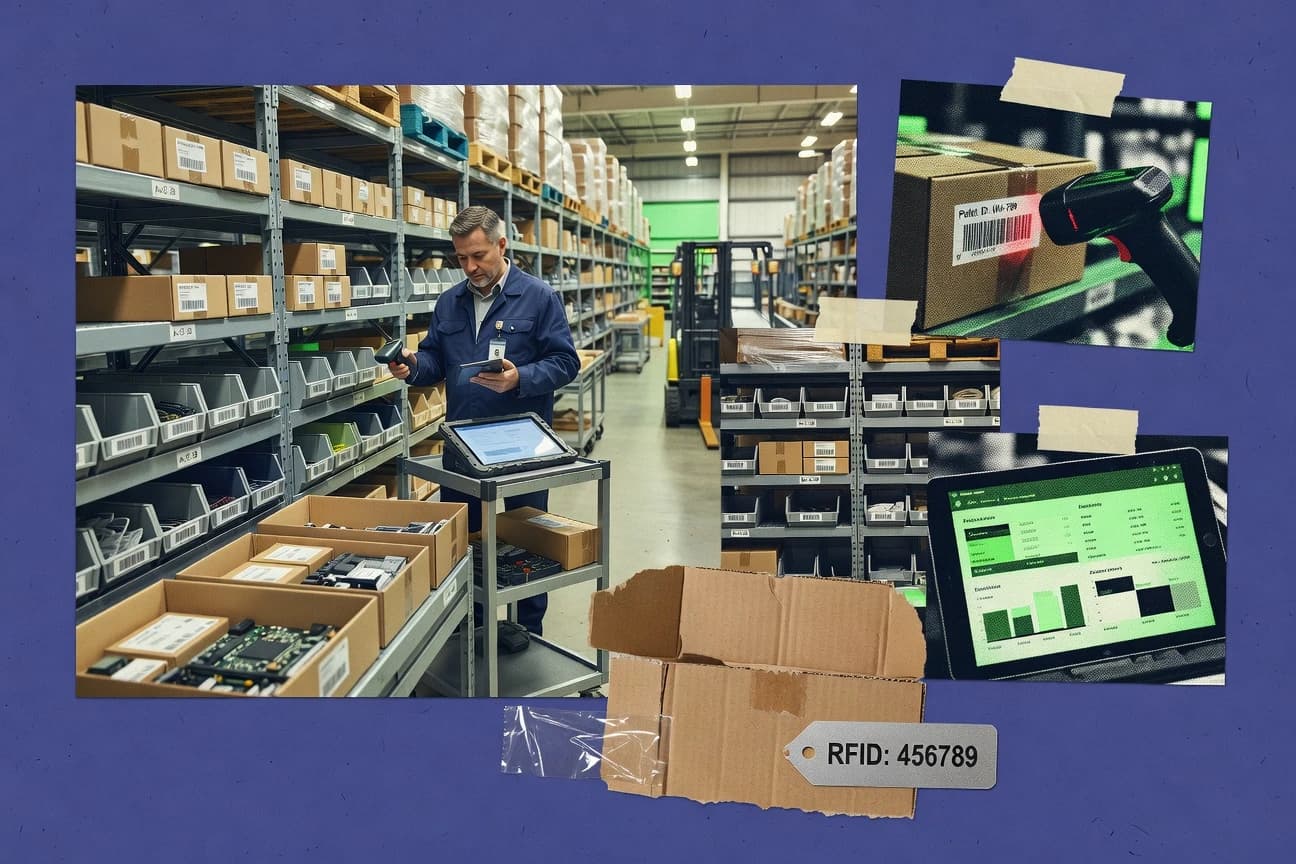
Business FinanceTop 10 Best Enterprise Inventory Software of 2026
Ranking of enterprise inventory software for large operations with side-by-side notes on Infor CloudSuite, Epicor ERP, and Sage X3.

How we ranked these tools
Core product claims cross-referenced against official documentation, changelogs, and independent technical reviews.
Analyzed video reviews and hundreds of written evaluations to capture real-world user experiences with each tool.
AI persona simulations modeled how different user types would experience each tool across common use cases and workflows.
Final rankings reviewed and approved by our editorial team with authority to override AI-generated scores based on domain expertise.
Score: Features 40% · Ease 30% · Value 30%
Gitnux may earn a commission through links on this page — this does not influence rankings. Editorial policy
Infor CloudSuite is the best fit when large operations need ERP-governed inventory flows across purchasing, sales, and warehouses, while Oracle Cloud ERP is the strong low-cost entry if you just need inventory governance, and Cin7 works better when multi-location coordination can sit alongside your broader ERP.
Editor’s top 3 picks
Three quick recommendations before you dive into the full comparison below — each one leads on a different dimension.
Infor CloudSuite
Inventory availability and valuation logic stay integrated across procurement, sales, and warehouse movements inside the CloudSuite environment.
Built for fits when large operations need ERP-governed inventory flows across purchasing, sales, and warehouses..
Epicor ERP
Editor pickManufacturing consumption and availability logic stays synchronized with inventory transactions through production-to-stock event flow.
Built for fits when manufacturing-linked inventory needs traceability, availability, and controlled integration to WMS..
Sage X3
Editor pickInventory is posted from ERP documents with valuation and traceability fields carried end to end.
Built for fits when large operations need ERP-integrated inventory control with warehouse execution handled externally..
Comparison Table
Infor CloudSuite
enterpriseIndustry-specific cloud ERP suites with inventory and warehouse management.
Inventory availability and valuation logic stay integrated across procurement, sales, and warehouse movements inside the CloudSuite environment.
Infor CloudSuite fits organizations that need inventory control tightly coupled to order management, procurement, and financial inventory valuation. The suite’s configuration-centric approach supports SKU lifecycle governance and warehouse transfer execution that reflects real stock movement, not just balance snapshots. Integration depth is strongest when inventory is treated as a shared system of record with explicit interfaces for ERP-to-warehouse updates.
A practical tradeoff appears in deployment overhead. Complex warehouses and multi-site setups usually require careful configuration to keep receiving, putaway, and transfers aligned with inventory availability and valuation. It works best when warehouse execution lives in a connected system and CloudSuite remains the planning and transactional backbone for enterprise inventory decisions.
- +ERP-linked inventory availability reduces overselling risk across orders
- +Configurable item governance supports consistent SKU lifecycle handling
- +Inventory movements stay aligned with valuation controls and finance
- +Integration interfaces support inventory synchronization with warehouse systems
- –Warehouse execution depends on connected modules and implementation choices
- –Setup discipline is required to keep multi-site configurations consistent
- –Custom workflows can increase upgrade effort and test scope
- –Some operational reporting depends on data model alignment and tuning
Manufacturing operations teams
Coordinate supply execution and stock visibility
Fewer stockout disruptions
Central procurement teams
Standardize receiving and stock additions
Cleaner inventory records
Show 2 more scenarios
Warehouse operations managers
Manage transfers across locations
Higher intersite accuracy
Execute warehouse transfer workflows that reflect inventory movement and keep location balances accurate.
Finance inventory control teams
Maintain consistent inventory valuation
More reliable reconciliations
Ensure inventory valuation logic follows the same movement events used by operational stock updates.
Best for: Fits when large operations need ERP-governed inventory flows across purchasing, sales, and warehouses.
Epicor ERP
enterpriseERP for manufacturers and distributors with multi-site inventory and lot tracking.
Manufacturing consumption and availability logic stays synchronized with inventory transactions through production-to-stock event flow.
Epicor ERP is a fit when inventory decisions depend on manufacturing context, like planned production orders, routing steps, and component consumption tied to stock status. The system supports serialized and lot-based tracking in inbound, transfer, and shipment flows, which helps when traceability is required end-to-end rather than only at shipment. Inventory valuation behavior is governed by its ERP accounting configuration, so stock moves and production completions follow consistent ledger rules.
A tradeoff is that deep inventory configuration and manufacturing linkage require strong master data governance to keep SKU lifecycle and traceability attributes correct across sites. Epicor ERP is most useful when a company already runs structured purchasing and production planning and needs warehouse execution events to reflect those decisions without manual reconciliation. In environments that only need basic SKU counts without BOM-driven availability, the configuration depth can become overhead.
- +Traceability covers receiving, internal moves, and shipments
- +BOM-driven availability ties warehouse stock to production plans
- +Supports multi-location inventory visibility with controlled transfers
- +API and EDI support transaction integration with external systems
- –Inventory setup complexity increases dependency on master data discipline
- –Advanced warehouse workflows often rely on WMS integration
- –Change management for inventory attributes can be operationally heavy
- –Reporting across inventory events may require disciplined configuration
Manufacturing ops leaders
Component availability drives warehouse commitments
Fewer stockout surprises
Supply chain integration teams
ERP inventory events sync to WMS
Reduced manual inventory rework
Show 2 more scenarios
Quality and traceability owners
Lot and serial control through shipping
Faster root-cause identification
Traceability captures lot and serial attributes across receiving, moves, and shipments for audits.
Plant controllers
Valuation follows inventory and production moves
More consistent financial reporting
Stock adjustments and production completions update valuation aligned with accounting rules.
Best for: Fits when manufacturing-linked inventory needs traceability, availability, and controlled integration to WMS.
Sage X3
enterpriseMulti-company ERP with inventory, warehouse, and distribution management.
Inventory is posted from ERP documents with valuation and traceability fields carried end to end.
Sage X3 supports SKU lifecycle management through item master configuration and transaction posting rules that keep inventory balances aligned with purchasing, sales, and manufacturing documents. It handles multi-location visibility using location and warehouse structures inside the same ERP ledger, which reduces reconciliation steps compared with inventory-only systems. The inventory engine supports valuation method configuration and traceability fields that can be carried on receipts and issues. For high-volume environments, batch and background processing are used to run reconciliation and period-end routines without requiring manual spreadsheet workflows.
A key tradeoff is that Sage X3 inventory control depends on ERP transaction setup and process discipline to produce clean reservations and lot or serial traceability outcomes. Teams with mature ERP masters get strong results when Sage X3 is positioned as the system of record for inventory balances and feeds warehouse operations through integration. Usage is strongest when receiving, putaway, and picking execution are handled by WMS while Sage X3 retains responsibility for financial inventory posting and order-driven inventory state.
- +ERP-driven inventory postings keep balances aligned with sales and purchasing
- +Multi-location stock structures reduce cross-system reconciliation overhead
- +Traceability data can persist across receiving and issue transactions
- +Background processing supports reconciliation and period-end inventory routines
- –Inventory outcomes depend on upfront ERP workflow and master data configuration
- –Warehouse execution often requires WMS integration for wave and picking control
- –Some inventory views can feel slower than purpose-built inventory apps
- –Extending processes usually needs implementation work rather than configuration alone
ERP operations teams
Maintain inventory balances from order events
Lower inventory variance between systems
Manufacturing planners
Control BOM-linked inventory consumption
More accurate work order stock
Show 2 more scenarios
Supply chain master data owners
Govern item and location master changes
Stronger master data governance
Master updates are controlled by roles and audit trails tied to inventory transactions.
Warehouse operations leads
Coordinate stock with WMS movements
Fewer manual stock adjustments
ERP inventory state syncs with warehouse execution for receiving, transfers, and shipment movements.
Best for: Fits when large operations need ERP-integrated inventory control with warehouse execution handled externally.
Oracle Cloud ERP
enterpriseCloud ERP with cost management, inventory, and supply chain planning modules.
Oracle Inventory feeds valuation and accounting through the same transaction chain used for receiving, issues, and transfers.
Oracle Cloud ERP is an enterprise ERP suite that ties inventory execution to finance and procurement workflows through shared item, cost, and transaction objects. Its inventory coverage emphasizes multi-organization control, structured item setup with support for both BOM and serialized tracking, and tight linkage to order and receiving flows.
Automation is driven by configurable rules plus Oracle integration tooling, with an API-first surface for data synchronization to warehouse systems and external master data sources. Administrators get governance primitives such as role-based access, workflow controls, and audit visibility across item lifecycle and inventory transactions.
- +Inventory transactions post directly into financial inventory valuation controls
- +Multi-organization item and inventory setup supports controlled SKU lifecycle
- +Extensibility via REST APIs supports inventory data sync to WMS and integrations
- +Barcode enablement supports warehouse scanning workflows for receiving and moves
- –Warehouse wave planning needs extra integration work with WMS execution systems
- –BOM and serialized edge cases often require detailed configuration governance
Best for: Fits when large operations need ERP-linked inventory governance with API-based integration to WMS.
Manhattan Active Inventory
enterpriseCloud-native inventory optimization and replenishment for retail and supply chains.
Policy-driven inventory control workflows that propagate coordinated balance changes across locations via integration events.
Manhattan Active Inventory runs inventory control workflows that tie item master changes to real inventory balances across warehouses. It supports operational policies for stock visibility and reconciliation, then propagates updates through integration rather than manual spreadsheets.
The system is built for enterprise inventory operations that need coordinated receiving, transfers, and order-related reservations while maintaining audit trails. Manhattan Active Inventory also exposes an API-based integration surface for ERP-to-inventory data synchronization and event-driven updates.
- +API-based inventory updates for tighter ERP to warehouse synchronization
- +Strong operational workflow coverage across receiving, transfers, and inventory reconciliation
- +Multi-location inventory visibility supports coordinated stock control
- +Master data governance workflows support SKU lifecycle change management
- –Inventory policy configuration requires disciplined governance across item attributes
- –Extensibility often depends on integration projects to match unique ERP logic
- –Complexity rises with higher SKU and location counts
- –Advanced barcode and traceability use cases can require external data standards alignment
Best for: Fits when large operations need policy-driven inventory control tied to ERP updates and controlled workflows.
Blue Yonder
enterpriseSupply chain platform with inventory planning, forecasting, and replenishment.
End-to-end inventory planning to execution orchestration that keeps replenishment logic aligned with warehouse stock movements.
Blue Yonder is an enterprise inventory software suite focused on planning plus execution synchronization across warehouses and supply networks. It is built to connect inventory policies to operational workflows, including replenishment decisions, receiving flows, and stock movement events.
Compared with many ERP-only approaches, Blue Yonder places stronger emphasis on automation around inventory decisions and on API-driven data exchange for keeping item master and stock records aligned. Teams typically evaluate it when multi-location inventory visibility and traceability requirements must stay consistent across WMS and ERP systems.
- +Tight coupling between inventory decisions and warehouse execution workflows
- +API-driven integration supports ERP-to-inventory data sync at scale
- +Automation helps keep replenishment and allocation logic consistent across locations
- +Strong governance around item and inventory lifecycle processes for large SKU sets
- –Cross-system configuration needs disciplined governance to avoid master data drift
- –Advanced automation depth can increase time-to-implement for complex networks
- –Some workflows depend on WMS integration patterns to reach full coverage
- –Operational change management can be heavier than ERP-only inventory setups
Best for: Fits when large operations need inventory policy automation and consistent ERP and WMS synchronization across many locations.
IBM Sterling Inventory Control and Visibility
enterpriseDistributed inventory visibility and allocation platform for omnichannel supply chains.
Allocation and reservation orchestration that keeps order demand, inventory status, and exceptions synchronized across multi-location workflows.
IBM Sterling Inventory Control and Visibility targets enterprise inventory governance with strong execution across receiving, allocation, and warehouse movement orchestration. It is built for multi-location inventory visibility using centralized inventory records and rule-driven reservations tied to order demand.
Integration depth is centered on IBM Sterling commerce and supply-chain workflows, with API-based connectivity and support for batch-oriented file exchanges for ERP-to-inventory sync. Automation shows up in exception handling for allocation, transfers, and reconciliation workflows that keep stock state aligned with operational events.
- +Rule-driven inventory allocation and reservation aligned to order demand
- +Multi-location visibility with centralized inventory status for operational decisions
- +Exception workflows for transfers and reconciliation reduce manual stock adjustments
- +Extensibility for warehouse and supply-chain workflows through integration hooks
- –Configuration of allocation and movement rules needs disciplined master data governance
- –Operational change cycles can be slower than ERP-native inventory modules
- –Depth depends on connected warehouse and ERP processes, not inventory alone
- –Admin tooling breadth can feel heavy for teams running fewer locations
Best for: Fits when large operations need centralized inventory orchestration across locations with controlled allocation rules.
Cin7
SMBCloud inventory and order management with multi-channel sales integration.
Inventory availability driven by order and warehouse workflow events, which updates stock status across locations.
Cin7 is an enterprise inventory system designed for multi-location stock control tied to order workflows. The product focuses on SKU lifecycle management, warehouse operations, and ERP-to-inventory data sync so stock levels update across sales and purchasing channels.
Cin7 also provides automation hooks for operational tasks such as receiving, allocations, and transfers, which helps reduce manual spreadsheet handling. Its integration surface and admin controls target governance for master data accuracy across large catalog and warehouse volumes.
- +Multi-location inventory visibility with operational workflows for transfers and allocations
- +Inventory and order linkage that reduces stock mismatch between sales and warehouse operations
- +Automation of receiving and warehouse tasks to limit manual reconciliation work
- +Integration options that support ERP-to-inventory data sync for consolidated availability
- –Advanced governance and master data controls demand disciplined setup across teams
- –Complex valuation and policy alignment can require careful mapping to ERP expectations
Best for: Fits when large operations need multi-location inventory coordination with strong order and warehouse workflow linkage.
Linnworks
SMBInventory and order management platform for multichannel retail operations.
Workflow-driven fulfillment that converts incoming orders into warehouse execution steps across multiple channels.
Linnworks processes multi-channel order fulfillment by pulling sales orders, allocating inventory, and generating warehouse execution tasks through configured workflows. It focuses on inventory item master synchronization and SKU lifecycle updates across locations while coordinating purchase, receiving, and returns states.
The system provides file and API-based integration paths for ERP-to-inventory data sync and event-driven stock and order updates. Governance features include role-based access controls tied to operational permissions and an audit trail for key inventory and order changes.
- +Multi-warehouse order allocation with configurable fulfillment rules
- +API and file integrations for inventory and order synchronization
- +Role-based access controls with audit trail for operational changes
- +Workflow configuration for returns and receiving states
- –Setup and mapping work is heavy for complex SKU lifecycle rules
- –WMS wave planning support depends on the linked warehouse system
- –Advanced inventory valuation methods can require careful configuration
- –Cycle counting workflows need deliberate process alignment
Best for: Fits when large operators need multi-channel fulfillment control with tight inventory sync across multiple warehouses.
Fishbowl Inventory
SMBInventory and warehouse management software with QuickBooks integration.
Warehouse execution with scan-led stock movements that stay linked to sales, purchasing, and production transactions.
Fishbowl Inventory targets manufacturers and distributors that need ERP-grade item and transaction control plus hands-on warehouse workflows. It manages an inventory item master and SKU lifecycle inside a sales, purchasing, and production flow, with warehouse and stock movement events that can feed accounting and reporting.
Fishbowl supports automation through rules tied to receiving, transfers, pick-pack-ship execution, and order reservation behaviors. For enterprise integration, it provides an API plus export and file-based options for ERP-to-inventory data sync.
- +Strong inventory-centric workflows across sales, purchasing, and manufacturing
- +API and file-based integration options for ERP-to-inventory synchronization
- +Lot and serial traceability support tied to stock movements
- +Warehouse execution controls for transfers, putaway, and picking sequences
- –Enterprise governance requires careful configuration of master data and processes
- –Complex multi-site models can demand disciplined inventory setup
- –Advanced procurement and production planning depend on configuration and add-ons
- –Data reconciliation at scale can require batch-like operational routines
Best for: Fits when distribution teams need inventory transaction control with traceability and warehouse workflow execution.
Conclusion
After evaluating 10 business finance, Infor CloudSuite stands out as our overall top pick — it scored highest across our combined criteria of features, ease of use, and value, which is why it sits at #1 in the rankings above.
Use the comparison table and detailed reviews above to validate the fit against your own requirements before committing to a tool.
How to Choose the Right enterprise inventory software
Enterprise inventory software governs the inventory item master, SKU lifecycle, and cross-location stock movements while keeping balances aligned with ERP transactions and warehouse execution. This guide covers Infor CloudSuite, Epicor ERP, Sage X3, Oracle Cloud ERP, Manhattan Active Inventory, Blue Yonder, IBM Sterling Inventory Control and Visibility, Cin7, Linnworks, and Fishbowl Inventory.
The earlier tool cards map where each platform keeps inventory availability and valuation logic inside the same transaction chain or pushes inventory posting through ERP documents. The strongest differentiators show up in integration depth, API and event surfaces, and governance controls that determine how consistently multi-site inventory configurations hold up under change.
Enterprise inventory software for ERP-governed inventory posting and warehouse-synchronized stock control
Enterprise inventory software coordinates inventory availability, valuation controls, and traceability fields across procurement, sales, and warehouse movements using ERP-linked inventory postings and integration events. Infor CloudSuite keeps inventory availability and valuation logic integrated across purchasing, sales, and warehouse movements inside the CloudSuite environment, which reduces overselling risk when orders and stock are updated together.
Epicor ERP synchronizes manufacturing consumption and availability logic with inventory transactions through production-to-stock event flow, and traceability covers receiving, internal moves, and shipments. Across these tools, differentiation centers on how inventory outcomes are posted, how inventory updates propagate to warehouse systems, and how master data governance is enforced for consistent SKU lifecycle handling.
Integration depth, inventory posting model, and governance controls
Enterprise inventory software succeeds when inventory item master changes, valuation rules, and transactional postings stay consistent across procurement, sales, and warehouse movements.
The differentiators across these tools come from how inventory outcomes are posted into the ERP transaction chain or pushed through integration events, and how governance controls protect SKU lifecycle handling across multiple sites.
ERP-governed inventory availability and valuation chain
Infor CloudSuite keeps inventory availability and valuation logic integrated across procurement, sales, and warehouse movements inside the same CloudSuite environment. Sage X3 posts inventory from ERP documents so valuation and traceability fields travel end to end with ERP-driven balances.
Production-to-stock and traceability propagation
Epicor ERP synchronizes manufacturing consumption and availability logic with inventory transactions through a production-to-stock event flow. IBM Sterling Inventory Control and Visibility coordinates allocation and reservation so order demand, inventory status, and exceptions stay synchronized across multi-location workflows.
API and event surface for ERP to WMS synchronization
Oracle Cloud ERP links inventory transactions to accounting through the same transaction chain and supports API-based integration to WMS. Manhattan Active Inventory provides API-based inventory updates so coordinated balance changes propagate across locations through integration events.
Warehouse execution coupling versus ERP-only posting
Blue Yonder couples inventory planning to execution orchestration so replenishment logic remains aligned with warehouse stock movements. Fishbowl Inventory centers on warehouse execution with scan-led stock movements tied to sales, purchasing, and production transactions.
Multi-location master data governance for SKU lifecycle consistency
Infor CloudSuite includes configurable item governance designed to keep SKU lifecycle handling consistent across multi-site configurations. Epicor ERP increases the impact of master data discipline because advanced warehouse workflows often rely on WMS integration and tighter inventory setup.
Choose the inventory posting path and then validate governance and orchestration boundaries
The first decision should be how inventory posting is supposed to work in the transaction chain, because tools that post through ERP documents produce different reconciliation behavior than tools that update balances via integration events.
The second decision should be where warehouse execution control lives, because some platforms expect connected WMS wave planning while others rely on orchestration inside the inventory and warehouse workflow layer.
Map the inventory posting path to ERP workflow ownership
If ERP documents are the system of record for inventory balances, Sage X3 is built around ERP-driven inventory postings that carry valuation and traceability fields end to end. If inventory availability and valuation logic must remain integrated across procurement, sales, and warehouse movements within one environment, Infor CloudSuite keeps those outcomes inside CloudSuite.
Run a manufacturing traceability walkthrough across receiving, internal moves, and shipments
If manufacturing consumption must stay synchronized with inventory transactions through production-to-stock event flow, Epicor ERP provides that synchronization and includes receiving, internal moves, and shipment traceability coverage. If the priority is multi-location allocation and reservation orchestration tied to order demand and exceptions, IBM Sterling Inventory Control and Visibility keeps those states coordinated across locations.
Decide whether WMS wave planning is controlled inside the inventory stack or externally
If warehouse wave planning depends on extra integration work with WMS execution systems, Oracle Cloud ERP shifts complexity into integration boundaries. If policy-driven inventory control workflows propagate coordinated balance changes across locations through integration events, Manhattan Active Inventory supports that event-driven propagation model.
Test API-based synchronization against your throughput and integration patterns
For event-driven inventory updates that must land in connected systems at scale, Manhattan Active Inventory emphasizes API-based inventory updates for ERP to warehouse synchronization. For inventory decisions that must stay aligned with warehouse execution workflows across many locations, Blue Yonder uses API-driven integration plus orchestration that spans planning and execution.
Stress master data governance for multi-location SKU lifecycle handling
If multi-site SKU lifecycle consistency relies on item governance configuration, Infor CloudSuite provides configurable item governance designed for consistent handling across sites. If governance gaps will surface as complex inventory setup issues and setup dependency, Epicor ERP requires inventory setup complexity and master data discipline to avoid errors propagating into inventory transactions.
Who should buy enterprise inventory software
Large operations need inventory software that can keep inventory item master updates, valuation outcomes, and traceability fields consistent across procurement, sales, and warehouse execution.
These tools fit best when the organization needs cross-system inventory synchronization with explicit governance controls and repeatable integration behaviors.
Organizations running ERP-governed inventory posting across purchasing, sales, and warehousing
Infor CloudSuite fits when inventory availability and valuation logic must stay integrated across procurement, sales, and warehouse movements inside CloudSuite. Oracle Cloud ERP fits when inventory transactions must feed valuation and accounting through the same transaction chain while supporting API-based integration to WMS.
Manufacturers that need production-to-stock traceability and availability alignment
Epicor ERP fits when manufacturing consumption and availability logic must stay synchronized with inventory transactions through production-to-stock event flow. IBM Sterling Inventory Control and Visibility fits when centralized allocation and reservation orchestration across multi-location workflows must stay aligned with order demand and exceptions.
Warehouse-centric operators that need scan-led stock movement control and traceability
Fishbowl Inventory fits when distribution teams need warehouse execution with scan-led stock movements linked to sales, purchasing, and production transactions. Sage X3 fits when warehouse execution is handled externally but ERP documents must still drive inventory control with valuation and traceability fields carried end to end.
Global networks that must keep inventory policy automation aligned with execution
Blue Yonder fits when inventory policy automation must remain aligned with warehouse stock movements through execution orchestration and inventory planning. Manhattan Active Inventory fits when policy-driven inventory control workflows must propagate coordinated balance changes across locations through integration events.
Common implementation pitfalls in enterprise inventory projects
Mis-scoped boundaries between ERP posting and warehouse execution cause the most common failures because balances, reservations, and traceability fields diverge across systems.
The second most common failure is governance underinvestment, because SKU lifecycle handling and multi-site master data drift turn integration errors into inventory reconciliation work.
Assuming inventory balances will stay aligned without an explicit connected-module plan
Infor CloudSuite ties warehouse execution to connected modules and implementation choices, so missing module connectivity turns availability into partial visibility. Sage X3 can keep balances aligned through ERP-driven postings, but warehouse execution must still be handled externally with disciplined WMS integration.
Underestimating master data discipline for multi-location inventory setup
Epicor ERP raises inventory setup complexity and increases dependency on master data discipline when advanced warehouse workflows rely on WMS integration. Infor CloudSuite also requires setup discipline to keep multi-site configurations consistent when item governance drives SKU lifecycle handling.
Treating policy and allocation logic as a configuration-only task
IBM Sterling Inventory Control and Visibility depends on rule-driven allocation and reservation orchestration, and configuration of allocation and movement rules requires disciplined master data governance. Manhattan Active Inventory requires policy configuration discipline because inventory policy workflows must propagate coordinated balance changes across locations via integration events.
Overlooking WMS wave planning responsibilities during tool selection
Oracle Cloud ERP notes that warehouse wave planning needs extra integration work with WMS execution systems, so wave orchestration gaps become integration scope. Blue Yonder reduces this by keeping replenishment logic aligned with warehouse stock movements through orchestration, but it still demands governance to avoid master data drift.
How We Selected and Ranked These Tools
We evaluated each platform on integration depth across ERP-to-inventory synchronization and on whether inventory outcomes remain consistent across procurement, sales, and warehouse movements. We weighted features at 40% and split the remaining 60% between ease and value at 30% each.
We prioritized Infor CloudSuite because inventory availability and valuation logic stay integrated across purchasing, sales, and warehouse movements inside the CloudSuite environment, which reduces overselling risk when orders and stock are updated together. We also used each tool card’s stated differentiation in transaction chaining, event propagation, and governance dependency to rank how reliably multi-site configurations hold under change.
Frequently Asked Questions About enterprise inventory software
How do enterprise inventory systems keep valuation and inventory transactions consistent with finance documents?
Which integration path handles ERP-to-inventory synchronization when warehouse balances change during execution?
How does item master and SKU lifecycle governance work across multiple sites with controlled master data updates?
When do audit log and traceability requirements force a specific choice between ERP-integrated inventory and WMS-focused execution?
What breaks if warehouse execution posts inventory movements outside the ERP transaction model?
How do systems handle reservations for sales orders to prevent overselling across multi-warehouse inventory?
Which tool provides the strongest production-to-stock synchronization for manufacturing consumption and availability?
How are lot and serial traceability fields carried from receiving through fulfillment and returns workflows?
How should administrators approach RBAC and configuration control to manage high-volume master data and warehouse operations?
Which systems support inventory updates via event-driven mechanisms rather than batch-only reconciliation files?
Tools reviewed
Primary sources checked during evaluation.
Referenced in the comparison table and product reviews above.
- Business FinanceTop 10 Best Enterprise Inventory Management Software of 2026
- Data Science AnalyticsTop 10 Best Enterprise Business Intelligence Software of 2026
- Business FinanceTop 10 Best Enterprise Risk Assessment Software of 2026
- Business FinanceTop 10 Best Enterprise Project Portfolio Management Software of 2026
- Business FinanceTop 10 Best Easy To Use Inventory Software of 2026
Keep exploring
Comparing two specific tools?
Software Alternatives
See head-to-head software comparisons with feature breakdowns, pricing, and our recommendation for each use case.
Explore software alternatives→In this category
Business Finance alternatives
See side-by-side comparisons of business finance tools and pick the right one for your stack.
Compare business finance tools→