
GITNUXSOFTWARE ADVICE
Technology Digital MediaTop 10 Best CHR oma Key Software of 2026
Compare 10 chr oma key software tools by effects, features, and usability. See rankings and tradeoffs for beginners, creators, and video teams.

How we ranked these tools
Core product claims cross-referenced against official documentation, changelogs, and independent technical reviews.
Analyzed video reviews and hundreds of written evaluations to capture real-world user experiences with each tool.
AI persona simulations modeled how different user types would experience each tool across common use cases and workflows.
Final rankings reviewed and approved by our editorial team with authority to override AI-generated scores based on domain expertise.
Score: Features 40% · Ease 30% · Value 30%
Gitnux may earn a commission through links on this page — this does not influence rankings. Editorial policy
CapCut is the strongest overall pick when creators want fast green-screen videos with captions, effects, and social publishing in one editor, while Adobe Premiere Pro is the better fit for professional compositing, multicam timelines, and Adobe post-production workflows.
Editor’s top 3 picks
Three quick recommendations before you dive into the full comparison below — each one leads on a different dimension.
CapCut
Remove Background combines automatic subject isolation with manual chroma key editing inside CapCut's social-video timeline.
Built for fits when creators need fast green-screen videos with captions, effects, and social publishing in one editor..
CyberLink PowerDirector
Editor pickAI-powered object selection combined with motion tracking simplifies animated cutouts, titles, and background replacement in one timeline.
Built for fits when creators need accessible green-screen editing with motion tracking and layered timeline control..
VideoPad
Editor pickIntegrated screen recording and chroma key editing let tutorial creators capture, replace, narrate, and publish footage in one desktop workflow.
Built for fits when creators need straightforward chroma key editing alongside everyday timeline production..
Comparison Table
CapCut
SMBCross-platform video editor with chroma key feature.
Remove Background combines automatic subject isolation with manual chroma key editing inside CapCut's social-video timeline.
CapCut suits creators who need fast background replacement without a dedicated compositing application. The color picker, intensity controls, shadow adjustment, and edge refinement tools support basic foreground isolation, while masking and layering handle subject-specific corrections. Its integrated templates, text animation, beat detection, and caption generation connect chroma-key footage to social video production.
The editor offers less control than specialist compositing software for hair detail, difficult lighting, spill suppression, and complex motion tracking. A social media team can produce presenter clips with branded backgrounds quickly, but advanced virtual production work may require a separate compositor. Export presets and direct publishing options support repeated short-form delivery.
- +Visual chroma key controls support quick background replacement
- +Desktop, web, and mobile apps cover varied editing environments
- +Automatic captions and templates shorten social video production
- +Layered timeline supports masks, overlays, text, and effects
- –Advanced spill suppression and hair-detail control remain limited
- –Complex composites need more manual masking and cleanup
- –Large projects can strain lower-specification devices
- –Team governance and enterprise automation are less developed than specialist suites
Short-form content creators
Replace green screens in vertical videos
Faster social video production
Social media teams
Produce branded presenter clips
More consistent campaign output
Show 2 more scenarios
Online educators
Overlay lessons on visual backgrounds
Clearer instructional videos
Instructors can place talking-head footage over slides, demonstrations, screenshots, or topic-specific imagery.
Small production teams
Create product announcement videos
Shorter content turnaround
Editors can combine keyed presenters, product footage, transitions, music, and captions without a separate graphics workflow.
Best for: Fits when creators need fast green-screen videos with captions, effects, and social publishing in one editor.
CyberLink PowerDirector
SMBConsumer video editor with chroma key and masking tools.
AI-powered object selection combined with motion tracking simplifies animated cutouts, titles, and background replacement in one timeline.
CyberLink PowerDirector combines multi-track editing with dedicated chroma key controls, motion tracking, mask tools, and layered compositing. Users can sample a screen color, refine tolerance, adjust edge softness, and reduce color spill around foreground subjects. GPU acceleration, proxy editing, and broad format support help manage high-resolution footage. Its template library and guided tools reduce setup time for creators who do not need a node-based workflow.
The main tradeoff is limited depth for advanced compositing compared with specialized visual-effects applications. Fine hair detail, difficult motion blur, and complex rotoscoping may require manual masking or another application. PowerDirector fits educators recording presenters over slides, marketers creating product demonstrations, and video creators replacing indoor backgrounds without building a larger post-production pipeline.
- +Precise chroma key controls include color sampling, tolerance, edge softness, and spill reduction
- +Motion tracking links titles, graphics, and effects to moving subjects
- +Layered timeline supports multiple video, audio, title, and graphics tracks
- +AI tools automate object selection, speech enhancement, and background removal
- –Advanced hair isolation and complex rotoscoping need manual refinement
- –Large projects can require proxy media and substantial disk space
- –Some specialized effects depend on installed content packs or external assets
- –The interface exposes many controls that can slow first-time users
Online course creators
Presenter over slide backgrounds
Consistent instructional videos
Marketing teams
Product demonstrations with replacements
Faster campaign production
Show 2 more scenarios
Social video creators
Short-form virtual backgrounds
Repeatable social formats
Templates, AI selection, and timeline presets support rapid clips featuring subject cutouts and branded environments.
Small production teams
Multi-camera interview edits
Centralized post-production workflow
Multi-track editing, audio mixing, and color tools organize interviews before screen replacement and final delivery.
Best for: Fits when creators need accessible green-screen editing with motion tracking and layered timeline control.
VideoPad
SMBBasic video editor with chroma key support.
Integrated screen recording and chroma key editing let tutorial creators capture, replace, narrate, and publish footage in one desktop workflow.
VideoPad places chroma key controls inside a familiar desktop timeline, so users can import footage, sample a background color, adjust tolerance, and preview the composite in one workspace. The editor also includes masking, overlays, clip stabilization, screen recording, narration, and direct publishing options. Preset transitions and drag-and-drop media handling reduce setup time for routine projects.
The keying controls are less extensive than dedicated compositing applications, with limited specialist handling for difficult hair, translucent objects, uneven lighting, and spill suppression. VideoPad fits classroom presentations and creator videos where a clean, evenly lit backdrop matters more than advanced matte refinement.
- +Chroma key controls sit directly within the timeline editor
- +Supports green-screen and blue-screen background replacement
- +Includes screen recording, narration, titles, and audio mixing
- +Exports projects to common formats and publishing destinations
- –Limited specialist controls for hair, transparency, and spill suppression
- –No dedicated node-based compositing workspace
- –Complex scenes require manual masks and careful lighting
- –Advanced automation and API access are not central features
Online course creators
Presenter overlays for lessons
Finished instructional videos
Small marketing teams
Product videos with backgrounds
Publishable campaign clips
Show 2 more scenarios
Gaming content creators
Webcam overlays for gameplay
Branded gameplay videos
Users can place webcam footage over captured gameplay and adjust the background color during timeline editing.
Teachers and students
Green-screen classroom projects
Completed multimedia assignments
Students can replace simple backdrops, add captions, record narration, and export assignments from one accessible editor.
Best for: Fits when creators need straightforward chroma key editing alongside everyday timeline production.
Movavi Video Editor
SMBConsumer video editor featuring a chroma key tool.
The Chroma Key filter combines direct color sampling with tolerance, noise, and opacity controls inside a beginner-friendly timeline.
Chroma keying software ranges from focused compositing tools to accessible editors, and Movavi Video Editor sits near the accessible end. Its Chroma Key filter removes green or blue backgrounds through color selection, tolerance, noise, and opacity controls.
The editor also includes timeline editing, transitions, titles, filters, motion tracking, keyframe animation, screen recording, and audio tools. Export presets and a relatively simple workspace suit short-form creators who need background replacement without a specialized compositing application.
- +Chroma Key filter includes color selection, tolerance, noise, and opacity adjustments.
- +Motion tracking links titles, graphics, and effects to moving subjects.
- +Keyframe controls support animated position, scale, rotation, and opacity changes.
- +Screen recording and built-in audio tools support creator workflows in one application.
- –Chroma Key lacks advanced spill suppression and detailed edge-refinement controls.
- –No documented public API supports automated editing or export workflows.
- –Professional color grading and audio mixing controls remain relatively limited.
- –Complex masking and multi-layer compositing demand more manual work than specialized editors.
Best for: Fits when creators need approachable green-screen editing with motion tracking, titles, and social-video export tools.
Pinnacle Studio
SMBConsumer video editor with chroma key tool.
AI-powered Masking and Smart Object Tracking automate subject isolation and attach effects to moving elements.
Chroma key compositing in Pinnacle Studio uses the Color Key effect to replace green or blue backgrounds with selected footage. The editor supports multi-track timelines, keyframe controls, masks, title creation, and color correction for layered video work.
AI-assisted masking, motion tracking, and dedicated video effects reduce manual work for common composites. Pinnacle Studio remains more suitable for desktop creators than teams requiring an API, shared asset governance, or collaborative production controls.
- +Color Key effect supports background replacement with adjustable tolerance and softness.
- +Multi-track editing supports layered video, audio, titles, and effects.
- +Keyframe controls allow gradual changes to effect settings and object movement.
- +Motion tracking connects effects and graphics to moving subjects.
- –Fine hair and uneven lighting can require manual masking after keying.
- –Desktop workflows lack native browser-based collaboration and shared project controls.
- –Advanced compositing depends on careful timeline organization across multiple layers.
- –No documented public API supports automated editing or production-system integration.
Best for: Fits when desktop creators need guided green-screen editing with multi-track control and built-in motion tools.
Adobe Premiere Pro
enterpriseIndustry-standard video editing software with advanced chroma keying tools.
Ultra Key combines color sampling, spill suppression, matte cleanup, and edge controls directly inside the editing timeline.
Fits editors producing narrative, social, and broadcast video who need precise timeline control and Adobe ecosystem integration. Adobe Premiere Pro combines multicam editing, layered audio, color correction, motion graphics templates, and format support in one desktop application.
The Ultra Key effect handles green screen keying with color sampling, spill suppression, matte controls, and edge refinement. Productions can connect Premiere Pro with After Effects, Photoshop, Audition, Frame.io, and Adobe Media Encoder through Dynamic Link and shared project workflows.
- +Ultra Key provides adjustable color range, spill suppression, matte cleanup, and edge softness controls.
- +Dynamic Link connects Premiere Pro timelines with After Effects compositions without intermediate renders.
- +Multicam editing supports synchronized footage, angle switching, and sequence-level audio management.
- +Adobe Media Encoder handles background exports across multiple delivery formats.
- –Complex projects require careful media organization, proxy management, and cache maintenance.
- –Advanced rotoscoping usually requires After Effects rather than Premiere Pro alone.
- –Large timelines can demand substantial memory, fast storage, and GPU capacity.
- –Collaboration depends on compatible Adobe applications and disciplined project handoffs.
Best for: Fits when editors need professional green screen compositing alongside multicam timelines and Adobe post-production workflows.
Vegas Pro
enterpriseProfessional NLE with advanced chroma keyer and masking tools.
Event-level compositing combines Vegas Pro’s Chroma Keyer, Bézier masks, motion tracking, and nested projects inside one timeline.
Vegas Pro differentiates itself with a timeline-centered editing environment that combines chroma keying with detailed compositing controls. Its Chroma Keyer supports color sampling, threshold adjustment, spill suppression, and edge refinement for green-screen footage.
Masking, Bézier drawing, motion tracking, and nested projects support layered corrections and background replacement. The workflow suits editors who need keying inside a full nonlinear editor rather than a dedicated real-time compositing application.
- +Chroma Keyer integrates directly with Vegas Pro’s event and track compositing workflow.
- +Bézier masks support precise isolation around irregular subjects and difficult backgrounds.
- +Motion tracking reduces manual keyframe work for moving subjects and masks.
- +Nested projects organize complex composites without leaving the editing timeline.
- –Fine hair and translucent edges can require extensive manual cleanup.
- –Advanced compositing is less specialized than dedicated node-based applications.
- –Real-time playback depends heavily on source resolution, effects, and hardware.
- –Team governance, shared project management, and API automation are limited.
Best for: Fits when individual editors need integrated green-screen editing, masking, tracking, and delivery in one desktop application.
Lightworks
SMBProfessional non-linear video editor with chroma keying support.
Timeline-integrated compositing lets editors key, mask, layer, and finish shots without leaving Lightworks’ editing environment.
Chroma keying is part of Lightworks’ broader non-linear editing workflow, with compositing tools available inside the timeline rather than as a dedicated keying application. Editors can isolate foreground footage, replace green-screen backgrounds, apply masks, and combine layered clips with transparency. Its interface supports professional editing conventions, but fine edge cleanup and advanced spill correction require more manual work than specialized compositing software.
- +Timeline-based compositing keeps keying within the main editing workflow
- +Supports layered video, masks, opacity controls, and background replacement
- +Proxy workflows help manage demanding high-resolution projects
- +Flexible trimming and timeline tools suit narrative and broadcast editing
- –Spill suppression controls are less specialized than dedicated keying applications
- –Fine hair and edge refinement can require repeated manual adjustments
- –Advanced compositing depends on layered editing rather than node-based control
- –Limited automation and integration options constrain larger post-production pipelines
Best for: Fits when editors need basic green-screen compositing inside a full non-linear editing workflow.
DaVinci Resolve
enterpriseProfessional video editing and color grading suite with advanced keying.
Fusion's Delta Keyer integrates detailed matte controls with a node-based compositing graph, tracking, masking, and finishing tools.
Chroma keying in DaVinci Resolve combines color-based matte extraction with compositing, masking, and color correction in one application. The Fusion page provides node-based compositing, while the Delta Keyer supports spill suppression, edge refinement, and transparency compositing.
Editors can refine difficult hair detail, add garbage mattes, track movement, and finish the composite without exporting between applications. The interface offers extensive control, but Fusion requires more technical knowledge than dedicated real-time keying tools.
- +Fusion's node graph supports layered composites, masks, tracking, and animated corrections.
- +Delta Keyer provides detailed control over despill, matte density, edge softness, and color ranges.
- +Edit, Fusion, and Color pages keep cutting, compositing, and grading in one project.
- +Fairlight and built-in delivery tools support complete post-production workflows.
- –Fusion's node-based workflow has a steep learning curve for basic green-screen edits.
- –Complex composites can require substantial GPU memory and processing time.
- –Live chroma keying workflows are less direct than dedicated broadcast keying applications.
- –Project organization becomes difficult without consistent node naming and compositing conventions.
Best for: Fits when editors need precise offline compositing and color finishing inside one professional post-production application.
Final Cut Pro
enterpriseApple's professional video editing software with keyer effect.
Apple silicon-optimized Magnetic Timeline combines background replacement, layered effects, and high-resolution playback in one editing workflow.
Editors using Apple hardware for polished green-screen work get a tightly integrated timeline, effects, and media-management workflow in Final Cut Pro. Its Keyer effect supports color sampling, spill suppression, edge refinement, and background replacement inside the standard editing interface.
Magnetic Timeline editing, compound clips, multicam editing, and Apple silicon optimization support fast offline compositing. Limited third-party integration and macOS-only availability reduce its fit for distributed production teams.
- +Keyer effect includes spill suppression and edge refinement controls
- +Magnetic Timeline speeds iterative compositing and shot replacement
- +Compound clips organize layered effects and repeated background treatments
- +Apple silicon playback handles demanding high-resolution timelines efficiently
- –macOS-only deployment excludes Windows and Linux editing environments
- –No documented public API for broad custom automation workflows
- –Advanced rotoscoping usually requires Motion or third-party applications
- –Keying quality depends heavily on source lighting and screen separation
Best for: Fits when Apple-based editors need integrated green-screen compositing for short films, social video, or client projects.
Conclusion
After evaluating 10 technology digital media, CapCut stands out as our overall top pick — it scored highest across our combined criteria of features, ease of use, and value, which is why it sits at #1 in the rankings above.
Use the comparison table and detailed reviews above to validate the fit against your own requirements before committing to a tool.
How to Choose the Right chr oma key software
Chroma key software ranges from fast background replacement in CapCut and Movavi Video Editor to timeline compositing in Adobe Premiere Pro, Vegas Pro, Lightworks, and Final Cut Pro. CyberLink PowerDirector, VideoPad, and Pinnacle Studio combine keying with tracking, layered editing, or screen recording. DaVinci Resolve adds Fusion’s node-based compositing for editors who need detailed matte and despill control.
The comparison prioritizes keying controls, masking, tracking, workflow depth, and platform coverage. CapCut leads the list for integrated subject isolation, chroma key editing, captions, effects, and social publishing across desktop, web, and mobile.
What Chroma Key Software Does Inside a Video Workflow
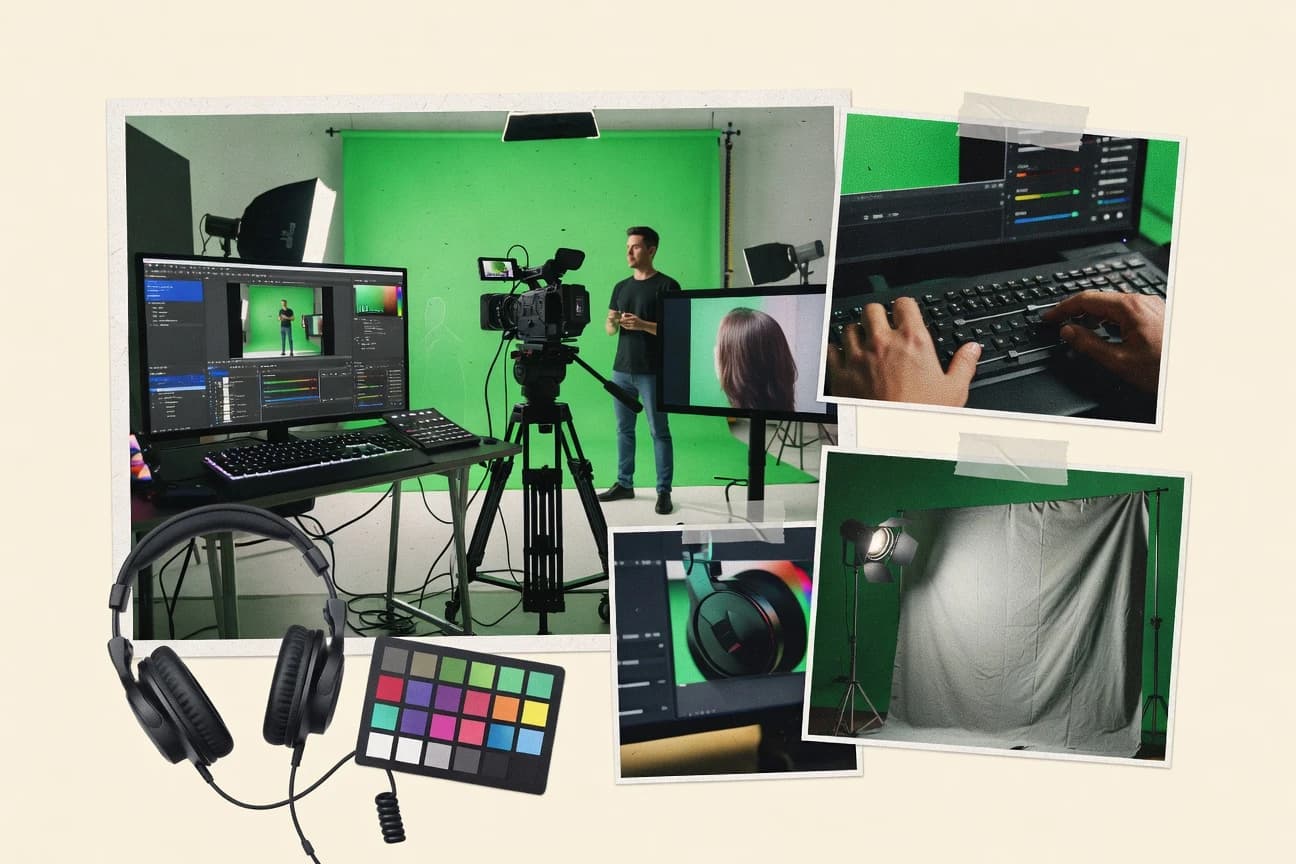
Chroma key software isolates a selected color from video and replaces that area with another background. Standard tools provide color sampling, tolerance adjustments, transparency controls, and background replacement. CapCut combines automatic subject isolation with manual chroma key editing, while VideoPad places chroma key controls directly in its desktop timeline.
More advanced applications add masking, tracking, edge cleanup, and spill control for difficult footage. Adobe Premiere Pro’s Ultra Key handles matte cleanup and spill suppression inside the editing timeline. DaVinci Resolve extends the process through Fusion’s Delta Keyer and node graph for layered composites, animated corrections, and detailed matte adjustments.
Keying Controls, Compositing Depth, and Editing Workflow
Color sampling, tolerance, edge softness, and spill control determine how cleanly software separates a subject from a screen. CyberLink PowerDirector exposes these controls directly, while Adobe Premiere Pro places them in Ultra Key.
Keying and matte control
DaVinci Resolve provides Delta Keyer controls for despill, matte density, edge softness, and color ranges. Final Cut Pro includes spill suppression and edge refinement in its Keyer effect.
Masking and subject tracking
Vegas Pro combines Bézier masks, motion tracking, and nested projects at the event level. Pinnacle Studio uses AI-powered Masking and Smart Object Tracking for moving subjects.
Workflow integration
VideoPad combines screen recording, narration, chroma key editing, and publishing in one desktop workflow. CapCut combines automatic subject isolation, manual keying, captions, effects, and social publishing across desktop, web, and mobile.
Timeline and layer control
Lightworks keeps keying, masking, layering, opacity, and background replacement inside its main editing timeline. Adobe Premiere Pro connects editing timelines to After Effects compositions through Dynamic Link.
Platform and project constraints
Final Cut Pro runs only on macOS, while CapCut supports desktop, web, and mobile environments. DaVinci Resolve can require substantial GPU memory and processing time for complex Fusion composites.
How to Choose Chroma Key Software by Composite Type
The selection depends first on the footage and delivery workflow. Short social clips favor integrated editing and publishing, while difficult edges require dedicated matte controls, masking, and compositing depth.
Choose an integrated editor for fast social production
CapCut combines subject isolation, chroma key editing, captions, effects, and social publishing in one workflow. Movavi Video Editor also targets approachable timeline editing with motion tracking and social export tools.
Choose tracking and masking for moving subjects
CyberLink PowerDirector links titles, graphics, and effects to moving subjects through motion tracking. Pinnacle Studio adds AI-powered Masking and Smart Object Tracking for guided desktop editing.
Choose timeline compositing for conventional post-production
Adobe Premiere Pro, Vegas Pro, and Lightworks keep keying inside full non-linear editing environments. This approach suits editors who need multicam, event-level compositing, layered timelines, or standard finishing in the same application.
Choose node compositing for matte-intensive work
DaVinci Resolve uses Fusion's node graph for layered composites, animated corrections, tracking, and detailed Delta Keyer adjustments. Its workflow differs from timeline-first tools and requires more technical operation.
Check platform and media requirements before committing
Final Cut Pro requires macOS, while CapCut covers desktop, web, and mobile use. Large CyberLink PowerDirector projects may need proxy media and substantial disk space, and complex DaVinci Resolve composites can demand high GPU capacity.
Audience Fit by Chroma Key Workflow
Different users need different levels of control over isolation, tracking, and finishing. The cards separate quick creator workflows from desktop editing and specialist compositing.
Social creators and mobile editors
CapCut supports desktop, web, and mobile editing with automatic subject isolation, captions, effects, and social publishing. Its workflow reduces the need to move a short green-screen project between applications.
Tutorial and screen-recording creators
VideoPad combines screen recording, narration, chroma key editing, and publishing in one desktop workflow. It suits instructional videos that need a presenter layered over captured content.
Desktop editors producing tracked presentations
CyberLink PowerDirector and Movavi Video Editor link titles, graphics, and effects to moving subjects through motion tracking. Their timeline controls support accessible background replacement without a node-based workspace.
Professional post-production editors
Adobe Premiere Pro supports Ultra Key and Dynamic Link with After Effects. DaVinci Resolve adds Fusion's node graph and Delta Keyer for editors handling layered composites and detailed matte work.
Apple-based short-film and client-project editors
Final Cut Pro combines its Magnetic Timeline with background replacement, layered effects, spill suppression, and high-resolution playback. Its macOS-only deployment excludes Windows and Linux workflows.
Common Chroma Key Software Selection Mistakes
A clean background replacement depends on more than a color picker. Tool choice also affects masking effort, project organization, platform access, and the amount of manual cleanup required.
Selecting software based only on automatic subject isolation
CapCut provides automatic isolation, but complex composites can still need manual masking and cleanup. CyberLink PowerDirector and DaVinci Resolve expose deeper controls for footage with difficult edges.
Ignoring hair, translucent edges, and uneven lighting
Pinnacle Studio and Vegas Pro can require manual masking after keying when hair or lighting creates problems. DaVinci Resolve provides more detailed matte and despill controls for demanding shots.
Assuming every editor supports advanced compositing
VideoPad has no dedicated node-based compositing workspace, and Lightworks offers less specialized spill suppression. DaVinci Resolve is the stronger option when node-based control is central to the workflow.
Overlooking platform and project-management limits
Final Cut Pro runs only on macOS, while Adobe Premiere Pro projects require careful media organization, proxy management, and cache maintenance. Large CyberLink PowerDirector projects can also require proxy media and substantial disk space.
Choosing a tool without checking automation needs
Movavi Video Editor and Final Cut Pro have no documented public API for broad automated editing or export workflows. Teams requiring custom automation should prioritize a workflow with a documented integration surface.
How We Selected and Ranked These Tools
We evaluated CapCut, CyberLink PowerDirector, VideoPad, Movavi Video Editor, Pinnacle Studio, Adobe Premiere Pro, Vegas Pro, Lightworks, DaVinci Resolve, and Final Cut Pro for chroma key controls, masking, tracking, compositing workflow, and platform coverage. Features accounted for 40% of each score.
Ease of use accounted for 30%, and value accounted for 30%. CapCut ranked first because it combines automatic subject isolation, manual chroma key editing, captions, effects, and social publishing across desktop, web, and mobile environments.
Frequently Asked Questions About chr oma key software
Which chroma key software is best for quick social videos?
How do professional editors handle difficult green-screen edges?
When is blue-screen support useful?
Which tools integrate with broader post-production workflows?
What breaks if an editor needs team collaboration or an API?
Which software supports motion tracking with chroma key editing?
How should beginners start a green-screen project?
Where does Lightworks fall short for advanced chroma key work?
What technical factors affect chroma key quality across these tools?
Tools reviewed
Primary sources checked during evaluation.
Referenced in the comparison table and product reviews above.
- Technology Digital MediaTop 10 Best Photo-Editing Software of 2026
- Technology Digital MediaTop 10 Best Basic Video Editing Software of 2026
- Technology Digital MediaTop 10 Best Music Video Editing Software of 2026
- Technology Digital MediaTop 10 Best Slideshow Software of 2026
- Technology Digital MediaTop 10 Best Color Adjustment Software of 2026
Keep exploring
Comparing two specific tools?
Software Alternatives
See head-to-head software comparisons with feature breakdowns, pricing, and our recommendation for each use case.
Explore software alternatives→In this category
Technology Digital Media alternatives
See side-by-side comparisons of technology digital media tools and pick the right one for your stack.
Compare technology digital media tools→