
GITNUXSOFTWARE ADVICE
Manufacturing EngineeringTop 8 Best Casting Simulation Software of 2026
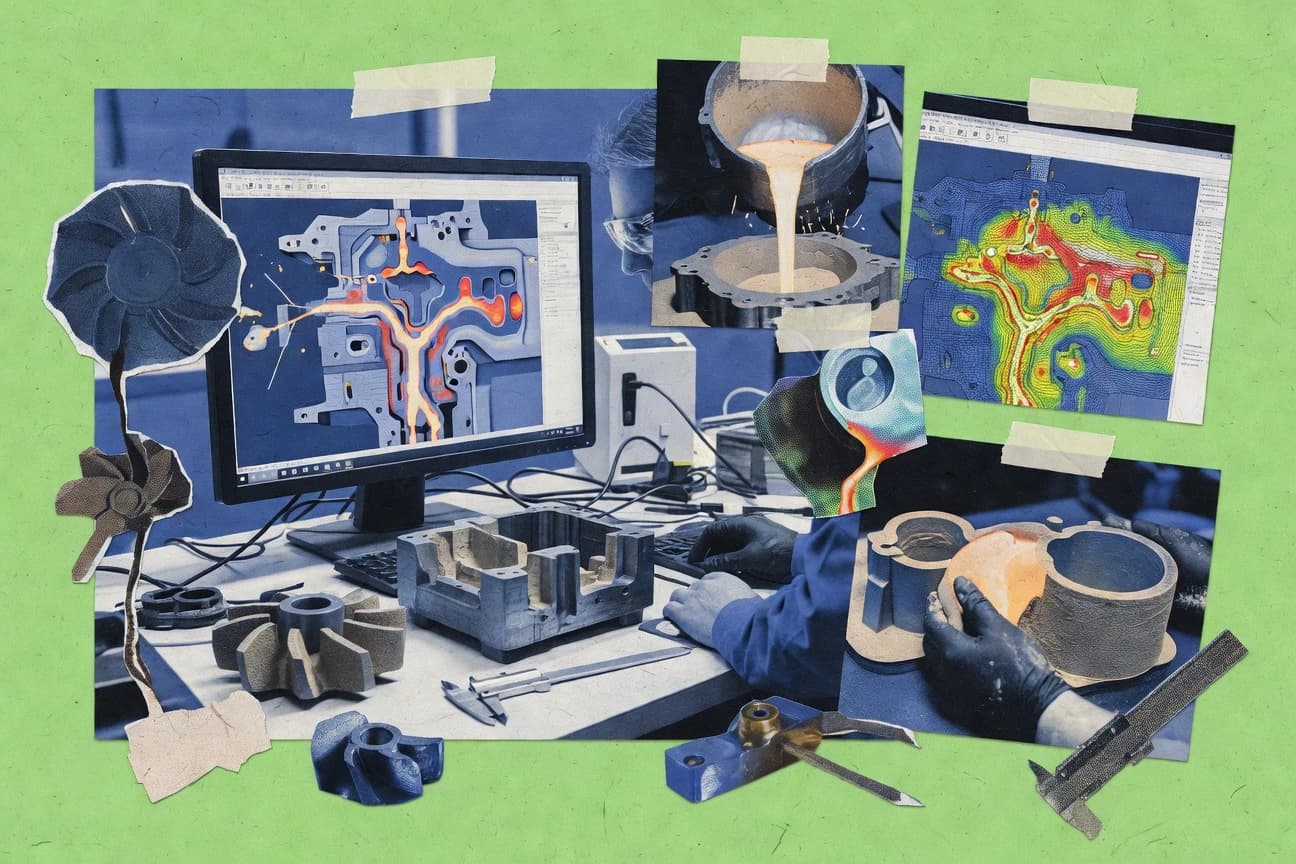
Ranking roundup of casting simulation software with evaluation notes and tradeoffs for teams using ADSTEFAN, FLOW-3D CAST, PoligonSoft.

How we ranked these tools
Core product claims cross-referenced against official documentation, changelogs, and independent technical reviews.
Analyzed video reviews and hundreds of written evaluations to capture real-world user experiences with each tool.
AI persona simulations modeled how different user types would experience each tool across common use cases and workflows.
Final rankings reviewed and approved by our editorial team with authority to override AI-generated scores based on domain expertise.
Score: Features 40% · Ease 30% · Value 30%
Gitnux may earn a commission through links on this page — this does not influence rankings. Editorial policy
ADSTEFAN is the best fit for engineering teams running frequent, comparable casting design studies across multiple processes, whereas FLOW-3D CAST is a stronger alternative when you need coupled metal flow and thermal simulation across many iterations.
Editor’s top 3 picks
Three quick recommendations before you dive into the full comparison below — each one leads on a different dimension.
ADSTEFAN
Batch automation around casting study runs for consistent variant throughput and cross-run comparison.
Built for fits when engineering teams run frequent casting design studies and need controlled, comparable simulation outputs..
FLOW-3D CAST
Editor pickCoupled filling and thermal solution used to compute time-dependent flow behavior and temperature fields within one study.
Built for fits when casting teams need coupled metal flow and thermal simulation across many design iterations..
PoligonSoft
Editor pickScenario comparison workflow that ties geometry changes to fill and solidification results for defect validation reviews.
Built for fits when manufacturing teams run many casting design scenarios and need consistent simulation-to-review throughput..
Comparison Table
ADSTEFAN
vertical specialistCasting simulation system covering fluid flow, solidification, and die temperature analysis for multiple casting processes.
Batch automation around casting study runs for consistent variant throughput and cross-run comparison.
ADSTEFAN supports casting defect validation workflows by pairing meshed mold geometry with physics runs that report filling behavior, solidification timing, and temperature gradients. Geometry handling includes CAD-driven inputs used for gating system design studies, and results can be reviewed per simulation run to compare outcomes. Integration depth is geared toward engineering organizations that connect simulation jobs to existing design data flows and internal review processes.
A key tradeoff is solver workflow rigidity for teams that need custom physics coupling beyond the product’s casting-specific feature set. ADSTEFAN fits best when a casting design team runs many controlled variants of gating and feeding parameters and needs consistent, comparable results across projects.
- +Engineering-focused workflow for repeatable casting variant comparisons
- +Tight coupling between geometry, meshing, and solver execution
- +Parameter-study orientation supports defect-risk screening
- +Automation hooks support scheduled batch runs for many cases
- –Less flexible for custom physics coupling outside casting scope
- –Mesh settings and convergence require discipline for stable runs
- –Visualization workflows can feel study-specific rather than exploratory
- –Integration depth depends on fitting into Hitachi ICS toolchains
Casting design engineers
Compare runner balance across variants
Fewer design iterations
Process development teams
Screen feeding distances for defects
Earlier defect-risk filtering
Show 2 more scenarios
Thermal analysis specialists
Validate temperature field predictions
More defensible thermal decisions
Replays geometry and process parameter sets to verify temperature gradients and thermal outcomes.
Engineering IT administrators
Govern simulation job executions
Lower operational risk
Uses automation and governance controls to manage run scheduling, access boundaries, and auditability.
Best for: Fits when engineering teams run frequent casting design studies and need controlled, comparable simulation outputs.
FLOW-3D CAST
enterpriseComputational fluid dynamics software for metal casting and solidification analysis.
Coupled filling and thermal solution used to compute time-dependent flow behavior and temperature fields within one study.
FLOW-3D CAST is a casting-focused CFD-to-thermal workflow that ties metal flow behavior to thermal fields used for defect validation. The package is designed around filling time and temperature field calculations that feed later interpretations like shrinkage risk and casting quality indicators. Teams typically use it when gating system design and runner balance decisions need visualization of metal velocity and thermal gradient across complex cavities. The tool also fits organizations that require repeatable simulation studies across alloys, part geometries, and process parameter sweeps.
A practical tradeoff is that model preparation is heavy for complex castings, because CAD cleanup, mesh generation, and boundary condition specification dominate setup time. FLOW-3D CAST fits best when simulation turnaround can tolerate meshing iterations and when analysts can tune solver controls to reach stable solver convergence on tight geometries. It fits less when the process is only for rapid screening without geometry cleanup or when the workflow expects minimal analyst intervention.
- +Coupled flow and thermal fields for casting quality-oriented interpretation
- +Repeatable study setups for scenario sweeps of filling and solidification behavior
- +Geometry import supports practical gating layouts without full re-creation
- +Solver controls help analysts manage convergence on complex cavity meshes
- –Geometry cleanup and boundary setup take substantial analyst time
- –Mesh generation choices can materially affect stability and results
- –Workflow depth demands solver tuning skills for consistent throughput
- –Outputs require domain interpretation to translate into defect decisions
Foundry engineering analysts
Optimize gating for consistent fill
Fewer runs to reach fill goals
Product quality engineers
Validate shrinkage-related risk
Lower defect recurrence in builds
Show 2 more scenarios
Thermal process specialists
Tune thermal gradient for alloys
More predictable solidification times
Run process parameter sensitivity studies to map thermal field changes.
Casting process simulation teams
Manage multi-scenario study throughput
Faster design space coverage
Batch repeated studies across geometry variants and process targets.
Best for: Fits when casting teams need coupled metal flow and thermal simulation across many design iterations.
PoligonSoft
vertical specialistFEM-based casting simulation integrating stress, thermal, and hydrodynamic solvers for defect prediction.
Scenario comparison workflow that ties geometry changes to fill and solidification results for defect validation reviews.
PoligonSoft is positioned for end-to-end casting studies where CAD-to-mesh preparation and simulation runs stay connected to review steps. The workflow is built around repeated scenario changes, which matches evaluation loops for feeding distance decisions, riser design impacts, and metal velocity patterns. Automation depth matters here because teams typically need multiple solver runs for design alternatives instead of a single one-off analysis.
A tradeoff is that deeper customization of solver controls and advanced coupling features often requires more setup discipline than a guided workflow. PoligonSoft fits best when the team needs repeatable studies for shop-floor design reviews, where throughput and consistent post-processing carry more weight than bespoke research settings.
- +Repeatable scenario runs for design alternatives and defect validation
- +Integrated geometry-to-analysis workflow for casting studies
- +Process parameter sensitivity runs for controlled comparisons
- +Post-processing focused on thermal and filling outcomes
- –Advanced solver customization needs careful setup discipline
- –Limited support for highly specialized coupling workflows
Foundry process engineers
Riser and gating tradeoff studies
Fewer trial changes in molds
Casting simulation analysts
Parameter sensitivity across pouring settings
Narrowed process window
Show 1 more scenario
Quality and reliability teams
Defect validation for failures
Clearer root-cause evidence
Use simulation outputs to validate suspected cold shut and solidification issues.
Best for: Fits when manufacturing teams run many casting design scenarios and need consistent simulation-to-review throughput.
ProCAST
enterpriseFinite element casting simulation for filling, solidification, defects, and thermal analysis.
Integrated casting defect prediction that links filling conditions to porosity and shrinkage outcomes through coupled thermal history.
ProCAST from Keysight is a casting process simulation tool focused on coupling thermal analysis with fluid flow modeling for metal filling and solidification stages. It supports end-to-end workflows for gating system design, riser design, and defect-focused validation through predicted temperature fields and solidification metrics.
CAD geometry import supports model setup for mesh generation workflows used in finite element analysis style projects. Automation typically centers on parameter studies and repeatable runs for process parameter sensitivity tied to casting defect prediction.
- +Strong coupling between metal filling and solidification physics
- +Predicts shrinkage and porosity outcomes from thermal and flow history
- +Workflow supports gating and riser design changes with reruns
- +Parameter studies make process parameter sensitivity repeatable
- –Mesh generation and material assignment need careful setup
- –GUI learning curve for solver and boundary condition choices
- –Geometry cleanup from CAD imports can be time-consuming
- –Limited out-of-the-box automation for external pipeline orchestration
Best for: Fits when teams need physics-linked casting simulation reruns for filling, solidification, and defect validation.
AnyCasting
vertical specialistCasting process simulation software covering mold filling, solidification, and defect analysis.
Design-to-run iteration tools that keep CAD, mesh, and run parameters linked for rapid gating change comparisons.
AnyCasting produces casting simulation results by running coupled modeling for metal flow during filling and thermal behavior during solidification.
The workflow emphasizes geometry ingestion, mesh generation, and scenario iteration so design changes can be compared using consistent output views.
Result review centers on metal velocity and temperature field maps, plus time-based indicators that support decisions about feeding and gating layout.
- +Parametric runs reduce rebuild work when testing gating and process parameter sensitivity
- +Visual temperature field outputs support fast review of thermal gradients
- +Geometry-to-mesh workflow shortens time between CAD import and solver execution
- +Defect-oriented result views map simulation outputs to casting defect validation decisions
- –Advanced solver settings require tighter setup discipline to maintain convergence
- –Complex gating edits can still trigger significant remeshing and reruns
- –Less depth in highly specialized defect models compared with research-focused tools
- –Automation coverage for multi-run studies is narrower than scripting-first simulators
Best for: Fits when engineering teams need repeatable casting simulation iterations with clear metal flow and solidification review.
NovaFlow&Solid
vertical specialistCasting simulation software for mold filling, solidification, stresses, and casting defects.
Integrated mold filling to solidification output generation in one preparation-to-postprocess workflow.
NovaFlow&Solid supports casting process simulation with a workflow centered on heat transfer and fluid flow coupling for mold filling and solidification follow-through. The tool focuses on defect-relevant outputs such as temperature fields, solidification time fields, and indicators that relate to porosity and shrinkage formation.
CAD import for casting geometries is designed to feed meshing and solver runs directly into the same preparation-to-simulation pipeline. NovaFlow&Solid also emphasizes process parameter studies so designers can compare how gating and thermal conditions change filling time and solidification behavior.
- +Tight linkage from geometry import through meshing and solver execution
- +Coupled treatment that keeps mold filling and solidification outputs consistent
- +Defect-oriented fields that help trace temperature history impacts
- +Workflow support for structured parameter studies across design variants
- –Setup complexity increases sharply with detailed gating and venting detail
- –Convergence issues can require tuning when mesh quality is uneven
- –Thermal boundary condition definition is the main bottleneck for reliable runs
- –Visualization and post-processing depth lags behind specialized CFD suites
Best for: Fits when foundries need repeatable casting flow and thermal simulation runs for design iterations without heavy scripting.
Cast-Designer
vertical specialistCasting simulation software for process design, filling, solidification, and defect prediction.
Scenario batch processing that ties parameter sweeps to casting-specific defect indicators in consistent output sets.
Cast-Designer from quantech.es focuses on end-to-end casting process simulation workflows that connect geometry inputs to defect-focused outputs like misrun and porosity risk. Its core capability centers on physics-based thermal and fluid flow modeling for filling and solidification analysis, including temperature-field reporting and derived defect indicators.
The product’s main differentiator versus general CAE viewers is workflow orientation around casting-specific setup artifacts such as gating geometry, mesh generation, and process-parameter sweeps tied to simulation runs. Automation and extensibility appear geared toward repeating scenario batches rather than one-off interactive studies, which reduces friction when validating feeding distance and riser design choices.
- +Casting-focused workflow links geometry, meshing, and run outputs in one sequence
- +Defect-oriented results reduce manual interpretation for common failure modes
- +Supports scenario repetition for parameter sensitivity studies across runs
- +Produces temperature-field outputs aligned to filling and solidification decisions
- –Less suitable for highly custom solver extensions beyond the casting workflow
- –Mesh quality controls require careful setup to avoid solver convergence issues
- –Automation coverage favors batch runs over fine-grained interactive optimization
- –CAD import expectations can add preprocessing steps before simulation
Best for: Fits when mid-size foundries need repeatable filling and solidification studies tied to defect validation workflows.
AutoCAST
SMBCasting method design and simulation software for foundries.
Defect-centric output mapping that connects metal flow and heat transfer results to misrun and cold shut validation in one workflow.
AutoCAST focuses on casting process simulation workflows tied to gating and feeding design, with emphasis on model-to-result iteration cycles. The workflow centers on CFD-based fluid flow modeling inputs such as metal velocity and temperature fields, then tracks downstream defect signals like misrun and cold shut.
AutoCAST also supports thermal analysis oriented setup to evaluate solidification time and thermal gradients that drive defect and quality risks. For teams that need repeatable scenario runs, AutoCAST’s configuration flow is geared toward repeatable parameter sweeps rather than one-off visualization.
- +Scenario iteration is built around repeatable process parameter sweeps
- +Solidification focused thermal setup supports defects linked to time and gradient
- +Fluid flow inputs map directly to metal velocity and temperature field outputs
- +Defect-oriented outputs target misrun and cold shut style validation
- –Model preparation needs more discipline than geometry-only simulation tools
- –Solver control depth is limited compared with specialist research toolchains
- –Meshing and convergence troubleshooting can dominate time for complex meshes
- –Automation depends on consistent input formatting and naming conventions
Best for: Fits when casting teams need defect-focused simulation runs tied to gating and feeding design changes.
Conclusion
After evaluating 8 manufacturing engineering, ADSTEFAN stands out as our overall top pick — it scored highest across our combined criteria of features, ease of use, and value, which is why it sits at #1 in the rankings above.
Use the comparison table and detailed reviews above to validate the fit against your own requirements before committing to a tool.
How to Choose the Right casting simulation software
Casting simulation software used in casting process simulation combines metal flow modeling with heat transfer modeling to produce time-dependent temperature field outputs that engineers can compare across design iterations. This guide covers ADSTEFAN, FLOW-3D CAST, PoligonSoft, ProCAST, AnyCasting, NovaFlow&Solid, Cast-Designer, and AutoCAST.
Across these tools, key differences show up in how runs are batched for variant throughput, how tightly filling and solidification outputs are coupled, and how defect validation results are generated for common failure modes. The review set also reflects practical workflow gaps such as boundary setup effort, mesh sensitivity, and how much solver control exists for analysts who need custom physics coupling.
Casting simulation software for mold filling, solidification, and defect validation workflows
Casting simulation software models filling time and solidification time by computing metal velocity and temperature fields from a defined gating system design, runner balance, and venting analysis. Many workflows also connect thermal history to defect indicators such as shrinkage and porosity when the tool provides integrated casting defect prediction.
ADSTEFAN emphasizes batch automation around casting study runs so teams can maintain controlled cross-run comparison. FLOW-3D CAST focuses on a coupled filling and thermal solution used to compute time-dependent flow behavior alongside temperature fields within one study.
Casting simulation evaluation criteria that affect run quality and defect validation outcomes
Casting simulation software quality shows up in how consistently it produces comparable filling and solidification results across design iterations. The most measurable differences in this category are run batching control, coupling depth between filling and thermal physics, and how defect validation indicators are generated from the computed history.
Batch automation for controlled variant throughput
ADSTEFAN is built around batch automation for casting study runs to support consistent cross-run comparison. Cast-Designer also emphasizes batch workflows that produce consistent output sets for defect-oriented scenario validation.
Coupled filling and thermal solution depth
FLOW-3D CAST uses a coupled filling and thermal solution to compute time-dependent flow behavior and temperature fields within one study. ProCAST links filling conditions to coupled thermal history for shrinkage and porosity outcomes.
Scenario comparison that ties geometry changes to defects
PoligonSoft centers scenario comparison that connects geometry changes to fill and solidification results for defect validation reviews. AutoCAST maps flow and heat transfer outputs into misrun and cold shut validation in a defect-centric workflow.
Run-to-review linkage from CAD geometry through analysis outputs
AnyCasting keeps CAD, mesh, and run parameters linked for rapid gating change comparisons with temperature field review. NovaFlow&Solid provides one preparation-to-postprocess workflow that links geometry import through meshing and solver execution.
Defect-specific output generation from thermal and flow history
ProCAST generates casting defect predictions that connect filling conditions to porosity and shrinkage. Cast-Designer ties parameter sweeps to casting-specific defect indicators in consistent output sets.
Analyst workload tied to boundary setup and geometry cleanup
FLOW-3D CAST requires substantial analyst time for geometry cleanup and boundary setup before coupled runs. NovaFlow&Solid increases setup complexity sharply when detailed gating and venting detail is required.
Choose by workflow control, coupling depth, and the defect indicators the process needs
Tool selection should follow the workflow shape used by the casting team, not just solver scope. The set of tools here separates into batch-driven study execution, tightly coupled filling-to-thermal engines, and defect-centric validation pipelines.
Pick the study execution model that matches variant throughput
Select ADSTEFAN when teams need batch automation to run many casting variants and keep outputs comparable across cross-run studies. Choose Cast-Designer when the expected workflow is scenario batch processing that emits consistent defect-tied output sets for review.
Match coupling expectations to the risk being analyzed
Choose FLOW-3D CAST when time-dependent metal flow behavior and temperature fields must be computed in a coupled manner within one study. Choose ProCAST when shrinkage and porosity predictions must be linked directly to the filling-to-thermal physics history.
Decide whether defect validation should be the primary output format
Choose AutoCAST when misrun and cold shut validation must be driven by defect-centric output mapping from metal flow and heat transfer results. Choose PoligonSoft when scenario comparison needs to support defect validation reviews by linking geometry changes to fill and solidification results.
Use parameter linkage tools when gating iterations must stay traceable
Choose AnyCasting when gating changes require fast iteration with CAD, mesh, and run parameters kept linked for reviewable temperature field outputs. Choose NovaFlow&Solid when the process requires a single preparation-to-postprocess workflow that maintains consistent mold filling and solidification outputs.
Verify solver control depth against custom physics needs
Choose ProCAST or FLOW-3D CAST when deeper casting physics coupling and tightly linked filling-to-solidification physics is a core requirement for reruns. Choose tools like PoligonSoft or Cast-Designer when advanced solver customization is not the main target and the priority is scenario consistency.
Plan for setup discipline based on boundary and mesh sensitivity
Expect analyst workload in FLOW-3D CAST because geometry cleanup and boundary setup are substantial before coupled runs. Expect convergence tuning effort in AnyCasting and NovaFlow&Solid when mesh quality and detailed gating or venting detail affect stability.
Who benefits from different casting simulation software workflows
Different teams need different degrees of automation, coupling, and defect-tied reporting. The tools in this category separate by whether the dominant value comes from batch variant throughput, coupled filling-to-thermal computation, or defect-centric validation output sets.
Foundry engineering teams running frequent gating and process studies
ADSTEFAN fits teams that run frequent casting design studies and need controlled variant throughput with consistent cross-run comparison. AnyCasting also suits teams that test gating and process parameter sensitivity using linked CAD, mesh, and run parameters.
Casting quality teams validating defect mechanisms from thermal history
ProCAST suits teams that need physics-linked reruns that connect filling and thermal history to shrinkage and porosity outcomes. AutoCAST fits teams that prioritize defect-focused validation where misrun and cold shut indicators come directly from mapped flow and heat transfer results.
Manufacturing teams with repeatable design scenario reviews
PoligonSoft fits scenario comparison workflows that tie geometry changes to fill and solidification results for defect validation reviews. Cast-Designer fits mid-size foundries that need scenario batch processing tied to defect indicators in consistent output sets.
Teams that want tight end-to-end workflow coverage without heavy scripting
NovaFlow&Solid fits foundries that want integrated mold filling to solidification output generation in one preparation-to-postprocess workflow. NovaFlow&Solid also targets consistency by keeping geometry import through meshing and solver execution tightly linked.
Analyst teams that must keep boundary setup and mesh behavior under strict control
FLOW-3D CAST fits analysts who can spend time on geometry cleanup and boundary setup to maintain coupled-run stability. AnyCasting and NovaFlow&Solid require careful mesh quality controls because advanced solver settings and convergence behavior depend on stable discretization.
Common casting simulation mistakes that cause unusable defect validation outcomes
Casting simulation failures usually come from workflow mismatch rather than missing simulation features. The most common breakdowns in this set are unstable runs from mesh and boundary choices, incorrect attribution of differences to design changes, and underestimating setup discipline required for convergence.
Running large scenario sweeps without enforcing consistent meshing and convergence discipline
ADSTEFAN relies on repeatable cross-run comparison, so mesh settings and convergence require discipline for stable variant throughput. AnyCasting also needs tighter setup discipline because advanced solver settings require stability to maintain convergence across gating edits.
Treating defect indicators as interchangeable when tools use different defect-centric output mappings
AutoCAST focuses on misrun and cold shut validation, so using its outputs as a substitute for shrinkage and porosity predictions can misrepresent defect drivers. ProCAST generates shrinkage and porosity outcomes linked to coupled thermal history, so defect interpretation should follow that physics linkage.
Underestimating geometry cleanup and boundary setup effort in coupled workflows
FLOW-3D CAST requires substantial geometry cleanup and boundary setup effort before coupled filling and thermal computation produces stable time-dependent results. NovaFlow&Solid increases setup complexity sharply when detailed gating and venting detail is included, so scope control is necessary.
Over-editing gating without planning for remeshing cascades
AnyCasting supports rapid gating comparisons, but complex gating edits can still trigger significant remeshing and reruns. NovaFlow&Solid similarly ties detailed gating and venting detail to setup complexity, so design iteration plans must include rerun budget.
How We Selected and Ranked These Tools
We evaluated ADSTEFAN, FLOW-3D CAST, PoligonSoft, ProCAST, AnyCasting, NovaFlow&Solid, Cast-Designer, and AutoCAST against their documented workflow mechanics. Features accounted for 40% of the score because tools like FLOW-3D CAST focus on coupled filling and thermal solution and ADSTEFAN centers batch automation around casting study runs.
Ease and value each accounted for 30% of the score because analyst time is directly affected by geometry cleanup, boundary setup, and mesh sensitivity described in the tool cards. ADSTEFAN earned the top rank because its batch automation supports consistent cross-run comparison while its workflow tight-couples geometry, meshing, and solver execution.
Frequently Asked Questions About casting simulation software
How do ADSTEFAN and AnyCasting differ in geometry-to-simulation iteration for gating and runner layout studies?
Which tool provides tightly coupled mold filling and heat transfer outputs in a single study for defect validation?
Which product is best suited when scenario batches must map derived defect indicators like porosity, shrinkage, or misrun across parameter sweeps?
How does ProCAST handle geometry import and mesh generation compared with NovaFlow&Solid for coupled filling and solidification workflows?
What breaks if automation is required for high-throughput parameter studies but the casting workflow depends on manual setup steps?
When teams need process-parameter sensitivity comparisons across multiple design iterations, how do PoligonSoft and ADSTEFAN differ in their study structure?
How do AutoCAST and Cast-Designer differ in defect-focused reporting from filling and solidification outputs?
What data migration steps are typically required when moving existing casting models into FLOW-3D CAST or AnyCasting for new meshed simulation runs?
When security controls like RBAC, audit logs, or admin-level governance are required for engineering groups running multiple simulation variants, which product is most aligned?
Tools reviewed
Primary sources checked during evaluation.
Referenced in the comparison table and product reviews above.
- Manufacturing EngineeringTop 10 Best Casting Software of 2026
- Manufacturing EngineeringTop 10 Best Plastic Injection Molding Simulation Software of 2026
- Manufacturing EngineeringTop 10 Best Production Line Simulation Software of 2026
- Manufacturing EngineeringCasting Industry Statistics
- Manufacturing EngineeringCastings Industry Statistics
Keep exploring
Comparing two specific tools?
Software Alternatives
See head-to-head software comparisons with feature breakdowns, pricing, and our recommendation for each use case.
Explore software alternatives→In this category
Manufacturing Engineering alternatives
See side-by-side comparisons of manufacturing engineering tools and pick the right one for your stack.
Compare manufacturing engineering tools→