
GITNUXSOFTWARE ADVICE
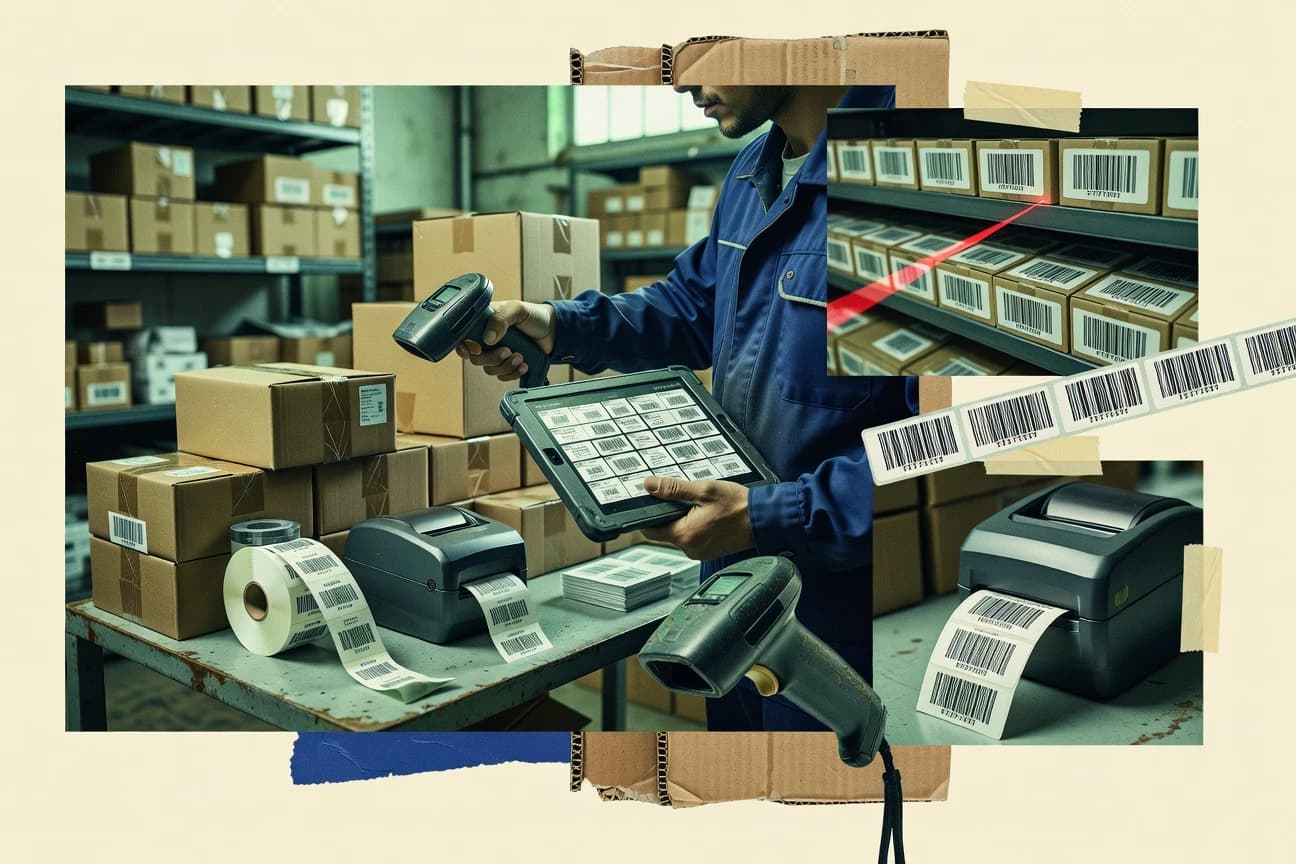
Business FinanceTop 10 Best Barcode Management Software of 2026
Top 10 barcode management software ranking with criteria and tradeoffs for warehouses and retail teams, including Zoho Inventory, Finale Inventory, Cin7.

How we ranked these tools
Core product claims cross-referenced against official documentation, changelogs, and independent technical reviews.
Analyzed video reviews and hundreds of written evaluations to capture real-world user experiences with each tool.
AI persona simulations modeled how different user types would experience each tool across common use cases and workflows.
Final rankings reviewed and approved by our editorial team with authority to override AI-generated scores based on domain expertise.
Score: Features 40% · Ease 30% · Value 30%
Gitnux may earn a commission through links on this page — this does not influence rankings. Editorial policy
Zoho Inventory is the strongest pick when you need scan-to-transaction accuracy that stays tied to stock and order workflows, whereas Cin7 suits larger, barcode-label-heavy teams that want consistent labels and ERP-linked operations without manual rework.
Editor’s top 3 picks
Three quick recommendations before you dive into the full comparison below — each one leads on a different dimension.
Zoho Inventory
Scan-driven inventory movements connect directly to item, lot, and serial records so mismatches surface during transaction creation.
Built for fits when warehouses need scan-to-transaction inventory accuracy tied to orders..
Finale Inventory
Editor pickLabel template configuration ties barcode generation to printing output and scan-to-item mapping.
Built for fits when mid-size teams need scan-led inventory updates with configurable label printing..
Cin7
Editor pickERP-driven inventory records can feed barcode label printing during fulfilment and stock movements.
Built for fits when barcode labels must stay consistent with inventory events and ERP-linked operations..
Related reading
Comparison Table
Zoho Inventory
SMBInventory management software with barcode scanning, stock control, and order workflows.
Scan-driven inventory movements connect directly to item, lot, and serial records so mismatches surface during transaction creation.
Zoho Inventory provides a central inventory record with SKU-level barcode assignments so scans map to the right item and transaction. Scanning can be done through mobile use cases for receipts and picks, with scan results updating on-hand quantities and line-item status. Label printing is oriented around selecting items for a batch of labels and sending them to printers used in warehouses.
A tradeoff is that advanced barcode data handling depends on how item attributes are modeled in the catalog and how those attributes are required during receiving and fulfillment. Zoho Inventory fits situations where barcode-based receiving and picking must stay consistent with order lines across multiple warehouses, rather than where barcode schemes and label formats need fully custom, per-label logic beyond standard templates.
- +Barcode-driven receiving and picking updates inventory by SKU mapping
- +Label printing batch workflows reduce manual label selection work
- +API integration supports custom scanning devices and back-office processes
- +Lot and serial tracking flows stay attached to inventory movements
- –Barcode requirements during receiving need careful item attribute setup
- –Highly customized label formats can require template workarounds
Warehouse operations teams
Mobile scanning for receiving and picks
Fewer picking and receiving errors
Ecommerce fulfillment teams
Pick and pack barcode confirmation
More accurate shipment packing
Show 2 more scenarios
Inventory control teams
Lot and serial traceability checks
Tighter traceability for audits
Serial and lot attributes carry through movements triggered by scanned codes.
Operations engineering teams
API-backed scanning integrations
Custom devices with consistent records
API integration supports linking custom handheld workflows to inventory transactions.
Best for: Fits when warehouses need scan-to-transaction inventory accuracy tied to orders.
More related reading
Finale Inventory
SMBCloud inventory management software with barcode scanning and warehouse control.
Label template configuration ties barcode generation to printing output and scan-to-item mapping.
Finale Inventory fits warehouses, distributors, and asset teams that want scanning to drive inventory status without spreadsheet-based reconciliation. Core workflows cover barcode generation, label template configuration, barcode printing, and scan capture to update inventory quantities and location states. Integration support is practical for automation since barcode and inventory transactions can be exchanged via API-driven integrations.
A tradeoff is that strong label and scan accuracy depends on upfront template configuration and consistent barcode symbology usage across receiving and picking. Finale Inventory works best when a single operational workflow governs label printing, handheld scanning, and the inventory updates consumed by downstream systems.
- +Label template configuration keeps printed barcodes consistent across workflows
- +Barcode generation and printing align with scanning-driven inventory updates
- +API integration supports automated barcode and inventory transaction syncing
- +Scanning workflows reduce manual count entry during receiving and picking
- –Setup discipline is required to keep label templates and symbology consistent
- –Advanced governance controls are limited compared with enterprise inventory suites
- –Complex multi-site processes need careful configuration to prevent mislabeling
- –Some print automation scenarios require more operational handholding
Warehouse operations teams
Receiving and picking with handheld scans
Fewer miscounts during daily operations
Asset management teams
Tagging and lifecycle tracking for equipment
Faster traceability of asset changes
Show 2 more scenarios
Inventory integration teams
Sync barcodes with ERP item records
Less manual reconciliation across tools
API-driven exchange supports mapping inventory events to external item systems.
3PL logistics coordinators
Multi-warehouse labeling for shipments
Higher throughput at dispatch
Label templates help standardize barcode printing so scan-based shipment workflows stay predictable.
Best for: Fits when mid-size teams need scan-led inventory updates with configurable label printing.
Cin7
enterpriseInventory management software with barcode scanning, warehouse automation, and order control.
ERP-driven inventory records can feed barcode label printing during fulfilment and stock movements.
Cin7 is used to drive barcode printing from controlled inventory records instead of treating labels as disconnected documents. Label outputs align with operational events like stock movements, so the same item attributes can propagate into barcode printing and fulfilment steps. Cin7 supports common barcode symbologies and label templates to match warehouse scanning conventions.
A tradeoff is that barcode labeling quality depends on correct item master setup before printing is reliable across channels. Cin7 fits best when barcode labels must track lot or serial details through inventory movements and where scanning events feed back into stock accuracy, not when only occasional labels are needed.
- +Inventory event driven printing tied to item master records
- +Label templates support repeatable barcode layouts across locations
- +Automation paths reduce per-order manual label handling
- +Integration options connect barcode workflows to ERP and channels
- –Label output quality depends on disciplined item master maintenance
- –Barcode label governance is harder in multi-warehouse change cycles
- –Some edge cases require process mapping across integrations
Warehouse operations teams
Print labels during pick and pack
Fewer mislabels, faster fulfilment
Inventory control teams
Maintain barcode consistency across warehouses
Lower scan failures
Show 2 more scenarios
ERP integration owners
Synchronize barcode workflows with ERP updates
Accurate stock linked labels
Barcode output follows inventory updates from connected operational systems.
Retail and omnichannel teams
Generate labels for transfers and fulfilment
Consistent scanning at receiving
Transfers and sales order fulfilment use the same barcode label logic.
Best for: Fits when barcode labels must stay consistent with inventory events and ERP-linked operations.
Loftware NiceLabel
enterpriseEnterprise label management software for barcode design, printing, and control.
NiceLabel Centralized Label Management pairs template governance with runtime data binding so the same design can print reliably from connected systems.
Loftware NiceLabel is a barcode label management suite used to standardize label design, generation, and printing across manufacturing and logistics environments. It emphasizes centralized template and data handling for consistent outputs across sites, printers, and workflows.
Its integration surface supports automation through APIs and connectivity with enterprise systems for pulling item, lot, and inventory attributes into label runs. Governance features like role-based access and change controls help teams manage label lifecycle without losing traceability of updates.
- +Centralized label templates reduce variation across lines and locations
- +Strong automation hooks for barcode generation and print workflows
- +Role-based access and change controls support label lifecycle governance
- +Workflow configuration supports high-throughput printing scenarios
- –Complex deployments can require dedicated admin ownership
- –API-based integrations need careful mapping of label variables
- –Advanced template rules add learning time for new operators
- –Offline printing and edge scenarios may need additional design effort
Best for: Fits when enterprises need governed label templates, automated data injection, and printer-ready workflows across multiple sites.
Sortly
SMBInventory software with barcode and QR code scanning for item tracking.
Container-based item organization that keeps nested locations aligned with barcode scans and printed labels.
Sortly manages barcodes and labels by linking each scanned code to an item record, photos, and custom fields. Label design and generation workflows support multiple barcode types for printing and day-to-day inventory updates.
Sortly also supports barcode scanning on mobile so counts, moves, and lookups can happen at the shelf and dock. Administration features focus on organizing containers and controlling access to item data through workspace permissions.
- +Mobile scanning ties codes directly to item records
- +Custom fields and photos help differentiate identical assets
- +Container-style organization supports nested locations and units
- +Label templates speed consistent printing runs
- –Barcode-to-record mapping does not replace a full WMS workflow
- –Advanced barcode validation and rules are limited versus enterprise suites
- –Barcode print automation stays manual for label production lines
- –API access is narrower than audit-heavy inventory governance tools
Best for: Fits when teams need mobile barcode scanning with practical label workflows and structured asset records.
inFlow Inventory
SMBInventory software supporting barcode labels, scanning, purchasing, and warehouse operations.
Configurable label templates map item and variant fields into generated barcodes for consistent batch printing workflows.
inFlow Inventory is a barcode management and inventory control system focused on end-to-end label workflows, from item records to barcode generation and printing. It supports mobile scanning for receiving, picking, and stock adjustments, with barcode validation rules tied to item data.
The app also handles item variants like lot and serial tracking, which makes it usable for asset workflows that need traceability. Integration options matter for ongoing operations, so inFlow Inventory is evaluated on its connectivity through CSV-based import and export plus available API surface for automation.
- +Mobile scanning supports fast receiving and picking workflows
- +Label printing uses configurable templates tied to item fields
- +Lot and serial tracking supports traceability during adjustments
- +CSV import and export cover bulk item and barcode updates
- –API coverage for barcode printing and validation flows is limited
- –Multi-warehouse governance needs disciplined setup
- –Advanced barcode verification rules are narrower than enterprise WMS
- –Workflow automation beyond scanning and basic adjustments is constrained
Best for: Fits when small-to-mid teams need scanning-driven inventory control with printable barcodes.
Fishbowl
enterpriseWarehouse and manufacturing inventory software with barcode scanning and traceability.
Transaction-aware barcode labeling that keeps scans aligned with inventory and fulfillment records across workflows.
Fishbowl couples warehouse and manufacturing workflows with barcode-driven inventory control, so scanning connects directly to operational actions. Core capabilities include inventory and location tracking, serial and lot support, barcode label printing, and mobile scanning for receiving, picking, and cycle counting.
The barcode layer is built around item and transaction contexts, which keeps scanned inputs aligned with what the ERP needs next. Integration coverage centers on ERP-style data flows plus extensibility for connecting other systems through Fishbowl’s API and automation surface.
- +Serial and lot handling is tied to receiving, picking, and production steps
- +Barcode label printing follows item and transaction context instead of ad hoc templates
- +Mobile scanning supports day-to-day warehouse motions like receiving and cycle counting
- +API access supports integration of scan events into broader ERP workflows
- –Barcode setup requires consistent item configuration to avoid label mismatches
- –Complex print rules can slow onboarding for multi-site label standards
- –Advanced governance depends on disciplined role assignments and process design
- –Throughput can be bottlenecked by network and printer queue behavior during bursts
Best for: Fits when teams need barcode scanning tied to warehouse and ERP transactions with label printing.
Odoo Inventory
enterpriseInventory application with barcode operations, stock locations, and warehouse routing.
Inventory transactions accept barcode-driven scan input and immediately post stock move outcomes with lot and serial details within Odoo.
Odoo Inventory integrates barcode capture and warehouse operations inside the broader Odoo app suite, which makes it distinct from standalone barcode managers. It supports barcode scanning workflows tied to stock moves, along with serial and lot tracking and label-related processes through Odoo’s inventory configuration.
Barcode label design and printing depend on Odoo label templates and printing flows, which connect directly to items, packaging, and stock events. The same data drives reporting across receipts, deliveries, and internal transfers so barcode capture updates inventory outcomes in one system.
- +Inventory barcodes drive stock moves without duplicate item tracking
- +Lot and serial tracking can attach to scanned receipts and deliveries
- +Label printing uses Odoo report templates tied to products and moves
- +Automation rules reduce manual posting after each scan
- –Barcode label design templates require Odoo report configuration knowledge
- –Advanced symbology validation and verification are limited
- –Mobile scanning depends on Odoo client configuration and device setup
- –Throughput for large label batches depends on print worker performance
Best for: Fits when teams want barcode scanning to update warehouse stock moves inside Odoo.
Orca Scan
SMBBarcode inventory software for stock lists, scanning, and shared inventory updates.
Rule-driven scanning workflow actions that turn captured barcode events into structured updates without manual reconciliation.
Orca Scan manages barcodes end to end by organizing label design inputs, generating printable outputs, and coordinating scanning workflows for day-to-day inventory and asset moves. Core capabilities include barcode scanning capture, barcode generation from configured formats, and barcode printing oriented label templates for repeatable production runs.
Automation is supported through workflow rules and import or export for moving barcode data between systems. Governance features center on user access control and activity visibility for traceable operations across teams.
- +Covers scanning capture, barcode generation, and label template printing in one workflow
- +Workflow rules reduce manual steps during routine inventory and asset movements
- +Batch-oriented import and export supports barcode data handoffs at scale
- +User access controls limit who can create labels and modify barcode records
- –Desktop-first label design workflow can slow frequent template iteration
- –External system integration relies on API work for deep ERP automation
- –Advanced validation rules need careful configuration to match each symbology format
- –Role granularity is less detailed than enterprise WMS governance needs
Best for: Fits when warehouse and asset teams need repeatable barcode label runs plus scanning workflows without custom tooling.
GoCodes
vertical specialistAsset tracking software using QR code labels, mobile scans, and location records.
Scanning reconciliation tied to barcode assignments helps catch print-to-record mismatches during receiving and inventory updates.
GoCodes focuses on barcode label lifecycle management, from generation through controlled printing workflows. The core workflow centers on managing label templates, creating barcode content tied to item or asset records, and producing print-ready output for thermal printers.
It also supports scanning-driven reconciliation for warehouse and inventory flows, which reduces mismatches between what was printed and what was recorded. Automation and integration are delivered through configuration options plus an API surface for synchronizing barcode assignments with upstream systems.
- +Template-based label generation keeps formatting consistent across printers
- +Scanning-driven reconciliation supports faster detection of print-to-record mismatches
- +API integration can synchronize barcode assignments with external inventory systems
- +Bulk operations reduce manual effort for high-volume barcode issuance
- –Limited visibility into GS1 structure checks for label content rules
- –Template configuration can take multiple iterations for complex label layouts
- –Automation depends on external workflow integration for full end-to-end coverage
- –Role separation and audit controls feel less granular than enterprise WMS expectations
Best for: Fits when teams need controlled barcode label templates and printing workflows backed by scanning reconciliation and API syncing.
Conclusion
After evaluating 10 business finance, Zoho Inventory stands out as our overall top pick — it scored highest across our combined criteria of features, ease of use, and value, which is why it sits at #1 in the rankings above.
Use the comparison table and detailed reviews above to validate the fit against your own requirements before committing to a tool.
How to Choose the Right barcode management software
This buyer's guide explains how to choose barcode management software based on integration depth, automation and API surface, and admin and governance controls across Zoho Inventory, Finale Inventory, Cin7, Loftware NiceLabel, Sortly, inFlow Inventory, Fishbowl, Odoo Inventory, Orca Scan, and GoCodes.
The coverage focuses on how each tool connects barcode label generation, barcode printing, mobile scanning, and scan-to-transaction updates so operations teams can control mismatches between what gets printed and what gets recorded.
Barcode label and scan workflows that keep inventory, assets, and documents aligned
Barcode management software coordinates barcode label design, barcode generation, barcode printing, barcode scanning capture, and scan-to-record updates so organizations can reduce mislabeling and incorrect stock movements.
Zoho Inventory connects barcode-driven receiving and picking directly to SKU, lot, and serial records so mismatches surface during transaction creation, and Loftware NiceLabel centralizes label templates with runtime data binding for consistent printing across printers and sites.
Teams typically use these tools in warehouses, manufacturing, and logistics operations where items, lots, and serials must remain consistent across receiving, picking, fulfillment, and cycle counting.
Evaluation criteria for barcode management workflows and control
Barcode management is not only label printing. It is the end-to-end chain that turns a scanned code into a validated inventory or asset outcome.
These criteria highlight where tools differ in integration breadth, automation options, label template governance, and the strictness of validation and reconciliation across scanning and printing workflows.
Scan-to-transaction inventory updates tied to item, lot, and serial records
Zoho Inventory excels when scanned inputs must connect directly to item, lot, and serial records so mismatches surface during transaction creation. Fishbowl and Odoo Inventory also connect scans to operational actions so barcode-driven inputs post inventory outcomes within the warehouse transaction context.
Template-driven barcode generation that matches printing output and scan mapping
Finale Inventory stands out with label template configuration that ties barcode generation to printing output and scan-to-item mapping. inFlow Inventory and GoCodes also map item and variant fields into generated barcodes, and they use scanning reconciliation to catch print-to-record mismatches.
ERP-linked inventory events that drive printing during fulfilment and stock movements
Cin7 connects barcode label workflows to ERP-linked inventory processes so fulfilment and stock movements can feed barcode label printing. Fishbowl follows transaction context rather than ad hoc templates, which helps keep scanned inputs aligned with what the ERP needs next.
Centralized label lifecycle governance with RBAC and change controls
Loftware NiceLabel is built for governed label template lifecycles with role-based access and change controls paired with runtime data binding. This governance model reduces label variation across sites, which is harder to achieve in tools focused on day-to-day scanning and manual label production workflows.
Mobile scanning workflows that reduce manual count entry
Finale Inventory and Sortly use scanning workflows to reduce manual count entry during receiving and picking, with Sortly adding mobile scanning that ties codes to item records. inFlow Inventory and Fishbowl also use mobile scanning for receiving, picking, and stock adjustments, which helps keep operational motions consistent.
Automation and integration surface for barcode events and label assignments
Zoho Inventory provides an API surface that supports custom scanning device and back-office processes tied to inventory actions. Finale Inventory, Fishbowl, and Orca Scan also support API-driven automation where barcode events or structured updates can synchronize with external systems.
Choose barcode tooling by where the workflow must stay consistent
Barcode management choices should start with the workflow that must remain consistent, not with label aesthetics. The required consistency usually lives in scan-to-transaction updates, label template governance, or ERP-linked inventory events.
Different tools optimize different choke points, so the selection should branch based on whether label governance, transaction accuracy, or operational scanning speed is the priority.
Pick the transaction anchor that must accept barcode scans
If barcode scans must update inventory movements in the same operational record, start with Zoho Inventory, Odoo Inventory, or Fishbowl. If barcode-driven labels need to stay aligned with fulfilment and stock movements tied to ERP-linked processes, evaluate Cin7 for event-driven printing during fulfilment and transfers.
Select label generation based on how templates must behave across printers and sites
When label consistency across locations and printer models must be controlled with template lifecycle governance, Loftware NiceLabel provides role-based access and change controls plus runtime data binding. When templates must be configurable enough to match receiving and picking outputs without enterprise template rules, Finale Inventory focuses on label template configuration that ties generation to scan-to-item mapping.
Decide whether reconciliation must catch print-to-record mismatches during receiving and inventory updates
If scan-driven reconciliation is a core safety net, choose GoCodes or Zoho Inventory because scanning reconciliation and scan-driven inventory movements expose mismatches during receiving and transaction creation. For teams that rely on mobile scanning for fast receiving and picking, inFlow Inventory also uses validation rules tied to item data and configurable templates.
Choose the integration approach based on automation requirements for barcode events
When barcode events must move into custom back-office processes, Zoho Inventory and Fishbowl provide API access tied to scan events within inventory or production workflows. When barcode data handoffs need batch import and export with workflow rules, Orca Scan and Sortly support structured updates using import and export and rule-driven scanning workflow actions.
Branch for operational style: container and asset-centric scanning versus ERP-transaction-centric scanning
For nested locations and container-style organization where scans map to items tied to photos and custom fields, Sortly fits warehouse and asset tracking workflows with mobile scanning. For ERP-transaction-centric scanning and production alignment, Fishbowl and Zoho Inventory keep barcode labeling and scanned inputs attached to transactions and manufacturing steps.
Which barcode management buyers get the most from each tool
Barcode management software fits teams that must control label correctness and ensure scanned inputs update the correct inventory or asset records. The best tool depends on whether the organization prioritizes transaction accuracy, label governance, or operational speed.
The audience segments below map directly to the tools that each platform targets in its best-fit description.
Warehouses running scan-to-transaction receiving and picking
Zoho Inventory fits warehouses that need barcode-driven inventory movements tied to orders, SKUs, lots, and serials so mismatches surface during transaction creation. Fishbowl also fits teams that want barcode scanning tied to warehouse and ERP transactions plus label printing across receiving, picking, and cycle counting.
Mid-size teams configuring label templates for scan-led inventory updates
Finale Inventory is aimed at teams that want scan-led receiving and picking with label template configuration that keeps printed barcodes aligned to scan-to-item mapping. inFlow Inventory fits small-to-mid teams that need configurable templates plus mobile scanning with validation rules tied to item data and CSV import and export for bulk barcode updates.
Enterprises standardizing label design and controlled template changes across sites
Loftware NiceLabel fits enterprises that need governed label templates with role-based access and change controls and runtime data binding so the same design prints reliably from connected systems. Cin7 fits organizations that require ERP-driven inventory records to feed barcode label printing during fulfilment and stock movements across multiple locations.
Asset and inventory teams that rely on container or assignment reconciliation
Sortly fits teams that need mobile scanning tied to item records, photos, and custom fields with container-style nested location organization aligned with barcode scans and printed labels. GoCodes fits teams that want controlled label templates for thermal printers plus scanning reconciliation tied to barcode assignments to detect print-to-record mismatches.
Teams needing structured scanning workflow automation with manageable governance
Orca Scan fits warehouse and asset teams that need repeatable barcode label runs plus rule-driven scanning workflow actions that turn captured barcode events into structured updates without manual reconciliation. Its user access controls support traceable operations, but role granularity is less detailed than enterprise WMS governance expectations.
Where barcode management projects commonly fail
Barcode rollouts often fail when label templates, item master fields, and scanning workflows are treated as separate activities. The result is mismatches between what gets printed and what gets recorded.
The pitfalls below map to concrete limitations and setup discipline noted across the reviewed tools.
Treating label templates as a one-time design instead of an operational dependency
Finale Inventory and Cin7 both require setup discipline so label templates and item master changes stay consistent across workflows. Failure to maintain consistent item attribute setup can lead to receiving mislabeling or label output mismatches.
Expecting advanced barcode verification and verification-rule depth from tools that focus on scanning and printing workflows
inFlow Inventory and Sortly keep barcode validation narrower than enterprise WMS-style suites, so teams needing strict symbology validation rules can hit configuration ceilings. GoCodes also has limited visibility into GS1 structure checks for label content rules, which can break programs that require GS1-specific rule enforcement.
Underestimating integration work when automation requires deep ERP behavior
Orca Scan and Fishbowl both require careful integration design when barcode events must drive deeper ERP automation beyond internal workflow rules. Fishbowl also notes that complex print rules can slow onboarding for multi-site label standards.
Ignoring governance and role separation until after templates and scanners spread
Loftware NiceLabel provides role-based access and change controls, while Orca Scan and GoCodes provide less granular role separation and audit controls than enterprise WMS expectations. Late governance design increases the chance that label changes and scan workflow updates happen without controlled review.
Assuming mobile scanning performance stays stable for large batch label production
Odoo Inventory and Fishbowl both note that throughput for large label batches can depend on print worker performance and printer queue behavior. Teams that schedule big label runs without validating print queue behavior can experience bottlenecks during warehouse bursts.
How We Selected and Ranked These Tools
We evaluated each barcode management tool on features, ease of use, and value, then used a weighted overall rating where features carries the most weight at forty percent while ease of use and value each account for thirty percent. Features were prioritized because barcode management failures usually come from broken scan-to-record chains, inconsistent label generation, or insufficient automation and API coverage.
Each tool score reflects how barcode label printing and scanning connect to inventory or asset workflows, how label templates are governed and configured, and how integration and automation surface supports moving barcode events and data into other systems. Zoho Inventory separated from lower-ranked options by connecting scan-driven receiving and picking updates directly to item, lot, and serial records so mismatches surface during transaction creation, which elevated both its features and its practical throughput of accurate warehouse transactions.
Frequently Asked Questions About barcode management software
How do barcode generation and label template mapping work in Zoho Inventory versus Finale Inventory?
Which tools provide API integration for barcode and inventory events, and what data can be exchanged?
What security and access control mechanisms exist for label governance in Loftware NiceLabel versus Orca Scan?
How should data migration be planned when moving item and barcode attributes into a new system?
When should teams choose Cin7 over Fishbowl for barcode label workflows tied to ERP-linked inventory processes?
What breaks if barcode verification is handled late instead of during transaction creation?
Where does mobile scanning fall short as a standalone feature, and how do tools close the gap?
How do extensibility options differ between Fishbowl and Zoho Inventory for connecting barcode workflows to other systems?
What admin control model supports multi-location barcode changes without print inconsistencies?
Which setup is better for a thermal printing workflow that needs repeatable label runs, Orca Scan or GoCodes?
Tools reviewed
Primary sources checked during evaluation.
Referenced in the comparison table and product reviews above.
Keep exploring
Comparing two specific tools?
Software Alternatives
See head-to-head software comparisons with feature breakdowns, pricing, and our recommendation for each use case.
Explore software alternatives→In this category
Business Finance alternatives
See side-by-side comparisons of business finance tools and pick the right one for your stack.
Compare business finance tools→