
GITNUXSOFTWARE ADVICE
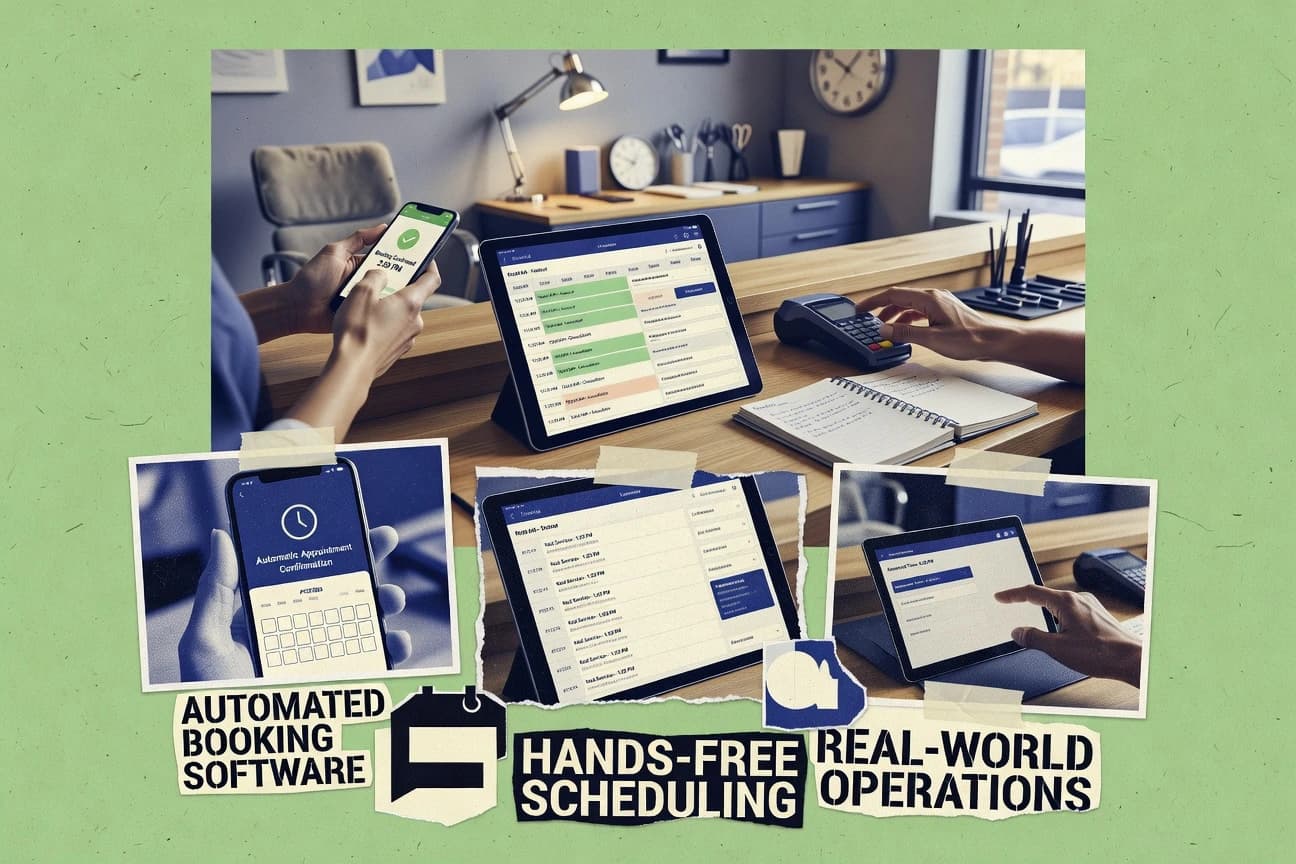
Business FinanceTop 10 Best Automated Booking Software of 2026
Ranking of automated booking software for teams, comparing Calendly, Fresha, and YouCanBook.me, plus other tools, by features, costs, and limits.

How we ranked these tools
Core product claims cross-referenced against official documentation, changelogs, and independent technical reviews.
Analyzed video reviews and hundreds of written evaluations to capture real-world user experiences with each tool.
AI persona simulations modeled how different user types would experience each tool across common use cases and workflows.
Final rankings reviewed and approved by our editorial team with authority to override AI-generated scores based on domain expertise.
Score: Features 40% · Ease 30% · Value 30%
Gitnux may earn a commission through links on this page — this does not influence rankings. Editorial policy
Calendly is the best automated booking pick when teams need dependable policy-enforced scheduling links and webhook-driven automation, while Fresha fits service salons and spas that want booking with staff availability and solid reminders; choose Setmore if you want an embedded, no-fuss start with basic workflow automation.
Editor’s top 3 picks
Three quick recommendations before you dive into the full comparison below — each one leads on a different dimension.
Calendly
Webhook events and a documented API expose booking lifecycle data for custom booking confirmation workflows.
Built for fits when teams need policy-enforced scheduling links and reliable automation via API and webhooks..
Fresha
Editor pickEmbedded scheduler widget designed for service workflows and staff-based booking pages.
Built for fits when service teams need booking pages, staff availability, and reliable reminders without heavy automation engineering..
Chili Piper
Editor pickLead-to-owner routing uses rule evaluation and round-robin assignment before the booking page confirms.
Built for fits when teams need automated owner routing tied to inbound request fields..
Comparison Table
Calendly
SMBAutomated scheduling platform for individuals and teams.
Webhook events and a documented API expose booking lifecycle data for custom booking confirmation workflows.
Calendly’s core workflow starts with an event type that maps meeting length, availability windows, and buffer time enforcement. It then drives a booking confirmation workflow with email and optional SMS reminders, plus cancellation and rescheduling policies tied to that event type. Calendar synchronization keeps booked times aligned across connected calendars, which reduces manual double-booking checks.
A key tradeoff is that deeper workflows like complex lead routing and conditional resource pooling often require API work or careful configuration per event type. Calendly fits best when a team needs repeatable scheduling for recurring sales calls, interviews, or customer onboarding and wants reminders and policy enforcement without building a custom booking service.
- +Calendar synchronization keeps bookings aligned across participants.
- +Event types include buffer time enforcement and clear rescheduling policies.
- +Webhook-driven booking events support workflow automation in external systems.
- +Embedded scheduler widget supports iframe-based booking on existing pages.
- –Complex lead routing can become hard to maintain across many event types.
- –Automation beyond scheduling often depends on integration work via API or webhooks.
Sales operations teams
Route prospects to the right rep
Faster handoffs from booking to CRM
Recruiting coordinators
Schedule interviews with policies
Fewer scheduling conflicts
Show 2 more scenarios
Customer success teams
Automate onboarding calls
Higher attendance with consistent reminders
Sync calendars and send reminders so customers show up without manual follow-ups.
IT and operations teams
Embed scheduling across portals
Bookings captured inside existing portals
Use embedded scheduler widget flows to keep booking in branded internal or partner pages.
Best for: Fits when teams need policy-enforced scheduling links and reliable automation via API and webhooks.
Fresha
vertical specialistBooking and business platform for salons and spas.
Embedded scheduler widget designed for service workflows and staff-based booking pages.
Fresha centers scheduling around service staff, locations, and appointment types, then maps those decisions into booking pages and booking confirmation workflow. Calendar synchronization helps keep availability aligned across connected calendars, and iCalendar export supports interoperability for systems that ingest ICS feeds. Automation is focused on reminders and booking state changes rather than custom workflow builders.
The tradeoff is limited deep automation customization compared with API-first schedulers that support extensive routing logic from webhooks. Fresha fits teams like salons, barbers, and clinics when appointment throughput, staff availability, and consistent customer notifications are the primary scheduling needs.
- +Staff and service scheduling is structured for service businesses
- +Embedded booking widget supports inline appointment capture
- +Calendar synchronization reduces manual availability drift
- +Operational workflow extends beyond bookings into day-to-day management
- –Advanced lead routing rules need workarounds instead of native logic
- –Automation customization is narrower than webhook-first schedulers
Salon operations managers
Book clients with staff availability
Fewer double bookings
Medical practice admin
Standardize intake with confirmations
More predictable visits
Show 1 more scenario
Multi-location beauty chain
Maintain shared scheduling across sites
Lower admin overhead
Calendar synchronization helps keep scheduling availability aligned for each location and staff member.
Best for: Fits when service teams need booking pages, staff availability, and reliable reminders without heavy automation engineering.
Chili Piper
enterpriseMeeting scheduling and routing for sales teams.
Lead-to-owner routing uses rule evaluation and round-robin assignment before the booking page confirms.
Chili Piper routes each booking request to the right owner using rule logic and round-robin assignment across available resources. Booking pages can collect intake fields and carry them into the scheduling context, which helps align routing with CRM contact sync. Calendar synchronization and iCalendar exports keep external calendars updated when ownership changes or a meeting is rescheduled. API support covers the booking lifecycle enough to connect routing decisions and follow-up steps into existing automation flows.
A key tradeoff is that advanced routing and workflow behavior depend on configuring rules and data mapping, not just pointing a widget at a calendar. It fits best when lead volume and owner assignment need to be consistent across multiple queues, such as sales and pre-sales booking. It can be harder to use when teams need one-off, human-in-the-loop scheduling with minimal configuration.
- +Rule-based lead routing with round-robin assignment across multiple owners
- +Embedded scheduler widget supports intake field mapping into booking context
- +Calendar updates and iCalendar exports keep external systems in sync
- +API supports booking and routing automation beyond the UI workflow
- –Complex routing rules require careful configuration and ongoing maintenance
- –Concurrent booking behavior can require additional constraints to avoid edge cases
- –Some meeting policy steps need custom workflow design instead of presets
Revenue operations teams
Route leads to correct sales rep
Higher meeting-to-opportunity conversion
Customer success teams
Pool renewal onboarding sessions
More predictable service coverage
Show 2 more scenarios
Sales enablement teams
Automate confirmation and rescheduling workflow
Fewer scheduling no-shows
Booking events trigger confirmation steps and update downstream calendar systems.
Engineering automation teams
Connect scheduling to internal systems
Less manual scheduling work
API access supports end-to-end automation for booking creation and status tracking.
Best for: Fits when teams need automated owner routing tied to inbound request fields.
Mindbody
vertical specialistBooking and management software for wellness and fitness.
Class and service scheduling built for studios, with staff and location rules integrated into booking and check-in.
Mindbody is a vertical booking system built for wellness and fitness businesses that need online class booking plus in-person service scheduling. The core booking workflow includes staff and location assignment, customer check-in flows, and calendar availability rules tied to business operations.
Scheduling automation is driven by embedded booking and calendar synchronization behavior that keeps staff calendars and customer booking status aligned. Admin control centers on managing services, schedules, and customer communication tied to bookings rather than only publishing empty time slots.
- +Built around studio class booking with staff and location availability logic
- +Booking workflows connect scheduling, check-in, and customer communications
- +Calendar synchronization keeps customer-facing schedule and business calendars aligned
- +Administration supports recurring programs and structured service calendars
- –Advanced automation often depends on how services and schedules are modeled
- –Custom booking edge cases can require added configuration and staff rule testing
- –Web embedding options can feel constrained compared with meeting-style schedulers
- –Two-way sync expectations require careful calendar and timezone alignment
Best for: Fits when wellness teams need class-first booking with staff assignment and operational scheduling controls.
Doodle
SMBPoll-based and automated group scheduling.
Availability polling with automated time selection for group scheduling, then synchronized confirmations into participant calendars.
Doodle schedules meetings by collecting availability and turning it into confirmed times with automated email notifications. Calendar synchronization supports two-way calendar updates, and iCalendar export helps teams share availability with external systems.
Rescheduling and cancellation messaging follows a configurable booking confirmation workflow, which reduces manual follow-ups. Doodle also provides an embedded scheduler widget for websites and group coordination when multiple participants must align.
- +Availability polling converts shared availability into scheduled times
- +Two-way calendar synchronization reduces manual date changes
- +Embedded scheduler widget supports website booking entry points
- +iCalendar export supports calendar app interoperability
- –Lead routing rules are limited for multi-staff assignment workflows
- –Complex group scheduling needs careful configuration to avoid conflicts
Best for: Fits when teams use availability polling and need calendar sync plus embed for faster meeting coordination.
Vagaro
vertical specialistBooking, POS, and marketing for beauty and fitness businesses.
Role-based staff and location scheduling rules within Vagaro make appointment availability reflect staff calendars across multiple service teams.
Vagaro targets service businesses that need booking automation tied to staff scheduling, client intake, and recurring appointment workflows. The product supports calendar synchronization so booking availability follows changes in shared calendars, and it handles booking confirmation and reminders to reduce missed appointments.
Admin tooling centers on managing locations, staff calendars, and booking rules that govern when appointments can be created or rescheduled. The scheduling experience also includes embedded scheduler options for placing booking into client touchpoints.
- +Staff-based scheduling works for multi-employee service teams and variable availability
- +Calendar synchronization keeps appointment times consistent with external calendars
- +Booking confirmations and reminders help enforce the appointment workflow end-to-end
- +Embedded scheduler supports placing booking into existing client pages
- –Complex booking rules can require careful setup to match real-world policies
- –Group scheduling workflows need configuration to avoid edge-case overlaps
- –Staff assignment behavior can feel restrictive for custom routing scenarios
- –Workflow changes often require rechecking availability across linked schedules
Best for: Fits when service teams need staff scheduling, confirmations, and reminders with calendar syncing for fewer missed appointments.
Cal.com
API-firstOpen-source scheduling infrastructure with self-hosting options.
Event webhooks that provide booking lifecycle signals for external systems to react in near real time.
Cal.com combines an open scheduling data model with a modular booking UI, which differentiates it from more template-driven schedulers. It supports one-to-one and round-robin style assignment, group scheduling, calendar synchronization, and iCalendar export so availability can stay consistent across tools.
Cal.com also offers an automation surface through webhooks and integrations that cover booking workflows like confirmations, rescheduling, and cancellation handling. Admin controls focus on team settings and access controls that help manage multiple scheduling pages in one org.
- +Round-robin assignment supports fair distribution across multiple resources
- +Booking pages support embedded scheduler widgets for iframe-style placement
- +Webhook events enable automation around booking created, updated, and canceled
- +Calendar synchronization plus iCalendar export reduces manual availability drift
- –Advanced routing and policy logic often needs careful configuration
- –Group scheduling workflows can require testing to match edge-case expectations
Best for: Fits when teams need scheduling automation plus an API and webhook-driven workflow around bookings.
OnceHub
enterpriseScheduling and routing platform for sales and support.
Round-robin lead routing rules that assign new bookings across staff calendars based on configured availability.
OnceHub focuses on automated scheduling with round-robin lead routing, a configurable booking confirmation workflow, and an embedded scheduler widget for in-site bookings. Calendar synchronization supports scheduling changes so the same meeting time does not drift across connected calendars.
OnceHub also provides intake form mapping and notification flows so appointment details can travel from booking to confirmations. For teams, the admin layer centers on managing routing rules and booking policies across multiple staff calendars.
- +Round-robin lead routing supports multi-staff capacity balancing
- +Booking confirmation workflow can apply consistent messaging across bookings
- +Embedded scheduler widget supports iframe embeddability for internal pages
- +Intake form mapping carries structured answers into appointment records
- –Complex routing rules require careful configuration to avoid misassignment
- –Automation and policy coverage can feel thin for advanced group scheduling
Best for: Fits when teams need lead routing plus embedded booking workflows with configurable confirmations.
Setmore
SMBFree appointment scheduling with payment integrations.
Embedded scheduler widget that works for iframe placement, keeping booking flows consistent across branded pages.
Setmore handles automated appointment booking by embedding a scheduler widget and routing each booking into configurable staff availability. It supports booking rules like buffer times and working hours, plus appointment workflows that include confirmations and rescheduling handling.
Calendar synchronization keeps event times aligned across devices, and iCalendar export supports broader calendar consumption. Admin tools cover team calendars and multi-user scheduling configuration for shared front-desk use.
- +Embedded scheduler widget supports iframe-style placement in existing sites
- +Buffer time and working-hour controls reduce back-to-back overruns
- +Calendar synchronization helps keep staff availability aligned
- +Team scheduling configuration supports shared front-desk calendars
- –Advanced booking logic for complex lead routing can require manual policy design
- –Webhook-level automation requires careful setup for handshakes and retries
Best for: Fits when small teams need embedded scheduling plus reliable calendar sync with basic workflow automation.
vCita
SMBSmall-business client management platform with online scheduling, payments, and client portals.
Integrated booking workflow that links intake, confirmations, and appointment status changes to the same client record.
vCita is an automated booking system geared toward service businesses that need scheduling plus client intake, messaging, and business workflows in one place. It supports calendar synchronization for availability, embedded scheduling experiences via a widget, and appointment confirmation workflows with status changes for reschedules and cancellations. vCita also provides contact and CRM-style sync so appointment data can propagate to downstream follow-up processes without manual copy-paste.
- +Two-way calendar integration reduces manual availability updates
- +Embedded scheduler widget fits into existing sites and intake flows
- +Appointment confirmation workflow tracks reschedule and cancellation states
- +Business messaging and intake steps support end-to-end booking
- –Advanced routing and group availability rules need careful setup
- –Reporting and export options can feel thin versus specialist tools
- –Resource pooling scenarios require more configuration than basic schedulers
- –Automation coverage depends on enabling connected modules and permissions
Best for: Fits when service teams need embedded booking plus appointment workflow states and client messaging in one system.
Conclusion
After evaluating 10 business finance, Calendly stands out as our overall top pick — it scored highest across our combined criteria of features, ease of use, and value, which is why it sits at #1 in the rankings above.
Use the comparison table and detailed reviews above to validate the fit against your own requirements before committing to a tool.
How to Choose the Right automated booking software
This buyer's guide compares automated booking software built for team scheduling, where booking lifecycle signals, embedded booking widgets, and staff or owner assignment rules determine how reliably requests turn into confirmed meetings. The coverage includes Calendly, Fresha, and YouCanBook.me alongside other scheduling platforms like Chili Piper, Mindbody, Doodle, Vagaro, Cal.com, OnceHub, Setmore, and vCita.
The selection criteria used across the tooling focus on integration depth through webhooks and APIs, the configuration surface for scheduling automation, and the governance controls teams rely on to prevent misrouted leads, inconsistent availability, and broken confirmation workflows.
Automated booking software for teams with API, routing rules, and embedded schedulers
Automated booking software turns inbound availability selection into scheduled events using booking pages, calendar synchronization, and rule-driven confirmation workflows that reduce manual coordination. Tools like Calendly prioritize booking lifecycle automation via webhook events and a documented API so external systems can enforce policy during booking confirmation.
Fresha and Vagaro focus scheduling automation around service workflows where staff and location availability feed the booking flow and reminders. Chili Piper and OnceHub emphasize lead-to-owner routing with round-robin assignment before confirmation so incoming requests land in the intended staff calendar context.
Automated booking capabilities that determine routing, sync, and confirmation reliability
Automated booking tools succeed or fail based on what happens after a time slot is selected. Teams need booking lifecycle signals that external systems can consume, plus the ability to enforce policies during confirmation so appointments do not drift from internal rules.
Integration depth also controls operational throughput. Tools with documented webhooks and APIs let teams run custom confirmation workflows, while service-first schedulers rely on structured staff and workflow logic that keeps reminders and availability aligned with real schedules.
Booking lifecycle automation via webhooks and documented API
Calendly exposes webhook events and a documented API so external systems can react to booking lifecycle changes during custom confirmation workflows. Cal.com also supports event webhooks, but Calendly ties those lifecycle signals to broader automation control.
Embedded scheduler widget for inline booking pages
Fresha delivers an embedded scheduler widget designed for service workflows with staff-based booking pages. Setmore provides an iframe-style embedded scheduler widget that keeps booking flows consistent on branded sites.
Lead-to-owner routing with round-robin assignment before confirmation
Chili Piper evaluates rule-based routing and applies round-robin assignment across owners before the booking page confirms. OnceHub also uses round-robin lead routing to balance capacity across staff calendars before confirmations.
Buffer time and scheduling policy controls inside event types
Calendly includes buffer time enforcement and clear rescheduling policies as part of its event type configuration. Setmore adds buffer time and working-hour controls to reduce back-to-back overruns.
Service and class scheduling workflows with staff and location context
Mindbody builds class and service scheduling around studio staff and location rules that connect booking to check-in. Vagaro uses staff-based scheduling rules so appointment availability reflects staff calendars across service teams.
Availability polling for group scheduling coordination
Doodle uses availability polling to convert shared availability into scheduled times, then synchronizes confirmations into participant calendars. It is the clearest match when group selection starts from polling rather than fixed routing to a single staff context.
Choose automated booking software by routing model, automation surface, and operational controls
Teams should start by matching their routing model to the scheduler’s configuration surface. Tools that route leads before confirmation support intake-driven ownership decisions, while widget-first schedulers focus on structured staff pages and staff availability.
Next, teams should confirm how confirmation is governed across systems. A webhook-first workflow with an API supports policy enforcement in custom steps, while service-first platforms concentrate configuration inside their own booking and communications workflow.
Pick the routing philosophy: rule-based owner selection or pre-formed staff pages
If intake fields must determine who owns the booking, Chili Piper applies rule evaluation and round-robin assignment across multiple owners before confirmation. If the operational model is staff-facing service pages, Fresha structures staff and service scheduling so staff availability drives booking.
Decide whether automation requires a webhook-first lifecycle workflow
If custom booking confirmation steps depend on booking lifecycle signals, Calendly provides webhook events plus a documented API surface. If near real-time external reactions are needed, Cal.com provides event webhooks and supports workflow automation around bookings.
Validate embedded booking placement needs with widget behavior
For inline booking inside existing service experiences, Fresha offers an embedded scheduler widget designed for service workflows. For iframe placement into branded pages, Setmore and vCita both support embedded scheduling experiences that match site integration constraints.
Match group scheduling to polling, not just staff capacity
If meetings start from group availability selection, Doodle’s availability polling model converts shared availability into scheduled times. If the workflow is staff or owner assignment before confirmation, Chili Piper or OnceHub better align to round-robin assignment needs.
Stress-test policy enforcement for buffers, working hours, and rescheduling
If bookings must respect buffer time and rescheduling rules inside the scheduling configuration, Calendly includes buffer time enforcement and explicit rescheduling policy controls. If the key risk is overlapping appointments in a small team setup, Setmore’s buffer time and working-hour controls reduce back-to-back overruns.
Who should buy automated booking software built for team scheduling workflows
Automated booking software is most valuable for teams where booking ownership and appointment availability must stay consistent across multiple people, resources, and downstream systems. The right choice depends on whether staff and location logic drives the schedule or whether inbound request fields drive owner routing.
Tools also differ in how much automation engineering the team must do. Webhook and API exposure reduces the need for manual reconciliation, while service-first platforms concentrate configuration inside scheduling and customer communication workflows.
Teams building custom booking confirmation workflows
Calendly fits teams that need webhook events and a documented API so external systems can enforce policy during booking confirmation. Cal.com also supports event webhooks but requires careful configuration for advanced routing expectations.
Service businesses that need staff-based booking pages and appointment reminders
Fresha fits service teams that want an embedded scheduler widget with staff-based booking structure and reliable inline appointment capture. Vagaro fits teams that need staff and location availability reflected in booking availability plus calendar synchronization.
Companies routing inbound requests to the right owner before confirmation
Chili Piper fits teams that route leads to owners using rule evaluation and round-robin assignment before the booking page confirms. OnceHub also uses round-robin lead routing, but automation and policy coverage can feel thin for advanced group scheduling.
Studios and wellness teams running classes with check-in workflows
Mindbody fits studio class booking with staff and location availability logic that connects scheduling and customer communications. The fit is strongest when check-in is part of the operational flow rather than a separate system.
Groups coordinating shared availability for a single meeting time
Doodle fits team coordination that begins with availability polling and produces scheduled times with synchronized confirmations. It is less aligned to multi-staff lead-to-owner assignment workflows.
Common failure points when teams deploy automated booking software
Many booking deployments fail when configuration complexity grows beyond what the team can govern. The biggest risks appear when lead routing rules are expanded, when automation steps depend on handshake behavior, or when group scheduling constraints are not tested.
Another frequent failure point is assuming booking lifecycle data is available for downstream systems. When lifecycle signals are not exposed in a usable automation surface, teams end up rebuilding the same confirmation logic inside multiple systems.
Assuming complex lead routing rules remain maintainable as event types multiply
Calendly can support many event types with routing complexity, but complex lead routing can become hard to maintain across many event types. Chili Piper also requires careful configuration for complex routing rules that must stay correct over time.
Choosing an automation-centric workflow when the project is actually staff page driven
Calendly and Cal.com support webhook-first automation, but a service team may waste effort if the operational model is staff-based scheduling inside embedded pages. Fresha’s service workflow structure and staff pages reduce the need for custom routing logic.
Treating embedded widgets as sufficient integration without validating lifecycle signals
Setmore and vCita can embed schedulers into existing sites, but webhook-level automation requires careful setup for handshakes and retries. Calendly’s webhook events and documented API reduce ambiguity when downstream steps depend on booking lifecycle changes.
Ignoring group scheduling edge cases when availability polling is involved
Doodle’s availability polling fits group selection, but complex group scheduling still needs careful configuration to avoid conflicts. Teams that need round-robin distribution across multiple owners should test OnceHub or Chili Piper logic with realistic capacity constraints.
Overlooking the operational implications of staff and location modeling
Mindbody’s class and service scheduling depends on how services and schedules are modeled, so custom booking edge cases can require added configuration and staff rule testing. Vagaro’s staff-based scheduling also needs setup that matches real-world policies to avoid booking rule mismatches.
How We Selected and Ranked These Tools
We evaluated each automated booking tool on automation and integration depth, including how booking lifecycle signals are exposed through webhooks and whether a documented API enables external booking confirmation workflows. Features were weighted at 40 percent, and ease of configuration and operational adoption were each weighted at 30 percent.
Value was measured by how well the tool’s scheduling configuration supports real team routing and staff assignment without shifting complex logic into manual steps. Calendly set the ranking pace by pairing webhook events with a documented API surface and by including buffer time enforcement and clear rescheduling policy controls inside its event configuration.
Frequently Asked Questions About automated booking software
How do Calendly and Cal.com handle booking lifecycle data for custom confirmation workflows?
Which tools provide embedded scheduler widgets that support iframe placement?
When teams need lead routing across owners, how do Chili Piper and OnceHub differ?
What breaks if calendar synchronization is inconsistent between the scheduler and a team’s internal calendar source?
How do buffer time enforcement and back-to-back booking constraints work in Setmore compared with Calendly?
Which tools are designed for staff and location assignment rather than generic meeting slots?
How does Fresha’s intake and reminder workflow reduce missed appointments compared with vCita?
When does iCalendar delivery matter, and how do Doodle and Chili Piper use it?
How do admin controls differ between Cal.com and Calendly for multi-page or multi-team scheduling?
Tools reviewed
Primary sources checked during evaluation.
Referenced in the comparison table and product reviews above.
- Business FinanceTop 10 Best Automated Business Software of 2026
- Business FinanceTop 10 Best Computer Booking Software of 2026
- Business FinanceTop 10 Best Automated Appointment Reminder Software of 2026
- Business FinanceTop 10 Best White Label Booking Software of 2026
- Business FinanceTop 10 Best Automated Cash Application Software of 2026
Keep exploring
Comparing two specific tools?
Software Alternatives
See head-to-head software comparisons with feature breakdowns, pricing, and our recommendation for each use case.
Explore software alternatives→In this category
Business Finance alternatives
See side-by-side comparisons of business finance tools and pick the right one for your stack.
Compare business finance tools→