
GITNUXSOFTWARE ADVICE
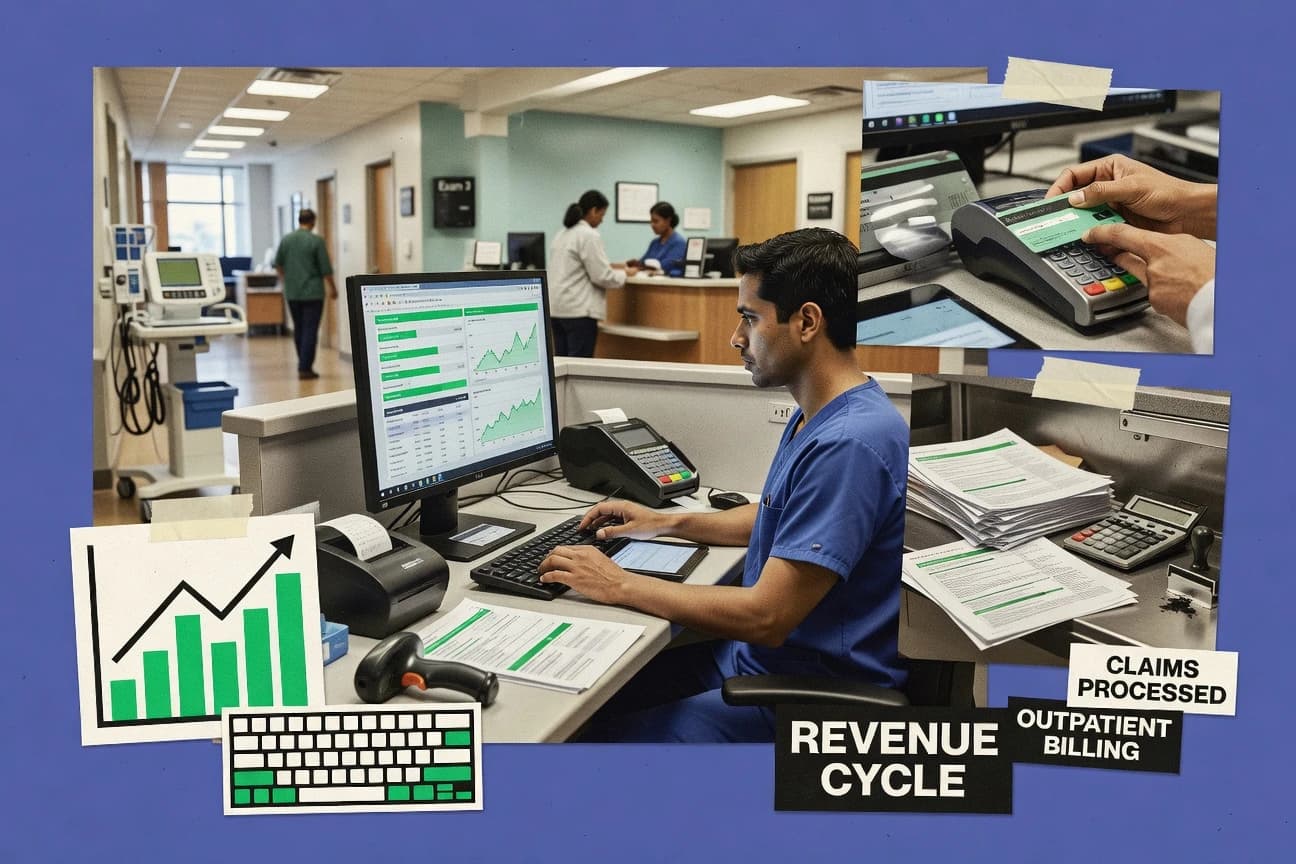
Healthcare MedicineTop 10 Best Ambulatory Revenue Management Software of 2026
Ranked roundup of ambulatory revenue management software for billing and collections teams, comparing TherapyNotes, AdvancedMD, RXNT strengths and tradeoffs.

How we ranked these tools
Core product claims cross-referenced against official documentation, changelogs, and independent technical reviews.
Analyzed video reviews and hundreds of written evaluations to capture real-world user experiences with each tool.
AI persona simulations modeled how different user types would experience each tool across common use cases and workflows.
Final rankings reviewed and approved by our editorial team with authority to override AI-generated scores based on domain expertise.
Score: Features 40% · Ease 30% · Value 30%
Gitnux may earn a commission through links on this page — this does not influence rankings. Editorial policy
TherapyNotes is the best fit for outpatient behavioral practices that need documentation-driven billing workflow control in one place, whereas AdvancedMD works better for mid-size ambulatory teams managing controlled billing with EDI-centered claims operations.
Editor’s top 3 picks
Three quick recommendations before you dive into the full comparison below — each one leads on a different dimension.
TherapyNotes
Encounter-to-billing workflow ties clinical documentation status to charge readiness and claim tasking.
Built for fits when outpatient behavioral practices need documentation-driven billing workflow control..
AdvancedMD
Editor pickException-based workqueues that route accounts into follow-up steps using status-driven triggers across billing and AR.
Built for fits when mid-size practices need controlled billing workflows with exception automation and EDI-centered claims operations..
RXNT
Editor pickDocumentation deficiency workflow carries status into denial, underpayment, and appeals queues for end-to-end traceability.
Built for fits when ambulatory billing teams need documentation-to-claims traceability with rule-driven denial routing..
Comparison Table
TherapyNotes
vertical specialistBehavioral health ambulatory practice management with integrated billing.
Encounter-to-billing workflow ties clinical documentation status to charge readiness and claim tasking.
TherapyNotes supports the end-to-end path from appointment capture to billed services by tying encounters to documentation and billing actions in one workflow. Charge entry and claim preparation are handled inside the practice work queue, which helps revenue staff manage exceptions without searching across separate systems. Automation exists through configurable forms, billing fields, and status-based tasking rather than only manual posting steps. Integration depth is primarily focused on healthcare data exchange patterns used in behavioral health workflows, with API and partner connectivity used for system interoperability.
A tradeoff appears in governance and extensibility compared with broad enterprise revenue platforms, because deeper schema control and high-volume EDI orchestration depend on implementation choices and connected systems. TherapyNotes fits best when outpatient clinics want documentation-linked charge capture and internal task tracking for claims work, denials, and appeals. It is less ideal when multiple business lines require complex contracting normalization and payer adjudication rule engines across large provider networks.
- +Documentation-linked encounters reduce charge mismatches across episodes of care
- +Configurable billing workflow states keep claim tasks visible to staff
- +Practice work queue consolidates billing exceptions and follow-up tasks
- +Behavioral health centric data entry reduces cleanup after scheduling changes
- –Advanced payer contracting normalization is limited versus large enterprise revenue systems
- –Extensibility beyond the core billing workflow can require deeper integration work
- –High-throughput EDI orchestration depends on connected interfaces and setup discipline
- –Denials workflow depth is more operational than analytics-first for many teams
Revenue cycle managers
Track claims tasks by encounter status
Fewer missed follow-ups
Billing and collections teams
Reduce coding and documentation gaps
Lower resubmission volume
Show 2 more scenarios
Practice administrators
Coordinate scheduling changes with billing
More accurate charge capture
Operational staff keep appointment and billing timelines aligned when care plans shift.
Clinical supervisors
Enforce documentation completion before billing
Improved submission readiness
Supervisors push clinicians to complete required fields before encounters enter billing states.
Best for: Fits when outpatient behavioral practices need documentation-driven billing workflow control.
AdvancedMD
SMBCloud practice management and medical billing software for ambulatory practices.
Exception-based workqueues that route accounts into follow-up steps using status-driven triggers across billing and AR.
AdvancedMD supports ambulatory billing and collections teams with configurable workqueues, status-driven tasking, and operational reporting that maps activity to account-level outcomes. Claim orchestration includes claim scrubbing steps before submission, along with remittance capture flows used to drive accounts receivable updates and underpayment identification. The system’s automation surface centers on exception routing and task generation rather than only static rules, which supports high-volume claims operations.
A tradeoff appears in governance and change control because workflow configuration is detailed and requires consistent documentation for local billing rules. AdvancedMD fits organizations that want tighter control over claim preparation and follow-up steps within one operational workflow, especially when teams need consistent handling of patient access exceptions and charge-to-claim consistency.
- +Configurable workqueues connect billing exceptions to actionable follow-up tasks
- +Claim scrubbing reduces avoidable rejections before claim submission
- +Remittance-driven posting supports underpayment detection signals in AR
- +EDI processing supports consistent 837 claim creation and EDI 835 handling
- –Workflow configuration needs strong governance to prevent rule drift
- –Advanced automations rely on well-maintained charge and account statuses
- –Some integration scenarios require more mapping work than typical billing tools
- –Operational reporting depends on consistent coding and document capture inputs
Billing operations managers
Reduce avoidable denials from submissions
Fewer rejected claims cycles
Revenue cycle analysts
Track underpayment patterns in AR
Faster root-cause identification
Show 2 more scenarios
Collections team leads
Automate follow-up for exceptions
Higher follow-up throughput
Route patient accounts into task queues when defined conditions indicate a required action.
Practice operations coordinators
Coordinate patient account readiness
Better registration-to-billing consistency
Manage patient account workflow steps so billing only proceeds when prerequisites are met.
Best for: Fits when mid-size practices need controlled billing workflows with exception automation and EDI-centered claims operations.
RXNT
SMBCloud-based practice management and billing for ambulatory practices.
Documentation deficiency workflow carries status into denial, underpayment, and appeals queues for end-to-end traceability.
RXNT is built for ambulatory billing and collections teams that need traceable progress from eligibility and benefits checks through claim submission orchestration and remittance follow-up. RXNT’s workflow tooling targets denial prevention by routing documentation deficiency items to accountable owners before claim filing, then carrying those flags into downstream appeals and reimbursement integrity reviews. EDI operations focus on coordinating claim submission with remittance handling and payment application outcomes for follow-on actions.
A notable tradeoff is that RXNT’s governance depth depends on configuration of workflow rules and ownership paths, which can increase setup effort for organizations with complex payer-specific adjudication logic. RXNT fits best when an ambulatory practice group wants documentation-to-claim traceability and standardized routing for denials and underpayment reviews across multiple clinics.
- +Workflow tracing from documentation gaps to appeals steps
- +EDI claim and remittance coordination supports closed-loop follow-up
- +Denial routing tied to accountable owners and status history
- +Collection investigations linked to reimbursement outcomes
- –Payer-specific rule coverage can require significant workflow configuration
- –Advanced automation depends on disciplined data entry upstream
- –Cross-team setup can be slower for organizations with many clinics
- –Extensibility options are clearer for EDI flows than for custom analytics
Revenue operations leaders
Standardize denial workflows across clinics
Fewer missed appeal steps
Ambulatory billing managers
Reduce avoidable claim rework
Lower preventable denial volume
Show 2 more scenarios
Collections analysts
Investigate underpayments faster
Shorter reimbursement investigation cycles
Link remittance discrepancies to the prior workflow states that produced the claim.
Compliance and audit teams
Maintain workflow state accountability
Clear audit trail for exceptions
Review historical progression of claims and reimbursement tasks across documentation and resolution steps.
Best for: Fits when ambulatory billing teams need documentation-to-claims traceability with rule-driven denial routing.
athenahealth athenaCollector
enterpriseCloud-based RCM platform for ambulatory practices with network-based revenue management.
Collections task orchestration that keys off claim and payer response signals to route the next patient account action.
athenahealth athenaCollector fits ambulatory revenue cycle management teams that need collections execution tied to claims status and payer responses. It supports worklist-driven denial prevention and patient accounts actions, including routing and follow-up based on account and remittance signals.
Integration depth is centered on athenahealth’s broader ecosystem, with APIs and HL7 interfaces used to move eligibility, claim, and payment context between systems. Reporting focuses on resolution throughput and accounts receivable aging trends rather than only static dashboards.
- +Collections worklists driven by claim and remittance status for targeted follow-up
- +Automation supports consistent payer-specific next steps without manual handoffs
- +Configurable routing helps keep ownership aligned across patient account queues
- +Reporting emphasizes resolution volume and aging outcomes for operational oversight
- –Workflow tuning requires admin time and governance to avoid misrouted tasks
- –Depth of patient access workflows can depend on the surrounding athenahealth modules
- –Some collection actions rely on upstream claim status fidelity from connected systems
- –Advanced integrations add implementation work for teams with heterogeneous stacks
Best for: Fits when mid-size billing and collections teams need worklist automation tied to claims and remittance context.
Waystar
enterpriseHealthcare revenue cycle management platform serving ambulatory providers.
Claim submission orchestration that coordinates payer response handling into downstream denial and follow-up queues.
Waystar routes and orchestrates ambulatory billing and revenue cycle workflows across claims, remittances, and patient access handoffs. It focuses on operational controls for claim submission orchestration, payment posting automation, and denial workflows tied to payer response cycles.
Admin features include workflow configuration, role-based access to operational tasks, and audit visibility for revenue-impacting events. Automation is built around integrations for EDI claim and remittance traffic plus healthcare messaging inputs that keep downstream steps synchronized.
- +Strong claim and remittance orchestration with automated sequencing
- +Denial workflows link payer responses to follow-up tasks
- +Operational governance for workflow steps and user permissions
- +Integration-ready design for HL7-based and EDI-based data flows
- –Configuration and governance require consistent mapping discipline
- –Some ambulatory edge cases depend on service configuration rather than rules alone
- –Workflow tuning can be time-consuming for multi-payer coverage variance
- –Visibility into data lineage can require system familiarity to interpret
Best for: Fits when ambulatory billing teams need end-to-end automation across claims, remittances, and denial follow-up with tight workflow control.
Greenway Intergy
SMBPractice management and RCM solution for ambulatory physician practices.
Claim submission orchestration that ties documentation-driven charge capture into scrubbing and denial handoff workflows.
Greenway Intergy is an ambulatory revenue management suite built around clinical and operational workflows that connect charge capture, billing handoffs, and downstream claims work. Teams use it to manage eligibility and benefits steps, coordinate claim submission activities like scrubbing and orchestration, and track denial drivers through to appeals and resubmissions.
The system also supports EDI exchange workflows for claims and remittance and gives revenue cycle teams reporting views tied to aging and reimbursement performance. Greenway Intergy is most distinctive when ambulatory organizations need tighter coordination between documentation, chargemaster behavior, and billing execution rather than standalone billing screens.
- +End-to-end ambulatory billing workflow that keeps charge capture aligned to claim activity
- +Eligibility and benefits steps are integrated into front-end revenue cycle execution
- +EDI 837 claim and EDI 835 remittance workflows support standard payer data exchange
- +Reporting covers denial patterns, underpayment signals, and accounts receivable aging views
- –Workflow configuration can require ongoing governance to keep billing rules consistent
- –Ambulatory-specific edge cases may depend on additional setup beyond core templates
- –Integration depth with non-Greenway systems can be slower when mapping is complex
- –Audit trail visibility across every handoff step may require targeted configuration
Best for: Fits when ambulatory organizations need integrated billing execution and denial follow-up tied to documentation-driven charge behavior.
CareCloud
SMBCloud RCM and practice management for ambulatory medical practices.
Exception-to-task routing that carries patient access issues into denial and billing queues with role-based workflow control.
CareCloud pairs ambulatory revenue cycle workflows with a scheduling-to-billing operational view that helps reduce patient access handoff gaps. Its core billing and collections coverage includes charge capture support, claim submission orchestration, and denial-focused work queues.
CareCloud also supports eligibility and benefits workflows that route exceptions into configurable tasks for follow-up. Administration features focus on multi-role governance for billing staff and operations teams.
- +Workflow routing connects registration exceptions to billing follow-up tasks.
- +Denial work queues support structured triage and consistent next steps.
- +Claim submission orchestration reduces manual handoffs between teams.
- +Operational visibility supports coordination between patient access and A/R.
- –Deep configuration is required to match payer-specific rules to workflows.
- –Some automation depends on integration quality with downstream claim and remittance systems.
- –Reporting granularity for denial and underpayment patterns can require extra setup.
- –Advanced collections automation requires tighter operational discipline across teams.
Best for: Fits when ambulatory orgs need strong handoff governance from patient access to billing operations.
SimplePractice
vertical specialistPractice management and billing for private ambulatory wellness and therapy practices.
Session-linked charge capture lets billing staff generate claims from the same documentation workflow, reducing rendering and billing disconnects.
SimplePractice is primarily a patient scheduling and clinical documentation system that also supports ambulatory revenue cycle workflows through practice billing features and claim-related tasks. Core capabilities include charge capture tied to clinical documentation, payer and plan management for claim routing, and automated billing steps that generate the data needed for claim submission and follow-up.
Revenue operations teams can monitor account status and balances inside the same workspace where sessions and documentation happen, which reduces handoffs between scheduling, rendering, and billing tasks. For complex denial management and payer communication, the workflow depth depends on add-on modules and on how the practice configures billing rules and payer parameters.
- +Charge capture is linked to documented client sessions
- +Payer and plan setup supports configurable claim routing rules
- +Account-level balances and billing status are visible in one workflow
- +Common billing tasks can be automated with workflow configuration
- –Denial and appeals management is less structured than dedicated RCM suites
- –Advanced eligibility verification workflows can require external dependencies
- –Governance controls for coding workflow are limited compared with specialized systems
- –Integrations may require careful setup to maintain claim-data consistency
Best for: Fits when behavioral health practices want billing tied to documentation without a separate RCM console.
NextGen Healthcare
enterpriseAmbulatory EHR and RCM suite with analytics for physician practices.
Denial and underpayment work queues prioritize follow-up tasks using the claim status trail across billing and collections steps.
NextGen Healthcare delivers ambulatory revenue cycle management capabilities that support registration through reimbursement, with workflow tools focused on billing and collections execution. The suite provides eligibility and prior authorization handling, charge and claim orchestration, and denial-focused follow-up work queues for ambulatory teams.
Admin features support governance over coding and billing workflows, with controls that help standardize documentation expectations across providers. Integration coverage is anchored by HL7 and related interface patterns used by healthcare systems, which affects how smoothly downstream systems can automate claim and remittance exchange.
- +Billing and collections work queues map to denial and underpayment follow-up needs
- +Configuration supports ambulatory billing rules without manual spreadsheet tracking
- +Coding and documentation workflows can be standardized across multi-provider groups
- +Interface options using HL7-style patterns support bidirectional system integration
- –Automation depth for payment posting depends on integration design and workflow mapping
- –Some governance controls require disciplined setup to keep coding and claim edits consistent
- –Reporting coverage for A R aging analytics is limited compared with specialized analytics tools
- –Claim troubleshooting requires operational familiarity with the system’s internal status model
Best for: Fits when ambulatory billing and collections teams need configurable claim workflows plus governance over coding and documentation execution.
PrognoCIS
SMBCloud ambulatory EHR and medical billing software for independent practices.
Governance-driven documentation deficiency tracking that routes remediation before charge and claim finalization.
PrognoCIS targets ambulatory revenue cycle workflows where billing and collections depend on dependable patient access inputs and adjudication-aware operations. Its core scope centers on billing orchestration, claim submission readiness, and downstream collections support tied to payer responses.
The differentiator is the focus on governance around charge and documentation processes instead of treating billing as a standalone stage. Automation and integration surfaces are oriented to reducing manual rework between eligibility, claim creation, and remittance follow-up.
- +Workflow controls connect patient access changes to downstream claim impacts
- +Billing orchestration emphasizes readiness checks before claim submission
- +Documentation tracking supports deficiency follow-up without separate tooling
- +Collections-oriented view ties payer outcomes to next actions
- –Integration depth needs careful mapping for existing HL7 or EDI interfaces
- –Configuration requires strong operational governance to prevent rule drift
- –Automation coverage can lag for less common payer handling paths
- –Reporting depth for aging and underpayment analysis depends on build effort
Best for: Fits when ambulatory billing teams need tighter governance across claims, documentation, and collections with controlled workflows.
Conclusion
After evaluating 10 healthcare medicine, TherapyNotes stands out as our overall top pick — it scored highest across our combined criteria of features, ease of use, and value, which is why it sits at #1 in the rankings above.
Use the comparison table and detailed reviews above to validate the fit against your own requirements before committing to a tool.
How to Choose the Right ambulatory revenue management software
Ambulatory revenue management software coordinates billing execution and collections follow-up by tying clinical documentation, claim tasks, and payer responses into controlled workqueues. This buyer’s guide covers TherapyNotes, AdvancedMD, RXNT, athenaCollector, Waystar, Greenway Intergy, CareCloud, SimplePractice, NextGen Healthcare, and PrognoCIS so ambulatory billing and collections teams can compare workflow automation depth and governance controls.
The standout differences across these tools show up in how documentation status drives charge readiness, how exception workqueues route accounts, and how claim and remittance signals shape next-step patient account actions. TherapyNotes is differentiated by an encounter-to-billing workflow that links documentation status to charge readiness and claim tasking, while RXNT carries documentation deficiency workflow status into denial, underpayment, and appeals queues for end-to-end traceability.
Ambulatory revenue management software for documentation-to-claims execution and payer-response collections orchestration
Ambulatory revenue management software runs billing and collections workflows by enforcing charge readiness from documentation status, orchestrating claim submission steps, and routing follow-up tasks based on claim and remittance signals. Tools like TherapyNotes connect encounter documentation state to billing workflow states so claim tasks remain visible to staff when charges are ready, which reduces charge mismatches across episodes of care.
AdvancedMD extends the same workflow-control idea through exception-based workqueues that use status-driven triggers across billing and AR, and it pairs that with claim scrubbing to reduce avoidable rejections before submission. RXNT focuses on documentation-to-claims traceability by carrying documentation gap status into denial, underpayment, and appeals queues, which supports structured remediation paths when payer adjudication conflicts with expected charge outcomes.
Ambulatory revenue management feature checks that affect billing and collections throughput
Ambulatory revenue management software succeeds when clinical documentation status, charge readiness, and claim tasks stay connected as accounts move from billing into denial and follow-up workqueues. These feature checks focus on how work is routed, how errors are prevented before submission, and how payer outcomes drive the next best action on patient accounts.
Category performance also depends on governance, because exception routing and status-driven automation can drift when teams do not control workflow states. TherapyNotes and RXNT demonstrate how documentation-linked state propagation can reduce rework, while AdvancedMD and athenaCollector show how exception workqueues shape downstream AR actions.
Encounter-to-billing state linkage for charge readiness
TherapyNotes connects encounter documentation status to charge readiness and claim tasking so billing staff see the next claim task only when charges are ready. Greenway Intergy also ties documentation-driven charge capture to claim activity, but TherapyNotes centers the encounter-to-billing workflow control.
Exception-based workqueues routed by billing and AR status triggers
AdvancedMD uses exception-based workqueues that route accounts into follow-up steps using status-driven triggers across billing and AR. CareCloud routes patient access issues into denial and billing queues with role-based workflow control, which matters when handoff governance from patient access to billing is a priority.
Documentation deficiency propagation through denial, underpayment, and appeals
RXNT carries documentation deficiency workflow status into denial, underpayment, and appeals queues for end-to-end traceability. PrognoCIS applies governance-driven documentation deficiency tracking to route remediation before charge and claim finalization.
Claim submission and payer response orchestration into downstream queues
Waystar coordinates payer response handling into downstream denial and follow-up queues during claim submission orchestration. athenaCollector similarly orchestrates collections task routing from claim and payer response signals, which reduces manual handoffs when payer responses arrive.
Pre-submission rejection control with claim scrubbing
AdvancedMD pairs status-driven exception workqueues with claim scrubbing to reduce avoidable rejections before claim submission. Greenway Intergy ties claim submission orchestration to scrubbing and denial handoff workflows, which supports cleaner downstream queue volumes.
Denied and underpaid follow-up workqueues with configurable routing
NextGen Healthcare prioritizes follow-up tasks using the claim status trail across billing and collections steps. Waystar links payer responses to denial workflows that create follow-up tasks, which supports consistent next actions when adjudication outcomes differ.
Decision framework for ambulatory billing and collections workflow automation control
The first fork is whether the organization needs documentation-driven workflow gating as the source of truth for claim readiness. TherapyNotes and RXNT both propagate documentation state into billing outcomes, but TherapyNotes emphasizes encounter-to-billing control while RXNT emphasizes end-to-end traceability from documentation gaps into denial, underpayment, and appeals.
The second fork is whether the organization wants automation to be organized as exception workqueues or as claim-and-remittance response orchestration. AdvancedMD and CareCloud center workqueue routing, while athenaCollector and Waystar center claim and payer response handling that drives the next patient account action.
Pick the workflow source of truth: documentation state or payer response signals
Choose TherapyNotes when clinical documentation status must directly govern charge readiness and claim task visibility for staff working across episodes of care. Choose athenaCollector or Waystar when claim and payer response signals must drive the next patient account action in collections and denial follow-up queues.
Match your governance maturity to exception and automation design
Select AdvancedMD when exception-based workqueues can be governed by maintaining well-maintained charge and account statuses, because its automations rely on disciplined state inputs. Select PrognoCIS when governance-driven documentation deficiency tracking and readiness checks before claim submission align with operational governance discipline.
Confirm denial traceability depth from documentation gaps to appeals steps
Choose RXNT when documentation deficiency workflow status must carry into denial, underpayment, and appeals queues for traceable remediation. Choose Greenway Intergy when the organization needs documentation-driven charge capture tied to scrubbing and denial handoff workflows rather than appeals-first traceability.
Assess whether denial and underpayment routing needs claim status trail controls
Select NextGen Healthcare when denial and underpayment follow-up workqueues must prioritize tasks using claim status trail mapping across billing and collections steps. Choose Waystar when claim submission orchestration must coordinate payer response handling into downstream denial and follow-up queues.
Evaluate patient access to billing handoff structure and role-based workflow control
Choose CareCloud when patient access exceptions must become structured billing follow-up tasks with role-based workflow control. Choose SimplePractice when session-linked charge capture must let behavioral health teams generate charges from the same documentation workflow with configurable claim routing rules.
Who benefits from specific ambulatory revenue management workflow designs
Ambulatory billing and collections teams benefit most when workflow routing mirrors their operating reality for clinical documentation, charge capture, and payer adjudication outcomes. The tool design differences across TherapyNotes, RXNT, AdvancedMD, and athenaCollector show up in how staff see tasks, how exceptions move, and how payer outcomes steer collections follow-up.
The right choice depends on whether documentation status must gate claim tasks, whether exception workqueues must drive follow-up, and whether claim and remittance signals must orchestrate collections action sequencing.
Outpatient behavioral health practices that require documentation-to-charge control
TherapyNotes supports encounter-to-billing workflow ties so documentation-linked encounters reduce charge mismatches across episodes of care while keeping claim tasks visible when charges are ready.
Mid-size ambulatory groups that run billing with exception-driven routing and EDI-centered claim operations
AdvancedMD provides exception-based workqueues that route accounts into follow-up steps using status-driven triggers across billing and AR and pairs that with claim scrubbing to reduce rejections before submission.
Ambulatory teams that need full traceability from documentation gaps to denial and appeals outcomes
RXNT carries documentation deficiency workflow status into denial, underpayment, and appeals queues for end-to-end traceability that supports rule-driven denial routing.
Billing and collections operations that organize work by claim and payer response signals
athenaCollector routes collections worklists based on claim and payer response signals so patient account actions follow remittance and adjudication context without manual handoffs.
Organizations that must govern patient access exceptions into billing and denial workflows
CareCloud routes patient access issues into denial and billing queues using role-based workflow control to enforce handoff governance from registration exceptions into billing execution.
Common ambulatory revenue management pitfalls during workflow automation and governance rollout
The most frequent failure mode is treating workflow automation rules as static when the underlying status inputs change across clinical documentation, charge entry, and payer adjudication cycles. Exception routing and denial follow-up workqueues require consistent state mapping to prevent misrouted tasks and queue noise.
A second pitfall is underestimating integration and mapping effort for existing EDI and interface workflows. Tools like RXNT and PrognoCIS can require significant workflow configuration or careful mapping when payer-specific rules must match local documentation and claim execution behavior.
Allowing workflow rules to drift without governance discipline
AdvancedMD requires strong governance because workflow configuration must prevent rule drift, and its automations depend on well-maintained charge and account statuses to route exceptions correctly.
Assuming denial and appeals traceability will happen automatically
RXNT provides documentation deficiency workflow status tracing into denial, underpayment, and appeals queues, but payer-specific rule coverage can require significant workflow configuration when adjudication paths differ.
Overlooking configuration effort needed to tune claim submission orchestration
athenaCollector collections task orchestration depends on claim and payer response signals, but workflow tuning requires admin time and governance to avoid misrouted tasks when routing logic conflicts with local operations.
Underestimating the setup work needed for payer-specific denial routing and documentation remediation workflows
PrognoCIS emphasizes readiness checks and governance-driven documentation deficiency tracking, but integration depth needs careful mapping for existing HL7 or EDI interfaces.
Building automation on inconsistent upstream charge and documentation entry
RXNT automation depends on disciplined data entry upstream, and NextGen Healthcare governance over coding and documentation execution must stay consistent to keep billing and collections edits reliable.
How We Selected and Ranked These Tools
We evaluated TherapyNotes, AdvancedMD, RXNT, athenaCollector, Waystar, Greenway Intergy, CareCloud, SimplePractice, NextGen Healthcare, and PrognoCIS using feature depth, automation behavior, and how workflow state connects documentation, charge readiness, claim tasks, and payer-driven follow-up. Features accounted for 40% of the score, and ease plus value each contributed 30% to reflect how much operational effort teams spend on governance and configuration.
TherapyNotes set the benchmark by tying encounter documentation status to charge readiness and claim tasking so staff see charge-dependent claim work only when encounters meet readiness requirements. TherapyNotes also scored highest because its documentation-linked encounter control reduces charge mismatches across episodes of care while keeping claim tasks visible to staff within the same workflow state model.
Frequently Asked Questions About ambulatory revenue management software
How do ambulatory revenue management systems connect clinical documentation to charge creation?
Which system provides exception-based workqueues that route accounts through billing follow-ups based on status triggers?
When a denial or underpayment happens, what workflow steps get automated for appeals and resubmissions?
What breaks if a team cannot reconcile remittances to the same claim identifiers used for payment posting automation?
Where does admin control and role-based access matter most for billing and collections throughput?
How do integration approaches affect eligibility verification, claim exchange, and remittance ingestion?
Which tools handle documentation deficiency tracking across claims and reimbursement investigations?
When organizations need tighter coordination between charge capture behavior and downstream billing execution, which workflow design fits best?
What setup differences matter for teams running ambulatory revenue cycle workflows from scheduling through billing?
Tools reviewed
Primary sources checked during evaluation.
Referenced in the comparison table and product reviews above.
- Healthcare MedicineTop 10 Best Ambulatory Software of 2026
- Healthcare MedicineTop 10 Best Revenue Cycle Analytics Software of 2026
- Healthcare MedicineTop 10 Best Ambulatory Surgery Center Practice Management Software of 2026
- Business FinanceTop 10 Best Revenue Optimization Software of 2026
- Healthcare MedicineTop 10 Best Anesthesia Medical Billing Software of 2026
Keep exploring
Comparing two specific tools?
Software Alternatives
See head-to-head software comparisons with feature breakdowns, pricing, and our recommendation for each use case.
Explore software alternatives→In this category
Healthcare Medicine alternatives
See side-by-side comparisons of healthcare medicine tools and pick the right one for your stack.
Compare healthcare medicine tools→