
GITNUXSOFTWARE ADVICE
Fashion ApparelTop 10 Best AI Video Influencer Generator of 2026
AI Video Influencer Generator tool roundup with ranking criteria for teams, comparing Rawshot.ai, HeyGen, and Synthesia for realistic virtual creators.

How we ranked these tools
Core product claims cross-referenced against official documentation, changelogs, and independent technical reviews.
Analyzed video reviews and hundreds of written evaluations to capture real-world user experiences with each tool.
AI persona simulations modeled how different user types would experience each tool across common use cases and workflows.
Final rankings reviewed and approved by our editorial team with authority to override AI-generated scores based on domain expertise.
Score: Features 40% · Ease 30% · Value 30%
Gitnux may earn a commission through links on this page — this does not influence rankings. Editorial policy
Editor’s top 3 picks
Three quick recommendations before you dive into the full comparison below — each one leads on a different dimension.
Rawshot.ai
Attribute-based synthetic model generation (28 attributes, 600+ models) fully compliant with EU AI Act, providing provable provenance, C2PA labeling, and zero risk of likeness issues.
Built for fashion brands, e-commerce businesses, and agencies needing scalable, high-quality model imagery and videos without the hassle and expense of physical photoshoots..
HeyGen
Editor pickAvatar-to-script generation with API automation for repeatable influencer video workflows.
Built for fits when marketing ops needs automated influencer video production without heavy manual work..
Synthesia
Editor pickAPI for generating videos from structured scripts and media inputs with persona configuration.
Built for fits when teams need automated influencer video production with strong workflow controls..
Comparison Table
Rawshot.ai
specializedEndless Fashion Shoots. Zero Photoshoots. Life-like Models. Zero AI Plastic.
Attribute-based synthetic model generation (28 attributes, 600+ models) fully compliant with EU AI Act, providing provable provenance, C2PA labeling, and zero risk of likeness issues.
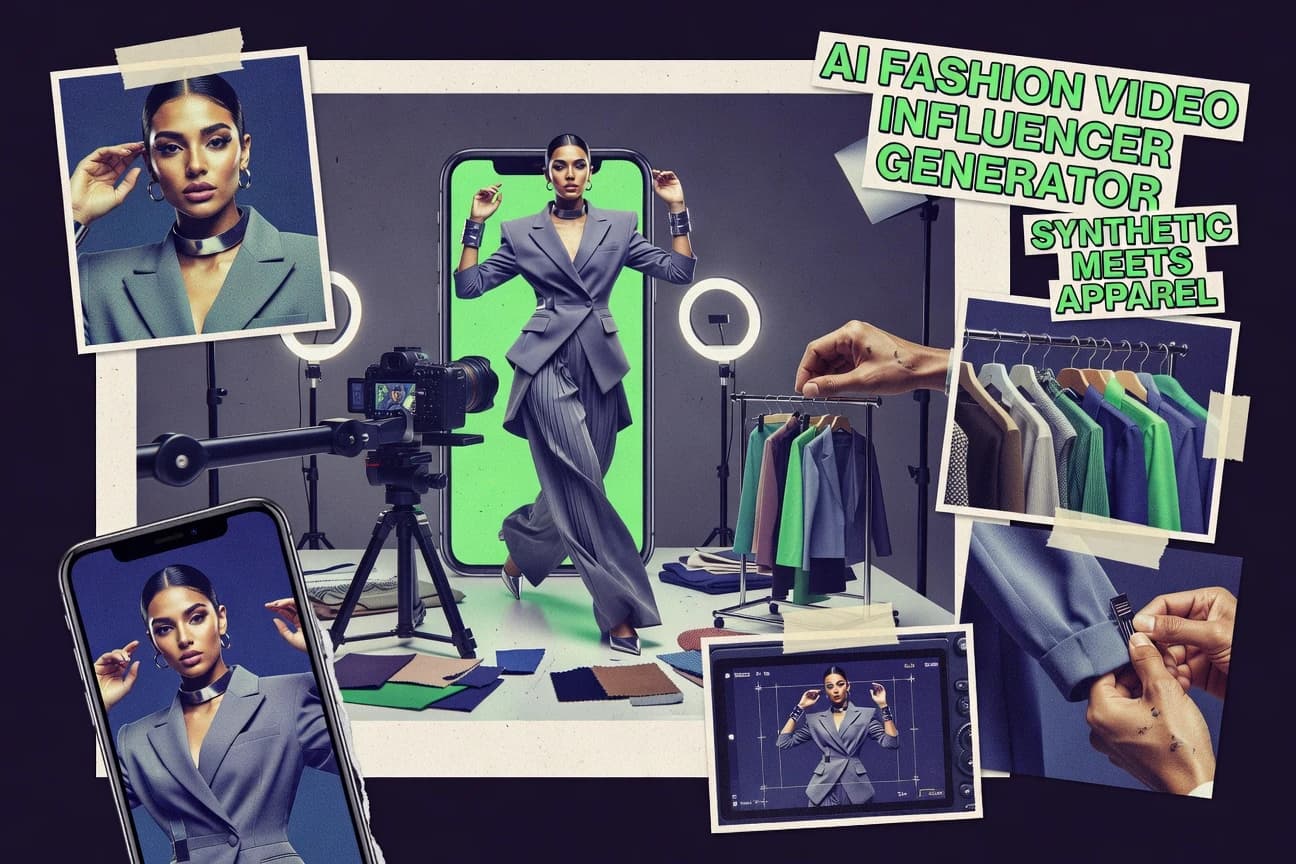
Rawshot.ai is an AI video influencer generator built for producing lifelike model photography and short videos from customer-provided product imagery. It supports importing flat lays, snapshots, and 3D renders, then assembling scenes using 600+ synthetic models, 150+ camera styles, and 1500+ backgrounds with outfit and pose controls. Collaboration tooling and project management help agencies and brand teams keep multiple campaigns aligned while generating consistent content.
A key tradeoff is that results depend on the quality and coverage of the source product images, since missing angles or low detail can limit how accurately the synthetic studio and lifestyle scenes match the product. A strong usage situation is rapid campaign iteration where fashion and e-commerce teams need new influencer-style visuals across many products without scheduling shoots.
- +Drastically reduces costs and time (99.9% less than traditional shoots, minutes vs. weeks)
- +Photorealistic outputs with 600+ compliant synthetic models, 150+ camera styles, and advanced editing/animation tools
- +Full commercial rights, EU AI Act compliance, GDPR hosting, and collaborative project management for teams
- –Token-based pricing can lead to variable costs depending on usage volume
- –Primarily tailored for fashion/e-commerce visuals, less versatile for other industries
- –Requires initial learning for optimal customization despite simple workflow
E-commerce merchandising teams
Generate influencer videos for new drops
Faster launch content pipeline
Fashion brand creative teams
Produce seasonal runway-style social assets
More consistent campaign visuals
Show 2 more scenarios
Agencies and production studios
Deliver client shoots without on-site crews
Lower production overhead
Generate photorealistic studio or lifestyle sets and export video for client approval workflows.
Brand compliance and legal teams
Maintain audit trails for synthetic assets
Stronger documentation for usage
Use attribute-based synthetic models with traceability to support EU AI Act compliance needs.
Best for: Fashion brands, e-commerce businesses, and agencies needing scalable, high-quality model imagery and videos without the hassle and expense of physical photoshoots.
HeyGen
AI avatar videoAI video creation with reusable avatar and video generation workflows designed for influencer-style output.
Avatar-to-script generation with API automation for repeatable influencer video workflows.
HeyGen fits teams that need repeatable influencer output tied to structured inputs like scripts, voice selection, and avatar choice. It offers configuration controls for asset selection and generation behavior, which matters when producing many localized or campaign-specific variants. Its documented automation and API surface is a better match for orchestrated pipelines than manual editing.
A key tradeoff is that high-fidelity results depend on avatar and voice asset availability plus script quality, which can limit fully custom character creation. HeyGen works well when a content ops team needs throughput for frequent updates, like weekly product messages or event announcements, without rebuilding the video flow each time.
- +API for scripted avatar video generation at scale
- +Configurable avatar and voice selection for consistent output
- +Automation-friendly workflow design for campaign iteration
- –Character customization depends on provided avatar assets
- –Script and voice quality drive final perceived naturalness
Marketing operations teams
Weekly product update influencer videos
Faster content turnaround
Localization and content teams
Multilingual influencer announcements
Consistent brand delivery
Show 1 more scenario
Training and enablement teams
Role-based avatar instruction videos
Lower production effort
Map role scripts to avatar outputs to standardize delivery across regions and cohorts.
Best for: Fits when marketing ops needs automated influencer video production without heavy manual work.
Synthesia
avatar video studioAvatar-based video generator with scripted video production and governance features for repeatable influencer-style assets.
API for generating videos from structured scripts and media inputs with persona configuration.
Synthesia is built around a content data model that separates scripts, avatar settings, media assets, and delivery targets for repeatable influencer campaigns. The workflow supports batch creation patterns through API-driven provisioning of video jobs and parameterized inputs. Tightly scoped configuration reduces rework when recurring personas need consistent tone, visuals, and branding. Integration depth is strongest when video generation must plug into existing CMS publishing and marketing automation steps.
A tradeoff is that influencer output quality depends on input structure and asset readiness, including avatar selection and clean script phrasing. When teams need frequent iterations on influencer lore, the cost of maintaining persona assets and scripts shifts from generation to editorial governance. Synthesia works best when structured inputs and controlled templates drive throughput instead of fully ad hoc improvisation.
- +API-driven video job creation with parameterized inputs
- +Reusable avatar and scene configuration for consistent personas
- +RBAC for separating creator, editor, and admin responsibilities
- +Audit-style activity visibility for content and asset changes
- –High governance effort for maintaining persona scripts and assets
- –Ad hoc generation needs extra configuration to keep tone consistent
- –Avatar consistency can require iterative tuning of settings
Marketing operations teams
Automate persona video creation for campaigns
Fewer manual video edits
Enterprise L and D teams
Provision multilingual avatar training videos
Faster localized content rollout
Show 2 more scenarios
Agencies managing multiple brands
Separate tenant assets with RBAC
Lower cross-brand mistakes
Uses access controls and project boundaries to keep brand-specific avatars and scenes isolated.
Product marketing teams
Generate launch influencer announcements
Higher publishing throughput
Creates batch influencer updates from structured prompts aligned to launch messaging and visuals.
Best for: Fits when teams need automated influencer video production with strong workflow controls.
D-ID
talking avatarInteractive AI video generation that supports talking-avatar creation and template-driven output.
Generation API that supports programmatic creation and retrieval of influencer-style video renders.
D-ID focuses on turning scripted prompts into video with a strong emphasis on influencer-style talking-head outputs and face-driven rendering. The integration depth centers on a documented API surface for creating, managing, and retrieving video generations, which supports automation and higher-throughput workflows.
Its data model supports structured inputs such as character settings and prompt parameters, which helps keep outputs reproducible across runs. Admin and governance controls are oriented around account-level access and operational traceability through logs tied to generation activity.
- +API supports scripted video generation for influencer-style talking-head workflows
- +Structured input parameters enable repeatable character and prompt configurations
- +Automation surface fits batch generation and programmatic retrieval of assets
- +Extensible parameters support iteration across tone, framing, and voice settings
- –Governance controls for RBAC granularity are limited compared with enterprise suites
- –Audit logs are generation-focused and do not cover downstream distribution actions
- –Schema rigidity can require adapter code for complex campaign assets
- –Throughput tuning needs careful orchestration to avoid backlog during bursts
Best for: Fits when teams need automated AI influencer video generation with a programmable API workflow.
Fliki
script-to-videoScript-to-video and avatar-style generation workflows that support automated content production at scale.
Script-driven influencer video generation with configurable output parameters.
Fliki generates AI video influencer content from scripts by producing video assets tied to a structured input and rendering pipeline. Fliki’s core capability centers on transforming text prompts into short-form video outputs that support repeatable creative runs.
The integration depth depends on how workflows are modeled around Fliki’s asset generation inputs and outputs rather than custom scene graphs. Automation and governance are typically handled through configuration of generation jobs and downstream asset management, with an emphasis on reproducibility instead of team-level policy controls.
- +Text-to-video influencer generation with repeatable script-based inputs
- +Asset-first workflow supports batch production for multiple influencer variants
- +Configurable generation parameters improve consistency across runs
- +Output targeting via templates reduces manual editing for common formats
- –Data model details limit fine-grained control over scene-level structure
- –API and automation surface depth is constrained by generation-centered workflows
- –RBAC and admin governance features are not clearly surfaced for team auditing
- –Throughput control lacks documented sandboxing for new creative configurations
Best for: Fits when content teams need repeatable script-to-video influencer production with controlled parameters.
Pictory
text-to-video automationText and media-to-video automation that turns structured inputs into short video outputs for recurring influencer formats.
Project-based generation pipeline that ties scripts, prompts, and rendered outputs into repeatable runs.
Pictory fits teams that need AI-generated influencer-style videos with repeatable workflows and production-grade controls. The generator pipeline lets creators define scripts, generate visuals from prompts, and output edit-ready video assets with consistent formatting rules.
For integration depth, Pictory’s automation story centers on how projects, prompts, and media outputs can be provisioned and iterated across runs. The governance experience is shaped by role-based access choices and traceable run histories when multiple editors share an asset namespace.
- +Script-to-video workflow supports influencer-style outputs with consistent structure
- +Project-based generation keeps assets grouped for repeatable publishing
- +Automation-friendly configuration reduces manual re-editing across versions
- +Output management streamlines handoff to editors and downstream tools
- –Prompt-driven results can drift without tight configuration and review loops
- –Complex influencer campaigns need careful asset naming and schema conventions
- –Automation and API surface may limit advanced custom pipelines for some teams
- –Governance controls like RBAC granularity may not cover every enterprise workflow
Best for: Fits when marketing teams need repeatable AI influencer video generation with controlled review loops.
Veed.io
AI video workspaceAI-assisted video creation with generation, editing, and export workflows that can be automated for consistent influencer clips.
AI-assisted video generation inside an editable timeline workflow
Veed.io differentiates from many AI influencer generators with its direct video editing workflow paired with AI-assisted generation inside one production surface. It supports creating influencer-style video assets by combining scripts, templates, and media timelines, then exporting finished clips for distribution.
Integration depth is primarily centered on its media pipeline and export outputs rather than a published influencer-specific data schema for audience, persona, and campaign state. Automation and extensibility depend on its available API and webhook patterns for ingesting source media, triggering renders, and retrieving output artifacts.
- +AI-assisted generation connects into an edit timeline for faster iteration
- +Export outputs align with common distribution workflows and video asset handoffs
- +Script-to-video paths reduce manual scene assembly for influencer-style content
- +Media handling supports compositing steps needed for consistent character shots
- –Influencer persona state model is limited versus systems that formalize persona schema
- –API and automation surface lacks clear coverage of influencer governance workflows
- –RBAC and audit-log controls are not explicit for multi-team production
- –Throughput controls for batch persona generation are not documented as configurable
Best for: Fits when teams need AI video creation tied to an editing timeline and export pipeline.
Kapwing
automation-first editingTemplate-driven video generation and editing with API-driven automation options for repeatable influencer production pipelines.
Template-based video generation with reusable assets across influencer campaign projects
Kapwing positions an AI video influencer generator workflow inside a broader content studio that handles script, media assembly, and publishing outputs. The generator path is built around configurable templates, reusable assets, and consistent render settings so teams can repeat campaigns with controlled variations.
Integration depth centers on how projects, assets, and exported videos map to a studio workflow rather than a formal influencer data schema. Automation relies on batch-like authoring flows and web automation hooks, with an API surface that supports programmatic media operations.
- +Template-driven influencer video assembly with repeatable render configuration
- +Reusable assets and project structure reduce per-campaign authoring variance
- +Programmatic media operations through an API suited for pipeline steps
- +Studio workflow supports multi-step editing and export in one place
- –Influencer persona metadata lacks a clear, typed influencer schema
- –Automation control is less granular than full orchestration plus approvals
- –Audit-ready governance controls like RBAC and audit logs are not explicit
- –Throughput limits and queue controls are not documented for scale planning
Best for: Fits when teams need repeatable AI influencer video production with moderate automation.
Descript
AI video editingAI editing and voice tools that support scripted video post workflows for maintaining consistent influencer narration.
Script-to-timeline editing with transcript-aligned controls for precise influencer narration changes.
Descript generates influencer-style video content through script-to-video workflows built on its text and audio editor. Production control comes from a detailed media timeline with subtitle-aware editing, plus voice cloning tied to per-project voice assets.
Integration depth is strongest through its API and automation hooks that support programmatic creation of scripts, renders, and asset management. Governance depends on account-level controls, with auditability centered on project activity and user permissions rather than enterprise RBAC tooling.
- +Timeline editing tied to transcripts for deterministic influencer script revisions
- +Voice cloning assets are project-scoped for tighter control of influencer voice
- +API supports automation of rendering and media asset lifecycle across workflows
- +Configurable templates for repeatable influencer formats with consistent outputs
- –Influencer persona schema is not exposed as a strict, versioned data model
- –Audit log granularity is limited for role-based approvals and change tracking
- –Automation surface focuses on editing and rendering, not full campaign orchestration
- –Throughput scaling for concurrent influencer generations is not clearly documented
Best for: Fits when teams need text-driven influencer video production with automation and repeatable templates.
InVideo
template video generatorAI-assisted video creation with text-based templates and bulk workflows for recurring influencer video variants.
Influencer-style multi-scene generation from script or prompt inputs
InVideo is an AI video influencer generator aimed at marketing and content teams that need repeatable virtual persona output. Core capabilities center on influencer-style video generation workflows that combine script or prompt inputs with media generation and scene assembly.
InVideo also supports exportable assets and reuse across campaigns, which matters when multiple brand identities and content calendars must stay consistent. Integration depth is limited compared with tools that expose a documented influencer schema and full automation surface via API.
- +Rapid generation of influencer-style video sequences from text inputs
- +Scene assembly workflow supports multi-shot influencer content creation
- +Asset reuse helps keep consistent visual outputs across campaigns
- +Export options support downstream editing in common video tools
- –Automation surface is weaker than tools offering full influencer data schemas
- –API and extensibility details limit governance at scale
- –RBAC controls and audit log visibility are not clearly surfaced for admins
- –Throughput controls for batch influencer generation are not well defined
Best for: Fits when small teams need consistent AI influencer videos with minimal engineering overhead.
Conclusion
After evaluating 10 fashion apparel, Rawshot.ai stands out as our overall top pick — it scored highest across our combined criteria of features, ease of use, and value, which is why it sits at #1 in the rankings above.
Use the comparison table and detailed reviews above to validate the fit against your own requirements before committing to a tool.
Tools reviewed
Primary sources checked during evaluation.
Referenced in the comparison table and product reviews above.
How to Choose the Right AI Video Influencer Generator
This buyer’s guide helps you choose an AI Video Influencer Generator by mapping real capabilities from HeyGen, Synthesia, D-ID, Pictory, InVideo, VEED, Kapwing, Runway, Fliki, and Lumen5 to your influencer workflow. You will learn which features support avatar-led presenter clips, which tools are built for fast short-form promo automation, and which platforms work best for iterative scene generation. Use the selection steps to match your output style and team process before you commit to a tool.
What Is AI Video Influencer Generator?
An AI Video Influencer Generator turns scripts or prompts into influencer-style videos by producing talking-head avatar clips, voiceovers, captions, and platform-ready short scenes. It solves the production bottleneck of turning creator messaging into repeatable video assets without building a custom video pipeline. Tools like HeyGen and Synthesia focus on avatar-presenter workflows that generate consistent on-camera style from scripts. Tools like Pictory and Lumen5 focus more on script-to-video storyboarding and automated editing so you can ship short-form influencer promos faster.
Key Features to Look For
These features decide whether your influencer output looks consistent at scale or turns into generic drafts that require heavy manual cleanup.
Branded avatar presenter control from scripts
If you need influencer identity and consistent delivery, HeyGen excels with branded avatar presenter control from scripts and a reusable branded avatar across videos. Synthesia also supports presenter-led AI videos from text using an avatar studio workflow designed for repeatable social campaigns.
Avatar Studio workflow with brand kit controls and subtitles
Synthesia’s Avatar Studio adds brand kit controls for fonts, colors, and on-video messaging plus subtitles to help reuse the same script across channels. This matters when you want every influencer clip to match brand typography and on-screen text without reauthoring.
Script-driven avatar talking animations with facial animation
D-ID pairs an avatar with a provided script and animates facial motion to create influencer-style talking videos. This helps believability versus static avatar demos, but timing and facial results depend on providing clean scripts and compatible avatar media.
Automated scene generation with templates for repeatable influencer formats
Pictory generates videos from influencer-style scripts using automated editing and scene-based clip generation plus templates for consistent creator branding. InVideo and Lumen5 also emphasize template-based creation where scene presets speed up high-volume influencer variations.
AI narration and voiceover tools integrated into the video flow
Fliki stands out for turning scripted influencer concepts into ready-to-post videos using text-to-video workflows plus integrated voiceover creation. Pictory and Lumen5 also include voice-driven workflows that reduce the need for separate narration editors.
Editing and publishing support inside the same workspace
VEED and Kapwing connect AI generation with a browser editor so captions, templates, and finishing happen without exporting to a separate timeline workflow. Kapwing also adds built-in resizing for multiple social aspect ratios, which matters for publishing the same influencer message across platforms.
How to Choose the Right AI Video Influencer Generator
Pick the tool that matches your target video format first, then verify that its identity, editing, and iteration workflow fits how your team produces influencer content.
Choose your influencer format: talking avatar vs scene-driven promos
If your influencer is a consistent on-camera presenter, start with HeyGen or Synthesia since both generate influencer-style talking-head clips from scripts. If you want faster short talking variations from scripts with animated facial motion, use D-ID as your primary option. If your influencer strategy is promo reels and story formats that can be templated and repurposed, prioritize Pictory, Lumen5, or Fliki.
Lock in identity consistency for campaigns and series
HeyGen supports consistent creator branding using a reusable branded avatar across multiple videos, which reduces the risk of identity drift across a campaign. Synthesia also supports repeatable avatar influencer videos at scale using script-driven generation. Runway can generate high-quality scene variations with image-to-video and prompt-driven iteration, but character identity across long series requires careful prompting and settings.
Match your creative control level to your production style
If you need tighter director-level cinematic control over multi-scene influencer storytelling, Synthesia is less strong than avatar-focused presenter output. For iterative scene creation where you adjust backgrounds, wardrobe looks, or shot composition, Runway provides image-to-video and text-to-video variation tools plus integrated editing controls. For teams that prefer AI drafts followed by manual polish, Kapwing offers an AI generation workflow paired with a practical timeline editor.
Plan for finishing needs like captions, subtitles, and social resizing
For on-screen readability and fast influencer formatting, VEED emphasizes AI captions with style controls directly on the timeline. Kapwing also supports caption and formatting tools plus built-in resizing for social aspect ratios. Synthesia’s subtitle generation helps reuse scripts across channels while preserving consistent on-video text layout.
Evaluate iteration speed against how often you publish variations
If you publish many short clips from the same message with consistent presenter styling, HeyGen and Synthesia are designed for repeatable social campaigns using script-driven avatar generation. If you generate multiple scenes from long content and want automation to repurpose quickly, Pictory’s automatic clip and scene handling helps reduce manual timeline work. If you want fast ideation to publishable drafts with templates and AI-assisted assets, InVideo and Lumen5 help you move from script to multiple publishable variations quickly.
Who Needs AI Video Influencer Generator?
Different tools fit different influencer production models, from avatar-led marketing teams to solo creators making templated promos.
Marketing teams producing consistent avatar-presenter influencer clips at scale
HeyGen and Synthesia both target marketing teams that need consistent creator branding and repeatable presenter output from scripts. HeyGen is strongest when branded avatar presenter control is a priority, while Synthesia adds an Avatar Studio workflow with brand kit controls for fonts, colors, and subtitles.
Marketers producing short avatar influencer talking videos from scripts
D-ID fits teams that want a script-driven avatar talking pipeline with automatic facial animation for short influencer variations. This approach is effective when scripting quality and avatar selection are handled carefully to maintain believability.
Solo creators and small teams producing influencer promos and short-form clips quickly
Pictory is built for script-to-video creation with automated editing and scene-based clip generation plus templates for consistent creator formats. Lumen5 also helps marketers generate influencer-style short videos with AI-assisted script storyboarding that auto-generates scenes, pacing, and layouts.
Creators who need stylized episodic scenes with iterative prompt-based changes
Runway supports image-to-video and prompt-driven scene generation for rapid influencer look and background changes. It is a strong match for episodic creative direction when you can manage character consistency through careful iteration and generation settings.
Common Mistakes to Avoid
The most common failures come from choosing a tool optimized for templated promo automation when you actually need identity-consistent avatar performance, or from expecting fully automated control when editing and iteration are required.
Choosing a template-driven tool for an identity-sensitive avatar series
If your influencer identity must stay stable across many episodes, InVideo and Lumen5 can produce outputs that feel template-driven and constrain long-run persona control. HeyGen and Synthesia provide script-driven avatar presenter workflows designed to keep branded delivery consistent.
Expecting cinematic multi-scene direction from an avatar-first generator
Synthesia focuses on studio-style presenter clips and makes cinematic, scene-by-scene influencer storytelling harder when you need director-level camera motion and advanced blocking. Runway fits teams that want scene iteration tools for influencer episodes through image-to-video and prompt-driven changes.
Underestimating how much avatar realism depends on scripting quality
D-ID results depend heavily on providing clean scripts and selecting compatible avatar media, so weak scripting leads to weaker facial animation believability. HeyGen and Synthesia still require good scripts, but their avatar studio workflows focus more on consistent presenter output from scripts.
Skipping an editing layer for captions, formatting, and social exports
Tools like VEED and Kapwing include caption and timeline-style controls that support influencer readability and formatting for social publishing. If you skip this layer and rely on raw AI output, your influencer videos can lose clarity even when the generation is strong.
How We Selected and Ranked These Tools
We evaluated HeyGen, Synthesia, D-ID, Pictory, InVideo, VEED, Kapwing, Runway, Fliki, and Lumen5 using four dimensions: overall capability, feature set strength, ease of use, and value. We treated script-to-video quality and influencer-style output consistency as the core capability because every tool here targets influencer-style content generation. HeyGen separated itself by delivering branded avatar presenter control from scripts with reusable creator branding and team review workflows, which directly supports scalable creator campaigns. Synthesia followed closely for script-driven avatar output plus an Avatar Studio workflow with brand kit controls and subtitle generation for repeatable social variations.
Frequently Asked Questions About AI Video Influencer Generator
How do Rawshot.ai and HeyGen differ for creating influencer-style videos?
Which tools expose an API or API-driven workflow for automation of influencer video generation?
What governance controls and audit trails are available in Synthesia versus D-ID?
How should teams plan for data migration when moving projects between tools?
Which tool is better for repeatable script-to-video output with configurable generation parameters?
What integration strategy fits teams that need an influencer video workflow inside an editing timeline?
Why does HeyGen’s workflow differ from Synthesia’s when generating influencer videos in multiple languages?
Which tools provide structured inputs that improve reproducibility across runs?
What common failure mode affects Rawshot.ai, and how can teams mitigate it?
Keep exploring
Comparing two specific tools?
Software Alternatives
See head-to-head software comparisons with feature breakdowns, pricing, and our recommendation for each use case.
Explore software alternatives→In this category
Fashion Apparel alternatives
See side-by-side comparisons of fashion apparel tools and pick the right one for your stack.
Compare fashion apparel tools→