
GITNUXSOFTWARE ADVICE
Fashion ApparelTop 10 Best AI Stock Footage Generator of 2026
Compare and rank ai stock footage generator tools by features, output quality, and use cases for video production teams.

How we ranked these tools
Core product claims cross-referenced against official documentation, changelogs, and independent technical reviews.
Analyzed video reviews and hundreds of written evaluations to capture real-world user experiences with each tool.
AI persona simulations modeled how different user types would experience each tool across common use cases and workflows.
Final rankings reviewed and approved by our editorial team with authority to override AI-generated scores based on domain expertise.
Score: Features 40% · Ease 30% · Value 30%
Gitnux may earn a commission through links on this page — this does not influence rankings. Editorial policy
RAWSHOT AI is the strongest fit for fashion brands needing repeatable on-model footage without conventional shoots, while Synthesia suits learning teams turning scripts into narrated training videos and is the better alternative when stock-style clips are not the goal.
Editor’s top 3 picks
Three quick recommendations before you dive into the full comparison below — each one leads on a different dimension.
RAWSHOT AI
RAWSHOT AI replaces the category's empty instruction box with a seven-step set of visible, editable building blocks. The orchestration layer turns those selections into repeatable generation instructions, while saved Stacks let teams apply the same treatment across a catalogue without asking each user to develop their own wording.
Built for indie labels, DTC retailers, marketplace sellers, and apparel teams needing repeatable on-model catalogue imagery across many SKUs, especially when physical samples or conventional shoots are impractical..
Synthesia
Editor pickAI Dubbing creates multilingual avatar videos with synchronized lip movement from one approved source.
Built for fits when learning teams need narrated training videos from scripts, slides, and reusable presenters..
PixVerse
Editor pickLoopable motion generation produces clips designed for repeat playback without obvious end breaks.
Built for fits when teams need repeatable prompt-to-video footage for campaigns and library-style shot variations..
Comparison Table
RAWSHOT AI
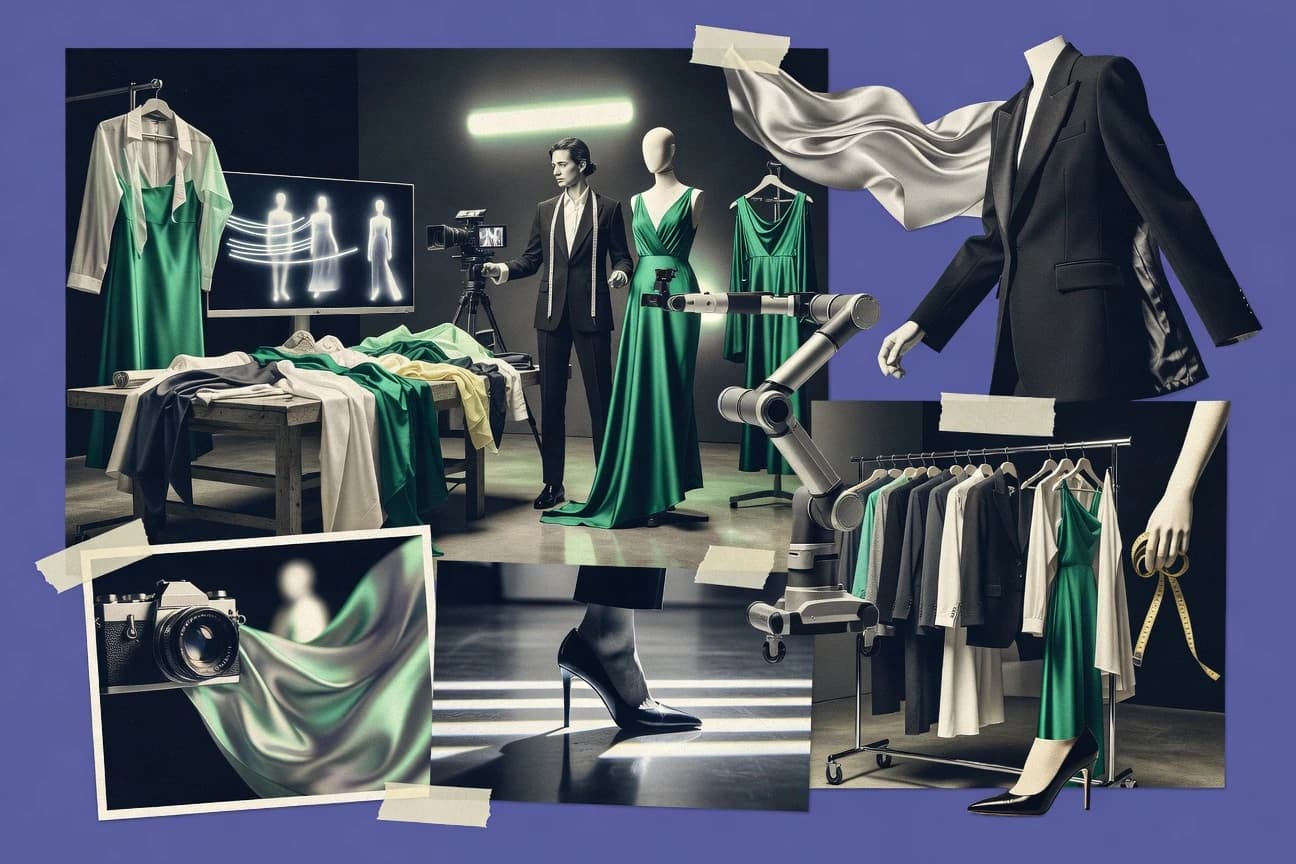
AI fashion photography and video softwareRAWSHOT AI creates original on-model fashion images and short videos from selectable models, garments, lighting, poses, backgrounds, and camera views.
RAWSHOT AI replaces the category's empty instruction box with a seven-step set of visible, editable building blocks. The orchestration layer turns those selections into repeatable generation instructions, while saved Stacks let teams apply the same treatment across a catalogue without asking each user to develop their own wording.
RAWSHOT AI is designed for brands that need recurring product imagery without arranging a physical sample, casting, or studio session for every catalogue update. It offers more than 1,800 licence-free synthetic models, including more than 600 children's models; no child was cast, photographed, or used as a likeness reference. Users can combine up to four garments, save a complete configuration as a Stack, and apply it across a collection for consistent treatment.
The controlled interface makes repeatable catalogue work easier, but it limits open-ended experimentation because users cannot enter free-text instructions. Video output supports up to three five-second scenes at 720p or 1080p, making it suitable for product-page clips and social assets rather than long-form production. Photoshoots start at $9 a month, and five tokens cover one image.
- +Full commercial rights forever, with no recurring licensing on library models.
- +A seven-step block interface makes model, garment, pose, lighting, and composition choices explicit.
- +More than 1,800 synthetic models support broad apparel coverage, including more than 600 children's models with no child cast, photographed, or used as a likeness reference.
- +Saved Stacks and bulk workflows help maintain consistent imagery across large collections.
- –Users cannot enter free-text instructions, so unusual concepts must fit the available building blocks.
- –The product ships with one accuracy-focused image style and leaves stylised finishing to post-production.
- –Video is limited to three five-second scenes and 720p or 1080p output.
- –RAWSHOT AI is built for fashion, apparel, footwear, and accessories rather than general-purpose image creation.
DTC apparel retailers
Create consistent imagery for new SKU drops
Faster collection launches
Indie fashion labels
Show pre-order garments before sampling
Earlier product merchandising
Show 2 more scenarios
Marketplace sellers
Refresh listings across multiple channels
More complete listings
Sellers generate consistent product views and short clips for apparel listings on marketplaces and social storefronts.
Compliance-sensitive apparel teams
Publish documented AI-created product imagery
Clearer content provenance
Teams receive AI-labelled outputs with C2PA credentials, watermarking, and per-image attribute documentation.
Best for: Indie labels, DTC retailers, marketplace sellers, and apparel teams needing repeatable on-model catalogue imagery across many SKUs, especially when physical samples or conventional shoots are impractical.
Synthesia
enterpriseAI video generation platform for creating corporate training and explainer videos with avatars and AI-generated scenes.
AI Dubbing creates multilingual avatar videos with synchronized lip movement from one approved source.
Synthesia combines scene-based editing, reusable templates, brand kits, screen recording, and uploaded media. Users can create presenter videos from scripts, import presentation content, and apply aspect-ratio presets for common channels. Enterprise workspaces support SSO, SCIM provisioning, role-based permissions, and centralized brand controls.
The tradeoff is narrower visual range than dedicated text-to-video or stock-footage libraries. Avatar gestures, camera movement, and emotional delivery remain constrained by the selected presenter and scene design. Training departments can connect approved scripts and assets through API integration for repeatable onboarding and internal communications production.
- +Script-based editing avoids filming, lighting, and presenter scheduling.
- +AI Dubbing creates multilingual versions with synchronized lip movement.
- +Templates, brand kits, and reusable avatars support repeatable corporate production.
- +API integration supports automated video creation from external workflows.
- –Avatar-led scenes do not replace broad cinematic stock-footage generation.
- –Expressive gestures and emotional delivery remain narrower than live presenters.
- –Advanced governance and automation require enterprise administration.
- –Fine-grained camera direction is limited compared with prompt-driven video tools.
Learning and development teams
Employee onboarding modules
Faster training production
Global communications teams
Multilingual company announcements
Localized internal updates
Show 2 more scenarios
Sales enablement teams
Product feature explainers
Consistent sales content
Reusable presenters deliver consistent feature walkthroughs without scheduling repeated recording sessions.
Customer support teams
Help-center video tutorials
Faster tutorial updates
Screen recordings and narrated scenes explain interface changes for distributed customers and support agents.
Best for: Fits when learning teams need narrated training videos from scripts, slides, and reusable presenters.
PixVerse
SMBPixVerse generates videos from text and images with preset creative effects.
Loopable motion generation produces clips designed for repeat playback without obvious end breaks.
PixVerse is designed around prompt-to-video generation with fast iteration loops that help users converge on usable takes for a stock library. Export targets typical editing needs such as standardized framing and clip-ready delivery, which reduces reformatting work in common editors. The strongest fit appears when a team needs many similar shots with controlled variations, such as scene topic swaps and consistent visual style across a campaign.
A key tradeoff is that prompt adherence can degrade when scenes require strict camera choreography or dense subject interactions across the full clip. PixVerse fits best when the creative direction is clear at the prompt level and motion style is the main variable. It fits less well when a workflow depends on frame-by-frame control or complex continuity guarantees across multiple generations.
- +Prompt-to-video iteration workflow reduces time to usable takes
- +Export outputs align with typical editing framing needs
- +Loopable clip generation supports repeatable motion shots
- +Consistent visual style helps batch production for libraries
- –Strict camera choreography can drift during longer motion sequences
- –Complex multi-subject actions may reduce temporal coherence
- –Fine-grained control over motion beats is limited
- –Advanced pipeline automation depends on integration setup
Video editors
Generate b-roll for cutaway sections
Faster b-roll assembly
Marketing teams
Produce campaign-specific stock shots at scale
More variations per deadline
Show 2 more scenarios
Product teams
Create UI-adjacent motion visuals
Cleaner motion backgrounds
Prompted scenes can supply consistent background motion for product storytelling.
Content libraries
Build thematic footage sets
Consistent library catalog
A library workflow benefits from repeating style and framing across many clips.
Best for: Fits when teams need repeatable prompt-to-video footage for campaigns and library-style shot variations.
Adobe Firefly
enterpriseAdobe Firefly creates text-to-video clips with image, camera, and style controls.
First-and-last-frame prompting creates controlled transitions between two supplied visual states.
Adobe Firefly combines a commercially oriented video model with direct connections to Adobe applications, separating it from standalone clip generators. Its Generate Video workflow creates short clips from text prompts or still-image references and provides controls for shot size, camera angle, motion, and aspect ratio.
Firefly can use first and last frames to guide transitions, while generated assets carry Content Credentials for origin tracking. Adobe Firefly does not replace a searchable stock footage library for footage selection.
- +First-and-last-frame controls guide transitions between supplied visual states.
- +Camera settings include shot size, angle, motion, and aspect-ratio presets.
- +Content Credentials attach provenance metadata to generated files.
- +Adobe workflow compatibility supports handoff into Photoshop and Premiere Pro projects.
- –Generated clips are short and usually require editing into longer sequences.
- –Character motion and object interaction can remain inconsistent across frames.
- –Firefly lacks a searchable catalog of pre-shot footage and release documentation.
- –Video controls do not replace a full editor’s timeline and compositing tools.
Best for: Fits when Adobe-centered teams need generated clips with frame guidance and documented content origin.
Freepik AI Video Generator
vertical specialistFreepik provides prompt-based video generation alongside a large stock asset library.
Freepik-branded generation flow links directly to library-style preview and download steps.
Freepik AI Video Generator turns prompts and images into short AI video clips for stock-style use cases. It integrates into Freepik’s content ecosystem with search, preview, and download flows that align with royalty-free publishing workflows.
Generation focuses on prompt adherence for motion scenes and supports common aspect-ratio presets for typical video placements. Exports are positioned for editorial pipeline use with standard video file outputs for post-production edits.
- +Workflow stays inside Freepik’s library search, preview, and download loop
- +Prompt-driven scene generation supports consistent style for stock-like footage
- +Aspect-ratio presets match common social and presentation formats
- +Fast iteration cycles from prompt tweaks to new renders
- –Motion control is limited to prompt-level direction rather than granular camera settings
- –No documented API surface for automated generation and provisioning
Best for: Fits when teams need quick, stock-style AI clips with minimal editing and format friction.
Canva AI Video Generator
SMBCanva generates short video content from prompts inside its browser-based design editor.
Magic Media generates AI video clips inside the same Canva canvas used for layouts, brand assets, captions, and export.
Canva AI Video Generator is distinct because it places prompt-based clip creation inside Canva’s design editor, alongside templates, stock media, and brand controls. Magic Media converts text prompts into short video clips, then lets users trim, layer, caption, animate, and export them within the same project. The workflow suits social posts and presentation visuals, but it offers less control over shot continuity and advanced camera direction than dedicated video-generation tools.
- +Magic Media generates clips directly inside Canva designs
- +Templates, animations, captions, and stock media share one editing workspace
- +Brand Kit controls support repeatable visual treatments
- +Exports fit common social and presentation formats
- –Generated clips are short and often need manual editing
- –Prompt control is limited for exact camera movement and subject continuity
- –Output quality can vary across complex scenes
- –Advanced timeline and compositing controls are less extensive than dedicated editors
Best for: Fits when social teams need quick AI clips that can be edited with templates, brand assets, and captions.
VEED AI Video Generator
SMBVEED generates video scenes from prompts and edits them in a browser-based timeline.
Script-to-video workflow combines generated narration, stock clips, subtitles, and brand styling in VEED’s editable browser timeline.
VEED AI Video Generator combines AI-assisted script-to-video drafts with VEED’s full browser editor, unlike generators that stop at a rendered clip. A prompt or script can produce scenes with stock media, voiceover, subtitles, music, transitions, and logo overlays. Users can replace clips, edit timing, adjust text, and export social formats without leaving the editor.
- +Browser timeline enables scene replacement after AI draft generation.
- +Automatic subtitles, AI voiceovers, music, and logo overlays support social exports.
- +Templates and aspect-ratio presets reduce repetitive formatting work.
- –AI drafts can require manual replacement when stock clips miss the script’s visual intent.
- –Generation offers limited control over camera movement and frame-level continuity.
- –Stock-based scenes may feel generic for specific locations, products, or branded environments.
Best for: Fits when social teams need scripted videos assembled from stock media inside a browser editor.
Pika
SMBPika creates short AI videos from text, images, and editing effects.
Pikaffects applies one-click transformations such as melting, inflating, crushing, and exploding to generated subjects.
Pika takes a creator-first route to AI stock footage generation, combining prompt-driven clips with distinctive transformation effects. Text-to-video and image-to-video workflows support short social clips, concept footage, product scenes, and visual transitions. Pikaffects adds presets such as melting, inflating, crushing, and exploding subjects, but Pika lacks the catalog depth, release documentation, and production controls expected from a conventional stock library.
- +Pikaffects provides recognizable melting, inflating, crushing, and exploding transformations.
- +Prompt and reference-image workflows support fast concept footage production.
- +Browser-based creation requires little setup for short-form video experiments.
- +Image animation can turn static product or character art into usable clips.
- –Pika does not provide a conventional searchable stock footage catalog.
- –Shot continuity and subject identity can weaken across generated sequences.
- –Fine control over lighting, lens behavior, and multi-shot blocking remains limited.
- –Team governance, asset organization, and automation controls are relatively thin.
Best for: Fits when social teams need quick stylized clips, visual effects, and animated concepts without production software.
Hailuo AI
vertical specialistHailuo AI produces short videos from text descriptions and reference images.
API-first generation workflow that supports batch creation of stock-style clip sets from structured prompts.
Hailuo AI generates AI video clips for stock footage workflows with prompt-driven production and library-style output. The workflow is oriented around producing short scenes suitable for editing timelines rather than bespoke full-length projects.
Output controls focus on framing presets and motion-style consistency across repeated takes. It is also positioned for automation through its API and programmatic job handling.
- +Prompt-to-clip workflow fits editors who need fast iteration cycles
- +Framing presets reduce time spent on post-crop and reframe fixes
- +API supports batch job generation for repeatable stock packs
- +Consistent style across related prompts helps maintain series coherence
- –No clear controls for camera move paths beyond basic motion style
- –Template-based outputs can limit creative variation on unusual concepts
Best for: Fits when teams need repeatable AI stock clips and want API-driven batch generation for editing pipelines.
Genmo
SMBAI video generation platform using open-source video models for creating short video clips.
Mochi-1’s open-source release allows developers to run and modify Genmo’s video model outside the hosted creator app.
Genmo suits solo creators who need quick concept clips without a conventional editing timeline, but its stock-footage workflow remains limited. Genmo combines prompt-driven image and video creation with image-to-video animation and short clip generation through a chat-style interface.
Its Mochi-1 model is also available as an open-source release, giving technical users a separate path for local experimentation and model inspection. Output quality varies with complex movement, and the product lacks the catalog depth, licensing controls, and production integrations expected from a dedicated stock library.
- +Chat-style prompting reduces setup for short visual concept clips.
- +Mochi-1 open-source release supports local testing beyond the hosted app.
- +Image animation can turn a still concept into moving footage.
- –No searchable stock-footage catalog for browsing established scenes.
- –Short generations can show weak temporal coherence during complex subject movement.
- –Batch rendering and team governance are not central features of the creator interface.
Best for: Fits when solo creators need quick animated concept clips and can accept limited stock catalog and production controls.
Conclusion
After evaluating 10 fashion apparel, RAWSHOT AI stands out as our overall top pick — it scored highest across our combined criteria of features, ease of use, and value, which is why it sits at #1 in the rankings above.
Use the comparison table and detailed reviews above to validate the fit against your own requirements before committing to a tool.
How to Choose the Right ai stock footage generator
This buyer's guide covers RAWSHOT AI, Synthesia, PixVerse, Adobe Firefly, Freepik AI Video Generator, Canva AI Video Generator, VEED AI Video Generator, Pika, Hailuo AI, and Genmo to support teams sourcing AI-generated clip assets with predictable outcomes. Each tool review focuses on generation workflow behavior, including repeatability controls like RAWSHOT AI Stacks and motion design like PixVerse loopable motion.
The guide also tracks how teams operationalize outputs into editing work, from VEED’s browser timeline that swaps scenes after AI drafts to Hailuo AI’s API-first batch creation from structured prompts. Coverage highlights automation surfaces and governance-adjacent controls where the product ships them, so asset pipelines can reduce rework across campaigns and libraries.
AI stock footage generator for prompt-to-video, library-style clip assets
An ai stock footage generator produces short video clips intended to function like stock footage, including prompt-to-video scenes and loopable motion sequences that can be inserted into edits. Tools in this guide differ in how they constrain motion and composition, such as RAWSHOT AI using a seven-step building-block interface and PixVerse generating loopable motion clips designed for repeat playback.
Some generators also shift the workflow from generic clip creation to scripted or structured pipelines. Synthesia focuses on avatar-led narrated training with AI Dubbing for multilingual lip-synchronized output, while Hailuo AI emphasizes batch creation of stock-style clip sets from structured prompts through an API-first workflow.
Generation controls, production workflows, and integration depth
An AI stock footage generator needs controls that produce usable clips instead of isolated demonstrations. RAWSHOT AI uses seven editable building blocks and saved Stacks, while PixVerse creates loopable motion for repeat playback.
Repeatable generation controls
RAWSHOT AI exposes model, garment, pose, lighting, and composition choices through seven editable blocks. PixVerse focuses on repeatable motion clips that avoid obvious breaks during playback.
Transition and camera guidance
Adobe Firefly uses first-and-last-frame prompting to guide transitions between supplied visual states. Freepik AI Video Generator keeps generation connected to library-style preview and download steps but offers only prompt-level motion direction.
Automation and pipeline integration
Hailuo AI supports batch creation from structured prompts through an API-first workflow. VEED AI Video Generator places generated narration, stock clips, subtitles, music, and logo overlays inside an editable browser timeline.
Editing environment and output purpose
Canva AI Video Generator creates clips inside the same canvas used for templates, brand assets, captions, and exports. Synthesia is designed for script-based avatar training videos rather than broad cinematic footage.
Specialized visual effects and model access
Pika applies Pikaffects such as melting, inflating, crushing, and exploding to generated subjects. Genmo provides local testing and modification through the open-source release of Mochi-1.
Choosing between stock libraries, structured generation, and editing suites
The main decision is whether footage will be generated as standalone clips, assembled from a stock-style library, or produced inside a broader editing workflow. Freepik AI Video Generator and PixVerse serve different needs from Canva AI Video Generator and VEED AI Video Generator.
Choose a library workflow or a generation-first workflow
Select Freepik AI Video Generator when previewing and downloading stock-style results inside a library workflow matters. Select PixVerse or Pika when prompt iteration and specialized generated motion matter more than browsing established scenes.
Choose explicit controls or conversational prompting
Select RAWSHOT AI when teams need visible choices for model, pose, lighting, and composition across many catalogue items. Select Genmo when chat-style prompting and quick animated concepts matter more than repeatable production controls.
Choose batch automation or browser-based assembly
Select Hailuo AI when an API-first workflow must create clip sets from structured prompts for an editing pipeline. Select Canva AI Video Generator when clips need immediate placement beside templates, brand assets, captions, and other design elements.
Choose narrated presenters or visual scene generation
Select Synthesia when scripts, reusable avatars, and multilingual dubbing define the production requirement. Select Adobe Firefly when supplied visual frames and camera settings should guide generated scene transitions.
Test continuity against the longest intended shot
Use PixVerse for clips that must repeat without an obvious end break, then test longer camera choreography for drift. Use Adobe Firefly for frame-guided transitions, then check character motion and object interaction across the generated frames.
Audience fit by footage workflow
Different teams need different levels of control over prompts, editing, and automation. RAWSHOT AI addresses repeatable catalogue imagery, while Hailuo AI addresses batch clip creation for production pipelines.
Indie labels, DTC retailers, marketplace sellers, and apparel teams
RAWSHOT AI supports repeatable on-model catalogue imagery when physical samples or conventional shoots are impractical. Its saved Stacks let teams reuse the same treatment across multiple SKUs.
Learning and development teams
Synthesia converts scripts and slides into narrated avatar videos. AI Dubbing creates multilingual versions with synchronized lip movement from one approved source.
Social media and brand content teams
Canva AI Video Generator keeps clips, templates, brand assets, captions, animations, and stock media in one design workspace. VEED AI Video Generator adds narration, subtitles, music, logos, and scene replacement inside a browser timeline.
Editors and pipeline developers
Hailuo AI supports batch generation from structured prompts through an API-first workflow. Genmo supports local model testing through Mochi-1 when hosted creator tools do not provide enough development access.
Common mistakes in AI stock footage selection
Short generated clips often require different handling from conventional stock footage. Canva AI Video Generator and Adobe Firefly produce clips that may need manual editing into longer sequences.
Choosing a generator without checking the intended footage duration
Test the full sequence length before selection because Adobe Firefly and Canva AI Video Generator produce short clips that commonly require manual assembly.
Treating prompt-level direction as precise camera control
Use Adobe Firefly when shot size, angle, motion, and aspect-ratio presets matter. Freepik AI Video Generator and VEED AI Video Generator provide less granular control over camera movement.
Assuming every tool provides a searchable stock footage catalog
Pika and Genmo do not provide conventional searchable stock-footage catalogs. Freepik AI Video Generator keeps generated clips inside a library search, preview, and download workflow.
Selecting a visual generator for an avatar-led training requirement
Use Synthesia for scripts, reusable presenters, and multilingual AI Dubbing. Adobe Firefly, PixVerse, and Pika target visual scene generation rather than presenter-led instruction.
How We Selected and Ranked These Tools
We evaluated RAWSHOT AI, Synthesia, PixVerse, Adobe Firefly, Freepik AI Video Generator, Canva AI Video Generator, VEED AI Video Generator, Pika, Hailuo AI, and Genmo for generation features, workflow ease, and practical value. Features accounted for 40% of each score, while ease of use accounted for 30% and value accounted for 30%.
RAWSHOT AI ranked first with a 9.1 Overall score because its seven-step control system and saved Stacks make catalogue generation repeatable. Its 9.2 Feature score, 9.0 Ease score, and 9.1 Value score placed it ahead of the other tools.
Frequently Asked Questions About ai stock footage generator
What can RAWSHOT AI generate that prompt-only tools cannot?
How does Adobe Firefly handle shot control compared with PixVerse?
Which tool supports API-driven batch generation for stock-style clip sets?
How do loop-oriented outputs differ between PixVerse and other generators?
When is an AI video generator better suited for presenter-led instruction than stock footage creation?
Where does content provenance show up in generated outputs?
What breaks if advanced administrative controls and governance are required?
How do data handoff workflows differ between Canva and VEED for exporting finished assets?
Which tool best fits stock footage library workflows with in-product search and preview?
What tradeoff occurs when using transformation effects in Pika versus production-controlled generation?
Tools reviewed
Primary sources checked during evaluation.
Referenced in the comparison table and product reviews above.
- Fashion ApparelTop 10 Best AI Foot Photography Generator of 2026
- Fashion ApparelTop 10 Best AI Video Clip Generator of 2026
- Fashion ApparelTop 10 Best AI Reference Image Generator of 2026
- Fashion ApparelTop 10 Best AI Sporting Goods Product Photo Generator of 2026
- Fashion ApparelTop 10 Best AI Instagram Post Generator of 2026
Keep exploring
Comparing two specific tools?
Software Alternatives
See head-to-head software comparisons with feature breakdowns, pricing, and our recommendation for each use case.
Explore software alternatives→In this category
Fashion Apparel alternatives
See side-by-side comparisons of fashion apparel tools and pick the right one for your stack.
Compare fashion apparel tools→