
GITNUXSOFTWARE ADVICE
Fashion ApparelTop 10 Best AI Influencer Video Generator of 2026
Compare 10 ai influencer video generator tools by features, usability, and output quality. See rankings and tradeoffs for creator teams and brands.

How we ranked these tools
Core product claims cross-referenced against official documentation, changelogs, and independent technical reviews.
Analyzed video reviews and hundreds of written evaluations to capture real-world user experiences with each tool.
AI persona simulations modeled how different user types would experience each tool across common use cases and workflows.
Final rankings reviewed and approved by our editorial team with authority to override AI-generated scores based on domain expertise.
Score: Features 40% · Ease 30% · Value 30%
Gitnux may earn a commission through links on this page — this does not influence rankings. Editorial policy
RAWSHOT AI is the strongest overall pick for brands needing consistent on-model product images and short videos at catalogue scale, while Tavus is the better fit for agencies running repeatable influencer campaigns with personalized presenter videos and API-based distribution.
Editor’s top 3 picks
Three quick recommendations before you dive into the full comparison below — each one leads on a different dimension.
RAWSHOT AI
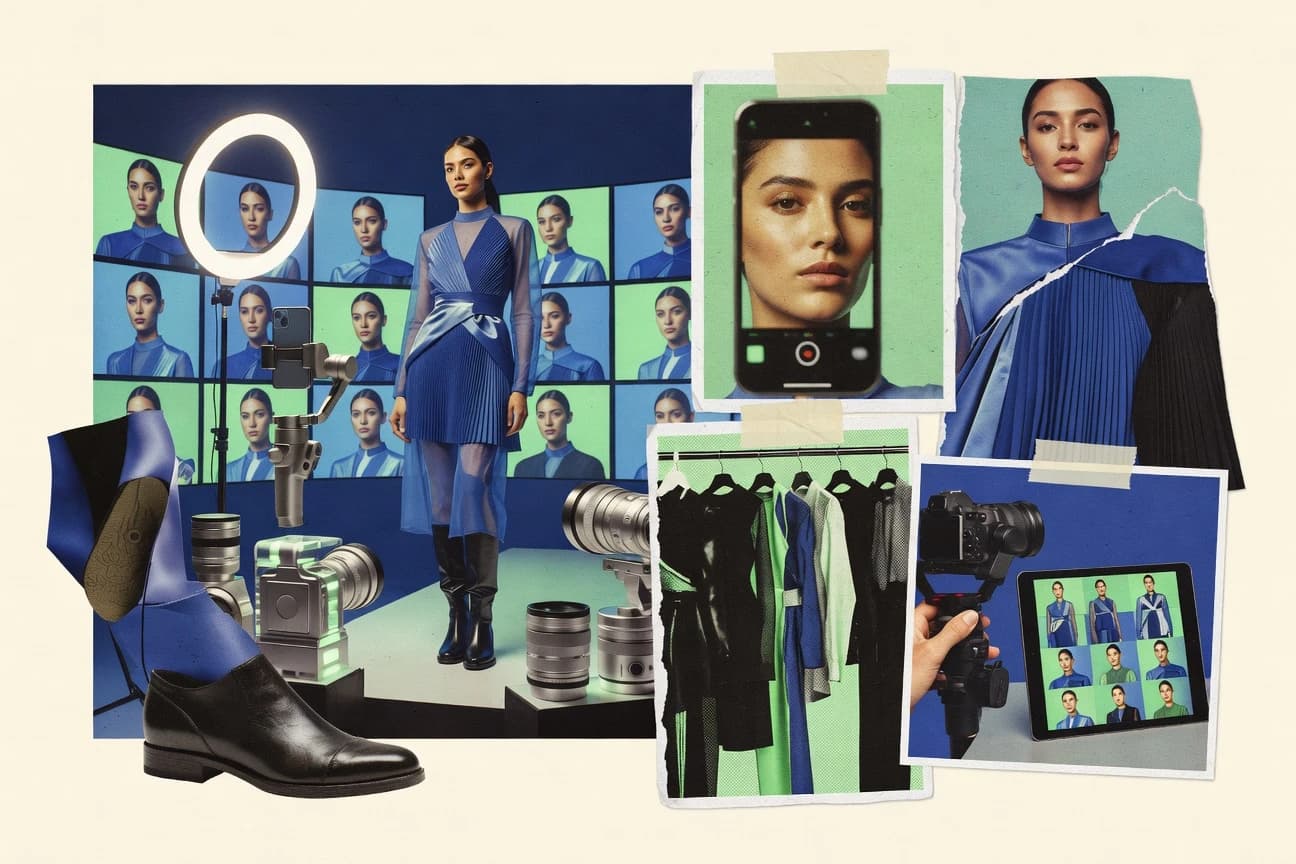
RAWSHOT AI turns a seven-stage photoshoot configuration into a reusable Stack: teams select the model, garments, styling, background, lighting and composition once, then apply the same treatment across a catalogue. This gives block-level creative control and deterministic repeatability without asking each user to engineer prompts.
Built for indie labels, DTC retailers, marketplace sellers and enterprise fashion teams needing consistent on-model product imagery, short product videos and scalable catalogue production..
Tavus
Editor pickPersonal Video AI turns one approved digital replica into individualized videos using structured audience and campaign fields.
Built for fits when agencies need repeatable influencer campaigns with personalized presenter videos and API-based distribution..
Arcads
Editor pickInfluencer persona templating that maintains character presentation rules across script-to-video batch generations.
Built for fits when marketing teams need script-driven influencer video batches with stable avatar persona across variations..
Comparison Table
RAWSHOT AI
AI fashion photography and video platformRAWSHOT AI creates configurable on-model fashion images and short product videos from selectable models, garments, scenes and camera directions, without requiring users to write a prompt.
RAWSHOT AI turns a seven-stage photoshoot configuration into a reusable Stack: teams select the model, garments, styling, background, lighting and composition once, then apply the same treatment across a catalogue. This gives block-level creative control and deterministic repeatability without asking each user to engineer prompts.
RAWSHOT AI is designed for brands that need dependable product imagery without arranging physical samples, casting or repeated studio sessions. Its selectable building blocks include more than 1,800 synthetic models, up to four garments per composition, multiple frame types, camera views, poses, expressions, makeup looks, backgrounds and lighting directions. Users never write a prompt—every setting is a block they select—and AI suggestions remain editable before generation.
The tradeoff is a focused visual system rather than an open-ended image workspace: RAWSHOT AI ships one accuracy-oriented image style, and video is limited to three five-second scenes at 720p or 1080p. That makes it well suited to a DTC label producing consistent product pages for a new collection, while teams seeking highly stylised campaigns or longer narrative videos may need post-production tools.
- +Full commercial rights forever, with no recurring licensing on library models.
- +Seven-step block selection makes catalogue treatments repeatable without requiring users to write prompts.
- +More than 1,800 synthetic models support broad apparel coverage, including more than 600 children's models; no child was cast, photographed, or used as a likeness reference.
- +Browser and REST API workflows have full parity, supporting individual generations and runs of 10,000 or more images.
- –No free-text input limits experimentation beyond the available selectable blocks.
- –The product ships one image style, so stylised or graded treatments require post-production.
- –Video is capped at three five-second scenes and 720p or 1080p output.
- –RAWSHOT AI is focused on fashion and apparel rather than general-purpose image generation.
Emerging fashion labels
Launch a first collection without samples
Consistent collection coverage
DTC ecommerce operators
Refresh imagery across 100 SKUs
Repeatable product pages
Show 2 more scenarios
Kidswear marketplaces
Create synthetic on-model apparel listings
Broader kidswear coverage
More than 600 synthetic children's models provide age-varied coverage without casting, photographing or referencing a child.
Fashion platform teams
Automate catalogue image generation
Scalable catalogue operations
The REST API mirrors the browser workflow for bulk product imports and high-volume generation runs.
Best for: Indie labels, DTC retailers, marketplace sellers and enterprise fashion teams needing consistent on-model product imagery, short product videos and scalable catalogue production.
Tavus
API-firstAI video personalization platform generating individualized videos from a single recording.
Personal Video AI turns one approved digital replica into individualized videos using structured audience and campaign fields.
Marketing teams, creator agencies, and media operations can use Tavus to record a source performance, configure a digital replica, and generate new videos from written scripts. The web interface supports reusable personas, video templates, variable insertion, and exports for common social formats. Tavus also exposes video generation through an API, allowing CRM or campaign systems to submit scripts and personalization data.
Tavus reduces recording effort for recurring influencer campaigns, but output quality still depends on the source recording, script structure, and pronunciation of unusual names. The product suits a campaign that turns one approved creator performance into individualized prospecting videos, follow-up clips, or localized social posts.
- +Custom digital replicas preserve a recognizable presenter across repeated campaigns
- +Personal Video AI supports individualized scripts from reusable video templates
- +REST API connects video creation with CRM and campaign workflows
- +CVI adds interactive avatar conversations beyond prerecorded clips
- –Unusual names and technical terms can require pronunciation testing
- –High-fidelity results depend on careful source-video recording
- –Advanced campaign automation requires API implementation work
- –Interactive CVI workflows require separate conversational design and moderation
Creator marketing agencies
Personalized campaign follow-ups
More campaign variations
SaaS marketing teams
Product launch explainers
Faster content production
Show 2 more scenarios
Influencer management teams
Localized social publishing
Broader market coverage
Managers create language-specific creator videos while retaining the same digital presenter identity across markets.
Revenue operations teams
CRM-triggered prospect videos
Automated video outreach
An API workflow sends account fields and scripts to Tavus for individualized outbound video generation.
Best for: Fits when agencies need repeatable influencer campaigns with personalized presenter videos and API-based distribution.
Arcads
vertical specialistAI-generated UGC-style video ads featuring realistic AI actors for social campaigns.
Influencer persona templating that maintains character presentation rules across script-to-video batch generations.
Arcads is a fit for teams that treat influencer content as an assembly line. Its script-to-video workflow supports turning a written beat list into video generations, while batch rendering lets one script produce multiple variants for iterative testing. The workflow is designed around persona consistency so the same avatar and style rules carry through a campaign sequence.
A notable tradeoff is that high continuity across complex, multi-scene storytelling depends on keeping scripts within the tool's supported shot and motion patterns. Arcads works best when the creative plan can be broken into manageable shots with a stable persona and clear on-screen actions.
- +Script-to-video workflow supports repeatable influencer production beats.
- +Batch rendering supports multi-variant generation for faster iteration.
- +Persona templating helps keep character style consistent across shots.
- +API generation endpoint enables automated submission and retrieval.
- –Multi-scene continuity can degrade when scripts exceed motion patterns.
- –Persona tuning may require more iteration than one-off experimentation.
Content ops teams
Batch variants from one script
Faster creative iteration cycles
Agencies producing campaigns
Consistent avatar across deliverables
Reduced rework between versions
Show 2 more scenarios
Automation engineers
API-driven production queue
Less manual production overhead
Send script payloads via API and pull generated outputs to a render queue workflow.
Growth marketers
Rapid ad iteration with scripts
More A-B test volume
Produce script-controlled variations to test hooks while preserving the same influencer look.
Best for: Fits when marketing teams need script-driven influencer video batches with stable avatar persona across variations.
Colossyan
enterpriseAI video platform for workplace training and corporate communication with avatar presenters.
PowerPoint and PDF-to-video conversion turns source content into editable presenter-led scenes.
Colossyan combines AI presenters with document-to-video conversion, making it distinct from tools built mainly around text prompts or talking avatars. Custom avatars, voice cloning, captions, screen recordings, and brand controls support repeatable creator personas across campaigns.
PowerPoint and PDF imports can become structured scenes, while translation and collaboration features support multilingual publishing. The editor is better suited to presenter-led explainers than highly cinematic influencer clips with elaborate motion.
- +Custom avatars support repeatable presenter identity across campaign videos.
- +PowerPoint and PDF imports turn existing decks into narrated video scenes.
- +Scene editing includes captions, backgrounds, screen recordings, and brand assets.
- +Translation workflows adapt scripts and audio for multiple languages.
- –Presenter-led output offers less visual motion than dedicated social avatar generators.
- –Advanced avatar and voice customization depends on suitable recorded source material.
- –Templates favor training and corporate communication over influencer-style storytelling.
Best for: Fits when teams need recurring avatar-led explainers from documents, presentations, and localized scripts.
Vidnoz
SMBAI video generator with avatar presenters, templates, and text-to-video workflows.
Vidnoz's Face Swap tool applies a selected face to prepared video templates for fast character variations.
Vidnoz turns scripts, uploaded images, and prompts into presenter-led videos through a browser editor. Its distinct advantage is a self-serve toolkit combining AI avatars, talking photos, face swapping, templates, translation, subtitles, and voice cloning. The workflow suits short-form influencer production, but detailed scene direction and long-form motion variation remain limited.
- +Large presenter avatar library supports varied influencer formats without filming.
- +Talking-photo generation turns still portraits into speaking clips.
- +Custom avatar creation supports branded presenter identities.
- +Built-in scripts, templates, subtitles, and translation reduce tool switching.
- –Avatar gestures and facial motion can look repetitive in longer videos.
- –Advanced scene control is less detailed than dedicated timeline editors.
- –Custom-avatar workflows require recording and approval steps before reuse.
- –Batch production controls are less prominent than single-video creation tools.
Best for: Fits when creators need quick influencer-style clips from scripts, portraits, or branded avatars.
Virbo
SMBWondershare AI video generator with avatar presenters and multi-language voiceover.
Talking Photo turns a still portrait into a speaking presenter with generated narration and editable video scenes.
Virbo targets creators producing presenter-led social clips without filming each segment. Its talking-photo feature animates uploaded portraits, while avatar templates, generated scripts, multilingual voiceovers, and text-to-video scenes support recurring influencer content. The web editor is accessible for short-form production, but the product offers limited evidence of public API automation, batch rendering controls, or advanced persona governance.
- +Talking Photo animates uploaded portraits into presenter-style clips.
- +Avatar templates cover product explainers, tutorials, announcements, and social posts.
- +Multilingual voiceovers support localized influencer content from one script.
- +Script generation reduces manual planning for short promotional videos.
- –Public API automation and batch rendering controls are not prominent in the creator workflow.
- –Avatar customization is narrower than workflows built around bespoke digital personas.
- –Long multi-scene videos require more manual continuity checks.
- –Advanced synthetic media governance features are limited for larger teams.
Best for: Fits when creators need fast presenter videos from scripts, stock avatars, or uploaded portrait images.
HeyGen
SMBAI avatar video generation platform with customizable virtual presenters and voice cloning.
Avatar IV converts a single photo into a speaking presenter with synchronized gestures and expressive motion.
HeyGen differentiates itself through reusable custom avatars, including digital twins, rather than relying only on stock presenters. Its script-to-video workflow combines avatar narration, voice cloning, multilingual translation, captions, templates, and social-ready aspect ratios.
An API and integrations support programmatic video creation, while the editor handles branded scenes and revisions. Limitations include less control over cinematic movement and character continuity than dedicated generative video systems.
- +Reusable custom avatars preserve presenter identity across recurring campaigns.
- +Photo-based Avatar IV adds expressive gestures to single-image presenters.
- +Multilingual dubbing supports localized influencer content across multiple markets.
- +API access enables automated video generation from external workflows.
- –Cinematic camera control and multi-character staging remain limited.
- –Output quality depends heavily on source footage and voice recordings.
- –Advanced brand governance requires team-level configuration.
- –Generated presenters can appear unnatural during complex gestures or fast speech.
Best for: Fits when influencer teams need repeatable avatar campaigns, multilingual localization, and API-driven publishing.
Synthesia
enterpriseEnterprise AI video platform producing presenter-led videos from text input.
PowerPoint import turns existing slide decks into editable avatar-presented videos without rebuilding each scene manually.
Synthesia combines presenter avatars with an editor designed for scripted business videos rather than creator-first persona generation. Users can turn scripts, documents, and PowerPoint files into scenes with narration, captions, layouts, and branded assets.
The library includes stock and custom avatars, multilingual voice output, screen recording, and collaboration controls. API access and enterprise administration support repeatable production, but influencer workflows lack the character customization and social-native editing found in creator-focused tools.
- +PowerPoint import converts existing slide decks into presenter-led video scenes.
- +Custom avatars support recurring spokesperson and brand-presenter formats.
- +Script, scene, caption, and brand controls remain editable after generation.
- +API access supports automated video creation for larger content operations.
- –Stock avatars can feel corporate for personality-led influencer campaigns.
- –Editing favors slide-based presentations over fast social cutdowns and visual effects.
- –Custom avatar creation requires recorded footage and consent workflows.
- –Social-native templates and direct creator analytics are limited.
Best for: Fits when teams need repeatable avatar-led explainers, product updates, training videos, and branded social posts.
Argil
SMBAI avatar video creation tool optimized for social media and short-form content.
Script-to-video persona continuity across multi-shot renders, paired with batch queue execution for scheduled posting.
Argil generates influencer-style videos from scripted inputs by producing coherent shot-level outputs tuned for a virtual avatar presentation. It focuses on an end-to-end script-to-video workflow that preserves persona continuity across multiple takes, rather than treating each clip as a one-off render.
The generator pipeline is built around repeatable rendering runs, including batch queue processing and preset control for common aspect ratios. Argil also provides an integration path suitable for automation via an API generation endpoint and export formats geared to social posting workflows.
- +Persona continuity stays consistent across multi-shot sequences
- +Batch rendering queue supports throughput for content calendars
- +API generation endpoint fits automated script-to-video pipelines
- +Resolution presets and aspect ratio templates speed production setup
- –Lip-sync accuracy can lag when scripts require fast cadence
- –Requires disciplined prompt and asset management for wardrobe consistency
Best for: Fits when teams need repeatable, batch-ready avatar influencer clips from scripted workflows.
Creatify
SMBAI video ad platform generating product videos with AI avatars and voiceovers.
Creatify's URL-to-video generator turns product-page content into ready-to-edit advertising concepts.
Creatify suits ecommerce marketers who need many short product ads from existing product-page assets. Its defining URL-to-video workflow converts product descriptions, images, and links into editable ad drafts.
The browser editor combines AI avatars, generated scripts, voiceovers, captions, music, and product media across common social formats. Creatify remains focused on direct-response advertising, with fewer controls for cinematic continuity, detailed avatar direction, and enterprise review.
- +URL-to-video converts product-page copy and images into editable ad drafts.
- +Avatar library supports presenter-led product clips without filming talent.
- +AI scripts, voiceovers, captions, and music reduce manual editing steps.
- +Multiple aspect-ratio exports target common short-form advertising placements.
- –Generated ads often need manual fact checking and visual cleanup.
- –Avatar expressions and lip-sync can look artificial in close shots.
- –Advanced brand governance and team review controls are limited.
- –Template customization is less flexible than a conventional timeline editor.
Best for: Fits when ecommerce teams need rapid product ad variations from existing catalog pages and media.
Conclusion
After evaluating 10 fashion apparel, RAWSHOT AI stands out as our overall top pick — it scored highest across our combined criteria of features, ease of use, and value, which is why it sits at #1 in the rankings above.
Use the comparison table and detailed reviews above to validate the fit against your own requirements before committing to a tool.
Tools reviewed
Primary sources checked during evaluation.
Referenced in the comparison table and product reviews above.
How to Choose the Right ai influencer video generator
This guide compares RAWSHOT AI, Tavus, Arcads, Colossyan, Vidnoz, Virbo, HeyGen, Synthesia, Argil, and Creatify for influencer video production. RAWSHOT AI leads the ranking with reusable seven-stage Stacks for repeatable model, garment, styling, lighting, and composition treatments, while Tavus, Arcads, and Argil focus on personalized or batch avatar workflows.
The remaining tools target distinct production paths, including Colossyan and Synthesia for document-led presenter videos, Vidnoz and Virbo for talking portraits, HeyGen for photo-based avatar motion, and Creatify for URL-driven product ads.
What an AI Influencer Video Generator Does
An AI influencer video generator converts scripts, product information, portraits, or source media into presenter-led clips using avatar animation, generated narration, scene assembly, or image-driven motion. Tavus creates individualized videos from one approved digital replica by combining reusable templates with audience and campaign fields.
Arcads applies influencer persona rules across script-driven batch generations, which helps marketing teams produce multiple character-consistent variations. These tools differ in their production inputs, persona controls, editing depth, batch capacity, and distribution interfaces.
Evaluation dimensions that drive reliable influencer video output
Influencer video generators succeed or fail based on how repeatable persona and scene assembly remain across multiple clips, not on whether a single render looks good. The tools below differ most in how they control presenter identity, batch generation, and the editing surface for multi-shot continuity.
Persona consistency across repeated renders
RAWSHOT AI uses reusable seven-stage Stacks to keep model presentation, styling, background, lighting, and composition consistent across a catalogue. Arcads and Argil use persona rules or persona continuity across multi-shot batches, which helps keep the same influencer character across script variations.
Production input shape and workflow automation
Tavus structures personalization around approved digital replicas with reusable templates and campaign fields, which supports repeatable presenter delivery at scale. Colossyan and Synthesia turn PowerPoint or PDF inputs into editable presenter-led scenes, which reduces time spent rebuilding each scene from scratch.
Batch throughput and render queue behavior
Arcads supports batch rendering for multi-variant generation, which helps teams iterate on influencer video beats quickly. Argil includes a batch rendering queue designed for scheduled posting across scripted content calendars.
Motion and gesture realism for short social clips
HeyGen’s Avatar IV converts a single photo into a speaking presenter with synchronized gestures and expressive motion for repeatable campaigns. Vidnoz and Virbo animate talking-photo style inputs, where facial motion and gestures can become repetitive when videos run long.
Scene control depth for edits after generation
Colossyan provides editable presenter-led scenes from deck imports, which supports iterative revision on a scene basis. Vidnoz and Virbo provide faster creator workflows, but their advanced scene control is less detailed than dedicated timeline editor style tooling.
Asset sourcing requirements that affect output quality
HeyGen and Tavus both depend on source footage and voice recording quality for higher fidelity results across campaigns. Virbo’s Talking Photo produces presenter clips from portraits, but avatar customization is narrower than workflows designed around bespoke digital personas.
Choose by workflow fit, repeatability model, and control surface
The fastest way to pick the right ai influencer video generator is to map the tool to the input assets already available, then verify that persona rules remain stable across the number of variants needed. The second axis is control depth, because some generators trade editing granularity for template speed.
Match the generator to the media type already in the pipeline
Pick RAWSHOT AI for catalogue-style production where garment, styling, background, lighting, and composition treatments must repeat deterministically across many items. Pick Colossyan or Synthesia when the team already owns PowerPoint or PDF content that must become presenter-led video scenes without rebuilding layouts.
Decide between template-led personalization and script-led persona batching
Pick Tavus when one approved digital replica must become individualized videos using structured audience and campaign fields, and distribution needs to follow API-driven publishing workflows. Pick Arcads or Argil when production begins with scripted workflow rules, and influencer persona consistency must hold across multi-shot or batch variations.
Set the continuity bar for multi-scene or multi-shot scripts
Pick Arcads when script-to-video batch generation speed matters, while setting guardrails so scripts do not exceed motion-pattern limits that can degrade multi-scene continuity. Pick Argil when multi-shot persona consistency is the priority, while planning for lip-sync lag on high-cadence scripts.
Verify lip-sync and expression quality against the target shot style
Pick HeyGen when expressive gestures and photo-based Avatar IV output must support recurring campaigns with multilingual localization needs. Pick Vidnoz or Virbo when talking-photo style clips are acceptable, and schedule additional QA for repetitive facial motion in longer videos.
Confirm how edits will be made after the first render
Pick Colossyan or Synthesia when scene editing should be anchored to deck imports and presenter-led scene structure. Pick RAWSHOT AI when deterministic style repeatability matters more than post-stylization flexibility, since the product ships one image style that often requires external post-production for graded looks.
Assess how much quality work comes from source capture versus generator tuning
Pick Tavus or HeyGen when recorded source footage and voice recording quality can be engineered, because high-fidelity results depend heavily on those inputs. Pick Creatify when URL-to-video is the starting point, and reserve time for manual fact checking and visual cleanup after ad drafts are generated.
Who should use each influencer video generator workflow
Different teams need different production surfaces, because influencer videos can start from a product catalogue, a deck, a replica, a portrait, or a URL. The best fit depends on whether the goal is persona stability, personalized variation, or rapid ad concept iteration.
DTC brands, indie labels, and marketplace sellers producing product video catalogues
RAWSHOT AI fits teams that need repeatable on-model product imagery and short product videos, because seven-stage Stacks lock model presentation and styling choices into reusable treatments across a catalogue.
Agencies and in-house teams running personalized campaigns at volume
Tavus fits when one approved digital replica must become individualized videos, because structured audience and campaign fields drive personalization while preserving a recognizable presenter identity.
Marketing teams translating scripts into consistent multi-variant influencer clips
Arcads and Argil fit when production is script-driven and persona consistency must remain stable across batch generations, because both tools focus on repeatable persona behavior rather than deck-based scene rebuilding.
Training teams, product update teams, and internal comms groups using slide authoring
Colossyan and Synthesia fit teams that already produce slide decks, because PowerPoint and PDF imports convert existing material into editable presenter-led scenes.
Creators generating talking-photo influencer clips for short social formats
Vidnoz and Virbo fit creators who want fast character variations from portraits and templates, because both tools support talking-photo style generation, while long-form clips need extra QA for repetitive gestures.
Common buyer pitfalls that break influencer video consistency
Most failures happen when teams choose a generator that matches the first render but not the multi-variant workflow that follows. The most common issues come from mismatched input formats, under-scoped continuity requirements, and assuming facial motion will stay natural in longer sequences.
Choosing a talking-photo generator for long multi-minute influencer edits without motion QA
Vidnoz and Virbo can show repetitive avatar gestures and facial motion in longer videos, so teams should test the exact target runtime and cut length before committing to production.
Over-extending script length in persona batch workflows without motion-pattern checks
Arcads multi-scene continuity can degrade when scripts exceed motion patterns, so scripts should be sized to the tool’s effective beat structure or split into smaller batches.
Assuming lip-sync will stay accurate for high-cadence scripted dialogue
Argil lip-sync accuracy can lag when scripts require fast cadence, so teams should run dialogue speed tests and adjust pacing or scene segmentation before full-scale batching.
Using URL-to-video drafts as final ad assets without a fact and cleanup pass
Creatify generated ads often need manual fact checking and visual cleanup, so review steps must be built into the workflow rather than handled after publishing.
Expecting highly cinematic staging and camera control from photo-to-avatar tools
HeyGen cinematic camera control and multi-character staging remain limited, so teams should design storyboards that fit within the supported staging and then layer any complex cinematography in post.
How We Selected and Ranked These Tools
We evaluated RAWSHOT AI, Tavus, Arcads, Colossyan, Vidnoz, Virbo, HeyGen, Synthesia, Argil, and Creatify on feature coverage at 40%, ease of producing repeatable influencer outputs at 30%, and value at 30%. RAWSHOT AI separated from the pack because it turns a seven-stage photoshoot configuration into reusable Stacks that teams apply across a catalogue for deterministic repeatability.
RAWSHOT AI also scored higher on controllable production setup because teams select model, garments, styling, background, lighting, and composition once, then reuse the same treatment without prompt engineering each time. RAWSHOT AI’s licensing and library model handling added to the value score because commercial rights are provided without recurring licensing on library models.
Frequently Asked Questions About ai influencer video generator
How does an AI influencer video generator handle persona consistency across multiple shots?
Which tools provide an API generation endpoint for programmatic video creation?
How do integrations work for teams that need automation beyond the web editor?
When should teams choose document-to-video workflows instead of script-only avatar generation?
What breaks if face-swap or talking-photo style inputs lack consistent landmark tracking?
Which tools support multi-language output with captions or subtitles for influencer publishing?
How do batch rendering queues affect throughput and production scheduling?
Where does character motion and cinematic direction fall short in presenter-first tools?
Which tools help with governance through audit trails and compliance-oriented output metadata?
- Fashion ApparelTop 10 Best AI Influencer Generator of 2026
- Fashion ApparelTop 10 Best AI Short Form Video Generator of 2026
- Fashion ApparelTop 10 Best AI Social Media Video Generator of 2026
- Fashion ApparelTop 10 Best AI Visual Video Generator of 2026
- Fashion ApparelTop 10 Best AI Promo Video Generator of 2026
Keep exploring
Comparing two specific tools?
Software Alternatives
See head-to-head software comparisons with feature breakdowns, pricing, and our recommendation for each use case.
Explore software alternatives→In this category
Fashion Apparel alternatives
See side-by-side comparisons of fashion apparel tools and pick the right one for your stack.
Compare fashion apparel tools→