
GITNUXSOFTWARE ADVICE
Fashion ApparelTop 10 Best AI Commercial Video Generator of 2026
An editorial ranking of ai commercial video generator tools, covering ad formats, key features, and tradeoffs for marketing teams.

How we ranked these tools
Core product claims cross-referenced against official documentation, changelogs, and independent technical reviews.
Analyzed video reviews and hundreds of written evaluations to capture real-world user experiences with each tool.
AI persona simulations modeled how different user types would experience each tool across common use cases and workflows.
Final rankings reviewed and approved by our editorial team with authority to override AI-generated scores based on domain expertise.
Score: Features 40% · Ease 30% · Value 30%
Gitnux may earn a commission through links on this page — this does not influence rankings. Editorial policy
RAWSHOT AI is the strongest overall choice for fashion brands that need consistent on-model commercial visuals across recurring product launches, while Colossyan is the better alternative for teams creating branded, multilingual presenter videos for training, explainers, and internal campaigns.
Editor’s top 3 picks
Three quick recommendations before you dive into the full comparison below — each one leads on a different dimension.
RAWSHOT AI
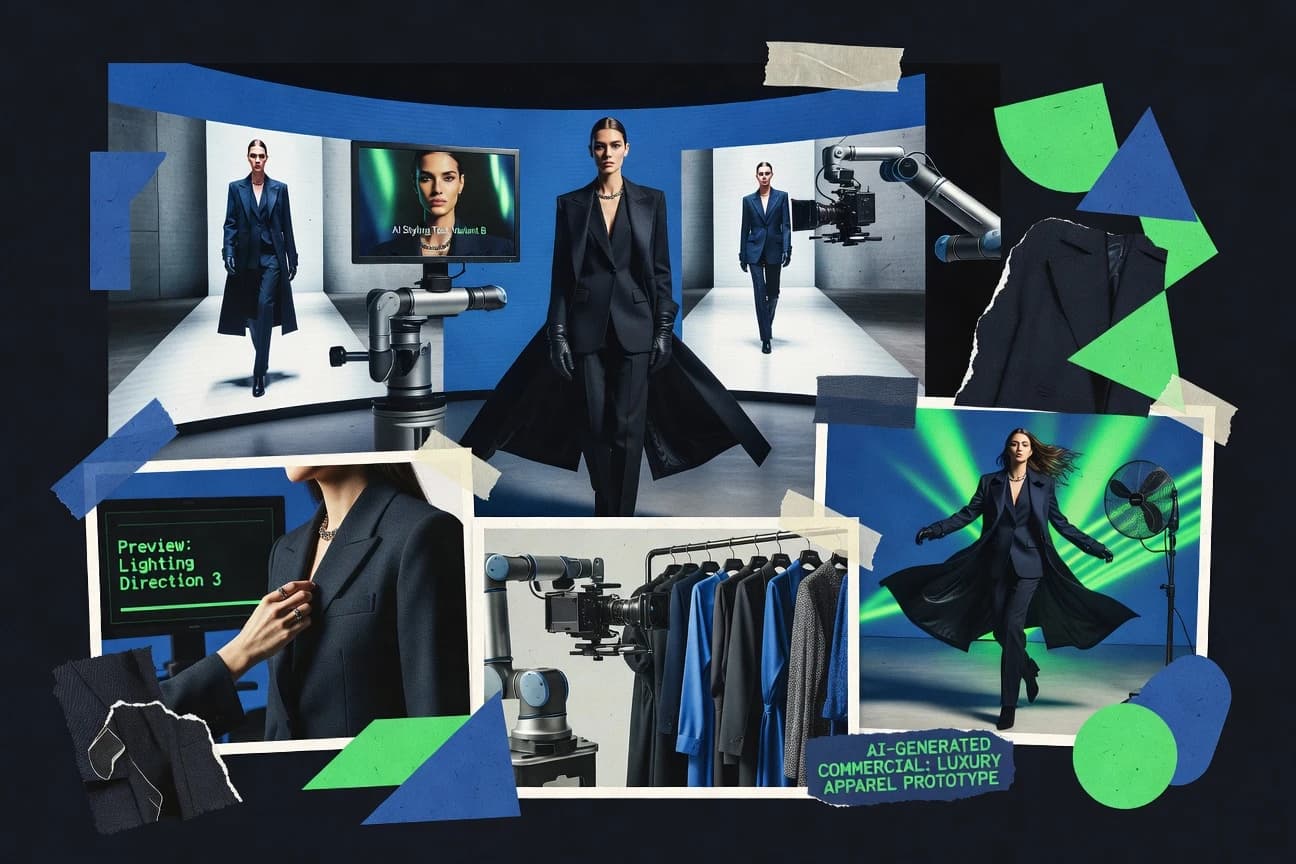
RAWSHOT AI replaces the usual blank input with a seven-step fashion photoshoot builder: users select every visible production block, while its orchestration layer compiles those choices consistently. Saved Stacks then reproduce the same treatment across a catalogue, and every completed still can be turned into a short video.
Built for rAWSHOT AI is best for DTC fashion labels, marketplace sellers, and apparel operators producing consistent on-model images and short product videos across repeated SKU launches..
Colossyan
Editor pickConversations creates dialogue scenes with multiple AI avatars from a single script.
Built for fits when teams need branded, multilingual presenter videos for explainers, training, or internal campaigns..
Fliki
Editor pickMultilingual AI Voiceover library with language, accent, and voice selection inside the scene editor.
Built for fits when marketing teams need narrated social ads from existing campaign copy..
Comparison Table
RAWSHOT AI
Block-based AI fashion photography and video generationRAWSHOT AI creates original on-model fashion imagery and short commercial videos from a brand's real garments through selectable photoshoot blocks.
RAWSHOT AI replaces the usual blank input with a seven-step fashion photoshoot builder: users select every visible production block, while its orchestration layer compiles those choices consistently. Saved Stacks then reproduce the same treatment across a catalogue, and every completed still can be turned into a short video.
RAWSHOT AI focuses on accurate, repeatable on-model fashion production rather than open-ended visual experimentation. Its catalogue includes more than 1,800 licence-free synthetic models, neutral supporting products, configurable garments, poses, frames, lighting directions, and backgrounds. Saved Stacks preserve a chosen setup across large product runs, while the browser interface and REST API provide the same core capabilities.
For ecommerce teams, RAWSHOT AI can turn a consistent product-photo setup into short product-focused videos without rebuilding the shoot from scratch. One image style is engineered to represent garments accurately, so brands requiring heavily graded or stylised campaign visuals will need post-production. Photoshoots start at $9 a month; for 2K images, five tokens an image. That's the whole pricing model.
- +Full commercial rights forever, with no recurring licensing on library models.
- +Saved Stacks apply the same garment, model, lighting, and composition treatment across hundreds of catalogue assets.
- –Video is limited to three five-second scenes and 720p or 1080p output.
- –RAWSHOT AI ships one accuracy-focused image style, requiring post-production for stylised or graded creative work.
DTC fashion labels
Launch a seasonal SKU drop
Consistent launch-ready product assets
Marketplace apparel sellers
Create listing imagery at volume
More consistent marketplace listings
Show 2 more scenarios
Kidswear brands
Produce compliant model imagery
Documented synthetic kidswear visuals
RAWSHOT AI offers more than 600 children's models, all synthetic composites with no child referenced.
Fashion platform teams
Automate catalog production through API
Scalable catalogue production
RAWSHOT AI REST API matches the browser workflow for bulk imports and high-volume image generation.
Best for: RAWSHOT AI is best for DTC fashion labels, marketplace sellers, and apparel operators producing consistent on-model images and short product videos across repeated SKU launches.
Colossyan
enterpriseAI video platform focused on workplace training and corporate learning content.
Conversations creates dialogue scenes with multiple AI avatars from a single script.
Colossyan suits product explainers, employee communications, and compliance campaigns where a consistent digital presenter carries the message. Brand kits centralize logos, fonts, colors, and approved assets across workspace projects. Custom avatars can represent an employee or commissioned actor in recurring video formats.
Colossyan does not generate cinematic product footage or detailed real-world action sequences. Use it for a localized product explainer with presenter narration rather than a lifestyle advertisement built around live-action movement.
- +Conversations places multiple avatars in scripted dialogue.
- +Brand kits keep logos, fonts, and colors consistent.
- +SCORM export supports LMS delivery.
- +Document and screen-recording inputs speed explainer production.
- –No native cinematic product-footage generation.
- –Avatar scenes offer limited camera and action control.
- –Custom avatars require recorded source material.
Product marketing teams
Avatar-led feature explainers
Faster explainer production
Learning and development teams
Compliance training modules
Trackable course delivery
Show 1 more scenario
Localization teams
Multilingual campaign versions
Consistent regional messaging
Translated scripts and localized voices produce regional versions without reshooting presenters.
Best for: Fits when teams need branded, multilingual presenter videos for explainers, training, or internal campaigns.
Fliki
SMBAI video generator combining text-to-speech with automated video creation.
Multilingual AI Voiceover library with language, accent, and voice selection inside the scene editor.
Fliki suits teams producing short promotional videos from existing written material. Its editor maps text into scenes, then lets users replace visuals, adjust scene duration, choose a voice, add subtitles, and add background music. The Avatar module can present scripted copy through a digital presenter, while the voice controls support language and accent selection.
Fliki offers a fast script-to-video route for ads that depend on narration and stock-led visuals. Shot-level animation, compositing, and precise motion control remain limited compared with dedicated video editing software. Marketing teams can use Fliki to turn product announcements or campaign copy into multiple short social video variants.
- +Multilingual AI voices support narrated ads across multiple markets.
- +Text, article, and product-copy inputs create editable scene drafts.
- +Stock media, generated visuals, captions, and music sit in one editor.
- +Avatar videos give spokesperson-style campaigns a presenter option.
- –Shot-level animation controls are limited for tightly art-directed commercials.
- –Stock-led scene selection can require manual replacements for brand-specific imagery.
- –Layered compositing workflows need external video editing software.
Social media marketers
Produce vertical product ads
Faster social ad variants
Multilingual campaign teams
Localize narrated promotions
Localized campaign videos
Show 2 more scenarios
Small business owners
Create launch announcement videos
Publishable launch creative
The scene editor builds short launch videos from written announcements and visual assets.
Content marketing teams
Repurpose blog posts
More reusable content
Fliki segments article text into narrated scenes for promotional video distribution.
Best for: Fits when marketing teams need narrated social ads from existing campaign copy.
Elai
SMBAI video generator for creating presenter-led content from text.
Elai API video generation with template variables and render-completion webhooks.
Elai centers commercial video production on AI presenters, turning scripts, slide decks, and web pages into narrated scenes. Elai supplies stock and custom avatars, multilingual voice output, scene templates, and video translation for repeatable sales, product, and training assets.
Its API can generate videos from structured inputs and use webhooks to report render completion for automated production workflows. Elai prioritizes presenter-led communication over cinematic prompt-based shot generation and detailed compositing controls.
- +API generation and webhooks support automated video creation from business data.
- +Custom avatars can represent an approved spokesperson across recurring campaigns.
- +Slide-deck and web-page conversion reduce manual scene assembly.
- +Interactive video branching can collect viewer selections and responses.
- –Output favors avatar-led scenes instead of cinematic shot generation.
- –Custom avatar creation requires source footage that meets capture requirements.
- –Scene layouts provide less compositing control than dedicated video editors.
Best for: Fits when commercial teams need avatar-led multilingual videos generated automatically from scripts, slides, or CRM data.
HeyGen
SMBAI video generator with realistic avatars for marketing and sales content.
Avatar IV creates a talking presenter from one photo with generated gestures, expressions, and synchronized speech.
HeyGen converts commercial scripts into presenter-led videos with stock avatars, custom avatars, AI voices, scenes, and media assets. Its distinctive Avatar IV feature animates a single photo into an expressive speaking avatar with generated gestures and facial motion.
Video Translate localizes finished commercials by translating speech while matching the speaker's mouth movement. Brand kits, collaboration workspaces, an API, and Zapier integration support repeatable production, although HeyGen remains focused on avatar-led formats rather than cinematic shot generation.
- +Avatar IV turns a single image into expressive presenter footage.
- +Video Translate localizes speaker videos with translated voices and matched mouth movement.
- +API supports programmatic generation through reusable video templates.
- –Avatar-led scenes offer limited control over cinematic camera composition.
- –Product physics and complex action sequences need externally produced footage.
- –Brand consistency requires disciplined template and asset governance across workspace users.
Best for: Fits when marketing teams need multilingual, avatar-led ad variations from repeatable scripts.
Pictory
SMBAI video generator that turns scripts and blog posts into marketing videos.
Text-based video editor that removes transcript passages and their linked footage in one edit.
Marketing teams turning webinars, articles, and scripts into short ads can use Pictory to assemble stock-footage videos without a conventional editing timeline. Pictory converts written scripts into scenes, matches clips from its media library, generates AI narration, and adds captions.
Transcript-based editing removes selected spoken passages with their linked video segments, while Brand Kits apply saved logos, colors, and fonts. Visual selection suits general marketing footage, but abstract claims and specialized products often need manual scene replacements.
- +Transcript edits remove spoken sections and their associated footage together.
- +Brand Kits apply saved logos, colors, and fonts across videos.
- +Automatic captions and AI narration support fast social-video production.
- –Stock-footage assembly cannot create custom product motion or actors.
- –Abstract scripts often receive irrelevant or generic scene selections.
- –Advanced timeline control remains limited for precise commercial edits.
Best for: Fits when marketers repurpose spoken content and scripts into captioned social ads using stock footage.
Vidnoz
SMBAI video generator with avatars and templates for business content creation.
Avatar Lite photo-to-avatar generation for presenter-led commercial scenes.
Vidnoz combines a large template catalog with Avatar Lite, which turns a single portrait into a talking presenter for commercial scenes. Its script-to-video workflows accept text, documents, URLs, and PowerPoint files, then allow scene-level changes to avatars, voices, and backgrounds.
Video Translator creates multilingual versions with synchronized avatar speech. The browser editor favors fast scene assembly over frame-level motion editing and camera-path control.
- +Avatar Lite creates talking presenter footage from a single portrait.
- +Accepts text, documents, URLs, and PowerPoint files as video inputs.
- +Video Translator supports multilingual commercial variants.
- +Scene editing isolates changes to individual avatars, voices, and backgrounds.
- –No frame-level timeline for detailed transition or motion edits.
- –No camera-path controls for cinematic product movement.
- –Avatar-driven templates can create repetitive campaign pacing.
Best for: Fits when small marketing teams need multilingual, presenter-led commercial variants from existing scripts and assets.
Synthesia
enterpriseAI avatar video platform for creating professional business videos from text.
AI Video Assistant converts source documents, URLs, or prompts into an editable avatar-video draft.
Synthesia centers commercial video production on presenter-led AI avatars instead of cinematic generated footage. Its scene editor turns scripts into avatar videos with narration, captions, Brand Kits, custom avatars, and translated versions. Enterprise workspaces support roles, SSO, SCIM provisioning, and template-based video generation through an API.
- +Custom avatars maintain a consistent presenter across campaign variants.
- +Brand Kits apply approved colors, fonts, and logos to video scenes.
- +Video translation localizes narration and avatar speech for regional versions.
- +API renders template-based videos from external systems.
- –No native cinematic shot generation or camera path control.
- –Avatar performances can feel repetitive in high-energy advertising.
- –The scene editor offers limited fine-grained motion and compositing control.
- –API generation relies on predefined templates, limiting freeform creative variation.
Best for: Fits when marketing teams need localized, presenter-led commercial videos with brand controls and programmatic template rendering.
InVideo
SMBAI-powered video creation platform for marketing and social media content.
Magic Box, InVideo's text-command editor for changing scenes, media, narration, and pacing after generation.
InVideo turns commercial prompts into edited video drafts with scripts, visuals, voiceover, and captions. Its AI workflow writes a script, selects stock or generated media, adds narration, and assembles scenes from one commercial brief.
Magic Box accepts plain-language changes to scenes, media, narration, and pacing after generation. The template editor supports manual revisions, but InVideo provides no documented public API for automated generation workflows.
- +Magic Box applies prompt-based revisions without rebuilding the entire video.
- +Combines script generation, stock selection, voiceover, and captions in one workflow.
- +Template library covers common ad formats and social-media aspect ratios.
- –No documented public API for programmatic video generation or workflow automation.
- –Scene timing and motion controls are limited beside professional non-linear editors.
- –Generated visual consistency can vary across longer multi-scene commercials.
Best for: Fits when marketing teams need fast commercial drafts and simple text-based revisions.
Pika
SMBAI video generation tool for creating short clips from text and images.
Pikaffects, including Inflate, Melt, Explode, and Crush presets for transforming a subject inside generated footage.
Pika fits social teams making short concept ads that need surreal visual transformations. Pika is distinct for Pikaffects presets such as Inflate, Melt, Explode, and Crush, which transform an uploaded subject inside a generated clip.
It supports text-to-video and image-to-video generation, while Pikaformance animates a character image from an uploaded audio track. The web editor lacks a documented public API, approval workflow, and brand-style enforcement for managed commercial production.
- +Pikaffects creates memorable object transformations from a single uploaded image.
- +Pikaformance animates character images to match uploaded audio.
- +Web-based generation keeps short concept testing accessible.
- –No documented public API for production automation.
- –No native approval workflow or brand-style rule enforcement.
- –Short-form effects provide limited control for precise commercial shot continuity.
Best for: Fits when social teams need playful, short ad concepts built around visually unusual transformations.
Conclusion
After evaluating 10 fashion apparel, RAWSHOT AI stands out as our overall top pick — it scored highest across our combined criteria of features, ease of use, and value, which is why it sits at #1 in the rankings above.
Use the comparison table and detailed reviews above to validate the fit against your own requirements before committing to a tool.
How to Choose the Right ai commercial video generator
RAWSHOT AI leads this group for repeatable fashion catalogue production, while Colossyan, Elai, HeyGen, Vidnoz, and Synthesia focus on avatar-led commercial formats. Fliki, Pictory, and InVideo convert scripts or source content into narrated, stock-based edits, while Pika generates short transformation-driven social concepts.
The products differ most in production control, repeatability, and automation. RAWSHOT AI uses Saved Stacks for consistent garment, model, lighting, and composition treatments, while Elai provides API generation with template variables and render-completion webhooks.
AI Commercial Video Generators: Production Models and Output Control
An AI commercial video generator creates advertising video from prompts, scripts, product copy, source documents, images, or existing footage. The category includes distinct production models, from RAWSHOT AI's configurable fashion photoshoot builder to Colossyan's scripted multi-avatar dialogue scenes.
Many products assemble narration, captions, presenters, and stock media into editable commercial drafts. Fliki builds scene drafts from text, articles, and product copy, while Pika applies effects such as Melt and Explode to an uploaded subject. The practical distinction is not basic generation but the degree of control over brand reuse, output type, and automated rendering.
Production Controls That Separate Commercial Video Generators
Every product can turn supplied copy or assets into a video draft, but RAWSHOT AI, Elai, and Pictory organize that work through very different production controls. The decisive capabilities are repeatable visual treatments, automated rendering, source-driven editing, and presenter formats.
RAWSHOT AI supplies structured selections for fashion production, while Colossyan and HeyGen center production on digital presenters. Teams should assess the output model before comparing individual editing controls.
Repeatable catalogue treatment
RAWSHOT AI Saved Stacks preserve garment, model, lighting, and composition choices across hundreds of catalogue assets. Pika instead applies one-off effects such as Inflate, Melt, Explode, and Crush to uploaded subjects.
Automated rendering surface
Elai provides API generation, template variables, and render-completion webhooks for videos created from business data. InVideo has no documented public API for programmatic generation or workflow automation.
Presenter scene format
Colossyan Conversations builds scripted dialogue scenes with multiple AI avatars. HeyGen Avatar IV creates a single talking presenter from one photo with generated gestures and synchronized speech.
Source-led editing mechanics
Fliki converts text, articles, and product copy into editable scene drafts with multilingual voice selection. Pictory removes transcript passages and their linked footage together, which suits edits to recorded spoken material.
Brand controls and editing depth
Synthesia Brand Kits apply approved logos, colors, and fonts to avatar-video scenes. Vidnoz accepts PowerPoint, document, URL, and text inputs but provides no frame-level timeline for detailed transition edits.
Choose by Production Model, Render Workflow, and Revision Method
The first choice is between product-led imagery, avatar-led communication, and stock-based assembly. RAWSHOT AI, Colossyan, and Fliki represent these three different production models.
The second choice is operational. Elai supports data-driven rendering through an API, while InVideo focuses on text-command revisions inside its editor.
Select the output model before selecting templates
Choose RAWSHOT AI for fashion catalogue assets that require controlled garment, model, lighting, and composition selections. Choose Colossyan or Synthesia for campaigns where a recurring digital spokesperson delivers the message. Choose Fliki or Pictory for narrated edits assembled from campaign copy, articles, or recorded material.
Choose structured production or expressive transformation
RAWSHOT AI uses a seven-step fashion photoshoot builder and Saved Stacks to reproduce a defined treatment across SKU launches. Pika uses Pikaffects to alter a subject with visual transformations such as Melt or Explode. These approaches serve catalogue consistency and short-form concept work respectively.
Match automation to the publishing workflow
Choose Elai when CRM fields, scripts, or slide content must populate template variables and trigger render-completion webhooks. Choose InVideo when editors need to alter scenes, narration, media, and pacing through Magic Box commands. InVideo does not provide Elai's documented public API surface.
Define the presenter requirement precisely
Choose Colossyan for scripted exchanges between multiple AI avatars in Conversations. Choose HeyGen when one portrait must become a gesturing presenter and existing speaker footage needs translated voices with matched mouth movement. Choose Vidnoz for simpler presenter variants generated from a portrait and supplied business files.
Test the revision path against real campaign material
Pictory suits recorded interviews and webinars because transcript deletions remove linked footage. Fliki suits copy-first social ads because its editor turns product copy and articles into scene drafts. Test abstract messaging in both products because stock-led scene selection can introduce generic or irrelevant imagery.
Teams Matched to Each Commercial Video Production Model
DTC apparel teams and marketplace sellers need a different production system from internal communications teams. RAWSHOT AI addresses repeated visual merchandising, while Colossyan addresses scripted presenter dialogue.
Marketing operations teams also differ from social creative teams. Elai supports automated output from business data, while Pika centers short concepts on image transformations.
DTC fashion labels and marketplace sellers
RAWSHOT AI creates consistent on-model images and short product videos across repeated SKU launches. Saved Stacks retain the selected garment, model, lighting, and composition treatment.
Training and internal campaign teams
Colossyan creates branded multilingual presenter videos and supports multi-avatar dialogue through Conversations. Its format suits explainers and scripted internal communication rather than cinematic product footage.
Marketing operations teams with structured data
Elai can generate avatar-led videos from scripts, slides, or CRM data through template variables and render-completion webhooks. Custom avatars provide a consistent approved spokesperson across recurring variants.
Content repurposing teams
Pictory links transcript edits to the associated footage for rapid cuts to recorded material. Fliki converts articles and product copy into narrated scene drafts for social advertising.
Social teams producing visual hooks
Pika applies Pikaffects such as Crush, Inflate, Melt, and Explode to an uploaded image. Pikaformance also animates character images to uploaded audio.
Commercial Video Generator Selection Errors
A presenter generator cannot replace a product-motion system. HeyGen and Synthesia create avatar-led scenes, while RAWSHOT AI produces fashion imagery that can become short video.
Revision methods also vary materially. Pictory edits through transcripts, whereas InVideo changes assembled video through Magic Box text commands.
Selecting avatar tools for cinematic product action
HeyGen has limited camera composition control and requires externally produced footage for product physics or complex action. Synthesia also lacks native cinematic shot generation and camera path control.
Assuming all visual generators support catalogue consistency
Pika creates short effect-driven transformations rather than a controlled apparel production system. RAWSHOT AI Saved Stacks are designed to repeat specific garment, model, lighting, and composition choices.
Planning data-driven publishing around an editor-only product
InVideo has no documented public API for programmatic generation or workflow automation. Elai provides template variables and render-completion webhooks for automated video creation from business data.
Expecting stock assembly to produce proprietary product footage
Pictory assembles stock footage and cannot create custom product motion or actors. Fliki can also require manual replacement when stock-led selections do not match brand-specific imagery.
How We Selected and Ranked These Tools
We evaluated production features at 40% of each ranking, including repeatability, source inputs, editing mechanisms, avatar capabilities, and automation surfaces. We weighted ease of use at 30% and value at 30%.
We ranked RAWSHOT AI first because its seven-step fashion photoshoot builder and Saved Stacks support consistent catalogue production across repeated SKU launches. We also credited RAWSHOT AI for converting completed stills into short videos and providing full commercial rights forever on library models.
Frequently Asked Questions About ai commercial video generator
Which generators support automated video production through an API?
How do teams enforce access controls and identity provisioning for commercial video production?
When should a team choose presenter-led video instead of generated cinematic footage?
What breaks if a campaign requires frame-level motion editing and camera control?
Which tool handles multilingual commercial variants with synchronized speech?
How can a fashion brand keep product imagery consistent across repeated launches?
Where do stock-footage commercial generators fall short for specialized products?
How do teams turn existing documents, presentations, or web pages into video drafts?
What governance evidence is available for AI-generated fashion assets?
Tools reviewed
Primary sources checked during evaluation.
Referenced in the comparison table and product reviews above.
- Fashion ApparelTop 10 Best AI Ad Video Generator of 2026
- Fashion ApparelTop 10 Best AI Commercial Brand Photography Generator of 2026
- Fashion ApparelTop 10 Best AI Short Form Video Generator of 2026
- Fashion ApparelTop 10 Best AI Video Advertisement Generator of 2026
- Fashion ApparelTop 10 Best AI Social Media Video Generator of 2026
Keep exploring
Comparing two specific tools?
Software Alternatives
See head-to-head software comparisons with feature breakdowns, pricing, and our recommendation for each use case.
Explore software alternatives→In this category
Fashion Apparel alternatives
See side-by-side comparisons of fashion apparel tools and pick the right one for your stack.
Compare fashion apparel tools→