
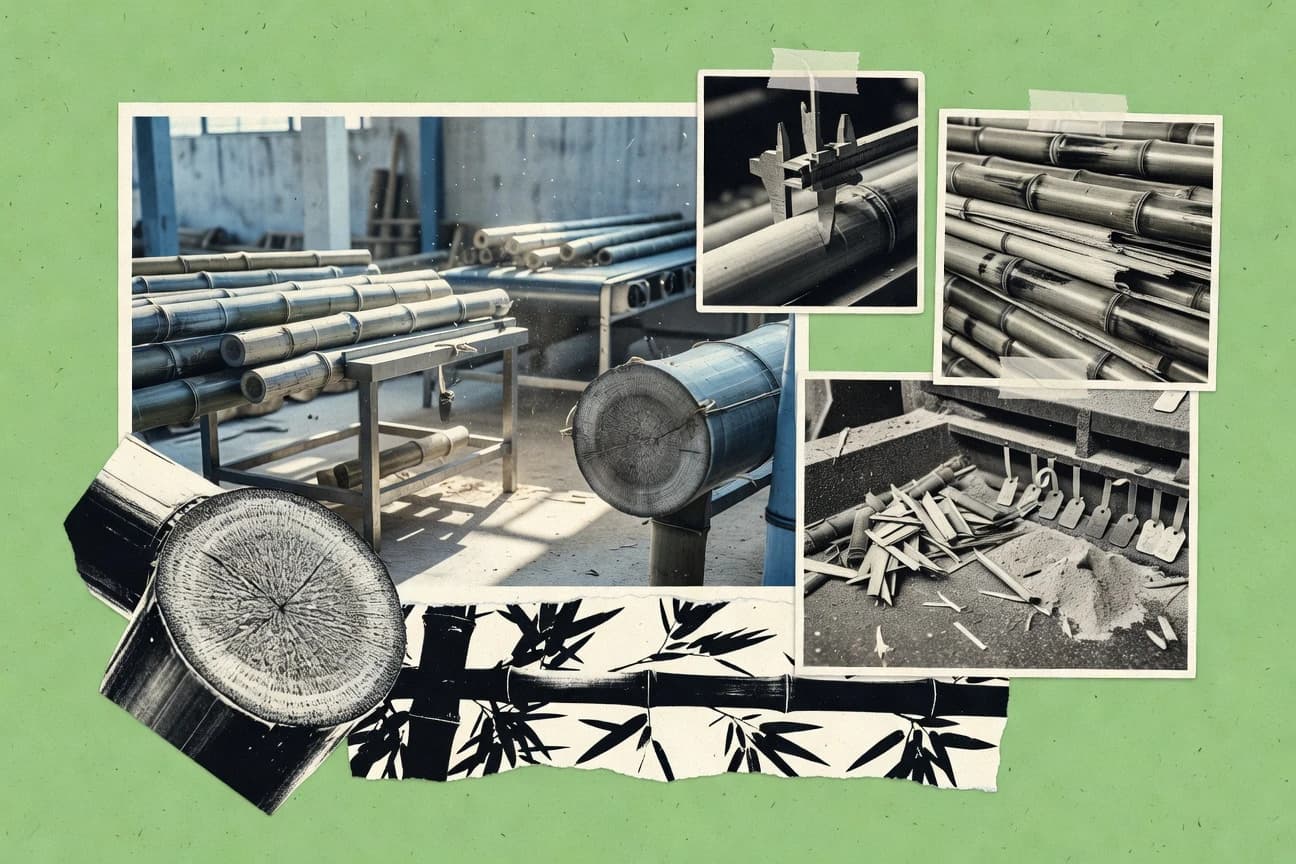

Bamboo is already turning into a serious materials and food crop, with the global bamboo product market projected to reach $89.3 billion by 2027 while the bamboo shoots market hit $5.2 billion in 2022. What makes the dataset worth your time is the push and pull between fast-growing biomass and the slower reality of harvesting cycles, carbon storage, and supply chain rules like CITES and green procurement. By the end, you will see how yields, market sizing, and performance metrics line up from culm growth rates to board durability and activated carbon adsorption capacity.
Key Takeaways
- Bamboo can be harvested without replanting due to rhizome-based regrowth, enabling repeated culm harvests over many years (agronomy reference).
- Bamboo culms can grow up to ~91 cm (36 inches) in a day in peak growth conditions (scientific/technical reference).
- Bamboo has been reported to have growth rates of up to 1 m per day under optimal conditions (review/technical reference).
- The global bamboo shoot market reached $5.2 billion in 2022 (report estimate).
- The global bamboo textile market was $3.5 billion in 2023 (report estimate).
- The global bamboo product market is projected to grow to $89.3 billion by 2027 (report forecast).
- In Vietnam, bamboo exports were valued at about $1.2 billion in 2021 (trade reporting).
- China was the largest exporter of bamboo shoots worldwide, with major export growth reported in 2021–2022 (trade reporting).
- Bamboo’s elastic modulus in transverse/longitudinal directions is commonly reported in ranges such as ~10–20 GPa (materials testing literature).
- Engineered bamboo products like laminated bamboo can achieve strength comparable to or exceeding some softwoods in bending in experimental studies (structural study).
- Bamboo is used in numerous green building rating systems; one industry review cites bamboo as a low-carbon material with substantial reductions when replacing concrete/steel in structural applications (life-cycle review).
- Rainforest Alliance certification standards exist for forestry products, and some bamboo supply chains pursue credible certification to meet buyers’ requirements (certification scheme).
- Bamboo is included in the FAO Global Forest Resources Assessment reporting where bamboo forests are tracked as forest land categories in some national reporting systems (FAO reporting methodology).
- FAO estimates bamboo contributes to rural livelihoods and employment in several countries; FAO’s bamboo strategy highlights livelihood impacts (strategy report includes quantified employment ranges).
- 17% of global households are projected to use clean cooking fuels by 2030 vs. reliance on traditional biomass remains high, supporting sustained demand for charcoal/biomass products rather than eliminating them quickly (market context for bamboo charcoal)
Bamboo grows fast and regrows for repeated harvests, while markets and low carbon benefits are rapidly expanding.
Related reading
01 · Category
Growth & Agronomy8 stats
01
Bamboo can be harvested without replanting due to rhizome-based regrowth, enabling repeated culm harvests over many years (agronomy reference).
02
Bamboo culms can grow up to ~91 cm (36 inches) in a day in peak growth conditions (scientific/technical reference).
03
Bamboo has been reported to have growth rates of up to 1 m per day under optimal conditions (review/technical reference).
04
Bamboo shoots are typically harvested within 4–6 weeks after emergence for best tenderness (food/agronomy reference).
05
Bamboo can achieve above-ground biomass production rates of 10–20 tons of dry matter per hectare per year in favorable conditions (agroforestry literature).
06
Bamboo stands can store substantial carbon; one literature synthesis reports carbon sequestration estimates often ranging from ~2 to 20 t C/ha/year depending on management (reviewed ranges).
07
Bamboo has a lignin content reported around ~20–30% by dry mass in compositional studies (materials literature).
08
Bamboo fiber yields reported in pulping studies are often in the ~30–50% range based on process and species (pulping literature).
Interpretation
Growth & Agronomy Interpretation
Bamboo’s growth and agronomy advantages are striking, with culms able to reach roughly 91 cm to even 1 m per day under optimal conditions and shoots harvested in just 4 to 6 weeks, while favorable stands can produce about 10 to 20 tons of dry biomass per hectare each year and sequester around 2 to 20 t C per hectare annually.
02 · Category
Market Size4 stats
01
The global bamboo shoot market reached $5.2 billion in 2022 (report estimate).
02
The global bamboo textile market was $3.5 billion in 2023 (report estimate).
03
The global bamboo product market is projected to grow to $89.3 billion by 2027 (report forecast).
04
The global bamboo flooring market was reported at $1.9 billion in 2023 (market sizing for bamboo flooring)
Interpretation
Market Size Interpretation
From a Market Size perspective, bamboo is scaling quickly across segments, with the overall bamboo product market forecast to reach $89.3 billion by 2027 after already totaling $5.2 billion in bamboo shoots in 2022 and $1.9 billion in bamboo flooring in 2023.
03 · Category
Production & Trade2 stats
01
In Vietnam, bamboo exports were valued at about $1.2 billion in 2021 (trade reporting).
02
China was the largest exporter of bamboo shoots worldwide, with major export growth reported in 2021–2022 (trade reporting).
Interpretation
Production & Trade Interpretation
Under the Production & Trade angle, Vietnam’s bamboo exports reached about $1.2 billion in 2021 while China’s bamboo shoots drove the biggest global growth in 2021–2022, pointing to rising cross border momentum in the market.
04 · Category
Performance & Design11 stats
01
Bamboo’s elastic modulus in transverse/longitudinal directions is commonly reported in ranges such as ~10–20 GPa (materials testing literature).
02
Engineered bamboo products like laminated bamboo can achieve strength comparable to or exceeding some softwoods in bending in experimental studies (structural study).
03
Bamboo is used in numerous green building rating systems; one industry review cites bamboo as a low-carbon material with substantial reductions when replacing concrete/steel in structural applications (life-cycle review).
04
A life-cycle assessment study on bamboo composites reports lower global warming potential than comparable conventional materials in specific configurations (LCA results).
05
In a comparative study, bamboo plywood can show moisture resistance improvements after chemical treatments with measurable reductions in water absorption rate (materials study).
06
Bamboo culms treated with boron-based preservatives are reported to achieve significant improvements in durability against termites (wood protection study).
07
Bamboo-based boards can have densities typically around ~600–900 kg/m³ depending on product type (panel/product characterization).
08
Bamboo charcoal production yields are commonly reported around ~25–35% by mass under typical carbonization conditions (biochar/char literature).
09
Biochar from bamboo has been reported to have surface area increases by activation treatments, with BET surface areas often in the hundreds of m²/g range (adsorption study).
10
Bamboo textile (viscose/rayon derived) can have strength and elongation measured in lab studies; one study reports breaking strength around ~30–40 cN/tex for specific blends (textile study).
11
Bamboo-derived activated carbon can show iodine number values commonly around ~800–1200 mg/g depending on activation (adsorption/carbon study).
Interpretation
Performance & Design Interpretation
For the Performance and Design angle, engineered bamboo is showing design-relevant capabilities such as bending strength that can match or exceed some softwoods while its panels typically sit around 600 to 900 kg/m³ and its carbon-based products achieve high functional metrics like activated carbon iodine numbers of about 800 to 1200 mg/g.
05 · Category
Industry Trends4 stats
01
Rainforest Alliance certification standards exist for forestry products, and some bamboo supply chains pursue credible certification to meet buyers’ requirements (certification scheme).
02
Bamboo is included in the FAO Global Forest Resources Assessment reporting where bamboo forests are tracked as forest land categories in some national reporting systems (FAO reporting methodology).
03
FAO estimates bamboo contributes to rural livelihoods and employment in several countries; FAO’s bamboo strategy highlights livelihood impacts (strategy report includes quantified employment ranges).
04
The World Bank notes bamboo is among non-timber forest products with potential for value-chain development in forest-rich regions (World Bank sector note).
Interpretation
Industry Trends Interpretation
Industry trends show that bamboo is moving from niche forestry to mainstream development as FAO highlights its role in rural livelihoods with employment effects quantified across countries and the World Bank points to value-chain potential for non-timber forest products in forest-rich regions.
More related reading
06 · Category
Market Demand2 stats
01
17% of global households are projected to use clean cooking fuels by 2030 vs. reliance on traditional biomass remains high, supporting sustained demand for charcoal/biomass products rather than eliminating them quickly (market context for bamboo charcoal)
02
0.5–1.0 million hectares of bamboo plantations were reported in Africa in the African Bamboo Strategy (indicative scale of plantation activity supporting raw material supply)
Interpretation
Market Demand Interpretation
With clean cooking fuels expected to reach only 17% of global households by 2030 while traditional biomass remains dominant, demand for charcoal and related bamboo biomass products is likely to stay strong even as Africa already shows about 0.5 to 1.0 million hectares of bamboo plantations supporting supply.
07 · Category
User Adoption3 stats
01
The global bamboo-based textiles (rayon/viscose) end-market was estimated at 25.2 million yards (approx.) in 2022 in one sizing dataset for bamboo-based textile fabric (downstream adoption proxy)
02
As of 2021, 60 countries had ratified the UN Convention on International Trade in Endangered Species (CITES), supporting broader regulatory environment for legal/non-illicit sourcing requirements that often affect bamboo/forest-based supply chains
03
Timber substitution policies and green procurement frameworks can apply to non-timber forest products including bamboo; in the EU, public procurement directives require environmental criteria in public contracts, increasing uptake of certified/low-impact materials such as bamboo products (policy adoption proxy)
Interpretation
User Adoption Interpretation
User adoption for bamboo-linked materials looks poised to scale as the 2022 global bamboo-based textiles end-market reached about 25.2 million yards, supported by a wider legal trade backdrop with 60 countries ratifying CITES by 2021 and strengthened green procurement policies in the EU that favor certified, low-impact bamboo products.
08 · Category
Performance Metrics4 stats
01
Bamboo-based activated carbon iodine adsorption capacities commonly fall in the 800–1200 mg/g range (typical performance window used in adsorption applications)
02
Bamboo-derived biochar typically shows carbonization yields in the 20–35% mass range depending on temperature and feedstock, aligning with common biochar process outputs used for soil amendment and adsorption
03
Thermal conductivity of bamboo fiber composites has been measured in the range of about 0.20–0.35 W/m·K depending on formulation, informing insulation-relevant performance positioning
04
Bamboo culms exhibit density typically around 600–900 kg/m³ (product and species dependent), which influences panel manufacturing yield and mechanical performance
Interpretation
Performance Metrics Interpretation
Across key performance metrics, bamboo products consistently land in application-relevant ranges such as 800–1200 mg/g iodine adsorption capacity, 20–35% biochar yield, and 0.20–0.35 W/m·K thermal conductivity, while culm density of 600–900 kg/m³ further supports reliable material performance.
09 · Category
Sustainability & Carbon4 stats
01
Bamboo can yield multiple culm harvests per stand over years due to rhizome-based regrowth, enabling repeated harvest cycles that reduce replanting labor costs (economic implication of stand economics)
02
Life-cycle assessment literature often finds bamboo products can have lower global warming potential than conventional materials in specific system boundaries (environmental performance evidence used in procurement)
03
Bamboo flooring and panels can achieve EPD-style disclosure of environmental impacts; in product EPD datasets, bamboo flooring EPDs report a declared unit of 1 m² with cradle-to-gate global warming potential values specified per product line (quant disclosure used by buyers)
04
The IPCC AR6 states that global net CO2 emissions must fall by about 43% by 2030 relative to 2019 to limit warming to 1.5°C, increasing procurement pressure for low-carbon bio-based materials like bamboo
Interpretation
Sustainability & Carbon Interpretation
For Sustainability and Carbon, the key trend is that bamboo is increasingly backed by carbon-focused evidence, including life cycle studies showing lower global warming potential and the wider 43% by 2030 global net CO2 reduction target from IPCC AR6 that is pushing buyers toward low carbon bio-based options like bamboo.
Reference
Cite This Report
This report is designed to be cited. We maintain stable URLs and versioned verification dates. Copy the format appropriate for your publication below.
APA
Nathan Caldwell. (2026, February 13). Bamboo Industry Statistics. Gitnux. https://gitnux.org/bamboo-industry-statistics
MLA
Nathan Caldwell. "Bamboo Industry Statistics." Gitnux, 13 Feb 2026, https://gitnux.org/bamboo-industry-statistics.
Chicago
Nathan Caldwell. 2026. "Bamboo Industry Statistics." Gitnux. https://gitnux.org/bamboo-industry-statistics.
Sources & references
42 datasets cited across this report · attribution is report-level
+24 additional datasets cited (not shown individually)