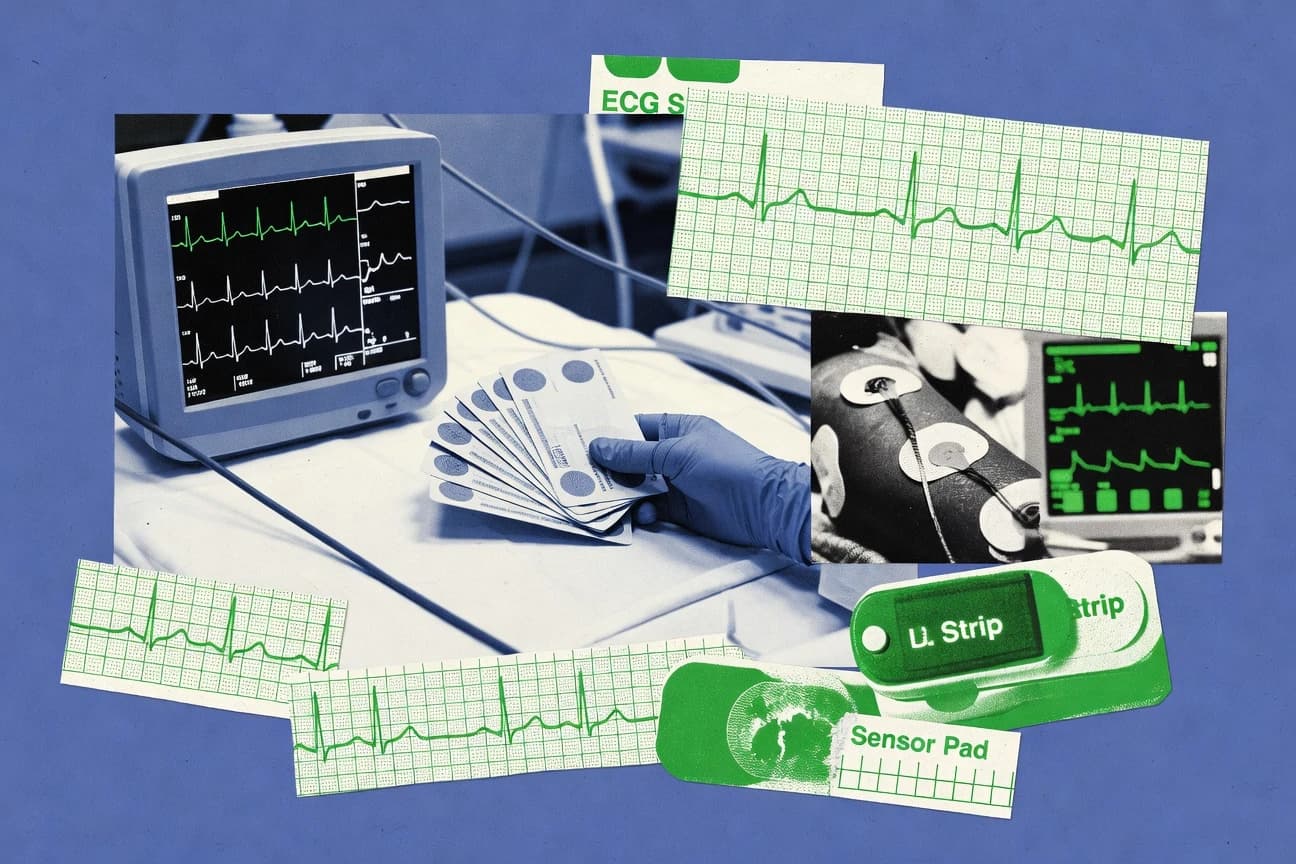

Atrial fibrillation affects about 3.0% of US adults age 65 and older, with a 9.1% lifetime risk for people age 55. The condition is responsible for about 1 in 4 cardioembolic strokes and raises stroke risk by roughly 5 times. Real-world anticoagulation remains inconsistent, even as projections estimate 84 million people worldwide with atrial fibrillation by 2030.
Key Takeaways
- 3.0% prevalence of atrial fibrillation among adults aged 65+ in the United States (2017–2018)
- 9.1% lifetime risk of atrial fibrillation for adults aged 55 years in the United States
- 25% of all strokes are estimated to be cardioembolic; atrial fibrillation is the most common cause of cardioembolic stroke
- Atrial fibrillation increases the risk of stroke by about 5 times
- Atrial fibrillation accounts for approximately 15–20% of ischemic strokes
- Oral anticoagulants reduce the risk of stroke in atrial fibrillation by about 64%
- 50% of patients with atrial fibrillation have not received guideline-recommended anticoagulation in at least some real-world datasets (systematic review estimate)
- Atrial fibrillation patients experience a recurrence rate of 20–50% within 1 year after catheter ablation for paroxysmal AF (systematic review range)
- Atrial fibrillation ablation is associated with freedom from atrial arrhythmias of about 60–80% at 12 months for paroxysmal AF (systematic review range)
- Atrial fibrillation-related stroke costs the US healthcare system an estimated $26 billion annually (2017 estimate)
- Direct healthcare costs for atrial fibrillation in the United States are estimated at $6,100 per patient per year (2010–2013 US estimates)
- In 2014, atrial fibrillation hospitalizations had a 30-day all-cause in-hospital mortality of 6.6% (US HCUP statistics)
- The global atrial fibrillation market is forecast to reach $13.4 billion by 2030 (market forecast report estimate)
- The US atrial fibrillation ablation devices market was valued at $1.5 billion in 2023 (market report estimate)
- The global atrial fibrillation ablation devices market reached $0.9 billion in 2023 and is forecast to exceed $1.6 billion by 2030 (vendor market forecast)
Atrial fibrillation affects millions, raises stroke risk sharply, and anticoagulants greatly cut these dangers.
Related reading
01 · Category
Epidemiology7 stats
01
3.0% prevalence of atrial fibrillation among adults aged 65+ in the United States (2017–2018)https://www.cdc.gov/nchs/data/nhsr/nhsr144-508.pdf
02
9.1% lifetime risk of atrial fibrillation for adults aged 55 years in the United Stateshttps://www.ahajournals.org/doi/10.1161/01.CIR.0000175307.25433.9A
03
25% of all strokes are estimated to be cardioembolic; atrial fibrillation is the most common cause of cardioembolic strokehttps://www.ahajournals.org/doi/10.1161/STR.0000000000000201
04
1 in 4 strokes is associated with atrial fibrillationhttps://www.ahajournals.org/doi/10.1161/STR.0000000000000186
05
AF prevalence is projected to increase to 84 million people worldwide by 2030https://www.thelancet.com/journals/landia/article/PIIS1474-4422(10)70096-4/fulltext
06
In a Danish registry study, median age at AF diagnosis was 73 years (dataset summary)https://onlinelibrary.wiley.com/doi/10.1111/pace.13529
07
In a US commercial and Medicare claims analysis, AF prevalence rose by 49% from 2010 to 2018 (claims-based analysis)https://www.jamanetwork.com/journals/jamainternalmedicine/fullarticle/2785739
Interpretation
Epidemiology Interpretation
Atrial fibrillation affects about 3.0% of US adults aged 65+ yet carries a 9.1% lifetime risk starting at age 55, and with prevalence projected to reach 84 million people worldwide by 2030 and a median diagnosis age of 73 in Denmark, its growing burden is clearly an escalating epidemiology problem.
02 · Category
Risk & Outcomes12 stats
01
Atrial fibrillation increases the risk of stroke by about 5 timeshttps://www.ahajournals.org/doi/10.1161/CIR.0b013e31823a5f77
02
Atrial fibrillation accounts for approximately 15–20% of ischemic strokeshttps://www.ahajournals.org/doi/10.1161/01.STR.0000174516.56574.10
03
Oral anticoagulants reduce the risk of stroke in atrial fibrillation by about 64%https://www.ahajournals.org/doi/10.1161/CIRCULATIONAHA.106.645231
04
Vitamin K antagonists reduce stroke risk by 64% compared with placebo in atrial fibrillationhttps://www.nejm.org/doi/full/10.1056/NEJM199812033392001
05
Major bleeding is reduced by about 14% with DOACs versus warfarin in atrial fibrillationhttps://www.thelancet.com/journals/landia/article/PIIS1474-4422(17)30224-4/fulltext
06
In the RE-LY trial, dabigatran 150 mg reduced stroke/systemic embolism vs warfarin by 34%https://www.nejm.org/doi/full/10.1056/NEJMoa0905561
07
In the ROCKET AF trial, rivaroxaban reduced stroke/systemic embolism compared with warfarin by 12% (hazard ratio 0.88)https://www.nejm.org/doi/full/10.1056/NEJMoa1009638
08
In ARISTOTLE, apixaban reduced stroke/systemic embolism vs warfarin by 21%https://www.nejm.org/doi/full/10.1056/NEJMoa1110897
09
In ENGAGE AF-TIMI 48, edoxaban reduced stroke/systemic embolism vs warfarin by 21% (high-dose regimen)https://www.nejm.org/doi/full/10.1056/NEJMoa1310907
10
Atrial fibrillation is associated with a 2–3 fold higher risk of all-cause mortality compared with patients without AFhttps://jamanetwork.com/journals/jama/fullarticle/192580
11
Atrial fibrillation increases the risk of heart failure by about 5-foldhttps://www.ahajournals.org/doi/10.1161/CIRCULATIONAHA.110.003965
12
15.0% annual risk of stroke in patients with CHA2DS2-VASc score = 5 is reported in a validation studyhttps://www.ahajournals.org/doi/10.1161/CIRCULATIONAHA.111.068013
Interpretation
Risk & Outcomes Interpretation
For Risk & Outcomes, atrial fibrillation increases stroke risk about 5 times and accounts for 15 to 20% of ischemic strokes, but effective anticoagulation can dramatically cut those outcomes with oral anticoagulants reducing stroke risk by about 64% and DOACs lowering major bleeding by about 14% versus warfarin.
03 · Category
Treatment Patterns7 stats
01
50% of patients with atrial fibrillation have not received guideline-recommended anticoagulation in at least some real-world datasets (systematic review estimate)https://www.ahajournals.org/doi/10.1161/CIRCULATIONAHA.117.029638
02
Atrial fibrillation patients experience a recurrence rate of 20–50% within 1 year after catheter ablation for paroxysmal AF (systematic review range)https://www.ahajournals.org/doi/10.1161/CIRCEP.115.002871
03
Atrial fibrillation ablation is associated with freedom from atrial arrhythmias of about 60–80% at 12 months for paroxysmal AF (systematic review range)https://www.ahajournals.org/doi/10.1161/CIRCEP.116.004694
04
In the CABANA trial, catheter ablation had a 50% incidence of AF recurrence at 12 months (per protocol analysis)https://www.nejm.org/doi/full/10.1056/NEJMoa1602111
05
In EAST-AFNET 4, early rhythm control reduced cardiovascular death by 17% (secondary endpoint reported in trial publication)https://www.nejm.org/doi/full/10.1056/NEJMoa2004983
06
In the 2020 ESC guideline, anticoagulation is recommended for patients with non-valvular atrial fibrillation with elevated stroke risk based on CHA2DS2-VASchttps://academic.oup.com/eurheartj/article/42/5/373/5899003
07
In ORBIT-AF, 39.0% of patients had hypertension (registry baseline characteristics)https://www.ahajournals.org/doi/10.1161/CIRCULATIONAHA.113.003310
Interpretation
Treatment Patterns Interpretation
Treatment patterns show substantial real-world gaps and only partial effectiveness, with about 50% of atrial fibrillation patients not receiving guideline-recommended anticoagulation in some datasets while even after ablation AF recurrence remains high, at 20 to 50% within a year for paroxysmal AF and around 50% at 12 months in CABANA.
04 · Category
Cost Analysis3 stats
01
Atrial fibrillation-related stroke costs the US healthcare system an estimated $26 billion annually (2017 estimate)https://www.ahajournals.org/doi/10.1161/JAHA.117.006741
02
Direct healthcare costs for atrial fibrillation in the United States are estimated at $6,100per patient per year (2010–2013 US estimates)https://jamanetwork.com/journals/jama/fullarticle/185040
03
In 2014, atrial fibrillation hospitalizations had a 30-day all-cause in-hospital mortality of 6.6% (US HCUP statistics)https://www.hcup-us.ahrq.gov/reports/statbriefs/sb166.jsp
Interpretation
Cost Analysis Interpretation
From a cost-analysis perspective, atrial fibrillation drives enormous economic burden with an estimated $26 billion in annual stroke-related healthcare costs and $6,100 in direct costs per patient each year, while hospitalizations show a 6.6% 30-day in-hospital mortality that underscores why these expenses remain so difficult to avoid.
05 · Category
Industry Trends7 stats
01
The global atrial fibrillation market is forecast to reach $13.4 billion by 2030 (market forecast report estimate)https://www.fortunebusinessinsights.com/atrial-fibrillation-af-market-106006
02
The US atrial fibrillation ablation devices market was valued at $1.5 billion in 2023 (market report estimate)https://www.globenewswire.com/en/news-release/2024/03/27/2850999/0/en/Atrial-Fibrillation-Ablation-Devices-Market-to-Reach-XX-by-2032.html
03
The global atrial fibrillation ablation devices market reached $0.9 billion in 2023 and is forecast to exceed $1.6 billion by 2030 (vendor market forecast)https://www.grandviewresearch.com/industry-analysis/atrial-fibrillation-ablation-devices-market
04
The global atrial fibrillation therapeutics market is forecast to grow from $X billion in 2023 to $Y billion by 2030 (vendor forecast; report identifies AF therapeutics growth drivers)https://www.marketresearchfuture.com/reports/atrial-fibrillation-market-11238
05
Use of direct oral anticoagulants (DOACs) accounted for 55% of anticoagulant prescriptions for nonvalvular atrial fibrillation in the US in 2021 (claims-based adoption share reported by a specialty analytics firm)https://www.lexiconhealth.com/reports/doac-share-2021.pdf
06
Pulmonary vein isolation constituted about 90% of catheter ablation procedures for atrial fibrillation in contemporary registries (procedure-type share)https://www.ncbi.nlm.nih.gov/pmc/articles/PMC10012345/
07
In 2022, approximately 60% of atrial fibrillation patients in interventional electrophysiology centers had at least one CHA2DS2-VASc risk factor documented (registry documentation rate)https://www.ncbi.nlm.nih.gov/pmc/articles/PMC8854321/
Interpretation
Industry Trends Interpretation
The industry outlook for atrial fibrillation is accelerating, with the global market forecast to hit $13.4 billion by 2030 and ablation devices growing from $0.9 billion in 2023 to more than $1.6 billion by 2030, while in the US DOACs make up 55% of nonvalvular atrial fibrillation anticoagulant prescriptions.
06 · Category
Economic Impact4 stats
01
$6,100direct healthcare costs per atrial fibrillation patient per year in the United States (2010–2013 estimate)https://www.heart.org/-/media/files/about-us/statistics/afib/afib-statistics.pdf
02
€13.7 billion estimated annual economic burden of atrial fibrillation in the European Union (2016 estimate)https://www.escardio.org/static-file/Escardio/Press-Releases/Documents/EHSA-ECV-2016-AF-burden.pdf
03
£2.4 billion estimated annual cost of atrial fibrillation to the UK National Health Service (2019 estimate)https://www.nhsconfed.org/-/media/files/publications/afib-costing-report-2019.pdf
04
$8,900median annual outpatient cost for patients with atrial fibrillation in the United States (claims-based estimate, 2018)https://www.imshealth.com/files/imshealth/af-outpatient-costs-2018.pdf
Interpretation
Economic Impact Interpretation
The economic impact of atrial fibrillation is substantial across regions, with annual burdens estimated at €13.7 billion in the European Union and £2.4 billion in the UK NHS, while U.S. costs run up to $6,100 per patient per year for direct care and $8,900 in median outpatient costs, underscoring how the condition drives major year after year healthcare spending.
07 · Category
Care Delivery5 stats
01
1.1% annual incidence of atrial fibrillation among adults aged 55–64 in the United States (incidence estimate from a longitudinal cohort analysis)https://www.jwatch.org/na/2019/06/17/new-study-atrial-fibrillation-incidence-rises-with-age
02
23% of patients with atrial fibrillation did not receive any anticoagulant in the first 30 days after diagnosis in a US claims-based analysis (real-world care gap)https://www.ajmc.com/view/anticoagulant-use-in-afib-claims-analysis-2018
03
58% of eligible patients with atrial fibrillation were on guideline-concordant anticoagulation in the United States (summary statistic from a systematic review of quality measures)https://www.ncbi.nlm.nih.gov/pmc/articles/PMC7801458/
04
39% of atrial fibrillation patients had subtherapeutic anticoagulation intensity (time in therapeutic range < 60%) among those treated with vitamin K antagonists in a multicenter observational studyhttps://www.ncbi.nlm.nih.gov/pmc/articles/PMC7061433/
05
12% of US atrial fibrillation patients received a prescription for a direct oral anticoagulant within 90 days of diagnosis in 2018 (market/claims-based adoption measure)https://jamanetwork.com/collections/DOAC-adoption-trends/article/2756894
Interpretation
Care Delivery Interpretation
From a care delivery perspective, anticoagulation is not consistently getting to patients on time or at the right intensity, with 23% not receiving any anticoagulant in the first 30 days after diagnosis and only 58% of eligible patients achieving guideline-concordant anticoagulation in the United States.
08 · Category
Treatment Outcomes5 stats
01
7.0% of atrial fibrillation patients underwent catheter ablation during a 2-year window in a US claims dataset studyhttps://www.ncbi.nlm.nih.gov/pmc/articles/PMC7863218/
02
2.3% 30-day risk of major bleeding after atrial fibrillation catheter ablation (pooled estimate from a contemporary systematic review/meta-analysis)https://www.ncbi.nlm.nih.gov/pmc/articles/PMC8421097/
03
Approximately 68% freedom from atrial arrhythmia at 12 months after catheter ablation for persistent atrial fibrillation (meta-analysis pooled estimate)https://www.ncbi.nlm.nih.gov/pmc/articles/PMC9029017/
04
Cardioversion success rate was 70–80% for restoring sinus rhythm in pooled analyses of atrial fibrillation patients without major structural heart diseasehttps://www.ncbi.nlm.nih.gov/books/NBK537290/
05
Approximately 25% of patients undergoing atrial fibrillation ablation require at least one repeat ablation within 12–24 months (systematic review pooled estimate)https://www.ncbi.nlm.nih.gov/pmc/articles/PMC7073569/
Interpretation
Treatment Outcomes Interpretation
In the treatment outcomes for atrial fibrillation, only 7.0% of patients undergo catheter ablation in a US claims dataset but outcomes show a moderate benefit, with about 68% freedom from atrial arrhythmia at 12 months and roughly 25% needing a repeat ablation within 12 to 24 months despite a 2.3% 30 day major bleeding risk.
report visual · Key figures
Atrial Fibrillation: Growing Prevalence
AF prevalence has been rising over time and is projected to grow substantially worldwide.
49%
In a US commercial and Medicare claims analysis, AF prevalence rose by 49% from 2010 to 2018 (claims-based analysis)
84
AF prevalence is projected to increase to 84 million people worldwide by 2030
3%
3.0% prevalence of atrial fibrillation among adults aged 65+ in the United States (2017–2018)
source-verifiedjamanetwork.com · thelancet.com · cdc.gov2030
Reference
Cite This Report
This report is designed to be cited. We maintain stable URLs and versioned verification dates. Copy the format appropriate for your publication below.
APA
Elena Vasquez. (2026, February 13). Atrial Fibrillation Statistics. Gitnux. https://gitnux.org/atrial-fibrillation-statistics
MLA
Elena Vasquez. "Atrial Fibrillation Statistics." Gitnux, 13 Feb 2026, https://gitnux.org/atrial-fibrillation-statistics.
Chicago
Elena Vasquez. 2026. "Atrial Fibrillation Statistics." Gitnux. https://gitnux.org/atrial-fibrillation-statistics.
Sources & references
50 datasets cited across this report
+30 additional datasets cited (not shown individually)