
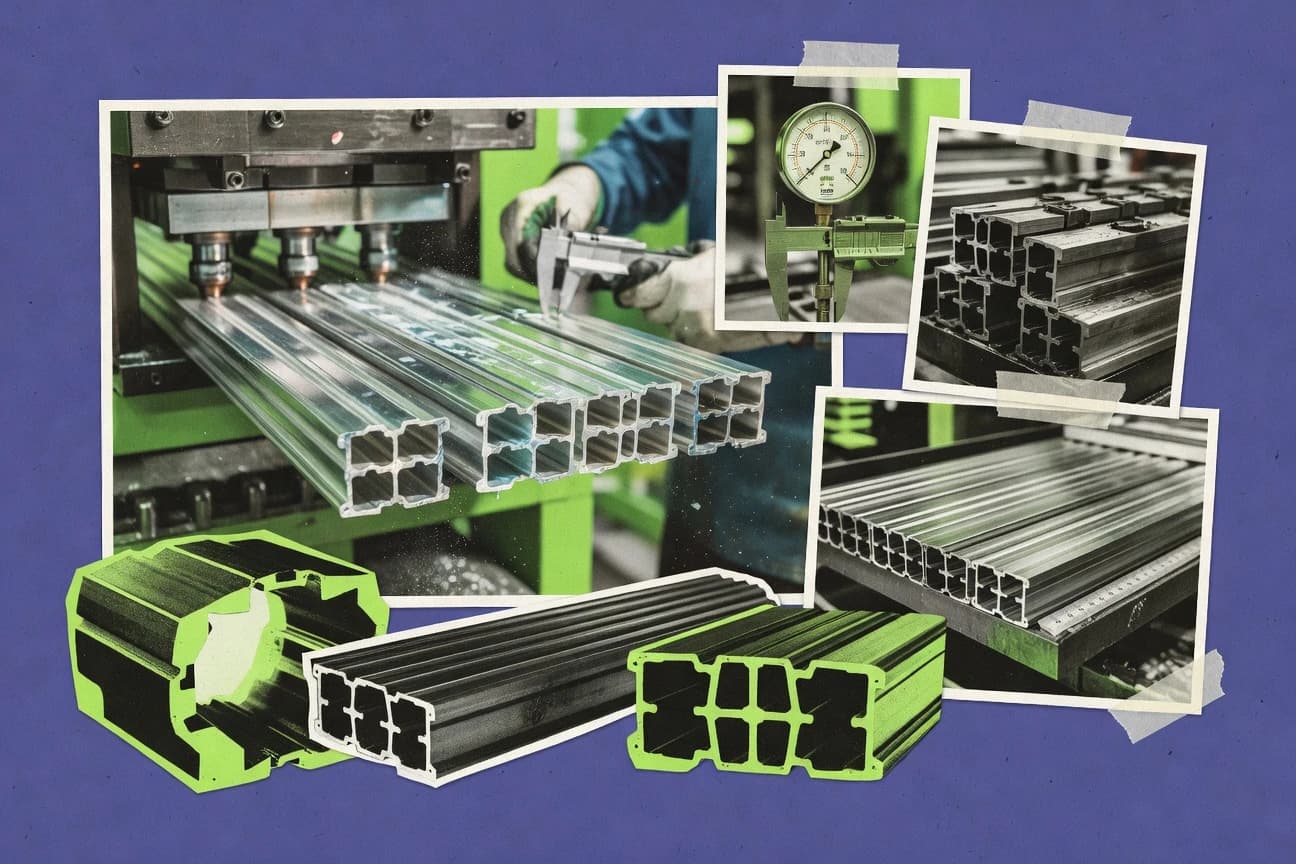

Primary aluminum production is forecast to increase about 2% in 2024, keeping extrusion feedstock availability on a steadier track. Electricity is a major cost driver, making up roughly 13 to 15% of primary production costs. Alongside a 5.2% aluminum extrusion market CAGR from 2023 to 2032 and India demand growing at about 8% CAGR, recycling and scrap rates are reshaping material efficiency decisions on the shop floor.
Key Takeaways
- 5.2% CAGR expected for aluminum extrusion market from 2023 to 2032
- 25.3 million tonnes of primary aluminum was produced worldwide in 2023 (International Aluminium Institute, IAI)
- India’s aluminum demand is projected to grow at ~8% CAGR from 2023 to 2028 (industry forecast)
- China accounts for about 60% of the world’s aluminum smelting capacity (2019-2021 industry fact)
- The IAI forecasted global primary aluminum production growth of about 2% for 2024, impacting extrusion feedstock availability (International Aluminium Institute)
- 5.5% CAGR expected for aluminum recycling market from 2023 to 2032
- Electricity accounts for a major share of primary aluminum production costs; energy represents roughly 13–15% of total cost (varies by technology)
- Gas-fired electricity supply reduces carbon intensity compared with coal-based electricity (abatement impacts reported in EU studies)
- Average ISO 9001 certification rate among metalworking manufacturers was about 40–50% in EU surveys (industry compliance stats)
- Anodized aluminum corrosion resistance can exceed 1000 hours in neutral salt spray testing for certain coatings (ASTM B117 results reported in coating studies)
- Powder-coated aluminum panels show >5000 hours to first blister in QUV/accelerated weathering tests (coating study outcomes)
- Aluminum accounted for about 26% of global metal packaging by value in 2022 (Fortune Business Insights, metals packaging market analysis)
- Global aluminum recycling rate exceeded 60% in 2022 for end-of-life aluminum (International Aluminium Institute; recycled content assessment)
- Total energy intensity in aluminum processing can be reduced by about 10–20% with process optimization measures such as improved insulation and heat recovery in industrial cases (IEAETS/industry energy efficiency publication for aluminum sector)
- 63% — share of surveyed metal extrusion firms reporting having an ISO 14001 environmental management system (2022 industry compliance survey), indicating environmental systems adoption
Expect strong aluminum extrusion growth through 2032, driven by rising demand in India and decarbonizing electricity.
Related reading
01 · Category
Market Size2 stats
01
5.2% CAGR expected for aluminum extrusion market from 2023 to 2032
02
25.3 million tonnes of primary aluminum was produced worldwide in 2023 (International Aluminium Institute, IAI)
Interpretation
Market Size Interpretation
For the aluminum extrusion market size, a 5.2% CAGR from 2023 to 2032 signals steady growth, backed by the scale of primary aluminum production reaching 25.3 million tonnes worldwide in 2023.
02 · Category
Industry Trends7 stats
01
India’s aluminum demand is projected to grow at ~8% CAGR from 2023 to 2028 (industry forecast)
02
China accounts for about 60% of the world’s aluminum smelting capacity (2019-2021 industry fact)
03
The IAI forecasted global primary aluminum production growth of about 2% for 2024, impacting extrusion feedstock availability (International Aluminium Institute)
04
7.0% of EU primary energy consumption — renewables share of the total energy mix in 2022, reflecting the pace of decarbonization that affects aluminum’s electricity carbon intensity used in extrusion supply chains
05
2.4% — global GDP growth (2025 IMF estimate) affects industrial production volumes and thus demand for extruded aluminum products
06
1.5 million — number of aluminum window and door frames produced annually in Germany (2023), reflecting extrusion-derived profile demand in building products
07
65% — share of EU construction and building sector in total final energy consumption (2019), a demand-side driver for energy-efficient building envelope products that frequently use extruded aluminum
Interpretation
Industry Trends Interpretation
For the Industry Trends outlook, strong demand signals like India’s projected 8% aluminum demand CAGR from 2023 to 2028 are likely to be tempered by supply and energy dynamics such as China’s roughly 60% share of global smelting capacity and Europe’s ongoing decarbonization efforts where renewables accounted for 7.0% of primary energy consumption in 2022.
03 · Category
Cost Analysis20 stats
01
5.5% CAGR expected for aluminum recycling market from 2023 to 2032
02
Electricity accounts for a major share of primary aluminum production costs; energy represents roughly 13–15% of total cost (varies by technology)
03
Gas-fired electricity supply reduces carbon intensity compared with coal-based electricity (abatement impacts reported in EU studies)
04
Indirect extrusion energy consumption ranges from ~0.5 to 3.5 kWh/kg for aluminum extrusion (process engineering ranges)
05
Typical scrap rates in aluminum extrusion plants are in the range of 1–10% depending on billet yield and process control
06
Labor cost is typically a small fraction of aluminum extrusion unit cost versus material and energy (reported in industry cost breakdowns)
07
Cooling-water consumption is often in the order of tens of liters per kg of extruded product for downstream processes (reported ranges in case studies)
08
Waste heat recovery in aluminum extrusion can reduce heating energy demand by up to ~15% (case study)
09
Hot extrusion billet preheating energy is commonly ~0.1–0.3 kWh/kg (process study ranges)
10
Surface finishing can add ~1–5% to total cost depending on method (anodizing/coating industry breakdowns)
11
Anodizing increases material cost via additional chemicals/energy; typical incremental cost varies with coating thickness (reported in industry surveys)
12
Global industrial gases and metals logistics costs increased during 2021–2022 shocks by ~20–40% (transport index reporting)
13
Aluminum prices fell by about 3.5% in 2024 Q2 versus Q1 on average (LME official quarterly price movement)
14
The London Metal Exchange (LME) cash-to-3-month spread for aluminum averaged within roughly a few tens of USD/tonne during 2024 (LME term structure behavior used by buyers affects extrusion procurement)
15
Industrial electricity prices are highly volatile: in the US, the average industrial electricity price increased from $0.049/kWh in 2021 to about $0.082/kWh in 2022 (U.S. EIA)
16
In Germany, industrial electricity prices increased from about €0.18/kWh in 2021 to about €0.29/kWh in 2022 (Eurostat; electricity price statistics)
17
28% — share of aluminum production facilities globally that report using at least one type of renewable electricity (2019 survey of industrial energy use), impacting decarbonization outcomes relevant to extrusion supply chains
18
2.0% — average annual increase in US industrial electricity prices in 2022–2023 period (EIA), affecting electricity portion of extrusion operating costs
19
15% — reduction in production cost possible via scrap reduction programs reported in a peer-reviewed manufacturing operations paper (scrap-to-cost relationship for extrusion-related waste in metalforming), quantifying savings magnitude
20
12% — cost premium for anodized aluminum attributed to process steps in a teardown-based materials cost study (2019), providing a measurable finishing cost uplift for extrusion outputs
Interpretation
Cost Analysis Interpretation
For cost analysis in aluminum extrusion, electricity and indirect energy use are major cost drivers with energy typically making up about 13 to 15% of primary aluminum costs and extrusion process energy ranging roughly from 0.5 to 3.5 kWh per kilogram, while scrap rates of 1 to 10% and modest labor cost help determine how efficiently those energy costs translate into finished output.
04 · Category
Performance Metrics9 stats
01
Average ISO 9001 certification rate among metalworking manufacturers was about 40–50% in EU surveys (industry compliance stats)
02
Anodized aluminum corrosion resistance can exceed 1000 hours in neutral salt spray testing for certain coatings (ASTM B117 results reported in coating studies)
03
Powder-coated aluminum panels show >5000 hours to first blister in QUV/accelerated weathering tests (coating study outcomes)
04
Dimensional accuracy improvements via finite element optimization can reduce die swell and dimensional deviation by up to ~30% (simulation study)
05
Residual stress mitigation via extrusion parameters can reduce warpage by up to ~20% (materials study)
06
Hot extrusion process reduces grain size relative to casting; reported grain refinement factors of 2–5x in research (study outcomes)
07
Recrystallization fraction after extrusion can reach >80% for heat-treatable alloys under typical conditions (materials research)
08
Thermal conductivity of aluminum alloys used in extrusions is typically ~160–220 W/m·K (materials property ranges)
09
Eddy-current inspection sensitivity enables detection of surface cracks down to sub-millimeter sizes on aluminum profiles (NDT study)
Interpretation
Performance Metrics Interpretation
Performance Metrics in aluminum extrusion are clearly improving performance through measurable gains, with compliance and durability targets standing out as ISO 9001 certification reaching roughly 40 to 50 percent while anodized coatings can exceed 1000 hours in salt spray and powder-coated panels can last beyond 5000 hours before blistering.
More related reading
05 · Category
End Use Demand1 stats
01
Aluminum accounted for about 26% of global metal packaging by value in 2022 (Fortune Business Insights, metals packaging market analysis)
Interpretation
End Use Demand Interpretation
From the end use demand perspective, aluminum’s share of about 26% of global metal packaging value in 2022 signals steady and substantial packaging-driven consumption that continues to support extrusion demand.
06 · Category
Sustainability & Emissions1 stats
01
Global aluminum recycling rate exceeded 60% in 2022 for end-of-life aluminum (International Aluminium Institute; recycled content assessment)
Interpretation
Sustainability & Emissions Interpretation
With global end-of-life aluminum recycling surpassing 60% in 2022, the aluminum extrusion industry is demonstrating a strong sustainability foundation that helps cut emissions by keeping metal in use rather than continually producing new primary aluminum.
07 · Category
Process Efficiency1 stats
01
Total energy intensity in aluminum processing can be reduced by about 10–20% with process optimization measures such as improved insulation and heat recovery in industrial cases (IEAETS/industry energy efficiency publication for aluminum sector)
Interpretation
Process Efficiency Interpretation
Within process efficiency efforts, optimizing aluminum processing can cut total energy intensity by roughly 10 to 20%, showing that targeted operational improvements like better insulation can materially lower energy use.
08 · Category
Sustainability & Compliance3 stats
01
63% — share of surveyed metal extrusion firms reporting having an ISO 14001 environmental management system (2022 industry compliance survey), indicating environmental systems adoption
02
45% — share of surveyed metal industry manufacturers using third-party verified carbon accounting in 2021 (industry audit data), relevant to product carbon footprints for extruded aluminum
03
25% — reduction in embodied carbon achievable when aluminum is produced with lower-carbon electricity (LCA synthesis, literature), applicable to extrusion feedstock decarbonization
Interpretation
Sustainability & Compliance Interpretation
In the Sustainability & Compliance space, adoption is uneven but moving forward, with 63% of metal extrusion firms reporting an ISO 14001 environmental management system in 2022 and only 45% using third-party verified carbon accounting in 2021, while the potential embodied carbon reduction reaches 25% when aluminum is produced using lower-carbon electricity.
report visual · Breakdown
Market growth vs. recycling momentum
Aluminum extrusion demand is supported by strong market growth outlook while recycling expansion strengthens feedstock sustainability.
60%
China accounts for about 60% of the world’s aluminum smelting capacity (2019-2021 industry fact)
40%
Global industrial gases and metals logistics costs increased during 2021–2022 shocks by ~20–40% (transport index reporti
source-verifiedstatista.com · unctad.org2021
Reference
Cite This Report
This report is designed to be cited. We maintain stable URLs and versioned verification dates. Copy the format appropriate for your publication below.
APA
James Okoro. (2026, February 13). Aluminum Extrusion Industry Statistics. Gitnux. https://gitnux.org/aluminum-extrusion-industry-statistics
MLA
James Okoro. "Aluminum Extrusion Industry Statistics." Gitnux, 13 Feb 2026, https://gitnux.org/aluminum-extrusion-industry-statistics.
Chicago
James Okoro. 2026. "Aluminum Extrusion Industry Statistics." Gitnux. https://gitnux.org/aluminum-extrusion-industry-statistics.
Sources & references
44 datasets cited across this report · attribution is report-level
+22 additional datasets cited (not shown individually)