
GITNUXSOFTWARE ADVICE
Healthcare MedicineTop 10 Best Medical Lab Software of 2026
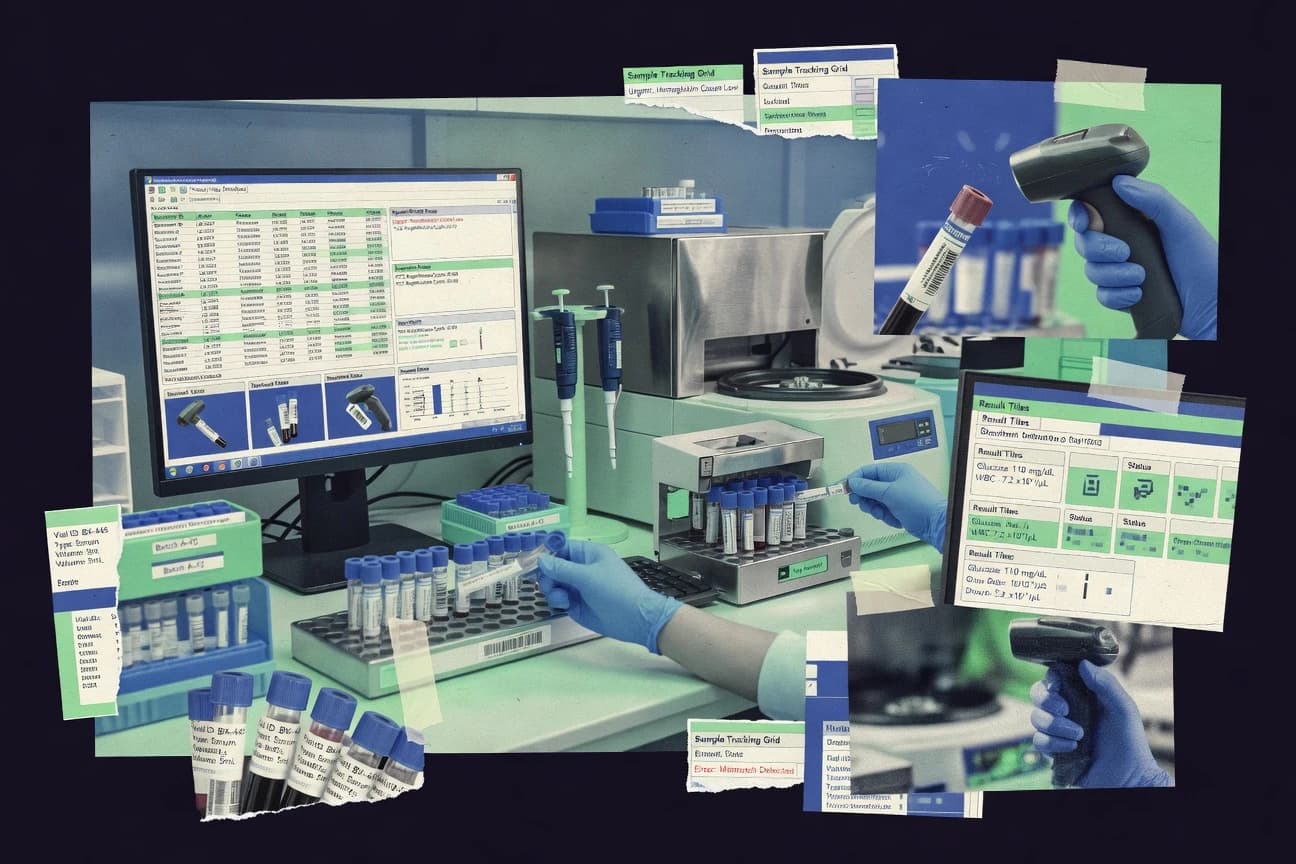
Top 10 ranking of medical lab software tools with feature comparisons for lab managers and IT teams, covering QBench, Clinisys, HORIZON.

How we ranked these tools
Core product claims cross-referenced against official documentation, changelogs, and independent technical reviews.
Analyzed video reviews and hundreds of written evaluations to capture real-world user experiences with each tool.
AI persona simulations modeled how different user types would experience each tool across common use cases and workflows.
Final rankings reviewed and approved by our editorial team with authority to override AI-generated scores based on domain expertise.
Score: Features 40% · Ease 30% · Value 30%
Gitnux may earn a commission through links on this page — this does not influence rankings. Editorial policy
QBench is the best fit for medium labs that want automated, instrument-driven workflows with governed validation and interfaces, whereas Clinisys is a stronger alternative for mid-size teams needing end-to-end LIS control with external system integration.
Editor’s top 3 picks
Three quick recommendations before you dive into the full comparison below — each one leads on a different dimension.
QBench
Bidirectional instrument integration that updates analyzer state and results into the same validation workflow.
Built for fits when medium labs need automated instrument-driven workflows with governed validation and interfaces..
Clinisys
Editor pickResult validation workflow supports controlled sign-out, including rule-based status handling tied to lab operations.
Built for fits when mid-size labs need end-to-end LIS workflow control with external system integration..
HORIZON Lab Systems
Editor pickStage-driven worklists tied to validation rules, enabling consistent autoverification and controlled release sequencing.
Built for fits when labs need configurable end-to-end workflows with validation rules and controlled releases..
Comparison Table
QBench
SMBLIMS software for clinical, diagnostic, research, and testing laboratories.
Bidirectional instrument integration that updates analyzer state and results into the same validation workflow.
QBench handles core LIS workflows such as order intake, specimen accessioning, barcode-based tracking, and worklist management through to result validation. The automation layer can apply laboratory workflow rules to reduce manual rework when samples move between accession, analysis, and sign-out. Interfacing is a central capability, with support for analyzer status and results to flow into the same operational view used by technologists.
The tradeoff is that deep configuration of workflow rules and interface mappings requires deliberate build and test cycles. QBench fits labs that need higher automation throughput across multiple instruments and want governance over who can release and amend results.
- +Instrument bidirectional workflows reduce manual transcription errors
- +Result validation state tracking supports clear sign-out control
- +Audit visibility on workflow actions helps trace changes to records
- +Integration patterns support both HL7 v2 and FHIR exchanges
- –Workflow rule configuration needs upfront mapping effort
- –Microbiology-specific culture workflows may require additional workflow design
- –Complex interface scenarios can increase implementation testing cycles
- –Role design for release and amendments needs careful governance
Lab operations managers
Reduce specimen-to-result turnaround delays
Faster cycle times
Clinical laboratory directors
Control who releases results
Lower release risk
Show 2 more scenarios
Informatics analysts
Integrate EHR and instruments
Fewer integration gaps
Interface mappings support HL7 v2 and FHIR style data exchange for orders and results.
Section supervisors
Standardize multi-instrument processing
Consistent processing
Analyzer-driven updates align instruments to consistent accession and result workflows.
Best for: Fits when medium labs need automated instrument-driven workflows with governed validation and interfaces.
Clinisys
enterpriseLaboratory information systems and laboratory workflow software for clinical and pathology organizations.
Result validation workflow supports controlled sign-out, including rule-based status handling tied to lab operations.
Clinisys fits teams that need a configured LIS workflow rather than a narrow results-only layer. The core capabilities concentrate on test catalog setup, specimen accessioning and tracking steps, and result validation workflows used in routine operations. Instrument interfacing is positioned as a key bridge between analyzers and the laboratory work process.
A key tradeoff is that most value depends on upfront configuration of test definitions, workflow rules, and mapping logic for each integration endpoint. Clinisys fits best when a lab can dedicate resources to ongoing configuration and change control for new tests, new instruments, and revised reference interval rules.
- +Worklist-driven flow supports consistent lab execution
- +Test catalog and validation rules cover routine clinical processing
- +Instrument interfacing supports analyzer-to-LIS handoff
- +Integration-focused exchanges fit enterprise lab ecosystems
- –Effective automation depends on disciplined configuration ownership
- –Microbiology-specific workflows may require deeper setup than expected
- –Workflow changes can be slower during high-volume operations
Laboratory operations managers
Standardize validation and sign-out steps
Fewer manual overrides
Lab IT integration teams
Connect orders and instruments
Reduced manual data entry
Show 2 more scenarios
Specimen processing leads
Reduce accessioning and tracking errors
Improved traceability
Supports specimen handling steps with identifiers that stay consistent through processing.
Pathology and reference workflows
Manage test definitions at scale
Faster onboarding for new tests
Coordinates test catalog configuration across panels and result requirements.
Best for: Fits when mid-size labs need end-to-end LIS workflow control with external system integration.
HORIZON Lab Systems
vertical specialistLaboratory information system software for pathology, clinical, and reference laboratories.
Stage-driven worklists tied to validation rules, enabling consistent autoverification and controlled release sequencing.
HORIZON Lab Systems is built to run day-to-day laboratory processing across specimen accessioning, worklist management, and result validation. Barcode specimen tracking patterns support scan-led movement through stages such as receipt, processing, and release, which helps reduce transposition errors. Rule-based quality controls and result checks support autoverification pathways where results pass predefined criteria.
A practical tradeoff is that deeper configuration of workflow rules and validation steps can require strong local governance to keep releases consistent across sites. The system fits operations with steady test catalogs and predictable turnaround workflows that still need configurable rules for exceptions, such as retests and critical result handling.
- +Configurable workflow design links ordering, accessioning, and release states
- +Rule-based validation supports autoverification for routine result pathways
- +Worklist management structures daily throughput by stage and status
- +Integration supports standard clinical messaging for result propagation
- –Workflow and validation configuration needs lab governance discipline
- –Microbiology-specific culture tracking depth may require workflow tailoring
- –Advanced instrument interfacing can depend on middleware approach
- –Multi-site testing variations can increase configuration overhead
Clinical chemistry team
Autoverification with rule-based validations
Fewer manual reviews
Specimen accessioning staff
Barcode-driven specimen tracking
Reduced specimen mismatch risk
Show 2 more scenarios
Laboratory informatics leads
Workflow governance across shifts
More consistent turnarounds
Configures role access and workflow steps to keep releases consistent by station.
Hospital integration teams
Result updates to downstream systems
Cleaner EHR result visibility
Transfers order and result status updates using standard clinical messaging patterns.
Best for: Fits when labs need configurable end-to-end workflows with validation rules and controlled releases.
Birlamedisoft
SMBHospital laboratory information system with pathology, microbiology, and HIMS integration modules.
Configurable pathology report templates combine results, reference ranges, signatures, and branding for print and digital delivery.
Birlamedisoft places laboratory operations inside a broader hospital information suite, connecting registration, billing, and clinical records. Its laboratory module covers test ordering, sample collection, result entry, report generation, and patient communication.
Barcode identification, configurable report formats, doctor access, and SMS or email delivery support routine diagnostic workflows. Public materials provide limited technical detail about external interfaces, automation rules, and governance controls.
- +Integrated hospital and laboratory records reduce duplicate patient entry.
- +Barcode sample identification supports consistent specimen handling.
- +Configurable report templates support branded print and digital reports.
- +SMS and email delivery give patients remote access to results.
- –Public documentation gives limited detail about analyzer connectivity.
- –No clearly documented public API supports external integration planning.
- –Advanced result automation and validation rules are not clearly specified.
- –Broader suite configuration may require implementation support.
Best for: Fits when diagnostic centers need integrated registration, billing, reporting, and patient communication.
LabLynx
SMBWeb-based LIMS for clinical and medical laboratories with configurable workflows and instrument interfacing.
Workflow rule engine that drives automatic transitions across specimen and result states based on configurable conditions.
LabLynx performs lab workflow automation with configurable worklists, specimen status tracking, and result lifecycle controls. The system ties daily operations to order intake, testing management, and report release so throughput and turnaround can be managed at the workflow level.
LabLynx also supports integrations for instrument handoffs and interoperability with downstream clinical systems using defined messaging and API endpoints. Administrative controls cover user access, auditability of key events, and governance of laboratory configuration items.
- +Configurable worklists reduce manual rekeying during accession to release
- +Result lifecycle controls support consistent validation and sign-off steps
- +Integration endpoints support instrument handoffs and downstream reporting needs
- +Audit-ready tracking of key workflow events supports operational traceability
- –Complex test-catalog and workflow configuration can take administrator time
- –Some advanced microbiology-specific culture steps may require customization
- –High-volume sites may need careful tuning of worklist and messaging schedules
- –Integration scope can vary by instrument model and interface configuration
Best for: Fits when labs need configurable workflow automation and integration endpoints for instrument and reporting handoffs.
WebPathLab
vertical specialistWeb-based laboratory information system for anatomic pathology labs.
Workflow rule configuration that drives automatic movement of specimens and tests through review and validation stages.
WebPathLab is a laboratory workflow and results management tool aimed at clinical testing operations that need web-accessible order-to-result visibility. It focuses on managing specimen and test lifecycles with configurable statuses, worklists, and result entry that supports lab staff collaboration.
The system is built around practical operational controls, including review, validation, and audit visibility for changes that affect final outputs. Automation capabilities center on rules for moving items through the workflow, plus integration hooks for exchanging orders and results with surrounding systems.
- +Configurable workflow states for specimen and test progress visibility
- +Audit visibility for who changed what during result lifecycle
- +Web-based worklists for lab staff task distribution
- +Rules-based handling for review and validation steps
- –Integration depth for instrument interfacing and bidirectional control is limited
- –HL7 and FHIR coverage is narrow or requires middleware patterns
- –Role separation for complex multi-site governance is constrained
- –Advanced automation needs careful configuration to avoid workflow drift
Best for: Fits when mid-size labs need web-based order-to-result workflow management with validation steps.
Sapio Sciences
enterpriseLab informatics platform combining LIMS, ELN, and data management for life sciences and clinical labs.
Sapio's shared data model links samples, experiments, instruments, documents, and results across modules.
Sapio Sciences differentiates itself with a configurable data model that connects clinical testing, research, and biobanking records. Its LIMS, ELN, LES, and SDMS capabilities cover sample tracking, protocol execution, document control, and result management. REST APIs, workflow automation, instrument connectivity, role-based permissions, and audit trails support integrations and controlled operations.
- +Configurable workflows cover accessioning, testing, approvals, and exception handling.
- +REST APIs connect instruments, portals, and enterprise applications.
- +Unified modules link samples, experiments, documents, and results.
- +Role-based permissions and audit trails support controlled record changes.
- –Broad configuration scope can require dedicated laboratory informatics administration.
- –Module navigation varies between research, clinical, and manufacturing use cases.
- –Specialized reporting may require local templates and integration work.
- –Small laboratories may not use enough modules to justify implementation complexity.
Best for: Fits when multi-site laboratories need one configurable environment for clinical testing, research, and biobanking workflows.
Labguru
SMBCloud-based lab management platform combining ELN, LIMS, and inventory for biotech and small pharma R&D labs.
Workflow configuration for lab runs ties structured documentation to execution steps, reducing transcription between stages.
Labguru is a cloud-hosted medical laboratory software with workflow and documentation features built around lab teams and specimen-driven processes. It provides lab notebook style capture, protocol and inventory handling, and structured task and run management for day-to-day operations.
Automation is supported through configurable workflows and integrations that connect instruments and external systems for order-to-results continuity. Admin tooling centers on user access controls and auditability for regulated work.
- +Configurable lab workflows reduce manual handoffs between activities
- +Structured experiment and documentation capture supports traceability for runs
- +Integrations help connect instruments and external systems into results flow
- +Role-based access controls fit multi-role lab staffing models
- –Clinical LIS coverage can be lighter than enterprise LIS offerings
- –Advanced validation logic can require careful workflow design to avoid gaps
- –Large instrument fleets may need additional integration effort
- –Reporting depth for complex clinical domains may lag specialized LIS tools
Best for: Fits when mid-size labs need workflow automation and traceable documentation connected to instruments.
Benchling
API-firstCloud-native platform for biotech R&D labs with sample tracking, molecular biology workflows, and 21 CFR Part 11 compliance.
Built-in workflow automation ties protocol execution and validation steps to controlled record state changes.
Benchling captures laboratory work as managed records, linking samples, protocols, and results into traceable histories. It provides configurable workflow automation for lab operations, including validation steps and rule-driven status changes.
Benchling also offers an API and extensibility points for integrating instruments, data sources, and adjacent systems. The result is a controlled electronic workspace that supports audit-ready documentation and governance for teams running structured lab processes.
- +Record model ties samples, documents, and protocol steps into traceable lineage
- +Workflow automation supports rule-driven state changes without custom code
- +API and integration hooks support connecting lab sources and external systems
- +Permissions and audit history support governed collaboration across roles
- –Clinical LIS-grade order entry and result workflows may require additional integration
- –Deep configuration can add admin overhead for complex multi-site processes
- –Instrument connectivity breadth depends on available integration patterns
- –Microbiology-specific bench workflows may need custom workflow design
Best for: Fits when regulated lab teams need governed record linkage and automation across protocols, samples, and results.
Scispot
API-firstAI-driven lab informatics platform for biotech startups with configurable workflows and integrations.
Workstep-driven workflow configuration ties routing and validation rules to lab execution without custom code.
Scispot targets laboratory teams that need instrument-adjacent workflow management rather than a full enterprise LIS replacement. It emphasizes configurable lab worksteps, task routing, and controlled result handling for recurring test flows.
The solution supports integration patterns for exchanging orders and results with surrounding systems through a documented API surface. Administration centers on lab-level configuration and user access controls tied to operational roles.
- +Configurable worksteps reduce manual handoffs between lab roles.
- +API-oriented integration supports order and result exchange automation.
- +Result handling workflows include validation gates for controlled release.
- +Task routing supports consistent execution of recurring lab processes.
- –Instrument interfacing depth can lag behind LIS-first products.
- –Complex test catalogs may require significant configuration effort.
- –Advanced microbiology workflow specialization is limited versus LIS incumbents.
- –Cross-lab governance and audit tooling can feel thin at scale.
Best for: Fits when lab groups need workflow orchestration and integration with existing systems.
Conclusion
After evaluating 10 healthcare medicine, QBench stands out as our overall top pick — it scored highest across our combined criteria of features, ease of use, and value, which is why it sits at #1 in the rankings above.
Use the comparison table and detailed reviews above to validate the fit against your own requirements before committing to a tool.
How to Choose the Right medical lab software
Medical lab software in this guide covers end-to-end LIS style order-to-result workflows and adjacent lab execution needs, with tools including QBench, Clinisys, and HORIZON Lab Systems alongside Sapio Sciences, Benchling, and Labguru. The lineup also includes Birlamedisoft for pathology report templating, LabLynx for a condition-driven workflow rule engine, WebPathLab for stage-based review and validation visibility, and Scispot for workstep orchestration with API-oriented integration. These tools are evaluated on how integration breadth and automation surfaces connect instruments, external systems, and validation state changes, with governance controls shaping configuration ownership and sign-out behavior.
Medical lab software for governed order-to-result workflows, validation, and integration
Medical lab software manages specimen accessioning, worklists, and result validation so lab teams can move tests through review and sign-out with controlled workflow state changes. It also coordinates automation and integration so instruments and external systems can exchange analyzer state and results in the same validation pathway, as QBench does through bidirectional instrument integration. Clinisys and HORIZON Lab Systems further illustrate how validation workflows can enforce controlled release sequencing and governed status handling through rule-based workflow control.
Integration depth, automation logic, and governed validation controls
Medical lab software must move specimens and test results through states that match lab operations, then prevent out-of-order sign-out. QBench, Clinisys, and HORIZON Lab Systems show how validation workflows and state changes reduce manual gaps during order-to-result execution.
Integration and automation matter because instruments and external systems create the throughput, then workflow rules define what can happen next. Sapio Sciences ties samples, experiments, instruments, documents, and results across modules while LabsLynx and WebPathLab automate stage transitions using configurable conditions.
Bidirectional analyzer-driven validation workflow
QBench updates analyzer state and results inside the same validation workflow, which reduces transcription drift between instrument output and sign-out decisions. WebPathLab can automate stage movement, but its bidirectional instrument interfacing control is limited.
Rule-based sign-out status handling
Clinisys ties result validation workflow to rule-based status handling for controlled sign-out. HORIZON Lab Systems also enforces controlled release sequencing using stage-driven worklists tied to validation rules.
Stage-driven worklists with autoverification sequencing
HORIZON Lab Systems links ordering, accessioning, and release states to rule-based validation so autoverification follows configured pathways. QBench similarly tracks result validation state in a governed workflow, but it differentiates via bidirectional instrument integration.
Configurable workflow rule engines for state transitions
LabLynx uses a workflow rule engine to move specimens and result states through automatic transitions based on configurable conditions. WebPathLab also drives automatic movement of specimens and tests through review and validation stages with workflow states and audit visibility.
Multi-module shared data model across clinical and research workflows
Sapio Sciences uses a shared data model across samples, experiments, instruments, documents, and results so one environment can support clinical testing plus biobanking workflows. Benchling ties protocol execution and validation steps to controlled record state changes for traceable lineage, but clinical LIS-grade order entry and result workflows may require extra integration.
Governance-ready audit visibility for result lifecycle edits
WebPathLab provides audit visibility for who changed what during the result lifecycle, which supports operational review of validation actions. QBench focuses on validation state tracking and instrument-driven updates, which shifts governance value toward governed sign-out control through workflow state.
Extensible workflow automation that ties documentation to execution
Labguru ties structured lab documentation to workflow execution steps to reduce transcription between activities. Clinisys and LabLynx focus more directly on worklist-driven lab execution and configurable workflow rule automation across specimen and result states.
Decision framework for workflow governance, integration surface, and admin ownership
Medical labs should choose based on how workflow rules reach sign-out and how integration inputs flow into the same validation path. QBench is a strong fit when analyzer outputs must update state inside the validation pipeline, while Clinisys and HORIZON Lab Systems fit teams that want explicit workflow control tied to release sequencing.
The second axis is how much configuration complexity the lab can govern. Sapio Sciences and LabLynx cover broad configuration scope for clinical plus extended workflows, while WebPathLab and Scispot can be attractive when orchestration is needed but deep instrument interfacing or wide protocol-grade coverage is not the primary goal.
Select workflow control philosophy: validation-first sequencing versus workstep orchestration
QBench and HORIZON Lab Systems enforce controlled release sequencing by linking workflow stages to validation rules so autoverification follows the configured path. Clinisys also controls sign-out through result validation workflow rules, while Scispot emphasizes workstep-driven workflow orchestration tied to routing and validation rules without custom code.
Check whether instrument output must drive the validation workflow
Choose QBench when bidirectional instrument integration must update analyzer state and results into the same validation workflow. If instrument control depth can be limited, WebPathLab still supports stage-based review and validation visibility, but it does not provide the same level of bidirectional analyzer control.
Match the lab’s automation scope: routine clinical catalog versus complex culture or exception paths
Clinisys and HORIZON Lab Systems include test catalog and validation rules that cover routine clinical processing paths. QBench supports governed validation tracking and interfaces, while LabLynx and WebPathLab may require additional customization for advanced microbiology-specific culture workflows.
Pick the integration surface: REST-oriented connected environment versus narrower public interface depth
Sapio Sciences positions REST APIs for connecting instruments, portals, and enterprise applications while tying modules together with a shared data model. Birlamedisoft provides configurable pathology report templates with integrated hospital and laboratory records, but public documentation gives limited detail about analyzer connectivity and no clearly documented public API for external integration planning.
Estimate configuration and administration effort for multi-site or multi-module needs
Sapio Sciences can require dedicated laboratory informatics administration because broad configuration scope supports clinical testing, research, and biobanking modules in one environment. LabLynx and HORIZON Lab Systems also require governance discipline to map workflow and validation rules, but their differentiation is workflow rule design tied to state transitions.
Validate clinical LIS coverage depth versus documentation and run traceability
Clinicsys and HORIZON Lab Systems focus on end-to-end LIS workflow control with worklist-driven flow and controlled release sequencing. Benchling and Labguru emphasize traceable record linkage tied to workflow execution and structured documentation, and clinical LIS-grade order entry and result workflows may be lighter depending on integration requirements.
Who should buy each medical lab software profile
Labs with a strong instrument integration requirement should prioritize tools that update analyzer state inside the validation workflow. Labs focused on controlled sign-out and stage sequencing should prioritize validation workflow governance features.
Labs running diverse programs across clinical testing and research or biobanking should prioritize tools with a shared data model across modules and documented API-oriented connectivity. Labs that mainly need workflow automation for runs and traceable documentation can favor workflow-tied record models over deep LIS-grade order-to-result logic.
Medium clinical labs with analyzer-driven workflows that require governed validation
QBench supports bidirectional instrument integration that updates analyzer state and results into the same validation workflow so sign-out aligns to instrument-driven data.
Mid-size labs that need end-to-end LIS workflow control and rule-based sign-out
Clinisys provides worklist-driven flow with test catalog and validation rules that support controlled sign-out through rule-based status handling.
Labs that run configurable stage-based review and validation sequencing for autoverification
HORIZON Lab Systems ties ordering, accessioning, and release states to configurable workflow design so autoverification and controlled release sequencing follow validation rules.
Multi-site organizations spanning clinical testing and research or biobanking with shared records
Sapio Sciences provides a shared data model linking samples, experiments, instruments, documents, and results while offering REST APIs for connecting instruments and enterprise applications.
Diagnostic centers that prioritize pathology report templating with coordinated registration and communication
Birlamedisoft focuses on configurable pathology report templates that combine results, reference ranges, signatures, and branding while supporting integrated registration, billing, reporting, and patient communication.
Common medical lab software buying pitfalls
A frequent failure mode is selecting a workflow tool without verifying that analyzer output can drive the same validation pipeline used for sign-out decisions. QBench shows the value of updating analyzer state and results inside validation, while WebPathLab’s limited bidirectional instrument interfacing depth can force workarounds.
Another failure mode is underestimating configuration ownership needs for workflow rules and validation logic. Clinisys and HORIZON Lab Systems can require disciplined configuration ownership and governance for mapping, while Sapio Sciences and LabLynx can require dedicated administration when workflows span multiple modules and exception paths.
Selecting a stage-workflow system without confirming bidirectional analyzer control
Verify whether analyzer output can update analyzer state and results directly within the validation workflow using QBench, then compare it to WebPathLab where instrument interfacing and bidirectional control are limited.
Assuming advanced microbiology culture workflows will work with default configuration
Validate microbiology culture tracking requirements against QBench, Clinisys, HORIZON Lab Systems, and LabLynx because multiple tools flag that microbiology-specific culture depth can require additional workflow design or customization.
Overloading a tool with multi-module scope without planning informatics administration
Sapio Sciences and LabLynx both signal configuration scope and complexity, so procurement should pair administrative capacity with the planned workflow breadth.
Choosing a pathology reporting focus while overlooking integration and API planning
Birlamedisoft delivers configurable pathology report templates and barcode sample identification, but limited public documentation on analyzer connectivity and no clearly documented public API can block external integration planning.
Treating traceability features as a substitute for governed sign-out logic
Benchling and Labguru can provide traceable record linkage and workflow-tied documentation, but procurement should confirm that validation workflows and sign-out status handling match controlled release needs seen in Clinisys and HORIZON Lab Systems.
How We Selected and Ranked These Tools
We evaluated QBench, Clinisys, and HORIZON Lab Systems for how workflow state changes connect to validation and controlled release sequencing. We scored features at 40% weight by checking whether instrument-driven automation, stage-based review, and rule-based sign-out handling were documented in the workflow behavior.
We scored ease at 30% weight by assessing how workflow rule configuration effort and admin ownership show up as required setup work in the provided capability notes. We scored value at 30% weight by comparing where QBench’s bidirectional instrument integration and validation state tracking reduce manual transcription risk compared with tools that emphasize stage visibility or workflow orchestration without the same instrument-driven validation coupling.
Frequently Asked Questions About medical lab software
How do QBench and LabLynx handle analyzer updates inside the same validation workflow?
Which tools provide both HL7 v2 and FHIR-style interoperability patterns for lab data exchange?
What breaks when an instrument interfacing plan lacks a bidirectional interface?
How does Sapio Sciences model cross-domain data linking across samples, instruments, and documents?
When should HORIZON Lab Systems be chosen over WebPathLab for stage-driven autoverification and release sequencing?
Which systems include role-based access controls and audit visibility tied to workflow actions?
How do Labguru and Benchling support structured record governance across protocol execution and validation steps?
Which tool fits labs that need web-based order-to-result workflow management with configurable statuses and audit visibility?
What migration and configuration risks appear when public interface documentation is limited, as with Birlamedisoft?
Tools reviewed
Primary sources checked during evaluation.
Referenced in the comparison table and product reviews above.
- Healthcare MedicineTop 10 Best Medical Lab Management Software of 2026
- Healthcare MedicineTop 10 Best Lab Pathology Software of 2026
- Healthcare MedicineTop 10 Best Medical Device Labeling Software of 2026
- Chemicals Industrial MaterialsTop 10 Best Chemical Lab Software of 2026
- Healthcare MedicineTop 10 Best Medical Speech To Text Software of 2026
Keep exploring
Comparing two specific tools?
Software Alternatives
See head-to-head software comparisons with feature breakdowns, pricing, and our recommendation for each use case.
Explore software alternatives→In this category
Healthcare Medicine alternatives
See side-by-side comparisons of healthcare medicine tools and pick the right one for your stack.
Compare healthcare medicine tools→